Post contributed by Elliot Mamet, Ph.D. Candidate in Political Science at Duke and Archival Processing Intern at the Rubenstein Library.
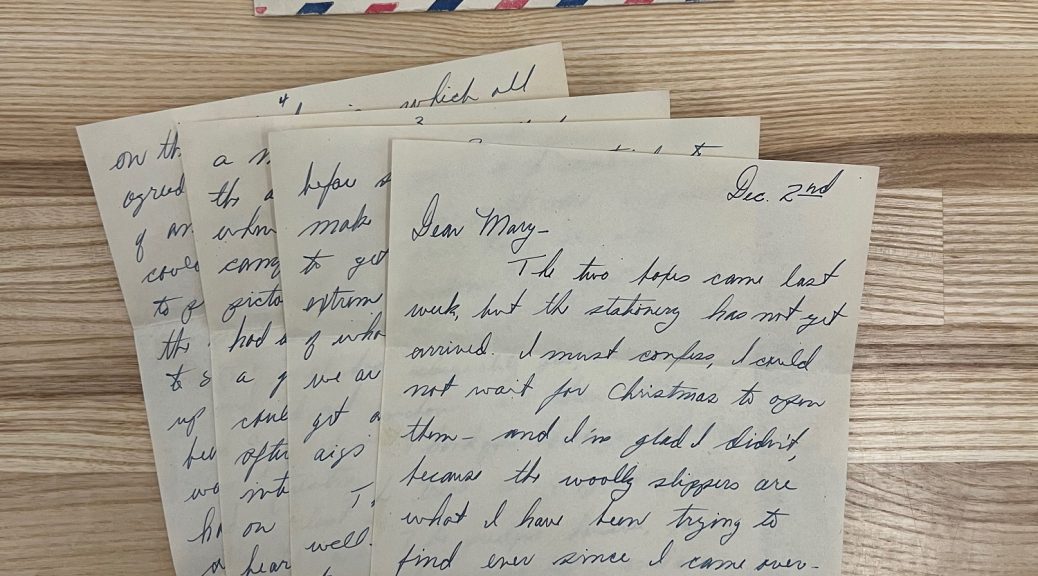
What does it feel like to be a fly on the wall at the Nuremberg Trials? The papers of Robert P. Stewart, recently donated to the Rubenstein Library, provide an answer.
Stewart was an attorney and Duke alumnus who served as a legal aide to Judge John J. Parker at the Nuremburg Trials in 1945 and 1946. There, 24 Nazi political and military leaders were indicted and tried with waging aggressive war, war crimes, and crimes against humanity. 19 were found guilty, and 12 were sentenced to death.
An overriding theme of Stewart’s correspondence is the emotional toll that the evidence of Nazi crimes took on the jurists. His letters tell of film evidence taken by the U.S. army when they first encountered the Nazi concentration camps. “It really was an awful pictorial display of what the Nazis had done—and it upset Judge [Parker] a great deal. The English judges could not even eat.”[1] Judge Parker, Stewart says, became depressed from hearing so much terrible evidence.[2] Compounding this emotional toll was the homesickness felt by the American legal contingent.
Also in Stewart’s letters is discussion of the secret 1939 non-aggression pact between Nazi Germany and the USSR—an agreement first disclosed at Nuremberg. Writes Stewart, “perhaps the most interesting bit behind the scenes lately is the way one of the defense lawyers is trying to introduce a document which purports to be a photostat copy of a secret treaty between Germany and Russia in 1939.”[3] That non-aggression pact paved the way for the Nazi invasion of Poland on September 1, 1939.
Outside of court, Stewart encountered colorful characters during his service at Nuremberg. For instance, he lunched with General Dwight Eisenhower at Eisenhower’s Frankfurt villa, calling Eisenhower “a remarkable man—strictly down to earth,” and noting it was “probably the first time during this war that anyone so lowly as a major sat down to break bread with him.”[4]
Some 35 years after returning from the Nuremberg Trials, Stewart reflected on his service in a profile in The Asheville Citizen. “The most dramatic part of the trials,” Stewart said, “was the evidence on the persecution of the Jews. The films shown and the stories told were horrendous, unbelievable. If I hadn’t been there I would never have believed it.”[5] He was there, and his papers at the Rubenstein help us feel what it was like.
Footnotes:
[1] Letter from Robert P. Stewart to Beverly G. Moss, December 2, 1945. Folder 2, Robert P. Stewart papers, David M. Rubenstein Rare Book & Manuscript Library, Duke University.
[2] Letter from Robert P. Stewart to Plummer Stewart, January 12, 1946. Folder 2, Robert P. Stewart papers, David M. Rubenstein Rare Book & Manuscript Library, Duke University.
[3] Letter from Robert P. Stewart to Plummer Stewart, May 30, 1946. Folder 3, Robert P. Stewart Papers, David M. Rubenstein Rare Book & Manuscript Library, Duke University.
[4] Letter from Robert P. Stewart to Plummer Stewart, November 7, 1945, and letter from Robert P. Stewart to C. C. Gabel, November 7, 1945. Folder 1, Robert P. Stewart papers, David M. Rubenstein Rare Book & Manuscript Library, Duke University.
[5] Tony Brown, “Stewart Had Important Role at Nuremberg,” The Asheville Citizen, September 8, 1981, pg. 9. Oversize Folder 1, Robert P. Stewart papers, David M. Rubenstein Rare Book & Manuscript Library, Duke University.
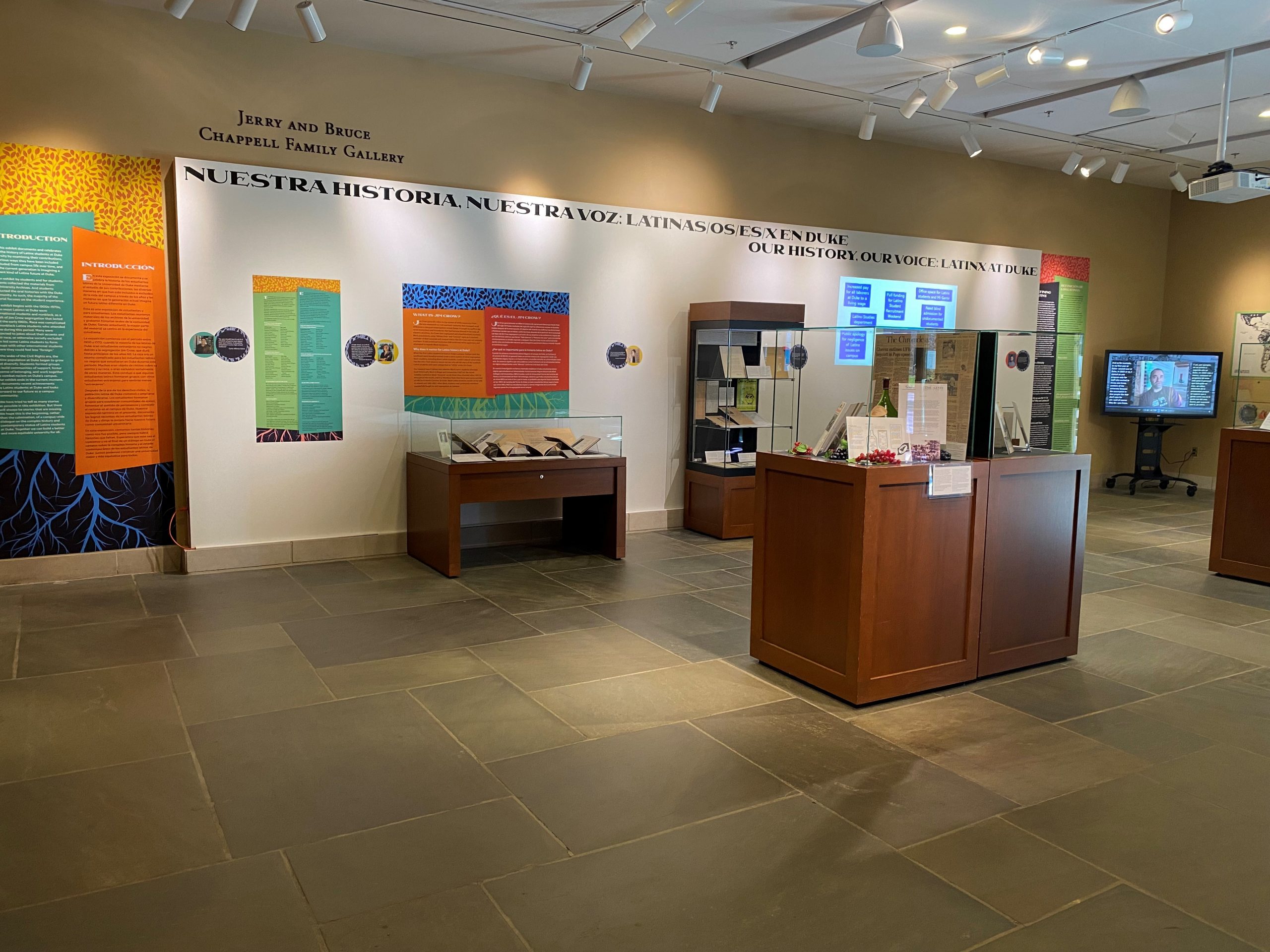
Please join the student and faculty curators at the opening of their new exhibition, “Our History, Our Voice: Latinx at Duke/Nuestra Historia, Nuestra Voz: Latinas/os/es/x en Duke.”
Over the past year, Dr. Cecilia Márquez’s Latinx Social Movements courses and Professor Joan Munné’s Spanish for Heritage Learners courses canvassed the collections of the Duke University Archives and conducted oral histories to create this first-of-its-kind exhibition exploring the complex story of Duke’s Latinx community.
The exhibit curators will make brief remarks at 4:30 PM and offer guided tours of the exhibit afterwards.
We encourage you to register for this event. Registration is not required, but will help us to plan the event safely. Masks are required in the Duke University Libraries.
If you’re unable to join us for this event, please check out our online exhibit!
For many towns and cities in 20th century America, the holiday season officially began just after Thanksgiving, which was established as a fixed national holiday in 1941. Frequently festivities included a parade that involved local dignitaries, youth clubs, business and social organizations, a Miss Something-or-Other pageant winner, high school bands, fire engines, culminating in the arrival of Santa Claus in some ostentatious conveyance. Town folk stood in yards and sidewalks, sometimes for hours in freezing weather, to witness the spectacle. To this day, even, the Macy’s Thanksgiving Day Parade ends with the Santa Claus float.
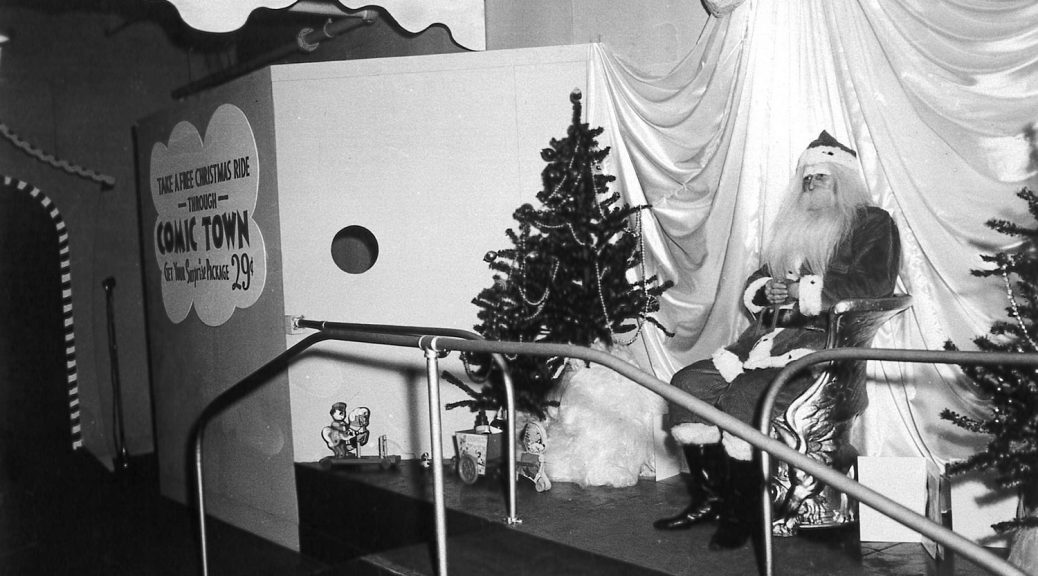
Afterwards, Santa generally installed himself in one or several of the local department stores, meeting children, hearing their wishes, and sometimes posing for photographs. In all it was a wonderfully odd synthesis of folklore, consumerism, and technology. How did it begin?
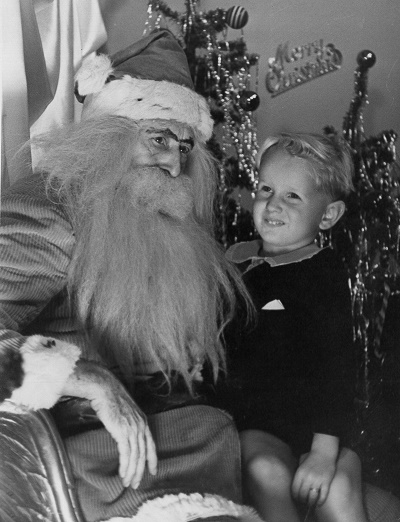
It is generally accepted that Macy’s Department Store featured the first in-store Santa Claus character beginning in the 1860s. Perhaps the first in-store Santa Claus that we might recognize, the rotund and jolly old man inspired by the stories of Washington Irving and illustrations of Thomas Nast, was James Edgar who posed as Santa as a promotional act in 1890 at his dry goods store in Brockton, Mass. The idea caught on and soon Santas were featured in department stores across the country. In the early 1940s, photographers and studios such as Art French in Seattle and Kiddie Kandids, based in the Midwest, began photographing Santa posed with children. What started out as a way to make money in what might otherwise be an off-season became a way to create mementos of childhood.
Recently the Hartman Center acquired a small collection entitled “Santa and Me!”, named for a promotional campaign conducted by Kiddie Kandids, a chain of photograph studios that apparently began in St. Louis and expanded to include over 2,000 studios located in major and regional department stores throughout the United States. The photographs, taken between 1946 and 1948, depict Santa with children on his knee, as well as some other themed settings such as Alice in Wonderland and the circus. There are also shots of Santa on a department store stage with the photographer’s booth hidden in a wall, as well as some images of how the camera was set up to capture the moment of Santa and child.
Accompanying documentation describes how to conduct an “Operation Santa Claus” campaign: instructions on pricing; how to match the children to their photographs; distribution; how to set up the camera and process the flow of children. There are even recommendations on processing children through the experience: “This is a candid photograph and the children can be taken as fast as Santa wants to move them along. At the rate of 300 per hour, 2,000 to 3,000 is not unreasonable.”
This small collection provides a glimpse into an aspect of mid-century holiday celebrations and a commercial photographic practice that was only a few years old at the time. The collection is available at Duke’s Rubenstein Library and the collection guide may be viewed here.
Post contributed by Rachel Ingold, Curator for the History of Medicine Collections.
The history of vaccine hesitancy is nothing new. Pamphlets, magazines, and newspapers from the eighteenth through twenty-first centuries feature opposing views of vaccination. Some profess personal liberty and abhor government intervention (i.e. instituting compulsory vaccination); or claim that potential side effects from vaccines are too risky. Others stress that public health and the well-being of communities against preventable, lethal diseases, should prevail through large-scale, or even mandatory, vaccinations.
Does this sound a bit familiar?
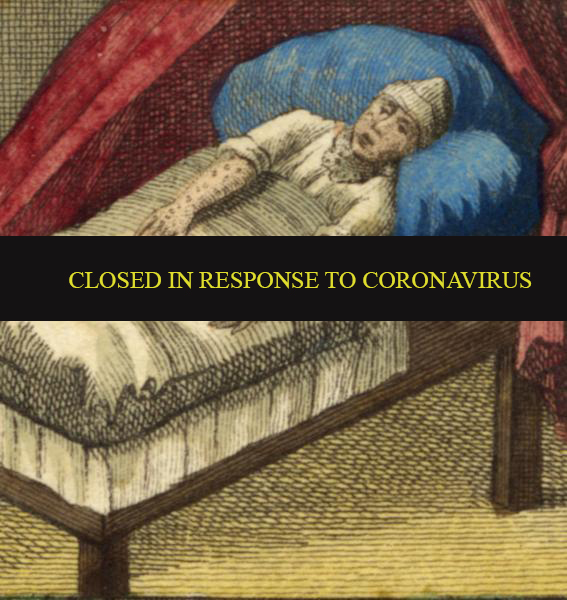
The David M. Rubenstein Rare Book & Manuscript Library has material, ranging in format and date, that document the long history of vaccine hesitancy. In October 2019, an exhibit Vaccination: 300 Years of Debate was installed in the Josiah Charles Trent History of Medicine Room. When campus closed in March 2020, so did our exhibit spaces. This exhibit became inaccessible at a time when it was becoming most relevant.
Image from Vaccination: 300 Years of Debate, person in bed from Engravings by Clemens Kohl
Post contributed by Richard Branscomb, PhD Candidate at Carnegie Mellon University and a recent Duke Human Rights Archive Travel Grant Recipient.
By many accounts, the riot on January 6, 2021 at the U.S. Capitol building was an unprecedented day of violent, far-right insurrection. Indeed, an attack of that magnitude on the nation’s capital has not occurred since this country’s Civil War. The events of that day drew together various far-right factions with a propensity for antidemocratic violence, including QAnon conspiracy adherents, so-called militia or patriot groups like the Oath Keepers, and the “western chauvinist” group the Proud Boys.[1] While the unfolding violence on January 6 may have been unprecedented, the “revolutionary” narratives undergirding those events are not. And the ultimate incapacity of those rioters to overturn national election results will not preclude others from trying again through other violent means.
My research uses digital and historical archives to trace the sort of conspiratorial narratives that resulted in the January 6 riot. The Rubenstein Library’s exceptional special collections have contributed to the goals of my larger dissertation project, in which I examine particular tropes in the history of firearms advocacy in the U.S. as that history is inflected by ideologies of far-right vigilantism and white supremacist subtext. As a scholar of rhetoric, I’m particularly interested in the ways social movements build and circulate narratives that establish certain senses of identity, urgency, or, in extreme cases, justifications for terroristic violence.
In the Rubenstein Library’s collections, I was primarily examining the periodicals circulated by the civilian militia movement that rose to prominence in the U.S. in the early 1990s. These materials include newsletters and propaganda that these militia groups circulated for recruitment and political antagonism. Overall, what these archival materials help illustrate is that the sort of antidemocratic violence seen on January 6 is neither a new phenomenon of far-right sedition, nor will it be the last. Though hundreds of rioters have now been criminally charged,[2] little accountability appears on the immediate horizon for the sitting members of Congress who refuse to condemn the participants or the election falsehoods that precipitated the riot.[3]
The civilian militia movement has been characterized by a deeply libertarian suspicion (and/or paranoia) of the federal government, and a stalwart dedication to the Second Amendment as a means to reclaim “liberty” for the militias’ overwhelmingly white and male members. This is despite the fact that militias were and are extrajudicial in all 50 states, and that judicial precedent on the Second Amendment does not support private militia formation.[4] The civilian militia movement originated amid a longer history of racist backlash to the incremental victories of the civil rights movement of the twentieth century, which were (and still are) framed on the political right as encroachments of federal government power on everyday American lives. Then, a series of lethal blunders by federal agencies in the early 1990s accelerated militia mobilization across the country: First, in the deadly standoff with a white separatist family at Ruby Ridge, Idaho in 1992, and second, the 51-day explosive siege of the Branch Davidian compound near Waco, Texas in 1993. This movement initially peaked in 1996,[5] but it declined amid the fallout from the 1995 bombing of the Oklahoma City federal building by white supremacist, anti-government extremists that killed 168 people and injured hundreds more.
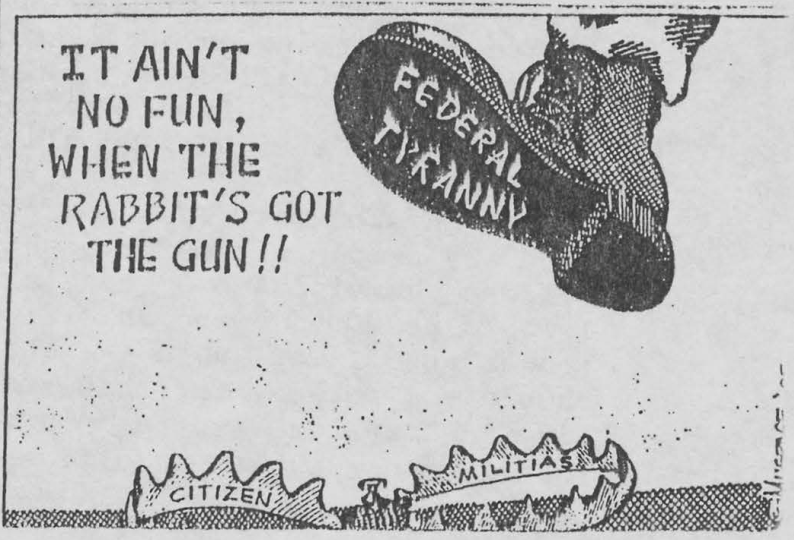
Cartoon from the Gadsden Minutemen Newsletter (1995) illustrating the purported function of citizen militias in combatting militarized federal tyranny.
As evidenced by archived materials of far-right groups, Ruby Ridge and Waco inspired militia mobilization for years afterward. For instance, the Missouri 51st militia was named for the length of the Waco siege. These events also inspired varying degrees of exhortative rhetoric in militia group publications, up to and including insurrectionary violence. In a March 1995 periodical for the Alabama-based Gadsden Minutemen Unorganized Militia, one writer reflected on how the movement ought to respond to government overreach, particularly incidents like Ruby Ridge and Waco. The writer concludes by emphasizing the “divine” spirit of the movement, even drawing a timeline from the American Revolution to the 1995 anniversary of the Waco siege’s disastrous end—the date that would in fact coincide with the Oklahoma City bombing:
“As on April 18, 1775, on July 4, 1776, on April 19, 1995, we are ‘ … endowed by our Creator … ’ Not endowed by government. I, we are free, independent and sovereign, with full authority over our lives, our bodies, and our property. We are rightly answerable to outside authority only for direct infringement of the rights of others. Otherwise only divine authority will obtain. It is our duty, laid on us by God and the generations, to defend our, our children’s, and our neighbors’ liberty. In extremis, to kill; if necessary to die. We, I, individuals, each alone, are individually responsible.”
Heading for a 1997 issue of Taking Aim, the Militia of Montana’s newsletter, highlighting the persistence of “false flag” and coverup conspiracies centered on federal agencies.
Though this militia group was not responsible for the terrorism in Oklahoma City, these bald exhortations resonate —in extremis—with the broader rhetorical strategies of these civilian militias then and now. Groups like the Gadsden Minutemen and the Missouri 51st militia publicly decried the horrendous violence in Oklahoma City, while asserting that their mission was not to overthrow the federal government but instead to compel the government to “return” to a nostalgic constitutional past. Still other groups like the influential Militia of Montana circulated “false flag” conspiracies about the bombing, claiming it to be yet another federal ruse to dismantle their movement. After the failed insurrection on January 6, 2021, some on the far-right recapitulated this storyline by claiming that the Capitol riot was itself yet another “false flag.” Still others, including members of Congress, have extended that “revolutionary” timeline to include January 6, 2021.[6]
In all, my research is concerned with critically contextualizing the prominence of heavily-armed vigilante groups in the American political system, particularly their violent vision of enforcing governmental accountability. To be sure, the government and our elected leaders must be held to account for their travesties and abject failures. However, civilian militias and their allies rely on armed intimidation and blatantly antidemocratic terrorism, methods that must be situated in the longer history of racist exclusion and silencing that paints a narrow view of just who “we the people” are.[7] This is why archives like the Rubenstein Library’s collections are particularly valuable for reminding us how we got to where we are now, including the far-right normalization of extremist words and deeds.
Post contributed by Roger Pena, MLIS Student at UNC Greensboro and Josiah Charles Trent History of Medicine Intern
“There may come to me fresh blooming flowers, but I’ll love the faded bud best.
For it slept one night in the moonlight, on the sod upon his breast.”
– Winifred Cobb, widow of Benjamin. F. Cobb
I am a little over a month into my internship at the History of Medicine Collections at the Rubenstein Rare Book & Manuscript Library. In my short time working in the collection, I’ve been able to handle incunabula (books printed prior to 1501), surgical tools dating back to the 16th century, and a wide range of artifacts preserving the history of medicine, health issues, biomedical science, and disease in a global context.
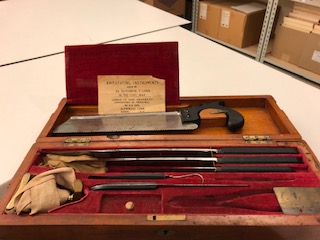
Amputation set, early to mid-19th century.
A library science degree with a focus in special collections is a career change from my decade of experience working in K-12 education. Being a history teacher for most of my career I had always been interested in battlefield medicine, especially throughout American history and the Civil War(1861-1865).
For most people with an interest in Civil War history, the treatment of wounded and injured soldiers is of particular interest. A search of the History of Medicine artifacts collection will lead you to several surgical and amputation saws donated to the Rubenstein Library. As I mentioned previously, one of the surgical saws dates back to the 16th century and could require two people to operate while the collection also houses an amputation saw from the late 1890s.
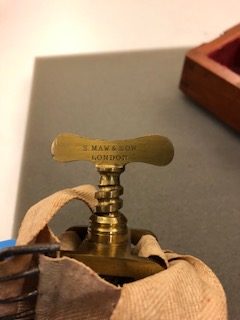
Detail on tourniquet showing the name S. Maw & Son, a medical supply company.
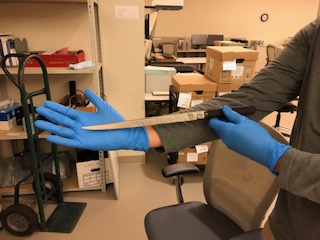
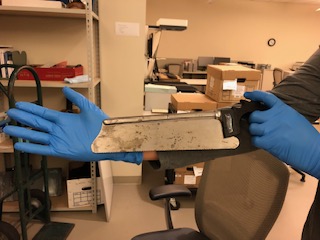
Another surgical saw is titled: “Amputation set, early to mid-19th century”. The set is made up of at least 8 different pieces including a large surgical saw, a tourniquet with leather paddings to make the procedure more “comfortable” and four large knives that more resemble a modern set of kitchen knives than ones used to amputate a soldier’s limb. The set comes in a wooden box with a brass plate and an engraving with initials: B.F.C. Its contents were purchased through S. Maw and Son – a medical supply company operating out of London and featured prominently on the saw and knife handles. The wooden set was donated through the Alphonsus Cobb Collection, son of Benjamin Franklin Cobb.
B. F. Cobb
The youngest son of Benjamin F. and Winifred Cobb, Alphonsus moved to the city of Durham around the turn of the 20th century. Throughout his time in Durham, Alphonsus would serve as a hotel manager and local businessman in real estate and insurance until his death in 1935. A look through collection control files revealed a folder with a detailed history of the Cobb family, historical columns written in local newspapers, and a poem written by Winifred, Benjamin’s widow, on the day of his burial. Not much survives of his record in the Confederate Army nor is there much information about Alphonsus, except for information about his business history in Durham.
Dr. Josiah C. Trent, whose original collection of medical books, manuscripts and artifacts helped to establish the History of Medicine Collections, hoped to create a collection that celebrated and studied the history of surgery. No doubt an artifact such as an amputation saw from the Civil War era would be a good fit for the collection.
The battlefields of the American Civil War saw nearly 60,000 amputations, roughly 75% of all surgeries performed in the conflict. Used as a method to prevent disease and infections such as gangrene, survival could depend on factors such as the location of the wound and when treatment was administered. Though rudimentary by today’s standards, amputations during the Civil War were “sophisticated” procedures conducted with patients under anesthesia (chloroform or ether) and “one of the quickest, most effective ways for surgeons to treat as many patients as possible.” Still, the harsh conditions of performing surgeries in the battlefield hospitals led to the reputation of surgeons and doctors acting more like “butchers” and soldiers fearing the short and long-term ramifications of an amputation.
Detail of amputation saw and descriptive card included in amputation kit.
Our saw’s owner, Benjamin F. Cobb was born into a slave owning family (1830 Census) in Wayne County, NC in January, 1826 and completed his medical training at Jefferson Medical College in Philadelphia in 1847. The 1850s would see Dr. B.F. Cobb in a general medical practice with a focus on obstetrics in Duplin Co., NC. In April of 1862, a year into the Civil War, Dr. Cobb was commissioned as a surgeon in the Provisional Confederate Army and would serve across the state of North Carolina until the end of the Civil War. Dr. Cobb was stationed as a Confederate Surgeon in Goldsboro, Fort Anderson, Smithville, Penders Hospital, and Fort Caswell until his capture in March 1865 and eventual loyalty oath in May of 1865. One can only wonder whether the “Amputation set” in the History of Medicine Collections was present as Dr. Cobb attended to wounded soldiers.
Detail of surgical knife from amputation set. Human arm for scale.
Today, the amputation set owned by Benjamin F. Cobb and donated by Alphonsus to Duke University serves as a hands-on teaching tool for students at Duke University in learning the ways that surgery has evolved over the last few centuries. When opening the finished and well designed wooden box holding the amputation saw and accompanying instruments, it’s easy to step back in history and imagine a world where physicians grappled with decisions regarding the need for an amputation and the thousands of soldiers whose lives were forever changed by the war and surgical procedure.
Post contributed by John B. Gartrell, Director, John Hope Franklin Research Center for African and African American History & Culture
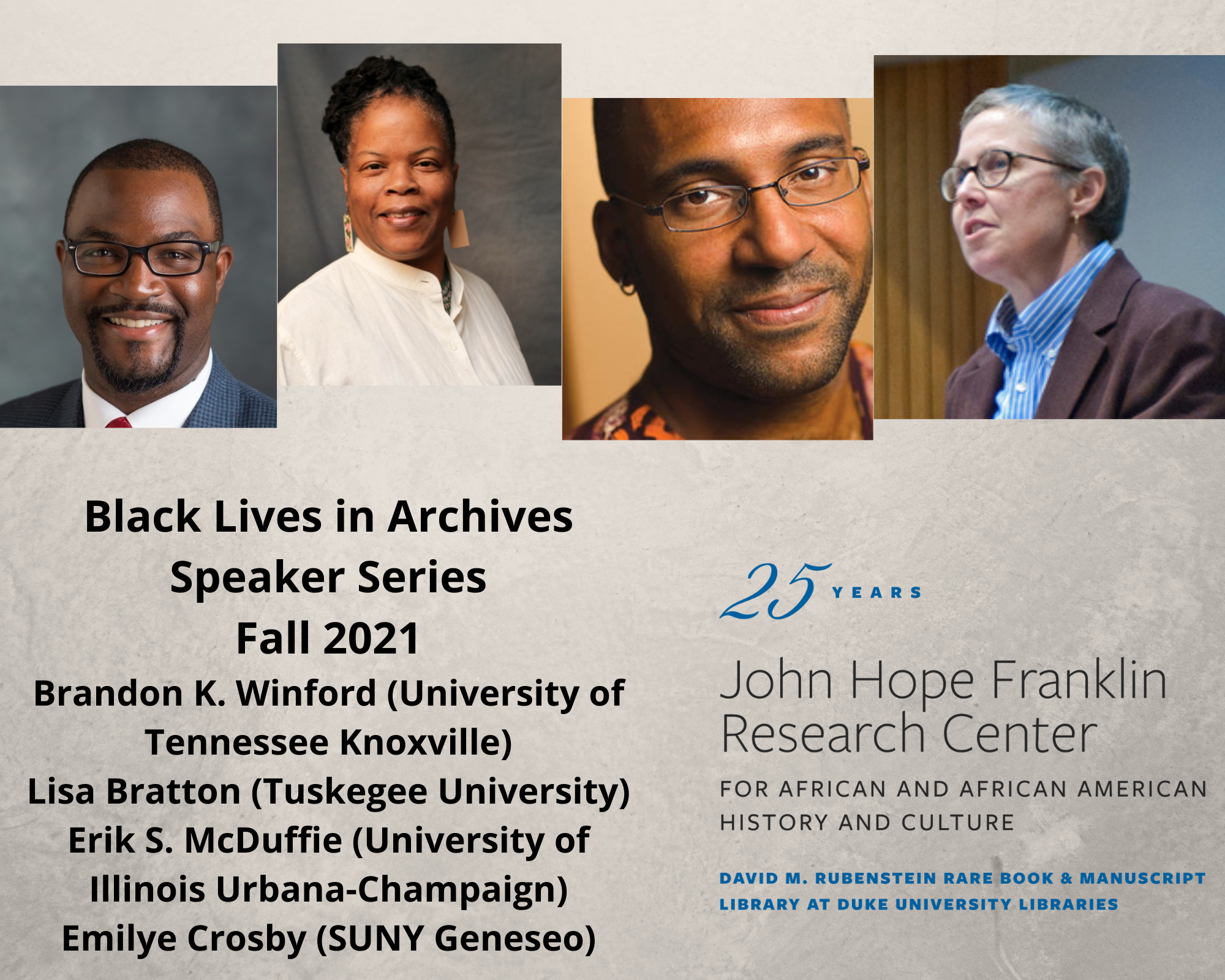
The 2021-2022 academic year marks the 25th anniversary of the John Hope Franklin Research Center for African and African American History & Culture. The Franklin Research Center, which is based in the David M. Rubenstein Rare Book & Manuscript Library, will use the theme “Black Lives in Archives” as the thread for a slate of programming and projects that will build upon the center’s mission of advancing scholarship on the history and culture of people of African descent.
The anniversary will begin on September 14 with a virtual lecture by Dr. Emilie Boone, Assistant Professor of African American Studies at New York City College of Technology, CUNY. Her talk will respond to the exhibition James Van Der Zee and Michael Francis Blake: Picturing Blackness in the 1920s, currently on display in the Rubenstein Library’s Photography Gallery. The exhibit highlights resonances between the work of James Van Der Zee and Michael Francis Blake, two African American photographers working in the 1920s at the height of the “New Negro Movement.” Register for this event here.
James Van Der Zee and Michael Francis Blake: Picturing Blackness in the 1920s. On display in the Rubenstein Library
Emilie Boone will lead a virtual lecture entitled, “Visualizing a Shared Ethos: Van Der Zee and Blake as Peers” on Sept. 14
Additional programs this semester will include a Black Lives in Archives virtual speaker series featuring four scholars who were previously awarded research travel grants to come to the Rubenstein Library and utilize the center’s collections. This “return to the archive” by each scholar will highlight the critical importance of Black collections as a foundation for new directions in the field of African and African American Studies. The tentative schedule includes:
September 22 – Brandon K. Winford, Associate Professor, University of Tennessee Knoxville
October 27 – Lisa Bratton, Assistant Professor, Tuskegee University
November 9 – Erik S. McDuffie, Associate Professor, University of Illinois Urbana- Champaign
December 8 – Emilye Crosby, Professor of History, SUNY-Geneseo
Earlier this summer, the center announced two exciting projects that will continue to drive the work of preserving the Black archives. “Documenting African American Life in the Jim Crow South: Digital Access to the Behind the Veil Project Archive” is a National Endowment for the Humanities grant-funded initiative to digitize and publish the Behind the Veil archive. The Behind the Veil project, which was led by the Center for Documentary Studies 1992-1995, was one of the largest oral history archives documenting the African American experience of living in the American South during the early to mid-twentieth century. The project will digitize analog cassette tapes containing close to 1,200 interviews with African American elders from twenty distinct communities. In Spring 2022, there will be a virtual gathering of Behind the Veil project staff and interviewers to reflect on their work and the impact of the collection.
The second project is a three-year Mellon Foundation funded project entitled, “Our Stories, Our Terms: Documenting Movement Building from the Inside Out,” which extends the partnership between Duke University Libraries and the SNCC Legacy Project through the Movement History Initiative. Our Stories, Our Terms will document how movement veterans from the Student Nonviolent Coordinating Committee and today’s activists built their social and political movements. The project will also build capacity for archival practice among current activist organizations and share documentary pieces from inter- and intra-generational conversations among activist and organizer communities.
In 1995, Dr. John Hope Franklin, the James B. Duke Professor Emeritus of History at Duke University, donated his own personal archive to Duke. In his honor, the Duke University Libraries founded the John Hope Franklin Research Center for African and African American Documentation as a designated collecting area specializing in rare book and primary sources documenting people of African descent, with endowment funding from GlaxoWellcome Inc. Franklin’s archive and his scholarship have been the guiding lights of the center’s engagement in public programming, teaching, exhibitions, and collaborations. This celebration of “Black Lives in Archives” will honor the center’s role as a premiere destination for researchers near and far over the last twenty-five years.
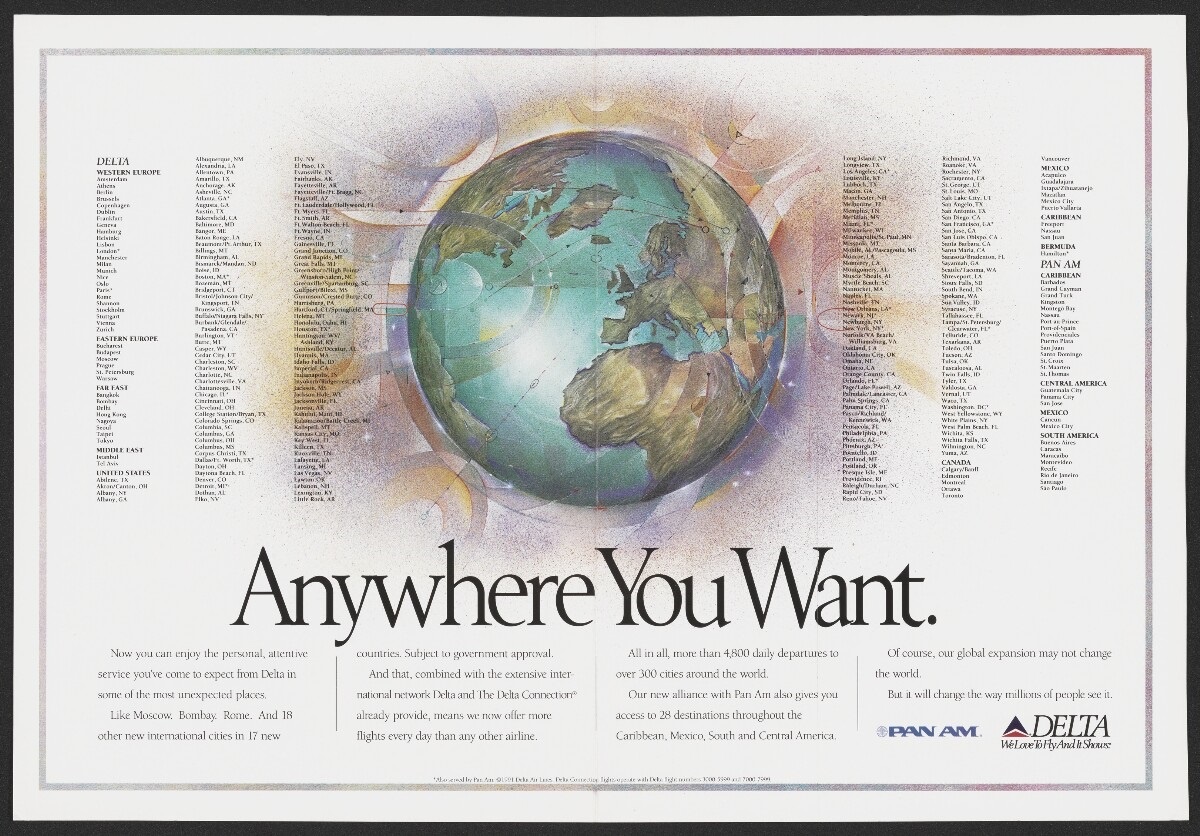
The Pan Am Digital Collection can be searched using free-text keyword searches, as well as through faceted searching by year, aircraft type (under the “Subject” search facet), language, departure and arrival locations, and source collection. Highlights from the Pan Am Digital Collection include:
First passenger service across Pacific, Atlantic, to South America, etc.
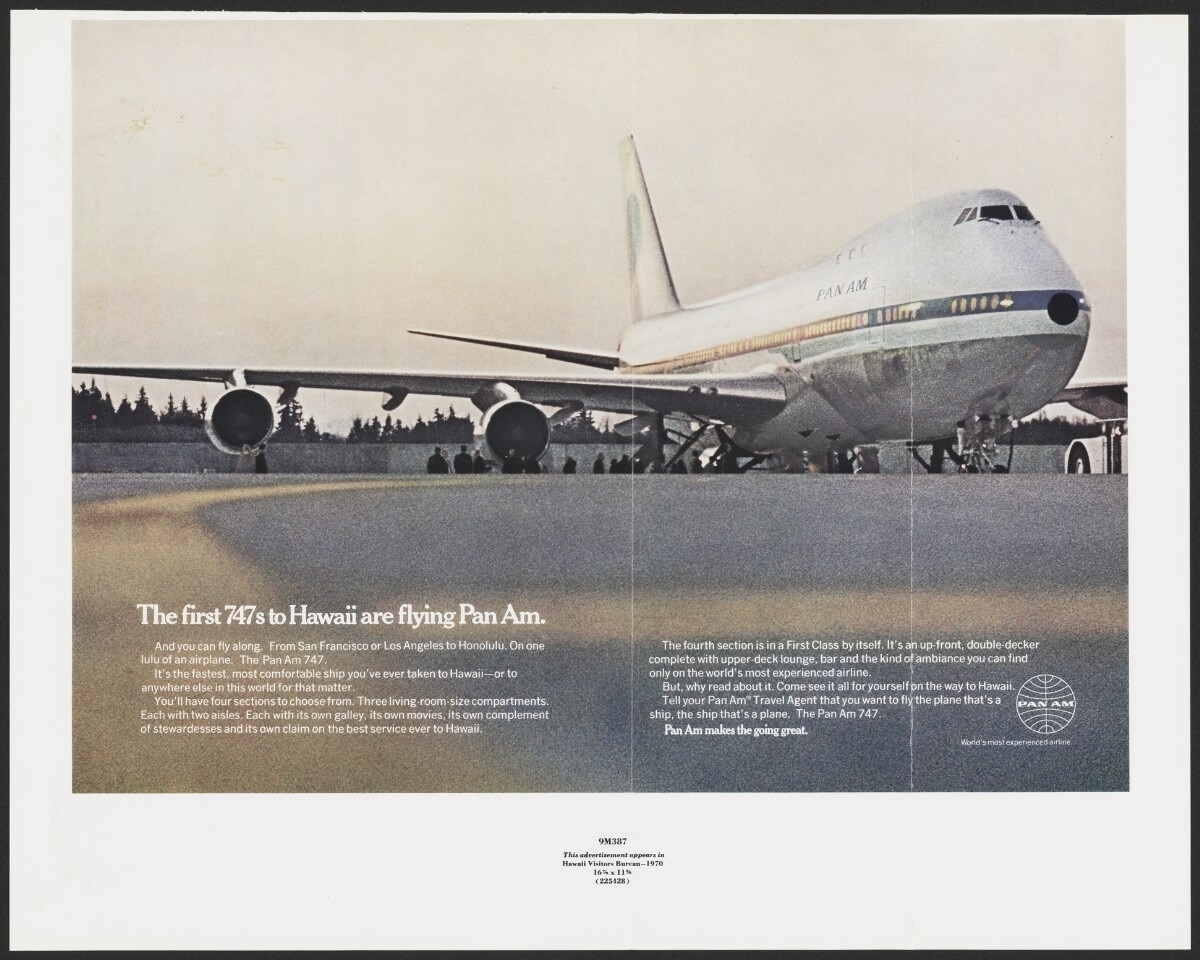
First jet service, including the debuts of the Boeing 707 and 747.
Inaugural service between New York and Moscow.
Noteworthy campaigns including the Clipper concept, “around the world service,” and the debut of new services such as in-flight entertainment.
The Pan Am Digital Collection is part of a larger collaboration with the University of Miami Libraries, who hold the corporate records of Pan Am, and HistoryMiami Museum, who hold artifacts from Pan Am. Together, our digitized materials and artifacts serve as the foundation of the Digital Public Library of America’s new aviation portal, Cleared for Takeoff: Explore Commercial Aviation. In addition to showcasing Pan Am’s history and impact on aviation, the DPLA portal also includes materials related to the broader history of other commercial aviation in America and associated airlines. The portal will eventually feature a chronological representation of Pan Am’s achievements and history through an interactive timeline, which is linked at the top of the portal. The timeline curates materials from each grant partner and puts otherwise disparate items in conversation with each other.
The DPLA Aviation Portal will eventually feature a Primary Source Set, curated by members from the Hartman Center, UMiami Libraries, and HistoryMiami. The Primary Source Set is meant for classroom use and focuses on how Pan Am impacted and “shrank” the world, encouraging critical thinking and analysis of primary source documents and touching upon numerous social, political, and cultural issues.
The Hartman Center is grateful to the Council on Library and Information Resources and The Andrew W. Mellon Foundation for funding this important project, as well as to our colleagues at UMiami Libraries, HistoryMiami, the DPLA, and our colleagues in Digital Collections & Curation Services and Conservation Services in Duke libraries.
This post was contributed by John B. Gartrell, Director, John Hope Franklin Research Center
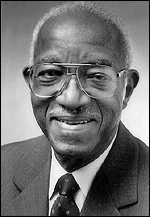
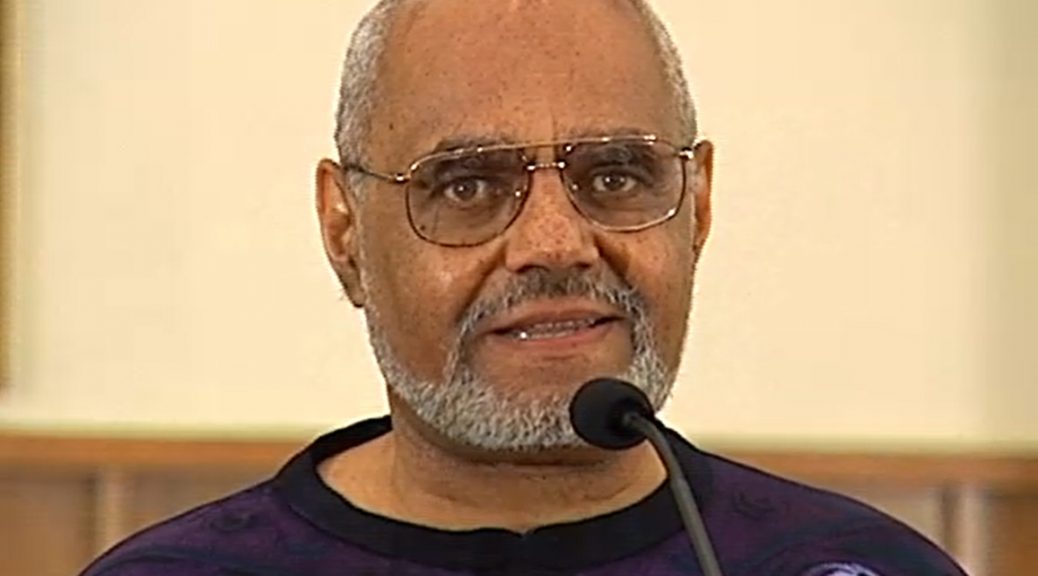
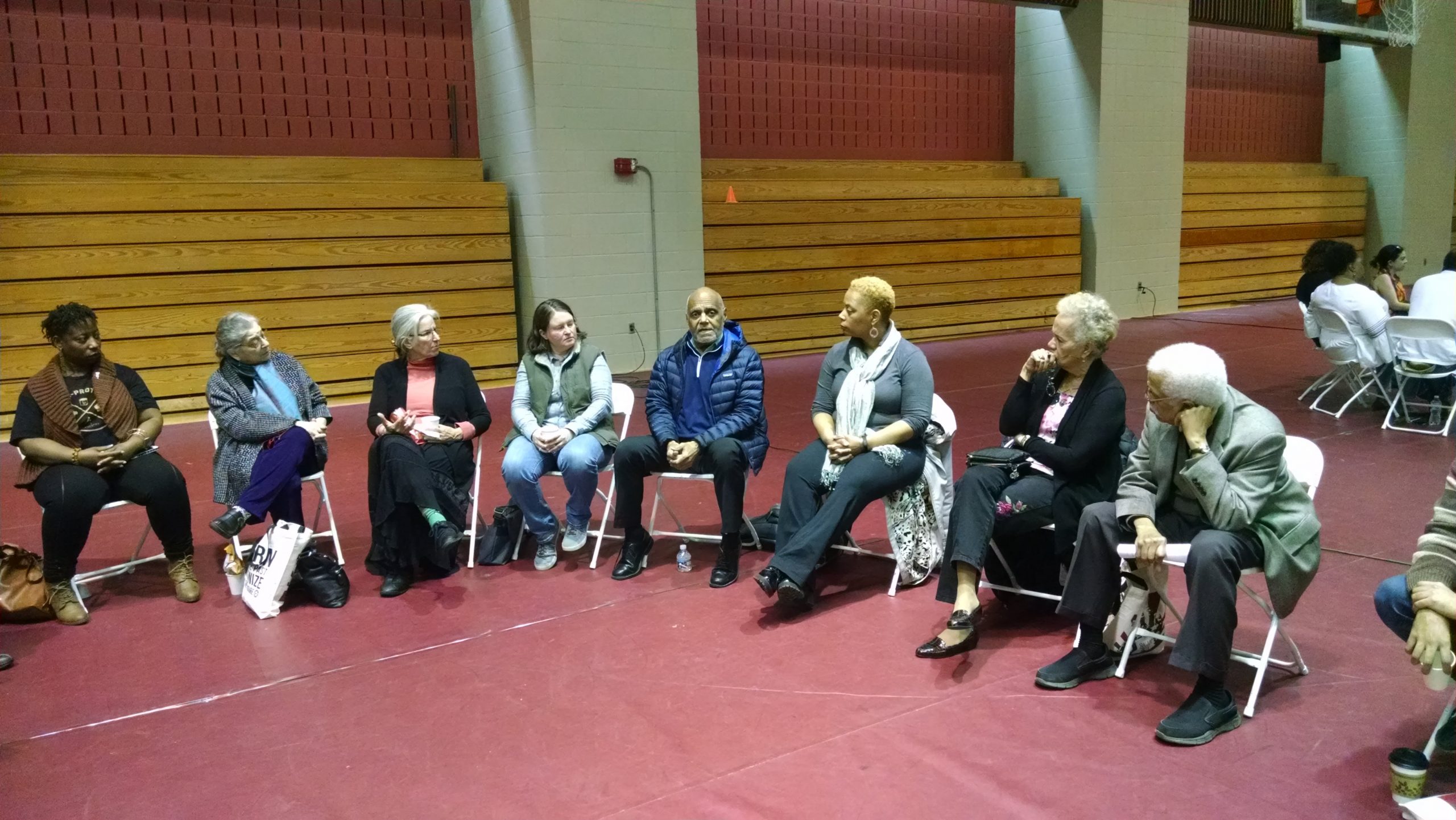
The Franklin Research Center and Rubenstein Library mourns the loss of Robert “Bob” Parrish Moses, who passed away on July 25, 2021. Moses was giant in the fight for civil and human rights, who began working with the Student Nonviolent Coordinating Committee (SNCC) as an organizer soon after the organization’s founding in 1960. He worked in tirelessly on a range of issues including voter registration and community organizing in the Deep South, particularly Mississippi, Alabama, and Southwest Georgia. He would later found the Algebra Project in the 1980s, which was evolution of his work with SNCC, using mathematics as an organizing tool while seeking to expand access to a quality education in the United States.
Bob Moses speaking at SNCC 40th Anniversary Conference, Shaw University
You can use the following resources in our archives and supporting projects like the SNCC Digital Gateway to learn more about Moses’ life and experiences in the struggle for freedom –
Bob Moses (center, blue coat) leading discussion at SNCC Digital Gateway Closing Conference, 2018 (photo courtesy of Kim Johnson, SNCC Legacy Project)
Duke University has had the honor of working Moses and his SNCC comrades for decades. This work continues today through the collaborative work of the Movement History Initiative. May he rest in power.
Post contributed by John B. Gartrell, Director, John Hope Franklin Research Center
This summer Duke University Libraries will launch a project to provide expanded digital access to the Behind the Veil: Documenting African-American Life in the Jim Crow Southoral history collection, housed in the David M. Rubenstein Rare Book & Manuscript Libraries and curated by the John Hope Franklin Research Center for African and African American History & Culture. The project, titled “Documenting African American Life in the Jim Crow South: Digital Access to the Behind the Veil Project Archive,” received a $350,000 Humanities Collections and Reference Resources Implementation grant supported by the National Endowment for the Humanities (NEH).
Behind the Veil (BTV) was undertaken by the Center for Documentary Studies at Duke University (CDS) from 1992–1995 and co-directed by Drs. William Chafe, CDS co-founder and Alice Mary Baldwin Distinguished Professor Emeritus of History, Robert Korstad, Professor Emeritus of Public Policy, and the late Raymond Gavins, the first African American faculty member in Duke’s Department of History. Chafe, Korstad, and Gavin’s vision for and title of the project refer to the concept of the “veil” introduced by scholar and activist W.E.B. DuBois in his iconic book The Souls of Black Folk (1913). In that work, DuBois discussed the metaphorical concept of the veil as “separating the two worlds of white and black,” designed to protect African Americans who had to balance comporting their lives as subservient and compliant in front of a White dominated society while simultaneously living free in their own community.
Henderson, Larry – Birmingham, Behind the Veil Collection
BTV was a groundbreaking documentary project for its time that recorded and preserved the living memory of African American life during the age of segregation in the American South. Over the span of three summers, cohorts of graduate students and early career scholars from universities across the country received training with the project’s scholarly board and then resided in selected locales for two weeks to conduct oral histories. The team conducted interviews with more than one thousand community elders who shared their memories from the Jim Crow Era of legal segregation. Nineteen distinct communities were identified for interviews: Albany, GA; rural Arkansas; Birmingham, AL; Charlotte, NC; Durham, NC; Enfield, NC; New Bern, NC; LeFlore County, NC; Memphis, TN; Muhlenberg, KY; New Iberia, LA; New Orleans, LA; Norfolk, VA; Orangeburg, SC; St. Helena, SC; Summerton, SC; Tallahassee, FL; Tuskegee, AL; and Wilmington, NC.
All of the BTV project files were transferred to the John Hope Franklin Research Center in subsequent years after the project’s completion. The BTV collection encompasses a number of formats including over 1,200 taped audio cassette interviews and 3,000 photographic strips, slides and prints, manuscript project files, training materials, administrative records, and born-digital files. The grant work will focus on the digitization and transcription of the oral histories, scanning of the photographic materials, and sharing the collection’s contents with students, educators, and the wider public through virtual programs and webinars. The digital collection will be published in the Duke Digital Repository, where 410 BTV interviews are currently accessible for research. Funds will also allow the project team to hire graduate level interns for archival processing, digitization, and outreach.
John B. Gartrell, director of the John Hope Franklin Research Center and principal investigator for the grant noted, “The Behind the Veil collection is one of the most used collections in the Franklin Research Center. These oral histories truly broaden our understanding of the everyday lives of African Americans during the early-to-mid twentieth century. They represent one of the largest bodies of scholarship on African American life documenting that time, and I’m excited to share the depth of these stories and honor the scholars who recorded them.” Gartrell will be joined by co-principal investigator Giao Luong Baker, who serves as Duke Libraries’ Digital Production Services Manager. Together they will lead the digitization efforts in collaboration with library colleagues over the course of the next three years (2021–2024).
Dispatches from the David M. Rubenstein Rare Book and Manuscript Library at Duke University




 For many towns and cities in 20th century America, the holiday season officially began just after Thanksgiving, which was established as a fixed national holiday in 1941. Frequently festivities included a parade that involved local dignitaries, youth clubs, business and social organizations, a Miss Something-or-Other pageant winner, high school bands, fire engines, culminating in the arrival of Santa Claus in some ostentatious conveyance. Town folk stood in yards and sidewalks, sometimes for hours in freezing weather, to witness the spectacle. To this day, even, the Macy’s Thanksgiving Day Parade ends with the Santa Claus float.