Video Killed the Research Woes

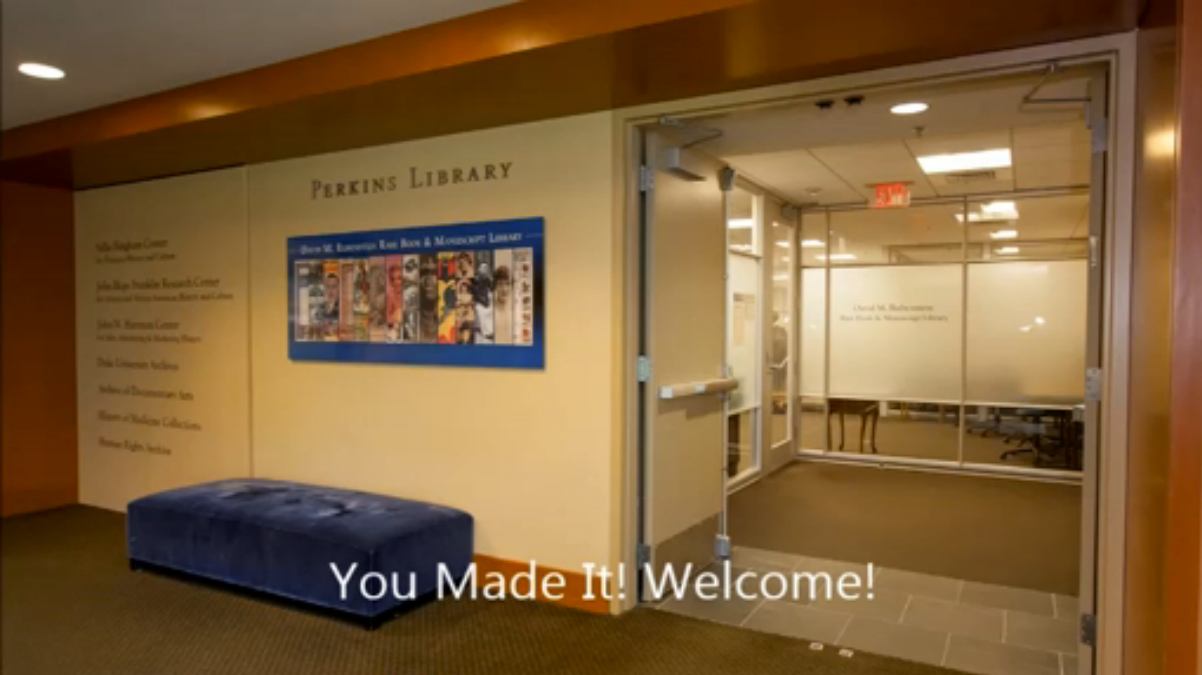
With the Fall Semester well underway, we wanted to let you know about a couple of videos that can make your research at the Rubenstein Library even easier.  For example, not sure where to find us since we moved?

Know that you know where we are and you want to come do research, check out our other videos:

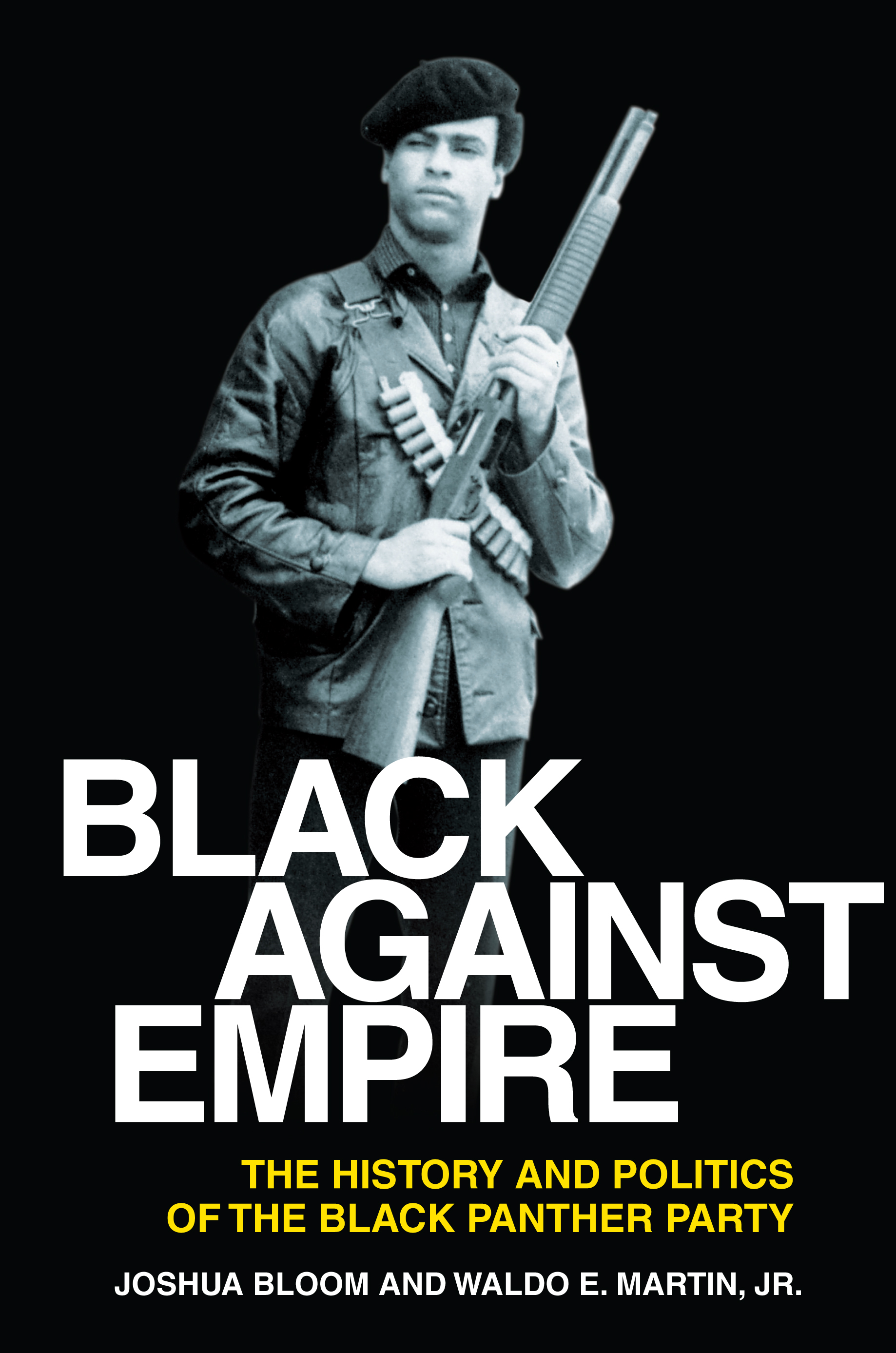
Author Waldo E. Martin Jr. to speak on the Black Panther Party

Bloom&Martin_compREV.inddDate: Thursday, October 3, 2013
Time: 4:00 – 6:00 p.m.
Location: Rubenstein Library, Perkins 318 (PDF Map)
Contact: John Gartrell, john.gartrell@duke.edu

Black Against Empire: the History and Politics of the Black Panther Party traces the rise and fall of the Black Panther Party against the backdrop global revolution. Co-authors Waldo E. Martin Jr. and Joshua Bloom argue that the Black Panther Party rejected fighting for full citizenship within the U.S. and instead, joined the global struggle against U.S. imperialism. In this comprehensive overview, the authors examine why so many young black people across the country risked their lives for the revolution, why the Party grew most rapidly during the height of repression, and why allies abandoned the Party at its peak of influence.

Dr. Waldo E. Martin Jr., joins us to discuss and sign copies of his new book, Black Against Empire: The History and Politics of the Black Panther Party, co-authored with Joshua Bloom.  


A Family with a Mission: The McGee Family Papers

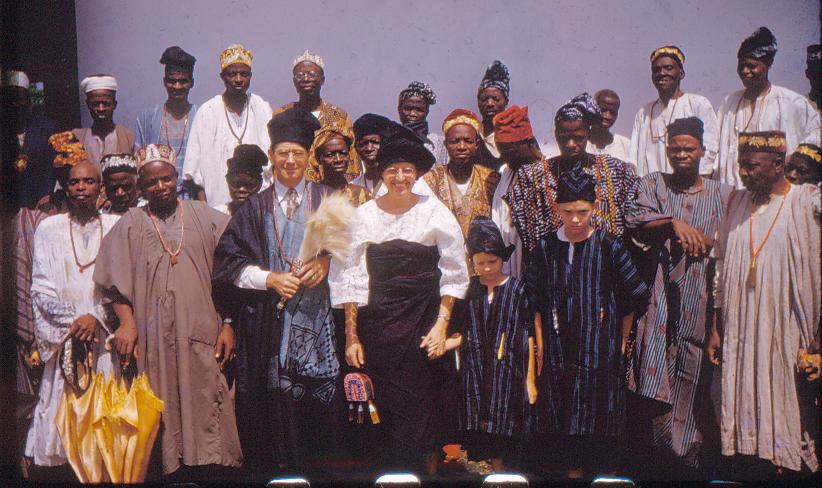
We just wrapped up processing an exciting new addition to the McGee Family Papers. John S. and Doris McGee were Baptist missionaries to Nigeria in 1945, where they served until their retirement in 1977. Their two sons, John David and Sidney, joined them in Africa for their formative years before finishing their education in America. During the McGee family’s time in Nigeria, they served at the Baptist College of Iwo and the Baptist Mission in Igede-Ekiti and Ikogosi, and they helped found the sixth Baptist high school in Nigeria–the Ekiti Baptist High School in Igede. They were made “Chief Gbaiyegun of Igede” by the Onigede and Chiefs of Igede-Ekiti, the paramount chief by the Ewi of Ado, and “Chief Akorewolu of Ikogosi” by Loja and Chiefs of Ikogosi-Ekiti.

McGees and chiefs, Gbaiyegun event, 1957
McGees and Nigerian chiefs, Gbaiyegun event, 1957

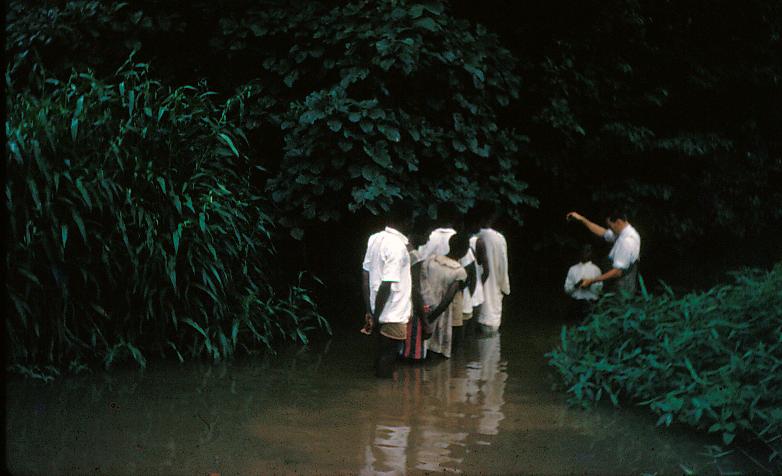
Some of the items in the new accession include correspondence (as well as reel-to-reel “audio letters”) between the family members while they were separated  during their various Nigerian tours; Doris’ many prayer diaries; and seven beautiful 16×20 color prints documenting life in various Nigerian missionary camps.

John S. McGee baptizing believers in Nigeria

The collection offers fascinating insight into the lives and histories of a family on a Baptist Mission to Nigeria in the mid-twentieth century.

Heschel Highlights, Part 2

Welcome to the second post in a series documenting the processing of the Abraham Joshua Heschel Papers.

Processing the materials in the Abraham Joshua Heschel papers over the past three months has presented interesting challenges, including deciphering a wide assortment of languages represented in the collection (we’re up to nine languages thus far) and determining date ranges for the materials. As a result, we’ve come up with some creative, yet practical solutions to address these challenges and are hopeful they will positively affect how researchers interact with and interpret the materials in the collection.

Language materials

Materials in English make up about 57% of the collection; materials in Hebrew and Yiddish about 38%; materials in German 4%; and materials in Italian, Spanish, French, Latin, and Polish about 1%. There are varying degrees of the amount of language materials in each folder and oftentimes multiple languages are represented in a single folder (sometimes in a single document!). Hebrew is particularly challenging as Heschel not only wrote in Hebrew but also frequently wrote folder titles in Hebrew.

To assist researchers understand the language(s) represented in the collection and its extent, each folder description will include a note identifying the language(s) and its extent in the folder. As an example, if all the materials are in German, the note will read “All materials in German,” or if there is a mix of language materials, the note may read “Most materials in German and Yiddish.” To assist researchers with the folder titles in Hebrew, we will be providing the original folder title in Hebrew, the transliteration of the title, and a translation of the title.
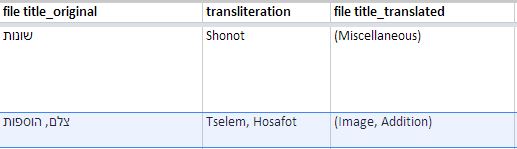
Capture1

Look on both sides!

Heschel tended not to date the materials he authored, nor did he date the folders. However, he does appear to have been a master at recycling paper for his handwritten notes. So far, we’ve discovered he reused coupons, correspondence, receipts, other handwritten notes, memoranda, and (my personal favorite) his student’s blue exam books. In many cases, turning these scraps of paper or documents over has provided essential clues to the date(s) of the materials in the folder.

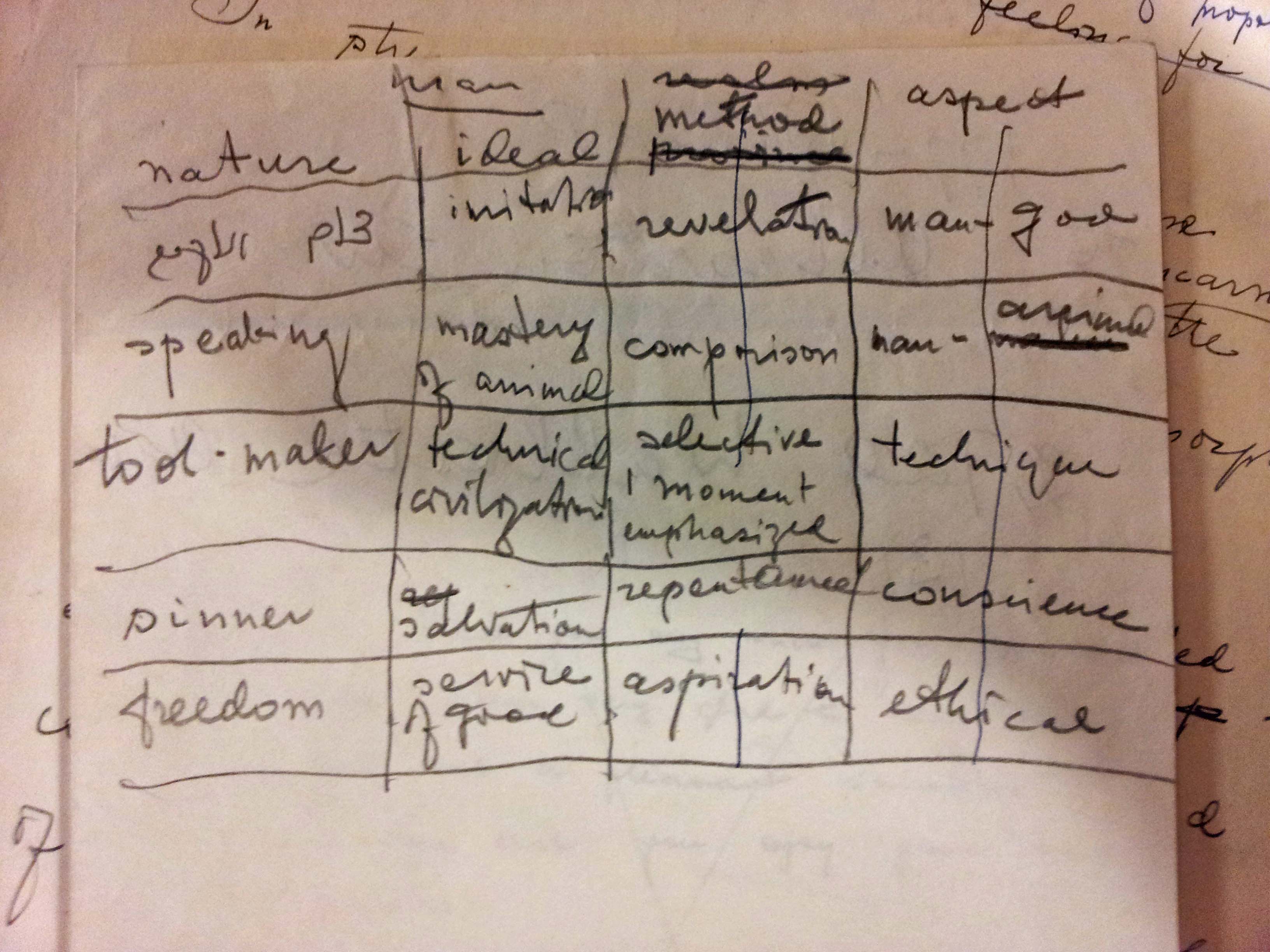
Looking on the other side of the materials has also had some unexpected benefits by providing additional clues to Heschel that may not have been discovered. As an example, we came across a handwritten table which provides descriptions related to the topic of “Man.”
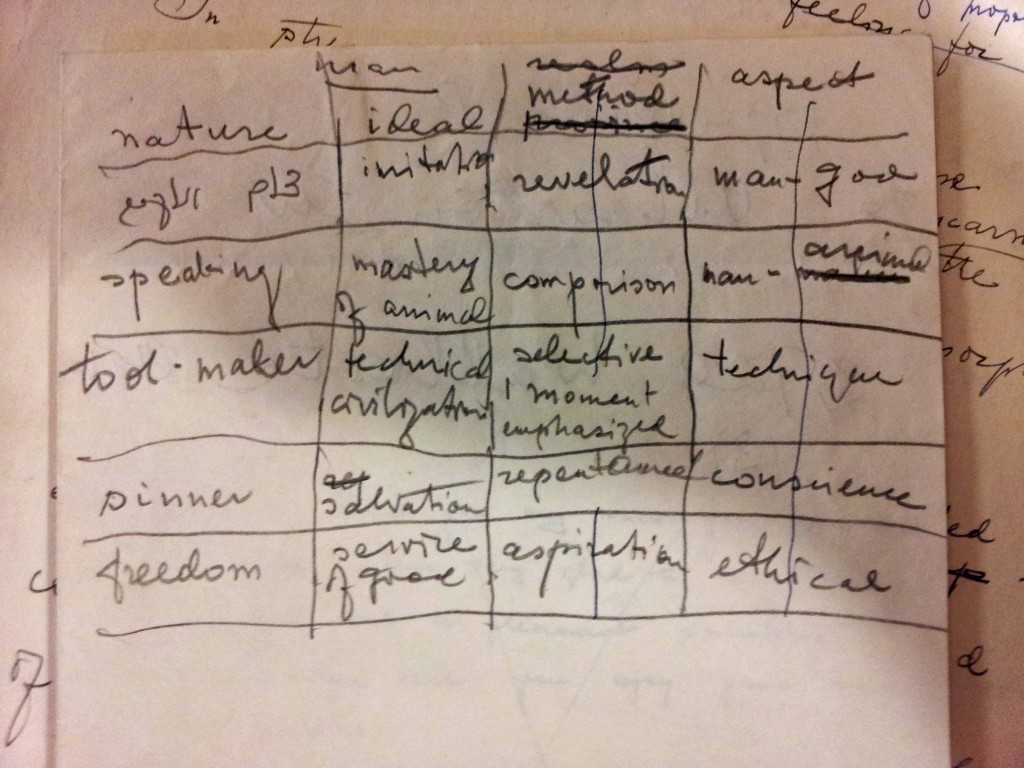
Capture 2On the reverse side is a draft letter Heschel wrote in 1941, about a year after he arrived in the United States. He asks the recipient of the letter about the availability of a room and if she knows of a place where he could “take one meal every day.” Heschel crossed the letter off and then reused it for other purposes.

Capture 3Stayed tuned for more Heschel Highlights in the near future!

Post contributed by Mary Samouelian, Heschel Processing Archivist in Rubenstein Technical Services.

My Rubenstein Library: Mary Ziegler on The Abortion Wars

With generous assistance from a 2013 Mary Lily Research Grant, I visited the Sallie Bingham Center for Women’s History and Culture last summer to do research for an article and for my book, now under contract with Harvard University Press, The Lost History of the Abortion Debate.

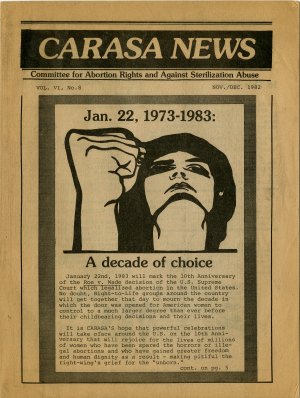
CARASA001resizedThe Bingham Center offers researchers access to many forgotten voices from the abortion wars, from pioneering feminists to founding members of the women’s health movement. I focused on materials documenting the policies and struggles of abortion providers in the years after Roe v. Wade. My search uncovered documents chronicling the work of individual clinics and the activities of political organizations, like the National Coalition of Abortion Providers, that lobby for those working in clinics. These documents revealed a complex legal discourse forged by lay actors—women, clinic staff, providers and activists seeking to redefine what abortion rights meant. Non-lawyers routinely interpreted Supreme Court decisions, using them as raw material for new visions of reproductive freedom.

The story told by the documents housed at the Bingham Center differs substantially from the conventional narrative of post-1973 abortion politics. We often believe that the Supreme Court set the course for the abortion wars of future decades. In particular, by defining abortion as a privacy issue, the Court supposedly short-circuited popular debate about what abortion rights ought to mean. The materials I found complicated this narrative. Far from leaving constitutional issues to the courts, providers, patients, and political activists drew on judicial decisions in creating bold, new ideas about the rights women deserved. The documents I found at the Bingham Center provide indispensable evidence of the true impact of Roe, since the Bingham collections recapture the often-neglected voices of abortion providers. We stand to learn a great deal from studying these materials. I certainly did.

Post contributed by Mary Ziegler, an assistant professor of law at Florida State University College of Law.


Women in the Movement Part One: Reflections Unheard: Black Women in Civil Rights

Date: Thursday, September 26, 2013
Time: 5:30-8:00 p.m.
Location: FHI Garage, Bay 4, Smith Warehouse (directions & parking information)
Contact: John Gartrell, john.gartrell(at)duke.edu

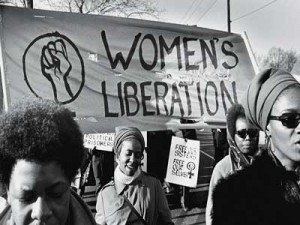
reflections_imageReflections Unheard: Black Women in Civil Rights focuses on black women activists and their marginalization within the Black Power and Feminist movements of the 1960s and 1970s. Filmmaker Nevline Nnaji looks at how each movement failed to fully recognize black women’s overlapping identities and include them as both African Americans and women. Through interviews and archival footage, Reflections Unheard tells the story of these black female activists’ political mobilization and fight for recognition.

The screening will be followed by a discussion with producer and director, Nevline Nnaji.

Part 1 of 2 in the Women in the Movement series is co-sponsored by John Hope Franklin Research Center, the Department of African & African American Studies, the Center for Documentary Studies, the Sallie Bingham Center for Women’s History and Culture, the Center for African and African American Research, the Franklin Humanities Institute, and the Program in Women’s Studies.


In the Lab: Whitmaniana

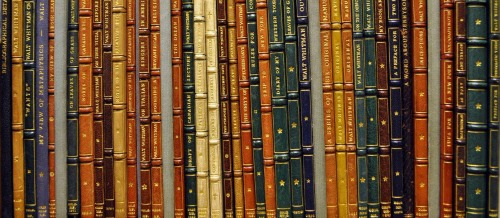
Recently our next-door neighbors in the Digital Production Center (DPC) had a large project digitizing volumes of Walt Whitman manuscript material from the Trent Collection of Whitmaniana. The digital images are headed for the online Walt Whitman Archive, in part for a digitized collection of Whitman’s marginalia, the notations that he made in and about books and articles he read.

Bound volumes of manuscripts in the Trent Collection of Whitmaniana.

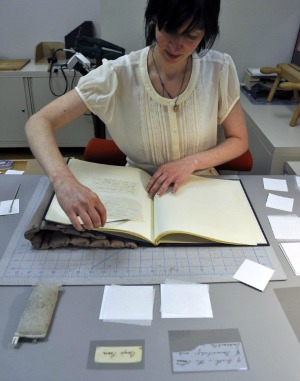
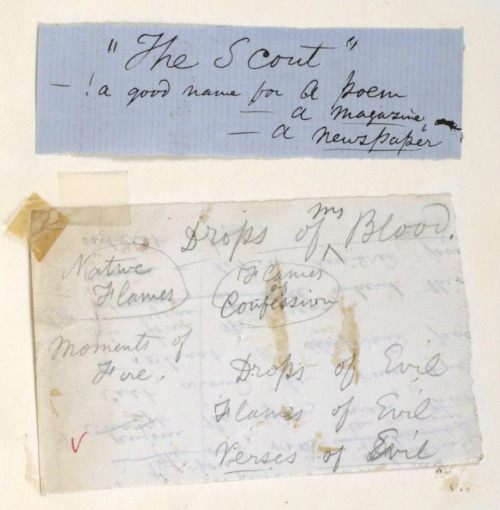
Many of the items were small paper scraps mounted in beautifully bound albums, but the manner in which each item was adhered to the page made it impossible to see what was on the back. Some of the manuscript notes had been damaged by readers trying to lift them, even if they were blank on the reverse. It was decided that conservation would remove the items from their pages to allow them to be digitized front and back, and then we would reattach them to the album pages in a safer manner.

ManuscriptScrapExample

Rachel Penniman working on one of the Trent Collection volumes.

I worked on this project with Rachel Penniman, the newest member of our conservation team, and I collaborated with Alex Marsh in DPC. For this project, Alex scanned 470 pages of material, many with multiple items glued to the pages. Will Hansen, Assistant Curator of Collections in the Rubenstein Library, identified 103 items in 21 albums or boxes to be lifted from their pages.

Rachel and I used moisture to soften the adhesive, being careful to avoid damage to any of the inks. A few items were found to be too risky for removal because of sensitive inks or insoluble adhesive, but for the most part we were successful.

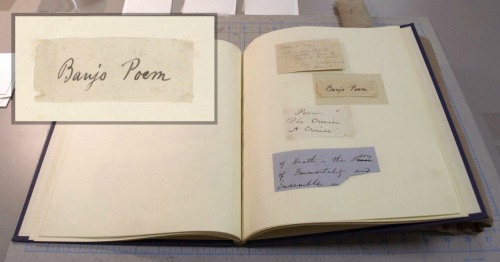
We enjoyed reading the items as we worked on them. Many appeared to be Whitman’s notes on themes for poems and little reminders to himself, some with drafts of lines and corrections, and others simply ideas with no elaboration. Our favorite said simply “Banjo poem.” (Did he ever write his proposed banjo poem?)

banjo page open After Alex digitized all the loose items in DPC, they came back to conservation to be reattached to their pages. Instead of adhering the items at the corners again, I hinged them with Japanese paper to allow them to be lifted safely by readers who want to see the backs.

hinge1

Post contributed by Grace White, Conservator for Special Collections, as part of our ongoing “In the Conservation Lab” series.


Rights! Camera! Action!: We Still Live Here / Âs Nutayuneân

Date: Thursday, September 19, 2013
Time: 7:00 p.m.
Location: FHI Garage, Bay 4, Smith Warehouse (directions & parking information)
Contact: Patrick Stawski, patrick.stawski(at)duke.edu

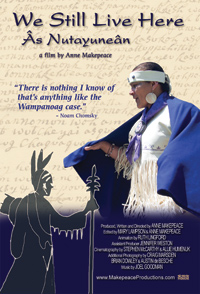
Poster for We Still Live HereWinner of the Full Frame Inspiration Award, We Still Live Here/ Âs Nutayuneân (TRT 56:00) tells the story of the revival of the language of the Wampanoag people of New England. All speakers of the language had died out when in 1994 Jessie Little Doe, a Wampanoag social worker, began to wonder if it could be recovered.

With M.I.T. linguist Ken Hale, with whom she earned a Master’s degree, she and other linguists pieced the language together from old documents and related Native American languages. Through community-wide efforts among the Aquinnah and Mashpee Wampanoag, the language is being spoken again, and Jessie’s young daughter is the first native speaker of Wampanoag in more than a hundred years.

The screening will be followed by a panel discussion featuring Dr. Liliana Paredes and Dr. Benjamin Frey.

Dr. Liliana Paredes is Associate Professor of the Practice of Spanish and Director of the Duke Spanish Language Program. She holds expertise in the areas of sociolinguistics, minority languages, and Amerindian languages.

Dr. Benjamin Frey is a Fellow in the Carolina Postdoctoral Program for Faculty Diversity at UNC. He completed his Ph.D. in Germanic linguistics at the University of Wisconsin – Madison in August 2013. His research examines language shift among minority communities in the United States from their traditional languages to English, with specific focus on German in Wisconsin and Cherokee in North Carolina. Frey is a member of the Eastern Band of Cherokee Indians.

Rights!Camera!Action is sponsored by the Archive of Documentary Arts and the Human Rights Archive in the Rubenstein Library, the Duke Human Rights Center @ FHI, and the Program in the Arts of the Moving Image.

Post contributed by Patrick Stawski, Human Rights Archivist.

Revisiting the Allen Building Takeover

In 2013, Duke University is commemorating the 50 year anniversary of its first black undergraduate students. Events, exhibits, and performances have been taking place over the year, and will culminate during the weekend of October 3-6.

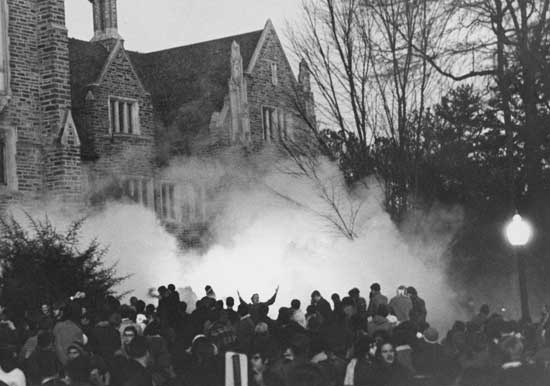
As we reflect on the milestone of integration, we must also consider the challenges faced by African American students at Duke, especially during the 1960s. This upcoming February will mark 45 years since the Allen Building Takeover of 1969. The Takeover was a seminal event in which nearly 100 black students occupied the administrative building for a day, demanding changes to a number of policies. After leaving peacefully, a crowd gathered outside the building confronted police, and teargas was fired on the crowd.

Allen Building Takeover, 1969

A new exhibit on the Takeover, curated by Caitlin M. Johnson, Trinity ’12, is now on display on the first floor of the Allen Building. Thirty panels describe the build-up to the protest, the events of that day, and the outcome of the Takeover. Featuring many images from the University Archives and the Durham Morning Herald and Durham Sun, Johnson’s exhibit forms a powerful narrative about Duke’s path toward real integration.

An opening reception for the exhibit will be held on Thursday, September 12 from 3:30 to 5:00 p.m. in the Allen Building.

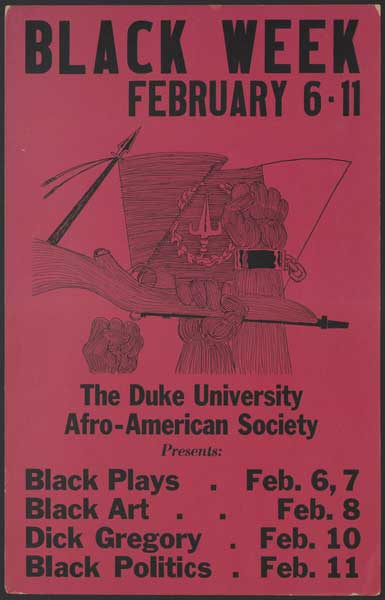
At 6:00 p.m. that evening, Dr. Jack Preiss, Professor Emeritus at Duke, will be speaking at the School of Nursing about desegregation at the University. Dr. Preiss was intimately involved in encouraging the Board of Trustees to change its policies on admissions. The University Archives holds a collection of his papers, including this poster from Black Week, which immediately preceded the Allen Building Takeover.

Black Week Poster, 1969

Email sharon.caple@duke.edu to RSVP for the Sept. 12 exhibit reception or the talk by Dr. Preiss.

Post contributed by Val Gillispie, University Archivist.

Transforming Knowledge: A Reading with Dr. Jean Fox O’Barr

Date: Tuesday, September 17, 2013
Time: 6:00 p.m.
Location: Thomas Room, Lilly Library, Duke University East Campus (directions to Lilly Library)
Contact Information: Kelly Wooten, kelly.wooten(at)duke.edu

Jean Fox O'Barr Dr. Jean Fox O’Barr will read from her new book, Transforming Knowledge: Public Talks on Women’s Studies, 1976-2011. This collection chronicles her personal journey, which unfolded alongside the women’s movement and the evolution of Women’s Studies. Now retired, Dr. O’Barr founded and led the Duke University Women’s Studies Program for two decades. Her records are preserved at the Sallie Bingham Center.

Read more about this book or order online from She Writes Press.  This event, which is free and open to the public, is co-sponsored by the Sallie Bingham Center for Women’s History and Culture at Duke University Libraries and the Resource Center for Women and Ministry in the South.

RSVP for this event (optional).

Post contributed by Kelly Wooten, Research Services and Collection Development Librarian for the Bingham Center.

Dispatches from the David M. Rubenstein Rare Book and Manuscript Library at Duke University