Post contributed by Kelly Wooten, Laura Micham, and Laurin Penland.
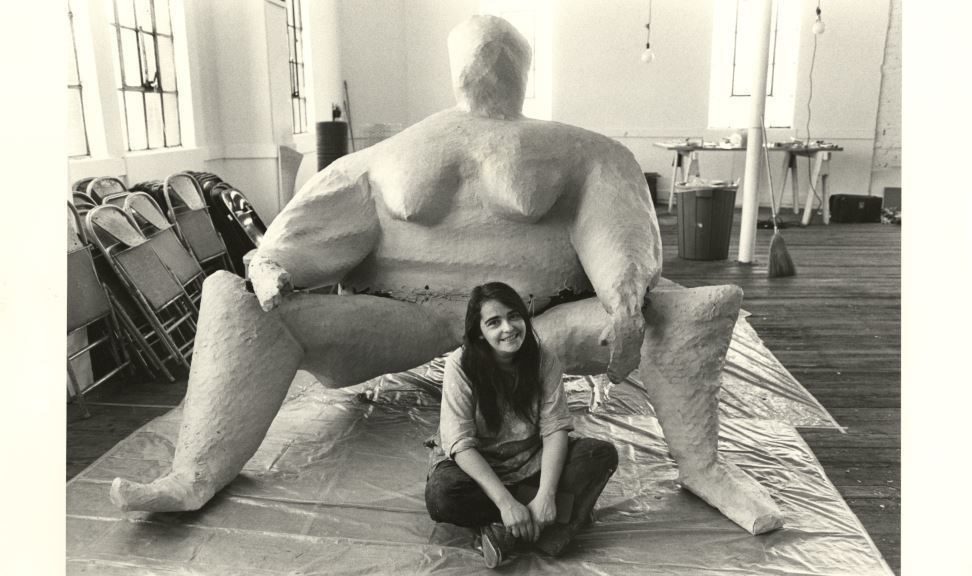
Kate Millett at the Los Angeles Women’s Center, 1977, photographed by Michiko Matsumoto. Kate Millett papers
We were saddened to learn of Kate Millett’s passing on September 6, 2017. As many people have been writing and speaking about her legacy, we realized we are not alone in trying to grapple with the significance of her contributions to the feminist movement, to the creation of feminist theory, to the art world, to writing, to LGBTQ activism, to advocacy for mental health reform, and to many, many other realms. Here at the Rubenstein Library, her papers have been at the heart of the Bingham Center’s collections since 2000, and have inspired much scholarship, enhancing our understanding of the world.
The Kate Millett papers in the Sallie Bingham Center provide rich documentation of Millett’s activities as a feminist activist, artist, and author. These materials reflect the intensely personal nature of much of Millett’s work and the frequent fusion of her personal, political, and professional interests. Materials in the collection also cover feminism and the social conditions for women around the globe, especially in France, Italy, and the Middle East—most notably Iran, where Millett traveled in the seventies.
Brochure for Women’s Liberation Cinema Company film, Three Lives, directed by Kate Millett, 1971. Kate Millett papers
Many researchers have been moved by their encounters with the writings and artwork of Kate Millett in her papers. Dr. Michelle Moravec, Associate Professor of American History and Women & Gender Studies at Rosemont College, writes:
“Working in a person’s archived papers is always an intensely intimate experience, but in Millett’s case the resonances are amplified by the emotional reactions she left scrawled across her papers. ‘Ridiculous!’ she pronounced in a scrawling red hand, across a tedious letter regarding a speaking engagement. ‘That awful Barnard thing goes on’ she sniffed in response to a request to publish her presentation from the Scholar and the Feminist Conference IX: Towards a Politics of Sexuality. Interspersed are flashes of Millett’s intellectual process, dashed off notes for one of her many lectures proclaims ‘We now have to dare everything… Writing our lives… Break every taboo.’ Long handwritten letters attest to her poignant longing to create an artistic community at The Farm, an art colony she created, the economic struggles all too familiar to female artists and writers who did not become academics, and her engagement with deeply difficult material including sexual abuse and torture.”
Born in 1934 in St. Paul, Minnesota, Kate Millett was an internationally acclaimed artist, writer, and activist. A founding member of the Noho Gallery in New York City, Millet created the Women’s Art Colony Farm in Poughkeepsie, NY in 1978, and had shown her work internationally since 1963. She was known for her sculpture and installation works in addition to pen and ink drawings both abstract and figurative. Millet’s Columbia University Ph.D. dissertation, Sexual Politics (1970), placed her at the forefront of the women’s movement. Her other political works include The Prostitution Papers (1973), The Basement (1979), Going to Iran (1979) and The Politics of Cruelty: An Essay on the Literature of Political Imprisonment (1994). Millett also wrote a series of memoirs that combine deeply felt personal revelation with trenchant political analysis. These include Flying (1974) about her early years, Sita (1977) and Elegy for Sita (1979) the story of a tragic romantic relationship, The Loony Bin Trip (1990) Millett’s exposé of the mental health system, A.D., A Memoir (1995) in which she reflects on her early life, and Mother Millett (2002) a meditation on her upbringing in middle America and her experience as an activist and then outcast from the movements she helped to form and lead.
In these books Millett gave her readers the analytical tools and inspiration for making a revolution. Her words, such as these from Sexual Politics, will continue to resonate, “For to actually change the quality of life is to transform personality, and this cannot be done without freeing humanity from the tyranny of sexual-social category and conformity to sexual stereotype—as well as abolishing racial caste and economic class.”
Pen and ink drawing, ca. 1978. Kate Millett Papers
Many moving tributes have been published in newspapers, on websites, and on social media such as this one by Gloria Steinem on Facebook: “As Andrea Dworkin said, ‘The world was asleep, but Kate Millett woke it up.’ Sexual Politics—and all Kate’s work—will keep us Woke.” The impact of Kate Millett’s life and work cannot be overstated.
Post contributed by Jonathan Johnson, Associate Professor in the Department of Art at Otterbein University, a recipient of a 2017 Marshall T. Meyer Research Travel Grant.
It was my pleasure to spend a week in the David M. Rubenstein Rare Book & Manuscript Library this summer engaging with photographs, documents and videos from Duke’s Human Rights Archive. I am in the pre-production phase of an experimental documentary film project that centers around the informal storytelling sessions between recent Southeast Asian immigrants that took place in my mother’s beauty shop in the 80’s and 90’s in St. Paul, Minnesota.
International Monitor Institute records, 1990-2003. Volume/Box:PH3
I was particularly interested in photographic prints from the International Monitor Institute Records (IMI) that documented human rights abuses in Southeast Asia, particularly in Burma (Myanmar). Many of these photographs were taken near the Thai border in refugee camps and temporary outposts of various branches of the Karen National Union that oppose the Burmese government. I intend to use these materials as aids to oral history interviews that I am conducting with my mother and others in this community that formed around her beauty shop.
International Monitor Institute records, 1990-2003. Volume/Box:PH3
As an artist that uses archives and primary source material (and also creates them), I start with a concept but remain open to the labyrinth experience that often occurs in the archive. For instance, when the random sequencing of photographic prints in an archival folder creates an unintended narrative through formal relationships (color, line, texture) and metaphor. In one case, the grid-like charred remains from a recently torched resistance army camp follows a wide landscape photo shot from a helicopter. The sense of scale and context meld into one another, the vast beautiful jungle landscape absorbing the physical and psychological terror of this conflict. As I storyboard my documentary, I am now thinking about how competing senses of scale and vantage point might stand in as visual representations of the fragmented reflections and narratives that are contained in the oral history interviews that I’m making.
This is just one of many examples of when creative research, chance and intuition intersected during my time in the Rubenstein Library. For an artist, this is the most rewarding experience of working in the archive.
Post contributed by Paula Jeannet Mangiafico, Visual Materials Processing Archivist
There are many music-related collections in the Rubenstein Library, but the Gilmore Ward Bryant papers are special to the history of Durham, North Carolina. This small collection of diaries, photographs, school records, and sheet music documents a time when turn-of-the-century citizens held cultural aspirations that included unleashing the terpsichorean muse on Durham—hoping perhaps that arpeggios and arias would temper the roughness of the tobacco town (population 18,241 in 1910).
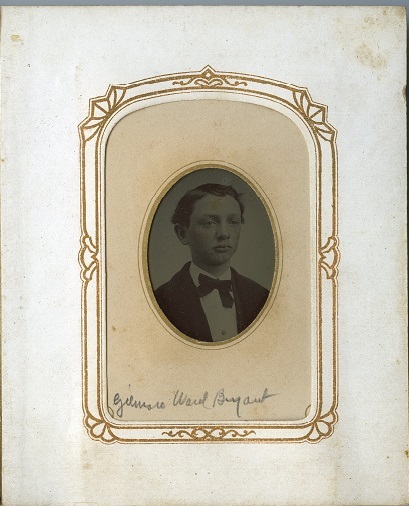
Enter Gilmore Ward Bryant, born in 1859 and raised in Bethel, Vermont.
Gilmore W. Bryant, circa 1870, from the Gilmore Ward Bryant papers
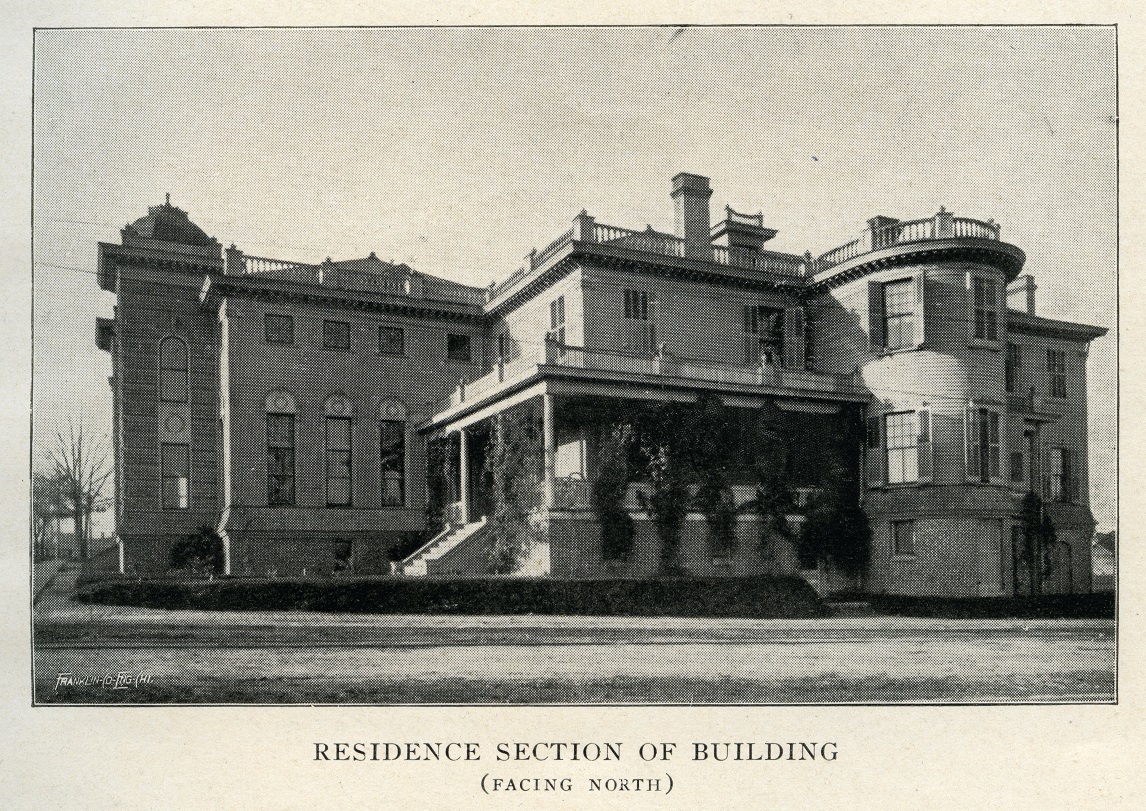
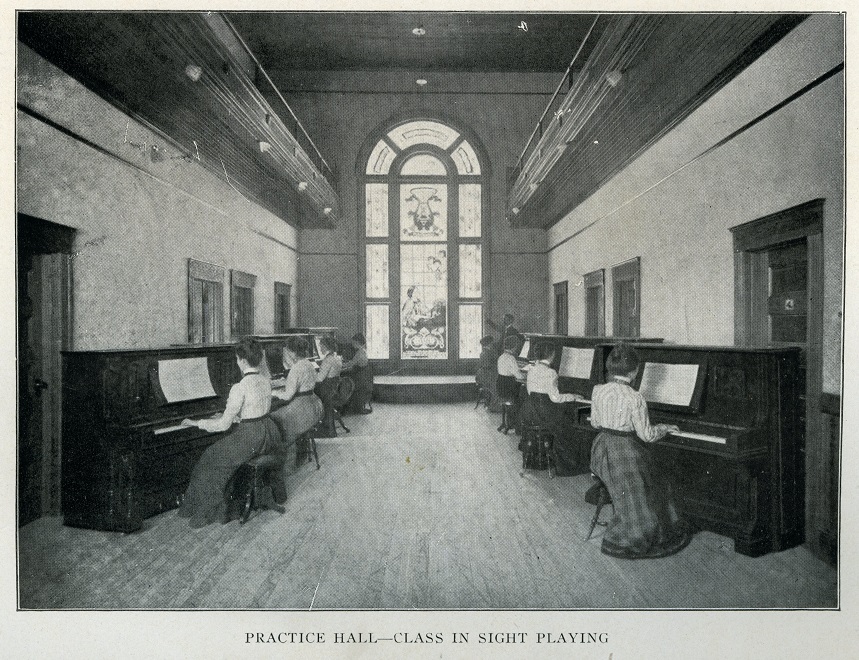
After a successful musical career in New England and Virginia, he was reportedly lured to the Southern upstart town of Durham by the Duke family, who financed the design and construction for what was to become the Southern Conservatory of Music. Finished in 1898, the grand Italianate-style building stood on the corner of Main and Duke Street, across from the Liggett Myers Building, on land that today belongs to the Brightleaf Square parking lot.
Here is a view of the Conservatory. This is what you would have seen if you stood at Toreros Mexican restaurant and looked across the street:
Conservatory Calendar, 1920-1921, Gilmore Ward Bryant papers
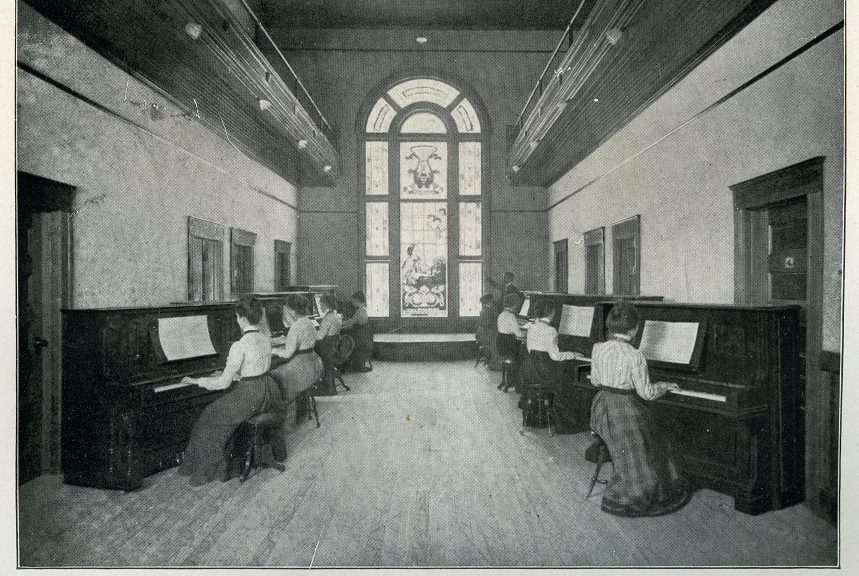
Its auditorium, practice rooms, and parlors were classically grand in scale—the reverberations must have been amazing, to say the least:
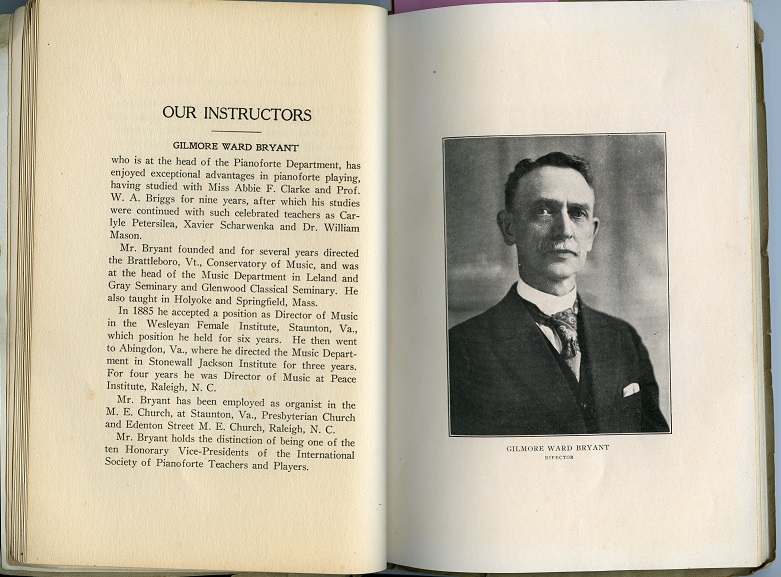
Conservatory Calendar, 1920-1921, Gilmore Ward Bryant papersGilmore Ward Bryant, circa 1920, Conservatory Calendar, 1920-1921
“G.W.” Bryant served as Director of the Conservatory, and along with his partner and wife, Mattie Emily Bullard Bryant, the head of the Voice Department (his daughter-in-law also taught piano), kept the undoubtedly expensive venture thriving for many decades. The school was a huge success, hosting large concerts, alumni dinners, and recitals several times a year.
Bryant was also a composer, penning scores as early as 1895 and continuing into the 1930s. He wrote and published many pieces, including a “Tiny Waltz” and another piece entitled “Topsy Turvy.”
Sheet Music Series, Gilmore Bryant papersSheet Music Series, Gilmore Ward Bryant papers
Eventually, perhaps due to a familiar pattern of rising downtown rents, the Bryants laid the cornerstone for a new Conservatory on South Alston Avenue, then open countryside, in summer 1923, and the old Conservatory was demolished in 1924. Bryant’s wife writes in her 1923 diary on December 31: “Went up & thru the old Conservatory— was terrible—nearly dropped to pieces.”
Today Durham hosts several music schools, but the era of grand edifices and classical conservatory training has yet to return. In the meantime, we applaud the Bryants’ vision for and dedication to their adopted Southern hometown. Luckily, some of the Conservatory’s records and the Bryant family’s personal papers and photographs have been preserved for researchers at the Durham County Library and the David M. Rubenstein Rare Book & Manuscripts Library. You can see the inventory for the Rubenstein collection here:
Contributed by Alice Poffinberger, Library Specialist.
The materials in the Lisa Unger Baskin collection celebrate more than five centuries of women’s work. One of the highlights of describing and cataloging these collections is the remarkable talent that is often showcased by these women.
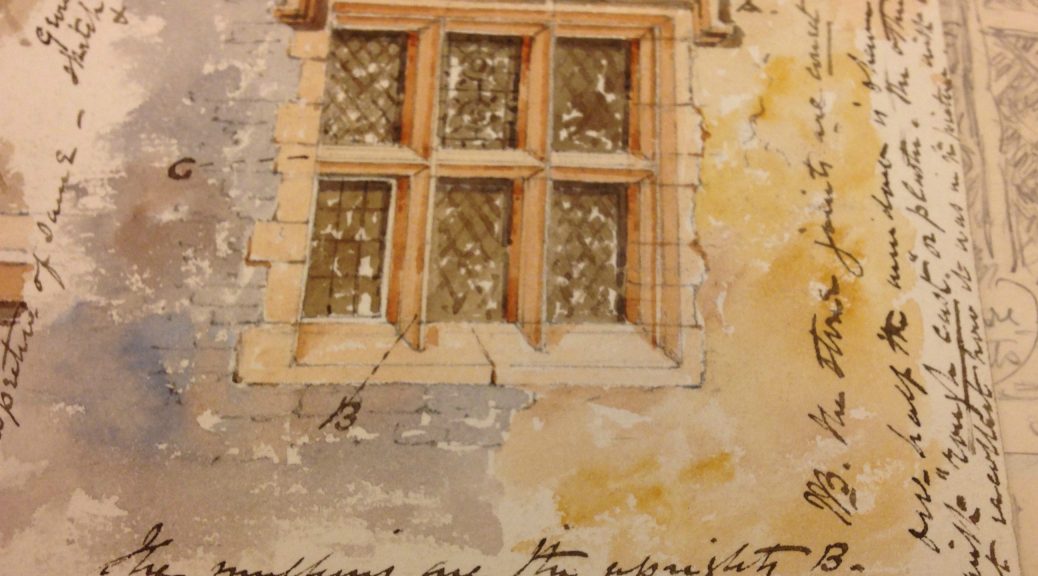
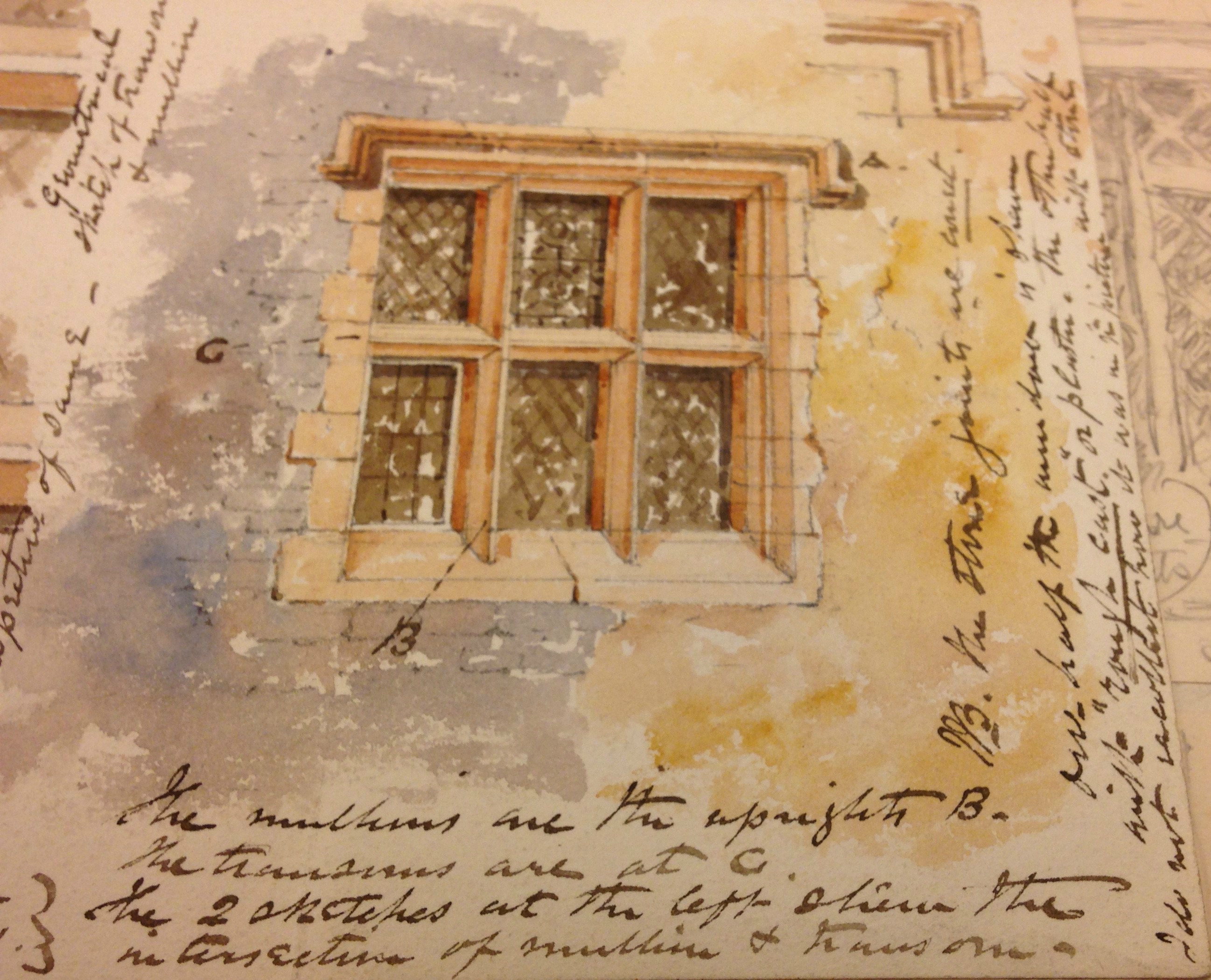
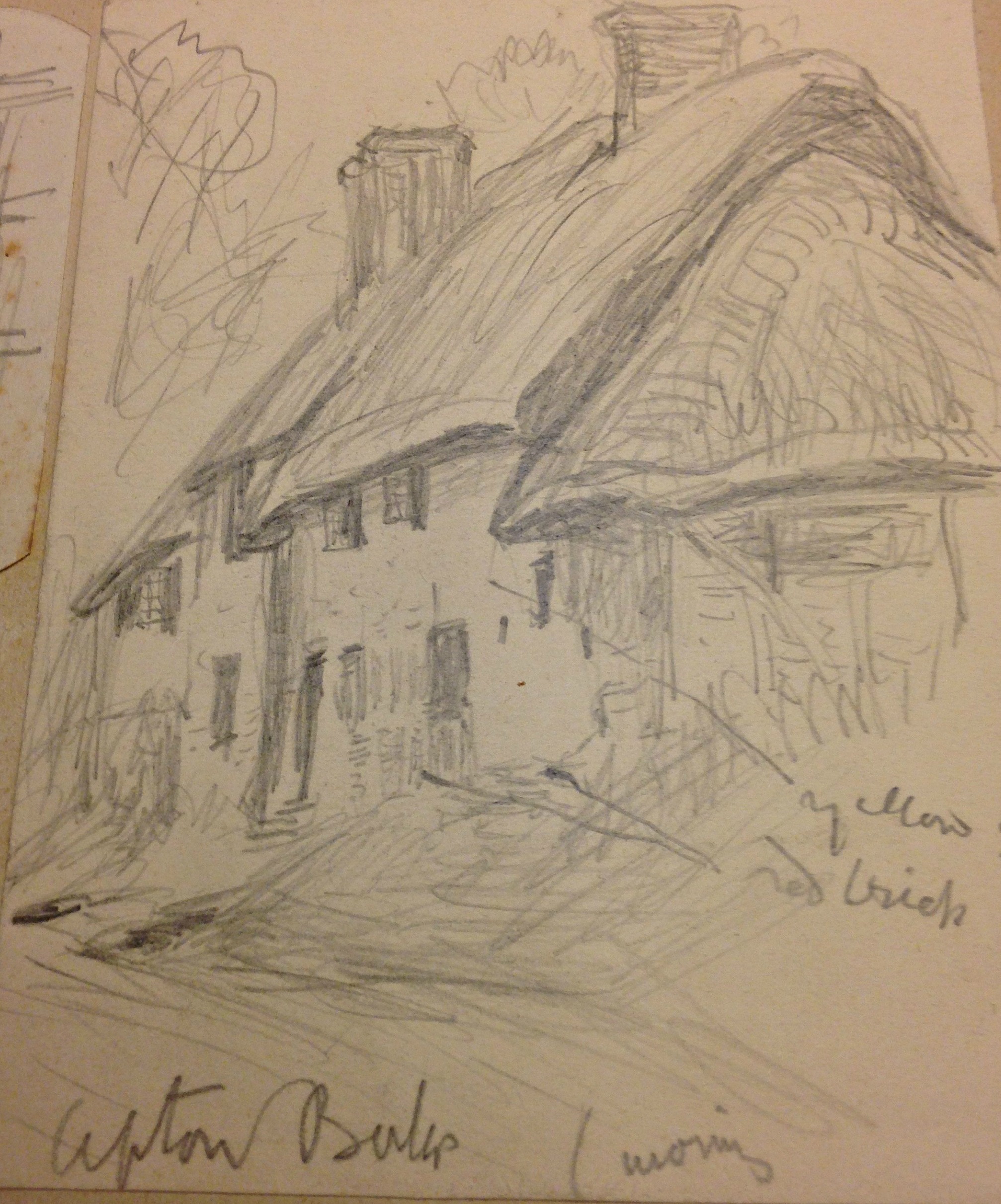
Helen Allingham, born near Derbyshire, England in 1848, studied at the Birmingham School of Design and the Royal Academy School in London. In fact, she was the niece of the first female student at the Royal Academy School, Laura Herford. Allingham began her career as an illustrator, but eventually became well known for her watercolors, usually of cottages. Her renderings often showed so much detail that they have been studied by architects interested in the construction of these buildings.
Following her studies, she supported her widowed mother with her work as an illustrator for publications like The Graphic. She was a founding staff member of the newspaper, and the only woman on staff. Her other work includes the original illustrations for Thomas Harding’s novel Far from the Madding Crowd.
She married William Allingham, an Irish poet and editor, in 1874. After their marriage, Helen shifted her career focus to watercolor painting. Her work was widely praised by the art community in London. She had paintings accepted at the Royal Academy Summer Exhibition, and was eventually the first woman granted full membership to the Royal Watercolour Society. After the family’s move to Surrey in the early 1880s, Allingham began painting the cottages for which she is best known.
The collection includes sketches and drawings made in graphite, watercolor, and pen and ink, dating from 1868-1916.
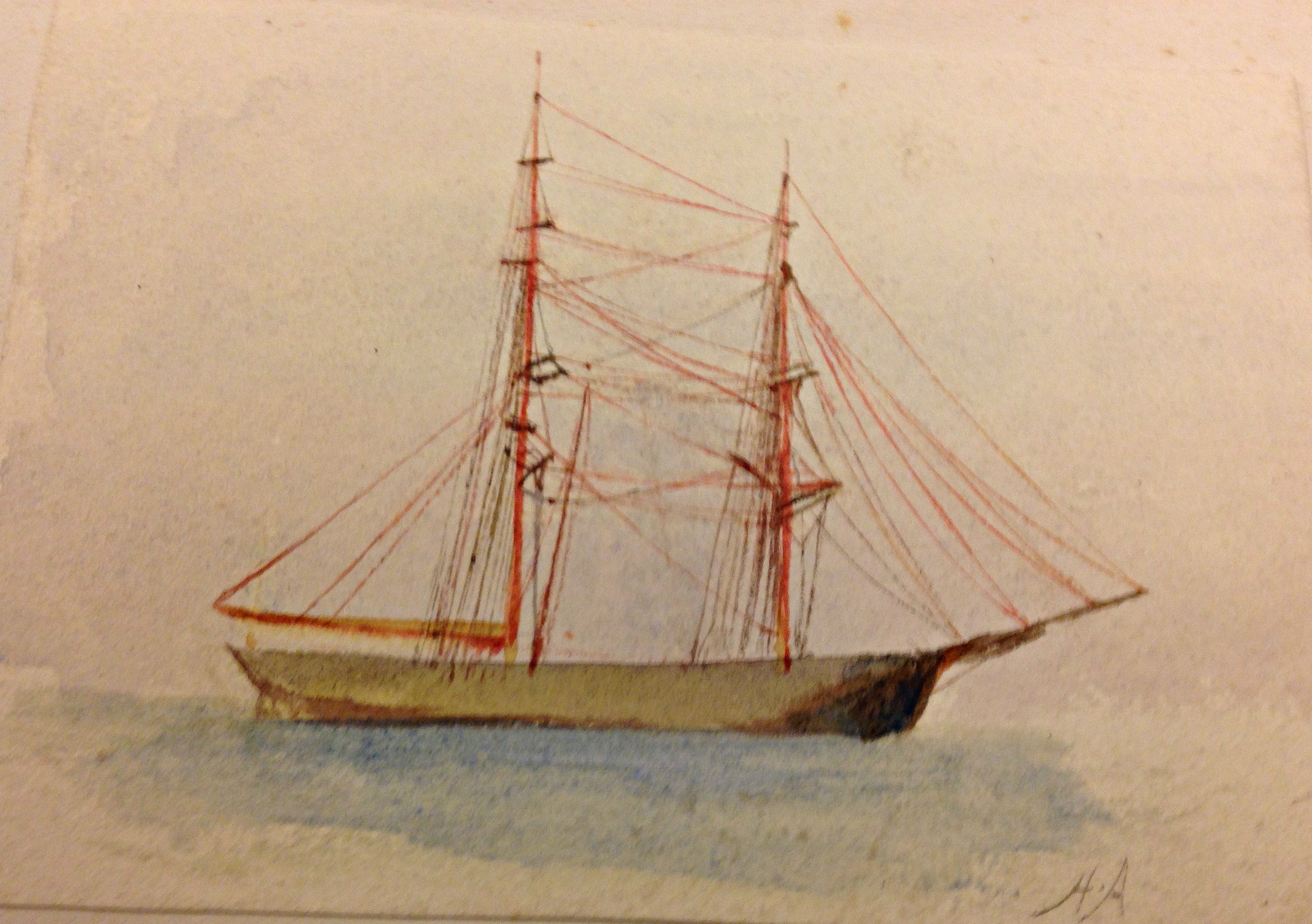
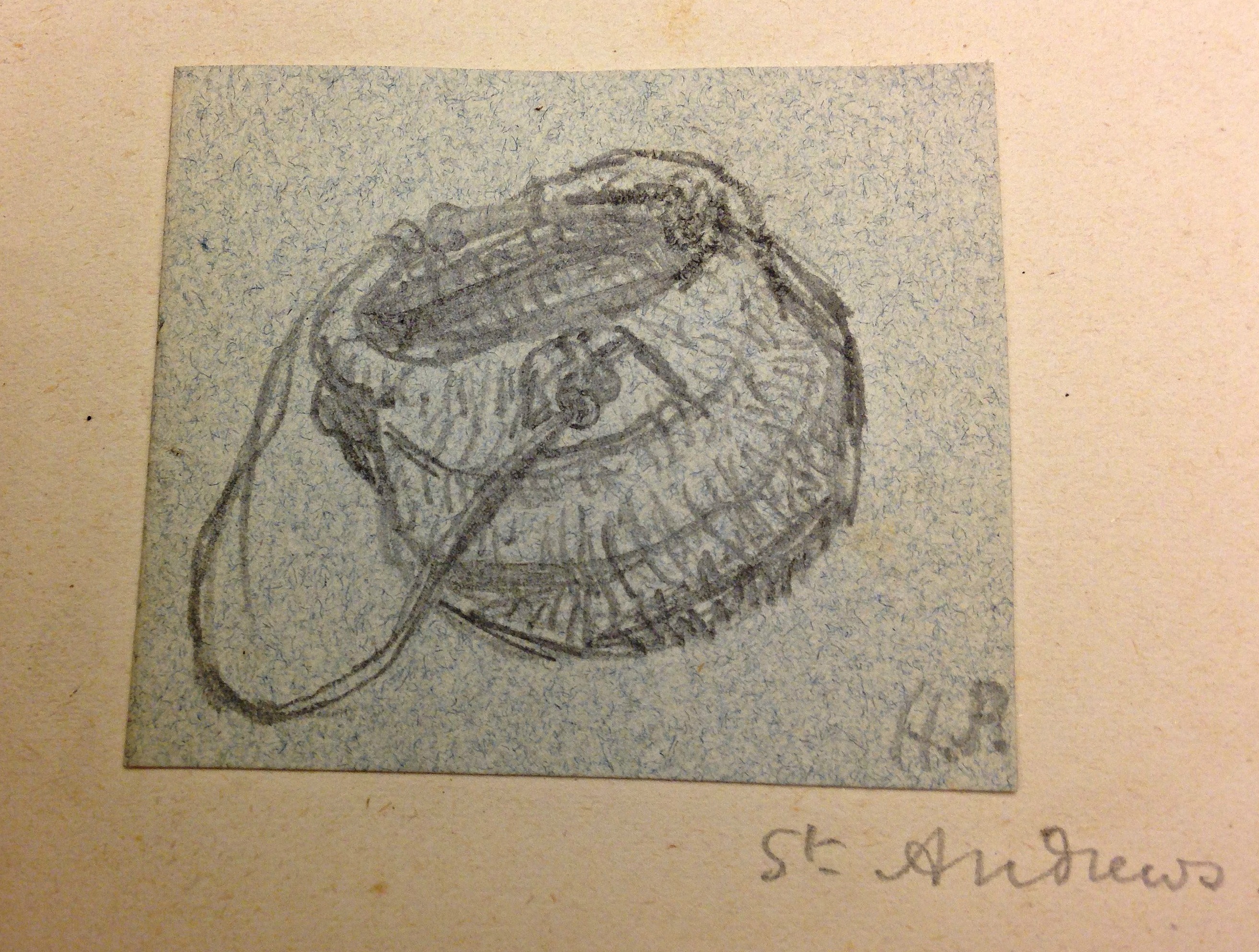
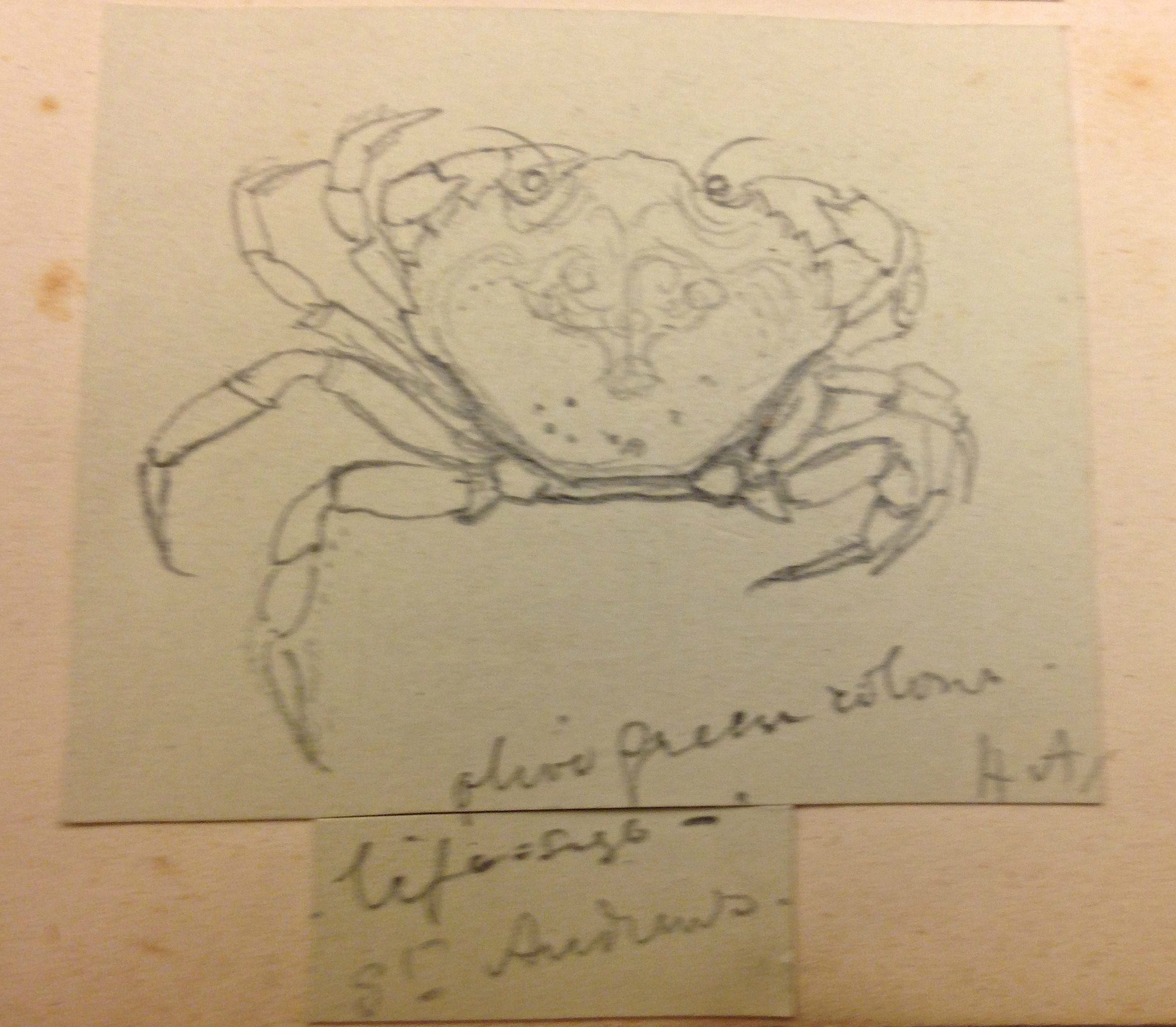
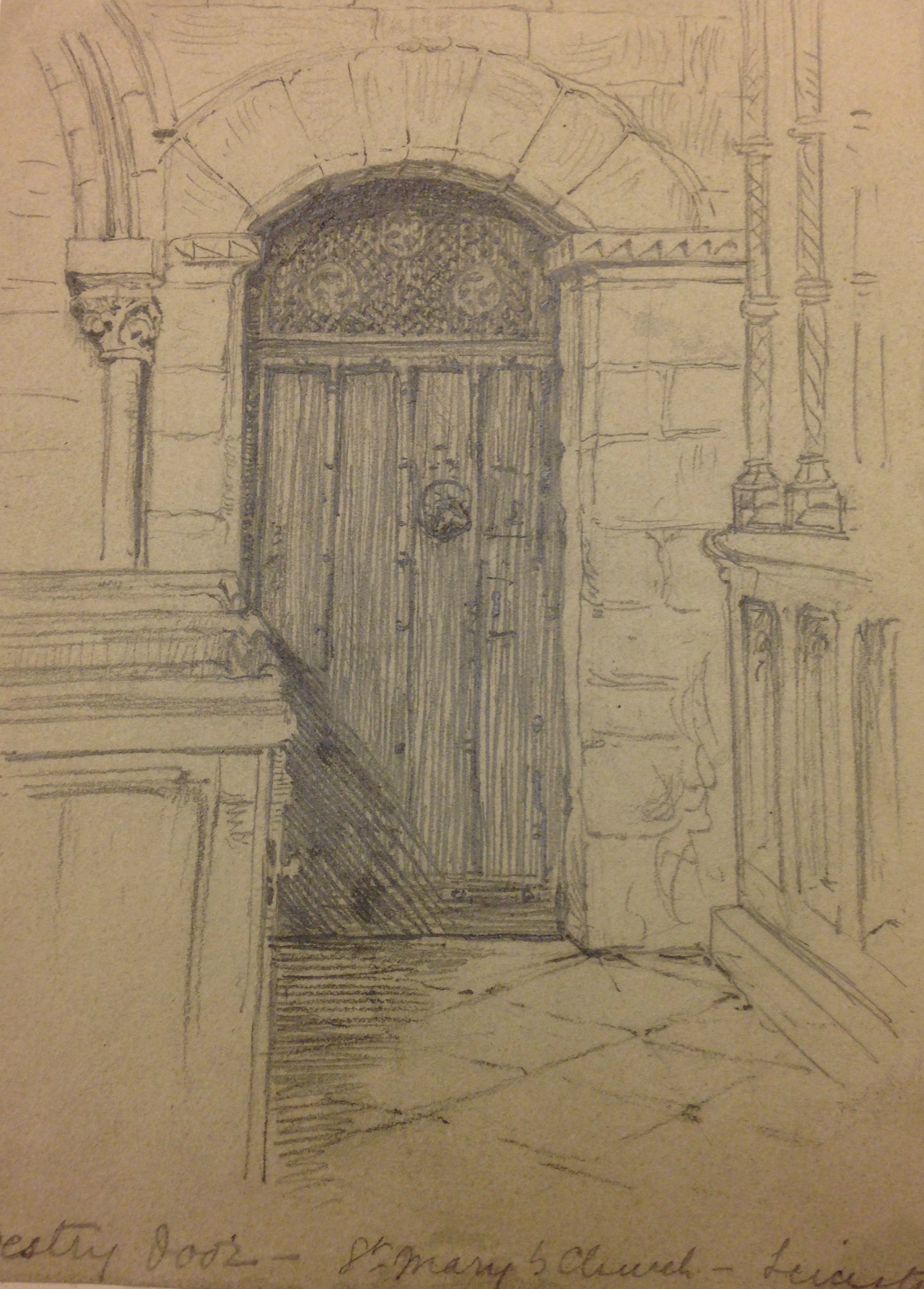
Subjects in the scrapbooks from the LUB collection are varied, and include English cottages and buildings, architectural features, sailboats and coastal scenes, figures, landscapes, and botanical items. Essentially, Allingham drew or painted anything that she came across during her travels, from a simple pile of rope to a vestry door. Many of the images are only about two inches wide.
Detail of window, with Allingham’s notes on construction.Upton Bales[?] cottage, in graphite.Pile of rope found in Lymm, England, in 1874, graphite.Sailing vessel in watercolor.Fishing basket in St. Andrews, England, graphite.Crab found in St. Andrews, England, graphite.Vestry door at St. Mary’s Church, Leicester, England, graphite.
Stop by and spend some time with these scrapbooks!
Among the 20,000 books and 4,000 manuscripts that together comprise the History of Medicine Collections at Duke’s David M. Rubenstein Rare Book and Manuscript Library—not to mention the collection’s hundreds of medical instruments and artifacts—is a large, leather-bound account ledger in folio kept by Hugh Mercer, an apothecary in Fredericksburg, Virginia, from 1771 to 1775.
Born in Aberdeen, Scotland, in 1725, Mercer went on to study medicine at Marischal College, graduating in 1744 before taking up a post as an assistant surgeon in the army of Charles Edward Stuart, better known as Bonnie Prince Charlie.
With the Scots’ defeat at Culloden in 1746, Mercer fled to America, arriving in Philadelphia in 1747. Mercer settled in what is now Mercersburg, Pennsylvania, where he practiced medicine for eight years. During the Seven Years’ War, Mercer served in the British army, where he met and befriended Colonel George Washington. Following his service, Mercer resettled in Fredericksburg, Virginia, a decision no doubt influenced by Washington.
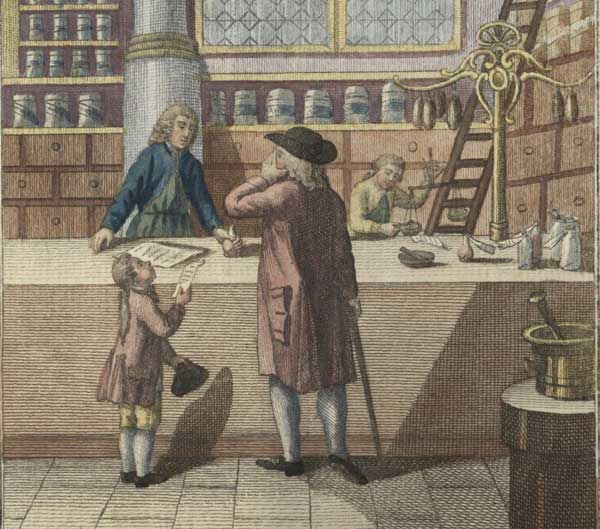
It was in Fredericksburg that Mercer, along with his business partner and fellow physician Ewen Clements, opened his apothecary shop. On May 28, 1771, in the Virginia Gazette, Mercer and Clements, “partners in the practice of physic and surgery,” announced that they had “opened a shop on the main street, opposite to Mr. Henry Mitchell’s store, furnished with a large assortment of drugs and medicines of the best quality, just imported from London; where Gentlemen of the profession and others may be supplied at easy rates, for ready money.” Together, Mercer and Clements compounded and dispensed medicines, diagnosed patients’ disorders, and prescribed and administered treatments.
The ledger kept by Mercer, which documents the history of his practice from 1771 to 1775, is a microcosm of the social and intellectual worlds of eighteenth-century Virginia. It contains entries for more than three hundred different accounts. Below each entry, Mercer meticulously documented his visits with patients, the medicines he dispensed, the treatments he prescribed, as well as the fees he charged.
An entry in Mercer’s ledger for the account of Colonel Fielding Lewis, a Fredericksburg merchant and George Washington’s brother-in-law. Click image to enlarge.
Among Mercer’s many patients were Mary Ball Washington, George Washington’s mother; Betty Washington Lewis, George Washington’s sister, and her husband Colonel Fielding Lewis; Thomas Ludwell Lee; John, Henry, and William Fitzhugh; and Mann Page. Mercer often noted the occupations of his patients, who ranged from merchants, planters, and gentlemen to tradesmen, schoolmasters, undertakers, and stage players. A number of women, many of them widows, kept their own accounts with Mercer. Also among Mercer’s patients were the enslaved men, women, and children whose visits were charged to their masters’ accounts.
Mercer kept a running index in the back of the ledger for each of his accounts. Click image to enlarge.
Mercer offered a range of treatments and services to his patients, from bleeding, purging, and pulling teeth to blistering, vomiting, and setting broken bones. He likewise dispensed a variety of compounds and medicines. These included saline mixtures, purging pills, febrifuge drops, liquid laudanum, balsam honey, magnesia, glauber salts, and stomach elixirs. In keeping with the medical science of his day, Mercer’s treatments were aimed at restoring the delicate balance of his patients’ four humors—black bile, yellow bile, phlegm, and blood—and ensuring equilibrium among the body’s solids and fluids.
In all, Hugh Mercer’s ledger offers a unique window into the prevailing medical beliefs and practices of eighteenth-century Virginia society and represents only a sample of the Rubenstein Library’s rich collection in the history of medicine.
Post contributed by David Pavelich, Head of Research Services.
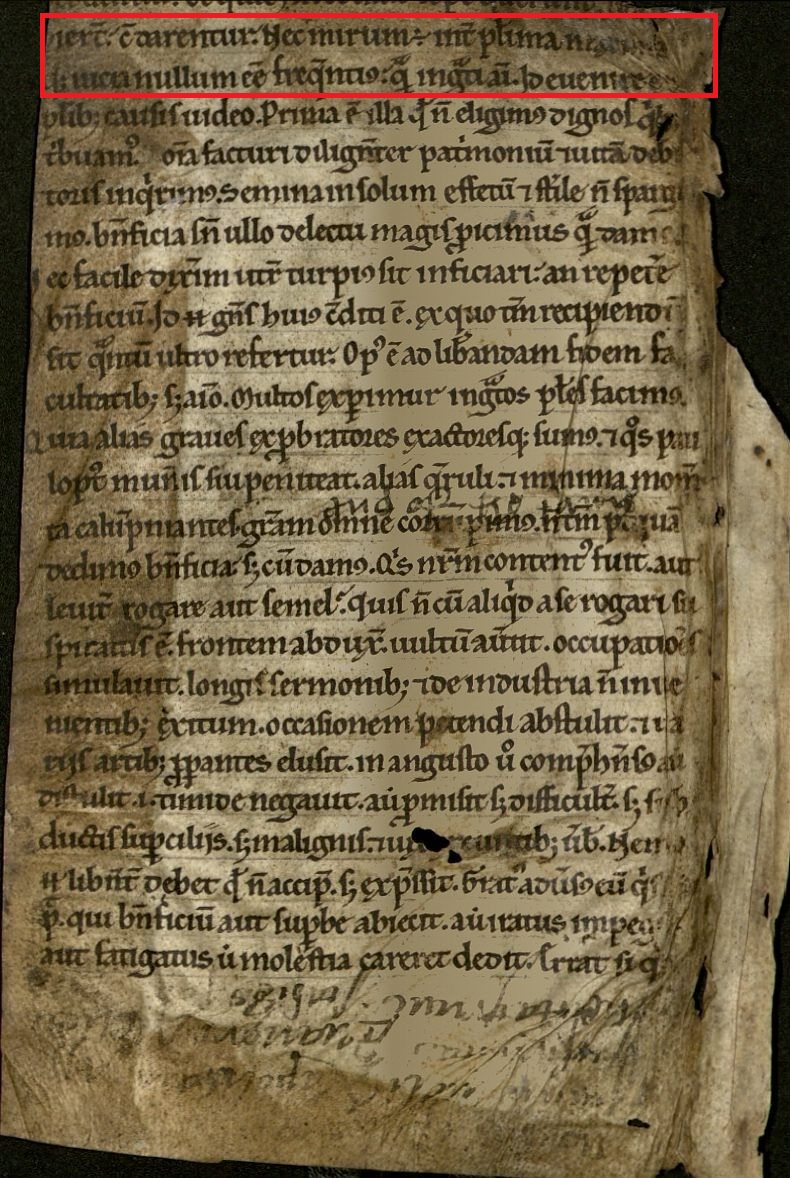
The Rubenstein Library’s Latin Manuscript 159 includes fragments of two well-known texts by Seneca the Younger (or Lucius Annaeus Seneca, 4 BCE – 65 CE), the Roman Stoic philosopher, as well as an epitaph for Seneca. This modest manuscript is comprised of only two small leaves of vellum, apparently separated from a florilegium (a medieval compilation of writings assembled by a scholar). A mid-12th century manuscript, it likely derives from Northern France. Duke University acquired it in 1995.
Latin MS 159 is an exciting piece, even though these surviving bits don’t include a single complete text by Seneca. Among the texts included, however, are the majority of letter 79 from Seneca’s Epistulae ad Lucilium (Letters to Lucilius) and the opening of his De Beneficiis (On Benefits). Letter 79 has been described by scholars as a discourse on scientific discovery. In it, Seneca asks his correspondent Lucilius to climb Aetna (Mount Etna) in Sicily to make first-hand observations, and to write something from his impressions. Climbing a volcano is no easy thing, but Seneca is crafty in his shaming: “Now if Aetna does not make your mouth water, I am mistaken in you” (“Aut ego te non novi aut Aetna tibi salivam movet”).*
Epistulae ad Lucilium 79: 7: “Now if Aetna does not make your mouth water, I am mistaken in you” (“Aut ego te non novi aut Aetna tibi salivam movet”).
The recto of the second surviving leaf contains the opening of De Beneficiis (On Benefits or On Gifts and Services). This work concerns the giving and receiving of benefits, but also how to express gratitude appropriately. For this Stoic, ingratitude is pervasive in humanity: “Nor is it surprising that among all our many and great vices, none is so common as ingratitude” (“Nec mirum est inter plurima maximaque vitia nullum esse frequentius quam ingrati animi”).
De Beneficiis 1:2: “Nor is it surprising that among all our many and great vices, none is so common as ingratitude” (“Nec mirum est inter plurima maximaque vitia nullum esse frequentius quam ingrati animi”).
We’re fortunate (and grateful, Seneca!) to have this manuscript, which has a family relationship with two other pieces in our collection. Seneca was the uncle of the poet Lucan, and the Rubenstein Library has two important Lucan manuscripts in our collection, Latin 118 and Latin 125. These manuscripts – along with our many other early manuscripts – are invaluable for teaching and research. Contact us for more information about our early manuscript collection!
“Why all this noise and all this furor for a man two years dead? Why all these mobilizations throughout the country?” With these words, Michèle Montas began her April 2002 editorial on the second anniversary of the assassination of her husband, Radio Haiti-Inter director Jean Dominique, and station employee Jean-Claude Louissaint. “Why Jean Dominique? This question has been asked for several weeks, in the background of the mobilizations around the second anniversary of the assassination of the journalist Jean Dominique. It is asked in whispers, but the admiring or, for some, incredulous sotto voce at times grows annoyed and strident among those who do not understand that this dead man refuses to die. That a murder perpetrated two years ago, now, continues to make news. Why Jean Dominique?”
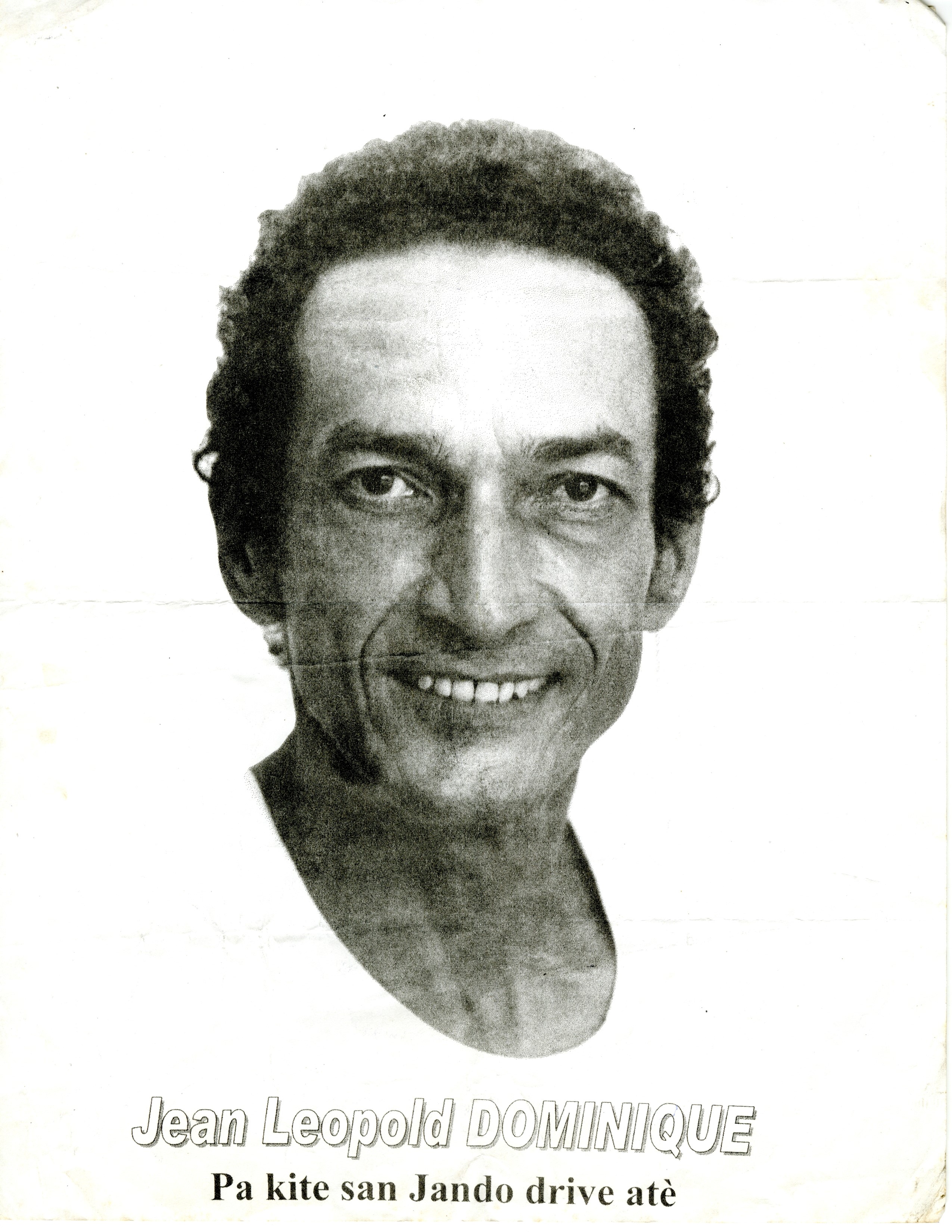
On April 3, 2002, the grassroots human rights group Fondation 30 Septembre poured red paint before the gate of the Ministry of Justice (which leader Lovinsky Pierre-Antoine referred to sardonically as the “Ministry of Injustice”) and displayed an effigy of the slain journalist. The slogan was “Pa kite san Jando drive atè.” “Don’t let Jean Do’s blood pool on the ground.” Two years after the murders, people were angry and frustrated that the judicial process had stalled. Now, sixteen years on, Jean Dominique and Jean-Claude Louissaint have still not found justice. The Jean Dominique case, like so many attempts to combat injustice in Haiti, has been filled with absurdity, a tragicomedy of errors and malfeasance.
Pessimism is seductive in the face of such impunity, when the system is stacked and cynical, when the victories are relative or Pyrrhic, when convicted murderers, torturers, and war criminals like Luc Désir and the perpetrators of the Raboteau massacre eventually walk free. When the state cannot or will not provide justice — when the state provides, instead, a mockery of justice –justice can manifest beyond the courts, beyond the government, beyond the system. It can manifest in the streets. La justice du peuple est en marche.
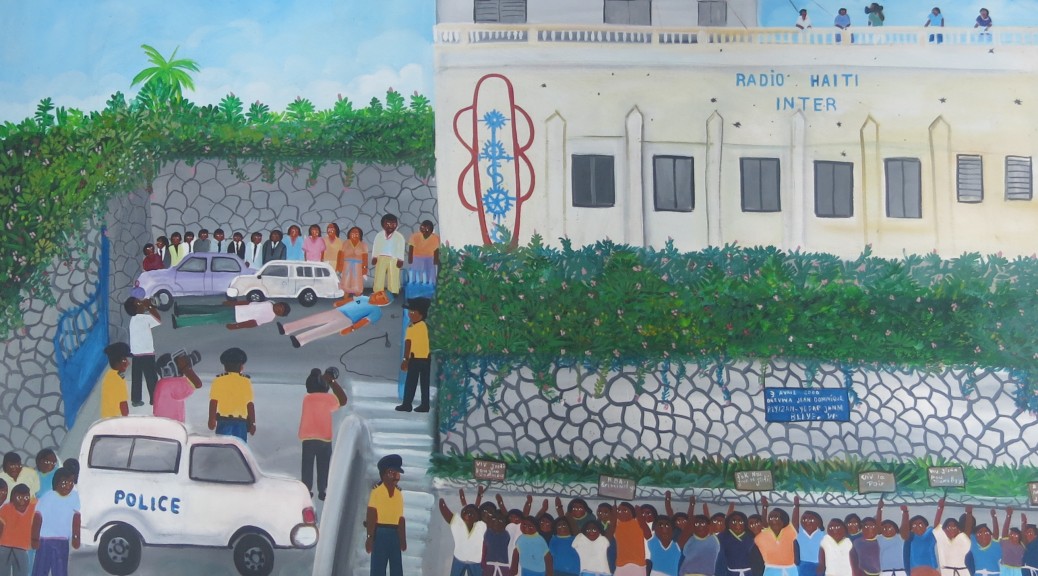
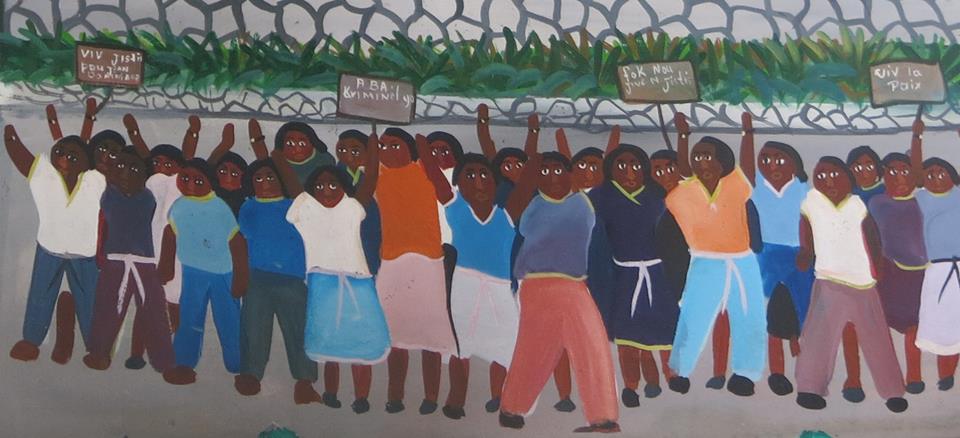
In 2001, artist Maxan Jean-Louis painted the assassination of Jean Dominique and Jean-Claude Louissaint. The canvas is dominated by the Radio Haiti building with its emblematic red-and-blue vèvè (a vodou symbol reimagined in the shape of a microphone). In the background are two men struck down in the parking lot. Jean’s silenced microphone lies beside him. Jean’s family and the Radio Haiti staff weep while the police and the media look on – rather helplessly, it seems, their arms at their sides. Tears run down the face of one of the policemen.
The most dynamic part of the painting are the protestors in the foreground, the men and women standing in the street, outside the station’s walls, clamoring for justice while the weeping policeman looks on. Their arms raised in protest, their lips parted as they shout, they carry signs: DOWN WITH CRIMINALS. WE MUST HAVE JUSTICE. DOWN WITH THE DEATH MACHINE. LONG LIVE PEACE. JUSTICE FOR JOURNALISTS. JUSTICE FOR JEAN DOMINIQUE. Above them is written: APRIL 3 2000. FAREWELL JEAN DOMINIQUE. THE PEASANTS WILL NEVER FORGET YOU.
In the literal sense, that was not how it happened. Jean Dominique was shot just after 6 am, at the time of the daily Creole news broadcast, and he was pronounced dead at l’Hôpital de la Communauté Haïtienne shortly after. There was no time for crowds to assemble while his body still lay on the ground.
The painting is a metaphor, then, or perhaps a depiction of time compressed. The urban and rural masses and civil society organizations did mobilize that very day and for years after: grassroots human rights groups, grassroots peasants’ groups, women’s groups, unions, and ordinary citizens. As Michèle Montas explains, “the mobilizations began on April 3, 2000, through the protests and the expressions of solidarity of hundreds of people shocked by the assassination of a pro-democracy activist who had survived all the regimes against which he had courageously fought, to fall victim to a contract killing during a democratic season that he worked to establish.”
Five days after the murders, on April 8, the state funeral for Jean Dominique and Jean-Claude Louissaint at Stade Sylvio Cator in downtown Port-au-Prince was attended by 15,000 people, of whom 10,000 were rural farmers. On July 31, 2000 – what would have been Jean Dominique’s seventieth birthday – more than 10,000 peasant farmers from the Association des Planteurs et Distillateurs de Léogâne et Gressier gathered at the Darbonne sugar factory to thank and demand justice for Jean Dominique. That same day, the Centre de Production Agricole Jean L. Dominique, run by small-scale coffee growers, was inaugurated in Marmelade. Hundreds of peasant farmers gathered to pay tribute. And that same day, musicians, poets, and vodouisants gathered in the courtyard of Radio Haiti to pay homage to Jean Dominique.
In the archive of things Radio Haiti held onto, I came across a song called “Won’t Jean Dominique Find Justice?” by Haiti Rap Force. From the hand-drawn cover, I assume it was a local rap group from one of Port-au-Prince’s quartiers populaires. They sing that justice is not achieved through only formal, state-sponsored institutions.
Dosye Jean Dominique pa koute sèlman tribinal sa konsène tout tout moun an jeneral n’ap bat poun fè ti pèp la bliye Nou pa gen dwa janm bliye lanmò Jean Dominique Refren: Men se ki lès ki gen flanbo-a kap klere chimen-an poun pa tonbe Men se ki lès ki konn chimen-an ki va di nou kote nou prale
The Jean Dominique case won’t just be heard in the tribunal
It concerns every single person in general
Trying to make the people forget
But we shall not ever forget the death of Jean Dominique
Refrain:
But who will hold the torch that will light the way so we do not fall?
But who knows the path, who will tell us where we are going?
At the end of the editorial, Michèle returns to the question with which she opened. “Why Jean Dominique? Why all this noise, all this noise and all this furor, for a man two years dead? Why these mobilizations reaching well beyond our borders? This question is asked in different tones: with admiration among those who understand only now that justice and the defense of freedom are not a gift, and that they can only be the result of permanent pressure to force institutions and political leaders to act in accordance with their mandates; with hostility on the part of the enemies of the journalist, those who ordered his killing, or those who rejoiced at April 3, 2000, at being freed from a voice so strong and, for certain interests, so troublesome. ‘Jean Dominique pa pitimi san gadò’ [Jean Dominique is not unguarded and free for the taking], as we say in one of our radio spots. His killers had no idea how true that was.”
Thinking about grassroots mobilization in response to injustice reminds me of Jacques Roumain’s Masters of the Dew (Gouverneurs de la rosée). It is the story of Manuel, a poor cultivator from rural Haiti who becomes politically engaged and organizes his fellow peasants to overcome the things that divide them, to unite in defense of their rights and their land. Manuel organizes a konbit, the traditional form of communal labor, before he is stabbed to death. Jean Dominique and his elder sister, the writer Madeleine Paillère, were so moved by novel that they translated the dialogue into Haitian Creole and adapted it for radio in 1972-1973. It is one fitting epitaph for an agronomist-activist, an intellectual who at great cost threw in his lot with the dispossessed, a man who believed that redemption lay not in suffering, but in solidarity.
On chante le deuil, c’est la coutume, avec les cantiques des morts, mais lui, Manuel, a choisi un cantique pour les vivants: le chant du coumbite, le chant de la terre, de l’eau, des plantes, de l’amitié entre habitants, parce qu’il a voulu, je comprends maintenant, que sa mort soit pour vous le recommencement de la vie.
It is the custom to mourn by singing hymns for the dead, but he, Manuel, had chosen a hymn for the living – the song of the konbit, the song of the soil, of the water, of the plants, of friendship between peasants, because he wanted, I understand now, that his death be for all of you the a new beginning of life.
Post contributed by Laura Wagner, PhD, Radio Haiti Project Archivist.
The Voices of Change project was made possible through a generous grant from the National Endowment of the Humanities.
While processing the Slade Family Papers my colleague came across several delightful pamphlets from the US Department of Agriculture on economical and nutritious foods. One in particular caught my eye, “Do You Know Oatmeal?” which was published in 1917. Conveniently, it had already been digitized and was available through the Internet Archive.
Do you know oatmeal?
As a long time fan of oatmeal, I was thrilled to see it get the government promotion it deserves. There were several recipes to choose from, and in a change from some past test kitchen experiences, all the recipes seemed edible to this oatmeal lover. Finally, I decided on “Spiced Oatmeal Cakes” which seemed to be a cross between a cookie and a muffin, and “Baked Oatmeal and Nuts.” As a vegetarian, I was especially intrigued by the direction “Instead of meat, cook this appetizing dish for your family.”
Part cookie, part muffin?Savory oats
According to Wikipedia oatmeal can refer to ground oats, rolled oats in various forms (instant, quick cooking, “old fashioned”, etc.) or steel cut or Irish oats. The recipe did not specify a type, but the long cooking time given on the front page (1 hour in a double boiler) suggested the “old fashioned” variety rather than instant or quick cooking. However, I never cook my oats longer than 10 minutes on the stove top so I was a bit skeptical. In the end, I went with what I had in my cabinet, Quaker Old Fashioned.
The Face of Oatmeal
I started with the oat cakes. All the ingredients were things I already had in my pantry. The only oddities in the recipe were 3 tablespoons of unspecified fat and the lack of oven temperature. I chose canola oil and 350 degrees.
Mise en place
These were very easy to assemble, even with the extra step of precooking the oatmeal. The dough/batter was very dry and I had to add ¼ cup water in order to reach a stir-able consistency. I also did not get 12 cakes.
Into the oven they go!Thirty Minutes Later!
Verdict: They were super tasty warm from the oven. I ate 3. They also smelled delicious while they baked.
The “Baked Oatmeal and Nuts” was equally as easy to assemble. Sadly, this would not feed 5 people, despite what the recipe says. I regularly cook 2 cups of dry oats for 2 people for breakfast, and then add fruit, flax seeds, and sugar. 2 cups already cooked oatmeal, split between 5 people would be a snack at best, even with the addition of peanuts and milk.
I used apple cider vinegar, and I used soymilk instead of regular milk. I also reduced the salt to 1.5 teaspoons. I also accidentally added ½ teaspoon pepper instead of ¼ that the recipe calls for. Since the oven was already preheated, I stuck with the previously decided upon temperature of 350 degrees.
Ingredients for Baked Oatmeal and NutsThe Final Product
Verdict: This was fairly tasty, although a little bland. I would also bake it longer than 15 minutes if I were to make it again.
Post contributed by Jessica Janecki, Rare Materials Cataloger
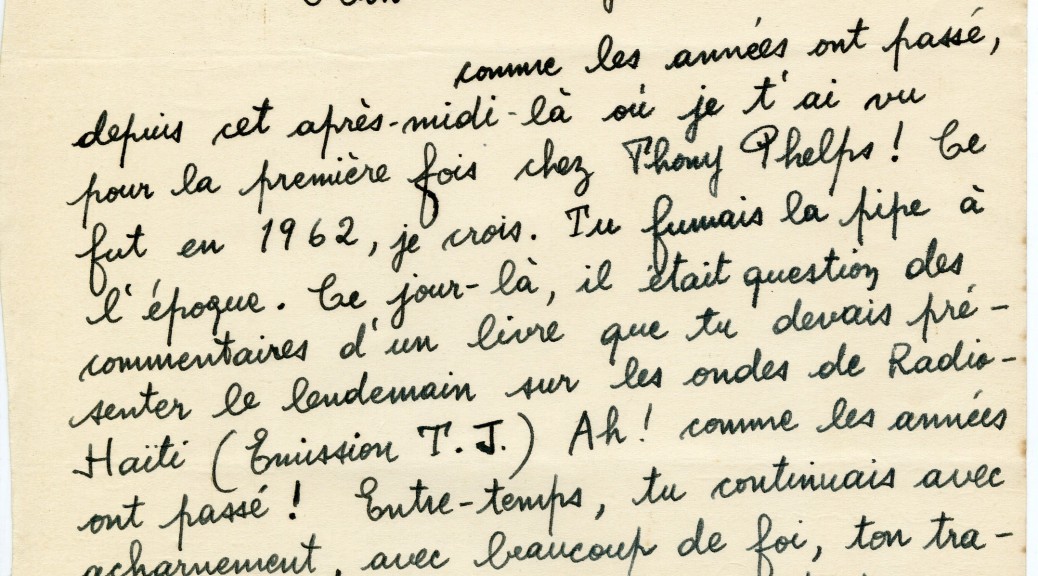
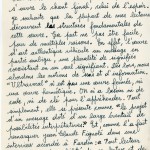
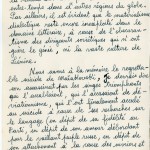
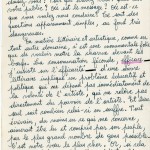
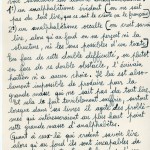
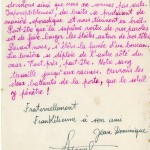
On December 29, 1972, the renowned writer, poet, and visual artist Frankétienne, one of the fathers of the Spiralist literary movement, wrote a letter to his friend, Jean Dominique.
My very dear Jean, how the years have passed, since that afternoon when I first saw you at Thony Phelps’ house! That was in 1962, I believe. You smoked a pipe at the time. That day, there was talk of a book upon which you would be commenting the next day on the air at Radio Haïti. Ah! How the years have passed!
Frankétienne’s letter to Jean Dominique page 1
Frankétienne’s letter to Jean Dominique page 2
Frankétienne’s letter to Jean Dominique page 3
Frankétienne’s letter to Jean Dominique page 4
Frankétienne’s letter to Jean Dominique page 5
Frankétienne’s letter to Jean Dominique page 6
Frankétienne’s letter to Jean Dominique page 7
Frankétienne’s letter to Jean Dominique page 8
Frankétienne’s letter to Jean Dominique page 9
Frankétienne’s letter to Jean Dominique page 10
Frankétienne’s letter to Jean Dominique page 11
Frankétienne’s letter to Jean Dominique page 12
Frankétienne’s letter to Jean Dominique page 13
Frankétienne’s letter to Jean Dominique page 14
Frankétienne’s letter to Jean Dominique page 15
Frankétienne’s letter to Jean Dominique page 16
Frankétienne’s letter to Jean Dominique page 17
For Frankétienne, Jean Dominique was both a personal friend and an intellectual interlocutor; the cultural programming he oversaw at Radio Haiti not only showcased Haitian arts and literature, but also influenced them.
Meanwhile, you continue, with ferocity and great faith, in your work as a lucid informant, guiding your listeners, aiding the youth with your advice. And as for me, I was among that number who listened to you, who followed you closely. Your critical analyses were for me an invaluable contribution, as much on the cultural level as on the purely human level. Your Sunday broadcasts enhanced my love of art, cinema and in particular literature, even influencing my reading and literary research. And, today, now that we have become friends, this remains true. Jean, my brother, you could not suspect or guess how my conversations with you have oriented and enriched my work as a writer. Your insights have been of great use to me, with regard to the material of my last book Ultravocal…
The letter is from 1972, shortly after Jean Dominique bought Radio Haiti; it offers a glimmer of what was to come. In the years that followed, Radio Haiti’s main cultural program “Entre Nous” would become something of an on-air salon, a place where painters, poets, novelists, historians, social scientists, storytellers, playwrights, musicians, critics, and others came together to discuss their work. Émile Ollivier, Mimi Barthélemy, Edwidge Danticat, Amos Coulanges, Tiga, Georges Castera, Syto Cavé, Roger Gaillard, Jean Fouchard, Kettly Mars, Dany Laferrière, Gary Victor, Yanick Lahens, Ralph Allen, Jean René Jérôme…
To listen to these creators of art and of knowledge is to reorient the narrative about Haiti. The standard story of Haiti is dominated by crisis: rare is the mainstream US news article that does not contain the words “the poorest country in the Western hemisphere.” Haitian people are depicted as either powerless victims or bloodthirsty criminals. For centuries, lurid, racist, deterministic narratives have enabled dominant geopolitical powers to undermine Haitian sovereignty and justify exploitation. According to these tropes, Haiti and Haitian people are organically poor – not only materially and economically, but intellectually, culturally and morally as well. Haiti is atavistic, violent and diseased. Haiti is starving children, “boat people,” ragged people. Haitian suffering is described, exaggerated, and luxuriated over, but rarely presented as anything other than an inevitability.
Radio Haiti presented Haitian narratives about Haitian crisis, exposing and analyzing the structural causes of oppression and political instability. The archive contains the voices of the intellectual elite and of the urban and rural poor alike, for Radio Haiti was one of the few places at the time where the oppressed and disenfranchised masses had lapawòl, the power of speech.
And in its cultural programming, Radio Haiti achieved even more: it decentered the narrative of crisis. It presented not a Haiti of suffering, but a Haiti of beauty and brilliance, one in which crisis is met with and defied by acts of creation. A Haiti in which art, both implicitly and explicitly, is political.
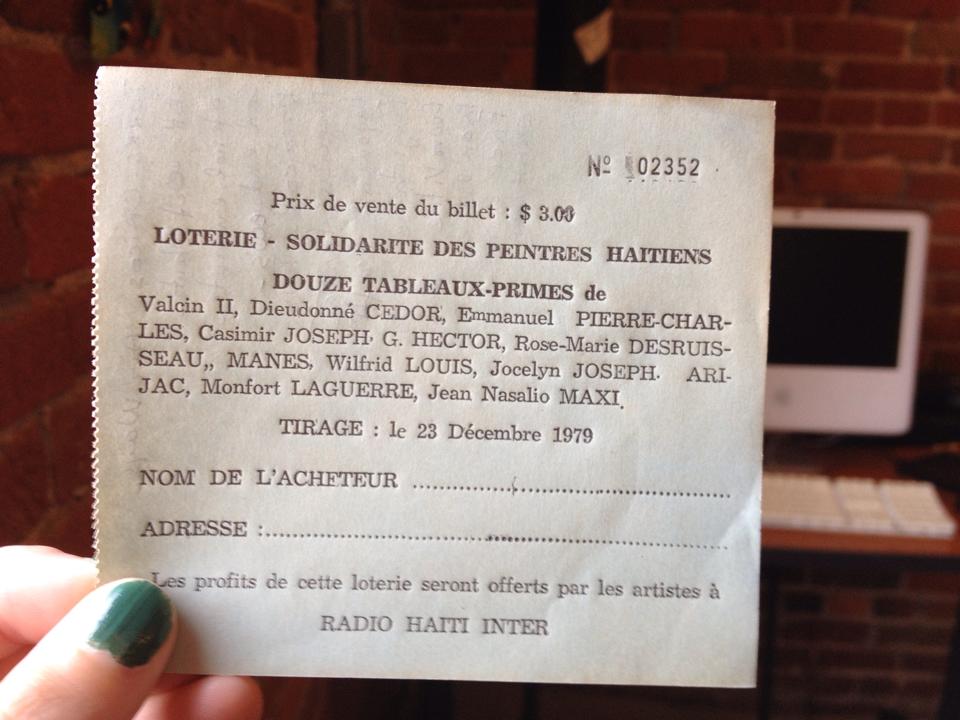
A few months ago, I found a little piece of ephemera hidden face-down at the bottom of a reel-to-reel tape box. It had been used as scratch paper: on one side is a handwritten list of sponsors from the late 1980s (Parkay Margarine, Kraft Mayonnaise, Breacol cough syrup, and so on). On the other side is this:
Raffle ticket, December 1979
By 1979-1980, businesses no longer advertised on Radio Haiti. The station openly opposed the Duvalier dictatorship, and potential sponsors, afraid of reprisal, did not want to be seen as accomplices. During this time, station manager Richard Brisson famously raised some money by using his car as a taxi. And in December 1979, several celebrated Haitian painters donated their works for an art raffle in support of Radio Haiti. Each ticket cost three dollars, for the chance to win a piece by one of these twelve renowned artists. The ticket is a relic, a souvenir of the extraordinary devotion that Radio Haiti inspired. It is also a poignant reminder of the grinding struggle to keep the station afloat day-to-day in the face of economic obstacles and political oppression.
Sometimes it feels as though Radio Haiti’s story, like that of Haiti itself, is eclipsed by crisis — that Jean Dominique’s assassination has become the principal lens through which we understand and remember Radio Haiti. But the loss of Jean Dominique and the injustice of his murder matter because his life mattered, because Radio Haiti’s many decades of work and legacy matter. Before the symbolic weight of memory, before the burden of hindsight, before the doomed prophet, there was the daily work of the station — all of which lives on in this archive.
So much comes before death; so much remains when death is no more.
In his letter to Jean Dominique, Frankétienne outlines the challenges facing the Haitian writer who strives to be accessible.
All writers, at least as far as I’m concerned, would like to be read and understood by their people, by the greatest number of people possible. It is our dearest hope. Yet, if that does not occur immediately, then another story, often macabre, begins. In the case of our country, one must overcome a double illiteracy: 1) obvious illiteracy (the inability to read at all, whether in Creole or in French) and 2) hidden illiteracy (the belief that one knows how to read, but in truth one does not perceive the structure and the possible meanings of a text). Faced with this double difficulty, or rather facing this double obstacle, the Haitian writer has no choice. It is absolutely impossible for him to write for the masses that cannot read at all. And this makes him suffer terribly, especially when, in his books, he reckons with problems that would be of utmost interest to those illiterate masses
Radio was a medium of unparalleled power in twentieth-century Haiti: it enabled people to participate in public discourse, as both listeners and speakers, whether or not they could read and write. And it allowed writers to reach a far broader audience, to be true public intellectuals. For this is what Jean Dominique was: a public intellectual. It was on the radio that his intellect unfurled: analytical and incisive, sometimes staggering.
There is a poet character who wanders, searching through words in a verbal delirium, writes Frankétienne in his letter, describing the themes of Ultravocal.
In the course of his phantasmal voyage, overcome by pain, he discovers that his drama is not entirely personal, that his own rupture is nothing more than one aspect of a far wider tragedy, the great human misery. From that moment on, the text breaks apart, spreading from the individual to the collective, from the subjective to the objective, from the particular to the general… And the poet character, entwined with the narrator, dizzy, speaks. The poetic inflections of a voice addressing a tribe of men besieged by beasts. My voice, perhaps. Yours, or that of either of us. And, when the narrator suggests… that one day, evil will be struck down into the dust with a terrible noise, then begins the final song, that of hope.
A week to the day before Frankétienne wrote his letter, Jean Dominique interviewed the painter Rose-Marie Desruisseau, in which she describes participating in ceremonies as part of her research for a series of paintings on Vodou. (It was revolutionary, at that time, to speak on the radio of Vodou as a topic of intellectual and cultural importance and as everyday practice: Duvalier père had politicized and exerted control over Vodou, manipulating its imagery for his own purposes and power while exercising sanctions on the practice.) Desruisseau describes her interactions with the Gede spirits, who are intermediaries between life and death. They dance provocatively through the cemetery, and shout and sing obscenities. They are lively gods of death. Vulgarity and humor, which transcend respectability and social convention, are the very things that enable Gede to straddle life and the afterlife, to be the master of the crossroads.
Rose-Marie Desruisseau explains:
“J’ai commencé d’abord par les dieux de la mort, tu vois, et puis je n’ai pas trouvé la mort chez eux, j’ai trouvé la vie intense, chez eux… chez les Guédés. Je n’ai pas trouvé la mort du tout.”
“I began first with the gods of death, you see, and it was not death that I found there. I found intense life there… among the Gede spirits. I did not find death at all.”
Radio Haiti’s archive, like a cemetery, like Haiti itself, is a place that could be defined by tragedy, loss and death. The archive, like Haiti’s history, is filled with human rights violations, massacres, impunity, and assassinations.
Yet, listening to artists and iconoclasts, creators and truth-tellers, I recall those same words: It was not death that I found here, in Radio Haiti’s archive. I found intense life here; I did not find death at all.
Post contributed by Laura Wagner, Ph.D., Radio Haiti Project Archivist.
The Voices of Change project was made possible through a generous grant from the National Endowment of the Humanities.
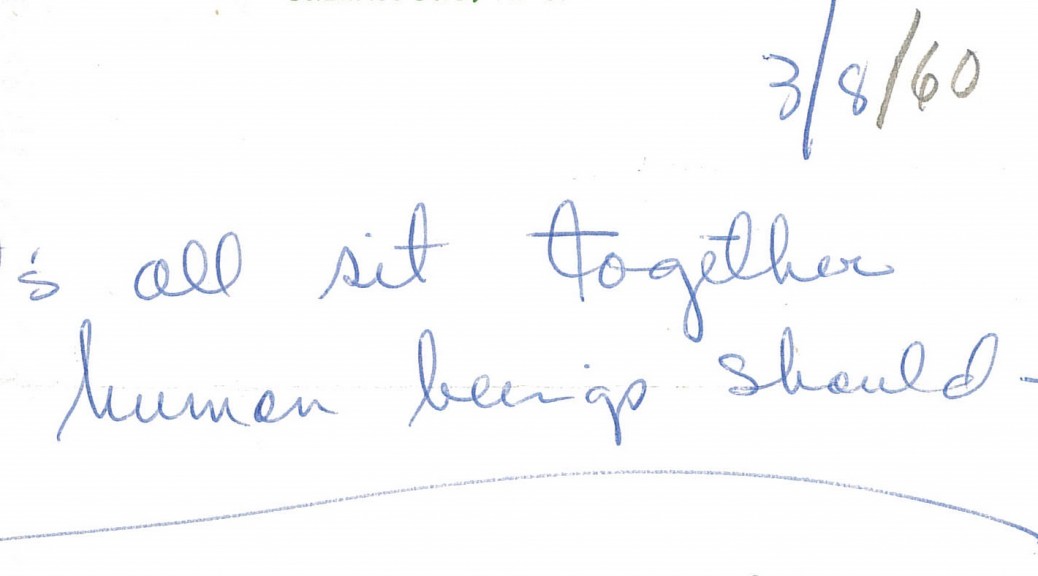
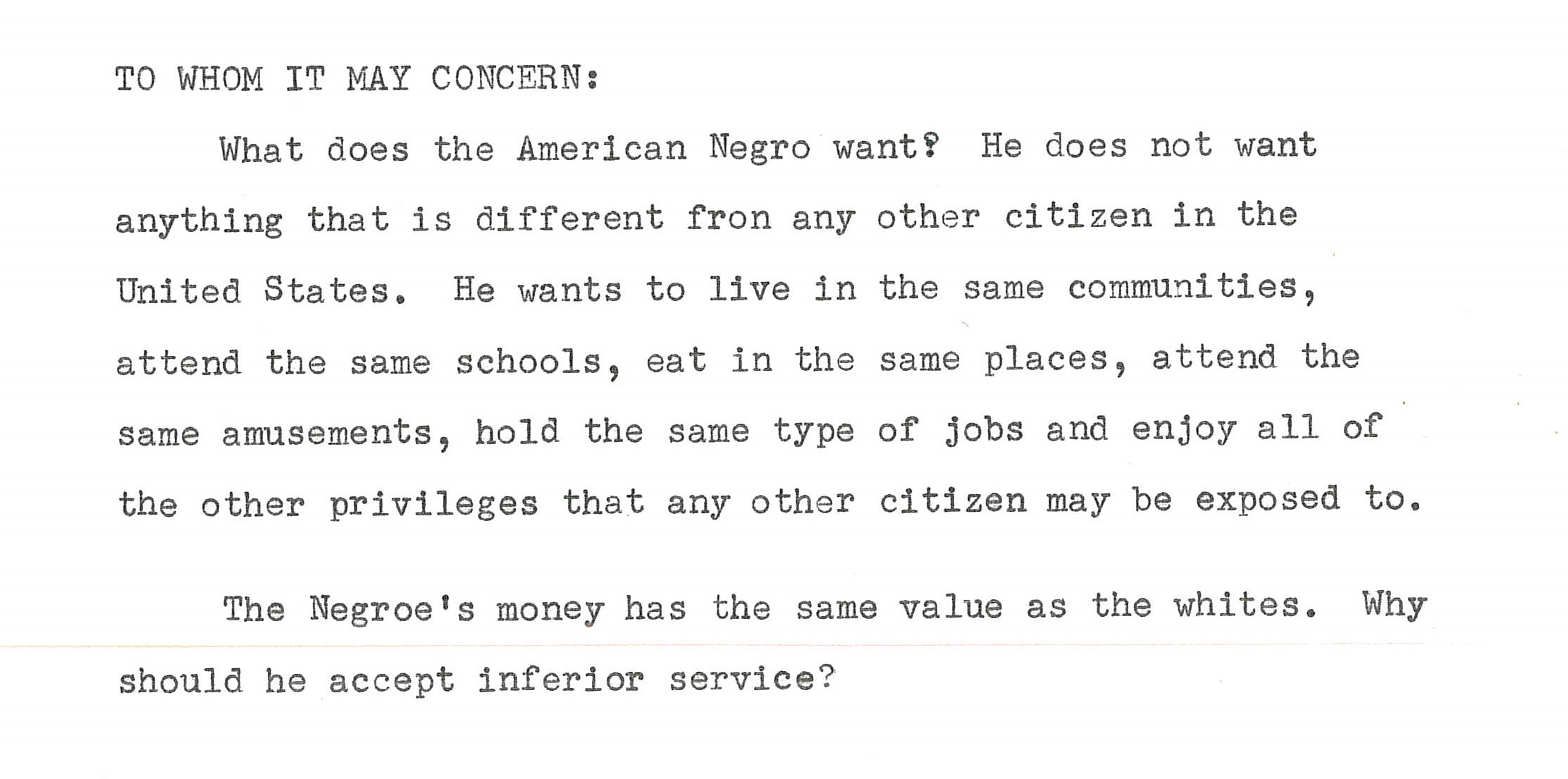
Excerpt of letter supporting integration of Greensboro’s lunch counters, March 8, 1960. From the E. R. Zane Papers
This month marks the 56th anniversary of the Greensboro Sit-Ins, which began on February 1, 1960 when four African-American students from North Carolina A&T walked from the campus library to the local Woolworth store, sat down at the “whites only” lunch counter, were denied service but refused to leave until closing. Over the next week, several hundred protesters took part in the sit-ins at the Woolworth and later Kress department store in Greensboro. The sit-ins grabbed national headlines and similar protests followed in towns across the South.
With the city in turmoil, Greensboro Mayor George Roach appointed an Advisory Committee on Community Relations to help coordinate a response to the sit-ins. He appointed Burlington Industries executive and city councilman Edward R. Zane to chair the newly formed committee. In his first act as chair, Zane issued a call to Greensboro citizens asking them to share their opinions on the “race issue.” Specifically, Zane encouraged citizens to send letters to the committee “expressing their views on recent racial problems,” and he laid out five possible solutions to the lunch counter integration question at Woolworth and Kress:
The situation to remain as it is;
The two establishments to remove seats and serve everyone standing;
The two establishments to serve everyone seated;
The two establishments to reserve separate areas for seated white people and seated Negroes;
The two establishments to discontinue serving food.
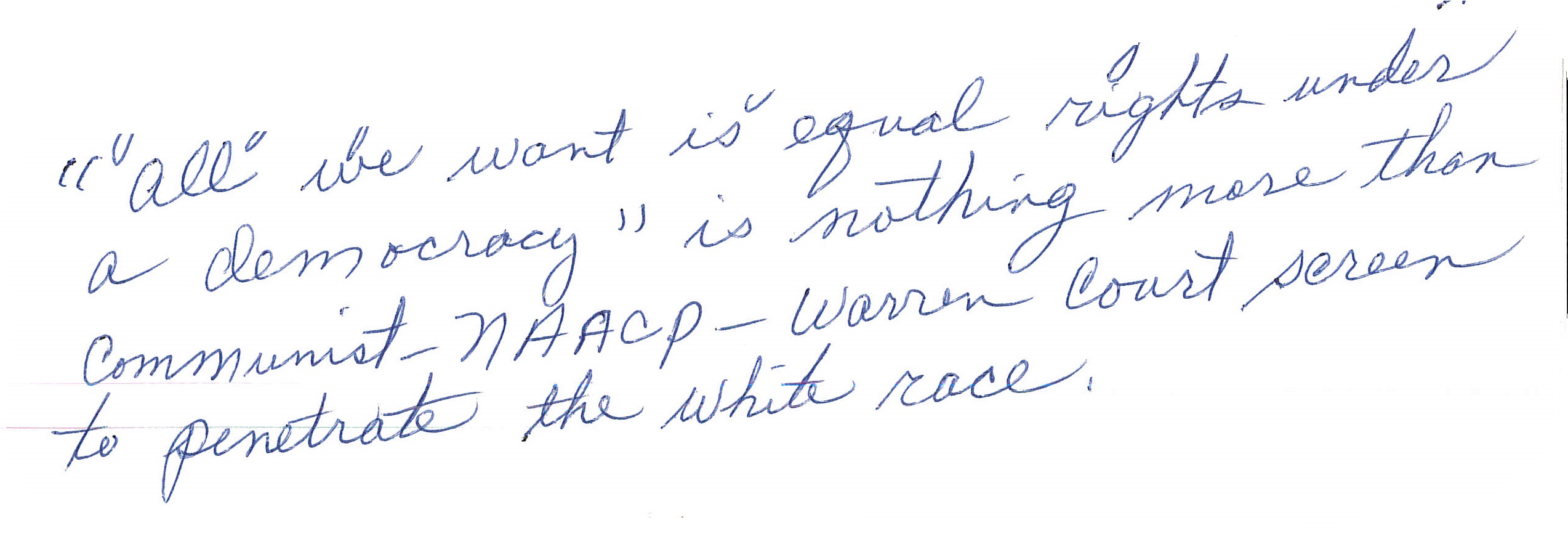
The Rubenstein’s Edward Raymond Zane collection contains several hundred of these letters from Greensboro citizens from late February to early March 1960. The letters, written by both white and African-American citizens, express support for or opposition to integrated seating at the Woolworth and Kress lunch counters. In aggregate, they provide a window into race relations in the community and help document the prevailing arguments on both sides of the integration issue.
More than a half century later, we remember the Greensboro Sit-ins as one of the seminal events of the civil rights movement. To commemorate the sit-ins, a portion of the Woolworth lunch counter now resides in the Smithsonian and four stools from the counter are on display in the International Civil Rights Center & Museum in Greensboro. The letters in the Zane collection are less tangible than these powerful artifacts, but they provide more direct evidence of one community’s response to direct action protests and serve as testimony to the bravery and courage of the Greensboro Four and other civil rights pioneers who ignited a movement to challenge segregation in public accommodations throughout the South.
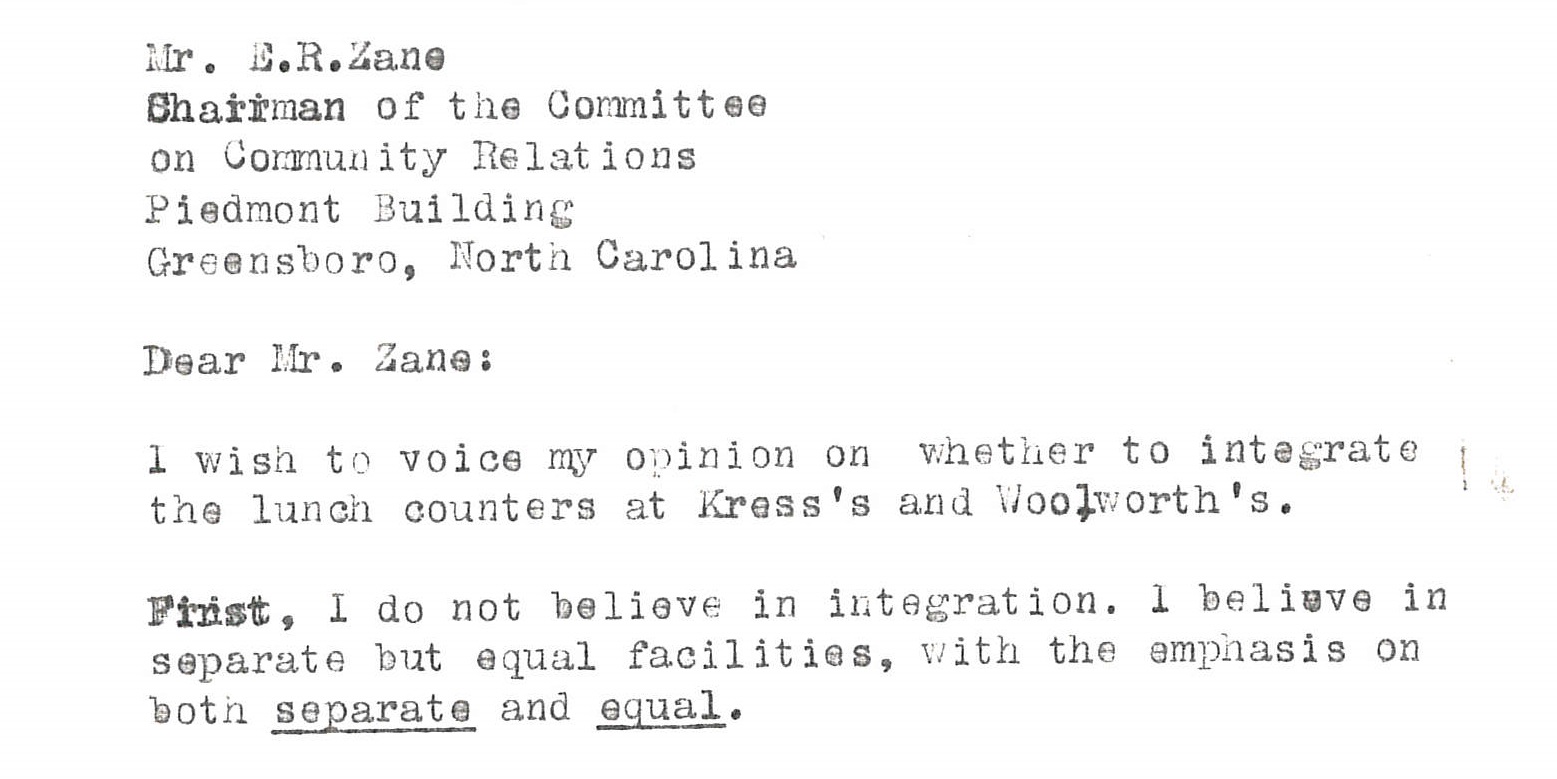
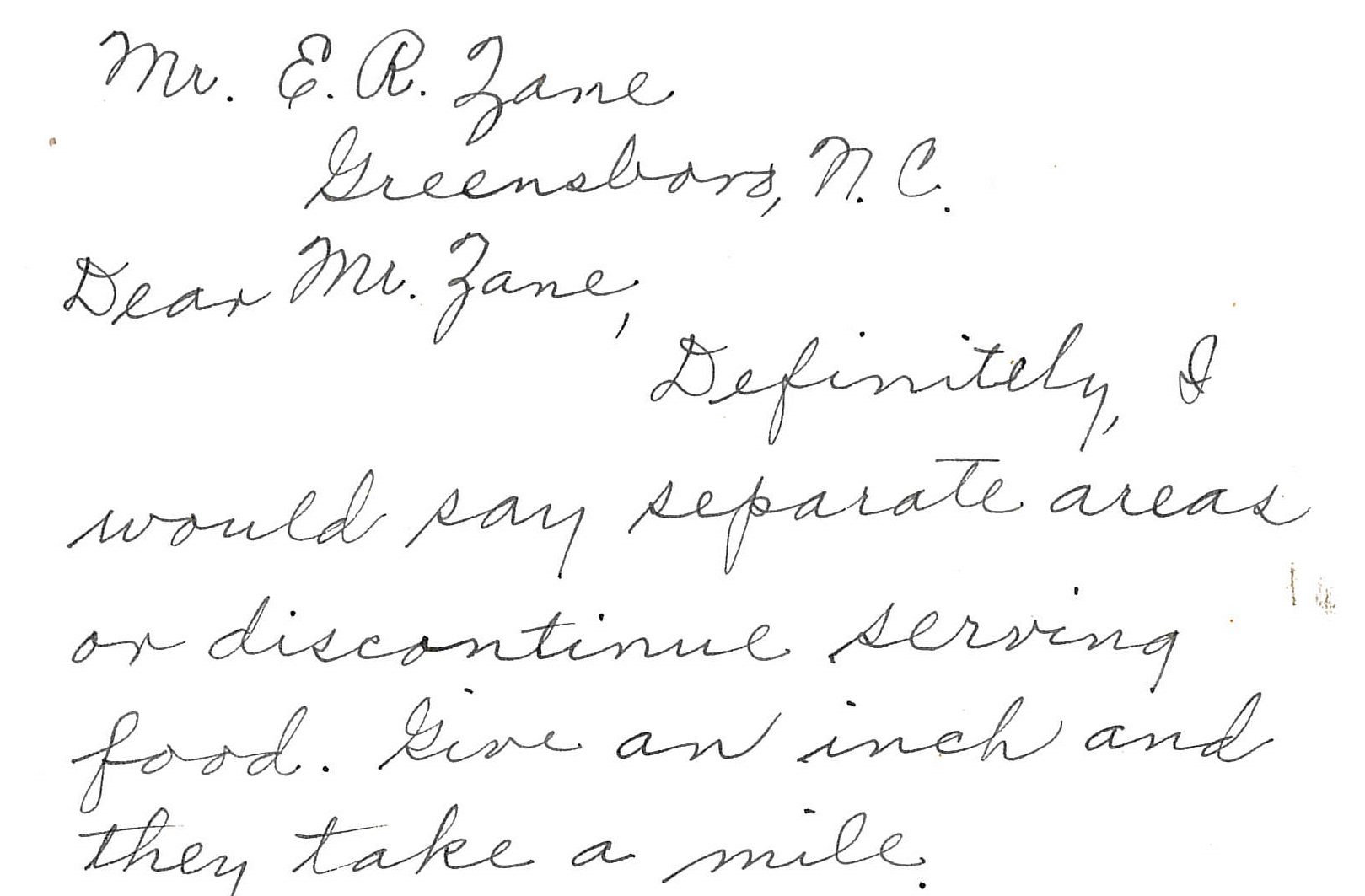
Excerpt of letter favoring separate but equal seating arrangements, March 1, 1960. From the E. R. Zane Papers
Excerpt of letter supporting integration, March 7, 1960. From the E. R. Zane Papers.
Excerpt of letter opposing integrated lunch counters, March 16, 1960. From the E. R. Zane Papers.
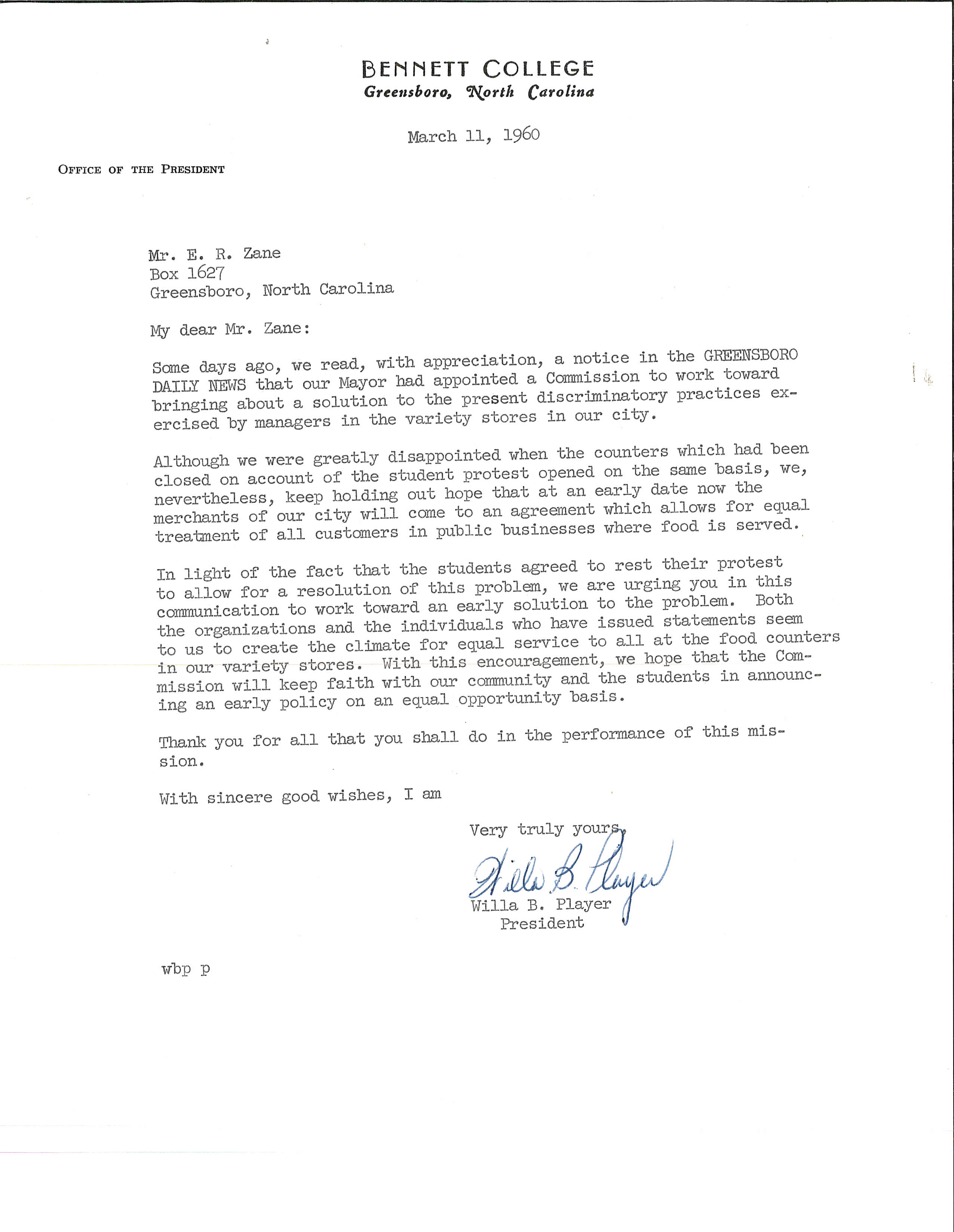
Letter from Bennet College President Willa B. Player, the first African American woman to become president of a four-year college, March 11, 1960. Over 40 percent of Bennet College students were arrested and jailed during the Greensboro demonstrations. From the E. R. Zane Papers
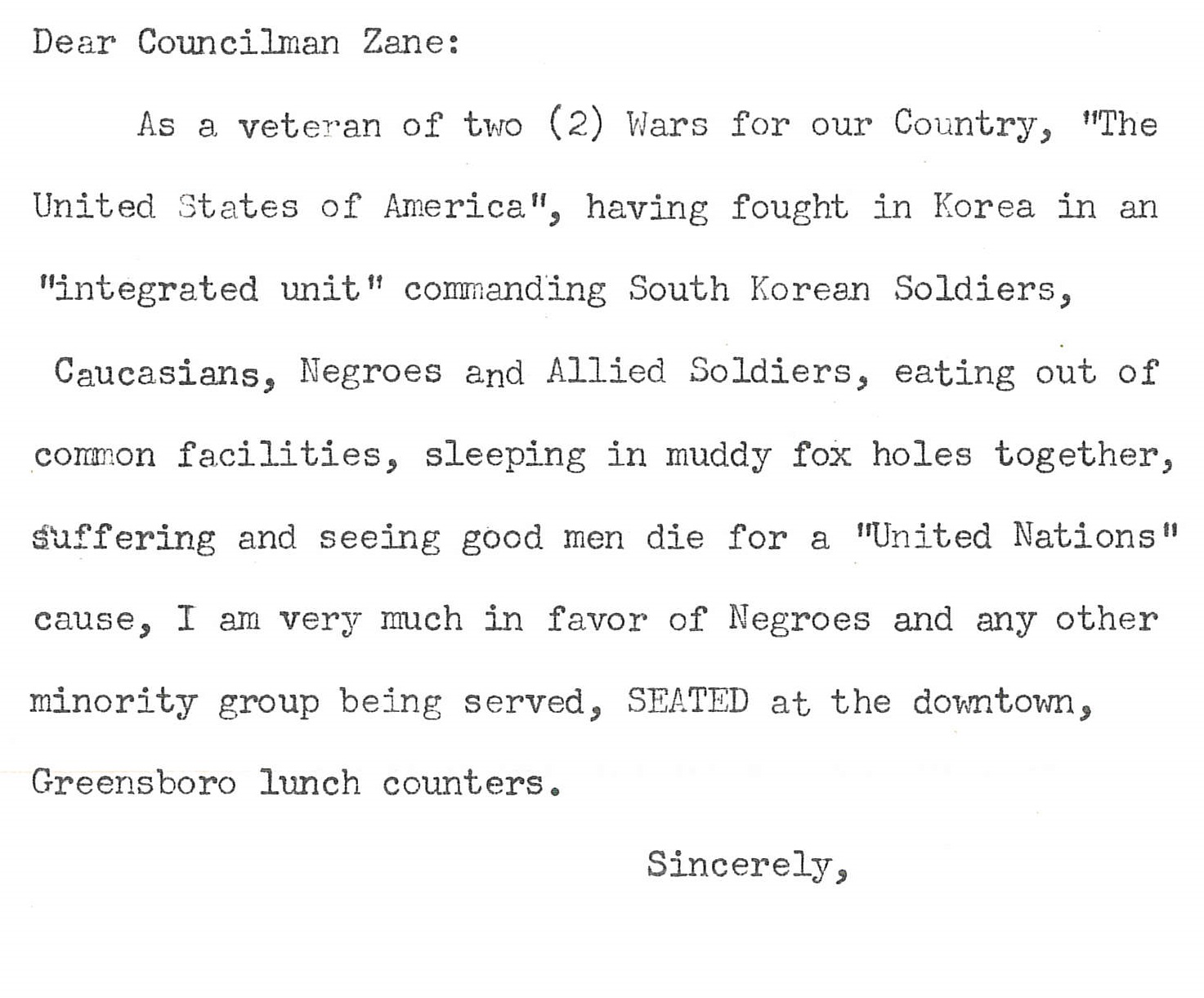
Excerpt of letter from veteran in favor of integrated lunch counters, February 29, 1960. From the E. R. Zane PapersExcerpt of letter opposing integrated lunch counters, February 28, 1960
Excerpt from pro-segregation letter, March 11, 1960. From the E. R. Zane Papers
Post contributed by Noah Huffman, Archivist for Metadata and Encoding.
Dispatches from the David M. Rubenstein Rare Book and Manuscript Library at Duke University