Category Archives: From Our Collections

New Acquisitions: Artists’ Books by Women

In June and July we’ll celebrate the beginning of a new fiscal year by highlighting new acquisitions from the past year.  All of these amazing resources will be available for today’s scholars, and for future generations of researchers in the Rubenstein Library! Today’s post features additions to the collection of artists’ books by women in the Library’s Sallie Bingham Center for Women’s History and Culture.  Check out additional posts in the series here.

nava2resized
Image courtesy of Nava Atlas.

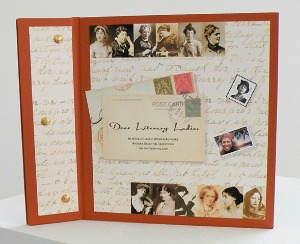
Dear Literary Ladies by Nava Atlas. New Paltz, New York: Amberwood Press, Inc., 2010. Edition of 15. Gift of the author.

According to Atlas, “this artist’s book fancifully poses questions on writing and the writing life, with the replies derived from classic authors’ letters, journals, and autobiographies. Reaching back to answer contemporary questions with voices from literary history reveals the timeless concerns and challenges of writers, with a particular emphasis on these issues from a female perspective.” The book was also produced in a trade edition.

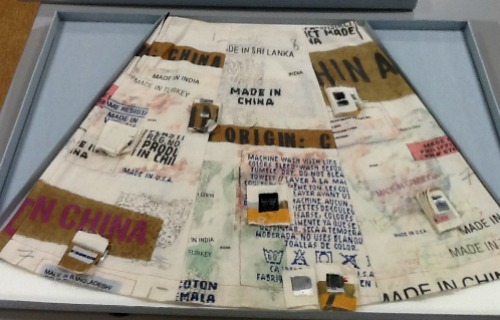
Skirt Book: Made in the USA by Julie Mader-Meersman. 2010.

This unique artists’ book is made in the form of a skirt with custom fabric printed with scans of country of origin tags from clothing. Booklets made from fabric remnants and original textile tags are sewn on around the garment.

skirtbookresized

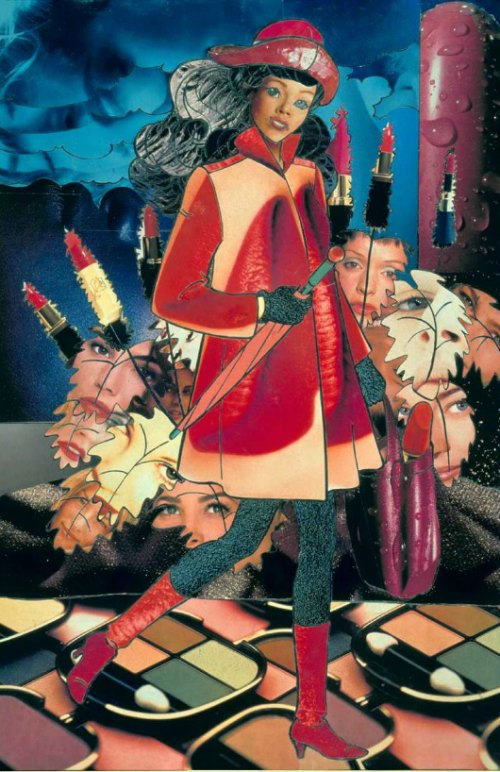
32 Big Pictures: A bound series of hand cut collages about Barbie by Dana F. Smith. San Francisco, California, 2011.

The images in this book were originally created from magazine collages overlayed on the pages of an over-sized Barbie coloring book. According to the artist, “it was created as a painstaking labor of love and reveals untold ways that Barbie is interlaced with modern American culture.”

barbiemakeover
“Barbie’s Makeover.” Image courtesy of Dana F. Smith.

Post contributed by Kelly Wooten, Research Services and Collection Development Librarian, Sallie Bingham Center for Women’s History and Culture.  


New Acquisitions: Human Rights in the New World

In June and July we’ll celebrate the beginning of a new fiscal year by highlighting new acquisitions from the past year.  All of these amazing resources will be available for today’s scholars, and for future generations of researchers in the Rubenstein Library! Today’s post features a key early work in the development of the concept of human rights.

Bartolomé de las Casas, a Dominican friar and one of the first Spanish colonists in the Caribbean, is best known today for his exposé of the horrifying treatment of indigenous peoples by Spanish settlers during the first decades of colonization.  First published in a 1550s series of tracts in Seville, the tracts represented the first argument for the rights of American Indians to be treated as fellow human beings, the first argument for the abolition of slavery in the New World, and one of the first attempts to appeal to a universal code of human rights.

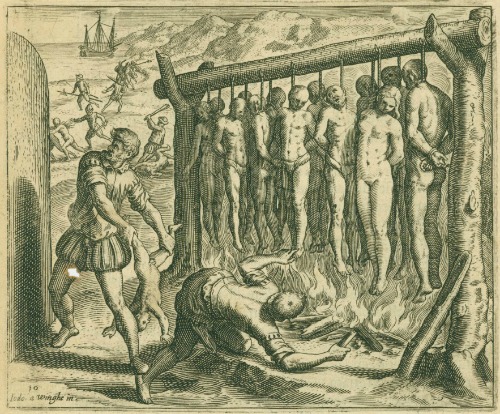
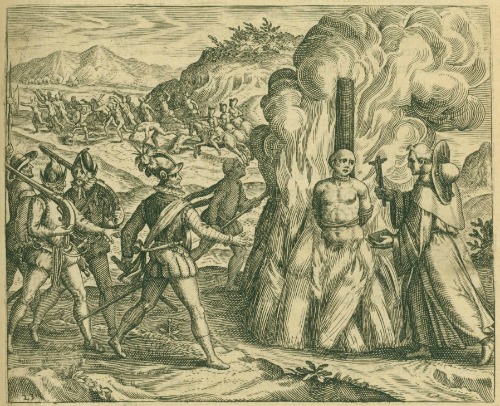
The tracts, especially the sensational details of torture, abuse, and murder, spread throughout Europe as evidence of the Spanish abuse of power in the New World.  The Library’s new acquisition is the first Latin translation and first illustrated edition of Las Casas’ text, entitled Narratio Regionum Indicarum per Hispanos Quosdam Devastarum Verissimi…published in Frankfurt in 1598.  The work features a powerful series of eighteen copper engravings by Theodor de Bry, depicting abuses of the native peoples.

casas-narratio_regionvm-1598-02blog
Image courtesy Dorothy Sloan Books.

De Bry never visited the New World, and the images can be seen as prime examples of the “Black Legend” of sensationalistic, anti-Spanish (and anti-Catholic) propaganda used to curb the might of the Spanish empire.  This edition of the work of Las Casas advocating for basic human rights for the native populations of the Americas was wildly popular and influential, thanks in part to the images, which retain some of their original power to shock and provoke thought about the treatment of the original inhabitants of the New World.

casasburning
Image courtesy Dorothy Sloan Books.

Post contributed by Will Hansen, Assistant Curator of Collections.

Mad Men Mondays: Episode 13 “In Care Of”

Mad Men Mondays logo

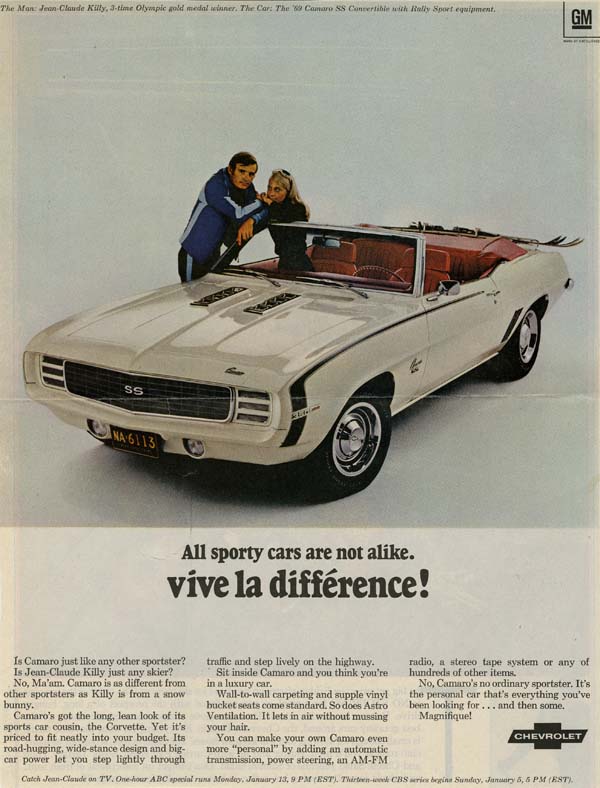
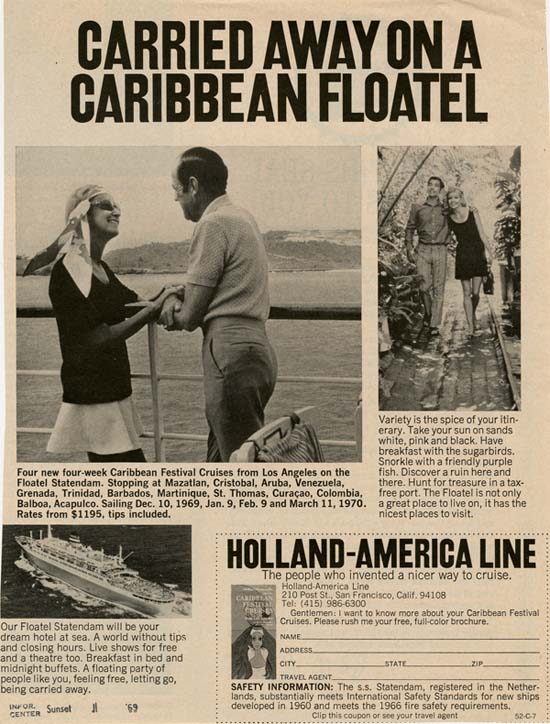
The season finale delivered many memorable moments that will keep us guessing until next year. Stan tells Don that he wants to be the one that goes to Los Angeles to open a satellite office that will service the Sunkist account. After a bad phone conversation with Sally, Don gets drunk at a bar when he is supposed to be at work. Later he wakes up in jail. Pete is horrified to find out that his mother is lost at sea. She married Manolo on a cruise and it is presumed that he threw her overboard in order to inherit her money. When Don comes home the next morning he pours out all of the liquor bottles and tells Megan that he wants them to go to Los Angeles so he can start the new SC&P office. She is thrilled and resigns her soap opera job. Peggy changes into a revealing dress and tells Ted, Jim, and Harry that she is leaving early because she has plans. In Detroit, Bob encourages Pete to test drive a stick shift Camaro Z28. Pete knocks over a GM sign in the process and is subsequently taken off the Chevy account. Peggy comes home after her date and finds Ted at her door. He says that he loves her and will leave his wife. They sleep together and make plans for the future. Betty calls Don in the middle of the night to say that Sally bought beer and got drunk with some classmates and is suspended from Miss Porter’s. Ted tells Don that he wants to go to Los Angeles so he can start over with his family. Don makes a great campaign pitch to Hershey’s, but then ruins it by telling them his true story of growing up in a whorehouse and stealing money from the johns to get Hershey’s chocolate. That night Don tells Megan that they are not going to Los Angeles after all. She is upset and talks about leaving him since she already set up meetings in Hollywood to further her acting career. Pete and his brother decide not to pursue an investigation into their mother’s disappearance. They clean out her house and Pete brings some furniture over to Trudy’s house.  He tells her and Tammy goodbye, as he is going to California. Ted tells Peggy that he will stay with his wife to protect his kids. She is upset and tells him to get out. Don attends a partners meeting and they confront him about his questionable behavior. They tell him to take some time off and regroup, but refuse to give him a return date. On his way out he sees Duck Phillips bring Lou Avery in, presumably as a replacement. The episode ends when Don picks up his kids for Thanksgiving and shows them the dilapidated house where he grew up.

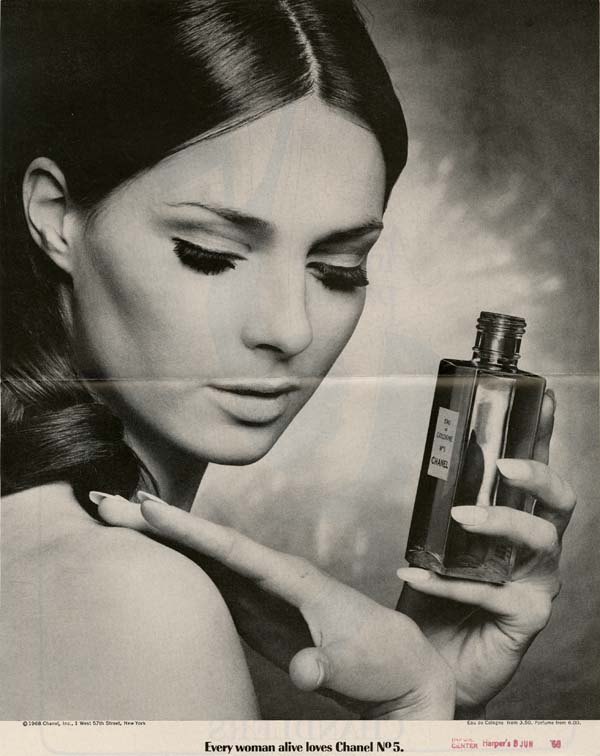
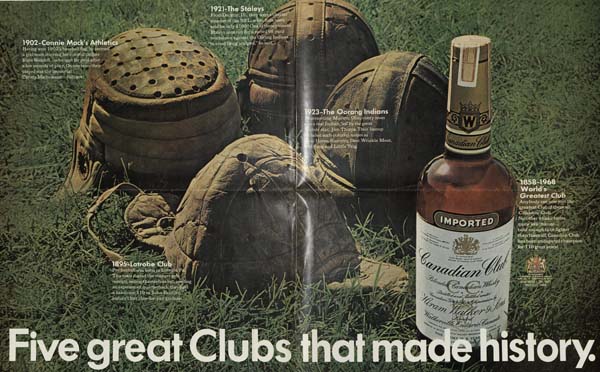
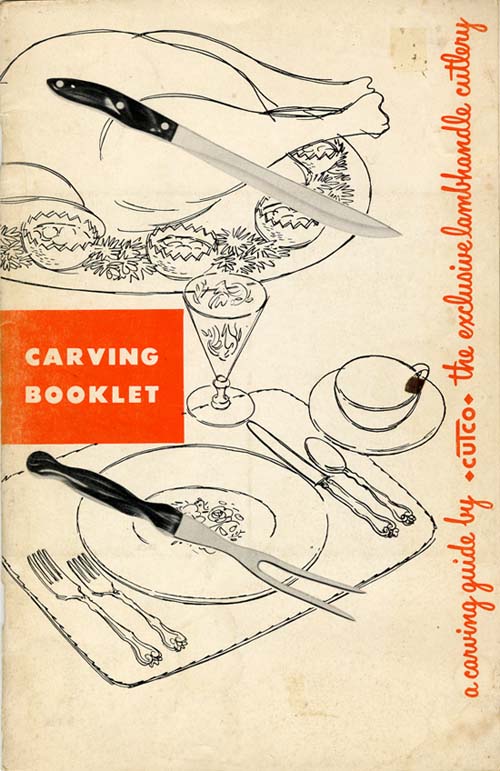
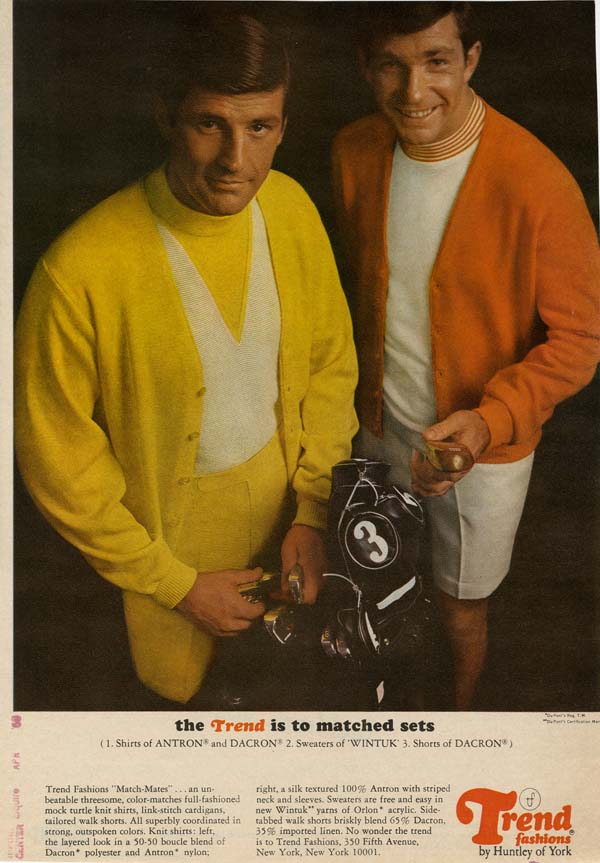
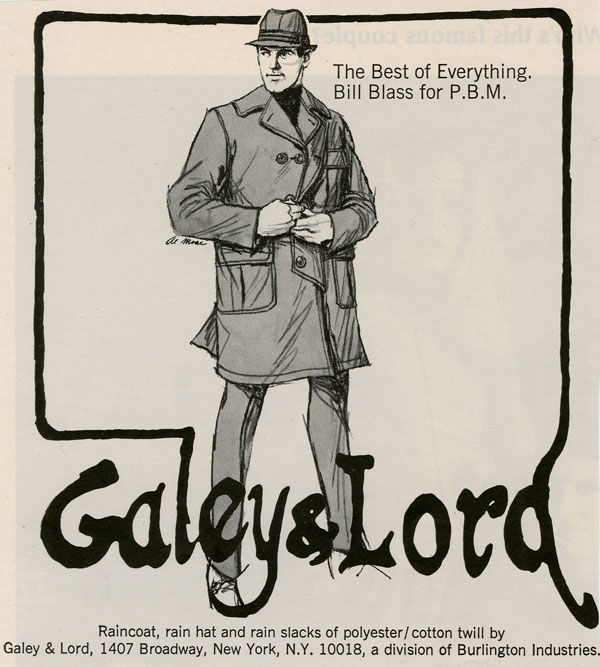
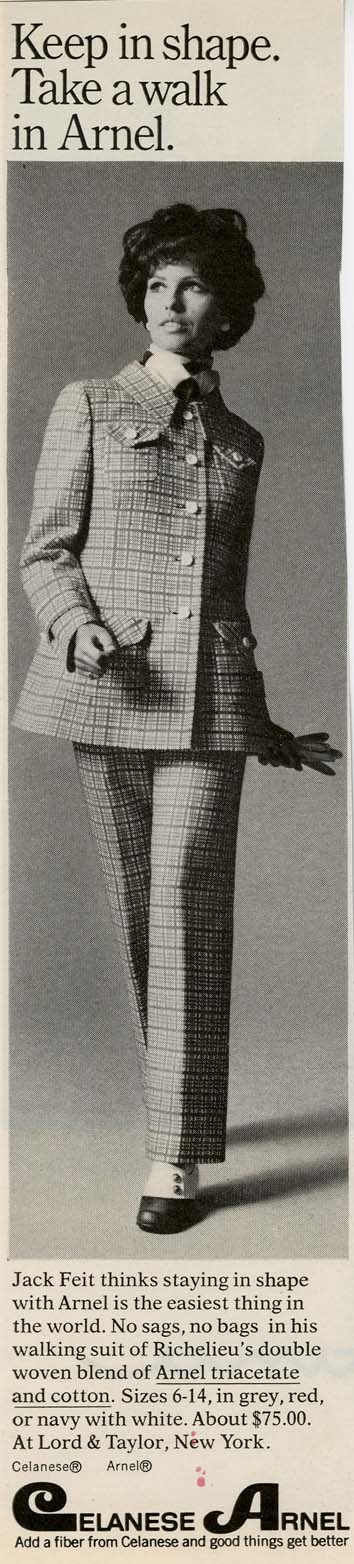
Episode thirteen referred to Chanel #5, Camaros, Thanksgiving, cranberry sauce, and cruises, among other things. Here is a selection of ads and images that illustrate some of the products and cultural references mentioned in last night’s Mad Men. A gallery of our highlighted images may also be found on Pinterest and Flickr.

cruise - blog

Chanel No 5 - Blog

camaro - blog

Canadian club - blog

turkey - blog

cranberry - blog

cardigan - blog

bill blass - blog       plaid suit - blog

Eight New Digital Collections on Civil Rights

The Duke University Libraries are proud to announce the completion of the still image digitization for the Duke-held collections of the Content, Context, and Capacity (CCC) Project.

This inter-institutional collaborative project of Duke, UNC Chapel Hill, NC State, and NC Central is digitizing records relating to the Long Civil Rights Movement. The Long Civil Rights Movement is a term used by historians to expand the traditional definition of the Civil Rights Movement of the 1950s and 1960s both further into the past and into more recent times. Collections from this project date back to as early as the 1880s and to as late as the first decade of the 2000s.

In total, all four institutions will digitize over 350,000 documents. Duke’s share of that total is approximately 66,000 scans from eight archival collections from the David M. Rubenstein Rare Book & Manuscript Library. In addition, during the next (final) year of the project, the CCC staff will transition to the digitization of audio collections. Duke will focus on the digitization of the North Carolina tapes from the Behind the Veil Oral History Collection, which is scheduled for publication in 2014.

Check out the gallery of selected documents digitized as part of the project (click to enlarge) and browse each of the eight collection’s finding aids, now containing the embedded digitized documents, below.

Collection descriptions and links to finding aids (containing digitized materials):

  1. Charles N. Hunter Papers, 1850s-1932 and undated: An educator and reformer ahead of his time, Charles N. Hunter’s papers feature valuable writings and speeches as well as correspondence with many luminaries, including Booker T. Washington.
  2. Asa and Elna Spaulding Papers, 1909-1997 and undated, bulk 1935-1983: Elna Spaulding was a Durham civic leader who served as a County Commissioner and as the present of Women-in-Action for the Prevention of Violence and Its Causes. Her papers include correspondence and records of her civic life with many organizations.
  3. Women-In-Action for the Prevention of Violence and Its Causes, Inc. (WIAPVC) Durham Chapter records, 1968-1998: Founded by Elna Spaulding in 1968, the WIAPVC is an organization dedicated to community improvement. Its records document both its successful projects and its fund-raising challenges.
  4. Basil Lee Whitener Papers, 1889-1968: Basil Lee Whitener was a Democratic member of the U.S. House of Representatives from 1957 to 1968 from Mecklenburg County, North Carolina. His papers document his opposition to civil rights legislation as well as his activities as a member of the House Judiciary Committee.
  5. Rencher Nicholas Harris Papers, 1851-1980 and undated, bulk 1926-1965: Rencher Nicholas Harris was Durham’s first African-American city councilman. His papers document a myriad of local issues in the 1950s, including segregated schools, health care, and zoning laws.
  6. Allen Building Takeover Collection, 1969-2002: This collection documents the events and the remembrances of the February 1969 Allen Building Takeover, during which students occupied Duke’s administrative building demanding improvement of African-American life on campus and skirmishes between sympathizers and the police on the quad became violent.
  7. Black Student Alliance Records, 1969-2006: The Black Student Alliance is a Duke African-American student advocacy organization. Its records include evidence of the organization’s projects as well as their publications and compiled scrapbooks illustrating student life.
  8. Department of African and African American Studies Records, 1966-1981: These records trace the development of the Black Studies Program into a full-fledged academic department. In addition, the records contain evidence of radical political thought in the 1970s.

Researchers will find a great deal of material to analyze in these eight collections. The CCC staff encourages you to visit the finding aids of each collection and start exploring the varied perspectives, narratives, and memories that help to comprise the Long Civil Rights Movement.

The grant-funded CCC Project is designed to digitize selected manuscripts and photographs relating to the long civil rights movement. Funding is provided by the federal Institute of Museum and Library Services (IMLS) under the provisions of the Library Services and Technology Act (LSTA), as administered by the State Library of North Carolina, a division on the Department of Cultural Resources. For more about Rubenstein Library materials being digitized through the CCC Project, check out previous progress updates posted here at The Devil’s Tale!

Post contributed by Josh Hager, CCC Graduate Assistant.

Mad Men Monday – Episode 11 “Favors”

Mad Men Mondays logo

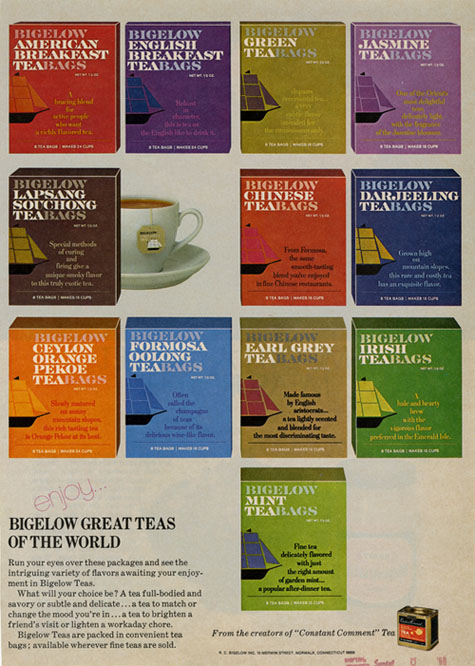
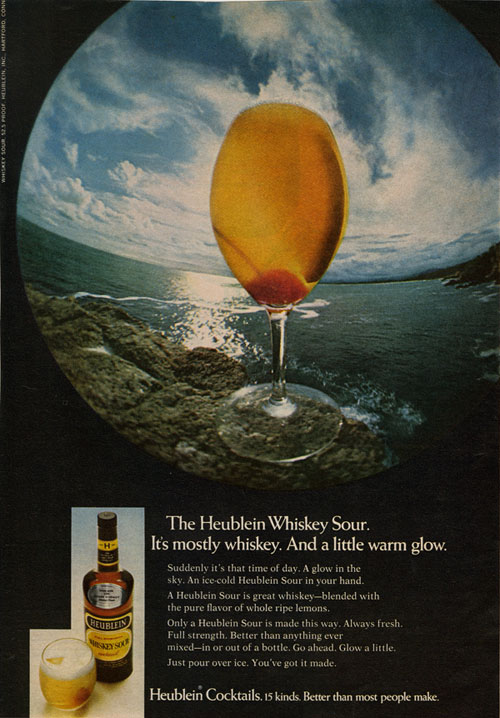
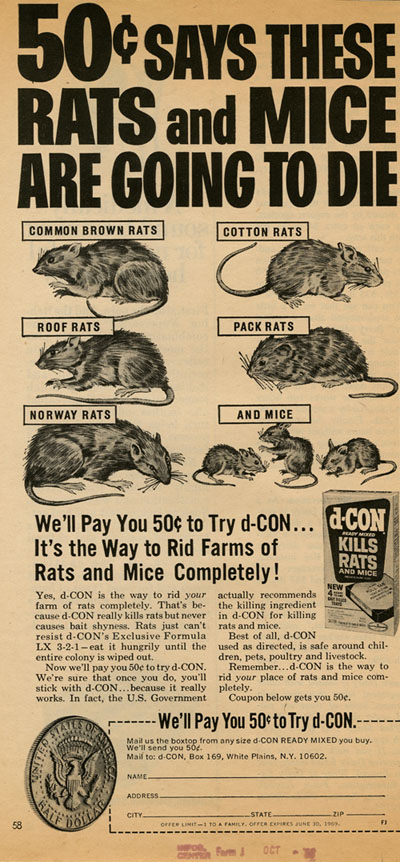
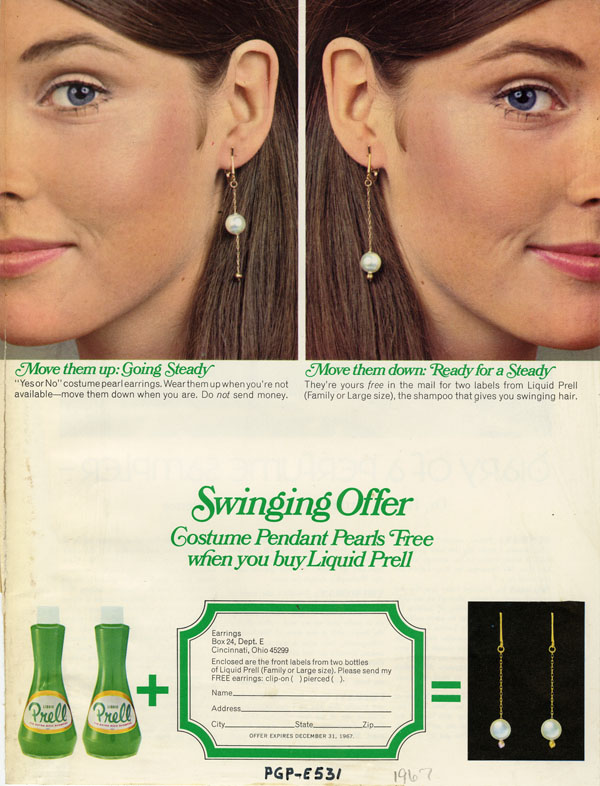
The title of last night’s show accurately sums up a major theme seen in the episode.  Many characters need or give favors, though not without consequences.  The SC&P staff realizes that they are competing for two similar clients, Sunkist and Ocean Spray, so one will have to be resigned. While talking to Peggy, Pete’s mother claims she is in love with her nurse Manolo, and implies that their relationship is sexual. Sylvia and Arnold are afraid because their son Mitchell is reclassified 1A by the draft after dropping out of school and sending back his draft card in protest. Peggy tells Pete what his mother said to her over a friendly post client meeting dinner.  Later Pete argues with his mother about Manolo. Don awkwardly brings up Mitchell’s draft status at a client dinner with Chevy. Peggy calls Stan to remove a dying rat from her apartment but he refuses to help. Sally and her friend Julie stay at Don and Megan’s apartment while attending the Model UN. They meet Mitchell in the lobby and swoon over him.  Ted gets mad at Don for the uncomfortable moment during the Chevy dinner.  He offers to help get Mitchell into the Air National Guard if Don will agree to drop Sunkist in favor of Ocean Spray.  Don agrees and calls Sylvia to tell her the good news. Julie signs Sally’s name on a love note slipped under Mitchell’s door.  Sally returns to retrieve the note from the Rosen’s apartment, only to find Sylvia and Don about to have sex. She runs away and Don tries to follow. Bob tries to reassure Pete about Manolo and touches his knee to Pete’s suggestively. Pete rebuffs Bob and fires Manolo. Don comes home drunk and Megan tells him that he is the “sweetest man” for helping Mitchell. Sally shouts “you make me sick!” and runs off to her room.  Don tries to talk to Sally but makes up a weak excuse.

Episode nine’s plot referred to Post cereals, whiskey sours, rat traps, tea, and Ocean Spray, among other things.  Here is a selection of ads that illustrate some of the products and cultural references mentioned in Sunday night’s Mad Men.  A gallery of our highlighted images may also be found on Pinterest and Flickr.

Bigelow tea-1968 - Blog
whiskey sour1968 - Blog
d-Con-1968 - Blog
Post cereals-1968 - Blog

Prell and earrings1967 - Blog

50 Drinks and Toasts, Manhattan-1968 - BlogGet a Haircut-1967 - Blog

Purina1968 - Blog

New Acquisition: Adventures in Negro History

This year, Duke commemorates the 50th anniversary of racial integration at the university, when in 1963 five African American students matriculated into the undergraduate program. Also in 1963, Pepsi sponsored the production of a record album, “Adventures in Negro History,” recently acquired by the John W. Hartman Center as part of the Douglass Alligood Papers. Alligood was one of the first black executives in the advertising industry, and is currently a Senior Vice President at BBDO agency. Long a champion for minority inclusion in the advertising business, Alligood chairs the BBDO’s Diversity Council, which advises management on diversity policies. He has also worked at RCA and for the minority-owned agency UniWorld Group. The record album contains dramatic readings by Detroit-based actors, including Jerry Blocker, Burniece Avery and Jiam Desjardins, which depicts the contributions of people of color to American history. Included are both the famous (Crispus Attucks, Phyllis Wheatley, Ralphe Bunche) and lesser known figures: Christopher Columbus’s pilot, Pedro Nino; Revolutionary War hero Salem Poor; and philanthropist Paul Cuffe.

adventures in negro history in alligoodPost contributed by Rick Collier, Technical Services Archivist.

Flags are flying for the 2000th online finding aid!

ship with sails

Any day now, the ticker at the top of the Rubenstein’s finding aids page will turn over and mark a milestone 2000th online finding aid. Doesn’t sound like much, especially when you consider that the Rubenstein Library holds more than 6,000 manuscript collections. But those 2,000 finding aids – narrative maps that guide a researcher through the contents of a manuscript collection’s boxes and folders – also represent thousands of hours of interpretive labor supplied by library staff. The first of these online collection guides debuted around 1996. They are encoded with an XML-derivative called EAD, and are now discoverable to a worldwide audience through any online keyword search. But finding aids – or inventories – or collection guides – go back a lot further than their online counterparts.

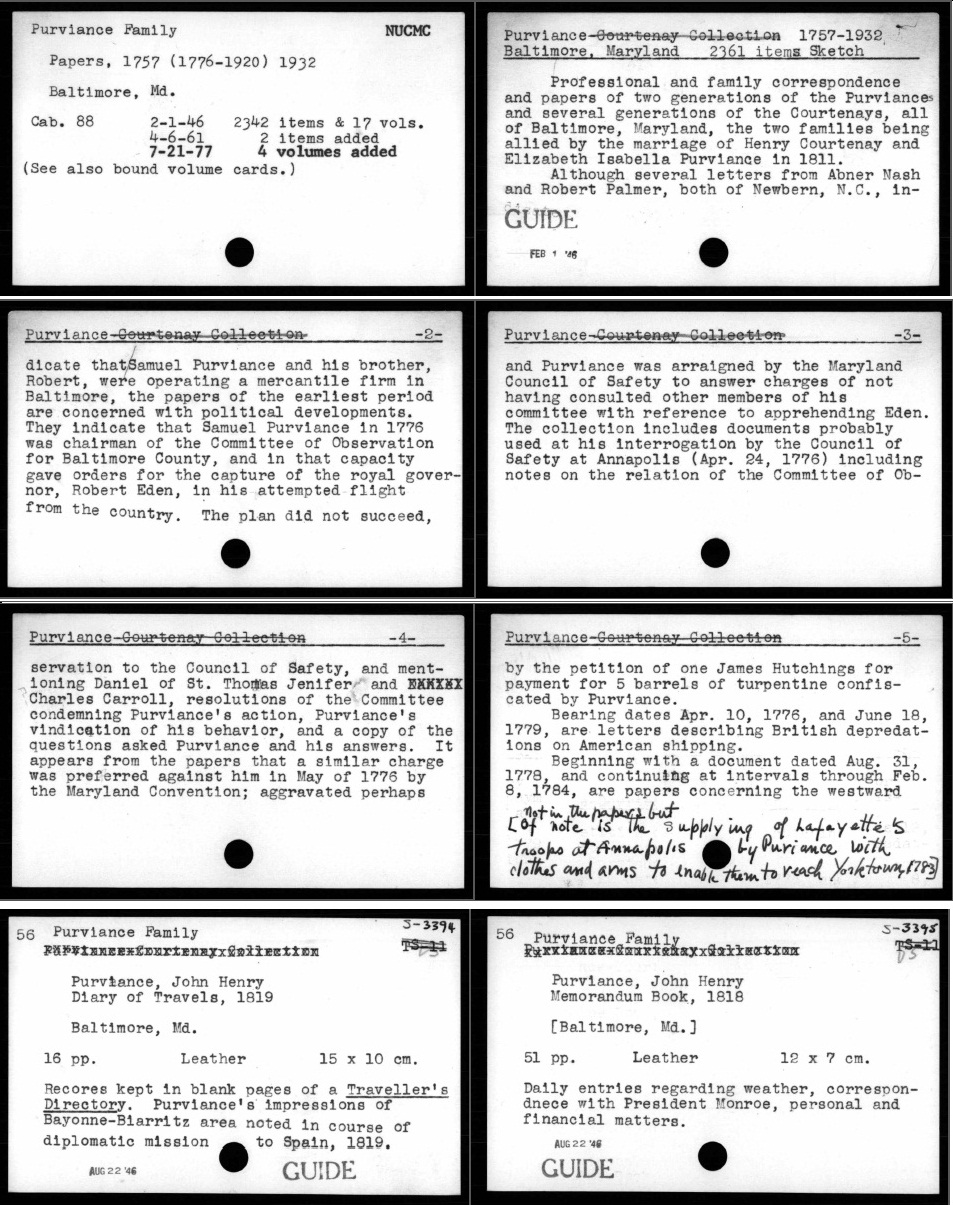
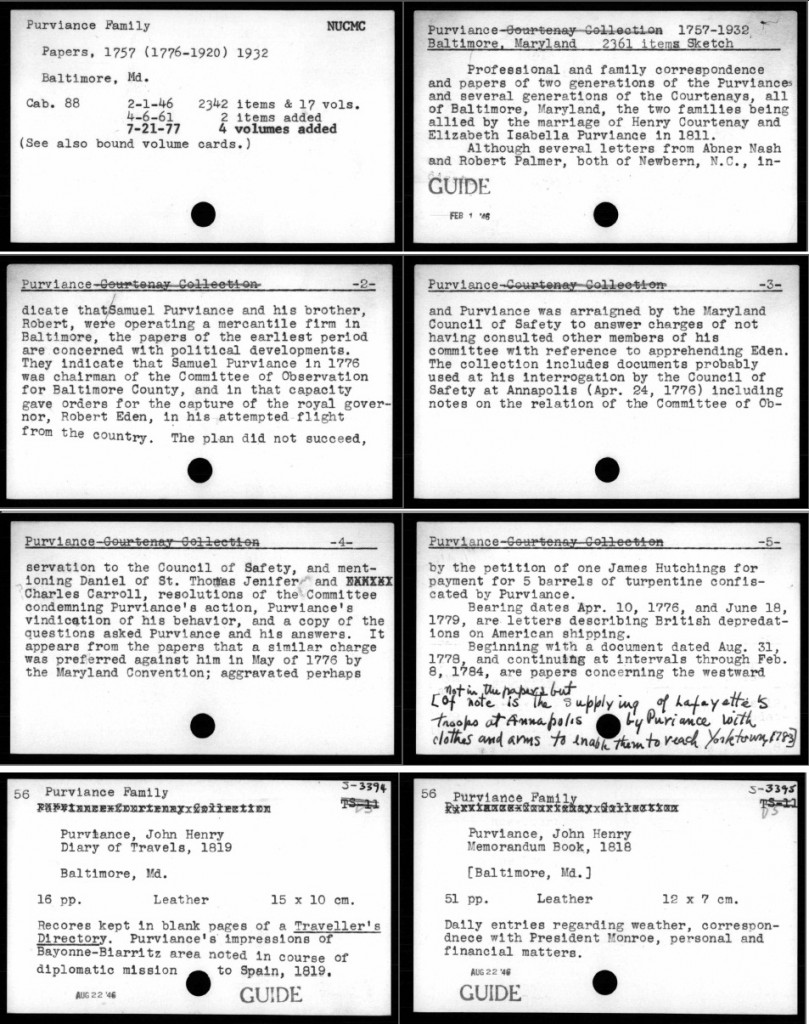
The winner of the 2,000th finding aid spot belongs to the Purviance Family Papers. Acquired as either a purchase or a gift by the Duke University Manuscripts Department in 1943 from an S. S. Barnes in Baltimore, the collection offers over 2300 manuscripts and 10 photographs, 4 maps, and 21 volumes (including an anonymous Civil War diary) belonging to a prominent Revolutionary-era Baltimore family with a compelling history. Shortly after it was received, a Manuscript Department archivist researched the collection and typed up a set of catalog cards: the Purviance Papers “finding aid.”

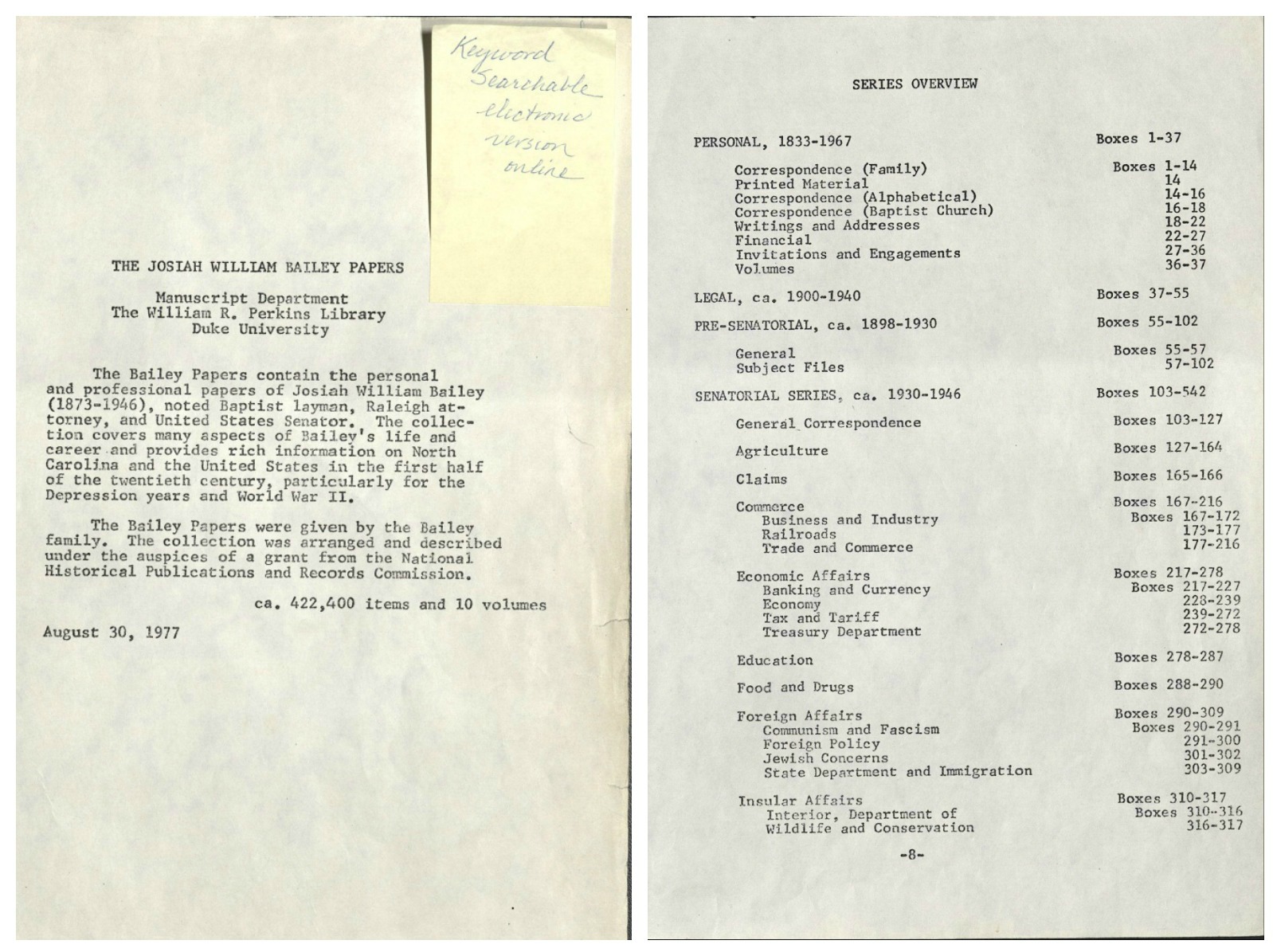
Defined most broadly, archivists consider a finding aid to be any document that assists in charting a path through the contents and topics of an archival collection – a big help when you’re dealing with a very large collection! In the 1940s at Duke, this was the role of the card catalog. Of course, you could only consult the cards if you traveled to the library, or if you could ask a reference archivist to help. Some collections were represented by three or four cards; some had close to a hundred. In 2012 – to the shock of older librarians who never thought they’d see the day – the entire card catalog was digitized and is currently being used as a resource for the reference archivists. Here is a sample of the 92 Purviance cards:  purviance cardsCollections were typically a lot smaller back then.  As collections grew larger, a new generation of archivists started using more productive strategies for describing thousands of folders of manuscript items, and as part of this effort, they turned to creating more-portable paper inventories (but still on typewriters). Here’s an example of one, with a post-it note that marks a turning point in library history:   PicMonkey Collage
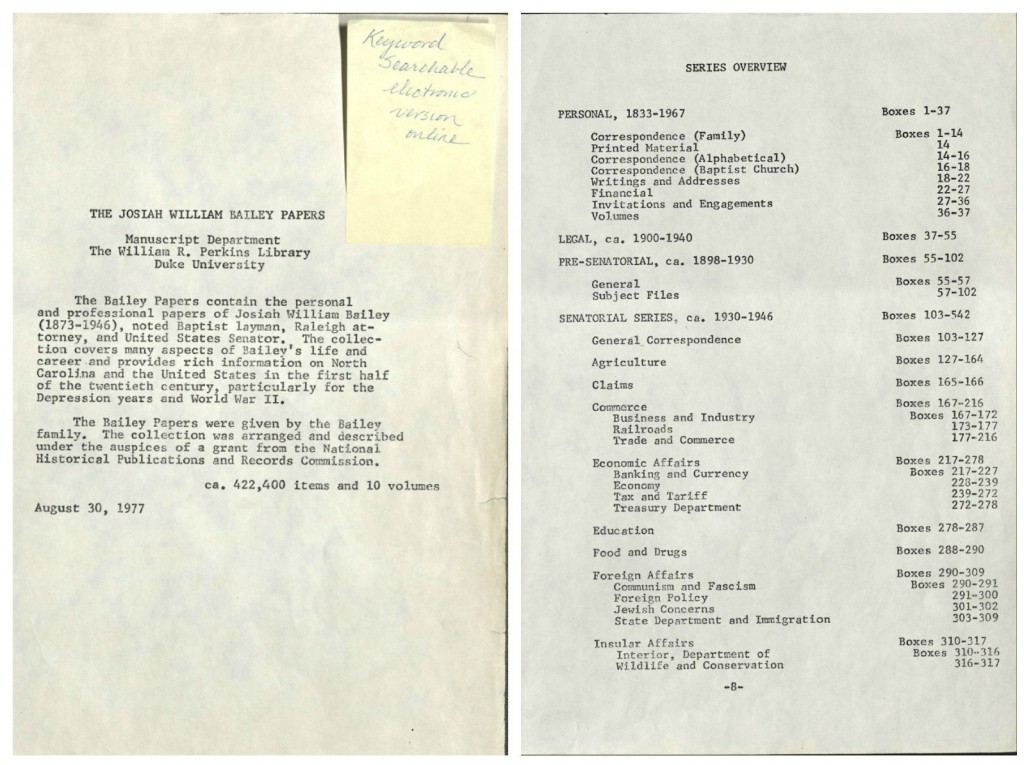
Enter the computer and Microsoft Word. When I started working in the library in 1992, the staff was thinking big about the power of computing. Gopher and Mosaic and were on the horizon. More prosaically, electronic-format finding aids could be corrected and added to, and printed out anytime (no more liquid white-out) or viewed online – goodbye, paper (well, sort of). The description for the Purviance Family Papers were still described on cards in the card catalog and in a paper box list until a few months ago. As part of a project to make all of our longer legacy descriptions available online, a library intern, Bob Malme, encoded the Purviance Family Papers collection guide – the Rubenstein Library’s 2,000th finding aid. And it is especially fitting that this inventory was the work of one of our interns: an integral part of our library practically since our founding, they have provided a huge amount of support for our collections and their finding aids – in every format.

As a member of the Technical Services Department, whose job it is to crank out all these finding aids, I was – and still am, I guess – an EAD Warrior. That moniker comes from a Duke Special Collections Library group whose early work on standards for Duke online finding aids would shape our goal for total online access for all of our finding aids – cards and paper. How many finding aids will that eventually be? Oh, another 4,000 at least. We’re working on it already!

Post contributed by Paula Jeannet Mangiafico, Senior Processing Archivist.

Identity Crisis

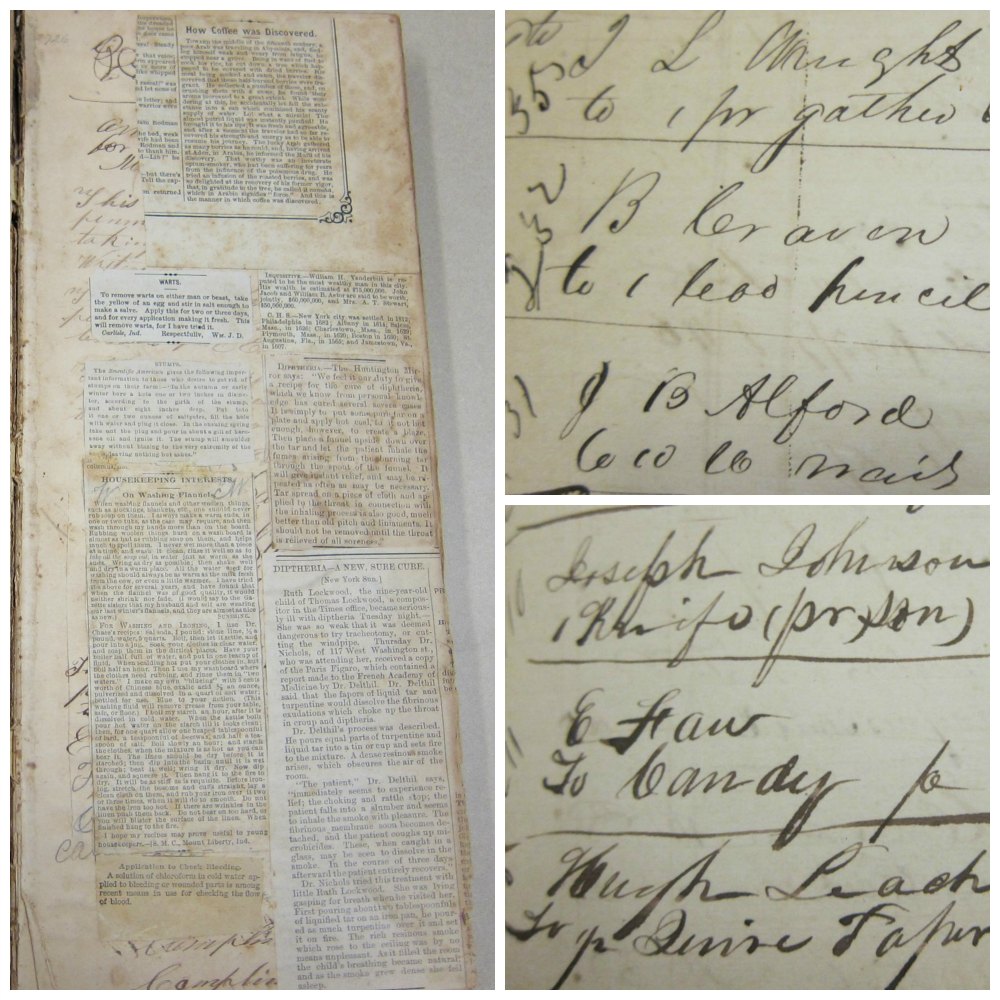
Our manuscripts cataloger, Alice Poffinberger, recently showed me a merchant’s daybook from Normal College, Randolph County, NC. For those unfamiliar with the history of Duke, Normal College was renamed Trinity College in 1859, which was renamed Duke University in 1924. The Normal College daybook dates from 1852 to 1853, and includes the names of the school’s students and faculty, including its president, Braxton Craven, and Enoch Faw.

Inside the daybook, including entries mentioning Braxton Craven and Enoch Faw.

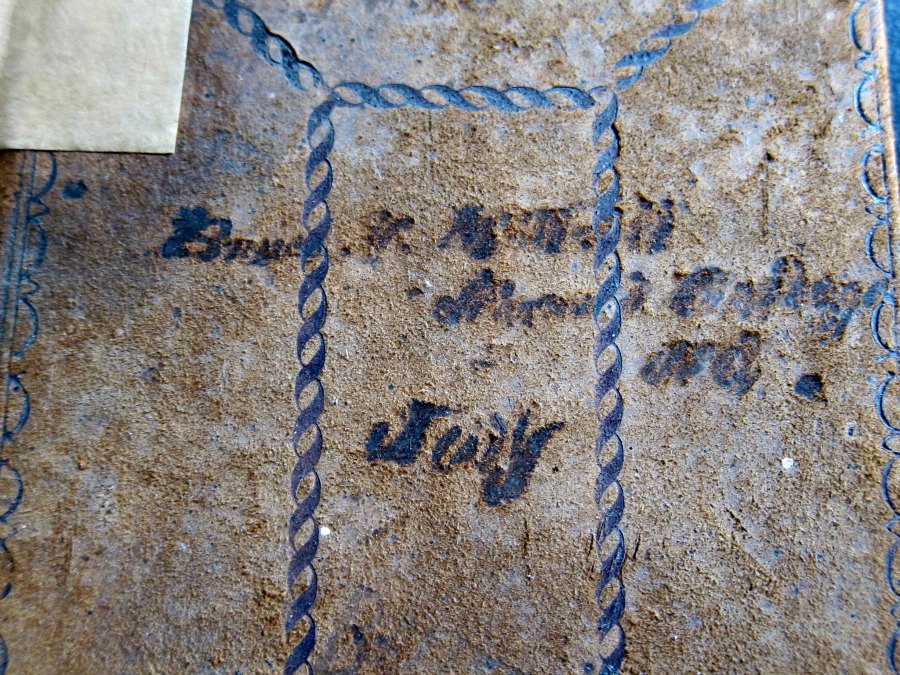
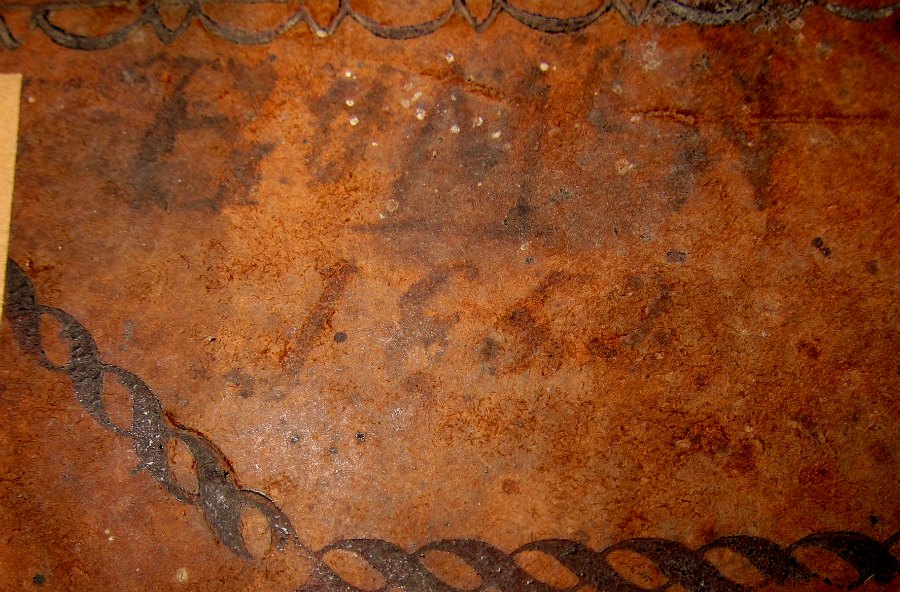
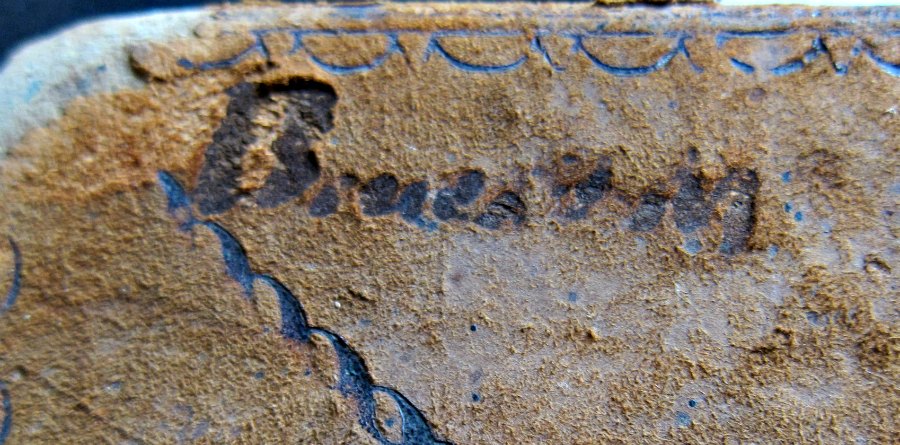
Identifying the name of the merchant or store, however, has proven to be a challenge. It was first cataloged in the 1940s as the S. C. Bruce Daybook, even though Bruce’s name appears prominently as a customer, not the merchant. Later attempts to trace the origin of the daybook culminated in consulting the 1850 census. They deduced that because both William Moffett and N. D. Bain were listed at households no. 6 and no. 8, respectively, and because both were listed as merchants, that the daybook likely belonged to the firm of Bain & Moffett. Also, on the upper left corner of the daybook’s front cover are the letters B and M with what was thought to be an ampersand between them.

IMG_0709
The upper left corner of the daybook’s front cover.
Upper left corner of the daybook's back cover.
Upper left corner of the daybook’s back cover.

While the item is cataloged as the “Bain & Moffett [?] Daybook,” Alice and I remain unconvinced that this is its true identity. It may be difficult to tell from the photographs, but in person, the branding on the cover looks more like Bruce than Bain and what is thought to be Moffett looks like it could be McNeill. What’s been assumed to be an ampersand looks more like an H or N.

Branding on the front cover of the daybook.

The North Carolina Digital Heritage Center’s DigitalNC site provides access to city directories from across the state. Unfortunately, the earliest available issue for Randolph County was published in 1894, making our wish to positively identify the daybook’s original owner a bit more difficult. We will continue to pursue this item’s identity as time allows. We will also graciously accept any help or insight.

What do you think? Is it Bain & Moffett, or something completely different?

Post contributed by Kimberly Sims, Technical Services Archivist for Univeristy Archives.

Mad Men Monday, Episode 10

Mad Men Mondays logo

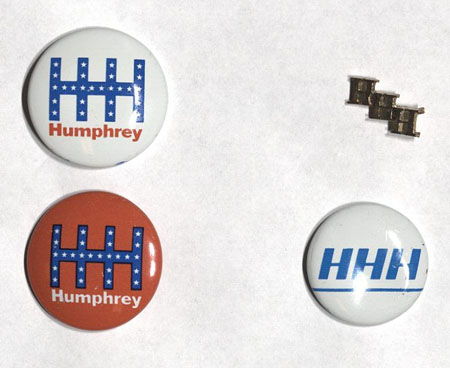
The riots and politics of the 1968 Democratic Convention in Chicago continually weave in and out of Episode 10, through media and discussions. The partners begin discussing changing the agency’s name. Don, Roger, and Harry travel to LA for client presentations, including Carnation. Harry drives Don and Roger to a party in the Hollywood Hills. Starlets and stoned hippies roam poolside. Don is invited to share a hit from a hookah. His hallucination ends with him seeing himself face down in the swimming pool. He comes to on the deck, wet and coughing, with a soaked and out-of-breath Roger telling everyone he’s fine.

At the office, Ginsberg confronts Jim, calling him a fascist. Jim tells Ted they should fire all SCDP staff, beginning with Ginsberg. Jim asks Bob Benson to take Ginsberg to the Manischewitz meeting. Joan’s blind date ends up being with Avon’s new Head of Marketing who is looking for a new agency. She praises the company and picks up the check. Wary of Pete, Joan sets up a lunch meeting with just herself, Avon, and an unknowing Peggy. Ted’s tells Jim Chevy has signed off on their work. Bob interrupts with news Manischewitz has put them in review. Jim rewards Bob for “handling this like a man” with a spot on the Chevy team. Avon sends samples to the agency. Pete blows up, reprimands Joan, and calls Ted in to deliver the final blow. Peggy listens in, and sends in the secretary with a fake note that Avon has called for Joan. Ted gives Joan the go-ahead, over-riding a seething Pete. All partners but Joan meet in Don’s office. Ted shares news of Chevy and Avon, and Cooper reveals Ted and Jim’s suggestion for an agency name: Sterling Cooper & Partners.

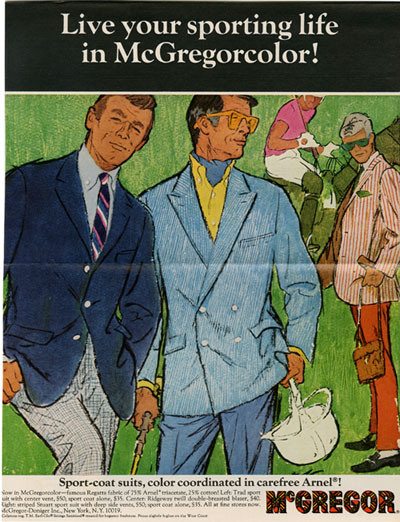
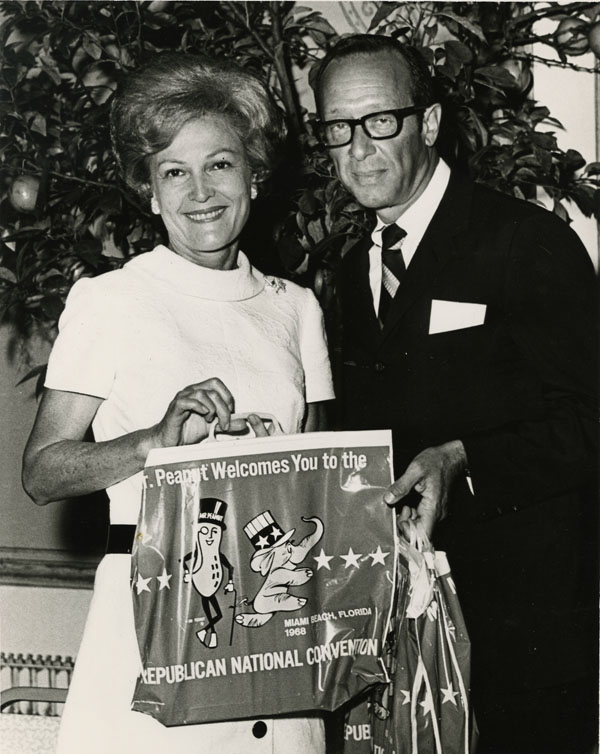
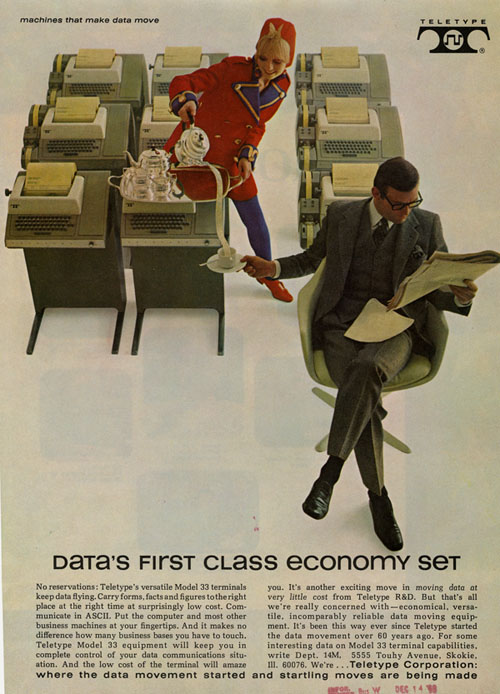
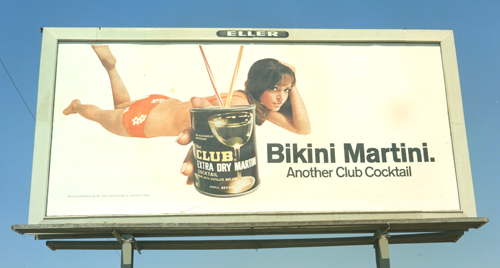
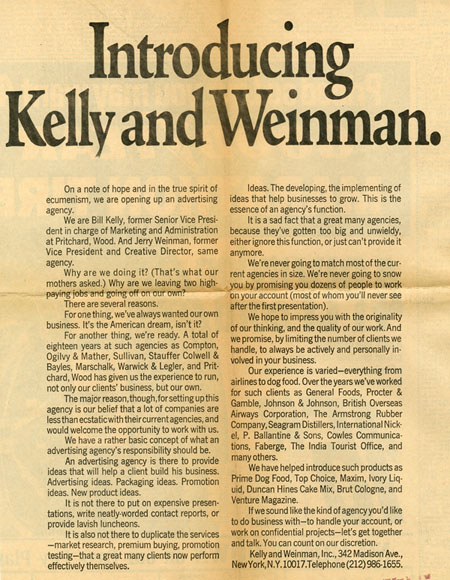
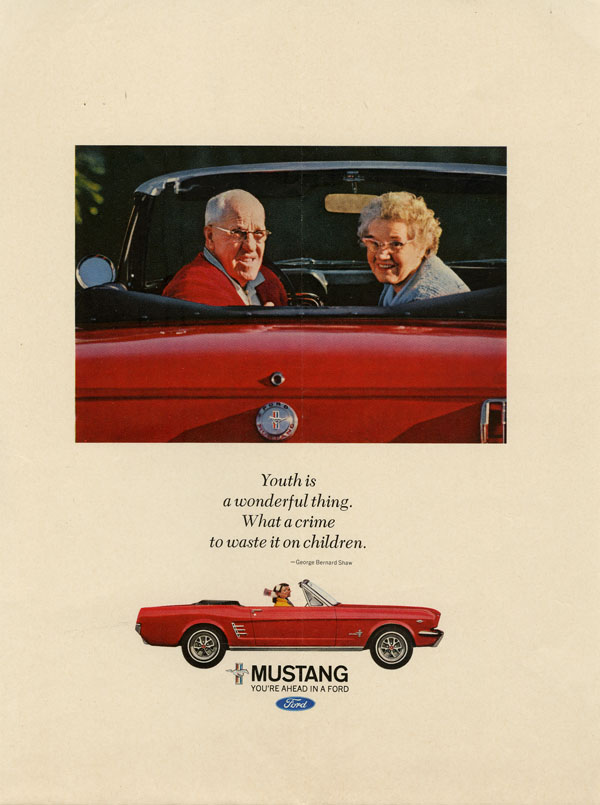
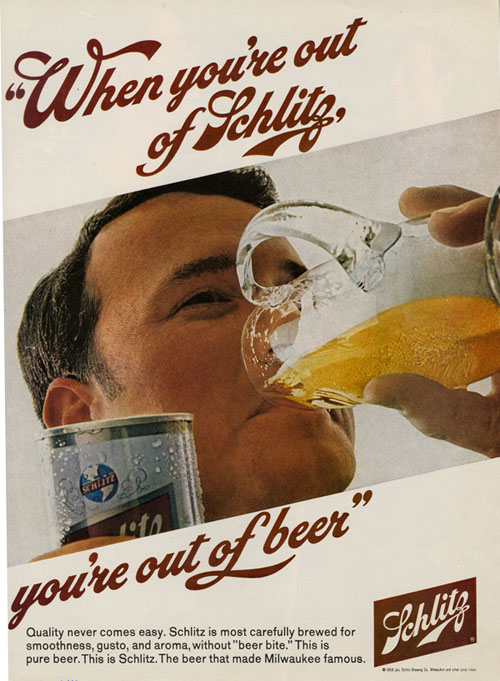
Episode 10 referred to Carnation Instant Breakfast, Life Cereal, computers in business, renaming an agency, men wearing ascots, and Schlitz beer, among others. Here is a selection of ads that illustrate some of the products and cultural references mentioned in Sunday night’s Mad Men. A gallery of our highlighted images may also be found on Pinterest and Flickr.

campaign buttons - Blog

Carnation - Blog

RNC - Pat Nixon - Mr Peanut - Blog

Life - Blog

Teletype - Blog

BBB3353-3-blog

Kelly and Weinman - Blog

mustang - Blog

McGregor - Blog

Schlitz - Blog

A Birthday Present for Walt Whitman

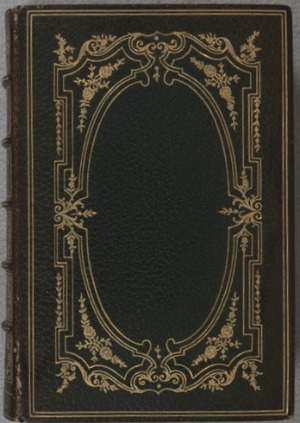
ExtraIllFrontBoardresizedToday, 31 May 2013, is the 194th birthday of Walt Whitman.  The Trent Collection of Whitmaniana in the Rubenstein Library is one of the largest collections of Whitman’s manuscripts and printed works in the world.  Just in time to celebrate the Good Gray Poet’s birthday, a beautifully “wrapped” new addition to the collection is available for research.

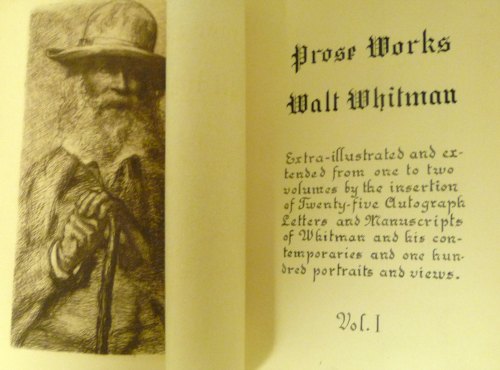
From an otherwise unremarkable edition of Whitman’s Prose Works, the copy newly arrived at the Library was lavishly extra-illustrated and expanded into two leather-bound volumes by an early owner, with the addition of 26 autograph letters and manuscripts and one hundred portraits and views.  Extra-illustration, also known as Grangerization, involves the addition by a collector of separately produced items such as portraits and manuscripts to a printed text.  Controversial today because it involves dismantling and transforming books, the practice was quite popular in the nineteenth century; this example is from the early twentieth century, perhaps the 1920s.

ExtraIllTitle
Added title page and frontispiece etching of Whitman in Prose Works.

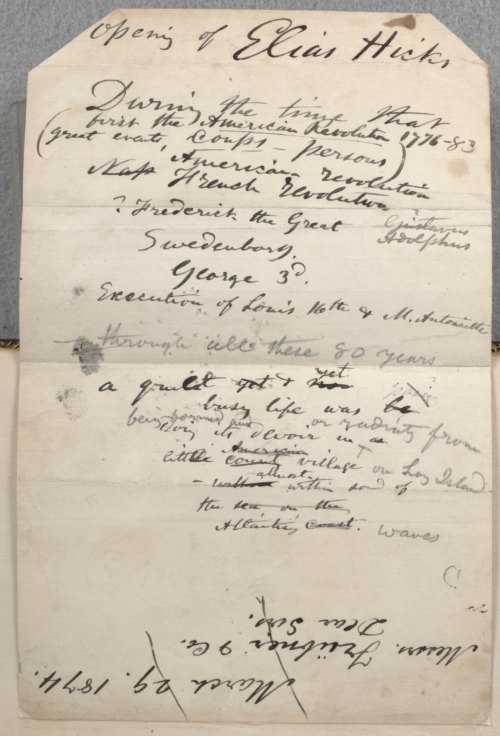
Many of the added items are of interest, including a manuscript slave deed and letters by Whitman friends and notables such as John Burroughs, John Swinton, William Cullen Bryant, Henry Wadsworth Longfellow, and General William T. Sherman.  Most importantly for Whitman scholars, the first volume contains a page of Whitman’s manuscript notes on the Quaker preacher Elias Hicks.   The manuscript had fallen into three pieces due to being folded into the binding; thanks to the work of Conservator for Special Collections Erin Hammeke, it has been repaired and remounted.

ExtraIllHicksEssayAfterresized

While we cannot say with certainty who created these extra-illustrated volumes, the second volume bears the bookplate of Mary Young Moore, a Papal countess for whom a high school on Staten Island, New York is named.  Given the connections of both Whitman and Hicks to New York City, this manuscript fragment may have especially appealed to Countess Moore.

Post contributed by Will Hansen, Assistant Curator of Collections, Rubenstein Library.