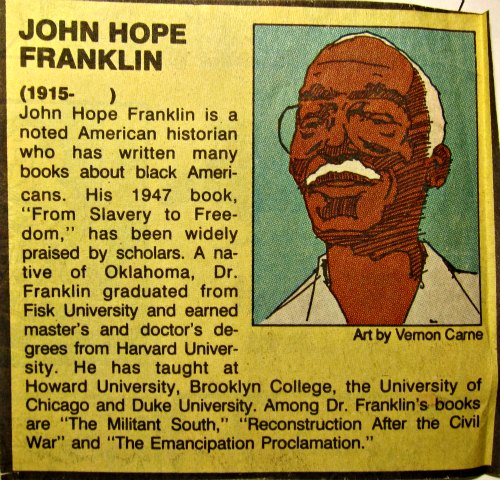
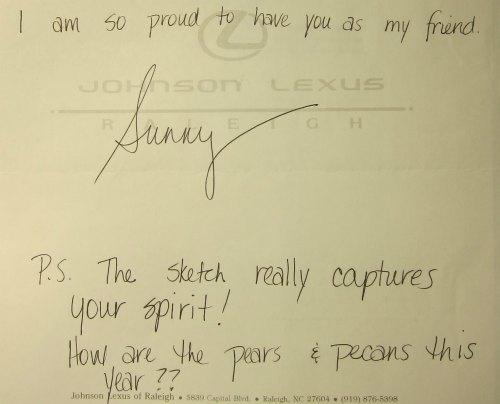
We are wrapping up processing on the John Hope Franklin Papers — more on that soon! — but I couldn’t let this project end without sharing a bit of its lighter side. Newspaper drawings and cartoons of Franklin popped up throughout processing, often having been clipped and sent to Franklin by his friends and admirers. Here is a case where we see Franklin’s reaction to one of his cartoons, shared with him by a friend in Raleigh.
The sketch in question appears to have been published as part of a syndicated comic strip in newspapers around the country.
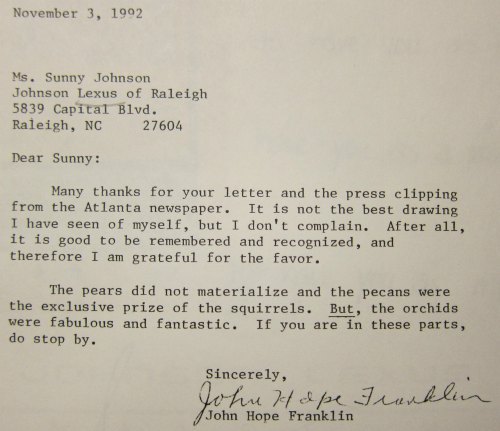
Here is Franklin’s response:
“It is not the best drawing I have seen of myself, but I don’t complain.” Understatement of the year, maybe? Franklin’s friendly good humor is prevalent throughout his papers, which has made them particularly enjoyable to process over the past year. Stay tuned for more information about the conclusion of the Franklin Papers processing project.
Post contributed by Meghan Lyon, Technical Services Archivist.
Beginning as a popular pastime in seventeenth-century Europe, freak shows featured performances intended to shock viewers such as exhibitions of biological rarities or heavily tattooed or pierced people, as well as extreme activities like fire-eating and sword-swallowing. Performers could be physically unusual humans such as those uncommonly large or small, those with both male and female secondary sexual characteristics, and people with other extraordinary diseases and conditions. As attitudes changed about physical differences and previously mysterious anomalies were scientifically explained, laws were passed restricting the freak show resulting in a decline in this form of entertainment.
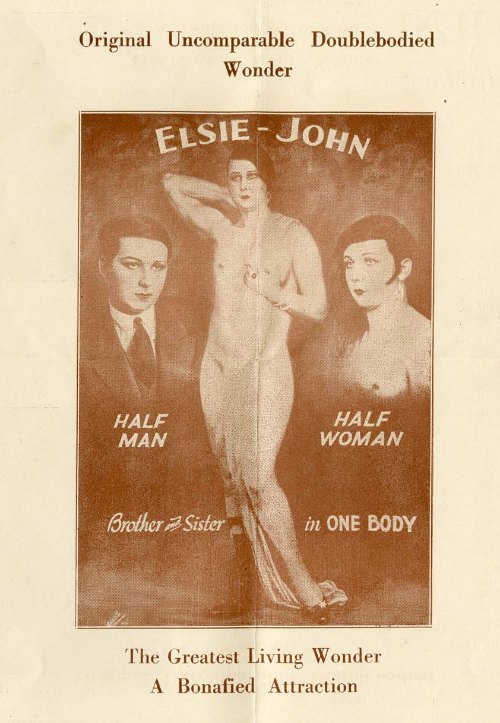
The pamphlet includes six halftone views of Elsie-John as a man and as a woman as well as an autobiographical sketch. Elsie John, a performer in Chicago in the 1930s and 1940s, was connected to the Beat Generation of writers. The poet Herbert Huncke (1915-1996), who appears as a thinly-veiled character in both William S. Burroughs’ 1953 novel Junkie and Jack Kerouac’s On the Road, and was by some accounts the source of the term “Beat,” wrote that he had been taken at an early age under the wing of Elsie John, who appears to have introduced Huncke both to heroin and to the gay underground of 1930s Chicago. Huncke’s short memoir “Elsie John” is an unsentimental but affectionate sketch of the performer.
Post contributed by Laura Micham,Merle Hoffman Director, Sallie Bingham Center for Women’s History and Culture and Curator, Gender and Sexuality History Collections.
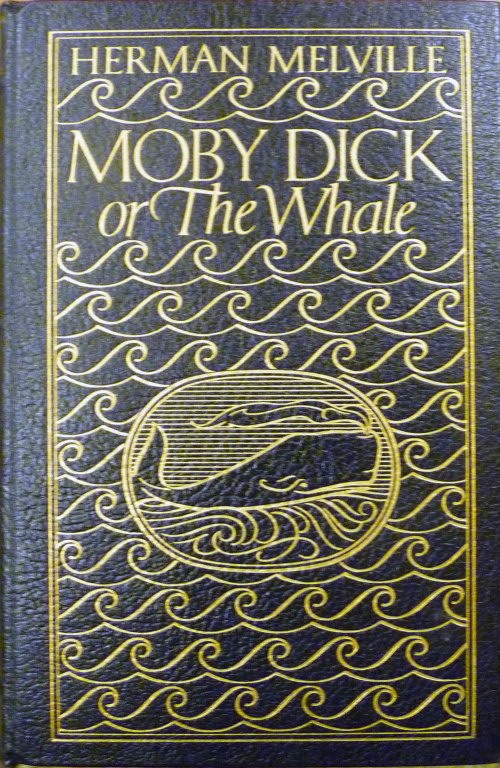
As strong advocates for the importance and vibrancy of the humanities, we here at the Rubenstein Library greatly enjoyed Duke President Richard Brodhead’s appearance on The Colbert Report last Thursday. As custodians of thousands of rare books, we were especially interested in Mr. Colbert’s mention of his “beautiful copy of [Moby-Dick] — hand-tooled leather, everything.” Colbert went on to say, “I don’t really want to crack it open, ’cause it’ll ruin the resale value.”
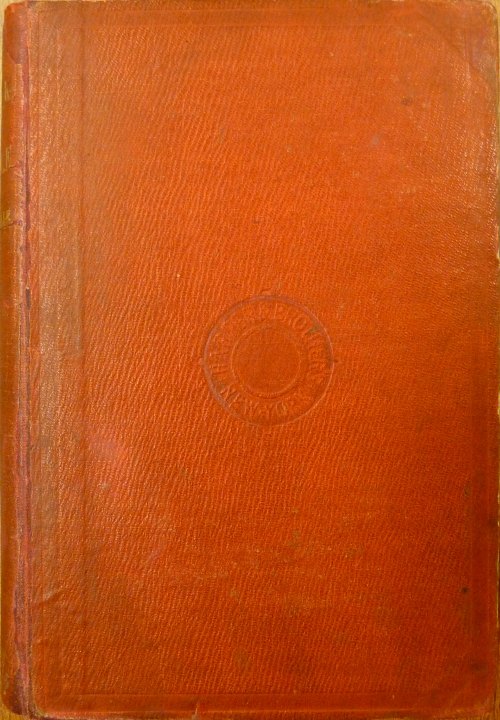
Which leads us to our quick pop quiz for the day: which of these copies of Moby-Dick is more valuable?
Moby-Dick in a gilded leather binding.Moby-Dick in a repaired red cloth binding.
The answer: the second copy — this is the 1851 first American edition of Moby-Dick, in its original variant red binding cloth. The first copy, in “hand-tooled leather,” is a 1977 Easton Press publication, and copies can be found for sale online for roughly 600 times less than you’d need to pay for the first American edition. Book historians and collectors, like Richard and Nancy Riess, who donated the Rubenstein copy of the first edition of Moby-Dick, generally prize first editions in their original bindings, for the evidence they preserve of the process by which a book was seen through the press and first encountered by readers.
The lessons, we hope:
Appearances can be deceiving, as Mr. Colbert and students of the humanities around the world know very well.
And it pays to know your book history — the kind of thing you learn with a quality humanities-based education.
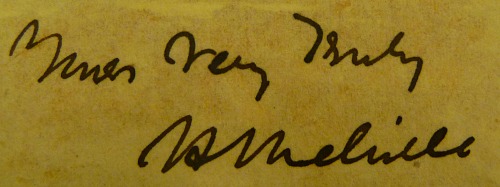
Melville’s signature, pasted into the Rubenstein copy of the first edition of Moby-Dick by a collector.
Post contributed by Will Hansen, Assistant Curator of Collections.
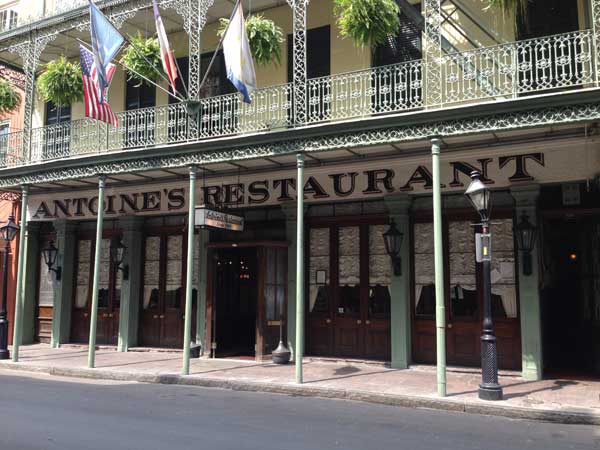
When we haven’t been attending presentations on the latest and greatest in our profession or meeting our fellow archivists, we’ve been exploring this awesome city. A few evenings ago, we stumbled upon a familiar place.
The venerable Antoine’s has stood in New Orleans’s French Quarter since 1840. And, of course, archivists have a soft spot for old things!
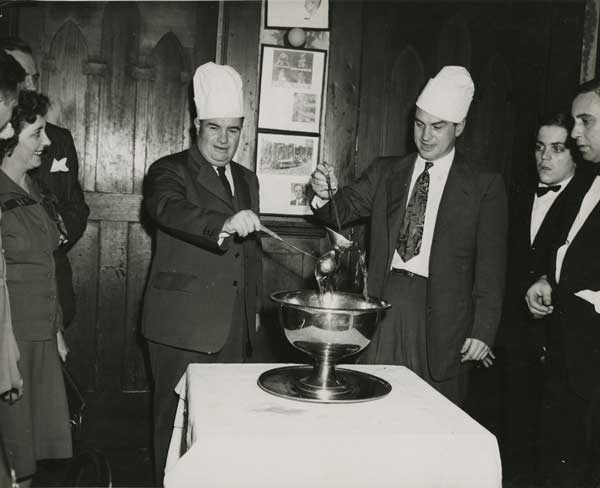
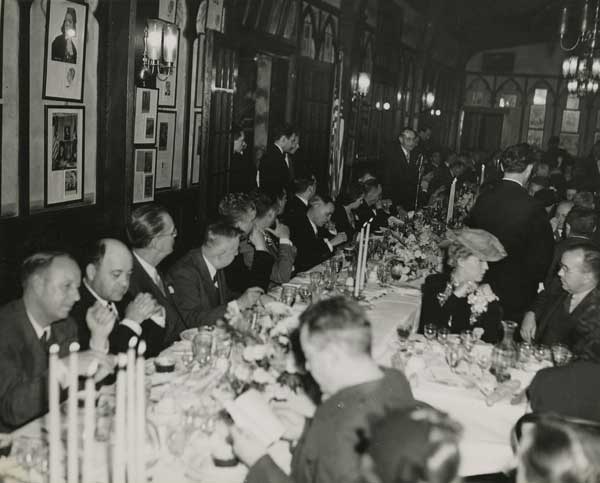
The restaurant is familiar to those of us in the University Archives because of Eddie Cameron—specifically, a scrapbook of photos, clippings, and ephemera from the Duke football team’s trip to play in the 1945 Sugar Bowl. Among the pre-game celebrations was a dinner at Antoine’s with the team’s University of Alabama opponents.
We love this photo of Eddie Cameron and Alabama head coach Frank Thomas mixing up some Café Brûlot Diabolique. Thankfully, the game wasn’t the following day! (Duke won, 29-26, incidentally.)
Most of us will be leaving today, to return to our normal Durham lives of collecting, processing, cataloging, answering questions, teaching, and, well, helping to make the Rubenstein the great place that it is. But we’ll be back here soon, we hope! Thank you, New Orleans, and thanks, Antoine’s, for reminding us of a fun evening in Duke’s history!
The title of this blog post comes from one of the taglines for the 1992 film A League of Their Own, a fictionalized account of the formation of the All-American Girls Professional Baseball League.
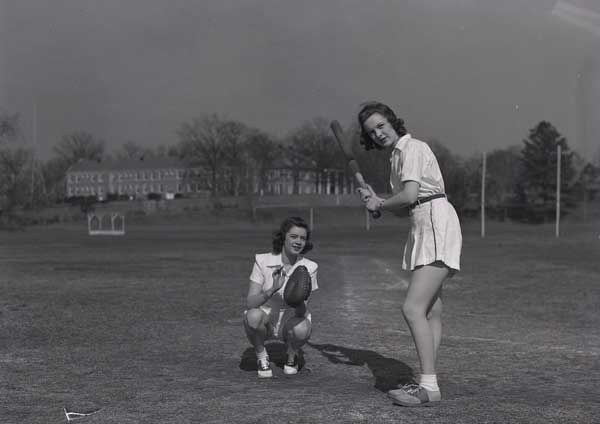
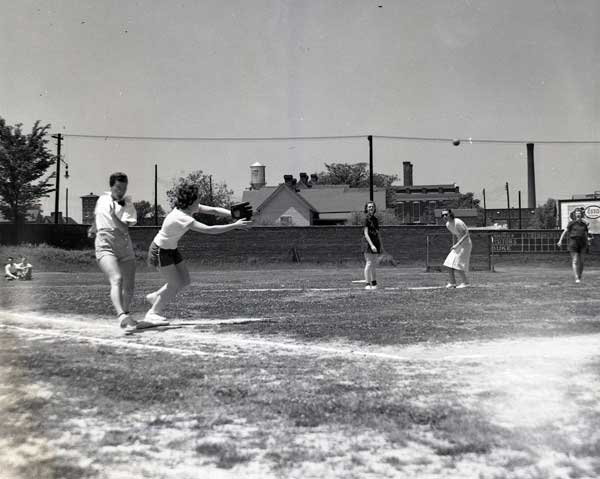
I’m currently working to inventory approximately 28,000 acetate negatives of Duke athletics from circa 1928-1982 and recently came across a few images of women playing baseball from as early as 1934 to as late as 1941.
Baseball, Women’s Athletic Association, 1941
In the decades before Title IX, Duke women participated in sports activities organized by the Women’s Athletic Association. The W.A.A. formed in 1929 as an “outlet for the athletic urge than the physical education classes were able to offer” and to provide a “program of sports activity for women, similar to that afforded to the men by the intramural athletic program.” The W.A.A.’s purpose was to “stimulate interest in athletics, to provide a chance for those interested in sports to develop more skill, and to give the women opportunities for fellowship and recreation.”
Baseball, Women’s Athletic Association, May 6, 1939
In addition to baseball (not softball), women competed in tennis, golf, track & field, equestrian events, field hockey, soccer, fencing, swimming, basketball, and archery. The W.A.A. also sponsored several events and activities, including dances, weekend parties, hikes, and open houses in the gym. It also used a point system to determine which 10 seniors received a blue “D.” The 7 seniors who accrued the highest number of points received white sweaters with the blue “D” attached.
Welcome to the first post in a series documenting the processing of the Abraham Joshua Heschel Papers.
Photographs and documents from the Abraham Joshua Heschel Papers.
In 1965, Rabbi Abraham Joshua Heschel, professor of Jewish Ethics and Mysticism at the Jewish Theological Seminary of America, accepted as position as the Harry Emerson Fosdick Visiting Professor at Union Theological Seminary (UTS). Newspapers reported this occasion with headlines that proclaimed “Rabbi to Teach Christians” and “Seminary Gives Post to Heschel.” The prestigious visiting position speaks to Heschel’s influence in Christian-Jewish relations at the time. As we begin processing the Abraham Joshua Heschel Papers, there is evidence that Heschel’s dedication to interfaith work also made him a controversial figure in some Jewish circles. I recently processed a large folder of materials that Heschel collected during his tenure at UTS and discovered that Heschel preserved the views of his dissenters, tucked in alongside his lecture notes and grade records.
In a folder that contains programs from events honoring Heschel at UTS and Eden Theological Seminary and an excerpt from Reinhold Niebuhr’s Pious and Secular America, I found a fascinating newspaper clipping. The article, “Scholar Delimits Interfaith Talks,” discusses another rabbi’s view on interfaith relations. The article explains that Rabbi Joseph B. Soloveitchik, professor of Talmud at Yeshiva University, argued that Jews should avoid discussing theological issues in their relations with Christians. This article provides an intriguing counterpoint to the documents promoting Heschel’s theological lectures at Christian Seminaries.
In another folder, which Heschel labeled “Interfaith,” he included an excerpt from a letter written by the Lubavitcher Rebbe, Rabbi Menachem M. Schneerson. In the letter, Schneerson writes, “there is no need for us whatever to have any religious dialogues with non-Jews, nor any interfaith activities in the form of religious discussions, interchange of pulpits, and the like” (2). Schneerson concludes, “religious dialogue with non-Jews has no place in Jewish life, least of all here and now” (4). This letter rests alongside an article written by UTS President John C. Bennett and Heschel’s itinerary for the Spring Semester of 1966 which included lectures at the Indiana Pastors’ Conference and eleven different Christian seminaries.
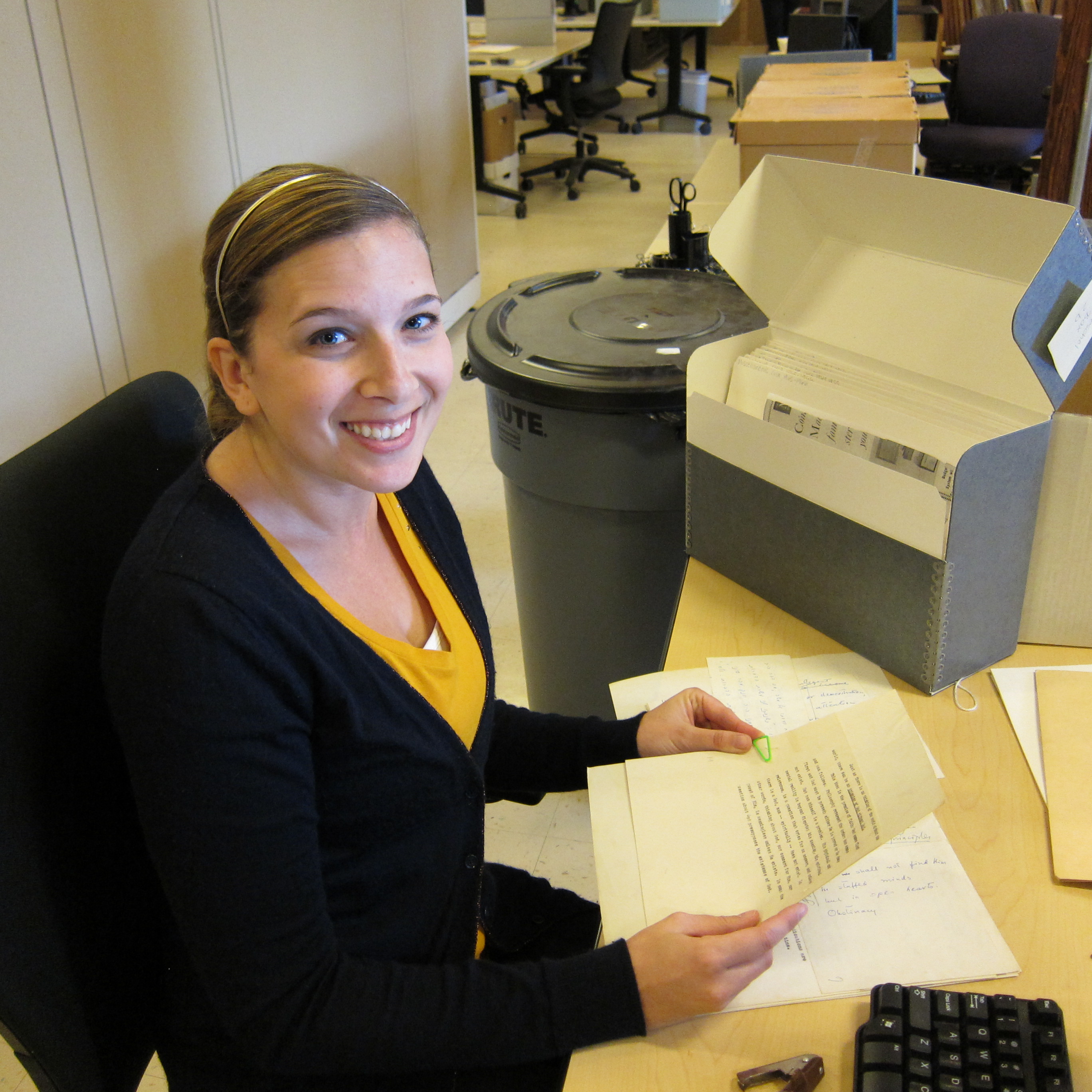
Adrienne and the Heschel Papers.
These dissenting opinions preserved by Heschel and included in folders that highlight his interfaith work provide an intriguing glimpse into Heschel’s world. We will leave it up to future researchers to discover the meaning behind Heschel’s inclusion of these opposition opinions in these particular folders!
Post contributed by Adrienne Krone, Heschel Project Assistant in Rubenstein Technical Services.
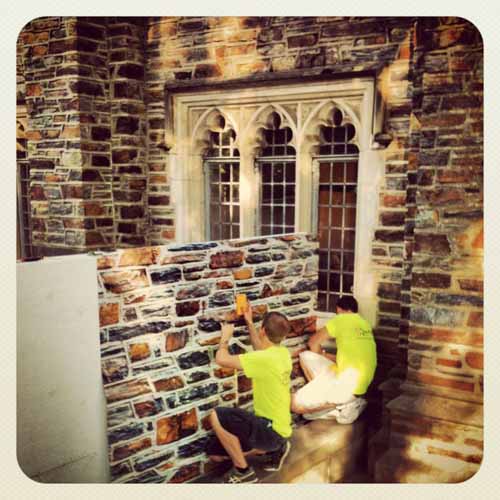
Last week, we watched “Duke Stone” panels going up on the construction fence surrounding the Rubenstein Library and the West Campus Union. So we thought we’d take a few moments to write about the real Duke Stone!
Duke Stone panels being applied. Photo by Aaron Welborn.
Did you know that Duke Stone comes from a quarry in Hillsborough, North Carolina, just about 10 miles away from campus? Or that there are 24 distinct colors in the stone: 7 primary colors with 17 distinct variants of the primary colors? Or that, before choosing the Hillsborough stone, there were several other stone contenders?
Before the Hillsborough stone was chosen to construct West Campus, and before it was known simply as “Duke Stone,” the architects, designers, builders, and James B. Duke himself looked at many different stone samples. They even constructed test walls of stone from other quarries on the East Coast to determine which one they liked the best. Here’s one of the test walls constructed during that phase:
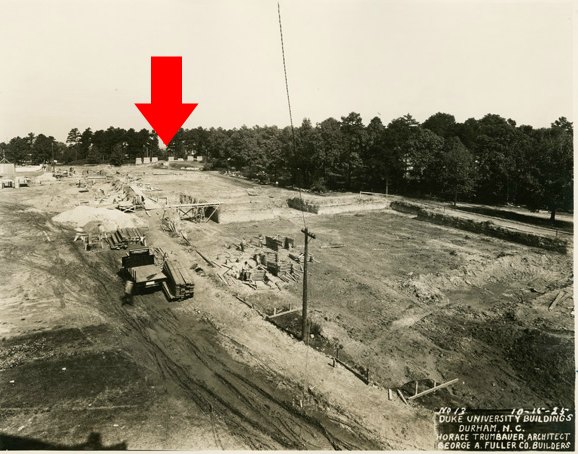
And in this October 15, 1925 photo of construction on East Campus, the test walls are visible off in the distance.
It’s safe to say that we all know and love Duke Stone today—so much so that the panels are going up on the construction wall so that we don’t have to be without the look of it for too long. Next time you’re on campus, see how many primary and variant colors you can find in the stone. Let us know how you do!
Post contributed by Maureen McCormick Harlow, 175th Anniversary Intern for the Duke University Archives.
In June and July we’re celebrating the beginning of a new fiscal year by highlighting new acquisitions from the past year. All of these amazing resources will be available for today’s scholars, and for future generations of researchers in the Rubenstein Library! Today’s post features a remarkable addition to the Sallie Bingham Center for Women’s History and Culture. Check out additional posts in the series here.
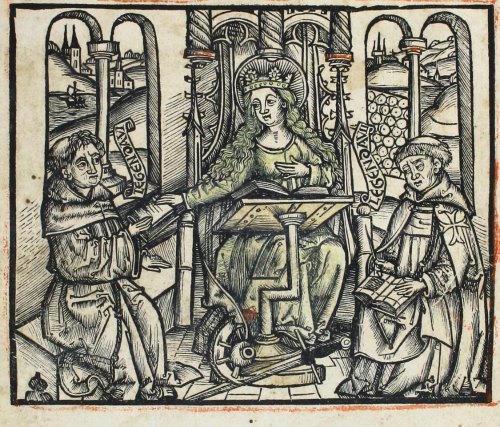
The Library has acquired a rare incunable (item printed from moveable type in Europe before 1501), the Legenda de Vita S. Catharinae by Frater Petrus, published in Strasbourg on April 6, 1500. It tells the story of St. Catherine of Alexandria, one of the most popular and important saints in late medieval Europe, and an enduring icon of women’s learning. She was said to have won a debate with the Roman emperor’s elite philosophers over the value of Christianity, leading to her imprisonment and torture on the breaking wheel, now often called the Catherine wheel.
This edition includes seventeen beautiful woodcuts attributed to the artist known as the “Master of Terence,” who worked frequently for the book’s publisher, Johann Grüninger. The copy now in the Rubenstein Library, just the third known copy in an American institution, also features a contemporary binding with elaborate tooling and a brass clasp, and extensive rubrication both in the text and bordering the woodcuts. It will reward a variety of research approaches, from literary scholars interested in book history and the popular medieval genre of saints’ lives to those working in women’s history, religious history, and art history.
In June and July we’re celebrating the beginning of a new fiscal year by highlighting new acquisitions from the past year. All of these amazing resources will be available for today’s scholars, and for future generations of researchers in the Rubenstein Library! Today’s post features new items in the Library’s Negley Collection of Utopian Literature and its comic book collections. Check out additional posts in the series here.
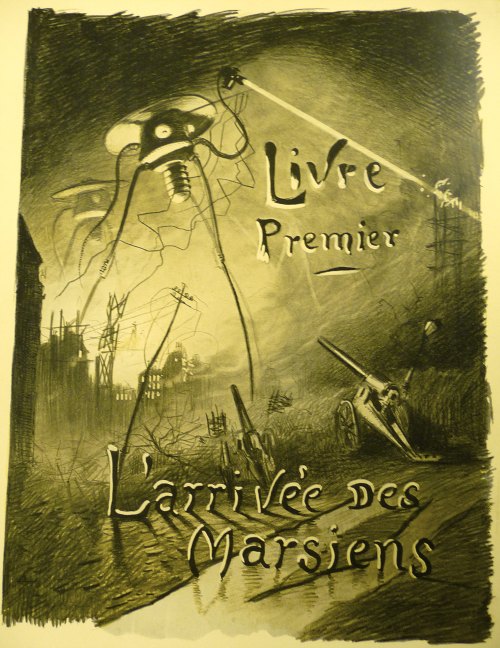
One of the most influential books in science fiction history, H. G. Wells’s The War of the Worlds, was an immediate sensation upon its publication in 1898. Famously adapted for radio, film, and television, the work received perhaps its most beautiful visual interpretation in the limited edition of Henry Davray’s French translation, La Guerre des Mondes, published in Brussels in 1906 with stunning illustrations by Henrique Alvim Corrêa.
The book features 32 plates as well as over 100 illustrations within the text. Corrêa, a Brazilian painter and illustrator who lived in Belgium for most of his life, captured the intensity, grand scope, and wonder of Wells’s vision of interplanetary invasion in his atmospheric, energetic compositions.
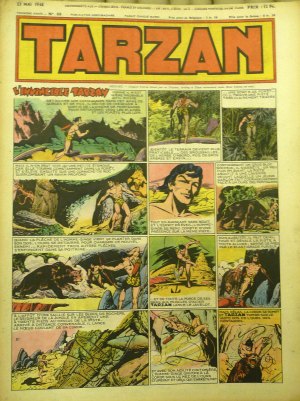
Another new acquisition demonstrates, in a different format, the burgeoning global appeal of genre fiction adapted to visual form in the twentieth century. A complete run of 293 issues of Tarzan, a comics series published in Paris between 1946 and 1952, features the adventures of Edgar Rice Burroughs’s famous creation in vivid color.
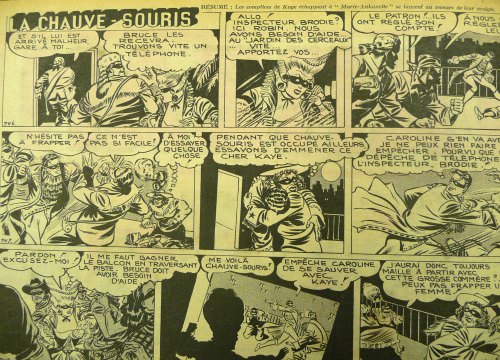
The first 71 issues also feature a French adaptation of the newspaper comic strip featuring Batman, La Chauve-Souris (The Bat), by the famous French science fiction illustrator, René Brantonne. These American adaptations ran alongside comics adaptations of French classics such as Les Miserables.
The Rubenstein Library now holds the only known copy of this periodical in the United States, which appears to be very rare in institutional holdings even in France.
A French adventure of Batman and Robin. dressed as Louis XIV and Marie Antoinette.
In June and July we’re celebrating the beginning of a new fiscal year by highlighting new acquisitions from the past year. All of these amazing resources will be available for today’s scholars, and for future generations of researchers in the Rubenstein Library! Today’s post features a new collection in the Library’s History of Medicine Collections. Check out additional posts in the series here.
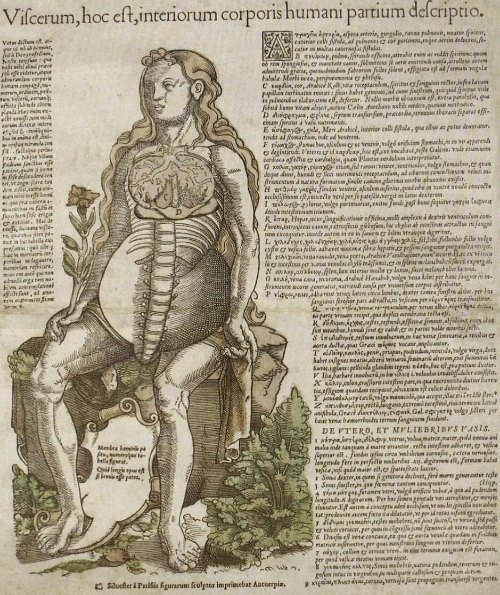
The History of Medicine Collections has acquired two anatomical fugitive sheets, elevating our holdings to now include ten of these magnificent items. Anatomical fugitive sheets are single sheets, similar to broadsides, that are printed on one side. Illustrations of the human body accompany text that was written in Latin, and later in the vernacular. Dating from the sixteenth century, this pair of fugitive sheets, titled Viscerum hoc Est Interiorum Corporis Humani Partium Descriptio and published in Antwerp in the sixteenth century, includes hand colored illustrations with accompanying text in Latin.
Besides being incredibly rare—these are the only known copies of these sheets—the sheets are noteworthy for many reasons, including the depiction of the human body using three-dimensional flaps that lift to reveal internal organs, as the title suggests. This particular pair of fugitive sheets has lost most of its flaps. While the male figure only retains a fragment of one flap, the female figure retains one full flap of the inner organs in entirety. Such loss is common since most of these fugitive sheets date to the sixteenth and seventeenth centuries and were printed as single sheets.
Theories abound as to who would own such items. Were they created for physicians, barber surgeons, or the lay person wanting to know more about the human body? Were they hung in apothecaries, medical university classrooms, or the gentleman’s library? Any sheets that remain today are incredibly rare and worthy of study and analysis. These appeal not only to the medical student who wants to see what inaccuracies exist, but to those interested in the history of science, printing history, and art history.
Post contributed by Rachel Ingold, Curator, History of Medicine Collections.
Dispatches from the David M. Rubenstein Rare Book and Manuscript Library at Duke University