Category Archives: University Archives

A Family Affair

In the University Archives, it is not unusual to interact with students and alumni who have familial ties to Duke. It is not often, however, that we obtain collections with such steep ties to the university like the Dorothy Newsom Rankin Papers. Rankin has the distinction of being the daughter of a Trinity College graduate (Class of 1899), an alumna herself (Class of 1933), a faculty wife, and the mother and grandmother of Dukies.

As I processed the collection, it quickly became obvious that Rankin was an archivist at heart. There were handwritten notes throughout which said “give to the Archives.” She understood and realized the value of what she had accumulated and its significance to preserving and sharing pieces of Duke’s history. The bulk of her collection centers on her father’s time at Trinity and her life as an active and engaged alum.

Her father, D. W. (Dallas Walton) Newsom, edited The Trinity Archive, was elected Phi Beta Kappa, and was a member of 9019, Kappa Alpha, and Sigma Upsilon. He was also a successful orator. Prior to entering Trinity College, he learned a form of shorthand, a skill which provided him the opportunity to work as personal secretary to President John C. Kilgo. Newsom kept a student diary, written in shorthand, which describes his daily activities and provides insight into the life of a Trinity student during the last years of the 19th century. The diary and its typescript translation are part of his papers within this collection, in addition to several of his Trinity College textbooks.
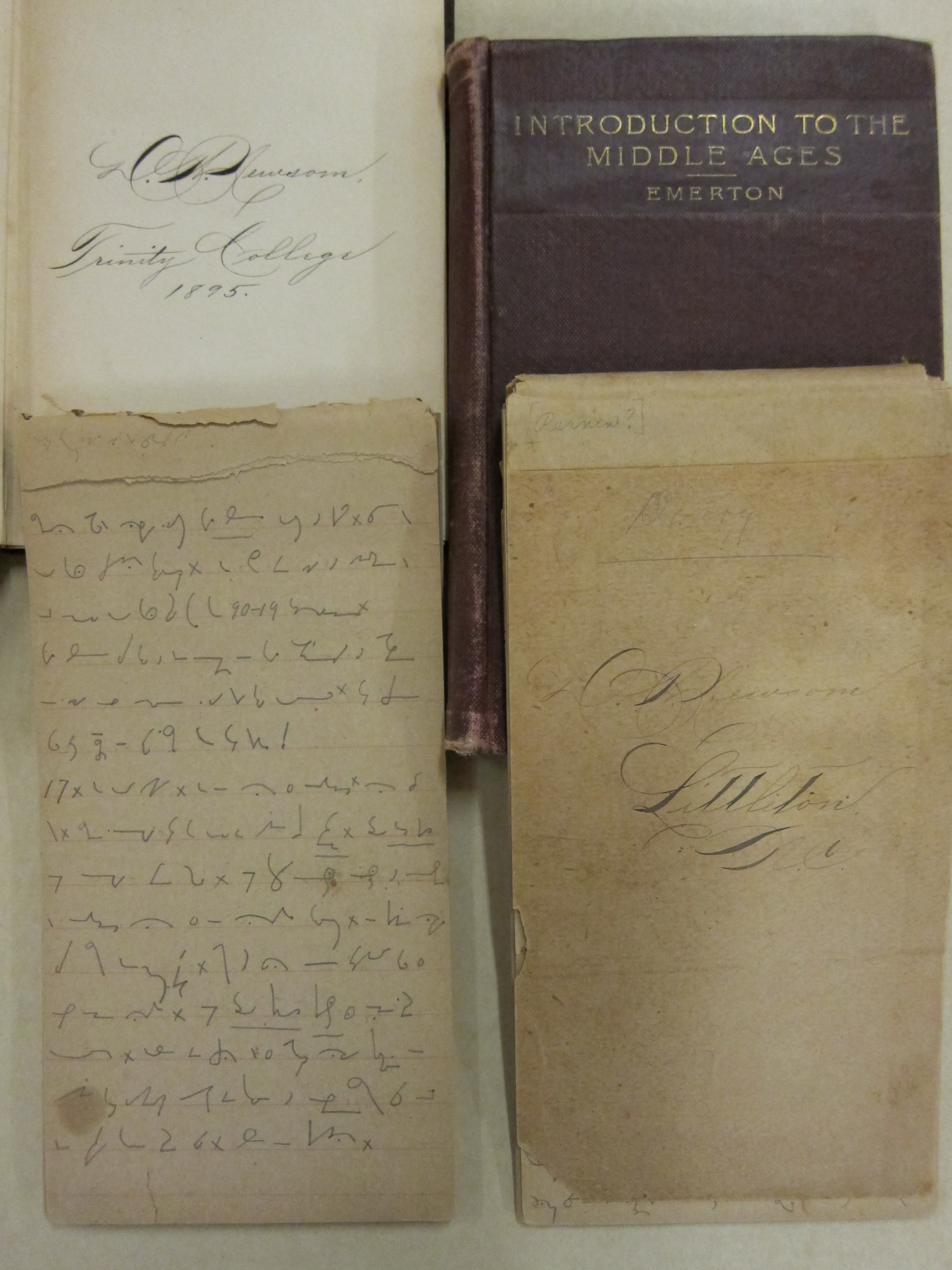
Newsom's diary, in bottom left, with Trinity textbooks from the 1890s.
Newsom’s diary, in bottom left, with Trinity textbooks from the 1890s.

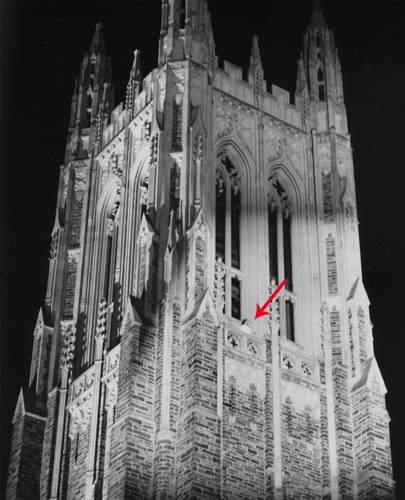
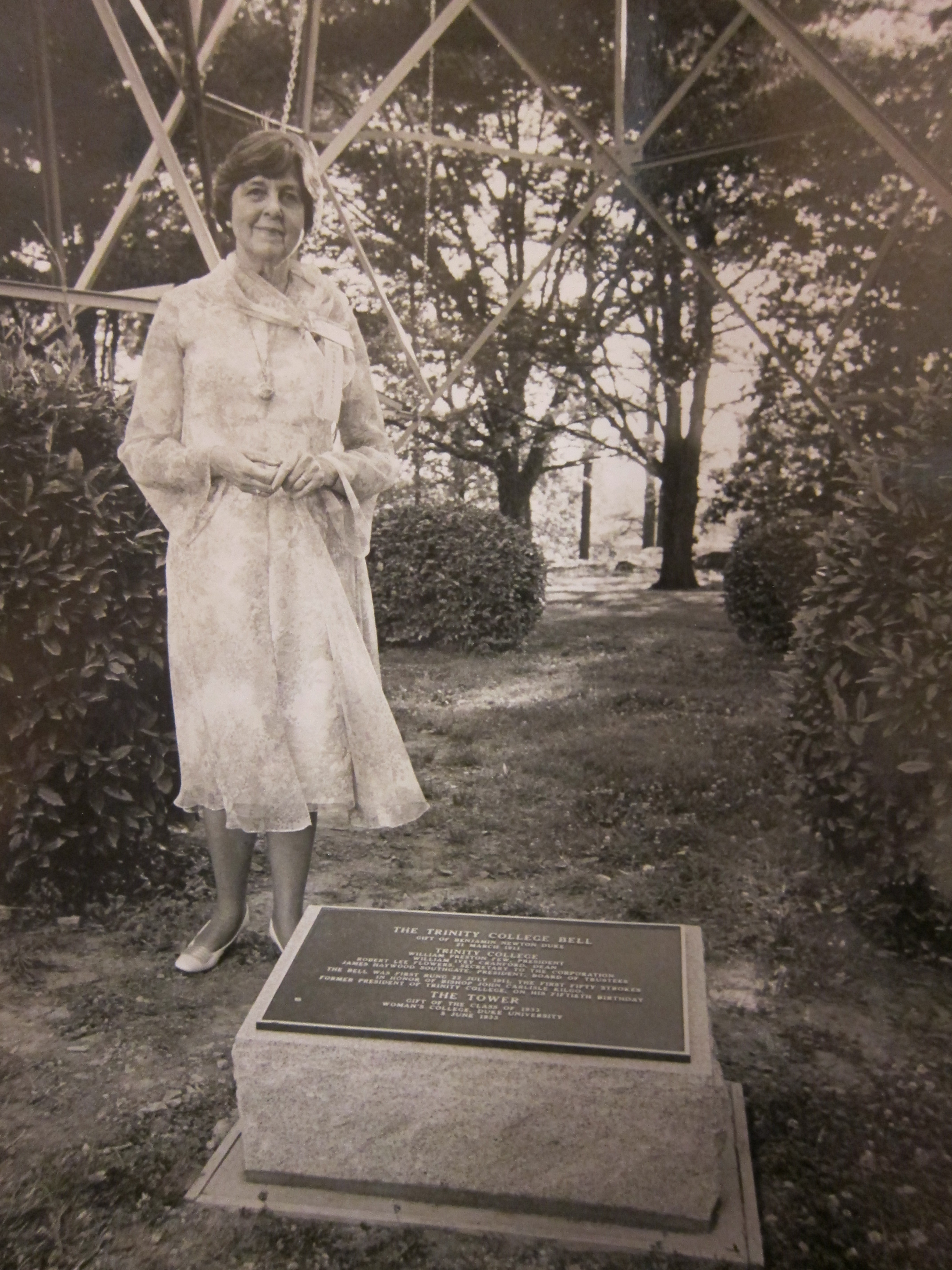
Rankin was elected Phi Beta Kappa, served as senior class president of the Woman’s College as well as May Day Queen her senior year, and was a member of Kappa Delta and the White Duchy.  After graduation, she married Professor Robert Rankin. She was actively involved in university life until her death in 2002. The Woman’s College Class of 1933 gift to the university was the tower which holds “Marse Jack,” the bell on East Campus given by Ben Duke in honor of President Kilgo in 1911. In the early 1980s, some faculty and students lobbied to have the bell moved to West Campus. Rankin argued against this and led an effort to keep the bell at its original location because of its relationship to the history of Trinity College. She was successful in this endeavor. The bell is now housed in Bell Tower Residence Hall on East Campus.
Dorothy Rankin underneath the Marse Jack belltower on East Campus.
Dorothy Rankin underneath the Marse Jack bell tower on East Campus.

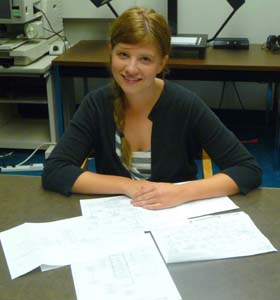
We also received as part of the Rankin papers, the Kappa Delta sorority rush jumper, worn by Rankin’s daughter Battle Rankin Robinson (Class of 1959), in circa 1956.

Technical Services Archivist Kim Sims poses with a Kappa Delta sorority jumper from the 1950s.

The Dorothy Newsom Rankin papers are available for use in the University Archives within the Rubenstein Library.  For more information, visit the finding aid.

Post contributed by Kimberly Sims, Technical Services Archivist for University Archives.
Digitizing the LCRM: Duke’s Dept. of African & African-American Studies

In this month’s update of the CCC Project at Duke University, we are happy to announce the publication online of the records of Duke’s Department of African and African-American Studies.  The items included in this collection document the beginnings of the department, the research and teaching of its faculty members, and the various social and cultural movements occurring within the African-American community during the 1970s and later.  We encourage researchers to peruse the digitized documents, accessible from the collection inventory, to find a host of items sure to add to the scholarship of the long civil rights movement.

Our document spotlight for the month highlights the struggles that the African and African-American Studies Department, then known as the Black Studies Program, experienced in its earliest days.  From its inception in 1969, the Black Studies Program had been offering several courses through adjunct faculty.  Still, the Program lacked a director and its course slate remained minimal, although the Program did offer a major.

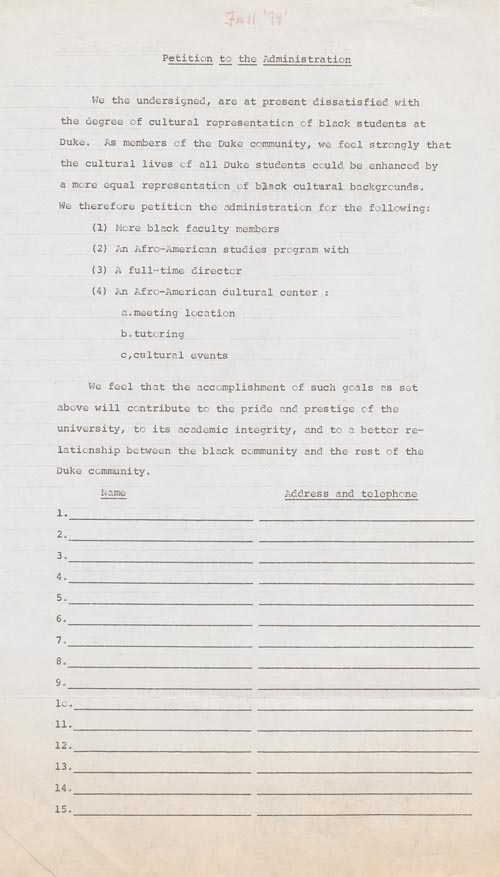
In addition, members of the African-American community at Duke contended that the university’s administration did not implement programs to encourage “black cultural representation.”  The document shown below is a draft petition from late 1979 written by members of the African-American community at Duke asking the administration to ameliorate both the academic and cultural issues that hampered the growth of the African-American community at the university.

Draft Petition to Duke Administration Regarding Cultural Representation of the Black Community, 1979
Draft Petition to Duke Administration Regarding Cultural Representation of the Black Community. Department of African and African-American Studies Records, Box 1, folder 30 (File ID daams01030169)

Although we do not have a completed petition in the Department’s records, the goals of the document did eventually become Duke’s policy.  University administration would create new standards to recruit more African-American faculty members.  In addition, the Program would soon become a fully-staffed Department.  In terms of cultural engagement, the establishment of the Mary Lou Williams Center for Black Culture in 1983 helped to fulfill the demands listed in the petition.  Researchers will now have the opportunity to learn even more about the beginnings of African-American Studies at Duke and how struggles for recognition led to a strong academic and cultural presence on campus.

The grant-funded CCC Project is designed to digitize selected manuscripts and photographs relating to the long civil rights movement. For more about Rubenstein Library materials being digitized through the CCC Project, check out previous progress updates posted here at The Devil’s Tale

Post contributed by Josh Hager, CCC Graduate Assistant.

America’s First Vocarillon Recital

It’s a busy Friday afternoon, and many of us are eagerly anticipating the 5:00 PM ringing of the Duke Chapel carillon. Then, university carillonneur J. Samuel Hammond will play Dear Old Duke to send us off for two days of rest and relaxation.

On this day in 1939, though, the carillon drew 5,000 people to campus on a drizzly evening, as then-university carillonneur Anton Brees and visiting mezzo-soprano Mary Frances Lehnerts prepared to perform what Duke’s Alumni Register termed “America’s first vocarillon recital.”

The vocarillon concert (voice + carillon=vocarillon) was an innovation that Brees had brought with him from his native Antwerp, where he (and his father before him) served as carillonneur of that city’s cathedral. Brees, who gave the carillon’s inaugural performance as part of the 1932 commencement celebrations, spent his summers at Duke–he spent the remainder of the year as carillonneur at the Bok Singing Tower in Lake Wales, Florida–presenting popular weekly carillon concerts that drew visitors from all over the area.

A view of the crowd at the 1939 vocarillon concert.

On that August night in 1939, the concert-going crowd filled West Campus’s quadrangles, spilling all the way down Chapel Drive. Lehnerts sang five pieces, accompanied by Brees on the carillon, from the Chapel’s balcony, some 175 feet above her audience. The Durham Morning Herald reported that she “sang with no more effort than would be required in a small concert hall,” and yet concertgoers sitting by Few Quadrangle could hear her clearly.

Mary Frances Lehnerts performs during the 1939 vocarillon concert.

In between each of Lehnerts’s performances, Brees played solo pieces for the carillon. Here’s the evening’s program:

  • America (for carillon)
  • Somewhere a Voice is Calling by Arthur Tate (for voice and carillon)
  • Maryland, My Maryland (for carillon)
  • Homing by Teresa del Riego (for voice and carillon)
  • Gavotte in G minor by Johann Sebastian Bach (for carillon)
  • Holy Night by Franz Gruber (for voice and carillon)
  • I Can Hear My Savior Calling by Philip P. Bliss (for carillon)

Encores:

  • Only a Rose by Rudolph Friml (for voice and carillon)
  • Roses of Picardy by Haydn Wood (for voice and carillon)
  • Moonlight and Roses by Edwin Lamare (for voice and carillon)
  • The Last Rose of Summer by Friedrich von Flotow (for voice and carillon)
  • The Old Refrain by Fritz Kreisler (for carillon)
  • Dear Old Duke by R. H. James (for carillon)

Yes, that many encores. We wish we could have been there.

Get a Group (Number)!

What is one way to become an expert in all things Duke? Go through all of its records!

Ashley Brown, the University Archives' King Intern, reviews Duke organizational charts.
Ashley Brown, the University Archives’ King Intern, reviews Duke organizational charts.

OK, claiming to be an expert in all things Duke may be a little ambitious, but I was able to learn a lot as the William E. King intern at the Duke University Archives. My name is Ashley and this summer I was tasked with creating a records group system for the University Archives.

A record group is “a collection of records that share the same provenance and are of a convenient size for administration.”  To simplify this definition from the Society of American Archivists, a record group numbering system is one way for archivists to show how records originate within one entity such as Duke University. Each record group can be broken down into a subgroup, which corresponds to an organizational subdivision; and then the individual record makes up the smallest unit known as a series.  Each record, subgroup, and series is given a number and the combination of those three numbers gives each record its unique identifier.  Sound complicated? Here’s an example:

Let’s take this record: Dept. of Zoology records, 1905-1997.

First, each college within the University is assigned its own record group and each department within each college is assigned its own subgroup.  So, my first step for this record is to determine which college the Department of Zoology resides in.  After a little research, I discover that Zoology no longer exists as a formal department but has been combined with Botany inside the Biology Department at Trinity College of Arts and Science.   Therefore, this record would fall under the Trinity College record group, which happens to be record group 25, and the Biology subgroup (.11).

So, the record group identifier for this record would be: 25.11.001.  The first number tells you the record group; the second number tells you the subgroup; and the third number is the individual series number.

Now let’s take the Botany records: Dept. of Botany records, 1932-1978 and assign it a number.  It, too, is in Trinity College under Biology. So it would also begin 25.11 but its series number would be different to distinguish it as a separate collection.  Its number is 25.11.002.

It is important to note that each record group will include the records of its current organizational structure and any forms of that organization or department’s predecessors.  For example, prior to the 1960s, the Provost position was titled “Vice President of Education.”  Any records pertaining to the Vice President of Education or individuals who held that title will fall under the Office of the Provost Records Group (RG 5).

There are over 1,000 record collections at University Archives that span over 174 years.  Each record collection needed be assigned a record number based on its provenance or origin of creation. This was no easy feat.  So I spent my summer researching Duke history, examining organizational charts that go back over sixty years, and reading the finding aids of each collection.  In doing so, I was introduced to an impressive array of presidents, faculty, staff, alumni, student groups, and others who have transformed Duke into the innovative institution that it is today. I also now have 32 record groups that help tell the story of Duke and its evolution through its records.

Over the next several weeks, I will be working alongside other University Archives and Rubenstein Technical Services staff to unveil the new numbering system.  Stay tuned for my blog post, part two to hear about how we implement this project!

Post contributed by Ashley Brown, William E. King intern at the Duke University Archives.

Construction Begins on the Temporary Rubenstein Library

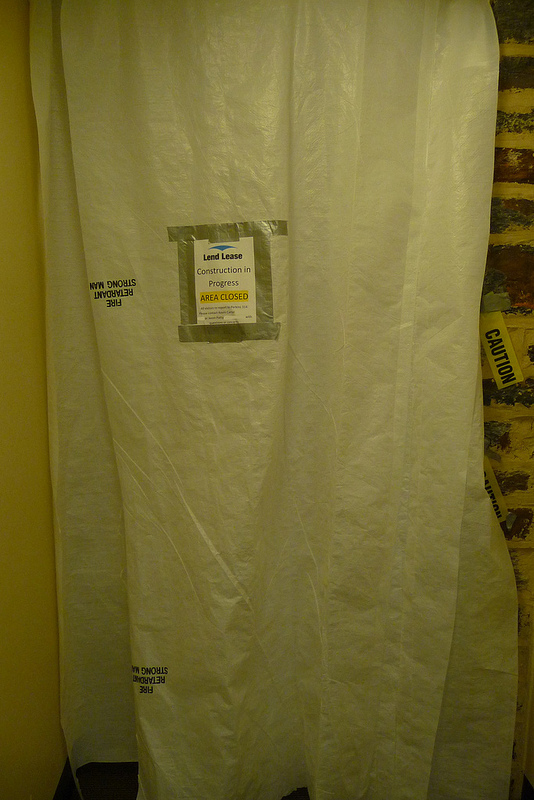
Over the past few months, Perkins staff has been shifting books out of the 3rd floor of the library to make room for the Rubenstein Library to have a home away from home during the renovation. We will be opening our reading room on the 3rd floor of Perkins on January 7, 2013. This month, construction begins in earnest. When we go check on the space, we even have to bring hard hats and safety glasses — this is kind of a thrill for some of us! (Okay, maybe just me.)

The 3rd floor of Perkins, now a construction zone for the Rubenstein swing space.

Our temporary home will house our reading room as well as work spaces for our Research Services, Collection Development, and University Archives staff.  We will also to be able to keep a portion of our collections onsite during the renovation.

The future temporary home of the Rubenstein Library Reading Room.
Library bookshelves have been re-arranged to safely hold our large folios.

As our regular readers know, moving out of our current space is no easy task.  In addition to prepping the collections for the move, we also have to execute a safe and secure move in a short period of time with minimal impact on our researchers. We know we cannot do this without the help of professional movers, so we have been talking with and reviewing bids from various moving companies.

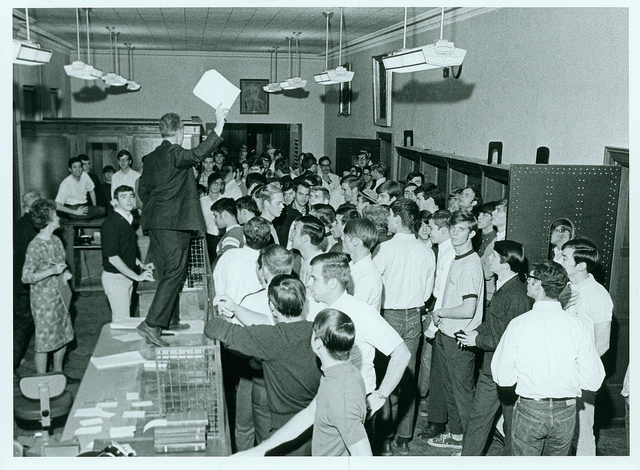
Back in 1969 when the library addition we now know as Perkins Library opened, the books were moved by fraternity brothers around campus. Some days I wish our move would be that simple. Although, after looking at the picture below of the 1969 move (from the Duke University Archives), I’m happy we will have the professionals involved.

Moving Day for Perkins Library books, 1969.

For more photographs of the Rubenstein renovation, visit the Library’s Flickr page.

Post contributed by Molly Bragg, Collections Move Coordinator in the Technical Services Dept.

A Thoroughly Forgotten Duke Figure

Trinity College Faculty, 1878-1879
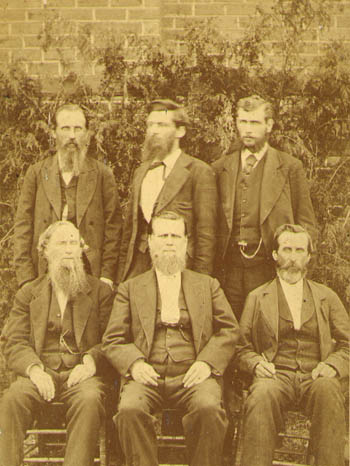
Trinity College faculty for the 1878-1879 academic year. Lemuel Johnson is seated to the right of President Braxton Craven.

LEMUEL JOHNSON (15 January 1828 – 29 April 1900) taught for more than thirty years the entire mathematics curriculum at Trinity College when it was a fledgling institution located in Randolph County, North Carolina.

Though there is no present building or other monument to his name at Duke, the Rubenstein Library holds in various collections a small memorial to this pioneer faculty member in the form of four manuscript letters, a mathematics primer that was widely distributed during the Civil War era, a carte de visite of him and another of the Trinity faculty of the late 1870s, and an 1887 map of Durham County printed from his own manuscript map, the first published presentation of the bounds of this county after its formation in 1881 from sections of Orange, Wake, and Granville.

He was the second graduate of Normal College, Trinity’s predecessor, when it was a very humble institution situated in a rural, red clay, Quaker-Methodist corner of the Carolina piedmont. There, beginning in 1852, he taught courses in arithmetic, mensuration, algebra, geometry, trigonometry, and calculus as well as performing the duties of college treasurer, librarian, and first president of the Trinity College alumni association.

Among his most memorable achievements as an educator was his tutoring of the gifted Giles sisters, every evening in his parlor after a full day of classroom teaching. Mary Z. Giles, Persis P. Giles, and Theresa Giles were graduated with the Trinity class of 1878 (although segregated into a “Ladies” column with less than full membership), an event that the Wilmington Morning Star reported as “unprecedented in the history of North Carolina colleges.” Indeed, the celebrated Sallie Walker Stockard, early historian of Alamance county and first female matriculate at the University of North Carolina, received her diploma in Chapel Hill in 1898.

In the last years of his life, Professor Johnson supported himself through hard times by teaching in rural high schools and by working intermittently as a civil engineer, and his maps of Randolph and Davidson counties are available online via the NC Maps site.

Post contributed by David Southern, Rubenstein Library researcher and Managing Editor for the Collected Letters of Thomas and Jane Welsh Carlyle at the Duke University Press.

A Different Take on “Yes We Can!”

Currently, there is a debate among faculty at the University of Chicago regarding whether or not President Barack Obama’s presidential library should be erected on campus.  Duke University experienced a similar debate in 1981, in what is today referred to as the Nixon Library Controversy.

For a little background, we turn to the Committee Against the Nixon –Duke Library (CANDL) Records finding aid:

In late July 1981, Terry Sanford initiated negotiations with former president Richard Nixon (Duke Law 1937) to locate the Nixon presidential library on the campus of his alma mater. When this information was revealed to faculty members during the week of August 10, 1981, many opposed the proposition as well as Sanford’s failure to consult the faculty prior to initiating negotiations.

Many who opposed the library had moral objections to memorializing a president whose behavior in office was reproachable, and they feared a negative effect on the university’s reputation. Other concerns included the effects of greatly increased tourist traffic on campus and the aesthetic nature of the large proposed structure. However, supporters of erecting the Nixon Library on campus argued that the scholarly and academic benefits of locating the vast Nixon Presidential Materials collection on campus should and would outweigh any moral concerns. These supporters tended to denounce the actions of vocal dissenters as divisive and/or arrogant.

Meetings of the Academic Council and Board of Trustees during September and October 1981 were dominated by this debate, and a group of faculty formed the Committee Against the Nixon-Duke Library (CANDL) to organize the efforts of faculty, students, alumni, and others opposed to the proposed library. Although the Academic Council voted not to recommend further negotiations with Nixon in a 35-34 decision September 3, 1981, the Board of Trustees later voted 9-2 to proceed. By April 1982 negotiations had stalled, and a year later Nixon’s representatives announced that a site at Chapman College in San Clemente, California, had been chosen for the Richard M. Nixon Presidential Library.

Duke University Archives houses several collections related to the Controversy.  Our most recent acquisition is the Peter Wood Papers on the Nixon Library Controversy.  Wood was Professor of History during this time and was a member of CANDL.  Included in his papers is the following flyer:

CANDL Flyer, ca. 1981
Click to enlarge.

For more information about the Nixon Library Controversy, we invite you to consult resources within Duke University Archives, including the following collections:

Post contributed by Kim Sims, Technical Services Archivist for University Archives.
Wooshes, Whistles, Crowd Roars, and Seal Screams

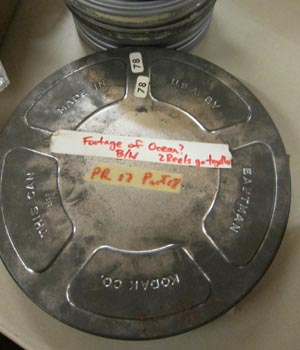
"Footage of Ocean" Reel from the Freewater Films CollectionThe name Freewater Films is perhaps best known for the film series it puts on in the Bryan Center. But in addition to these screenings, it is also responsible for providing workshops and support for amateur film-making by Duke students and community members.

The origins of Freewater Productions Films can be traced to 1969, when the Mary Duke Biddle Foundation gave funds for students from the Duke University Union Visual Arts Committee to make a 16mm film. In November 1970, several students produced an original film (called Dying), using a 16mm Bolex camera borrowed from the Union. Described by the maker as “a woman’s surrealistic encounter on an island,” Dying went on to win first prize at the Association of College Unions’ 1971 International Film Festival.

Over the years, Duke students produced a number of cutting-edge films under the auspices of Freewater, ranging from documentaries on urban Durham to science fiction and horror films set in the Duke Hospital. (The 1984 film A Medical Scutwolf in Durham tells the story of a doctor who becomes a werewolf.)

Sound Effects Reels from the Freewater Films CollectionSaved in a variety of formats—including DVDs, VHS, Betamax, and 16 mm film—the Freewater Productions Films archives are now housed at Duke University Archives. They have recently been arranged in order by date, format, and title. In some cases, “unofficial” titles had to suffice, as in the reel titled “Footage of Ocean,” pictured above. Those that arrived in rusty cans or unstable cardboard boxes were transferred to archival plastic “cans.”
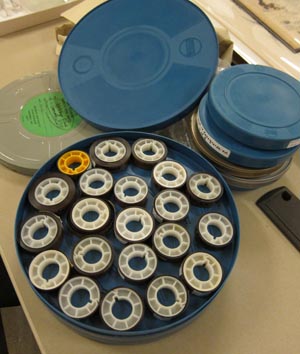
Pictured at left is a group of 21 sound effects from the collection, labeled as: “wooshes, whistles, crowd roars, and seal screams.”

We’re looking forward to the day when these historic films may be screened again!

Post contributed by Jessica Wood, William E. King intern for the 2011-2012 academic year.

Doodle-Bug-Dumplings

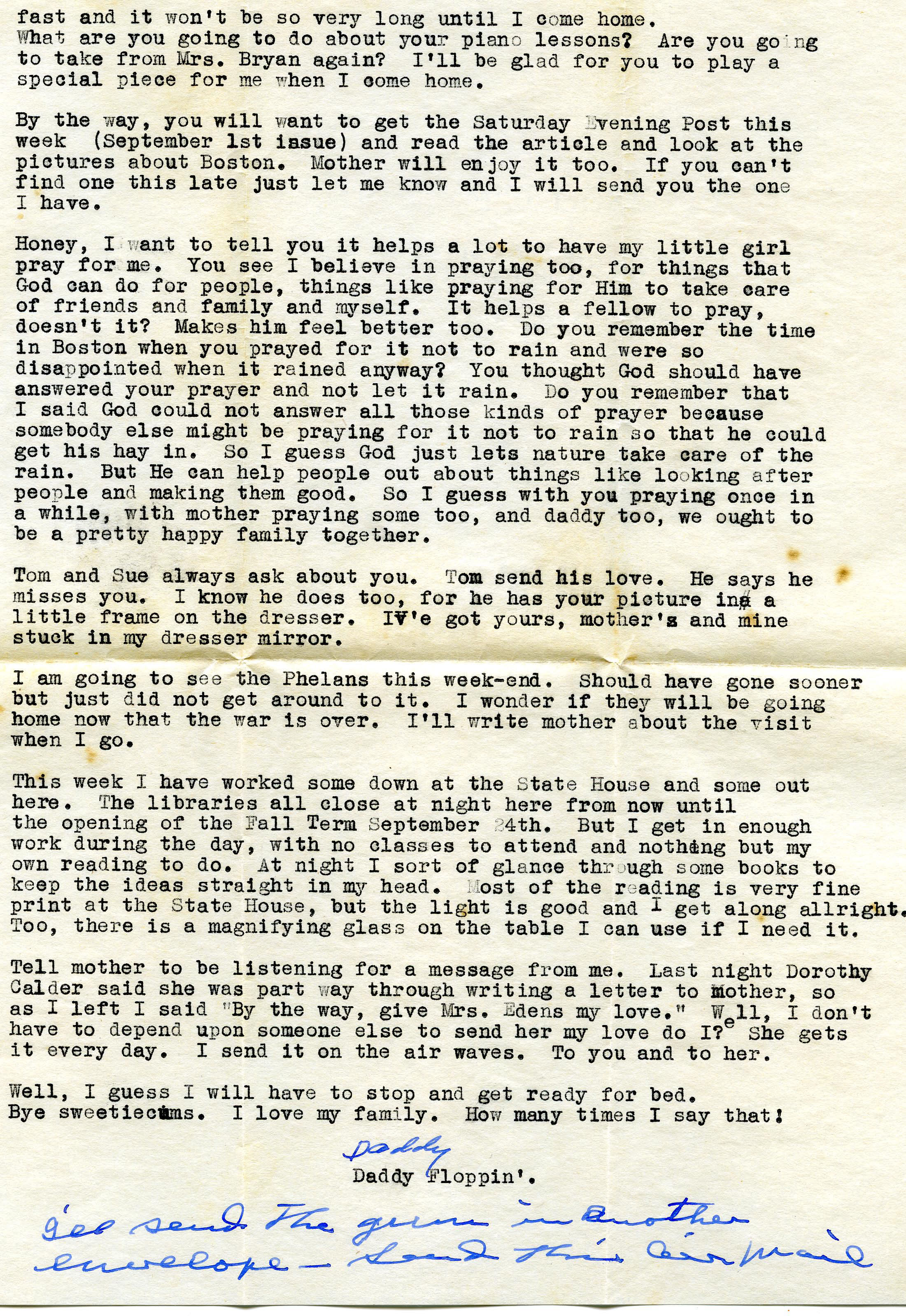
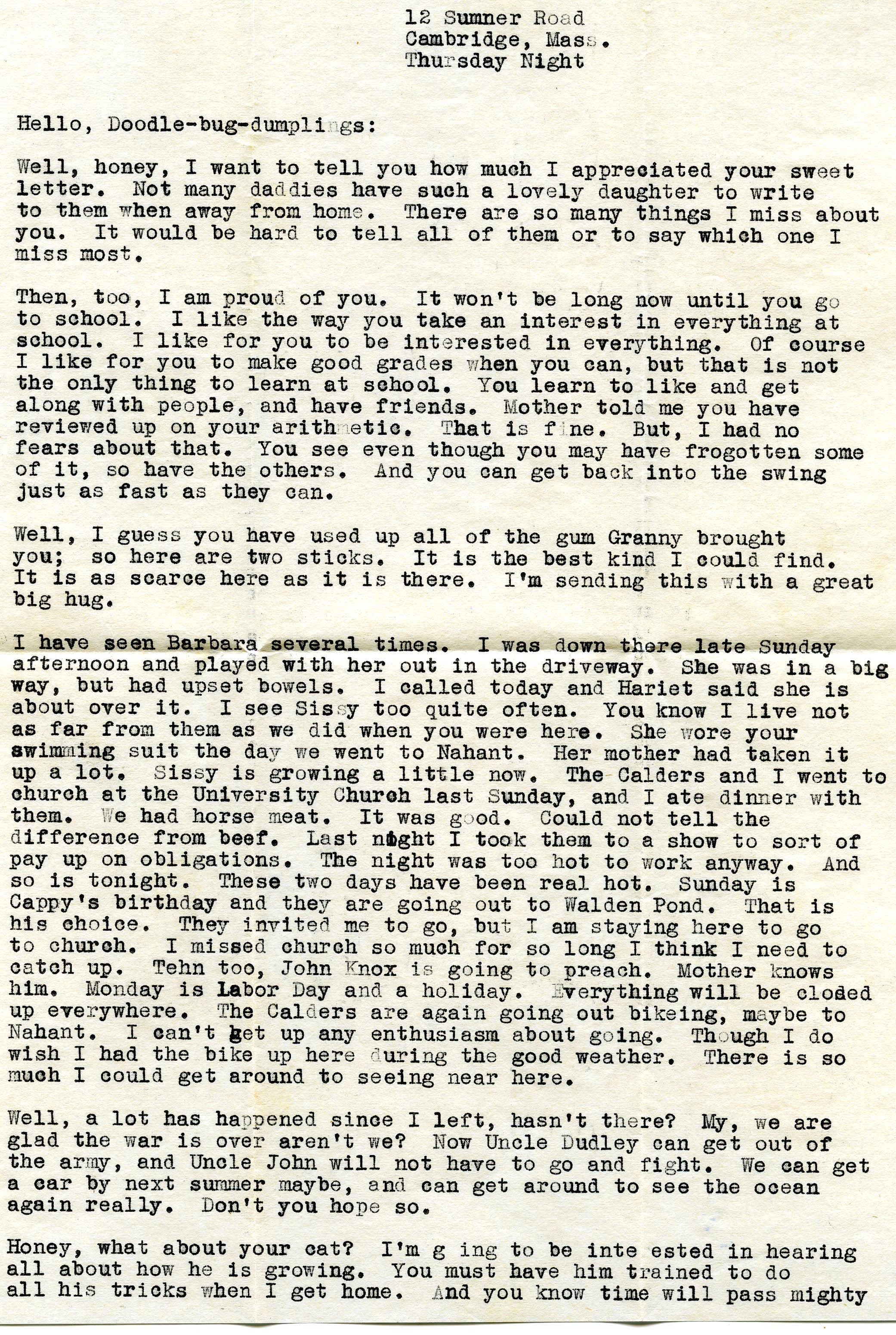
This weekend, many folks will celebrate Father’s Day.  I recently processed the personal papers of A. Hollis Edens, Duke President from 1949-1960, and was left teary-eyed by letters written between him and his only child, Mary Ann.  The letters demonstrate such a strong father-daughter bond and provide insight into a closeness that spanned into her adulthood.  So, in honor of the fathers out there and in memory of those who are no longer with us, please enjoy the following exchange between President Edens and his “Doodle-bug-dumplings.”

Click images to enlarge!

Mary Ann Eden’s letter (dated August 6, 1945)
“Since you’ve been gone I’ve prayed every night in the hopes that God will keep you safe and sound and bring you back soon.” Mary Ann Eden’s letter, page 1.
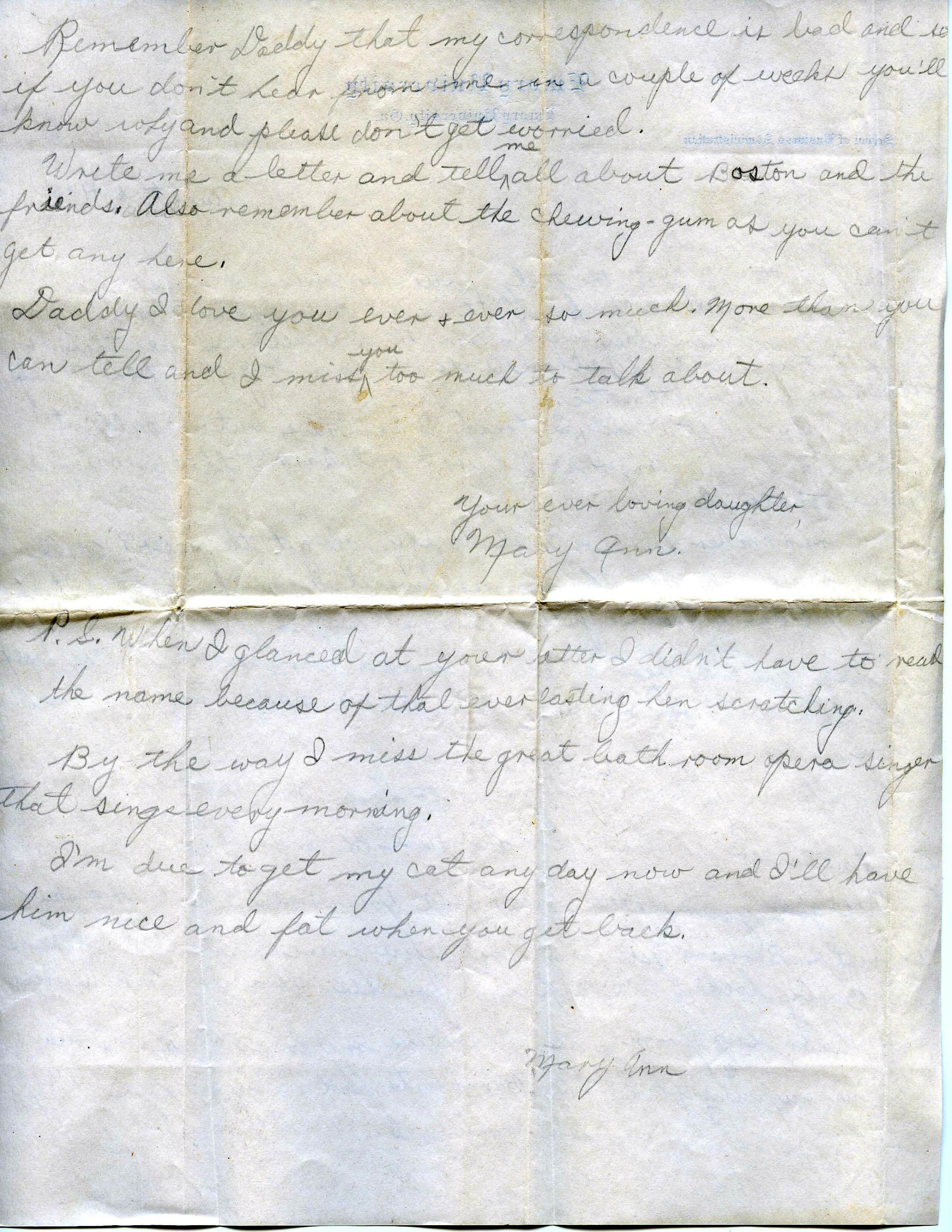
Mary Ann Eden’s letter (dated August 6, 1945)
Mary Ann Eden’s letter, page 2
Eden's letter
“Honey, I want to tell you it helps a lot to have my little girl pray for me.” President Eden’s Letter, page 1.
President Eden’s letter, page 2.

Post contributed by Kim Sims, Technical Services Archivist for the Duke University Archives.
From the Rubenstein Wire

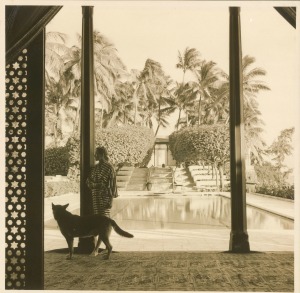
Doris Duke at Shangri-La, ca. 1960-65. From the Doris Duke Charitable Foundation Historical Archives.

As we cruise into summer after another busy semester, here’s a rundown of some notable recent news stories about the Rubenstein Library:

New York’s Museum of Arts and Design is preparing an exhibition entitled “Doris Duke’s Shangri La: Architecture, Landscape, and Islamic Art,” according to GalleristNY.  The story features a beautiful photo from the Doris Duke Papers on the Shangri La Residence here in the Rubenstein. The exhibition is scheduled to open on September 7, 2012.

Two stories in the Durham Herald-Sun document the Rubenstein Library’s May 15 event to celebrate the publication of Reynolds Price’s final memoir, Midstream, and the fiftieth anniversary of the publication of his first book, A Long and Happy Life.

The Raleigh News and Observer reported on Durham County Library’s Comics Fest.  Rubenstein Assistant Curator Will Hansen spoke about the Library’s comic book collections on a panel entitled “Comics Go to College” with colleagues from Duke and UNC.

The May/June issue of Duke Magazine features a piece on advertising pioneer David Ogilvy, whose career is documented in the Kenneth Roman Papers; an article about Princess Irene’s 1967 visit to Duke by University Archivist Valerie Gillispie; and a column on the American Family Robinson radio serial, rare acetate discs of which are preserved in the Randy Riddle Collection of Race Records and Radio Programs.

Look for more exciting news about the Rubenstein Library in the coming months!