Category Archives: Technical Stuff

Heschel Highlights, Part 1

Welcome to the first post in a series documenting the processing of the Abraham Joshua Heschel Papers.

DSC_9316b
Photographs and documents from the Abraham Joshua Heschel Papers.

In 1965, Rabbi Abraham Joshua Heschel, professor of Jewish Ethics and Mysticism at the Jewish Theological Seminary of America, accepted as position as the Harry Emerson Fosdick Visiting Professor at Union Theological Seminary (UTS). Newspapers reported this occasion with headlines that proclaimed “Rabbi to Teach Christians” and “Seminary Gives Post to Heschel.” The prestigious visiting position speaks to Heschel’s influence in Christian-Jewish relations at the time. As we begin processing the Abraham Joshua Heschel Papers, there is evidence that Heschel’s dedication to interfaith work also made him a controversial figure in some Jewish circles. I recently processed a large folder of materials that Heschel collected during his tenure at UTS and discovered that Heschel preserved the views of his dissenters, tucked in alongside his lecture notes and grade records.

In a folder that contains programs from events honoring Heschel at UTS and Eden Theological Seminary and an excerpt from Reinhold Niebuhr’s Pious and Secular America, I found a fascinating newspaper clipping. The article, “Scholar Delimits Interfaith Talks,” discusses another rabbi’s view on interfaith relations. The article explains that Rabbi Joseph B. Soloveitchik, professor of Talmud at Yeshiva University, argued that Jews should avoid discussing theological issues in their relations with Christians. This article provides an intriguing counterpoint to the documents promoting Heschel’s theological lectures at Christian Seminaries.

In another folder, which Heschel labeled “Interfaith,” he included an excerpt from a letter written by the Lubavitcher Rebbe, Rabbi Menachem M. Schneerson. In the letter, Schneerson writes, “there is no need for us whatever to have any religious dialogues with non-Jews, nor any interfaith activities in the form of religious discussions, interchange of pulpits, and the like” (2). Schneerson concludes, “religious dialogue with non-Jews has no place in Jewish life, least of all here and now” (4). This letter rests alongside an article written by UTS President John C. Bennett and Heschel’s itinerary for the Spring Semester of 1966 which included lectures at the Indiana Pastors’ Conference and eleven different Christian seminaries.
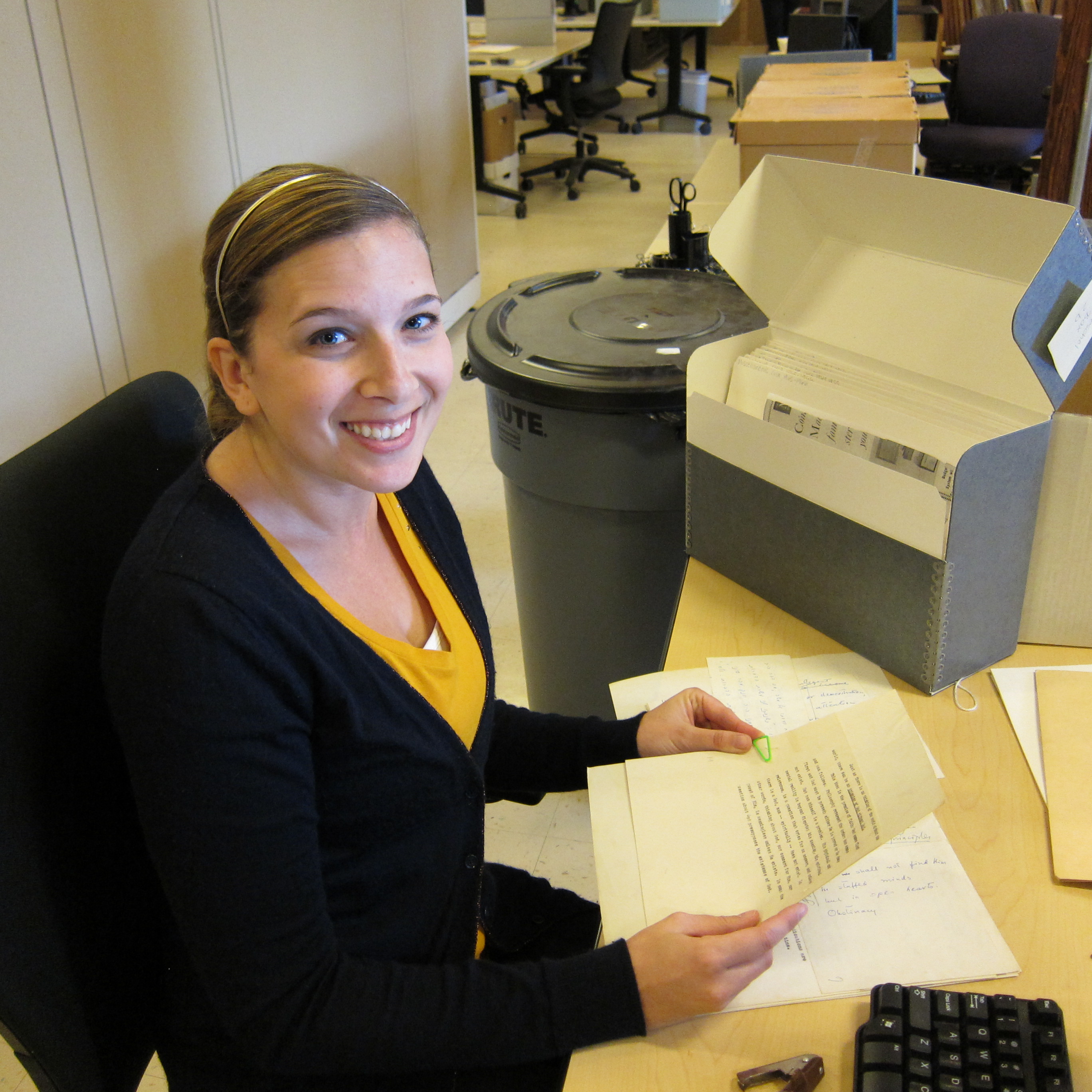
Adrienne and the Heschel Papers.

These dissenting opinions preserved by Heschel and included in folders that highlight his interfaith work provide an intriguing glimpse into Heschel’s world. We will leave it up to future researchers to discover the meaning behind Heschel’s inclusion of these opposition opinions in these particular folders!

Post contributed by Adrienne Krone, Heschel Project Assistant in Rubenstein Technical Services.
A Journey’s End

A couple of weeks ago the finding aid for the Doris Duke Audiovisual Collection was posted on the Rubenstein Library website. The audiovisual collection, which is now opened for research, has a fascinating variety of materials, including film reels, vinyl records, and audio cassettes reflecting Doris’ interests in travel, music, the performing arts, and historical events. It’s chock-full of surprises for those willing to delve into the detailed and intricate collection. Homemade recordings of Doris practicing the piano and singing, four original nitrate film reels of the Nazi Supreme Court Trial of the Anti-Hitler Plot from 1944-45 (which we’re presuming Doris obtained while working for the Office of Strategic Services [OSS] during World War II), and a somewhat sketchy telephone interview with Howard Hughes from the 1970s are just a few of the treasures awaiting discovery in this collection.

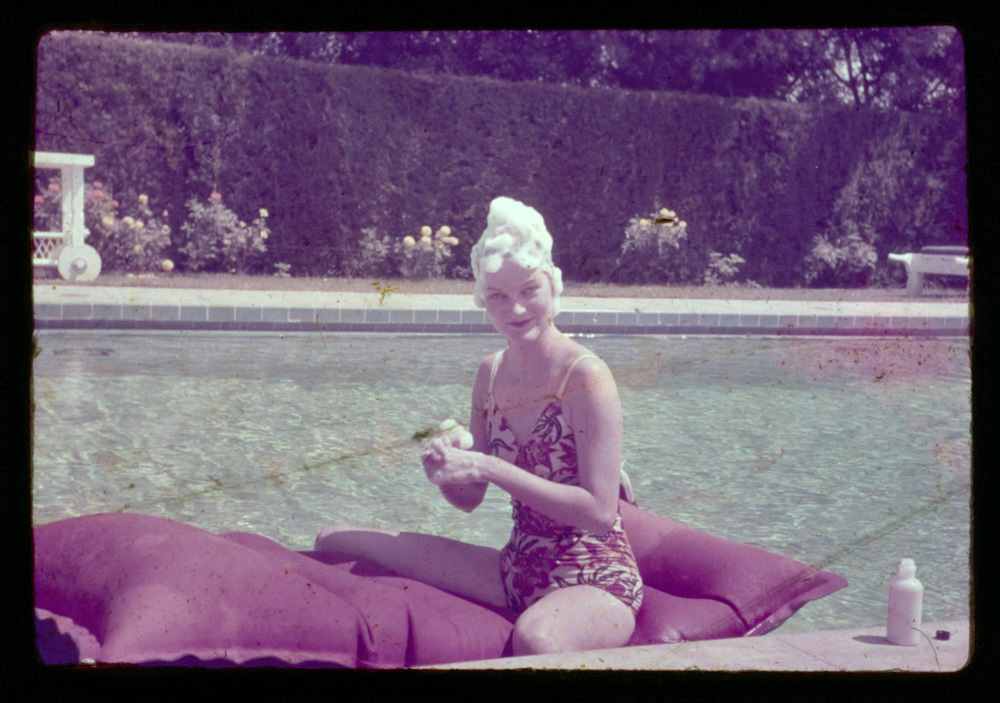
ddpph011600130

The Doris Duke Audiovisual Collection also marks a significant milestone for the Doris Duke Charitable Foundation Historical Archives. It is the final collection in the historical archives to be processed, described, and opened for research, thus ending my three year processing journey.

Working so intimately with the materials has been quite a remarkable experience, and not surprisingly I’ve grown quite attached to both Doris Duke and the materials over the past three years! The nineteen collections comprising the historical archives are filled with artifacts and clues that leave evidence of a woman who did big things, yet they also give insight to unexpected and hidden facets of Doris’ life. Collectively they paint a picture of Doris that challenges the general perception of her as an eccentric and tragic figure.

While I am sincerely grateful for having had the opportunity to process and promote the materials in the historical archives, I am equally thankful for having had the chance to meet researchers and patrons interested in both Doris Duke and the historical archives. Their enthusiasm for learning more about her spurred several of the events, exhibits, and digital initiatives developed during the course of the processing project.

And so a journey for me ends, but the journey for the materials in the historical archives continues!

Post contributed by Mary Samouelian, the former Doris Duke Collection Archivist. Mary will continue in the Technical Services Dept. as the Processing Archivist for the Abraham Joshua Heschel Papers.

Wense Grabarek in the First Person

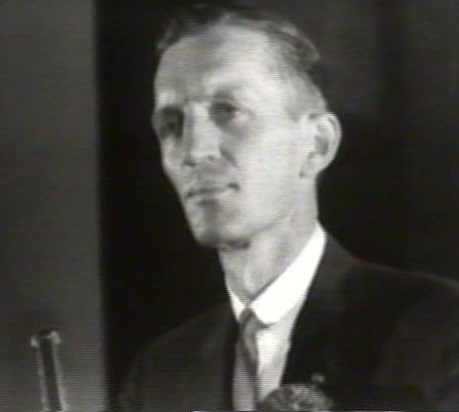
The 50th anniversary of a key moment in the desegregation of Durham, North Carolina came and went largely without fanfare last month.  It was in May 1963 that, amid growing racial discord in the city, Mayor Wense Grabarek prevailed upon business and community leaders, black and white alike, to cooperate in desegregating the city. The mayor was in an unusual position: having held office for less than a day when a series of sit-ins around Durham resulted in 130 arrests, Grabarek’s first task upon being sworn in was to stop a riot at the jail. Achieving this by letting supporters deliver sandwiches and cigarettes to the jailed protesters, he then turned his attention to the NAACP and CORE, who promised mass demonstrations in the wake of the arrests. Jean Anderson, in Durham County: A History of Durham County, North Carolina, tells the story this way:

He went in person, a slight, dapper man, always with a red carnation in his lapel, to a meeting of protesters, one thousand strong, held at Saint Joseph’s A.M.E. Church.  Habitually soft-spoken and immensely polite, he asked permission to enter and address them.  Then, pointing out that by their demonstrations they had informed the community of their deeply felt grievances, he spoke about the danger of racial tension and division and promised to take positive steps to respond to their complaints.  Finally, he asked for their support and understanding.  Impressed by his coming, his tone, his words, they accepted his sincerity and promised to halt demonstrations and give the mayor time to act on his promises.

Mayor Grabarek formed the Durham Interim Committee to reconcile the community’s opposing groups, in so doing acknowledging the damage of segregation and the real possibility that Jim Crow could prevent Durham from realizing its potential, particularly given the economic promise of the newly formed Research Triangle Park. The efforts of Grabarek and of the leaders appointed to the Committee allowed Durham a degree of progress that eluded many other southern cities.

Wense Grabarek addressing the congregation at St. Joseph's AME Church, May 1963.
Wense Grabarek addressing the congregation at St. Joseph’s AME Church, May 1963.

A modest man and a successful accountant who continues to work full time six days a week, Wense Grabarek is now 93 years old and eager to add his perspective to the history of Durham, the adopted hometown that called him mayor from 1963 to 1971. To this end he has donated to the Rubenstein Library a number of recorded interviews he has given since the early 2000s, as part of a larger collection of papers that he is gathering for donation later this summer. You can check out the finding aid for the interviews here.

Wense Grabarek in conversation with Tim Tyson, Sept. 2011

The recordings include an interview with Steven Channing for his documentary Durham: A Self Portrait, an 8-hour conversation with author and scholar Tim Tyson detailing his work as mayor, and, presented here, with the permission of WTVD, an interview with Angela Hampton on the events of May 1963:

An oral history has been scheduled with Mr. Grabarek in July, and this time the interviewer will be the Rubenstein Library. We hope to learn more about the mayor’s life before and after the 1960s, including his experiences as a soldier in World War II and the philanthropic work he and his wife have done over the years in education.

Post contributed by Craig Breaden, Audiovisual Materials Archivist in the Technical Services Dept.

Spirit of Play

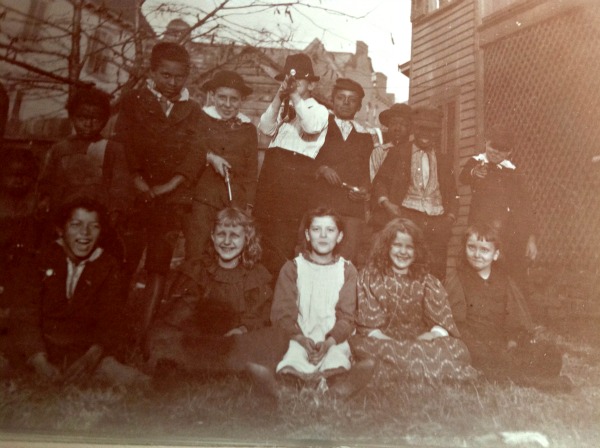
I was absolutely taken with this albumen image as I reviewed the “From Atlanta [,] Georgia to Mammoth Cave [,] Kentucky, November 1895” photograph album prior to my cataloging it. The children are laughing and making faces, perhaps interrupted in a game of “cops and robbers,” since many of the boys are holding guns or rifles. Their sense of fun is infectious and it reminded me of the neighborhood games groups of us played during my childhood. Yet I was surprised that such a large interracial group would have been playing together at this time. Is this a late-nineteenth-century South I never dared imagine?

doughty

Post contributed by Alice Poffinberger, Original Cataloger in the Technical Services Department.

Student Takes on Living Groups, 1992 and Now

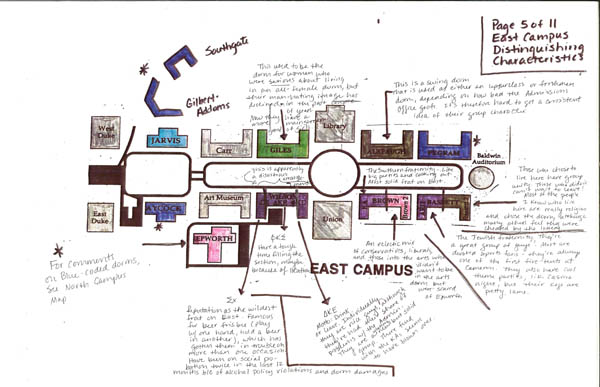
This spring I assisted my supervisor in processing the Duke Student Government (DSG) Records. One day he called me over to look at a report he had found called “A Color-Coded Guide to Campus Living Groups.” Prepared in the summer of 1992 by Adrianne G. Threatt, this report truly was colorful. It was divided in two parts with maps of the campus living groups on Main West Campus, Edens Quadrangle, East Campus, and North Campus. Part II was straightforward, with four maps showing the approximate number of residents per living group. But Part I showed the same four maps with hand-written commentary about the “distinguishing characteristics” of each living group. Looking at these comments reminded me of my own experience with Duke dorms and their “distinguishing characteristics.”

DSG_EastMap-web
Click to enlarge!

One day shortly after my freshman year began, I walked into my dorm, Giles, to find all my friends crowded around a single laptop. My roommate was pointing to the screen animatedly, so I stopped to see what all the girls were looking at: it was a list of all the dorms on East Campus, with blurbs about the reputations of each. Giles, it said, was “home to pretty girls who like to have a good time.” Being freshmen, we of course knew everything on the internet is true: we all must have been placed in Giles because the all-knowing, all-seeing Duke housing lottery deemed us pretty girls who liked to have a good time.

Seeing the color-coded maps, then, I was eager to find out the “distinguishing characteristics” for Giles in 1992. According to the guide, Giles was “the dorm for women who were serious about living in an all-female dorm, but their man-hating image has declined in the past couple of years. Now they have a more main-stream group of girls.” To say the least, a far cry from what my friends and I had read 18 years later, in the fall of 2010.

What else had changed about East Campus? The first thing I noticed was that East was not an all-freshman campus. There were fraternity sections, for one thing, and “swing dorms,” which were used as either upper-class or freshman dorms.. In Wilson, there were three fraternity sections—ΣX (Sigma Chi), ΦKΣ (Phi Kappa Sigma), and ΔKE (Delta Kappa Epsilon)—which the author of the maps noted as “apparently a disastrous arrangement.” The “artsy dorm” in 1992 was Epworth, whereas Pegram had that title by my freshman year. Half of Bassett in 1992 was AEΠ’s (Alpha Epsilon Pi) section and the people who chose to live on the other half of Bassett were described as having “group unity” and as being “really religious.” I have only known Bassett as the dorm where all the basketball players lived.

Despite all these changes, many things have stayed the same. In 1992, KA’s (Kappa Alpha) section was in half of Brown; the author described KA as “the Southern fraternity,” who likes “big parties and cooking out.” This reputation holds true today. AEΠ was known as “the Jewish fraternity” and as a “great group of guys” who had “cool theme parties, like Casino night, but their kegs are pretty lame.” AEΠ is still the Jewish fraternity and still considered to be a great group of guys who have fun parties. As to their current kegs quality—no comment.

Being at Duke is exciting because the history that is everywhere makes us feel like part of a much bigger legacy. Yet, we are still able to make that legacy our own. This is why we see both reputations that persist through the years and reputations that constantly change. I would be interested to hear how other students and alums feel about Duke’s “distinguishing characteristics” over the years.

Do you see your Duke in the color-coded guide to the Duke of 1992?

UPDATE: The Duke University Archives has added the three other maps of campus living groups to their Flickr photostream. Here are the maps for West Campus, Edens, and North Campus!

Post contributed by Julia Eads, Trinity ’14, Rubenstein Library Technical Services and Duke University Archives student assistant.

Flags are flying for the 2000th online finding aid!

ship with sails

Any day now, the ticker at the top of the Rubenstein’s finding aids page will turn over and mark a milestone 2000th online finding aid. Doesn’t sound like much, especially when you consider that the Rubenstein Library holds more than 6,000 manuscript collections. But those 2,000 finding aids – narrative maps that guide a researcher through the contents of a manuscript collection’s boxes and folders – also represent thousands of hours of interpretive labor supplied by library staff. The first of these online collection guides debuted around 1996. They are encoded with an XML-derivative called EAD, and are now discoverable to a worldwide audience through any online keyword search. But finding aids – or inventories – or collection guides – go back a lot further than their online counterparts.

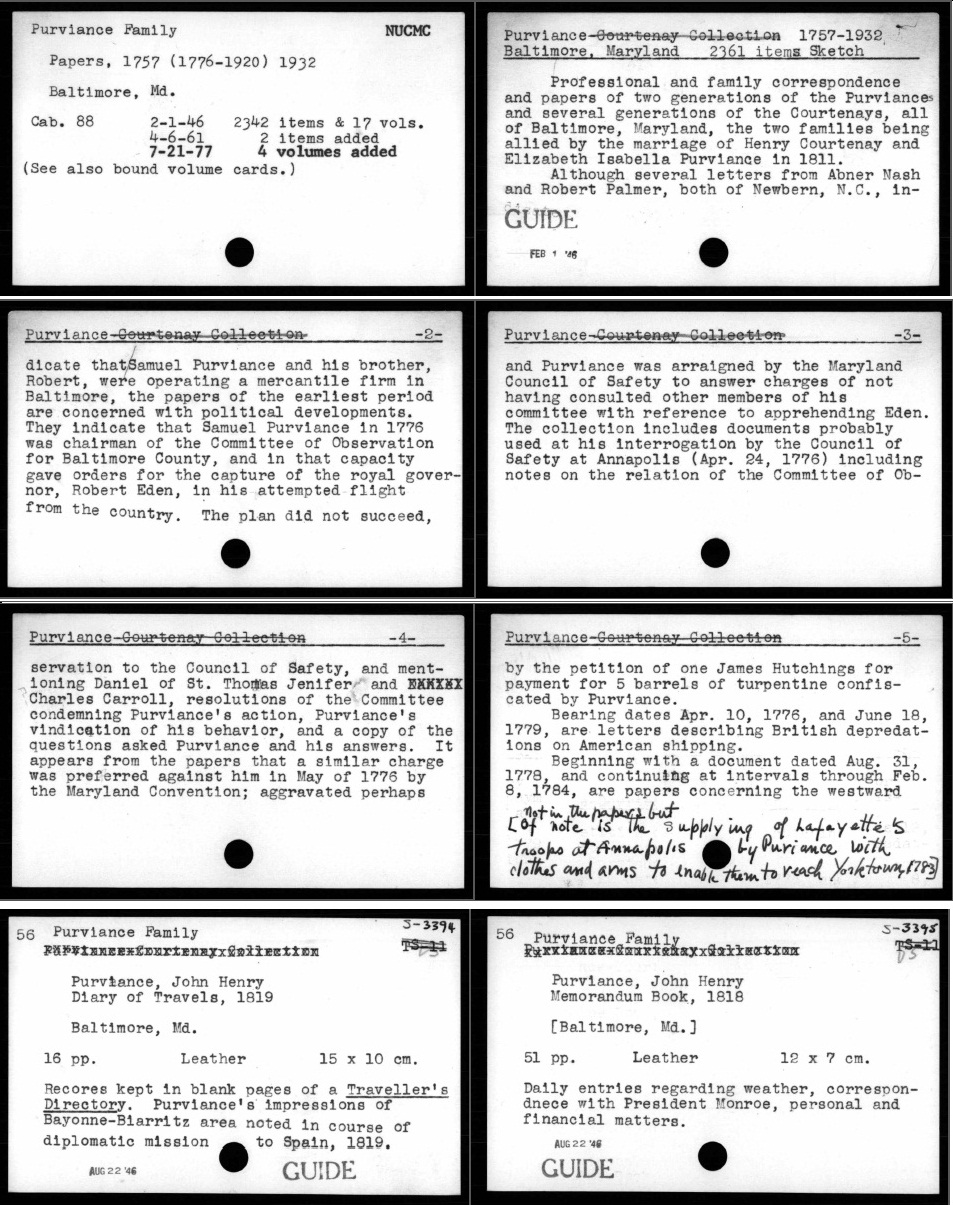
The winner of the 2,000th finding aid spot belongs to the Purviance Family Papers. Acquired as either a purchase or a gift by the Duke University Manuscripts Department in 1943 from an S. S. Barnes in Baltimore, the collection offers over 2300 manuscripts and 10 photographs, 4 maps, and 21 volumes (including an anonymous Civil War diary) belonging to a prominent Revolutionary-era Baltimore family with a compelling history. Shortly after it was received, a Manuscript Department archivist researched the collection and typed up a set of catalog cards: the Purviance Papers “finding aid.”

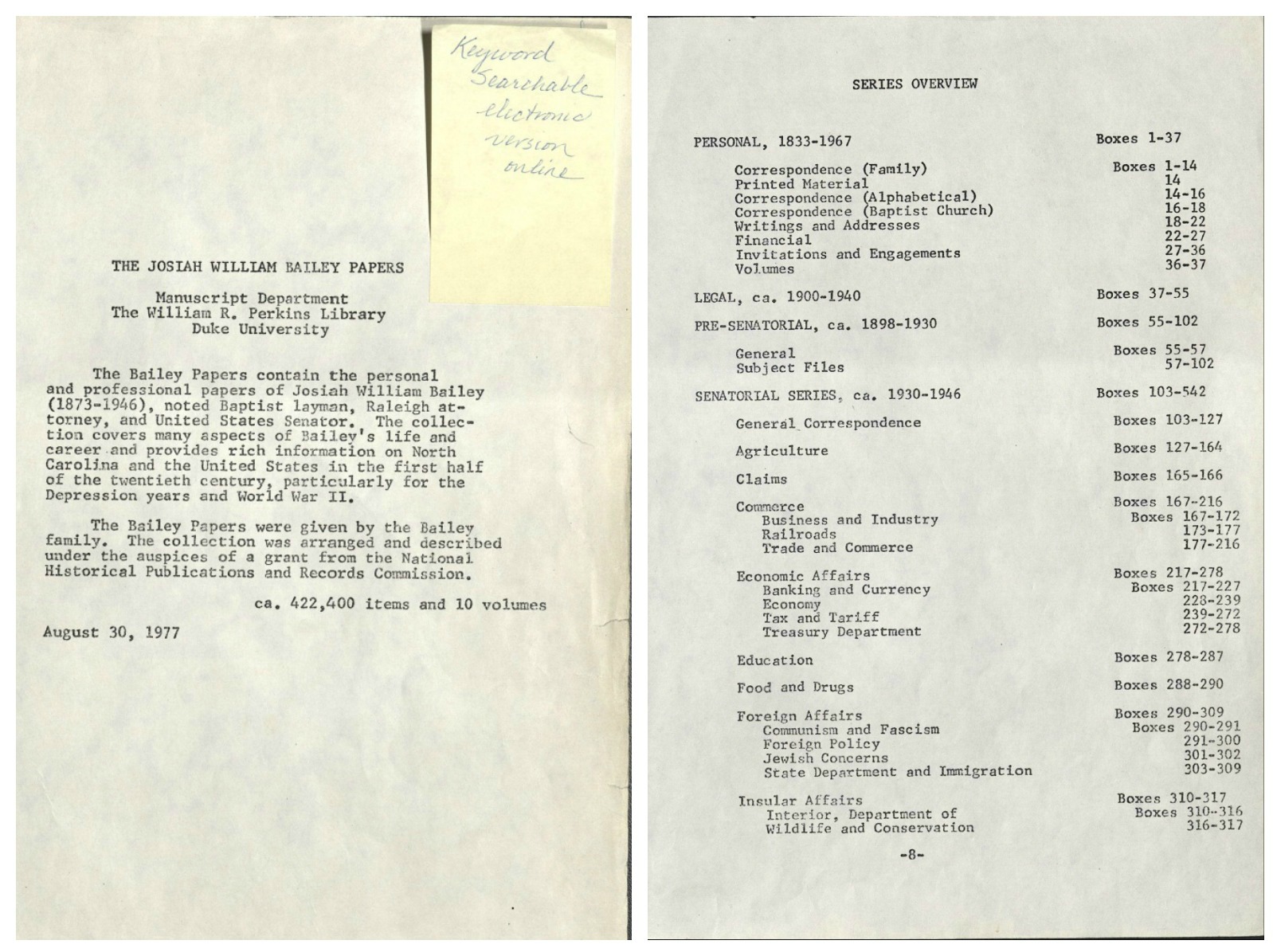
Defined most broadly, archivists consider a finding aid to be any document that assists in charting a path through the contents and topics of an archival collection – a big help when you’re dealing with a very large collection! In the 1940s at Duke, this was the role of the card catalog. Of course, you could only consult the cards if you traveled to the library, or if you could ask a reference archivist to help. Some collections were represented by three or four cards; some had close to a hundred. In 2012 – to the shock of older librarians who never thought they’d see the day – the entire card catalog was digitized and is currently being used as a resource for the reference archivists. Here is a sample of the 92 Purviance cards:  purviance cardsCollections were typically a lot smaller back then.  As collections grew larger, a new generation of archivists started using more productive strategies for describing thousands of folders of manuscript items, and as part of this effort, they turned to creating more-portable paper inventories (but still on typewriters). Here’s an example of one, with a post-it note that marks a turning point in library history:   PicMonkey Collage

Enter the computer and Microsoft Word. When I started working in the library in 1992, the staff was thinking big about the power of computing. Gopher and Mosaic and were on the horizon. More prosaically, electronic-format finding aids could be corrected and added to, and printed out anytime (no more liquid white-out) or viewed online – goodbye, paper (well, sort of). The description for the Purviance Family Papers were still described on cards in the card catalog and in a paper box list until a few months ago. As part of a project to make all of our longer legacy descriptions available online, a library intern, Bob Malme, encoded the Purviance Family Papers collection guide – the Rubenstein Library’s 2,000th finding aid. And it is especially fitting that this inventory was the work of one of our interns: an integral part of our library practically since our founding, they have provided a huge amount of support for our collections and their finding aids – in every format.

As a member of the Technical Services Department, whose job it is to crank out all these finding aids, I was – and still am, I guess – an EAD Warrior. That moniker comes from a Duke Special Collections Library group whose early work on standards for Duke online finding aids would shape our goal for total online access for all of our finding aids – cards and paper. How many finding aids will that eventually be? Oh, another 4,000 at least. We’re working on it already!

Post contributed by Paula Jeannet Mangiafico, Senior Processing Archivist.

Identity Crisis

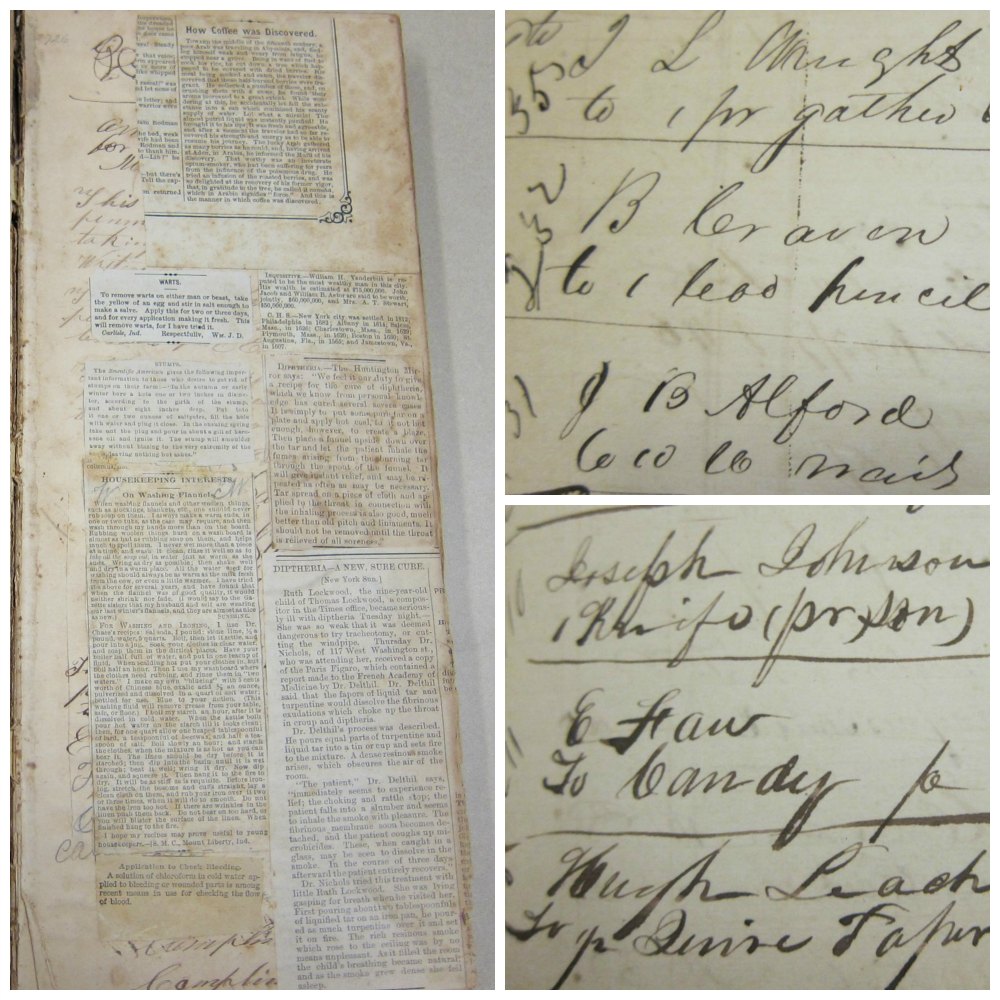
Our manuscripts cataloger, Alice Poffinberger, recently showed me a merchant’s daybook from Normal College, Randolph County, NC. For those unfamiliar with the history of Duke, Normal College was renamed Trinity College in 1859, which was renamed Duke University in 1924. The Normal College daybook dates from 1852 to 1853, and includes the names of the school’s students and faculty, including its president, Braxton Craven, and Enoch Faw.

Inside the daybook, including entries mentioning Braxton Craven and Enoch Faw.

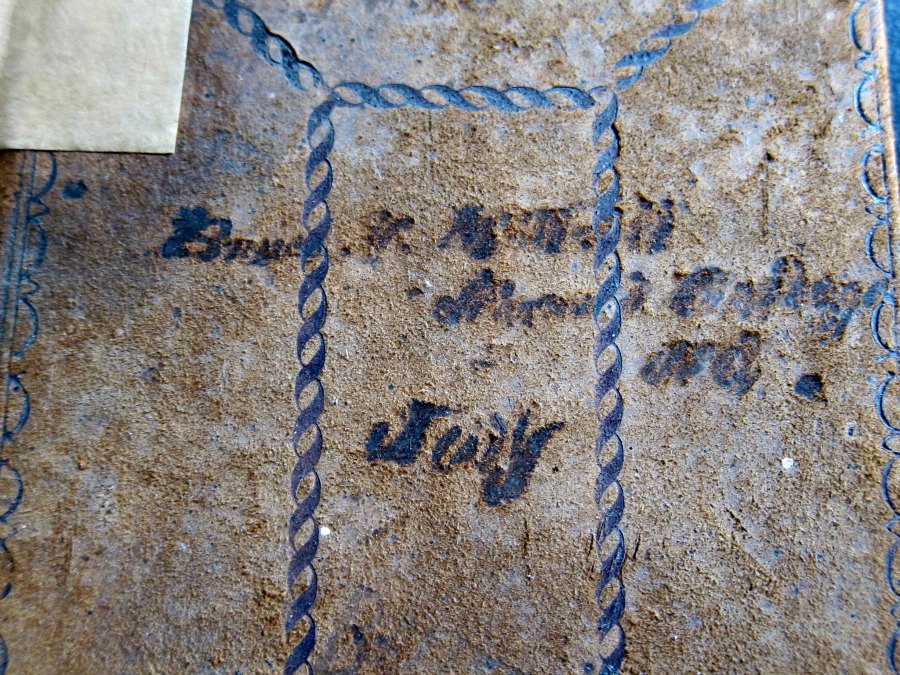
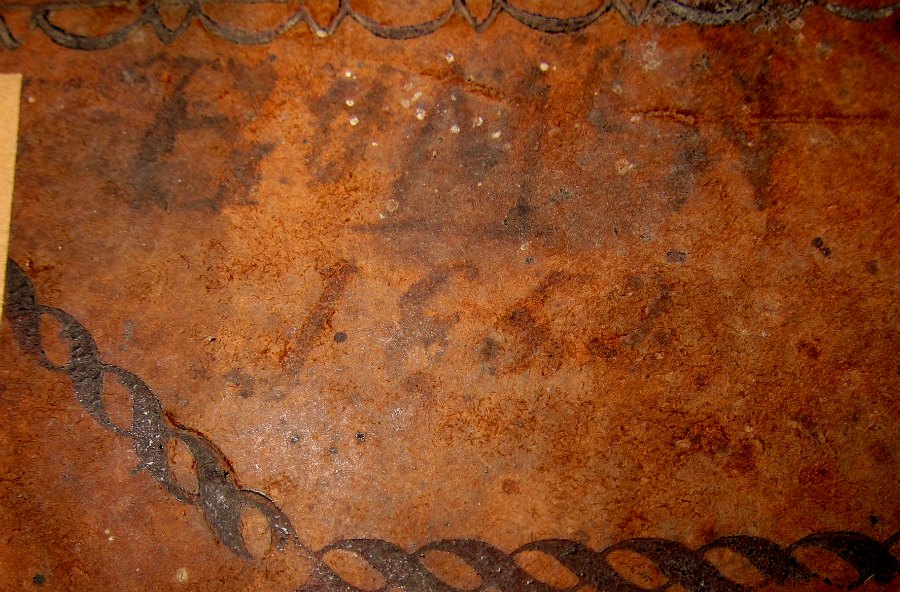
Identifying the name of the merchant or store, however, has proven to be a challenge. It was first cataloged in the 1940s as the S. C. Bruce Daybook, even though Bruce’s name appears prominently as a customer, not the merchant. Later attempts to trace the origin of the daybook culminated in consulting the 1850 census. They deduced that because both William Moffett and N. D. Bain were listed at households no. 6 and no. 8, respectively, and because both were listed as merchants, that the daybook likely belonged to the firm of Bain & Moffett. Also, on the upper left corner of the daybook’s front cover are the letters B and M with what was thought to be an ampersand between them.

IMG_0709
The upper left corner of the daybook’s front cover.
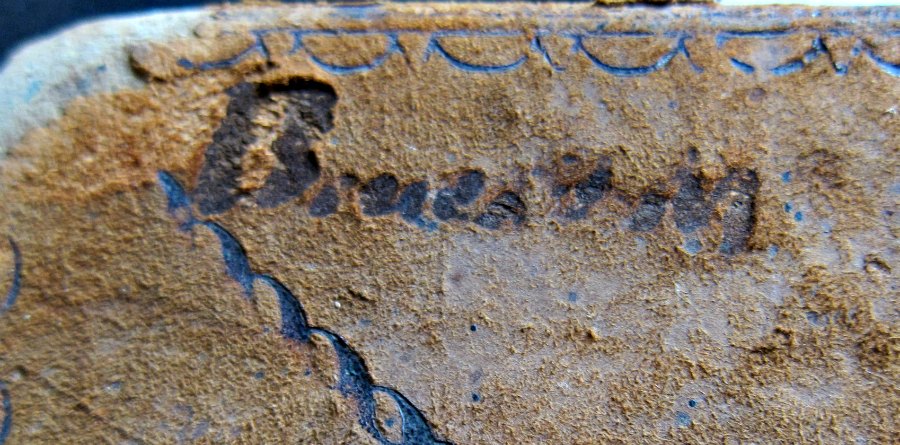
Upper left corner of the daybook's back cover.
Upper left corner of the daybook’s back cover.

While the item is cataloged as the “Bain & Moffett [?] Daybook,” Alice and I remain unconvinced that this is its true identity. It may be difficult to tell from the photographs, but in person, the branding on the cover looks more like Bruce than Bain and what is thought to be Moffett looks like it could be McNeill. What’s been assumed to be an ampersand looks more like an H or N.

Branding on the front cover of the daybook.

The North Carolina Digital Heritage Center’s DigitalNC site provides access to city directories from across the state. Unfortunately, the earliest available issue for Randolph County was published in 1894, making our wish to positively identify the daybook’s original owner a bit more difficult. We will continue to pursue this item’s identity as time allows. We will also graciously accept any help or insight.

What do you think? Is it Bain & Moffett, or something completely different?

Post contributed by Kimberly Sims, Technical Services Archivist for Univeristy Archives.

Dr. John Hope Franklin, Honoris Causa

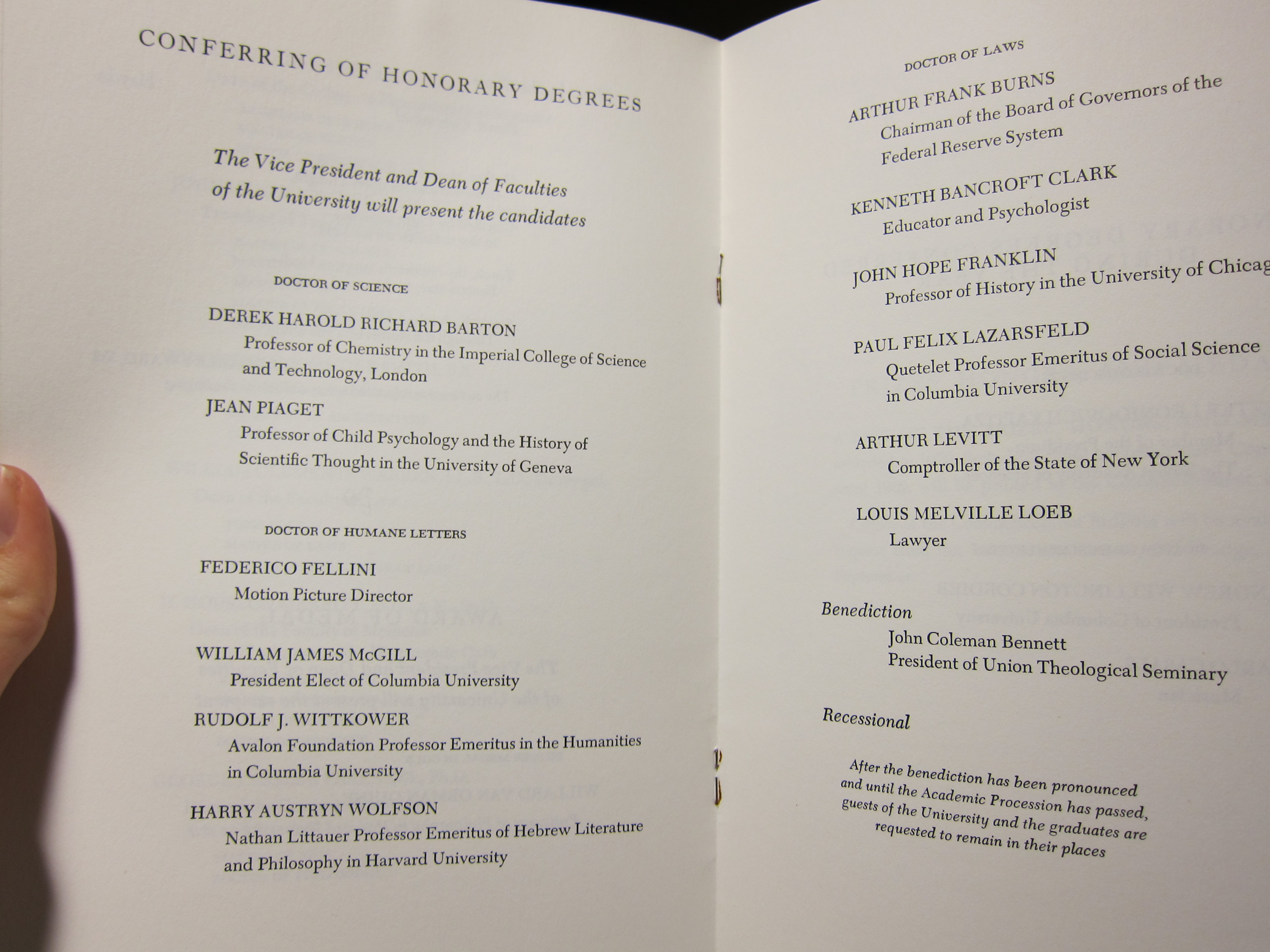
One of the most interesting batch of records I’ve worked with in the ongoing processing of the John Hope Franklin Papers are the Honorary Degrees, a subseries of Franklin’s Honors and Awards. In the course of his life, Franklin collected over 130 honorary degrees from colleges and universities all over the United States. Franklin appeared to cherish these awards, never turning one down unless it conflicted with a pre-existing engagement. By the 1970s and 1980s, Franklin’s weekends in May and June were booked — so booked that he would occasionally receive one degree on a Saturday, and another on a Sunday. Franklin also delivered the commencement addresses at many of these ceremonies, sometimes serving as the school’s first African American commencement speaker.

IMG_0680
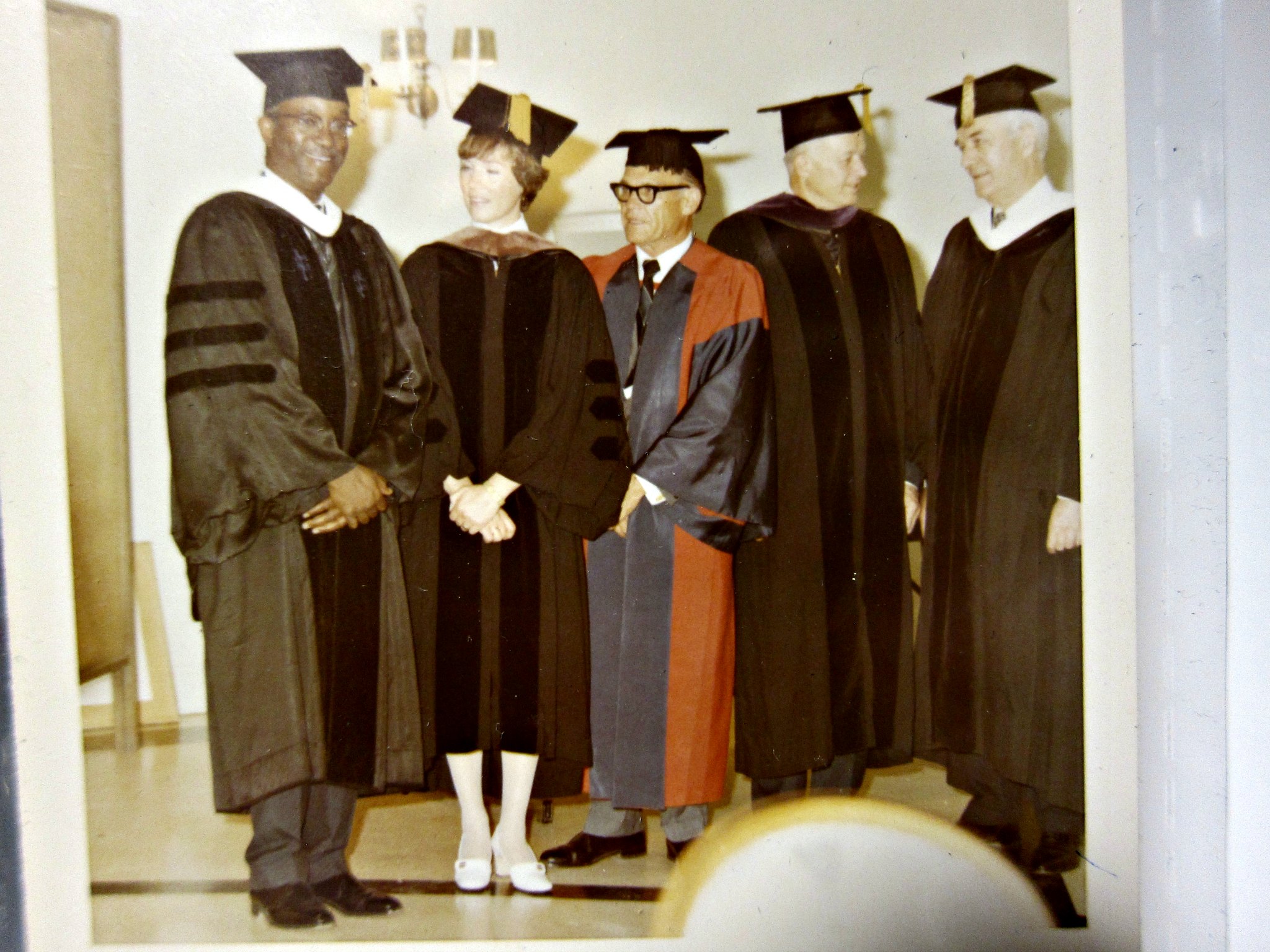
Honorary degree recipients John Hope Franklin, Julie Andrews, Edwin Gott, and Logan Wilson with University President Wilson Elkins at the University of Maryland commencement on June 6, 1970.

There is more to this series than a bunch of diplomas (although there are plenty of those, too). The pomp and circumstance occasionally overshadow the tense relationships between historically white university administrations and the growing numbers of African American faculty and students campaigning for civil rights in the United States. For example, before receiving his honorary degree at the University of Maryland (alongside Mary Poppins herself, Julie Andrews), Franklin was contacted by the campus’s Democratic Radical Union of Maryland and informed that the campus was still “effectively segregated” and under “virtual Marshall law.” The group of about 50 faculty urged him “not to help the administration at Maryland legitimize their power by taking part in one of their ceremonies on their terms, but rather to attend and stand with us against the political and racial repression that exists at this university” (telegram, June 3, 1970). Franklin went ahead with the ceremony, much to the frustration of the DRUM. He was the school’s first black honorary degree recipient.

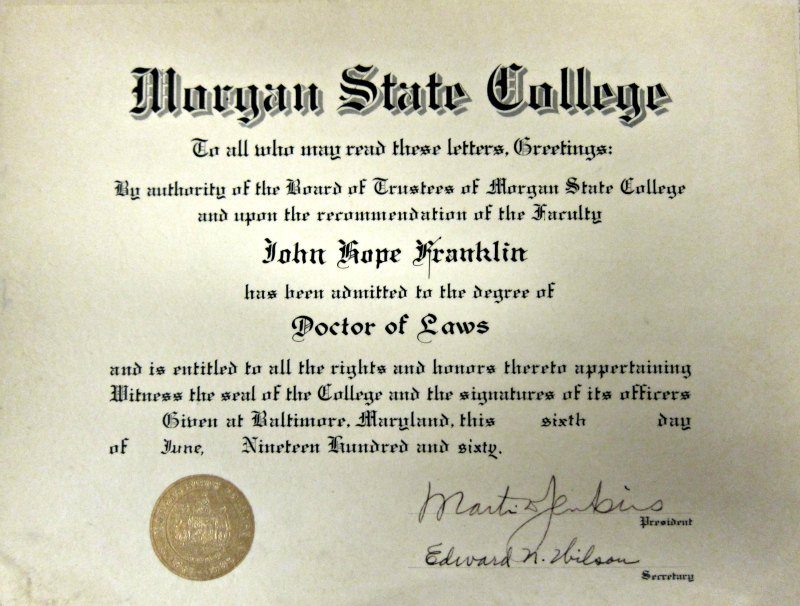
Franklin’s honorary degrees also reveal the wide-sweeping connections he established over the course of his life in scholarship. Many of his early honorary degrees were from historically black colleges, allowing him to further engage with leaders of the civil rights movement. In 1960, Franklin delivered the commencement address at the Morgan State ceremony that honored both him and W.E.B. Du Bois with honorary degrees, shortly before Du Bois moved to Ghana. This was only one of several occasions when the two men interacted with each other. In 1961, Franklin received an honorary degree from Lincoln University at a commencement addressed by Martin Luther King, Jr. He later joined King on the march to Selma.

Franklin's honorary degree from Morgan State College, 1960.
Franklin’s honorary degree from Morgan State College, 1960.

Later degrees attest to the random connections and coincidences of academic life. For example, at the Yale commencement in 1977, Franklin was honored alongside President Gerald Ford and musician B.B. King. He received his 1970 honorary degree from Columbia University with Arthur Burns, an economist and former chairman of the Federal Reserve whose papers are held at Duke. A 1984 ceremony at the University of Connecticut honored him alongside Marian Anderson, celebrated contralto.

Commencement program for Columbia University, June 2, 1970.

I was curious how John Hope Franklin’s 130+ degrees compared to other honorary degree holders — so I did some online searching. Most people come nowhere close to Franklin. Sir David Attenborough, scientist and documentary filmmaker behind the epic Planet Earth series, holds the record in the United Kingdom for the most honorary degrees: 31. Maya Angelou, U.S. Poet Laureate and one of Franklin’s close friends, has also received over 30 honorary degrees. Two Nobel Peace Prize winners come closer to Franklin’s total: the Dalai Lama has received at least 70 honorary degrees, including two last month from the University of Maryland and Maitripa College. Another Nobel laureate, Elie Wiesel, cannot remember how many honorary degrees he’s received, but reckons they number over 100. But, lest you think we have a record-holder at the Rubenstein, Franklin’s degrees pale in comparison to Daisaku Ikeda, a Buddhist philosopher and educator who has received over 300 honorary degrees and professorships from universities and colleges around the world. One can only imagine what Ikeda’s weekends look like.

Post contributed by Meghan Lyon, Technical Services Archivist.

The Accidental Archivist

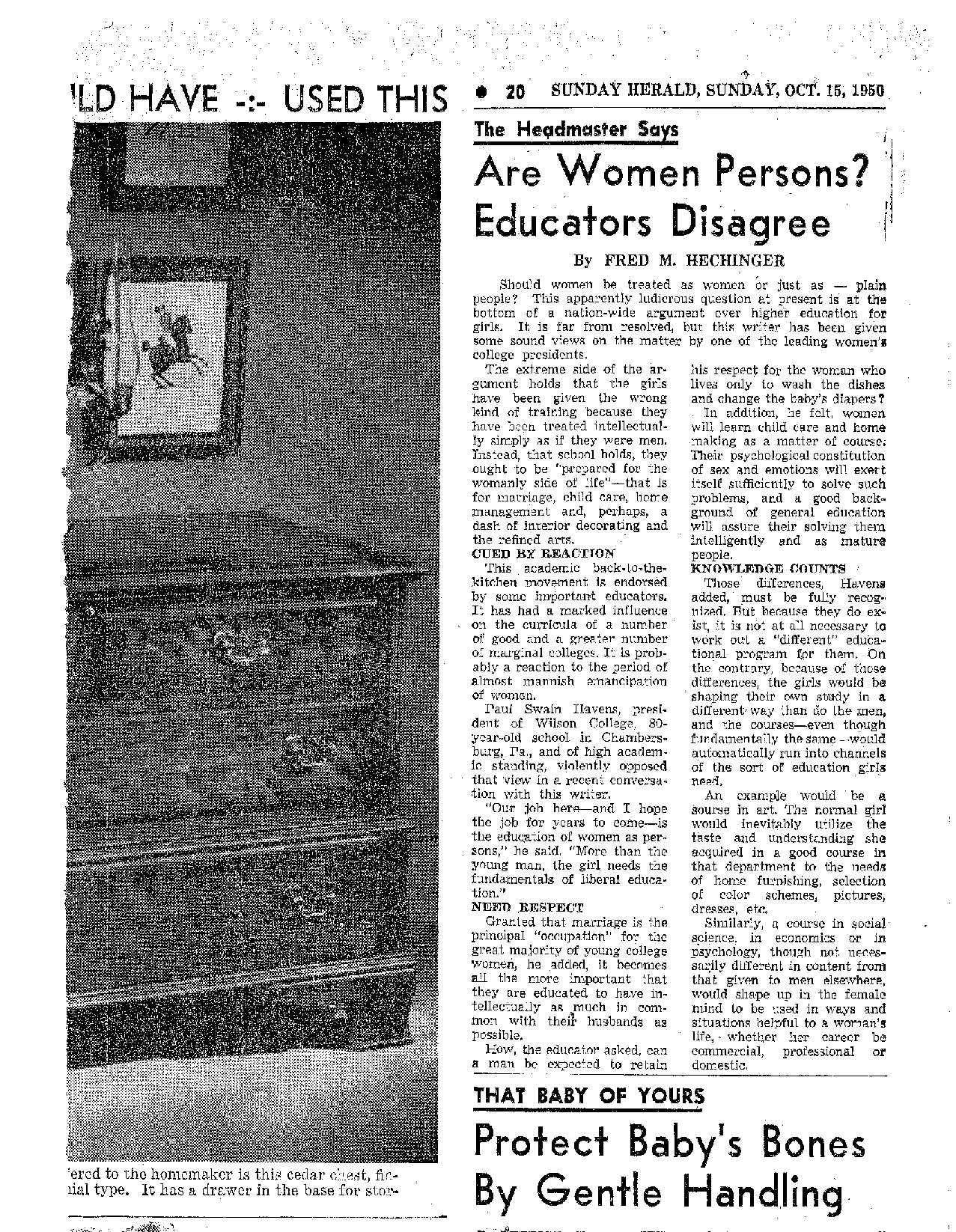
Issues involved with the handling and preservation of ephemera—campaign buttons, stickers, scrapbooks, photo albums, brochures and pamphlets and such—have been an ongoing concern among curators and archivists, as many of our procedures and best practices concern materials commonly recognized as “important artifacts” such as art, works of prominent photographers, rare manuscripts and books. Many modern manuscript collections pose an additional challenge when they include files of clippings, the two-sided nature of which inadvertently creates an “accidental archive” of items of potential research interest. Many of the Hartman Center’s advertising collections suffer from this wealth of excess. Magazine and newspaper pages containing ads for one product frequently have an equally (if not more) useful ad on the reverse, or a provocative news article. In the example here, taken from the Doris Bryn Papers, the reverse side of a department store ad contains an article “Are Women Persons? Educators Disagree” that appeared in the Oct. 15, 1950 edition of the Sunday Herald.

3363989-0
The backside of a 1950 advertisement for a department store wonders, “Are Women Persons?”

As indicative of the kinds of debates taking place during the postwar re-integration of women into domestic life and the slow march toward women’s rights and gender equality, the article poses potential research utility; at the least, great fodder for an undergraduate paper. The big challenge is: how to remember where to find these little gems the second time around?

Post contributed by Rick Collier, Technical Services Archivist for the John W. Hartman Center.

A Candid Doris Duke

Post contributed by Mary Samouelian, Doris Duke Collection Archivist

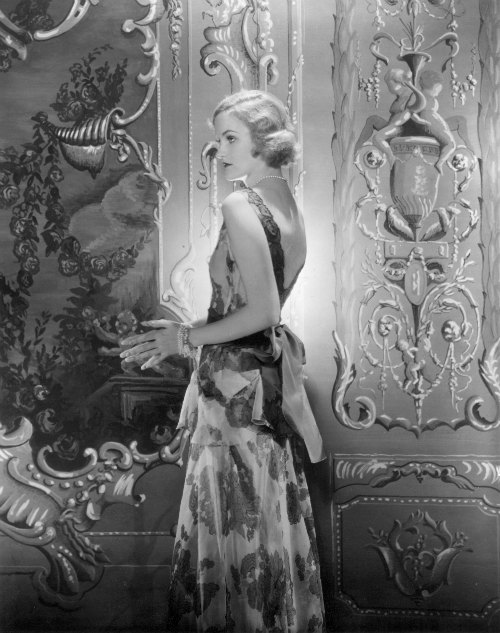
Cecil Beaton's portrait of Doris Duke
Cecil Beaton’s portrait of Doris Duke

One of the most well-known photographs in the Doris Duke Photograph Collection is a very glamorous Doris Duke draped in a floral gown and pearls, standing against an ornate backdrop. The photograph was taken in the early 1930s by Cecil Beaton, a fashion photographer known primarily for his portraits of celebrated persons. For most people this image is Doris Duke.

Doris Duke’s class portrait, probably from kindergarten

However, the recently published Doris Duke Photograph Collection finding aid sets out to introduce you to a Doris Duke who is very different from her public persona. Approximately 3,500 photographs out of 12,000 photographs in the collection have been digitized and are viewable from within the finding aid. Amongst these digitized items you can scroll through images of Doris as a young girl, Doris’ volunteer work for the United States Government during World War II, images of her travel, various estates,and an assortment of pictures of her dogs, cats, cows, and camels!

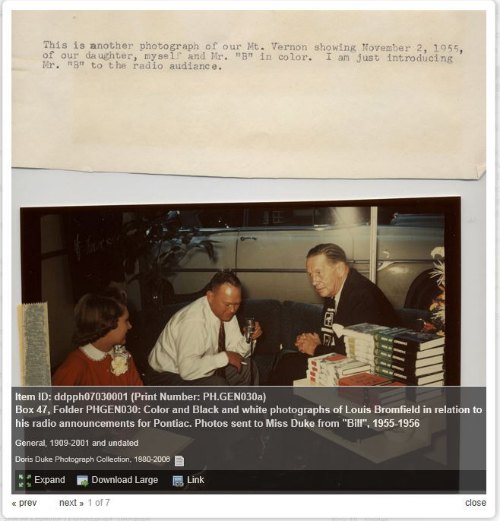
If you are interested in seeing the actual photographs, you can hover the cursor over any of the images and information about the physical location of the photograph within the collection is displayed. You can then request the box(es) you are interested in using through Duke University’s library catalogue.

Finding aid how to
Hover over digitized photographs to find out which box it’s stored in

The finding aid also describes photographs that have not been digitized but are available for use in the Rubenstein Library. Some of the more fascinating images in the collection are tinted photographs of Duke Farms (Somerville, New Jersey) from the 1900s, autographed pictures of a sultry Rudolph Valentino (Doris’ school girl crush), and color glass mounted slides of Doris Duke’s trip to the Middle East in 1938.