
Category Archives: Manuscripts

A Humble Petition from 1864

Greeting from 1864 Petition to Jefferson Davis from the Citizens of Cripple Creek, VA

Working on the History of Medicine (HOM) Trent Manuscripts Grant Project has revealed quite a few items of interest—but most recently, I discovered something that fits rather well into the Memories of the Civil War exhibit currently on display in the Perkins Exhibit Gallery.
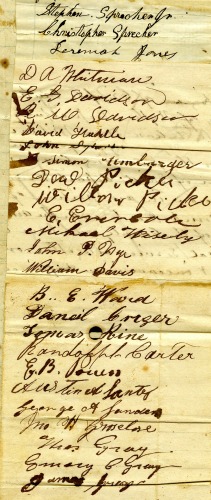
Signatures to the 1864 Petition from the Citizens of Cripple Creek.
Signatures to the 1864 Petition from the Citizens of Cripple Creek. From the Trent Manuscripts Collection.

You may have seen the grisly amputation kit from the HOM collection, which might be the kind of war-related artifact that you would expect out of a collection on the history of medicine.  But here, instead, is not an example of progressive advances in medicine, nor a relic of past practice: instead, a simple plea for a family doctor to remain in service to his community by being excused for service in the Confederate Army:

“We the undersigned Citizens of Cripple Creek, Wythe County, VA earnestly petition that our family physician, Dr. C. C. Campbell, who is a conscript under the late act of Congress and whose services are indispensable to this portion of the county, be exempt, or detailed, and left with us.”

This singular petition to the President of the Confederacy, Jefferson Davis, dated February 15, 1864, was accompanied by two pages of signatures by the residents of Cripple Creek.  Did it ever reach its destination?  Do any historians or local residents know the fate of Dr. C. C. Campbell and his patients in Cripple Creek, Virginia?  If so, we’d love to hear from you!

Jacqueline Chapman, a graduate student at UNC-Chapel Hill’s School of Information and Library Science, was History of Medicine Intern at the Rubenstein Library from September 2011 to January 2012.
Another Civil War: Lucan’s Pharsalia

It was written of the poet Lucan (Marcus Annaeus Lucanus, 39-65 C.E.) by his 17th century English translator Thomas May that when Lucan was born, “bees swarmed about the childes cradle, and pressed in clusters toward his mouth. A happy presage (as the learned interpreted it) of his future wit….”

Lucan was a Roman poet who lived and composed during the reign of Nero. Initially a favorite of the emperor, Lucan later joined a conspiracy against him, was captured, and was forced to commit suicide – at the age of 25 (the same age as John Keats when he died).

Lucan’s Pharsalia, or De bello civilli [Civil War], portrays the war between Julius Caesar and Pompey Magnus. The title refers to the Battle of Pharsalus (48 B.C.E.), in which Caesar defeated Pompey.

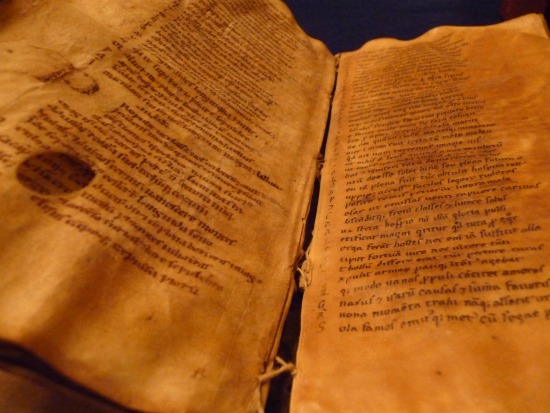
The Rubenstein Library’s Latin Manuscript 118 is a 12th century Italian manuscript of the Pharsalia. Acquired from Sotheby’s in 1969, the manuscript was written on parchment in a late Carolingian hand in brown ink, and was bound in the 15th century in goat skin over wood. In 86 parchment folios, the manuscript sits oblong in the hand, measuring 210 x 103 mm.

Image of Duke's Latin manuscript 118
Duke's Latin Manuscript 118, Lucan's Pharsalia

The Rubenstein has several early and significant printed editions of Lucan as well, the earliest published between 1493 and 1494 in Venice.  An edition from 1515 was printed by the venerable firm of Aldus Manutius. The presence of the manuscript and several printed editions provide students and scholars with an opportunity to study the transmission, editing, and translation of Lucan’s work over the centuries.

The Early Manuscripts series of blog posts seeks to bring greater attention to the Rubenstein’s rich collections in Latin, Greek, and other early manuscript traditions.

It’s St. Patrick’s Day (in the morning)!

Thomas F. Perry music collection
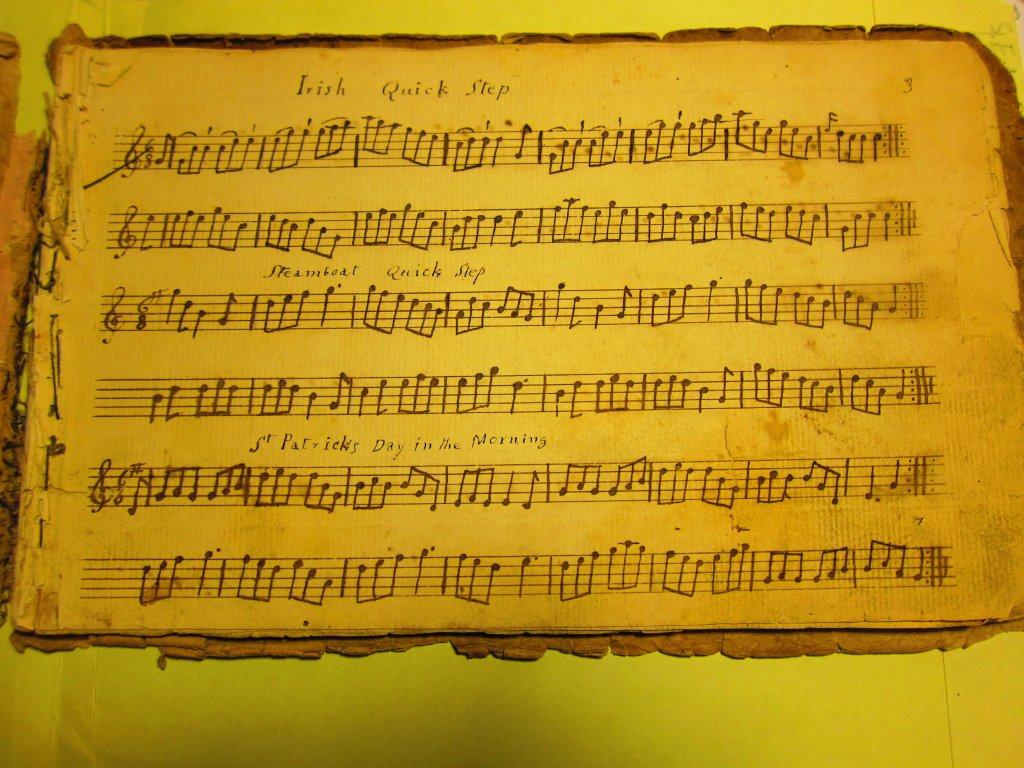
First page from the Thomas F. Perry music collection, 1833, which features many Irish melodies.

Happy St. Patrick’s Day from the Rubenstein! Here are the “Irish Quick Step” and “St. Patrick’s Day in the Morning” to enhance your celebrations. These dances and more can be found in the Thomas F. Perry Music Collection, dating from about 1833.

Post contributed by Alice Poffinberger, Archivist/Original Cataloger in the Technical Services Dept.

Dear Diary, I’m a woman.

Perhaps I just run with the bibliophiles, but when I tell people I work in a library, they usually say, “You’re lucky, you get to read books all day!” For most of my colleagues this is probably not the case, but I am one of the fortunate few for whom it is true. I am responsible for cataloging small or single-volume collections. They generally arrive with little or no description, so I must read the material to some extent in order to provide access to it. I also train others to catalog these collections, and I urge them to verify any information accompanying a new acquisition. In particular, I ask them to confirm the sex of any journal or diary author. Those describing these items before they reach our library still tend to assume that creators are male rather than female. Here is a case in point.

Travel Diary of unknown woman
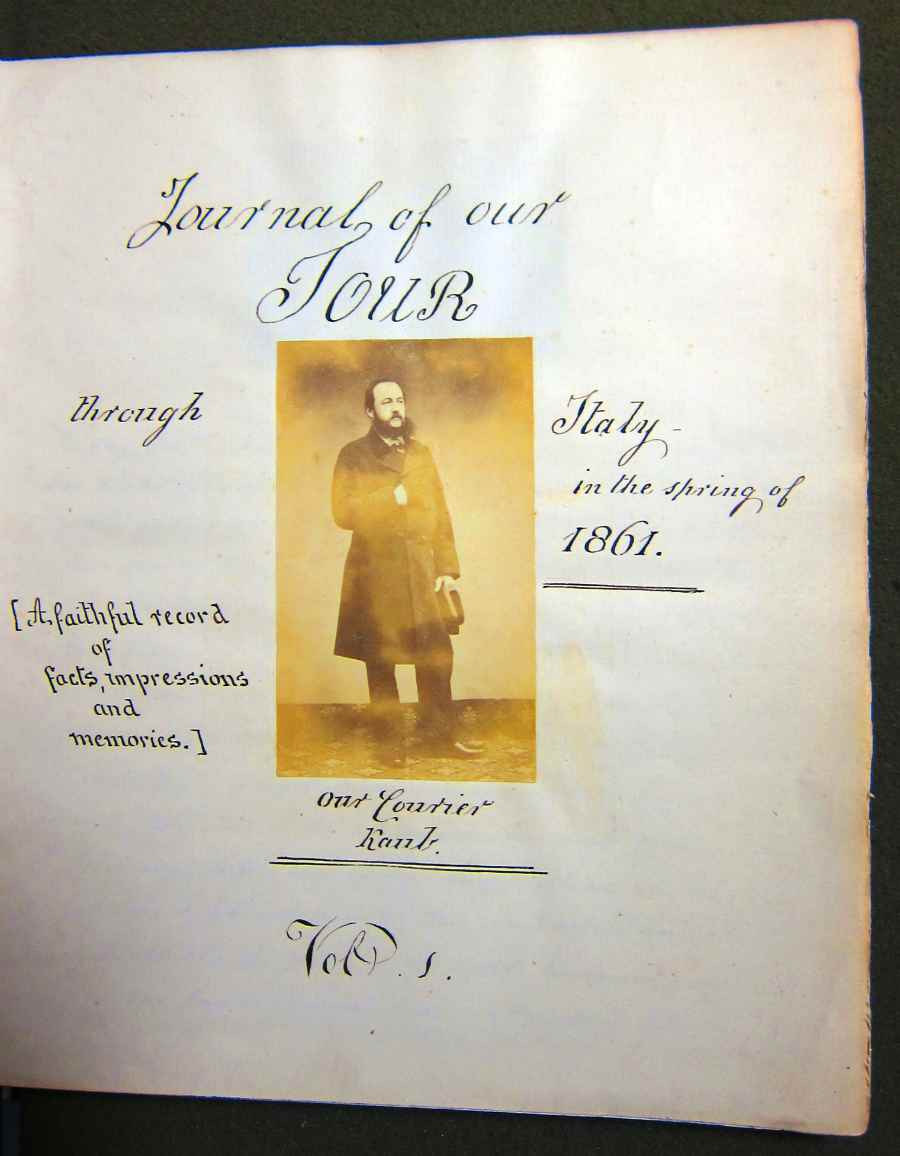
“Journal of our Tour through Italy in the spring of 1861. (A faithful record of facts, impressions and memories.)”

According to the description provided to us, Rev. James Lee-Warner of Norfolk, England, was the author of this travel journal. I needed to confirm this. The wrinkle was that, although I’ve often deciphered 19th-century handwriting in both quill and pen, this hand was rather difficult to read. With a little persistence I was able to read passages, including the one that provided the confirmation I was seeking.

In the entry for Friday, March 15, the traveling party joined a crowd of 10,000 people waiting at St. Peter’s to see Pope Pius IX. The author noted that “[The pope] did not arrive punctually, so we had ample leisure to look round on the vast crowds…,” then went on to describe what happened later that day:

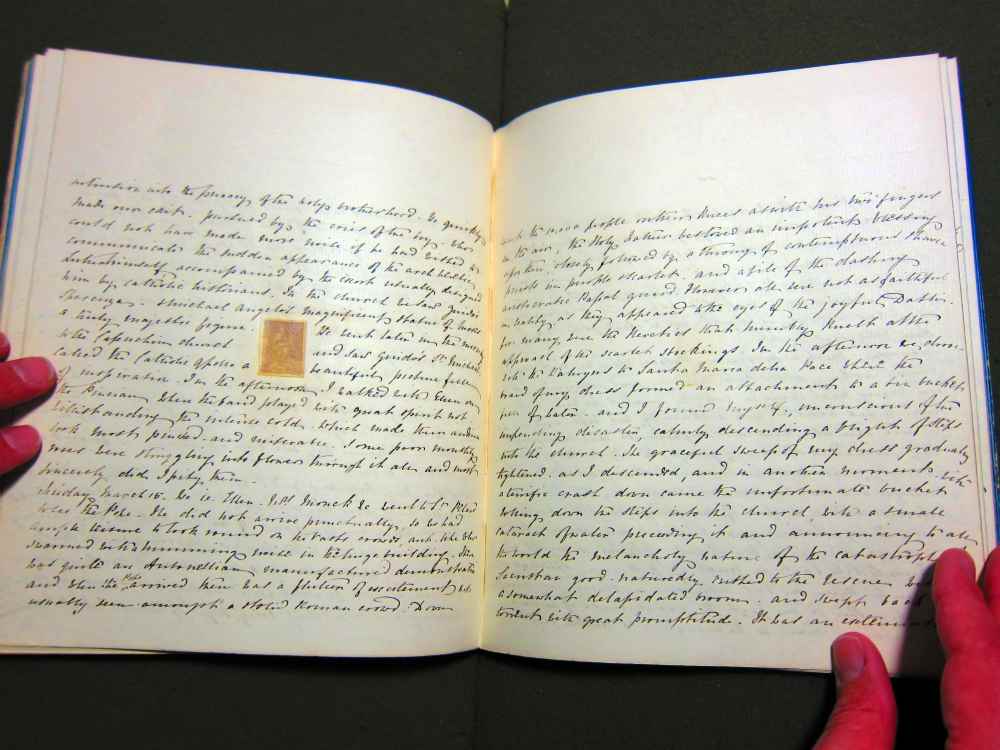
Pages of the diary, which sometimes include glued-in small albumen photographs of artwork or tourist attractions...
Pages of the diary, which sometimes include tiny albumen prints of artwork or tourist attractions.

In the afternoon we drove with the [W?]abryns to Santa Maria della Pace where the braid of my dress formed an attachment to a tin bucket full of water—and I found myself, unconscious of the impending disaster, calmly descending a flight of steps into the church. The graceful sweep of my dress gradually tightened as I descended, and in another moment with a terrific crash down came the unfortunate bucket [tolling?] down the steps into the church with a small cataract of water preceeding [sic] it and announcing to all the world the melancholy nature of the catastrophe. The Sacristan good-naturedly rushed to the rescue with a somewhat dilapidated broom and swept back the torrent with great promptitude.

I searched the journal and found no one else’s handwriting, so the volume’s sole author was a well-educated woman. Unfortunately, despite consulting entries for the Lee-Warner family and their relations in Burke’s Peerage and his Landed Gentry, I have not been able to identify her, although I am more certain that at least some members of the traveling party were Lee-Warners. To learn more about this journal and its content, visit our library’s catalog record.

Post contributed by Alice Poffinberger, Archivist/Original Cataloger in the Technical Services Dept.

Charles N. Hunter Papers: Full of Surprises

When I began processing the Charles N. Hunter Papers, I had just completed my work on the N.C. Mutual Collection, which was full of incredible material concerning Durham’s Black business community throughout the 1900s. The Hunter papers constituted a much smaller collection and, as such, I was not prepared to find such a rich and varied amount of information regarding a time period (mainly 1870s-1930s) that is often under-explored and underrepresented in general historical accounts of African Americans in the United States.

The collection paints a broad picture of the evolution of race relations and racial thought during Hunter’s lifetime, including a change in the tone of his beliefs concerning the best way for Blacks to seek equality and dignity within the United States (a change which appears to coincide with increasingly strained race relations in the 1920s). Given Hunter’s extensive experience as an educator in North Carolina, the collection also provides unique insights into the daily workings of the education system for Black children in the post-war, rural South. Additionally, Hunter’s extensive personal correspondence can be found intermingled with the amazing sociological and historical perspectives that are present within his business and community papers. The placement of his personal triumphs and tragedies amidst his professional and community commitments gives his papers a uniquely human dimension. In examining the collection, it was personally difficult for me to see so many personal family tragedies unfold in what seemed like a short period; however, this allowed me to connect with the Hunter by way of seeing the relationship between his public and private life.

Birchbark letter
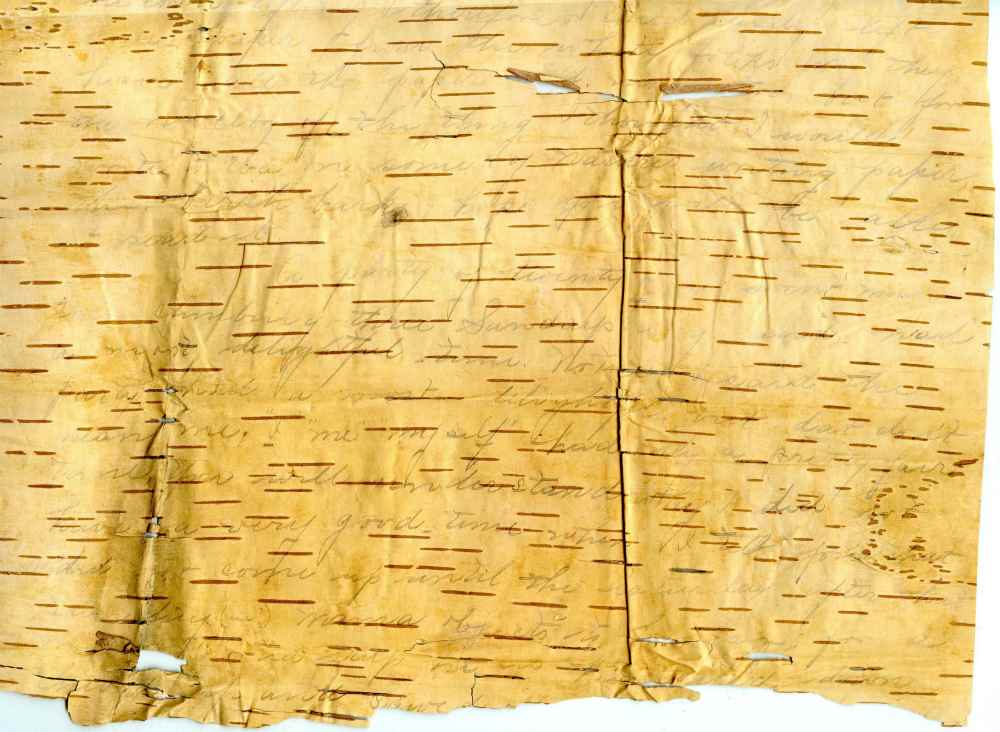
The bark from a Birch tree, collected and used as writing paper.

Within the Hunter papers, there are a wide variety of interesting artifacts, some of which include: a letter from a friend written on Birchbark (an amazing piece that is now quite thin and fragile); letters that provide greater elucidation of the daily business aspects of the operation of NC Mutual during the early 1900s; Hunter’s affectionate correspondence with the Haywood family, which owned his family prior to emancipation; and a blank 1850s “Slave Application” for the N.C. Mutual Life Insurance Company of Raleigh.

Slave Policy Insurance Form
An application for an insurance policy covering a slave, 1850s.

The latter company is one that was distinct from the N.C. Mutual that began its operations in Durham just before the turn of the 20th century, and the history of the Raleigh company is largely unknown or forgotten. In addition to offering general life and property insurance,  N.C. Mutual of Raleigh also allowed slave owners to take out policies covering their slaves for a limited number of years. It is unclear how or when Hunter came by this form, but the presence of this document within the collection brings forth the great irony of both a pre-Civil War N.C. Mutual that insured the lives of slaves and a completely separate post-Civil War N.C. Mutual that was created, owned, and operated solely by former slaves and the children of former slaves.

Post contributed by Jessica Carew, a Ph.D. candidate in the Political Science Department at Duke University and an intern in the John Hope Franklin Research Center for African and African American History and Culture.

Honeymooning with the Cowpers

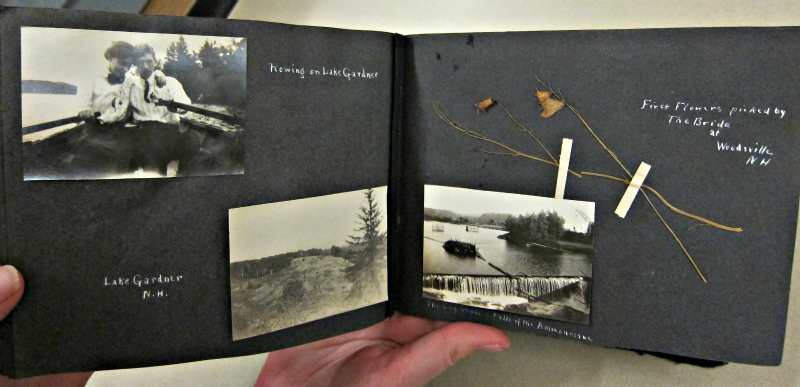
On April 17, 1909, Frederick Augustus Grant Cowper married Mary Octavine Thompson. Frederick became Professor of Romance Languages at Trinity College (now Duke University), while Mary (who earned a Ph.D. in Sociology at the University of Chicago) became a suffragette, helping to organize the North Carolina League of Women Voters in 1920. Both Frederick’s and Mary’s papers reside in the Rubenstein Library.

The Cowpers' honeymoon scrapbook, with flowers picked by Mary

While on their honeymoon in New Hampshire, the Cowpers took many photographs they placed in an album they titled “Photographs of their Wedding Journey.”  In honor of Valentine’s Day, here is my favorite photograph and caption:

The Cowpers' honeymoon scrapbook, asking "How'd you like to spoon with me on Mt. Gardner?"

Post contributed by Kim Sims, Technical Services Archivist for Duke University Archives.

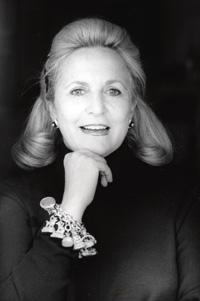
Barbaralee Diamonstein-Spielvogel

A monthly series highlighting the Barbaralee Diamonstein-Spielvogel Collection Project and the woman behind the documents.

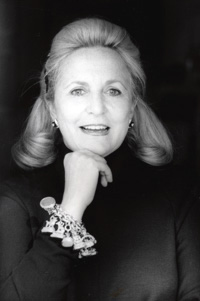
Diamonstein-Spielvogel

Barbaralee Diamonstein-Spielvogel is an advocate for art in fashion, design and architecture and a leading voice on some of the defining urban issues of our time, including preservation of the historic built environment of the United States. The impact of her work is all around us.  Have you been inside re-adapted buildings?  Diamonstein-Spielvogel was one of the pioneers of adaptive reuse of buildings throughout the country.  Have you seen “Historic neighborhood” medallions on street signs in numerous major cities?  She pushed for those (and still does).  As we start the New Year, we are excited to announce the Barbaralee Diamonstein-Spielvogel Collection, a new addition to the Rubenstein’s Archive for Documentary Arts.

Barbaralee Diamonstein-Spielvogel helps to commemorate the inventor of Scrabble with an historic street sign.

Diamonstein-Spielvogel’s interest in the relationship among the arts, public policy, community and politics has charted the course of her career, fostered her involvement in national and local institutions and organizations, and earned her many awards and honors. As the first Director of Cultural Affairs for New York City, she brought the first public art to Bryant Park in 1987 and the first public performance by the Metropolitan Opera to Central Park. Diamonstein-Spielvogel was appointed by President Reagan to the board of the U.S. Holocaust Memorial Museum in Washington, D.C., and by President Clinton to the U.S. Commission of Fine Arts, where she was elected its first woman vice chair in 2002. In 2010, Barack Obama appointed her as a commissioner of the American Battle Monuments Commission. She has written 20 books and dozens of magazine and newspaper articles and has served as interviewer/producer of nine television series for the Arts and Entertainment Network plus several programs for other national networks, many of which Duke has made available in the Diamonstein-Spielvogel Video Archive.

Diamonstein-Spielvogel’s latest book, Landmarks of New York: An Illustrated Record of the City’s Historic Buildings

As part of the two-year Diamonstein-Spielvogel Collection Project, we will be processing the 200-plus boxes of manuscripts pertaining to her life and career.  The project will culminate in an exciting exhibit in 2013. In our next post, look for information on Diamonstein-Spielvogel’s work with famous designers and artists including Calvin Klein, Adolfo, Robert Rauschenberg, Louise Nevelson, Jeanne-Claude and Christo, Roy Lichtenstein, and Sam Maloof.

Post contributed by Ruth Cody and Caroline Muglia, Graduate Interns for the Barbaralee Diamonstein-Spielvogel Collection Project.

Juanita Kreps and the Merger of the Duke Woman’s College, 1972

Working on the Economists Papers Project at the Rubenstein Library this summer introduced two Duke economics graduate students to an inspiring and impressive figure who shaped the histories of both Duke University and the United States: Juanita Morris Kreps.  The description and arrangement of 58 boxes of her professional papers was made possible in summer 2011 by Matthew Panhans and Nori Takami, with funding from the Center for the History of Political Economy.

Krep's senior portraitBorn into a childhood of poverty in the small mining town of Lynch, Kentucky in 1921, Juanita Kreps emerged as one of the top students at Berea College, earning her a scholarship to study economics at Duke University, where she completed her M.A. and Ph.D.  She joined the faculty at Duke in 1955 and served as Dean of the Woman’s College and as Associate Provost; in these roles she oversaw the controversial 1972 merger of the Woman’s College and the men’s Trinity College to form the present coeducational undergraduate Trinity College of Arts and Sciences.  As we celebrate the 40th anniversary of that merger in 2012, many of us may not be aware of its deep significance to the history of Duke and to the future for women in higher education. Kreps’ papers hold many files of correspondence from alumna who responded to her calls for comments, accompanied by letters, speeches, and memoranda written by Kreps which reveal her own insights into this monumental change.

In 1972 Kreps became the first woman to hold the prestigious James B. Duke chair, and in 1973, Kreps was named a Vice President of the University.  In 1976 she left Duke to serve as the first female Secretary of Commerce under President Carter, also the first academic to serve in this role and the fourth woman ever to be a part of the Cabinet.  As the Secretary of Commerce, she was an advocate for the business community while also encouraging business to look beyond profits and towards social responsibility to workers, consumers, and the public.

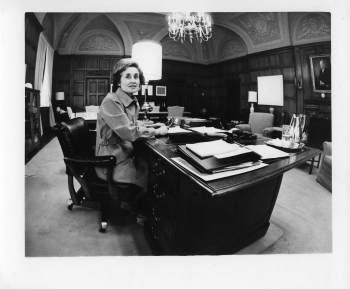
Kreps at her deskPerhaps rooted in her humble beginnings in Kentucky, her academic research maintained real-world relevance.  Much of her work was on the value of women’s work, women’s education, and labor issues related to aging populations.  These and other topics that remain relevant today pervade her speeches, which are both witty and moving.  The plethora of thank you notes accompanying each speech offers clear evidence of the power of her words and ideas – but if this is not enough to convince you, come to the Rubenstein Rare Book & Manuscript Library and read them for yourself!

Post contributed by Paula Mangiafico, Senior Processing Archivist for the Rubenstein Library. Matthew Panhans is an M.A. student in Duke’s Department of Economics. Norikazu Takami is a post-doctoral fellow at Duke’s Center for the History of Political Economy.

One for the Refrigerator Door

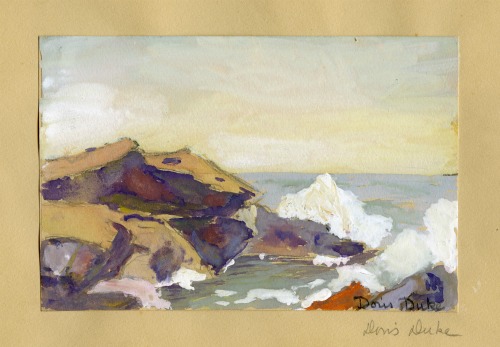
Painting by Doris Duke, 1924

Doris Duke—the only daughter of Duke University benefactor James Buchanan Duke and noted philanthropist and patron of the arts—painted this lovely scene in 1924 at the age of eleven. It is part of the Doris Duke Papers, donated to the Rubenstein Library in 2009 by the Doris Duke Charitable Foundation and now open for public research.

Further details about the extraordinary collection may be found in the official press release, or by reviewing the collection’s finding aid.