Category Archives: Manuscripts

Growing up Duke

When Angier B. Duke (1884-1923) and Mary L. Duke (Biddle) (1887-1960) were born, Trinity College was still plodding away in Randolph County, and the American Tobacco Company was just a twinkle in James B. Duke’s eye. Still, W. Duke, Sons, and Company, the family business founded by Washington Duke, was so successful that parents Benjamin N. and Sarah P. Duke could already afford to give their son and daughter a childhood that wildly exceeded that of previous generations in terms of comfort and education. The couple’s first son, George Washington Duke, died at about two or three years of age in the early 1880s. His life preceded the time span of most of the papers held by the Rubenstein Library, and only a few reminders of his brief existence can be found, such as the haunting note from Ken Roney, Ben’s uncle, following the death of Roney’s son: “You know and I know now, how hard it is to give up a promising son.” Given this tragic past, the couple’s second and third children were much doted upon by their parents.

Among the few remaining mementos of their childhoods in the Benjamin Duke papers, some of the most amusing are the letters the children wrote to their father when he was away on business in New York. A young Angier was full of demands—for a sword case, a pair of shoes, and a visit from “Uncle Buck”: “when he comes he must stay with us longer.”
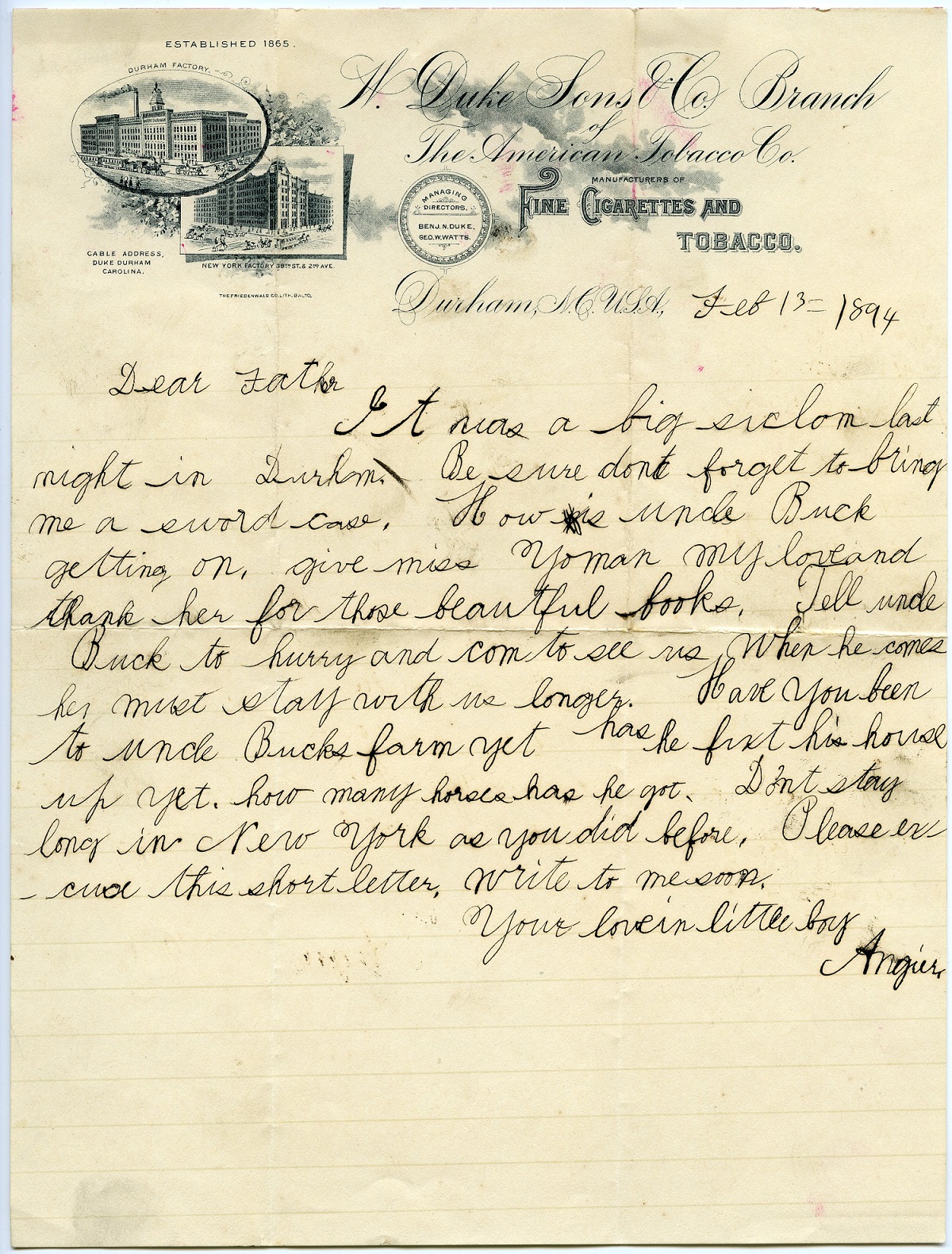
abd_to_bnd_18940213_001

In 1893 he also sent along his first school composition, an essay on Christopher Columbus (historical myths intact). Mary delighted in telling her father of her April Fools’ Day pranks:

“I have had a right good time April fooling people. I fooled Mrs. Robinson, and brother, and many other people. I don’t think you can fool anybody much up there.”

While the ties between the Duke family and Trinity College were obviously very strong (“Duke University,” need I say more?), it still seems extraordinary how closely connected Angier and Mary were with the campus community from a young age. A steady stream of professors were welcomed at the Duke home, including former presidents Crowell, Kilgo, Few, and many other names you might be able to pick off a university building in passing. Sarah P. Duke hosted literary societies such as the Shakespeare Club, and guest speakers also lodged at the Duke home. Angier and Mary’s private tutor was Arthur H. Meritt, whose day job was professor of Latin, German, and Greek.

Community events also drew together the Dukes and other Durham residents with the college faculty, including spelling bees and athletic matches. An 1896 letter from Angier to his father conveys his enthusiasm for an upcoming “kite-sailing” contest to be held by Professors Lockwood and Meritt. The same Professor Lockwood (physics and biology) used a nine-year old Mary, or rather four Mary’s, as the subject of one of his trick photograph experiments.
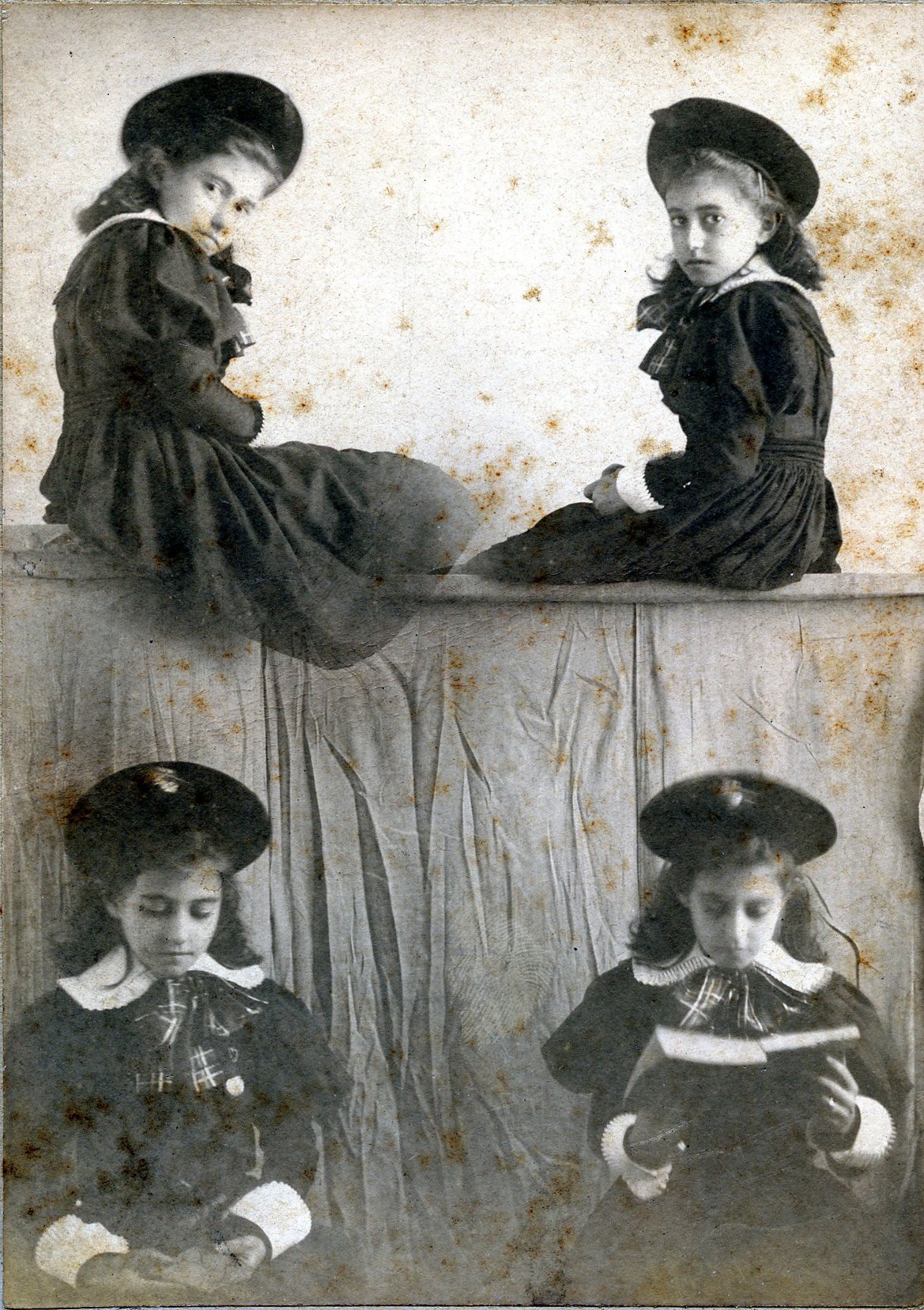
biddle_mary_duke_1896_cropped
Mary L. Duke (Biddle)

When the time came for Angier and Mary to attend college—well, it’s safe to say that Carolina wasn’t on the table. By the time they began their respective terms at Trinity (Angier in 1901 and Mary in 1903), the siblings already had buildings named after them, built with funds from their father and grandfather. The Mary Duke Women’s Building was demolished long ago to make way for new dormitories, while the Angier B. Duke Gymnasium, better known by the nickname “The Ark,” still stands on Duke University’s East Campus.

While the siblings lived in New York after they graduated, they always maintained a connection to Durham and their alma mater. Angier served on the Trinity College Board of Trustees, was president of the Trinity Alumni Association, contributed to the construction of the first fraternity dwellings sanctioned by the college, and left a generous bequest in his will, which was executed after his untimely death in 1923. He and Mary both donated considerable sums to realize the completion of the Alumni Memorial Gymnasium, built in honor of the students and alumni who perished during World War I. Perhaps the greatest testaments to Mary Duke Biddle’s philanthropy are the Sarah P. Duke Gardens and her support of the arts through the Mary Duke Biddle Foundation. Like their parents, uncle and grandfather, both Angier and Mary succeeded in leaving a mark on the institution that had truly become part of the family.
Post contributed by Mary Mellon, Doris Duke Charitable Foundation Intern

Crazies in Love: A Valentine’s Open House

Date: Thursday, February 12, 2015
Time: 3:30-5:00 PM
Location: Room 217, Perkins Library
Contact: Amy McDonald, amy.mcdonald@duke.edu

Dearest readers and friends, we long to see you on Valentine’s Day. Won’t you please set our hearts a-flutter and come to our Valentine’s Day open house?

Do you fear that you will be too busy penning epistles of undying love to your own beloveds to join us? Ah, but this event is crafted especially for you: we’ll be sharing the most swoon-worthy of love declarations from the Rubenstein Library’s collections, so you may find just the term of endearment you need to woo your mate.

Perhaps a few examples to help the time pass more swiftly until we meet?

We’re charmed by the simplicity of this short note from the scrapbook of Odessa Massey, Class of 1928:

Note from Odessa Massey's scrapbook
From the Odessa Massey Scrapbook, 1924-1928.

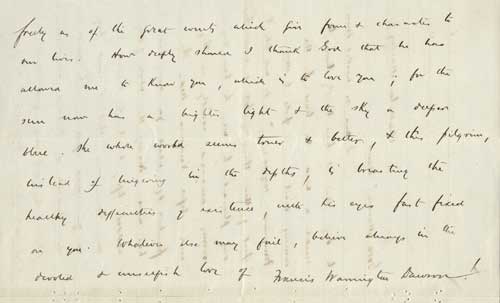
Or the more expressive route taken by Francis Warrington Dawson—writing to Sarah Morgan, his future wife–is always sure to succeed:

Letter from Francis Warrington Dawson to Sarah Morgan, February 10, 1873. From the Dawson Family Papers.
Letter from Francis Warrington Dawson to Sarah Morgan, February 10, 1873. From the Francis Warrrington Dawson Family Papers.

“How deeply should I thank God that he has allowed me to know you, which is to love you, for the sun now has a brighter light & the sky a deeper blue. The whole world seems truer & better, & this pilgrim, instead of lingering in the depths, is breasting the healthy difficulties of existence, with his eyes fast fixed on you. Whatever else may fail, believe always in this devoted & unselfish love of Francis Warrington Dawson!”

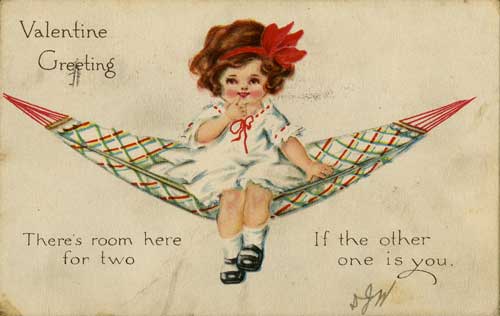
Or whose heart wouldn’t melt upon receiving this most adorable valentine, from our Postcard Collection:

Valetine, undated. From the Postcard Collection.
Valentine postcard, undated. From the Postcard Collection.

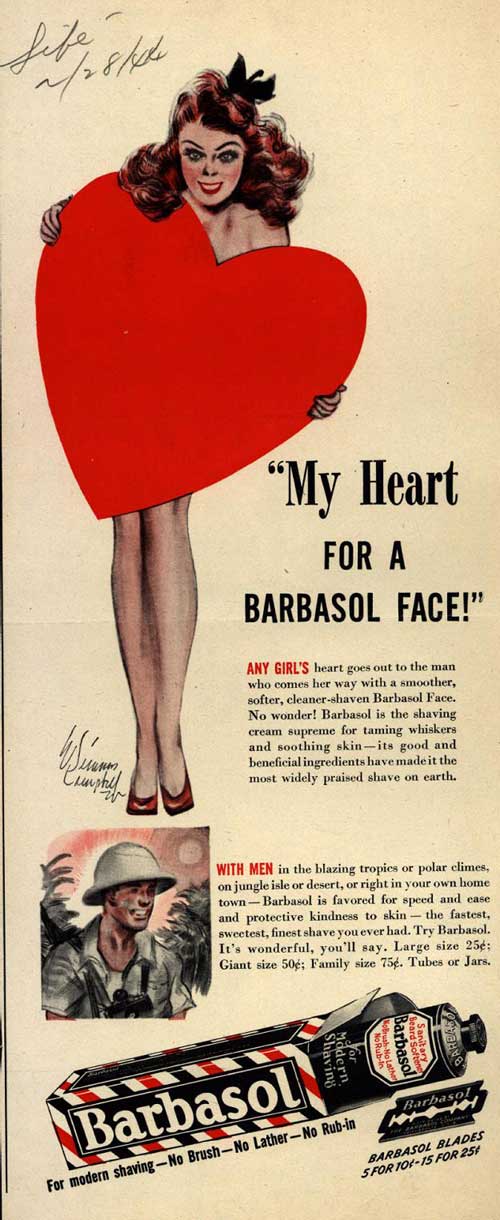
And there might even be tips on how to present yourself when you present your valentine!

Barbasol advetisement, 1944.
Barbasol advetisement, 1944. http://library.duke.edu/digitalcollections/adaccess_BH0643/


Have we convinced you yet? What if we mention that there will be chocolate and candy?

Until next Thursday,

Your Rubenstein librarians

Durham’s Beardy Bros

We have collections and rare books from so many far-flung locations, but we occasionally come across historical materials documenting life right here in Durham.

Brush Brothers Plege BookThe city of Durham’s centennial celebrations took place from April 26th through May 2nd of 1953, and people were excited! Excited to reflect on how much Durham had progressed and also on what changes might or should take place in the next hundred years. A particularly strange way in which some chose to celebrate the occasion was to join the Brothers of the Brush. Never heard of ‘em?

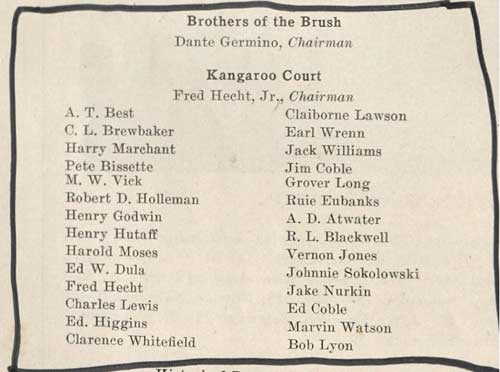
Spearheaded by Dante Germino, an engaged Durham resident who worked for the Herald-Sun Co. at the time, the fund-raising effort collected $1.00 per member; and the 3093 members pledged to do their “civic duty” by growing and maintaining a “moustache, full beard, goat-tee, or side-burns” throughout the celebrations. If a member failed to keep his promise he was brought before a Kangaroo Court of his peers.

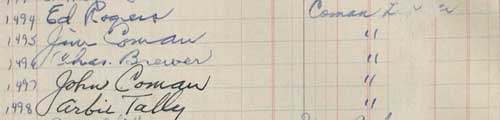
Roster of the Brothers of the Brush

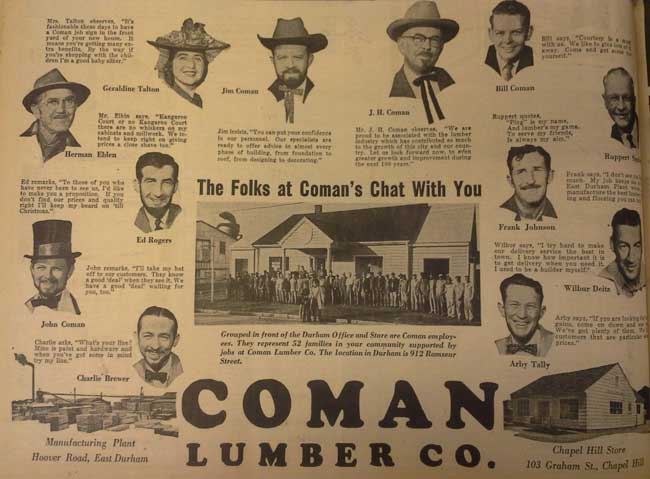
Evidence from newspapers at the time show that many local businesses took up the challenge. Check out these fellows at Coman Lumber.

Coman Lumber Advertisement, Durham Herald-Sun, April 26, 1953.
Coman Lumber Signatures from the Brothers of the Brush Registry.

Want to find out if a local family member of yours was an official Brother of the Brush? We’ve got the registry in our holdings for you to peruse; and we’ve also got local newspapers from that time.

Times have changed. These days, with so many hipsters out and about in Durham, we’d have an easy time collecting funds from bearded folks throughout the city. We could use Duke Libraries’ button-maker to make buttons for participants! We’ll have to wait until 2053 for the next centennial, though.

Dominique has a lovely beard!Post contributed by Dominique Dery, Research Services Intern, who may or may not have the lustrous and full beard pictured at right.

Our Fifth Birthday

Happy birthday to our super blog, which turns five today! We took a quick look at some numbers (although apparently age is more than just that) and found that the blog racked up 54,901 pageviews this year—so thank YOU, dear readers, for coming along with us on our explorations of the Rubenstein Library’s very cool collections (and the very cool people who work with them). We hope you’ve enjoyed it as much as we have!

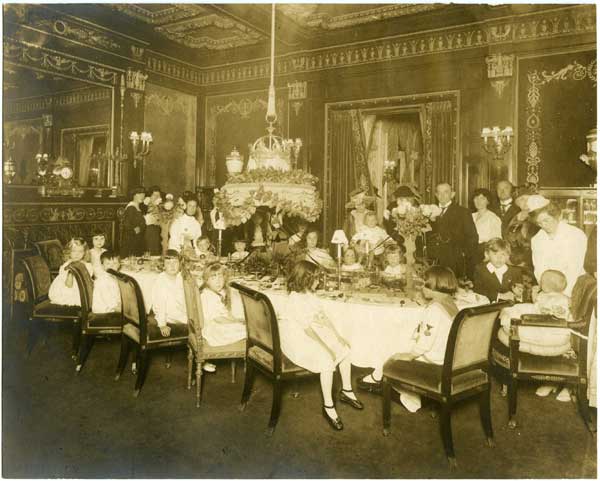
We went looking for something appropriately celebratory to share, and didn’t have to look farther than the papers of our own Benjamin N. Duke. Isn’t this just about the fanciest birthday party you’ve ever seen?

Birthday Party, ca. 1916. From the Benjamin Newton Duke Papers.

The photo dates from around 1916 and includes Mr. Duke himself (he’s standing behind the bouquet on the table). It was taken in New York City, at the house next door to Mr. Duke’s own mansion at 1009 Fifth Avenue (2 East 82nd Street, to be exact).

We’re not certain, but we’re wondering if this might be a birthday party for Mr. Duke’s grandson (and future U.S. ambassador), Angier Biddle Duke, who was born in 1915. If only the baby seated at the head of the table on a plump cushion had his head turned toward the camera. . . . If you have any information about the photo, send us an email!

Also, inspired by this photograph, we are thinking of trying to invent the combination piñata-chandelier. If you have any ideas about that, send them to us in an email as well.

Hat tip to Mary Mellon, Technical Services Intern, who found and scanned the photo!

What’s Not a Photograph of John Wilkes Booth?

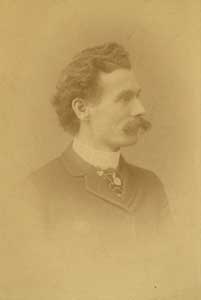
Pictured above:  Not John Wilkes Booth. From the James Thomas Powers Papers.
Pictured above: Not John Wilkes Booth. From the James Thomas Powers Papers.

In a recent appearance on Jeopardy!, former Rubenstein Library intern Josh Hager announced that he had discovered a previously unknown image of John Wilkes Booth in the James Thomas Powers papers at Duke. That would have been exciting—if it were true.

Hager thought there was a resemblance between the man in the image and the images of Booth he found online, and he wrote a post about the apparent resemblance on this very blog in 2010. This was jumping the proverbial gun—on the blogger’s part as well as ours. More work was needed to verify this conclusion. And indeed, a little further research confirms that the image is not Booth. We appreciate the comments from those who saw Hager on Jeopardy! and then wrote us to question the accuracy of the post. They are right—we never should have published it. In the interest of setting the historical record straight (and protecting the innocence of the unknown man in the photo), we have taken it down and added this new post.

Alex, we’ll have “Mea Culpa” for $1,000.

New Collection: Meet the Wilsons

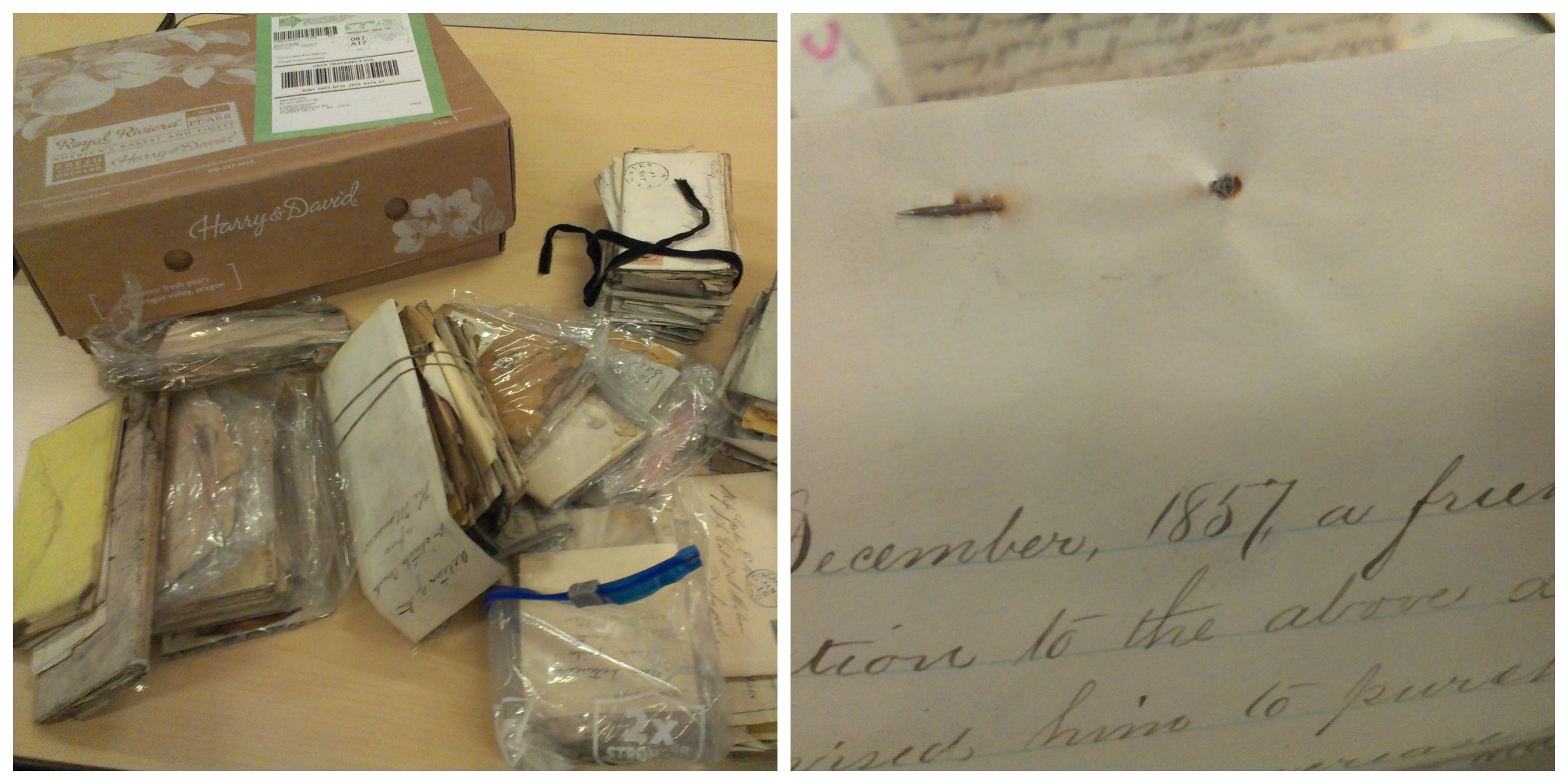
It is a rare treat for me to have a chance to process some 19th century family letters. The family papers of Col. David S. Wilson, from Dubuque, Iowa, arrived in March 2014, thanks to a generous donation from the Kirby, Pfohl, and Quigley Family. The collection was discovered in an attic. It reached the Rubenstein Library as it was discovered, with rusty pins and covered in black dust. Considering its age and environment, the letters themselves were in terrific condition — just filthy. A lot of my time was spent cleaning the paper with special sponges that attract grime.
The original state of the Col. David S. Wilson Family Papers; an up-close view of a rusty pin (used before the invention of the safety pin).
The original state of the Col. David S. Wilson Family Papers, before they were cleaned and sorted; an up-close view of a rusty pin (used before the invention of the paper clip).

I was pleasantly surprised by the contents of the letters. Col. David S. Wilson is moderately famous in Iowa history for his service in the state legislature in the 1850s and early 1860s, and for raising the 6th Iowa Cavalry in 1862. His regiment fought the Sioux in the Dakota Territory. Wilson later worked as a lawyer in both San Francisco and Washington, D.C., and eventually was appointed district judge back in Dubuque.

The collection does not focus on Wilson’s military career, but instead consists largely of letters between David and his family, particularly his wife, Henrietta, and their four children. The letters cover personal topics such as in-laws, health, and finances, and reveal the hardships the family faced as David was frequently separated from his loved ones. They seemed to genuinely miss each other, and it was nice to see such warmth conveyed in their letters.

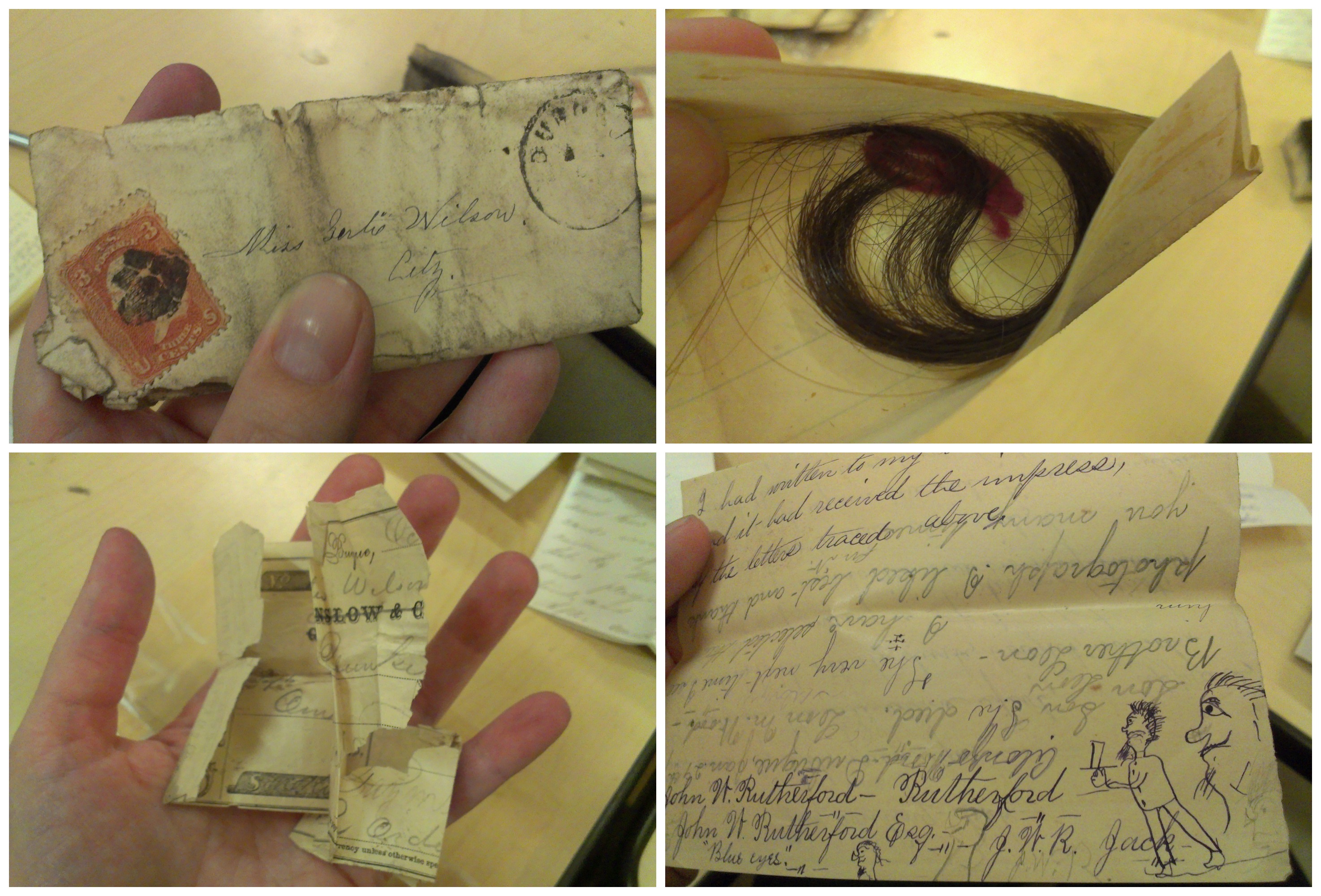
Also notable in the collection were the courtship letters received by the couple’s daughter Gertrude (also known as “Gertie”) in the mid-1870s. Gertie had at least six different suitors in 1872 and 1873, and their letters to her dominate the correspondence from that period. Emotions turned raw as she rejected a few declarations of love. Gertie finally married George Brock, from Chicago, in March 1874.

Tiny letters for Gertie from her fellas; a lock of Gertie's hair returned after a break-up; crumpled up love-note; Gertie's doodles of a former suitor's name
Tiny courtship letters for Gertie from her fellas; a lock of Gertie’s hair returned after a break-up; a crumpled up love-note; Gertie’s doodles of a former suitor’s name.

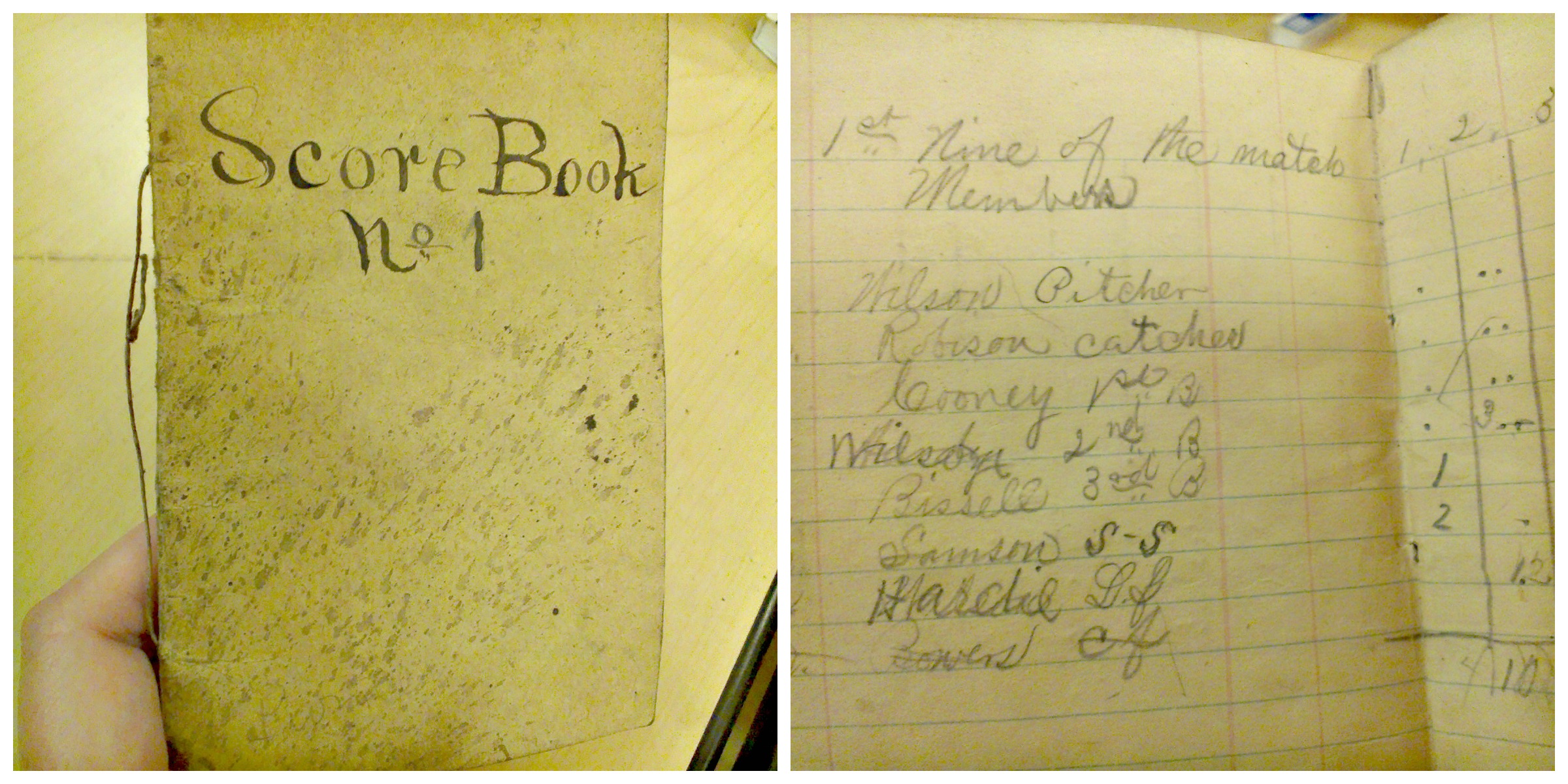
The collection includes more than just correspondence; there are also some legal documents, land grants, and a diary from David S. Wilson’s 1860 term in the General Assembly. One of the land grants includes a signature from President Franklin Pierce. The children’s activities, particularly their schooling, are documented through report cards and flyers. I also came across this handmade score book, which was largely empty, but I was excited to see what sport it was for: baseball. Along with all his other activities, it turns out that David Wilson was also a pitcher.

David Wilson's score book from his baseball games.
David Wilson’s score book from his baseball games.

The Col. David S. Wilson Family Papers are now fully processed and available for researchers. You can explore it for yourself using the collection guide.

Post contributed by Meghan Lyon, Technical Services Archivist.

Duke College?

Benjamin Newton Duke

Our colleague Mary Mellon is currently reprocessing the Benjamin Duke Papers to provide more refined description. Among the many fascinating pieces of correspondence within the collection, she has found a letter, dated November 16, 1896, from Trustee A. P. Tyer to Ben Duke. In it, he makes a not-so-modest proposal: that Duke give a $500,000 endowment and that the school be renamed Duke College.

“The only hope that Trinity College has of ever being endowed is found in the Dukes. I therefore ask that you give the College five hundred thousand dollars as endowment and allow the Trustees to name it “Duke College.”

In 1896, the school was just four years old in its new Durham location. There was great concern about longterm viability, despite the generosity of the Duke family up to that point, including providing the funds to bring the school to Durham. $500,000 in 1896 would have been around $13 million in today’s money.

To sweeten the deal, Mr. Tyer added,

“This will forever take away the feeling of uncertainty, make the college an assured success forever, put the Dukes in front of all southern benefactors, largely increase the number of students, bring even a better class of patronage to the college, make it possible for others to give to it, be the greatest monument any southern man will ever build, be a perpetual benefit and blessing to the human family, and constantly glorify God your Father.”

Ben Duke remained a steady and heavily involved benefactor, but never made a gift at the level requested in the letter. The month after this letter was received, Washington Duke, Ben’s father, gave a $100,000 endowment, contingent on women being admitted on equal footing with men. In 1924, Ben’s brother, James B. Duke, established the Duke Endowment, which helped fund a massive expansion of the college, and led to the renaming of the school—not to Duke College, but to Duke University.

aptyer-pg1-small
Click to enlarge.
A. P. Tyer to Benjamin N. Duke, page 2
Click to enlarge.
A. P. Tyer to Benjamin N. Duke, page 3
Click to enlarge.

Post contributed by Valerie Gillispie, University Archivist, with assistance from Mary Mellon, Technical Services Intern.

The Dawning of Legibility

In 2009, a single-item addition to our Charles Alexander Gore papers turned up in my cataloging queue. The letter surfaced while preparing some collections to move off-site before renovation of the Rubenstein Library began.  When I recalled the appropriate box and pulled the folder into which I was going to place the addition, I noticed that the handwriting on my letter did not match that of Charles Alexander Gore.

Allie Blog 1
Rev. Charles Gore, circa 1900

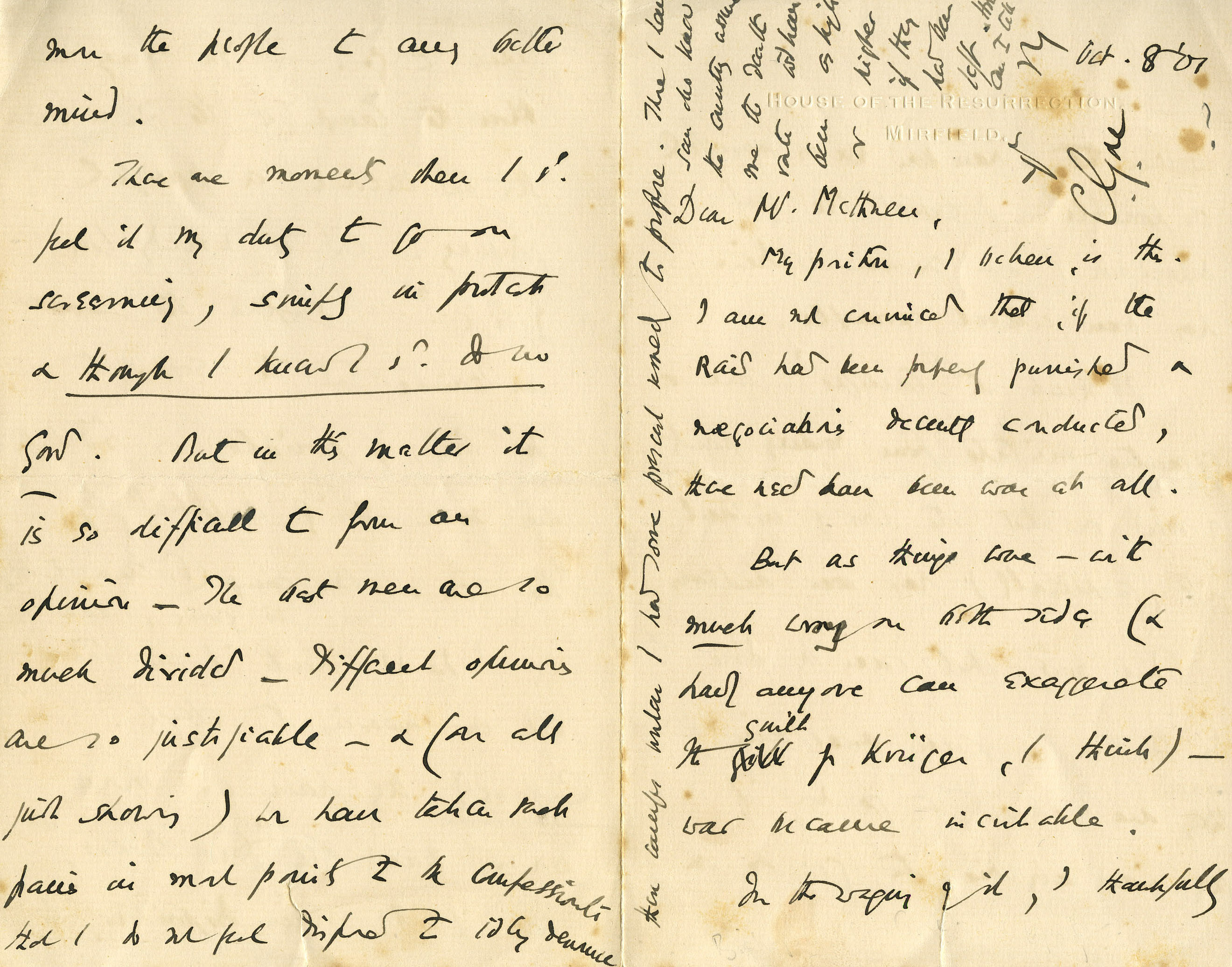
Using the embossed address at the top of the letter, I determined that the author probably was Rev. Charles Gore (1853-1932), who became an Anglican Bishop not long after he penned it.  Because we do not have any other items created by Rev. Gore, the letter needed to be cataloged on its own. The problem in doing that, however, was that I found Gore’s handwriting almost completely illegible.

I determined that the first line of the letter mentioned a war, which likely referred to the 2nd Boer War in South Africa, given the fact that the letter was written in 1901. Other than that, I could only pick out individual words or phrases in the piece. Frustrated, I put the letter back on my shelf.  Every once in a while, I would return to it in order to see if I could make progress deciphering it, and even consulted with my British colleague, Mandy Hurt, who also struggled with the penmanship.

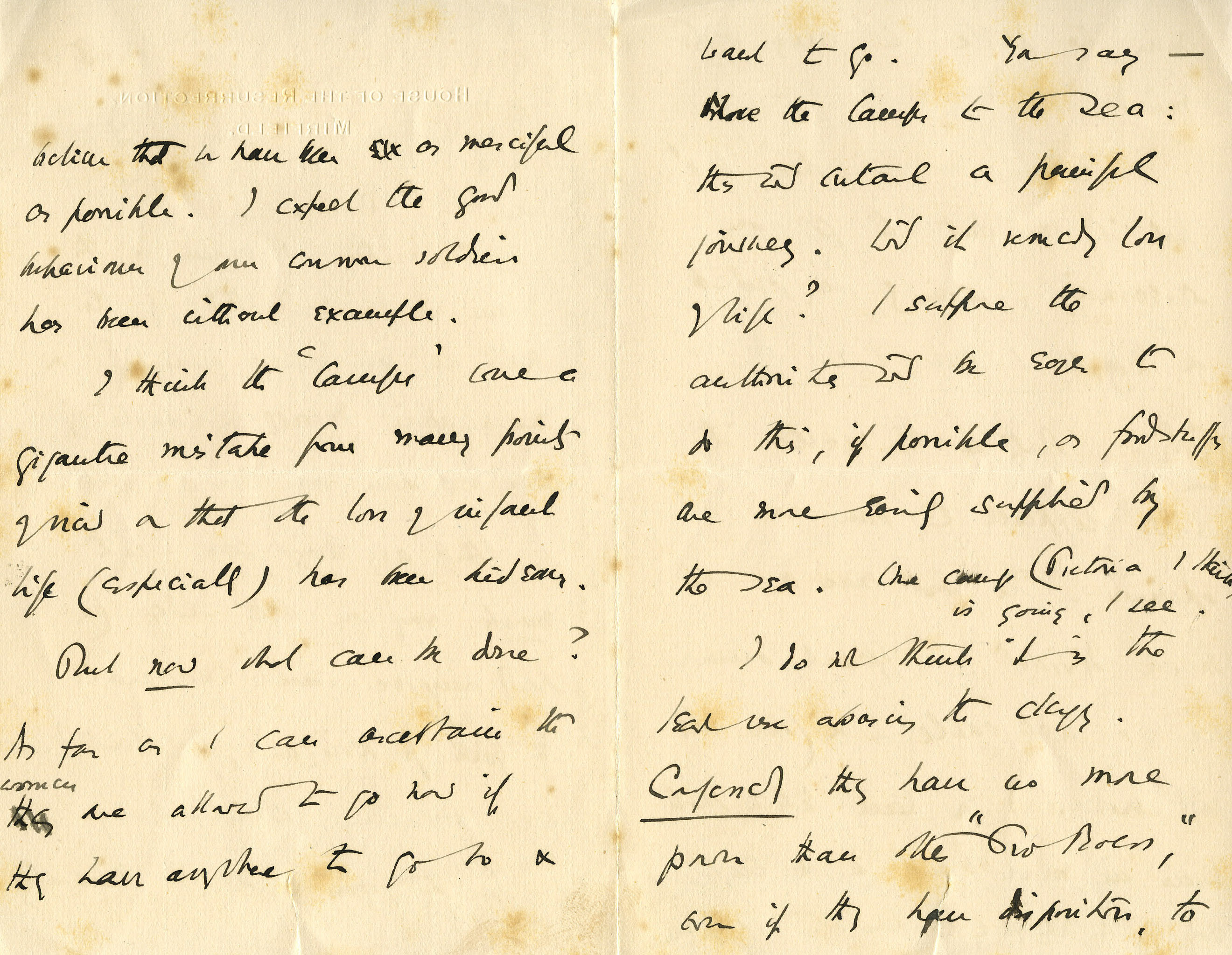
I do not know what happened within my brain, but when I recently opened the letter again, I could suddenly distinguish many of Gore’s words! Not all of them, mind you, but enough to catalog the letter with greater confidence regarding its subject matter.  I worked through the sentences, and then showed my transcription again to Mandy, who deciphered several more key words and phrases, she tells me, by searching for “typically British turns of phrase.” Here’s our transcription, as it stands:

Oct. 8 ‘01

Dear Mr. McI[___]

My [pri___,] I believe, is that I am not convinced that, if the raid had been properly punished or negotiations decently conducted, there need have been war at all.

But as things were—with much wrong on both sides (& how anyone can exaggerate the guilt of  Krüger, I think)—war became inevitable.

In the waging of it, I thankfully believe that we have been as merciful as possible. I expect the good behavior of our common soldiers has been without example.

I think the ‘camps’ are a gigantic mistake from many points of view & that the loss of infant life (especially) has been [____ ____].

But now what can be done? As far as I can ascertain the women are allowed to go now if they have anywhere to go to & [bread?] to go. You say—move the camps to the sea: this will curtail a painful journey. Will it remedy loss of life? I suppose the authorities [___ ___ be ___] to do this, if possible, or foodstuffs are more easily supplied by the sea. One camp (Victoria I think) is going, I see.

I do not think it is the [best] use [___] the clergy. [_____] this have no more power than the [“Good Boer,”] even if they have disposition, to move the people to any better [mind?].

There are moments when I do feel it is my duty to go on [_____, _____] in protest & though I know [it will] do no good. But in this matter it is so difficult to form an opinion—the best men are so much divided—different opinions are so justifiable–& ([on all just showing]) we have taken such pains in most points to be compassionate that I do not feel [inspired?] to idly denounce them [___ ___]. I have some present [___] to propose.  Those I have seen who know the [country assure] me the death rate [___] have been as high or higher if they had been left. How can I tell?

A scan of the letter is below.  What do you think about our transcription?  If you have any suggestions to make as to the words we still find illegible, please do so in the comments section.

Allie blog first last pages-1
Gore letter, first and last pages
Allie blog second third pages-1
Gore letter, second and third pages

Post contributed by Alice Poffinberger, Original Cataloger/Archivist for small manuscript collections. Mandy Hurt is Assistant Librarian for Electronic Resources & Serials Management.


Heschel Highlights, Part 6

Abraham Joshua Heschel: The Voice on the Back of the Page

1 HeschelAnyone familiar with Abraham Joshua Heschel’s English writings has encountered the distinctive cadence of his sentences. From the early book The Earth is the Lord’s (1949) to his final work A Passion for Truth (1973), one can hear and feel the rhythm that we now all find so familiar. Reliant on evocative words, on short phrases strung together mostly through suggestions, his sentences pile steadily one atop another, compelled from within as if by their own heartbeat.

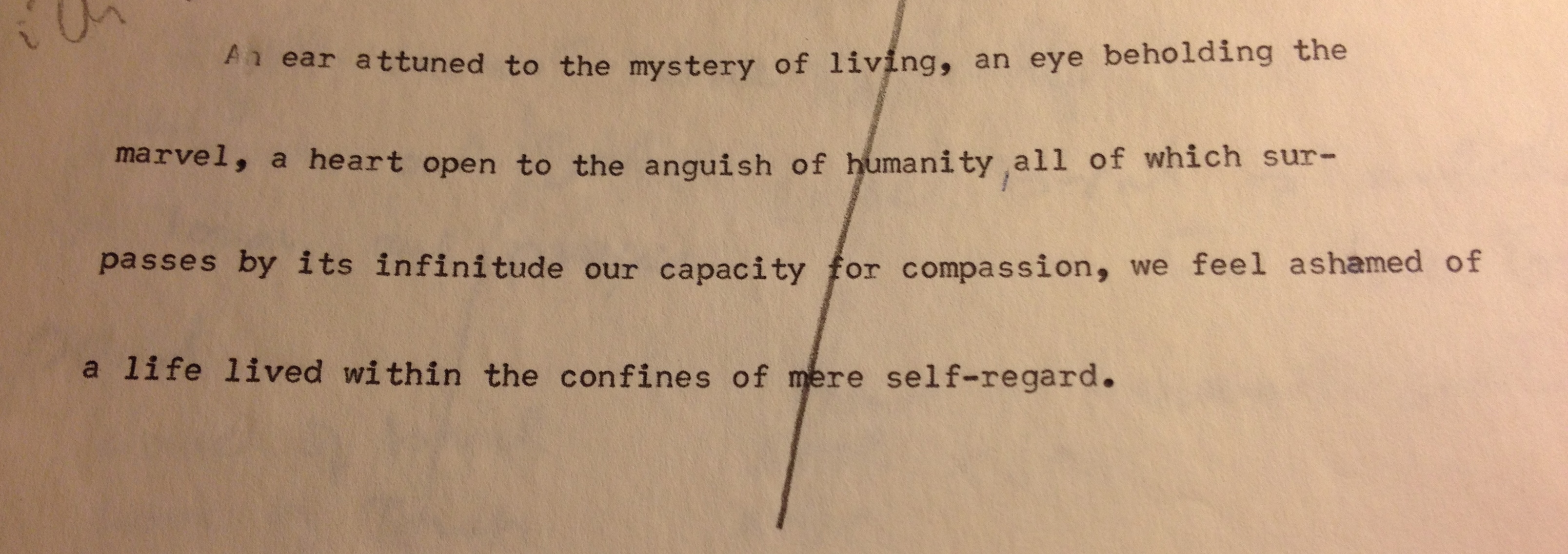
2 HeschelHeschel saved nearly every scrap of paper on which he wrote. From napkins and hotel stationary to JTS announcements and publisher’s proofs, often what we record in the database is only the “front” of the page—what appears to us to be a paper’s final use. But the other side, the crossed out side, is often just as lively, covered in sentence fragments, Talmudic quotations, half-written letters of thanks or condolence. Often these backsides record, as if by sheer happenstance, a couple of seconds of Heschel’s mind, a brief instance when a thought, a turn of phrase, caught him amid other actions and was hastily scribbled down.

3 Heschel
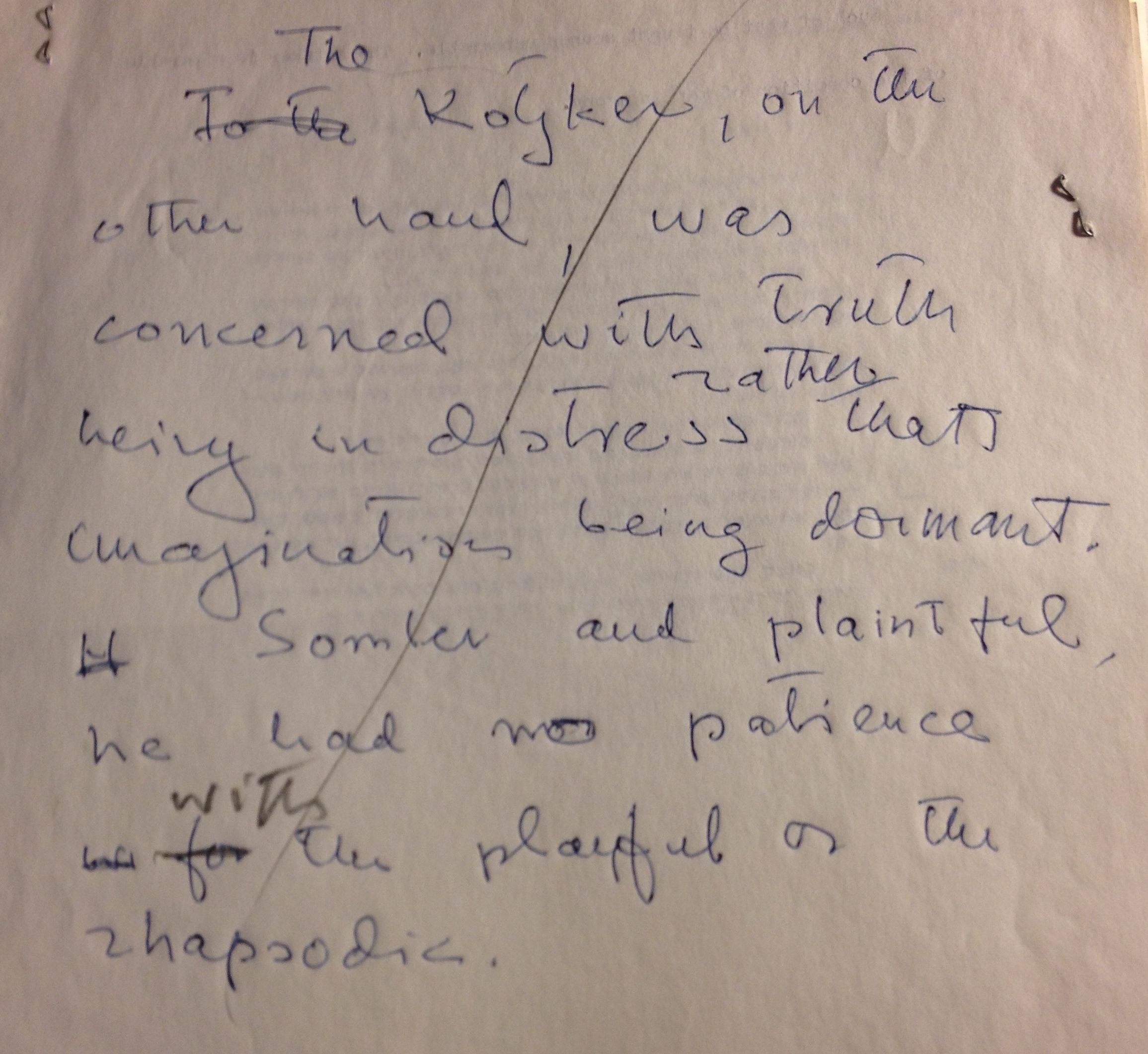
“The Kotzker, on the other hand, was concerned with truth, being in distress {rather} that imagination being dormant. Somber and plaintive he had no patience with the playful or the rhapsodic.”

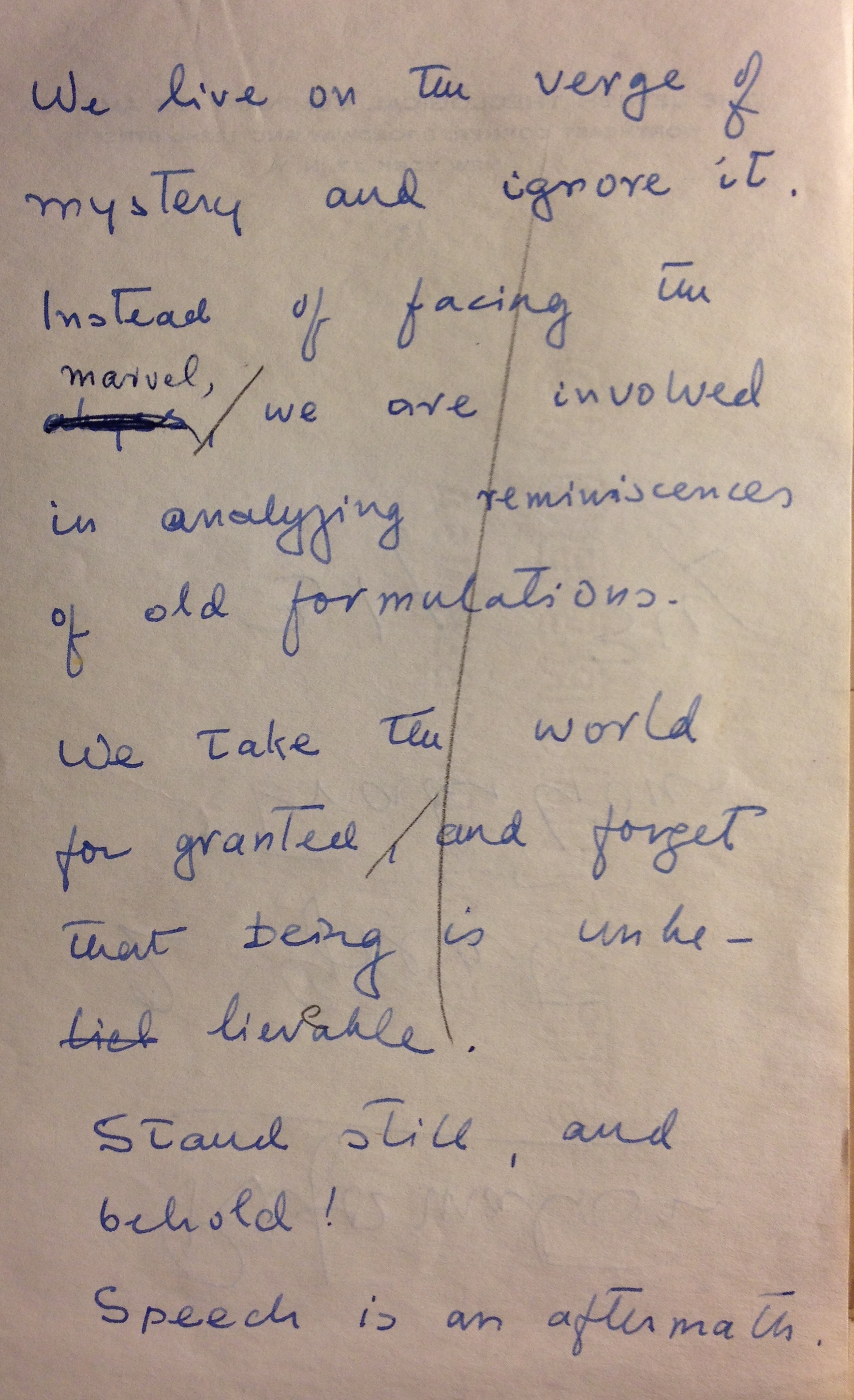
More often than not Heschel returned to these scraps, edited them, sounding after each change more rhythmically alike to the unhurried but morally tugging voice that characterize his finished prose.

4 Heschel
“We live on the verge of mystery and ignore it. Instead of facing the abyss marvel, we are involved in analyzing reminiscences of old formulations. We take the world for granted, and forget that being is unbelievable. Stand still and behold! Speech is an aftermath.”

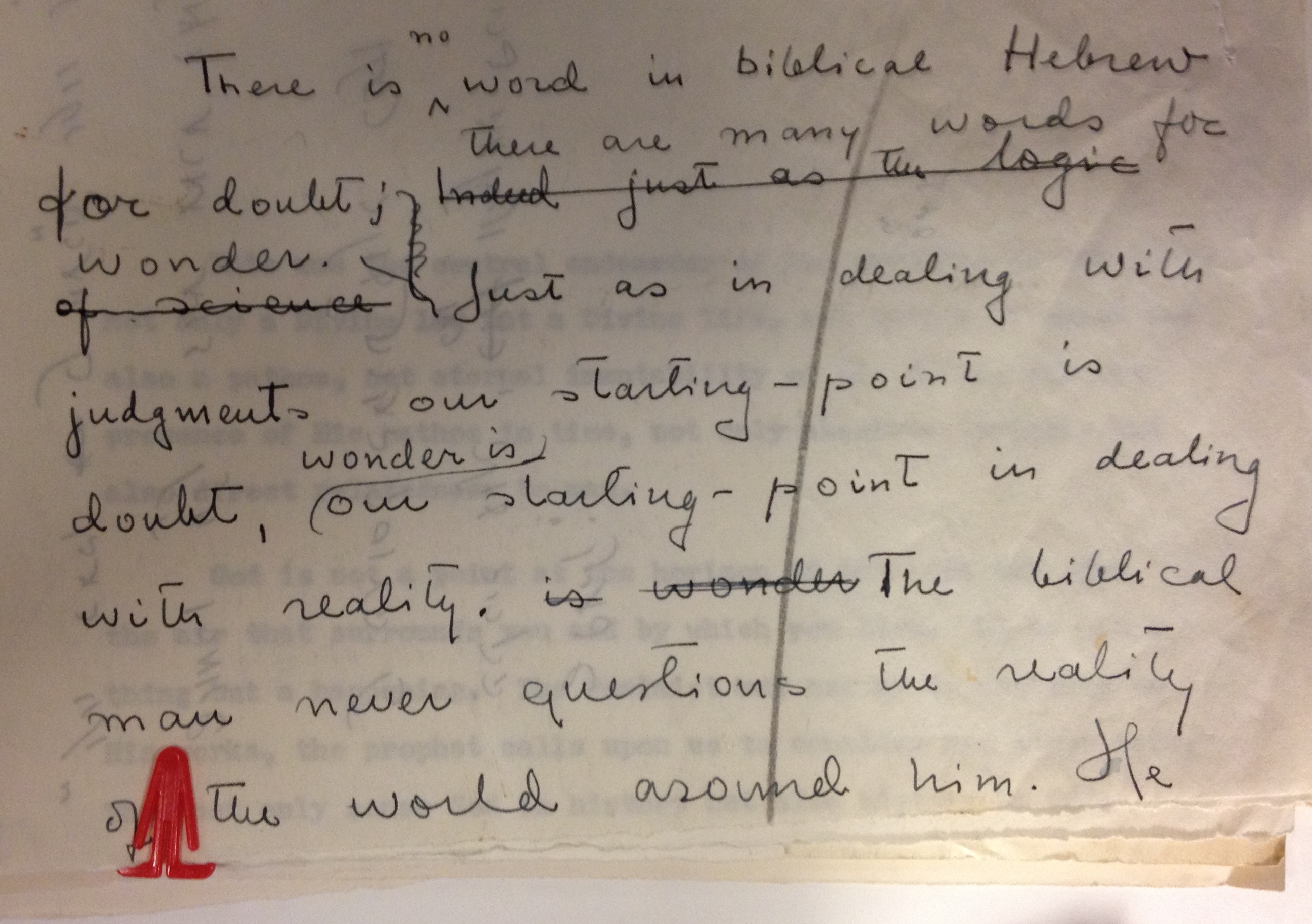
5 Heschel
“There is {no} word in biblical Hebrew for doubt. Indeed just as the logic of science ; there are many words for wonder. Just as in dealing with judgment, our starting-point is doubt, {wonder is} our starting-point in dealing with reality. is wonder The biblical man never questions the reality of the world around him. He [unfinished].”
Though he wrote almost without ceasing, few of Heschel’s notes reveal autobiographical awareness. “I” was not a word he employed readily. Coming upon a personal reflection can feel momentous.

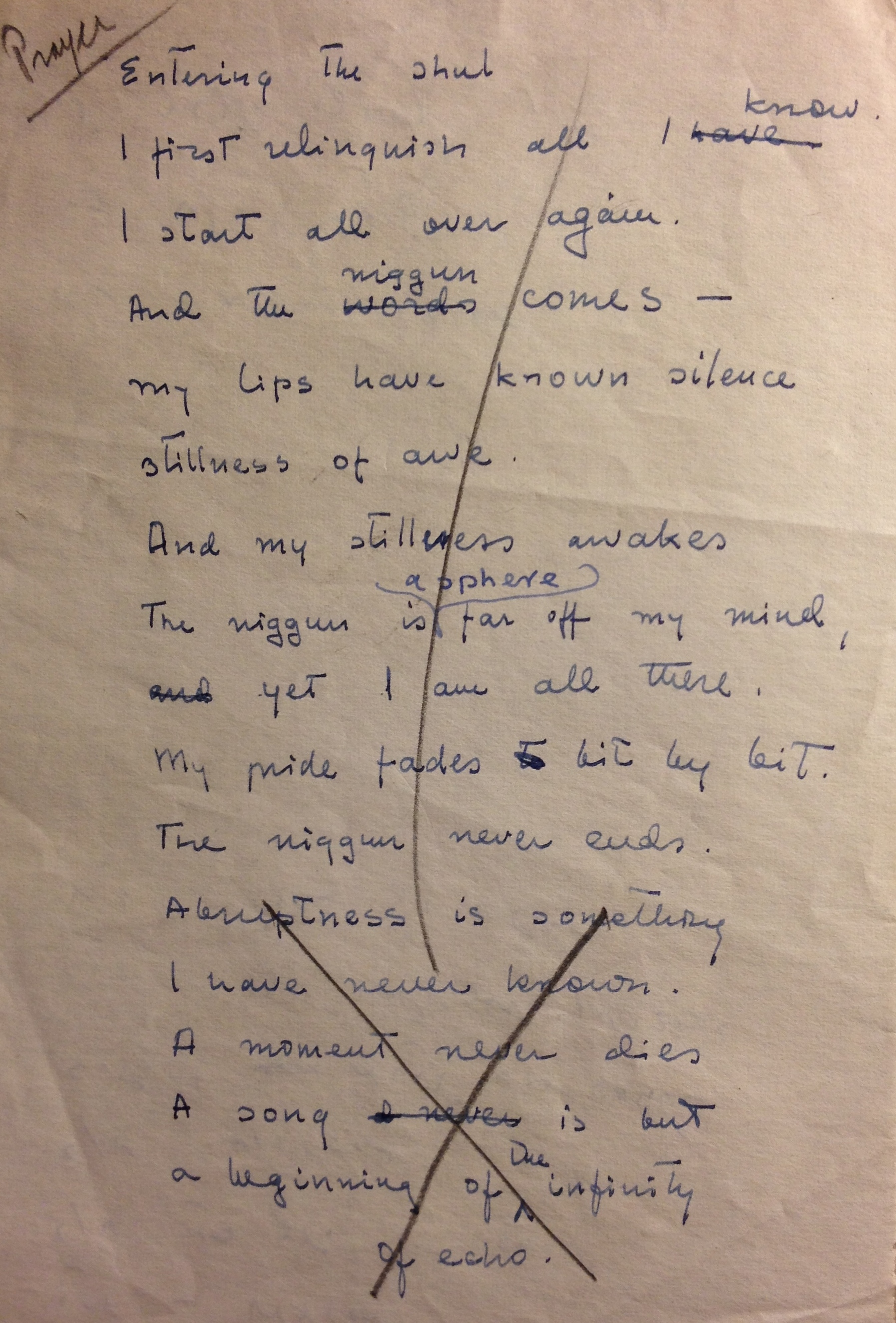
6 Heschel[“Prayer
Entering the shul
I first relinquish all I have know.
I start all over again.
And the words niggun comes —
my lips have known silence
stillness of awe
And my stillness awakes
The niggun is {a sphere} far off my mind,
and yet I am all there.
My pride fades to bit by bit.
The niggun never ends.
Abruptness is something
I have never known.
A moment never dies
A song is never is but
a beginning of {one} infinity
of echo.]


But sometimes, too, there are the pages punctuated by sadness, when the search for God recedes behind the dark memory of all that Heschel, and Judaism, has lost.

7 Heschel
“My people was burned to death in Poland. Almost all traces of its existence are thousand year history were wiped out. Since 1945 the country was rebuilt, the last remnants of its survivors driven out. No one misses mourns for us in Poland, no one seems to remember us in Poland.”

Post contributed by Samuel J. Kessler, intern for the Abraham Joshua Heschel processing project.

Happy Valentine’s Day, My Rapturous Codfish!

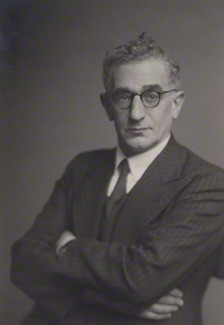
Image of Leon Simon, taken from London's National Portrait Gallery.
Image of Leon Simon, taken from London’s National Portrait Gallery.

As my student assistant, Sophia Durand, began the physical processing of the 131 letters in the Leon Simon collection (1915-1916, 1918), she noticed something intriguing. Leon Simon addressed each letter to his future wife, Esther Ellen Umanski, differently. Until they made official plans to marry, she was “My Dear Nellie.” But once the date was set, Simon became creative and effusive, his word choices sometimes questionable as endearments.
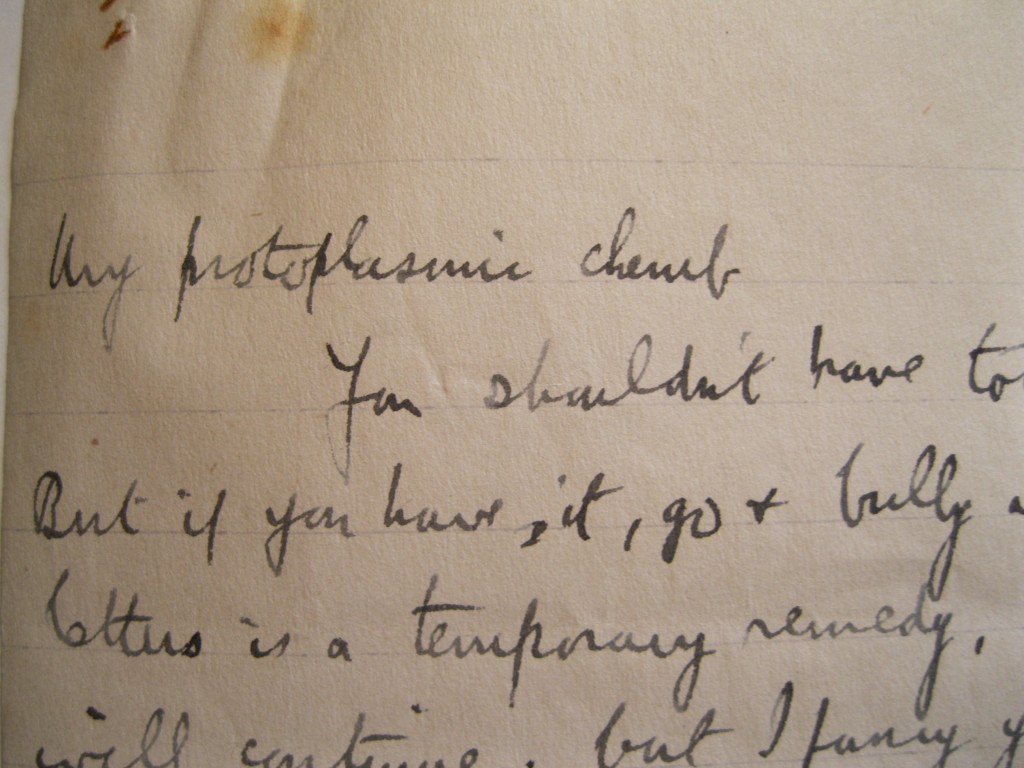
Romantics everywhere tend to be sugary in their pet phrases. Simon was no different, perhaps just more over-the-top. He addressed his letters to: My essence of honeycomb, My exquisite Peach Melba, My lump of sweetness, My peachiest apricot, My succulent meringue, My belovedest mimosa, My jujubious confection, My sweet Sugar plum(p).

As you can already tell, Simon was quite fond of food and cooking. Other highlights in the letters include My stewed apricot, My eversweet parsnip, My most succulent kipper, My pickled herring (You know how I love them!), My pickledest onion (=on’y ‘n  =only one), My own dumpling, My coo (k) ing dove, My rapturous codfish, My toasted crumpet, and–my personal favorite–My incandescent soup-tureen.

Simon
Simon wrote Nellie at least once a week. On October 12, 1915, he called her “My protoplasmic cherub.”

Occasionally, Simon sought to be reassuring about his odd turns of phrase. On October 20, 1915, he wrote to Nellie, who was studying German, “My most exquisite Stumpfenbach, (Don’t worry about the meaning of this; it is a term of endearment invented for the occasion & means nothing at all except that all recognized terms of endearment are hopelessly inadequate)…” A Duke German professor says that he was unwittingly referring to a city in Bavaria.

So, if on this Valentine’s Day your terms of affection seem stale, why not borrow one coined by Simon: My adorable whelk, My kitchy-kooish boo-woo, My jokaceous blue bottle, My bilingual Scaramouche, My unique joy, My tender flamingo, My early paradise, My copious ink-pot, My imperative necessity, My darlingpetangelanddelightallrolledintoone. Perhaps you and your loved one will then share in one of his closings, a “Quintessence of hugs & kisses ad lib.”

Sheesh.

Post contributed by Alice Poffinberger, Original Cataloger.