Category Archives: Manuscripts

Edwin and Terry Murray Comic Book Collection: Closed for cataloging as of March 1st!

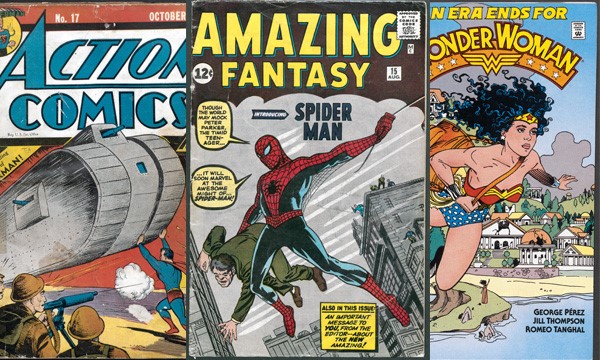
There’s no denying it: we love the Edwin and Terry Murray Comic Book Collection. The product of 40+ years of collecting by Edwin L. and Terry A. Murray, the Murray Comic Book Collection has far-reaching holdings, from mainstays like DC to smaller publishers like Pacific Comics. It has an enormous volume of materials–almost 290 linear feet, or nearly the height of the Statue of Liberty from the ground to torch (305 feet)![i] And it’s very comprehensive: to quote our finding aid, the Marvel series contains “near-complete runs of Avengers, Captain America, Fantastic Four, Daredevil, Incredible Hulk, Punisher, Spider-Man, Thor, and X-Men.

murraypost1
Image via Alyssa Alegre

The Murray Comic Book Collection has been good to us, providing us with ample opportunities to use its holdings for instruction sessions, reference questions, research, and even blog posts. We want to be good to it, too. With the spirit of the New Year at our backs, we’re embarking on a project to reprocess the titles in the collection as serials. Thus, beginning March 1st, 2016, the Edwin and Terry Murray Comic Book Collection will be closed to researcher use.
murraypost2

You may now be wondering: what’s a serial?

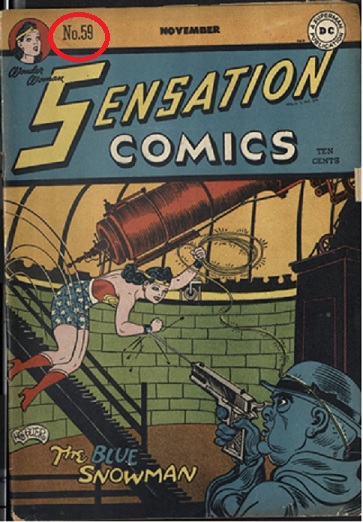
A serial “is a resource issued in successive parts, usually bearing numbering, that has no predetermined conclusion.”[i] When you look at that definition, it’s obvious that many comics are serials. A quick browse of our finding aid shows our comic titles are often issued in successive parts (see the numbering of Sensation Comics below), and there are some that are still going strong after decades of issues. In fact, the Rubenstein has issues of Walt Disney’s Comics and Stories dating from the 1940s!
 

murraypost22

By thinking of the Murray Comic Book collection as serials rather than as one big collection, we can go over it with a finer toothed comb: we learn even more about what we have, such as when a comic book series spawns a new series, or exactly how many issues we need to make a series complete. With that information, we’re then able to catalog each title individually, creating and/or improving upon records in our library catalog. Once this project is complete, you’ll be able to type in a title—like Action comics—into our search engine, and its very own record will come up. There will be direct access to serial titles, complete with listings of the issues we hold.

As might be expected, this project will take time, which is why we’ve decided to close the collection March 1st. We’ll need to sort those 290 linear feet of comic books, grouping by titles and sleuthing out potential issues. We’ll also look at rehousing the titles in the collection. After that, we’ll catalog them as titles, so that researchers will be able to use their own super powerful research skills to locate our holdings quickly and easily. No lassoing of truth necessary.

Post contributed by Liz Adams, Special Collections Cataloger.


[i]“Statue facts.” The Statue of Liberty Facts. The Statue of Liberty – Ellis Island Foundation, Inc. All Rights Reserved., n.d. Web. 12 Jan. 2016.

http://www.libertyellisfoundation.org/statue-facts

[i]“Serials.” RDA Toolkit. RDA Co-Publishers, n.d. Web. 12 Jan. 2016.

http://access.rdatoolkit.org/
Born to Belonging: the Mab Segrest Papers

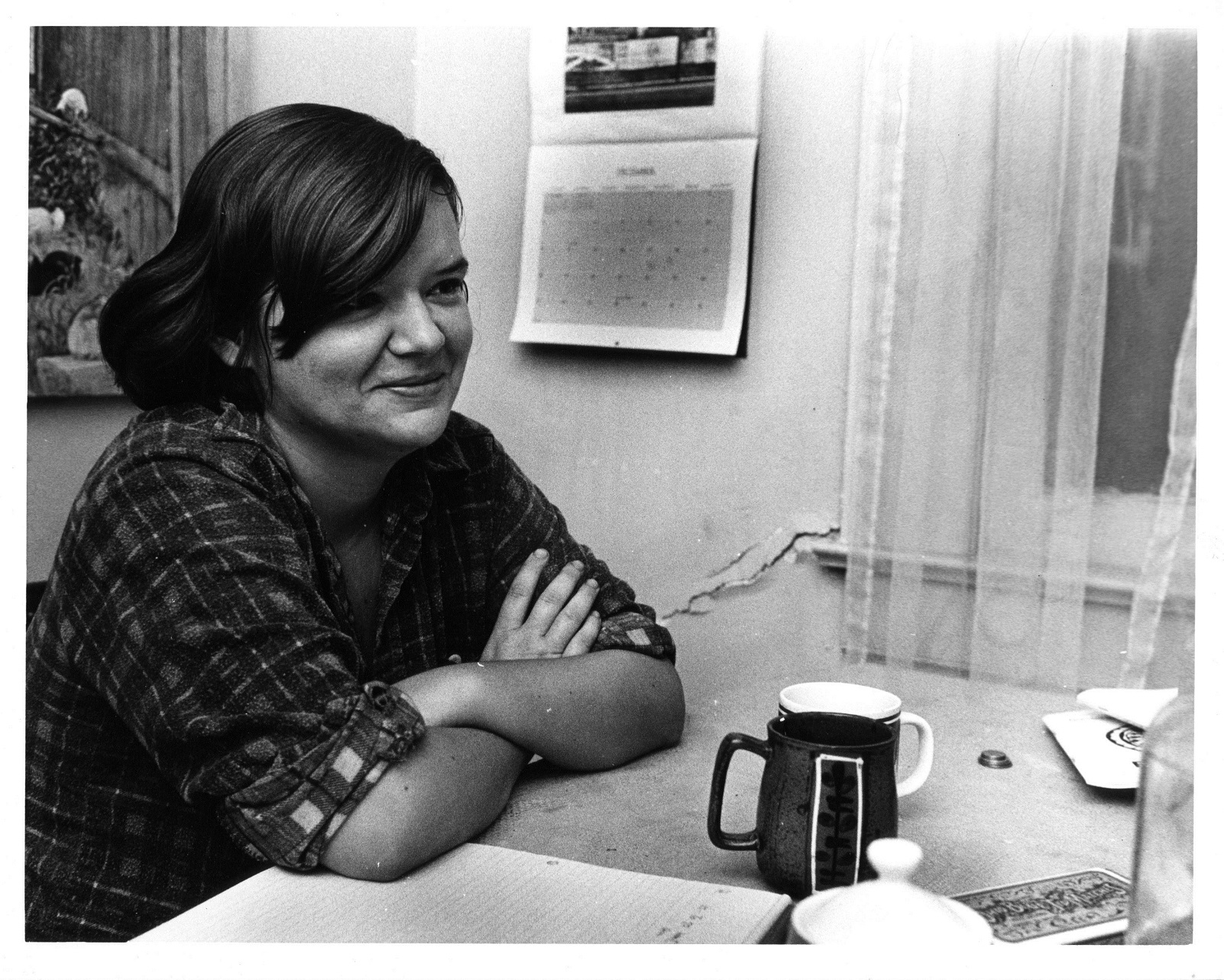
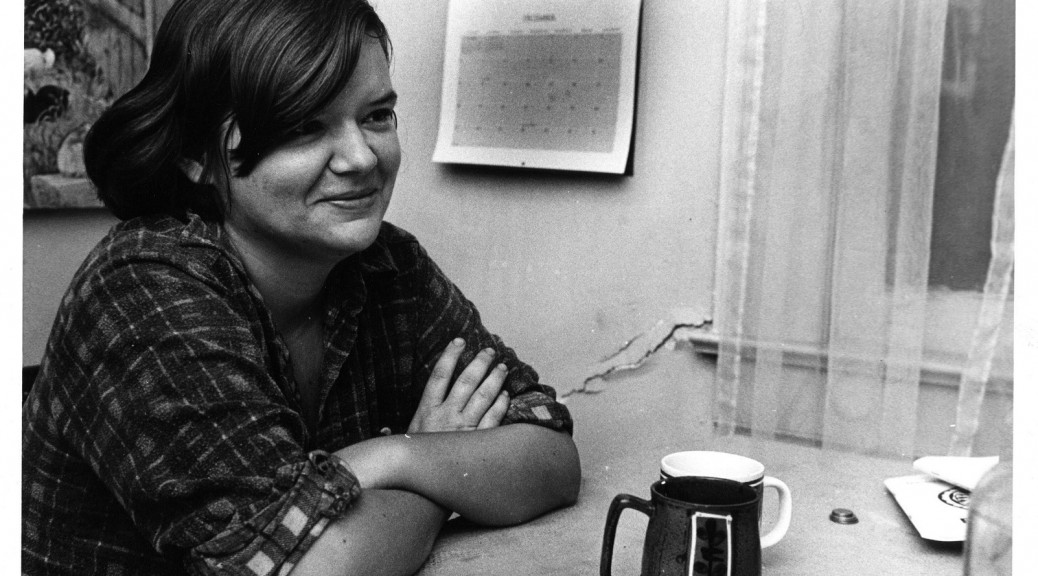
For the past few months, I have had the pleasure of processing the papers of Dr. Mab Segrest, a leading feminist writer, activist, scholar, and speaker, who has traveled the United States and around the world fighting for social justice. Her papers are a foundational collection for the Sallie Bingham Center and a valuable resource for the study of feminism, race, class, sexuality, and gender, as well as literary theory and social movement history.

mabsegrest3
Mab Segrest in her home in Durham, circa 1978-80

Filling 124 boxes and spanning from 1889 to the present, the materials document many aspects of Dr. Segrest’s personal and professional history.  In the series related to her family, there are a variety of valuable materials, including correspondence from the Panama Canal, Civil War portraits, and artifacts from her childhood in Tuskegee, Alabama.  Professional materials include everything from correspondence, teaching files, and organizational records to drafts and research materials from her most famous published works, Memoir of a Race Traitor (1994) and My Mama’s Dead Squirrel (1985).

mabsegrest1
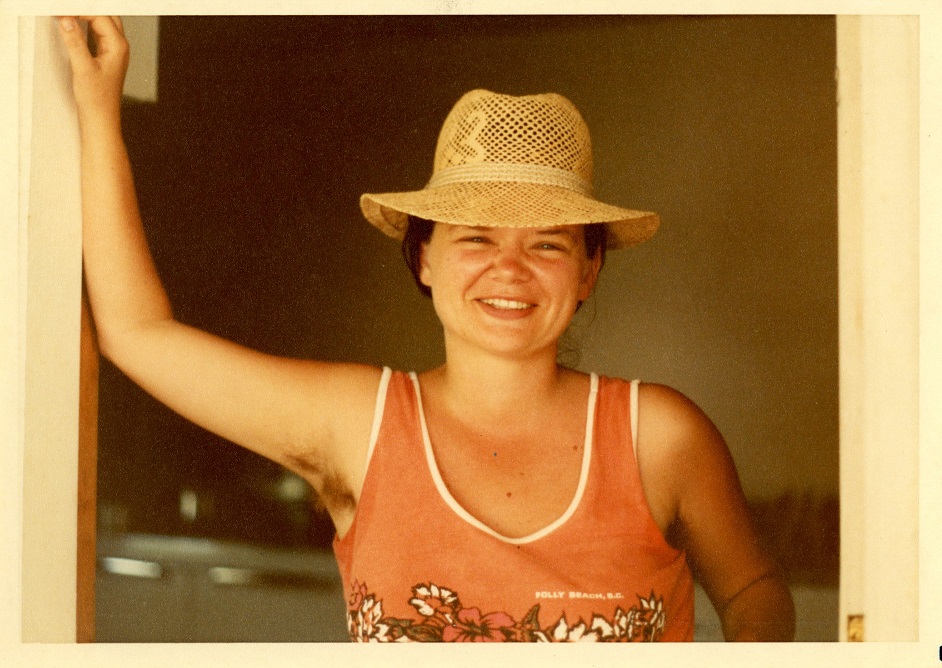
Mab Segrest circa 1979

The largest section of the papers document Dr. Segrest’s wide-ranging activism, especially her work with North Carolinians Against Racist and Religious Violence (NCARRV), a public interest organization she co-founded in 1983 that rallied citizens against an epidemic of hate violence in this state. NCARRV files contain public communications as well as materials documenting strategy for on-the-ground activism in which she played a central role.

Dr. Segrest’s papers are a great testament to her long-standing commitment to education. Her teaching career started in 1971 when she accepted a position at Campbell University while working on her Ph.D. dissertation (earned at Duke University in 1979). Dr. Segrest has also taught courses at UNC Chapel Hill and Duke. She taught at Connecticut College from 2002 to 2014 where she was the Fuller-Maathai Professor of Gender and Women’s Studies. Most recently Dr. Segrest has taught at both Emory University and Georgia College while researching the history of Georgia’s state mental hospital in Milledgeville.

mabsegrest2
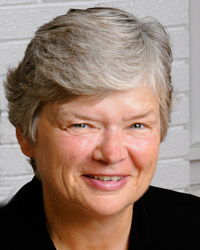
Mab Segrest, feminist activist, writer, speaker, and educator

There is a good deal of connection among the different dimensions of this collection. In particular, it is impossible to separate Dr. Segrest’s work as an activist from her many academic accomplishments as these parts of her life have informed and shaped one another.  When processing a person’s papers, it is impossible not to feel connected to them in some sense.  I’m moved by Dr. Segrest’s enormous resolve and courage, and my time with her papers has increased my appreciation of her work and her dedication to activism and social justice.

The Mab Segrest Papers are an incredibly deep and rich resource within the Bingham Center and the Rubenstein Library. It has been a privilege to work with this collection and it is exciting to imagine the scores of students, scholars, and others whose work will be informed by these materials.

Post contributed by Rachel Sanders, intern for the Sallie Bingham Center for Women’s History and Culture. 

Seeing a bit of home while far away: discoveries in the World War II Propaganda Leaflets

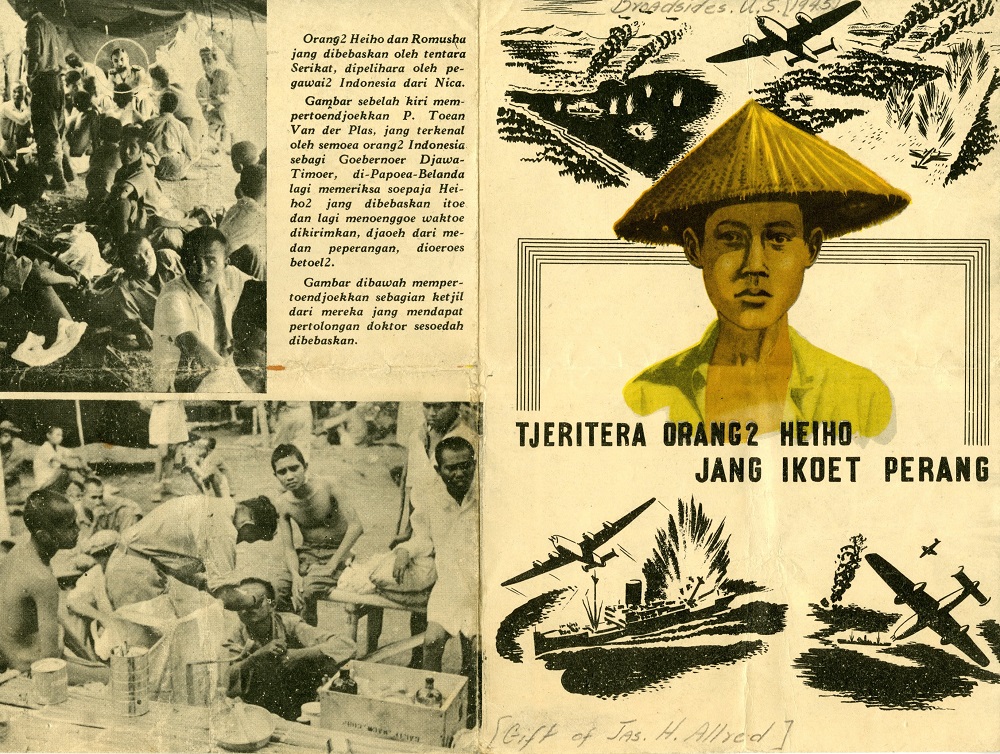
Working in an archive, you can come across a lot of exciting material and constantly learn something new. When the Rubenstein recently augmented its collection of World War II propaganda leaflets, we took the occasion to reorganize the whole collection. The collection now contains about 270 leaflets as well as some examples of propaganda magazines (most of the non-English documents include English translations). The material was disseminated between 1941 and 1945 with the aim of damaging enemy morale and sustaining the morale of the occupied countries. The collection includes examples of German and Japanese propaganda, aimed at Allied soldiers. Included also are German-language leaflets that were dropped over Germany by a clandestine British intelligence body—the Political Warfare Executive (PWE)—, as well as French-language leaflets, prepared by the French exile government in London and dropped over Vichy France (calling on the French population to not collaborate with the German occupiers or the Vichy regime).

Tok-Pisi-front
Leaflet with text in Tok Pisi

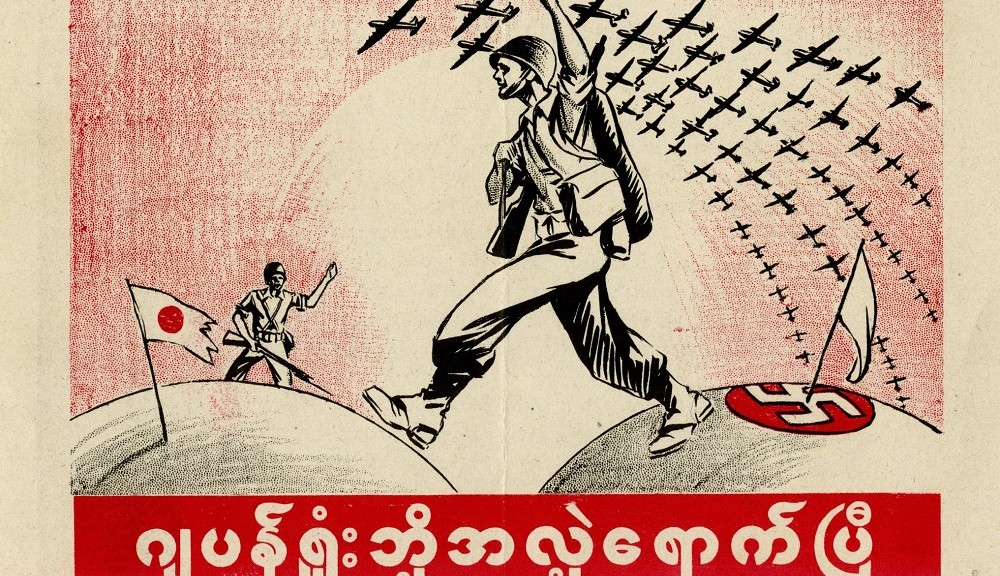
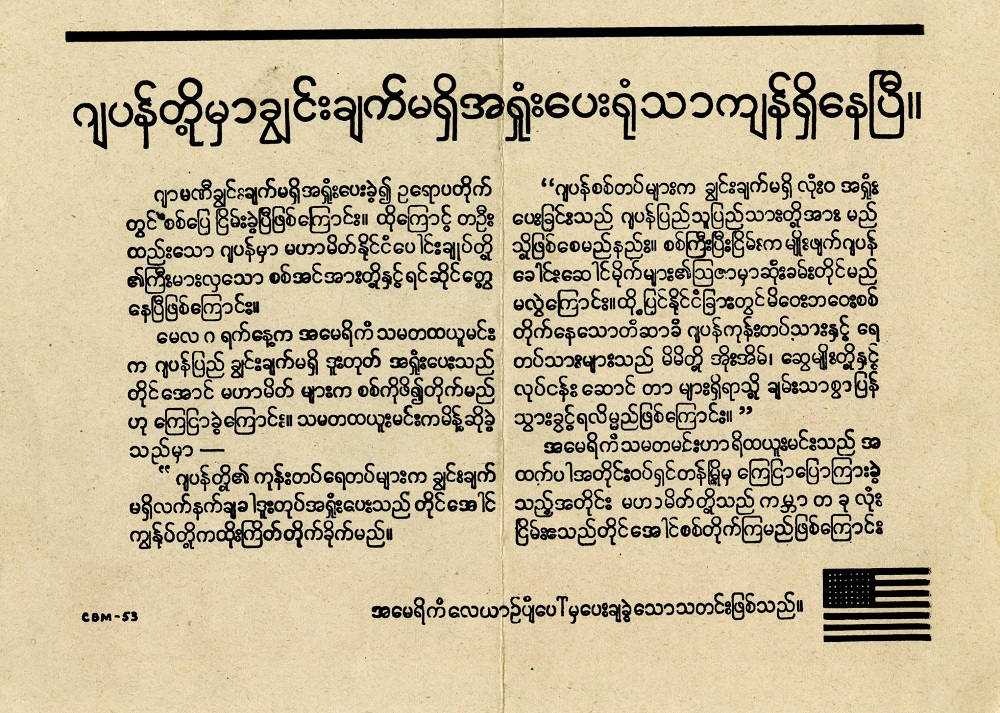
A large portion of the leaflets were aimed at the Pacific area and dropped by the Psychological Warfare Branch of the U.S. Army Forces. Most of them area are in Japanese. Some of them, however, are written in less well-known languages like Tok Pisin and Burmese.  A creole language spoken throughout Papa New Guinea, Tok Pisin is commonly known in English as New Guinean Pidgin or Melanesian Pidgin. By trying to identify the languages of the leaflets, I learned that the New Guinea Campaign from 1942 to 1945 was one of the major military campaigns in the Pacific War and that leaflets in Tok Pisin—the most widely spoken language in New Guinea—were dropped by the Allies in order to encourage the population not to collaborate with the enemy. Likewise, material in Burmese was dropped over Burma (since 1989 Myanmar) in 1944 and 1945 during the Burma Campaign—the Allies’s fight against the Empire of Japan, which was supported to some degree by Thailand, the Burmese Independent Army, and the Indian National Army.

Burmese-front (2)
Leaflet in Burmese dropped during the Burma Campaign, 1944-1945


Burmese-back (2)
Leaflet in Burmese (back)

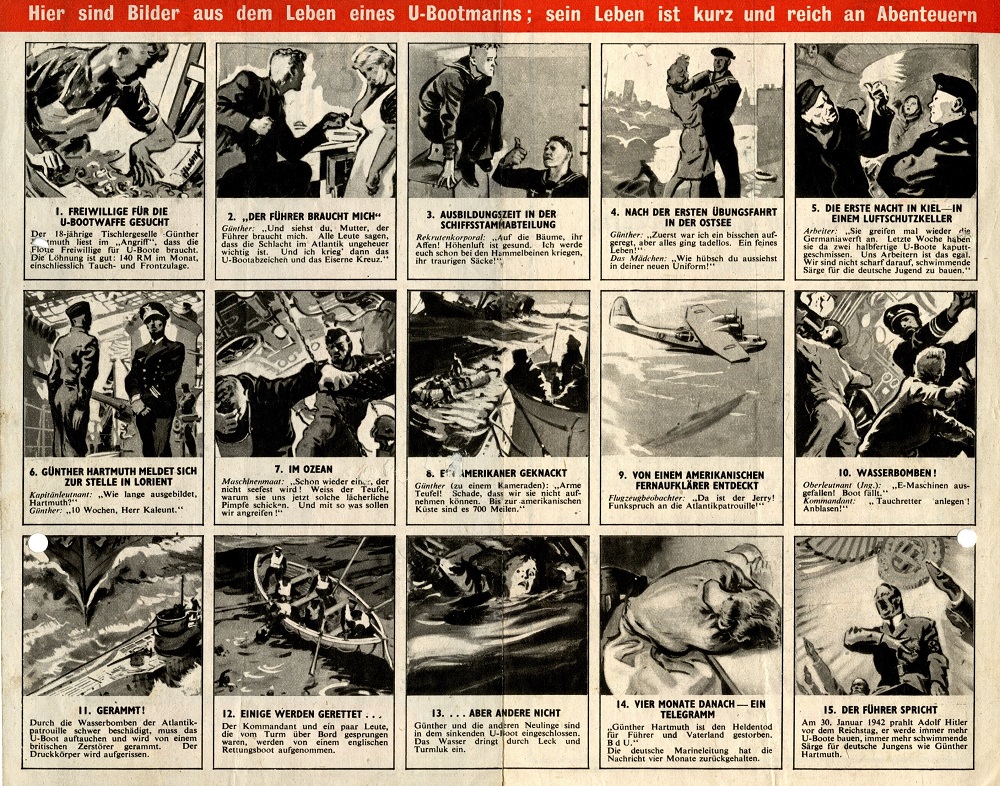
Finally, one might discover personal connections and be reminded of very familiar places, even when far from home. I am from Kiel, the capital of the state of Schleswig-Holstein in northern Germany. I spent many vacations and weekends in Laboe, a little town at the coast of the Baltic Sea, right at the outskirts of Kiel. Kiel/Laboe was one of the main naval bases and is the location of the Laboe Naval Memorial, a memorial for the deaf of World War I built from 1927 to 1936. As such, it was a natural target for propaganda against the German marine like the leaflet found in our collection shows. Imagine my surprise to see a leaflet showing such a familiar sight while processing!  The naval memorial still stands today and attracts many tourists (https://en.wikipedia.org/wiki/Laboe_Naval_Memorial).

Laboe-front
Leaflet depicting Laboe Naval Memorial (front)
Laboe-back (2)
Leaflet depicting Laboe Naval Memorial (back)

If you want to know more about this collection, visit the collection guide: http://library.duke.edu/rubenstein/findingaids/wwiiprop/.

Post contributed by Sandra Niethardt, Rubenstein Tech Services intern and graduate student in Germanic Languages & Literature. 


19th Century Maple Ice Cream – Rubenstein Library Test Kitchen

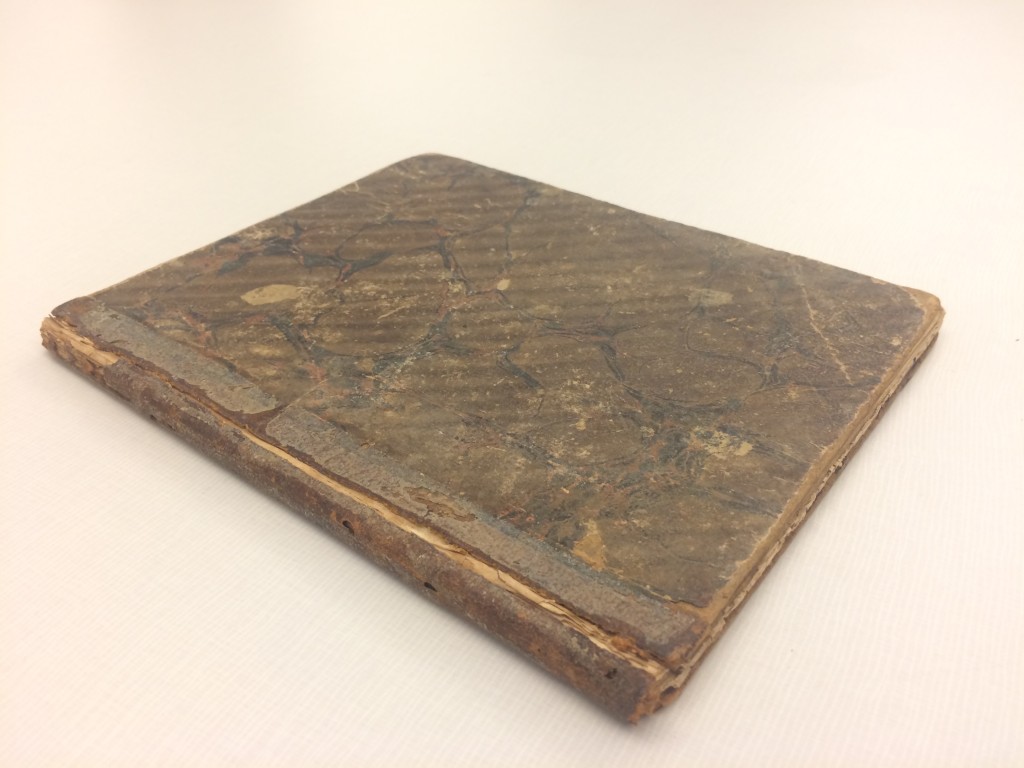
IMG_3257A manuscript (i.e. handwritten) cookbook can tell us a great deal about its creator. What foods were available to her? How would her family have celebrated holidays and birthdays? Was she an elite woman with a cook who could prepare elaborate dishes, or a farm wife who had to prepare simple, hearty fare and preserve her harvest to feed her family? Do the recipes reflect a particular ethnic or religious background or geographical location? As is the case today, routine meals do not require a recipe. It is the special occasion recipes, especially those that require careful measurements to work properly, that are recorded for future reference.
We know, based on the ingredients, that Rubenstein Library’s New England Manuscript Recipe Book, [ca. 1860]-[1900] comes from the northeastern United States. It is no surprise that the little book includes a page of maple recipes, since maple is such a distinctive regional product.


IMG_3260

I was intrigued by the Maple Ice Cream Recipe, in part because I am the proud owner of a fancy electric ice cream maker, so much easier than the hand-crank models that would have been available when the recipe was recorded. There is also the nostalgia of tasting maple:  Santa always left a maple sugar woman in my Christmas stocking.

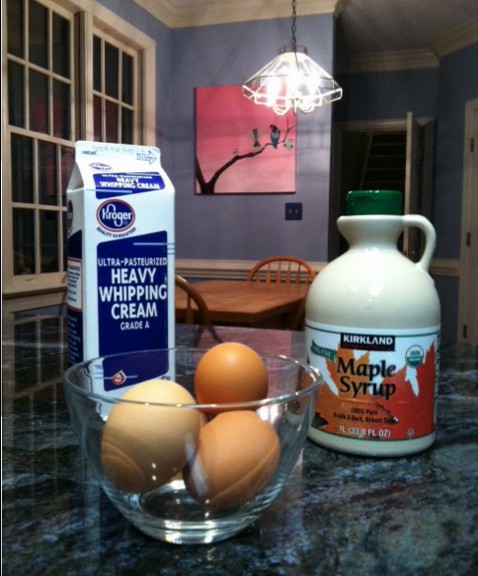
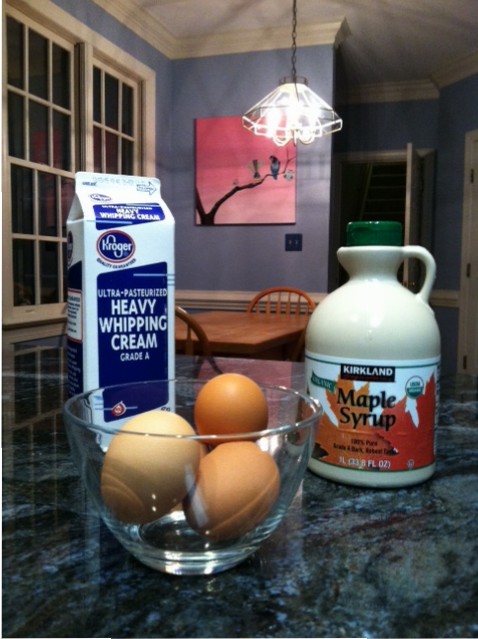
This is an extremely simple recipe, with just three ingredients: eggs, maple syrup, and cream:

photo 1

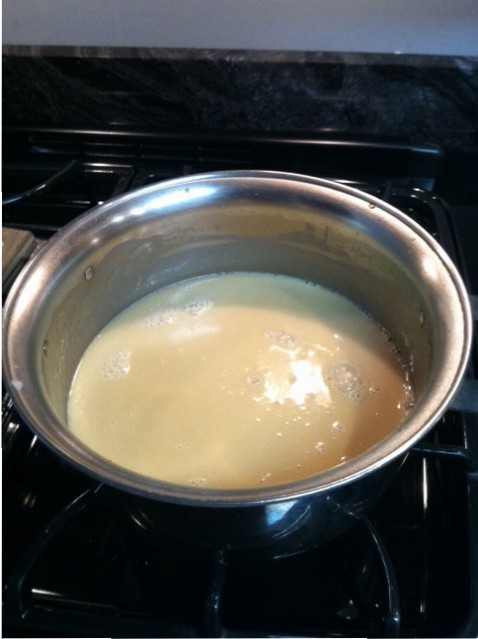
I made a couple of changes. Given concerns about salmonella, I was not comfortable leaving the egg whites uncooked. I was also worried that mixing the eggs and syrup and boiling the mixture would result in curdled eggs. Instead, I boiled the syrup for about ten minutes to reduce it slightly, thereby intensifying the flavor. In a separate bowl, I beat the whole eggs. Then I slowly dribbled in about a cup of hot syrup, whisking the egg mixture constantly before whisking the egg mixture into the pot of hot syrup. Then I brought the mixture to 170 degrees, turned off the heat, and stirred in the cream.

photo 2

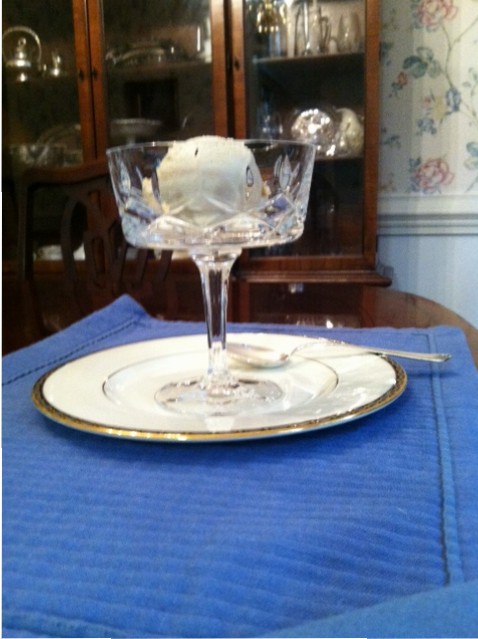
Finally, I strained the mixture through a sieve to remove any solids and chilled it overnight before freezing, emptying into a plastic container, and leaving it in the freezer for a few hours to firm it up. The result: an absolutely luscious and elegant frozen dessert.

photo 4

How did it taste? I brought in the whole container to share with my Rubenstein colleagues and it got rave reviews. It is very rich (note the quart of heavy cream!), but delicious.

Intrigued by the annotations (1896, Mrs. Kimber Thomas, Ladies Uplift Club), I did some searching and found a Morrisville, Vermont Uplift Club in The Register of Women’s Clubs (1922). I wondered whether Mrs. Kimber Thomas was given the recipe for Maple Ice Cream in 1896 and contributed it to an Uplift Club fund-raising cookbook and was thrilled to find a reference to this 53-page cookbook: Tried and Proven Recipes from Many Households. Morristown, Vt. : Ladies of the Uplift Club. The one known copy is in the Janice Bluestein Longone Culinary Archive at the University of Michigan in Ann Arbor. Staff have dated it to 1921, based on advertisements printed in the cookbook. As I write this, I am waiting for scans that I hope will confirm my hunches about the Maple Ice Cream recipe’s provenance. The tradition of noting the source and date of a recipe is a lovely way to link culinary creations to a vast network of friends, family, community, and history. The additional information would also allow us to more precisely identify the origins of this precious little cookbook.

Post contributed by Elizabeth Dunn, Research Services Librarian

Sometimes it takes a village, especially the first time.

I catalog manuscript and other archival materials, the majority of which are unpublished and not described. They also cover a wide variety in type of material. Among the more exotic finds I have cataloged: a salesmen’s kit with patterns for men’s suits, musical instruments used by a jazz percussionist, feminist t-shirts, John Brown commemorative medals, and envelopes of 19-century bath and other powders.

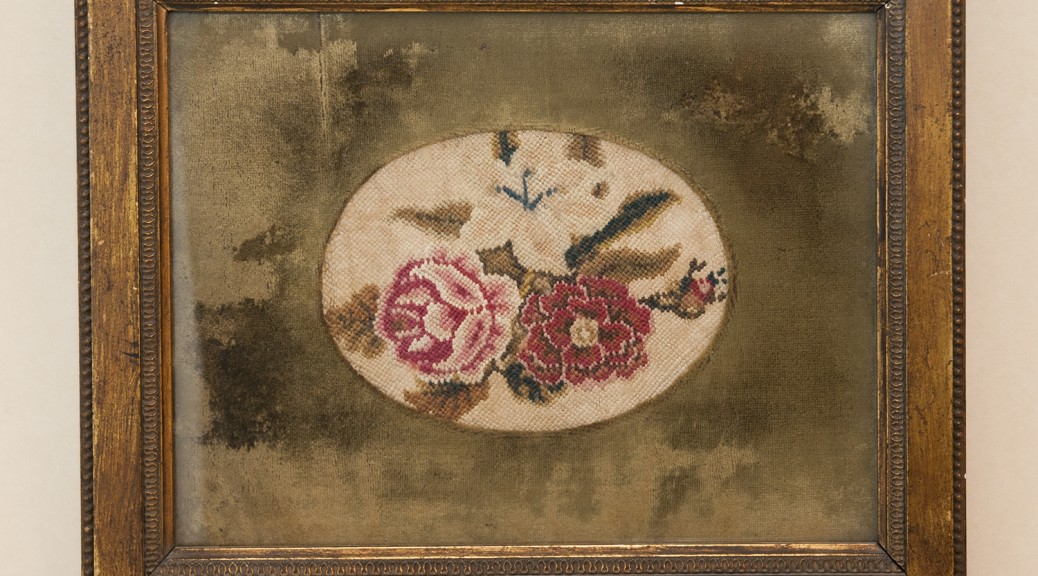
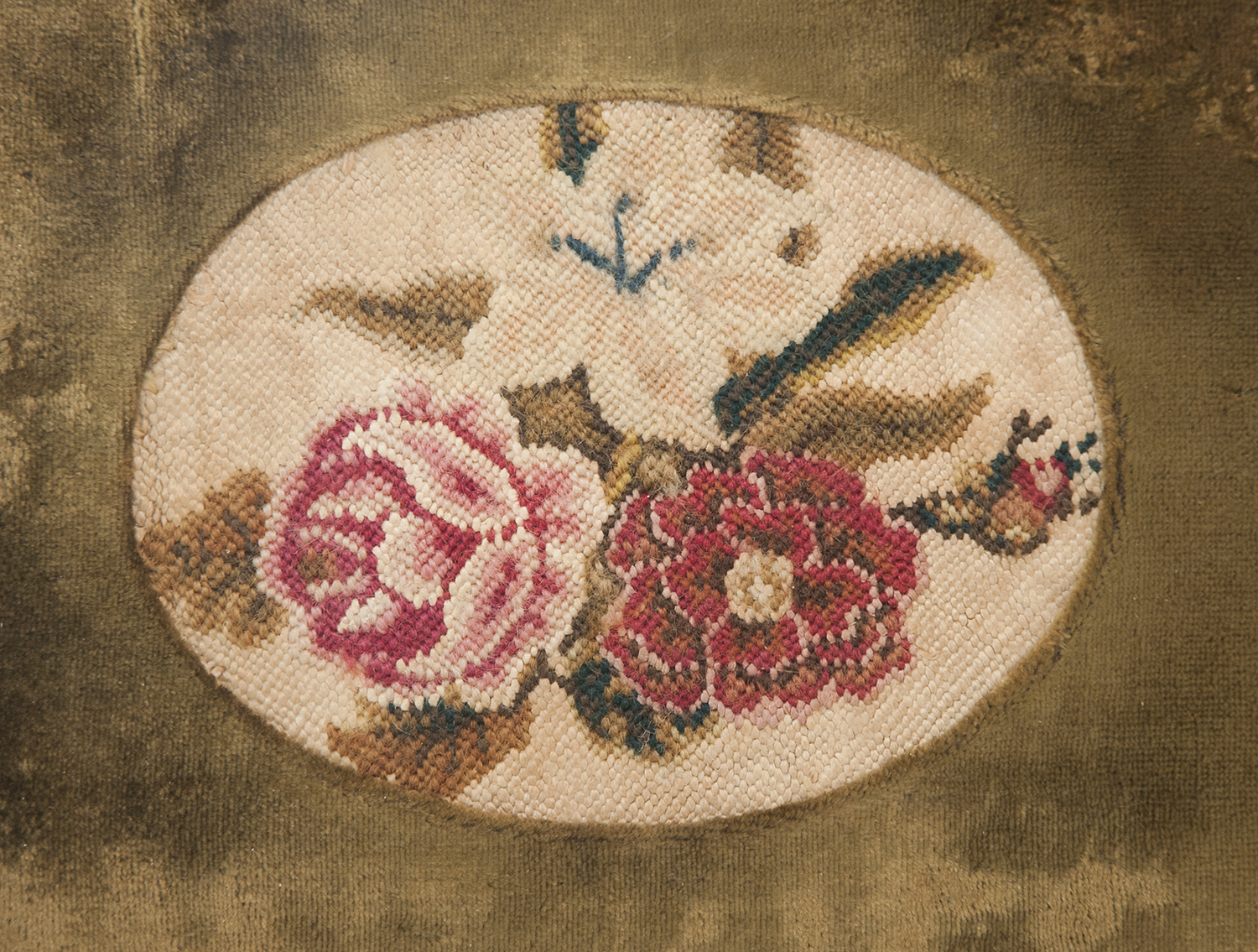
Last Spring we acquired the Lisa Unger Baskin collection, which features five centuries of women’s history. Among the items is a work of needlepoint, a flower study, completed by Charlotte Brontë around 1840. I had never cataloged a work of needlepoint.

_DSC0840a

When faced with an unfamiliar format, a cataloger begins by looking for similar materials cataloged by colleagues nationally, searching in WorldCat. I found only a few pieces of embroidery, usually samplers, and those did not include extensive description of the item. I was determined to provide more detail than a basic record.

Fortunately, our donor had included with the Brontë needlepoint a photocopy from a book on Brontë artwork. The page focused on a flower study Charlotte had completed in watercolors while she was still in school. It offered a description of the piece which provided the level of detail I was seeking, so I based my own approach on it. However, to move forward with this approach I needed to confirm what flowers were depicted in Charlotte’s needlepoint study.

There was no argument that the top flower is a white lily. I felt the bottom left flower was a peony, while others said it was a rose. I had no clue what the bottom right flower might be. Who to consult? I approached a colleague who hails from England, and she offered to forward my photograph of the needlepoint to her father, who is a master gardener. After consulting his references, he agreed that the bottom left flower is a peony, and determined that the unknown flower on the bottom right is probably a carnation.

_DSC0838a

I also had to consult with Beth Doyle, head of our Conservation Services Department, regarding whether Charlotte’s needlepoint should be removed from its frame. While answering this question (no) Beth let me know the thread Charlotte used was probably wool. Beth’s mother is a master needleworker who may be able to determine what type of stitch Charlotte used.

Using all of this information, I wrote a description that provided the level of detail I was seeking, to give someone a basic mental image of the piece they would then find in our collection. However, even after I finished my initial work, one more consultation was required. My colleague, Lauren Reno, checked my catalogue record in RDA, the new cataloging standard I am applying to manuscript materials. She made several helpful enhancements.

I am very grateful for the “village” of people I can call upon in support of my work.

You can find the catalog record for the needlework here.

Post contributed by Alice Poffinberger, Archivist/Original Cataloger in the Technical Services Dept.

Screamfest III: The Cutening

Date: Thursday, October 29, 2015
Time: 2:00-4:00 PM
Location: Holsti-Anderson Family Assembly Room
Contact: Amy McDonald, amy.mcdonald@duke.edu

Y’all, we hear you. The semester is getting more and more intense and sometimes Duke is just so . . . gothic, you know? Sometimes you just need to eat some free candy and look at cute things. And what better time to do that than in celebration of that traditionally cute holiday, Halloween?

Your cuddly Rubenstein librarians would like to invite you to visit us for Screamfest III, an open house featuring creepy ADORABLE things from our collections.

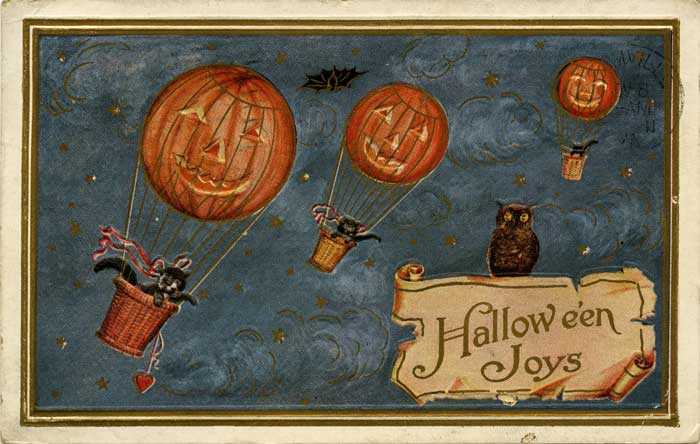
Halloween Postcard
Like this postcard of these sweet black kitty-cats, bringing you Halloween joys in their happy hot air pumpkins.

Illustration from Opera Omnia Anatomico-Medico-Chirurgica, ca. 1737.

Or this illustration of these precious babies from our History of Medicine Collection’s Opera Omnia Anatomico-Medico-Chirurgica by Frederik Ruysch. Yes, fine, they’re skeleton babies, and they’re standing on a pile of human organs, but they’re totally listening to a song by The Wiggles.

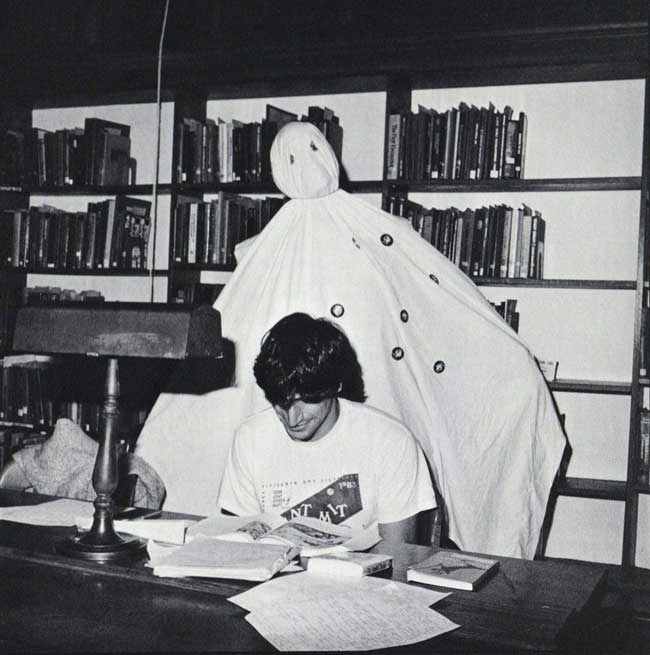
Ghost at the Library. From the 1984 Chanticleer.

You can also page through the 1984 Chanticleer to view the photos of this friendly library ghost, who just wants to bring you fuzzy slippers so you can study comfortably.

Demon Miniature from Edwin and Terry Murray Collection of Role-Playing Games.

And sure, scourge and sword-wielding demons are very scary when they’re life-sized. But swing by our open house and you’ll be able to bravely make kissy-faces at this little dude (paperclip for scale) from the Edwin and Terry Murray Collection of Role-Playing Games.

In fact, we promise that there will be so much cuteness (and candy) that, well, you might die. See you there!

Thomas Jefferson to Benjamin Rush on the quality he values “more than all things”

tjbrletter2

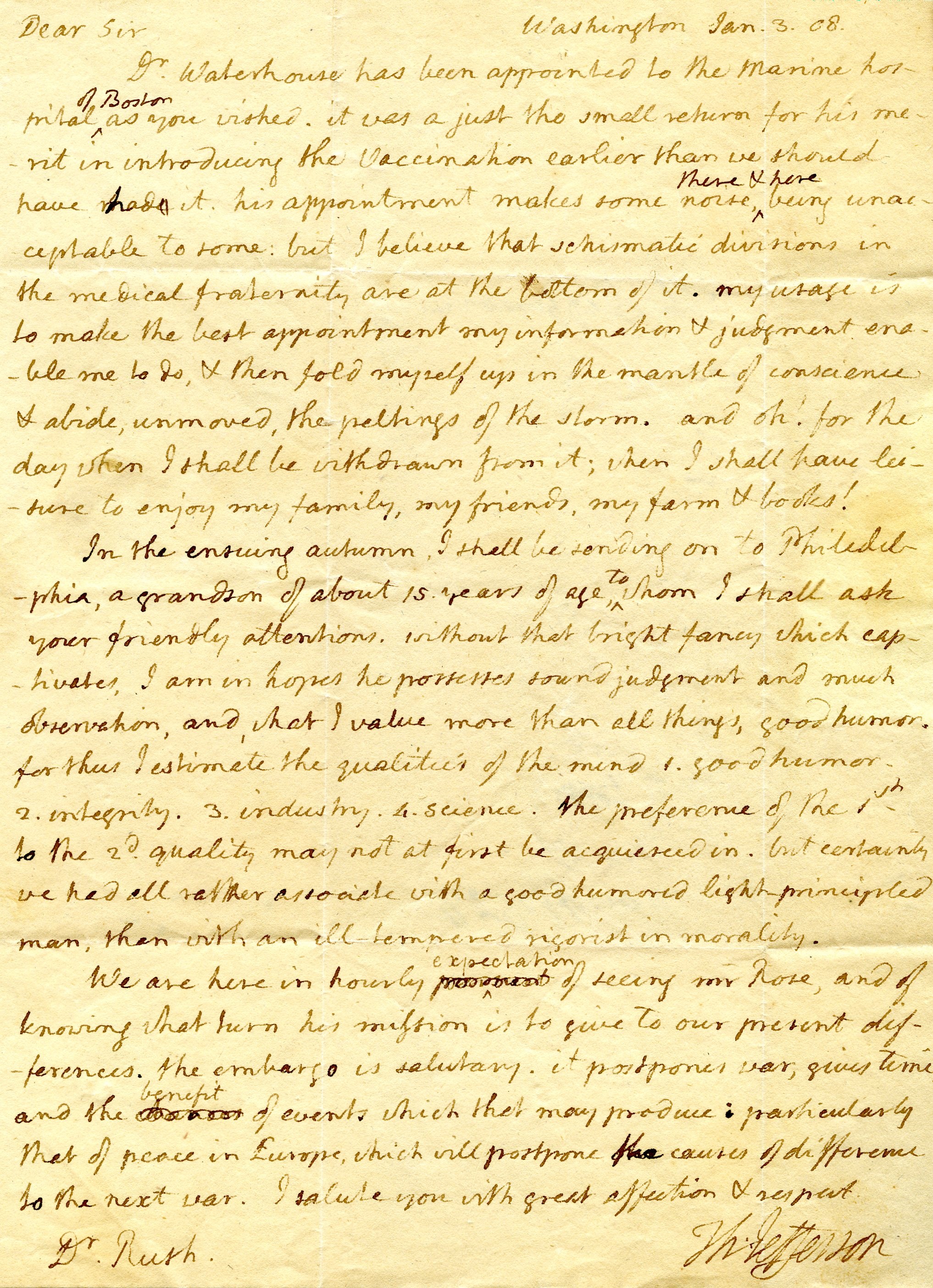
While processing the Benjamin Rush papers, which will soon be digitized and available online, Alice Poffinberger, Archivist/Original Cataloger, came across a letter from Thomas Jefferson to fellow Founding Father Dr. Benjamin Rush. The letter, dated January 3, 1808, requests that Rush grant Jefferson’s teenage grandson his “friendly attentions” when he moves to Philadelphia the coming autumn.  Though unnamed in the letter, the grandson in question is Thomas Jefferson Randolph, who attended the University of Pennsylvania from  1808 to 1809.

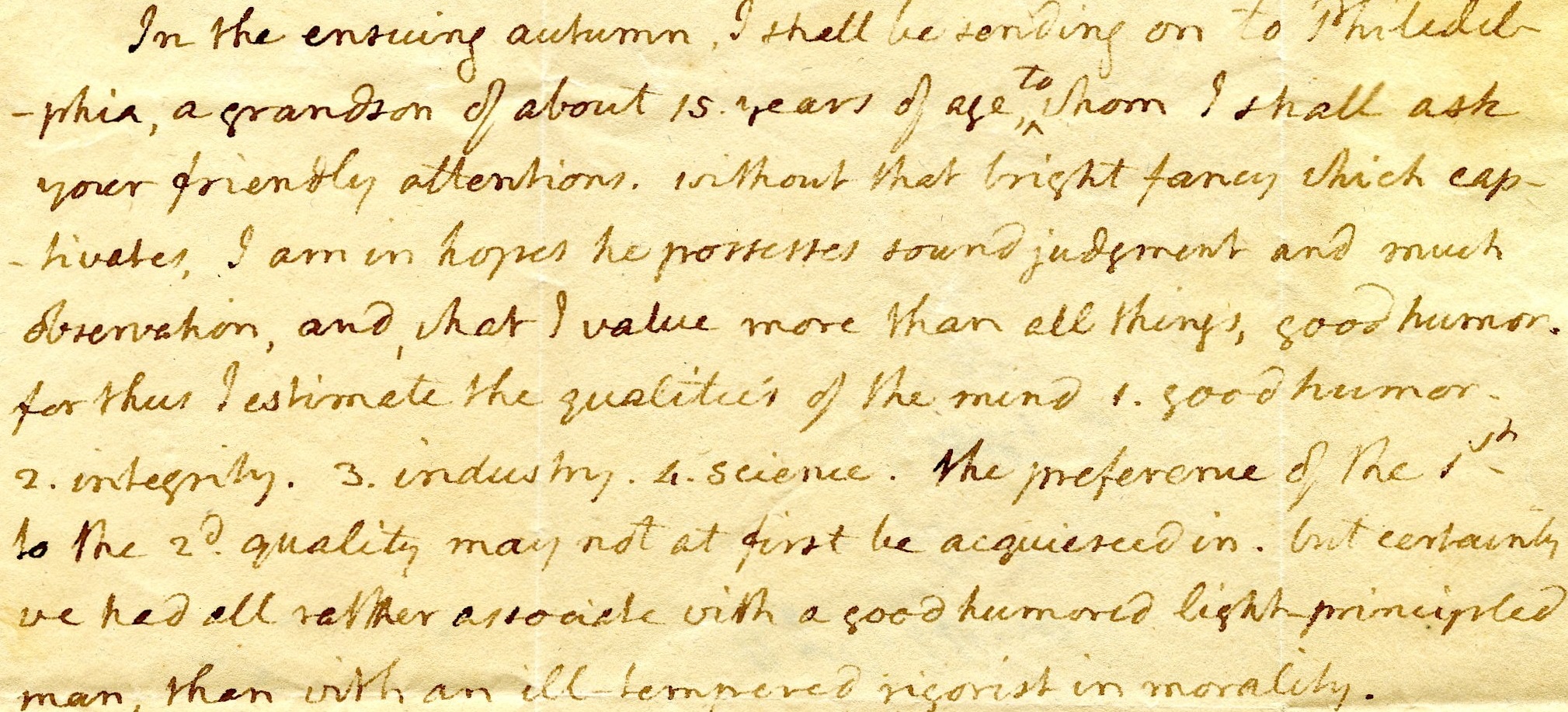
Stating that he is “without that bright fancy that captivates,” Jefferson hopes the fifteen-year-old “possesses sound judgment and much observation” in addition to the quality he values “more than all things, good humor.”  Jefferson goes on to list the qualities of the mind he appreciates as good humor, integrity, industry, and science. Following this list, he claims “The preference of the 1st to the 2nd quality may not at first be acquiesced in, but certainly we had all rather associate with a good humored light-principled man, than an ill-tempered rigorist in morality.”

tjbrlettercrop


Randolph would go on to serve six terms in the Virginia House of Delegates and manage his grandfather’s sizable debts as the sole executor of his estate.

Post contributed by Katrina Martin, Technical Services Assistant. 

The Incarceration Collections at the Rubenstein: The Role of Reading and Writing in the History of Prisoners’ Rights Movements

The popular Netflix series Orange is the New Black, based on the memoir of the same name by Piper Kerman, has brought renewed attention to the conditions inside U.S. women’s prisons. While prison reform has not been contemporarily understood as a priority of the LGBTQ and feminist communities, the special collections at the David M. Rubenstein Rare Book & Manuscript Library, illustrate the degree to which prison reform and anti-prison activism have, since the 19th century, operated as a cornerstone of both LGBTQ and feminist movements.

 In the 19th century, charity efforts led by white middle-class feminists led to the creation of prison reform organizations such as the Women’s Prison Association (WPA) and the Gilbert Library and Prisoners’ Aid Society. These organizations advocated for separate women’s reformatories, the decriminalization of prostitution, rehabilitation programs for former inmates, and the creation and expansion of prison libraries.

These early reform efforts are reflected in the ledger and scrapbook of Linda Gilbert, the founder and president of the Gilbert Library and Prisoners’ Aid Society. The ledger details Gilbert’s fundraising efforts on behalf of the organization and the expenses it incurred from roughly 1868 to 1894, as it helped to establish libraries in institutions such as the New York House of Detention, Ludlow St. Jail, and Sing Sing Female Prison. A pamphlet included in the Linda Gilbert scrapbook speaks to the particular significance of prison libraries and literature to reformers of this period, who saw increasing literacy among prisoners and increasing access to reading material as central to their moral improvement.

IMG_2315
Linda Gilbert account and scrapbook, 1894

 The incarceration collections held in the Rubenstein Library, however, reflect the importance of circulating periodicals to prison reform efforts more generally, and the changing role of reading and writing in prison reform movements over time. In the 1960’s and 70’s, prison libraries and education programs helped to instigate an expanding prisoners’ rights movement both within and beyond prison walls. These efforts are reflected in several women’s prison newsletters and pamphlets that were published by lesbian feminist organizations in the late 20th century, including “No More Cages” and “Through the Looking Glass,” which are held in the Atlanta Lesbian Feminist Alliance Periodicals Collection and the Women’s and Lesbian, Gay, Bisexual, and Transgender Movements (LGBTQ) Periodicals Collection, respectively.

These newsletters were the collaborative projects of lesbian feminist and anti-prison activists in the late twentieth century in the context of neo-liberal economic policies, intensifying restrictions on access to welfare, and a corresponding rise in incarceration rates. The newsletters that grew out of these coalitions often aimed their critiques at increasing restrictions on access to welfare that, while initiated by the Nixon administration, were part of a larger conservative backlash against the Economic Opportunity Act of 1964 that continued through the 1990’s, making women of color, in particular, vulnerable to mass incarceration.

“Break ‘de Chains of U.S. Legalized Slavery,”  a joint publication between the Triangle Area Lesbian Feminists’ Prison Book Project and inmates at the North Carolina Correctional institute for women, documents a prison rebellion at the North Carolina Correctional Institute for Women in 1975 that began as a work stoppage in the prison laundry. The pamphlet not only critiques healthcare and labor conditions in the prison, but contests media accounts of the rebellion itself. Additionally, the Rubenstein Library also holds a publication from Action for Forgotten Women, a feminist organization that was also active in the Triangle in the 1970’s.

Gay and lesbian publications such as Feminary, Lesbian Tide, RFD, and Gay Community News, which frequently reported on conditions inside prisons and incidents of police brutality, gave advice to gay and lesbian readers about how to protect themselves from law enforcement, and published letters from prisoners that also circulated widely both inside and outside of prisons during this period. These publications helped to galvanize support for prisoners, and encouraged readers to understand the policing and criminalization of gender and sexual non-normativity as intersecting with the policing and criminalization of people of color, immigrants, and the poor.

More recently, zines distributed by prison books programs, anti-prison zine distros, and collectively owned bookstores and activist centers have done similar work, attempting to fill a gap left by increasingly restrictive policies and funding for prison libraries and education.

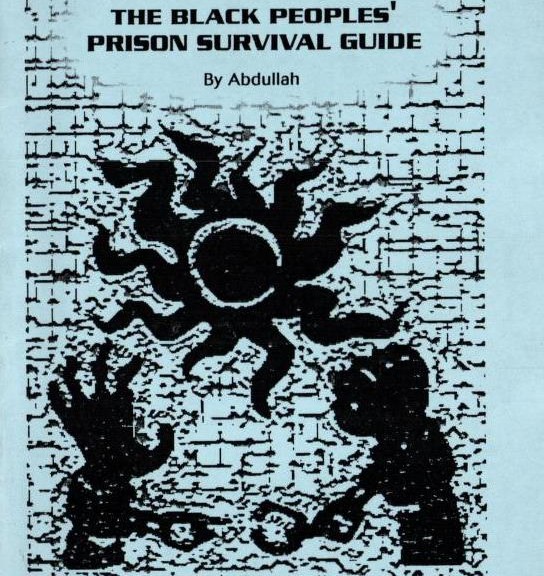
Many of the most widely circulating zines are included in the Incarceration Zine Collection, part of the Human Rights Archive, which was acquired from the Chicago Anarchist Black Cross Zine Distro. The collection spans the years from 1995 to 2007, and includes 103 zines distributed inside and outside of jails and prisons, with writing by notable inmates and anti-prison activists, including Mumia Abu-Jamal, Sundiata Acoli, Ashanti Alston Omowali, David Gilbert and his son, Chesa Boudin, Kevin “Rashid” Johnson, Dennis Kyne, Anthony Rayson, Bobby Sands, Sean Swain, and Harold H. Thompson. Zines related specifically to the concerns of women and LGBTQ people, including The Invisibility of Women Prisoners’ Resistance, Reaching through the Bars, Tenacious: Art and Writings from Women in Prison, and Queers Bash Back can be found in the Bingham Center Women’s Zine Collection.

TheBlackPeoplesPrisonSurvivalGuideByAbdullah_0000
The Incarceration Zine Collection

These resources offer researchers insight into the dialogue amongst prison reformers and anti-prison activists both inside and outside of prison, and into the particular role of reading and writing in the expansion of prison reform and prisoners’ rights movements.

Submitted by – Jennifer Ansley, Ph.D. Postdoctoral Fellow, Thompson Writing Program, jennifer.ansley@duke.edu

Profiles in Research: Georgina Colby and the Kathy Acker Papers

I was awarded a Mary Lily Research Grant in 2014 to travel to the Sallie Bingham Center for Women’s History and Culture to consult The Kathy Acker Papers. In April 2014 I carried out research in the archive for my book manuscript, Kathy Acker: Writing the Impossible, which is under contract with Edinburgh University Press.

Critics and scholars in the field of contemporary literature have largely understood Kathy Acker as a postmodern writer. My monograph challenges such readings of the writer and her works, paying close attention to the form of Acker’s experimental writings, as a means to position Acker and her work within a lineage of radical modernisms.

Consulting The Kathy Acker Papers, the extensive archive of Acker’s works housed at the Sallie Bingham Center, shaped my research in a number of ways. Most striking, and perhaps the aspect of the archive that has been most formative to my work, is what the archive revealed in terms of the materiality of Acker’s various manuscripts. The original manuscript of Acker’s early and most renowned work, Blood and Guts in High School (1978), is a lined notepad with text and image pasted onto the pages. It is a collage, an art object. The dream maps, which punctuate Blood and Guts in High School, are archived as separate framed objects. Dream Map Two is an artwork measuring 56 inches by 22 inches. Such archival discoveries enabled the development of my book. The monograph takes a specific work of Acker’s for each chapter as a means to explore six key experimental strategies in Acker’s oeuvre. A substantial knowledge of Acker’s avant-garde practices would not have been possible without the research carried out in the archive.

Image from manuscript for Blood and Guts in High  School by Kathy Acker
Image from manuscript for Blood and Guts in High School by Kathy Acker

The Kathy Acker Papers also illuminated a related line of enquiry taken in my monograph: the importance of Acker’s early poetic practices to an understanding of her later prose experiments, which often dislimn the distinction between poetry and prose. The repository of unpublished poetic works provided rich material for the first chapter of my book, which explores Acker’s engagement with the L=A=N=G=U=A=G=E poets in the 1970s. Acker’s unpublished poetry can be understood as both a significant autonomous body of work, and as juvenilia that was a catalyst for her later writing experiments. The box that houses these early works also contains typed conversations between Acker and her early mentor, the poet David Antin. Written under Acker’s early pseudonym, The Black Tarantula, these conversations point to the discourses that emerged between Acker and various writers and poets concerning the uses of language. In this 1974 text, ‘Interview With David Antin’, which reads in part, and perhaps intentionally, like a Socratic dialogue, Acker and Antin interrogate issues of language and certainty. Acker and Antin draw on their writing experiments, alongside a discussion of Wittgenstein’s On Certainty, as means to interrogate language and perception. Such materials are rich when read in conjunction with Acker’s poetry.

Reading the materials in the archive, letters, early drafts of published works, speeches, Acker’s teaching notes and notebooks on philosophy, as well as Acker’s handwritten annotations on various texts, and her invaluable collection of small press pamphlets, was illuminating. Numerous texts disclosed the self-conscious nature of Acker’s experiments. A number of early poetic experiments are entitled ‘Writing Asymmetrically’, and several notebooks gesture specifically to the influence of William Burroughs and Acker’s experiments with the cut-up technique. Other notebooks are streams of consciousness, and are evidently comprised of material that Acker then cut up for use in her experimental works. Most of Acker’s novels originated this way, as a set of handwritten notebooks.

KIC Image 0002
Image from manuscript for Blood and Guts in High School by Kathy Acker

Archival research at the Sallie Bingham Center cultivated a rich understanding of the diversity of Acker’s experimental work and the writer’s remarkable lifetime achievements, many of which remain unpublished. The extent of the material and its uniqueness brought home the importance and centrality of the archive in the formation of knowledge regarding an experimental writer’s oeuvre. In the context of the female avant-garde writer, Acker stated that Gertrude Stein, as the progenitor of experimental women’s writing, is ‘the mother of us all.’ The remarkable experimentalism and the linguistic innovation of a great number of the texts that comprise The Kathy Acker Papers reveal Acker to succeed Stein as one of the most important experimental writers of the twentieth century.

Post contributed by Georgina Colby, Lecturer in Contemporary Literature, University of Westminster, UK.


Palette Play with Jennie Chambers

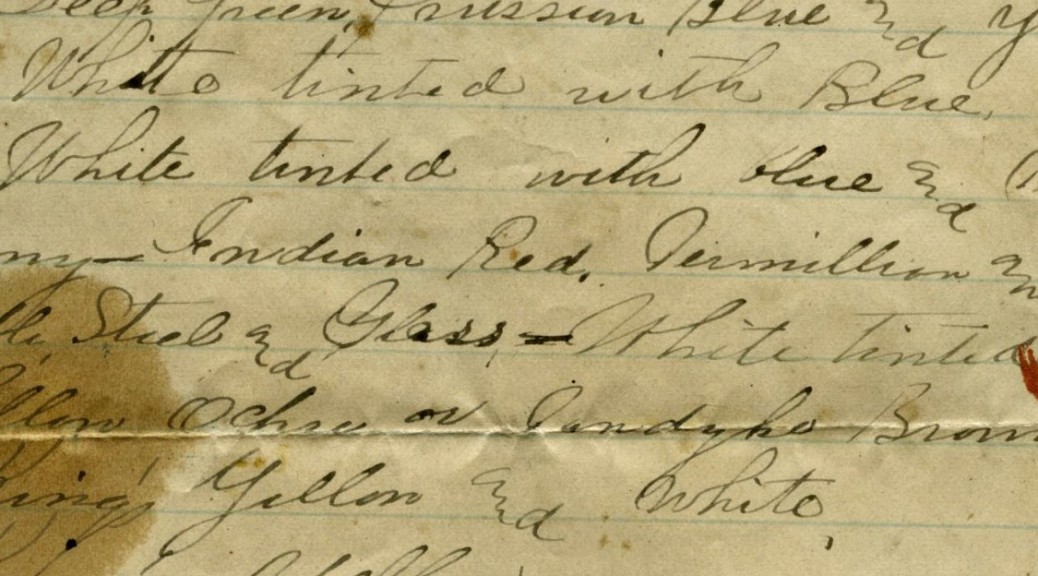
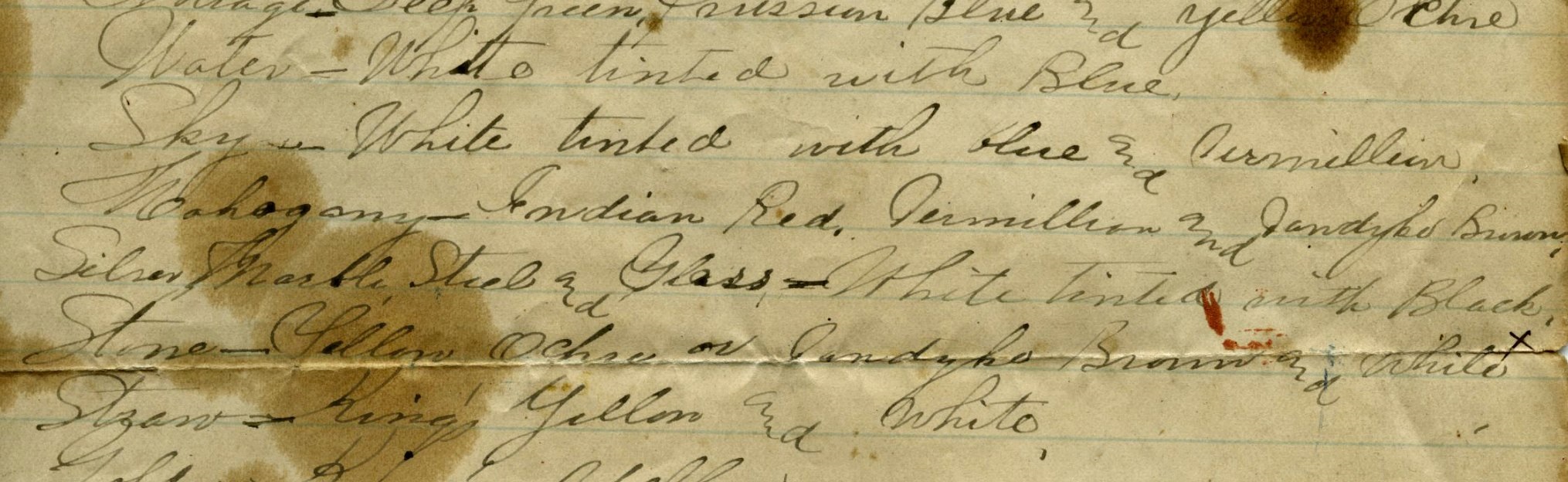
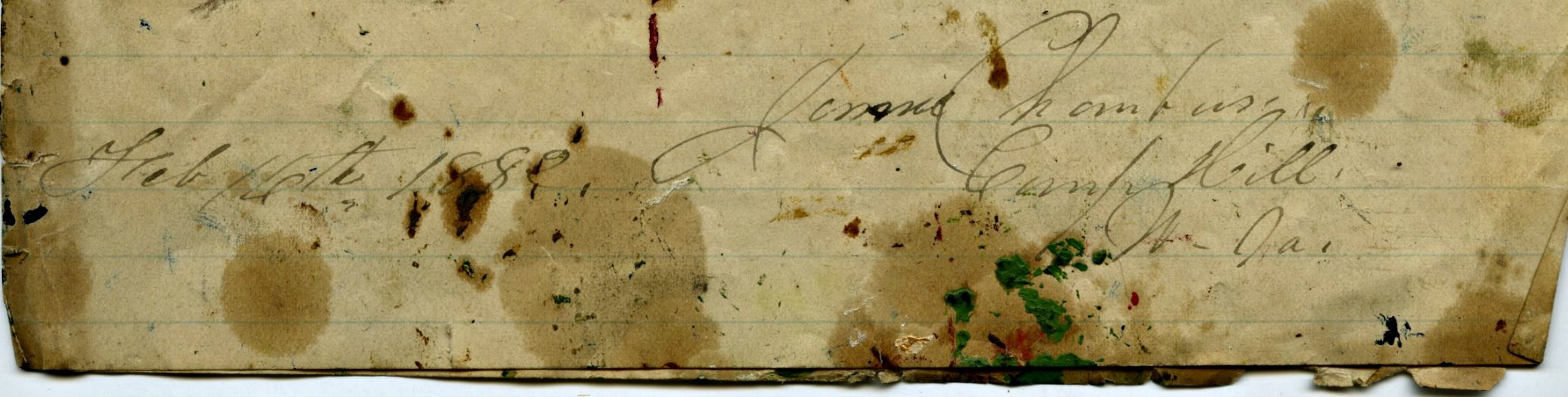
Are you interested in painting but aren’t sure how to mix your colors? The Jennie Chambers Papers might be able to help. The Chambers family lived in Harpers Ferry, West Virginia, in the mid-nineteenth century. Jennie Chambers was an author and amateur artist who went on to write for Harper’s Magazine, publishing “What a School-Girl Saw of John Brown’s Raid” in 1902 (still available online today). Duke has held the Jennie Chambers Papers for several decades, but I recently revisited the collection to enhance its online description and update its housing to our current standards. Most of the papers are letters between Jennie and her family or drafts of Jennie’s writings. But I most enjoyed finding this kind-of-grimy paper that includes all of her notes about mixing paint colors. It looks like she frequently used these notes for her paintings. I love the spots of paint and the smears of oil that stain the page, and it was really fun to see what sorts of things she painted. For foliage, mix deep green, Prussian blue, and yellow ochre. Do you want to paint mahogany? Mix Indian red, vermillion, and Vandyke brown.

cropped page mahogany
wholepage

My archivist’s heart also loves that she signed and dated the page. The only thing missing from the collection are her actual paintings.

signature

Post contributed by Meghan Lyon, Technical Services Archivist.