All posts by Amy McDonald

A Thoroughly Forgotten Duke Figure

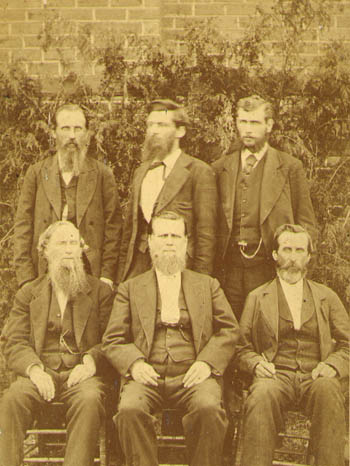
Trinity College Faculty, 1878-1879
Trinity College faculty for the 1878-1879 academic year. Lemuel Johnson is seated to the right of President Braxton Craven.

LEMUEL JOHNSON (15 January 1828 – 29 April 1900) taught for more than thirty years the entire mathematics curriculum at Trinity College when it was a fledgling institution located in Randolph County, North Carolina.

Though there is no present building or other monument to his name at Duke, the Rubenstein Library holds in various collections a small memorial to this pioneer faculty member in the form of four manuscript letters, a mathematics primer that was widely distributed during the Civil War era, a carte de visite of him and another of the Trinity faculty of the late 1870s, and an 1887 map of Durham County printed from his own manuscript map, the first published presentation of the bounds of this county after its formation in 1881 from sections of Orange, Wake, and Granville.

He was the second graduate of Normal College, Trinity’s predecessor, when it was a very humble institution situated in a rural, red clay, Quaker-Methodist corner of the Carolina piedmont. There, beginning in 1852, he taught courses in arithmetic, mensuration, algebra, geometry, trigonometry, and calculus as well as performing the duties of college treasurer, librarian, and first president of the Trinity College alumni association.

Among his most memorable achievements as an educator was his tutoring of the gifted Giles sisters, every evening in his parlor after a full day of classroom teaching. Mary Z. Giles, Persis P. Giles, and Theresa Giles were graduated with the Trinity class of 1878 (although segregated into a “Ladies” column with less than full membership), an event that the Wilmington Morning Star reported as “unprecedented in the history of North Carolina colleges.” Indeed, the celebrated Sallie Walker Stockard, early historian of Alamance county and first female matriculate at the University of North Carolina, received her diploma in Chapel Hill in 1898.

In the last years of his life, Professor Johnson supported himself through hard times by teaching in rural high schools and by working intermittently as a civil engineer, and his maps of Randolph and Davidson counties are available online via the NC Maps site.

Post contributed by David Southern, Rubenstein Library researcher and Managing Editor for the Collected Letters of Thomas and Jane Welsh Carlyle at the Duke University Press.

A Different Take on “Yes We Can!”

Currently, there is a debate among faculty at the University of Chicago regarding whether or not President Barack Obama’s presidential library should be erected on campus.  Duke University experienced a similar debate in 1981, in what is today referred to as the Nixon Library Controversy.

For a little background, we turn to the Committee Against the Nixon –Duke Library (CANDL) Records finding aid:

In late July 1981, Terry Sanford initiated negotiations with former president Richard Nixon (Duke Law 1937) to locate the Nixon presidential library on the campus of his alma mater. When this information was revealed to faculty members during the week of August 10, 1981, many opposed the proposition as well as Sanford’s failure to consult the faculty prior to initiating negotiations.

Many who opposed the library had moral objections to memorializing a president whose behavior in office was reproachable, and they feared a negative effect on the university’s reputation. Other concerns included the effects of greatly increased tourist traffic on campus and the aesthetic nature of the large proposed structure. However, supporters of erecting the Nixon Library on campus argued that the scholarly and academic benefits of locating the vast Nixon Presidential Materials collection on campus should and would outweigh any moral concerns. These supporters tended to denounce the actions of vocal dissenters as divisive and/or arrogant.

Meetings of the Academic Council and Board of Trustees during September and October 1981 were dominated by this debate, and a group of faculty formed the Committee Against the Nixon-Duke Library (CANDL) to organize the efforts of faculty, students, alumni, and others opposed to the proposed library. Although the Academic Council voted not to recommend further negotiations with Nixon in a 35-34 decision September 3, 1981, the Board of Trustees later voted 9-2 to proceed. By April 1982 negotiations had stalled, and a year later Nixon’s representatives announced that a site at Chapman College in San Clemente, California, had been chosen for the Richard M. Nixon Presidential Library.

Duke University Archives houses several collections related to the Controversy.  Our most recent acquisition is the Peter Wood Papers on the Nixon Library Controversy.  Wood was Professor of History during this time and was a member of CANDL.  Included in his papers is the following flyer:

CANDL Flyer, ca. 1981
Click to enlarge.

For more information about the Nixon Library Controversy, we invite you to consult resources within Duke University Archives, including the following collections:

Post contributed by Kim Sims, Technical Services Archivist for University Archives.

Digitizing the LCRM: Update #2

We’re going to start our second update on Duke’s participation in the CCC Project with exciting news: the first three CCC-digitized collections are now available online!  You can now find digitized content directly through each collection’s finding aid.  Take a minute and check out the digitized portions of the Basil Lee Whitener Papers, the Rencher Nicholas Harris Papers, and the Women-in-Action for the Prevention of Violence and Its Causes Records.

This month, we feature an item from the Basil Lee Whitener Papers. Whitener was a Democratic Congressman representing Mecklenburg County (N.C.) from 1957 through 1968. Like many other Democrats from the South (who collectively became known as “Dixiecrats”), Whitener was a vehement opponent of integration and any federal action intended to address civil rights issues.

His papers contain a great deal of correspondence, speeches, bills, and other materials that reflect both the views of constituents regarding civil rights and how he acted in the House of Representatives to try to derail reform-minded legislation.

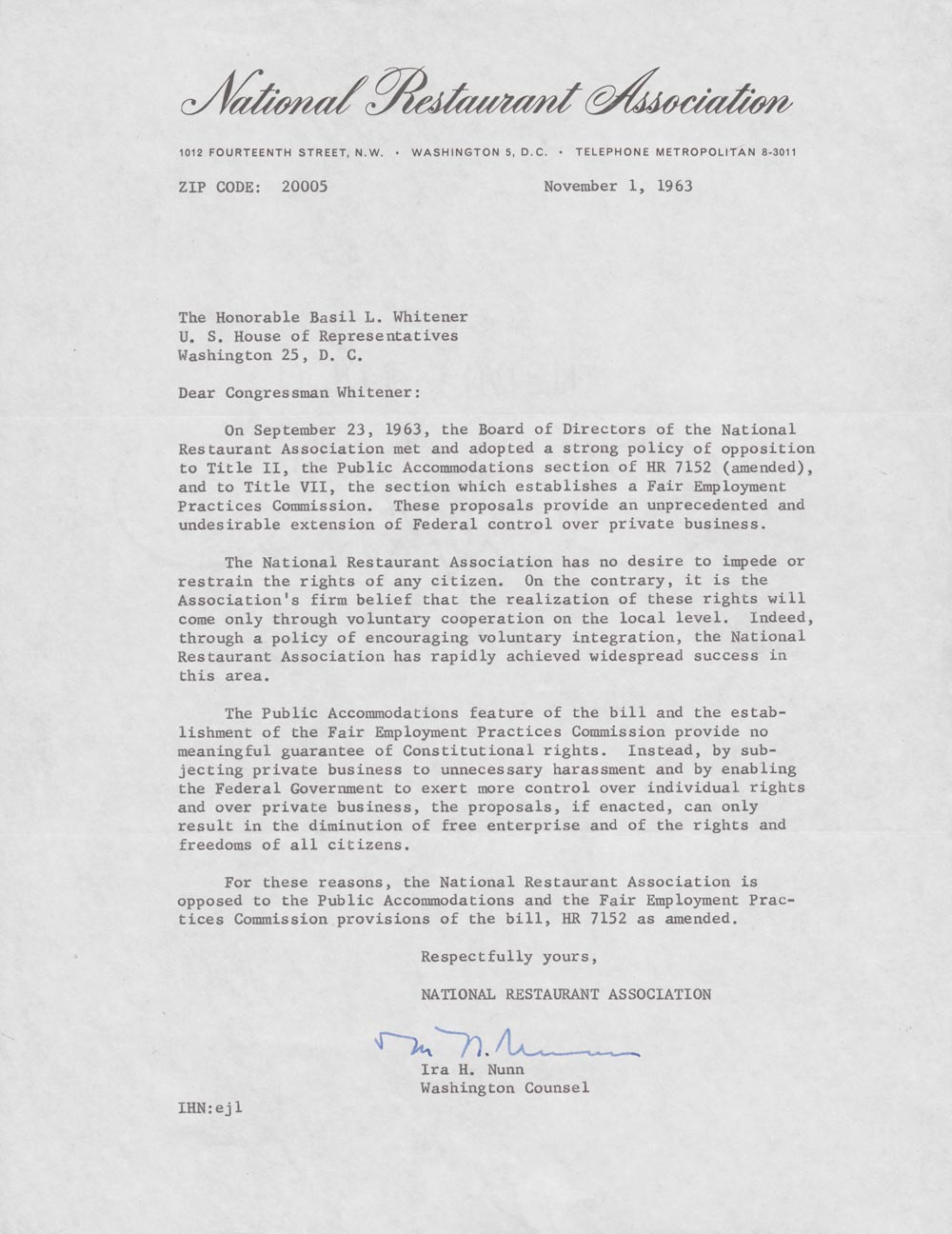
Whitener’s opposition was firm, but such groups as the NAACP and the North Carolina Baptist Student Union sent telegrams and letters to the Congressman arguing for strong civil rights legislation. Knowing that these efforts fell on deaf ears, who then actually lobbied against civil rights legislation? The answer is the NRA . . . but not that NRA. The organization in question is the National Restaurant Association; the letter that their representative Ira Nunn sent to Whitener in opposition to what would become the Civil Rights Act of 1964 is presented below.

Letter, Ira H. Nunn of the National Restaurant Association to Basil Lee Whitener, November 1, 1963. From the Basil Lee Whitener Papers. (Click to enlarge.)

The given reason for the NRA’s opposition to H.R. 7152 was that its proposals “can only result in the diminution of free enterprise and of the rights and freedoms of all citizens.” Decode this political jargon and you will see that the NRA disapproved of the proposed ability of the federal government to mandate the integration of all public dining spaces.

Instead, the NRA offered the solution of voluntary integration. In his letter, Nunn claimed that voluntary integration had been a “widespread success.” While Nunn’s claim was literally true insofar as a certain percentage of restaurant owners had chosen to integrate their establishments voluntarily, the spirit of the argument is false. Restaurateurs were not en masse choosing to integrate their establishments, especially in the South. For example, only forty percent of businesses in Greensboro were integrated by the end of 1963. Nationally, out of a possible 60,000 districts where mandated integration could have existed, only 1,000 had integrated facilities. It is understandable that Nunn would like to present his industry as reform-minded while preserving laissez-faire standards, but the historical reality does not corroborate his argument.

Why would Nunn and restaurateurs more broadly oppose civil rights reform? While a culture of segregation may have contributed to the NRA’s opposition, it is much more likely that members of the NRA feared the potential loss of business that forced integration would entail, especially in the South. Therefore, at its core, the NRA’s argument against integration was primarily economic rather than cultural or social, making it stand out from most anti-integration documentation from the early 1960s. Furthermore, in an ironic twist given Whitener’s role as a representative of North Carolina, it is probable that the NRA’s economic argument was in part inspired by the events of the 1960 Greensboro Sit-In and subsequent protests across the South. In fact, such protests provided strong evidence of the social role of restaurants and the necessity for integrating their dining counters, even if the members NRA could only see the possibility of losing customers and profit.

The grant-funded CCC Project is designed to digitize selected manuscripts and photographs relating to the long civil rights movement. For more information on this project, including updates on the progress of digitization, please check out the CCC website. As part of the outreach efforts of the CCC Project, monthly blog posts to The Devil’s Tale will provide updates on the latest Rubenstein Library collections to be digitized for the project. Stay tuned!

Post contributed by Josh Hager, CCC Graduate Assistant.

Wooshes, Whistles, Crowd Roars, and Seal Screams

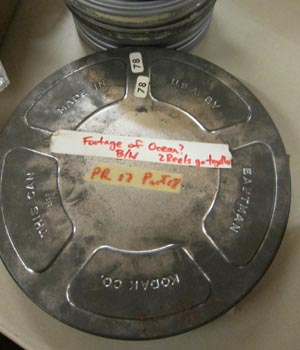
"Footage of Ocean" Reel from the Freewater Films CollectionThe name Freewater Films is perhaps best known for the film series it puts on in the Bryan Center. But in addition to these screenings, it is also responsible for providing workshops and support for amateur film-making by Duke students and community members.

The origins of Freewater Productions Films can be traced to 1969, when the Mary Duke Biddle Foundation gave funds for students from the Duke University Union Visual Arts Committee to make a 16mm film. In November 1970, several students produced an original film (called Dying), using a 16mm Bolex camera borrowed from the Union. Described by the maker as “a woman’s surrealistic encounter on an island,” Dying went on to win first prize at the Association of College Unions’ 1971 International Film Festival.

Over the years, Duke students produced a number of cutting-edge films under the auspices of Freewater, ranging from documentaries on urban Durham to science fiction and horror films set in the Duke Hospital. (The 1984 film A Medical Scutwolf in Durham tells the story of a doctor who becomes a werewolf.)

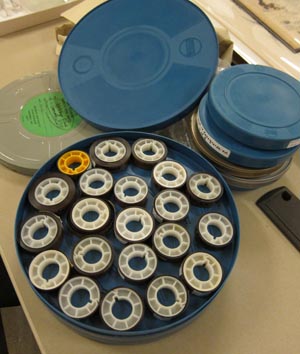
Sound Effects Reels from the Freewater Films CollectionSaved in a variety of formats—including DVDs, VHS, Betamax, and 16 mm film—the Freewater Productions Films archives are now housed at Duke University Archives. They have recently been arranged in order by date, format, and title. In some cases, “unofficial” titles had to suffice, as in the reel titled “Footage of Ocean,” pictured above. Those that arrived in rusty cans or unstable cardboard boxes were transferred to archival plastic “cans.”

Pictured at left is a group of 21 sound effects from the collection, labeled as: “wooshes, whistles, crowd roars, and seal screams.”

We’re looking forward to the day when these historic films may be screened again!

Post contributed by Jessica Wood, William E. King intern for the 2011-2012 academic year.

Feminism beyond Borders

Date: Thursday, June 21, 2012
Time: 12:00 PM
Location: Breedlove Room, Perkins Library
Contact Information: Kelly Wooten, 919-660-5967 or kelly.wooten(at)duke.edu

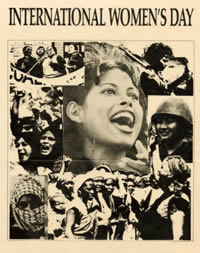
International Women's Day PosterPlease join the staff of the Sallie Bingham Center for Women’s History and Culture for a lunchtime talk by Jessica Lancia, Ph.D. candidate at the University of Florida (and Duke alum!).

She will speak about her research for her dissertation topic, Borderless Feminisms: A Transnational History of the U.S. Women’s Movement, 1967-1985, using a variety of collections from the Bingham Center. Lancia is a Mary Lily Research Grant recipient.

Please bring your own lunch. Drinks and cookies will be provided.

Post contributed by Kelly Wooten, Research Services and Collection Development Librarian for the Bingham Center.

In the Lab: Housing Papyri and Early Manuscripts

Two big rehousing projects have been underway in the conservation lab for several months now.  One, the papyrus project, has been mentioned in the conservation department’s own blog, Preservation Underground.

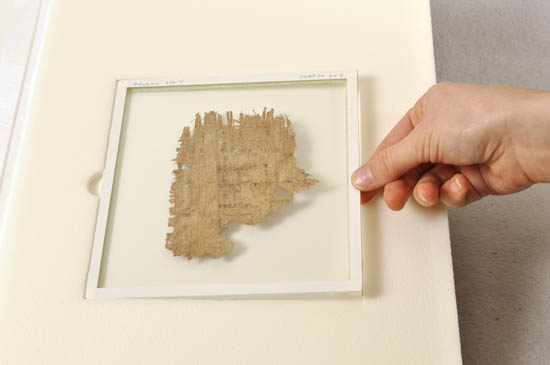
Duke’s papyri collection is one of the largest in the country with approximately 1400 items, each housed between sheets of glass.  Until now, those glass “sandwiches” have been loosely stored in boxes.  The conservation team is now making individual folders for them, made of mat board and padded with Volara (polyethylene foam), each clearly labeled for safer, easier access.

Once a month, everyone in the department joins in to make hundreds of these customized folders which will go into storage boxes to return to the stacks.  Such a big project is a logistical challenge, necessitating lists, spreadsheets, careful documentation, and also cooperation.  As a department, we are becoming a well-oiled papyrus-housing machine.

Papyri housings, before and after
Papyrus item in its new folder

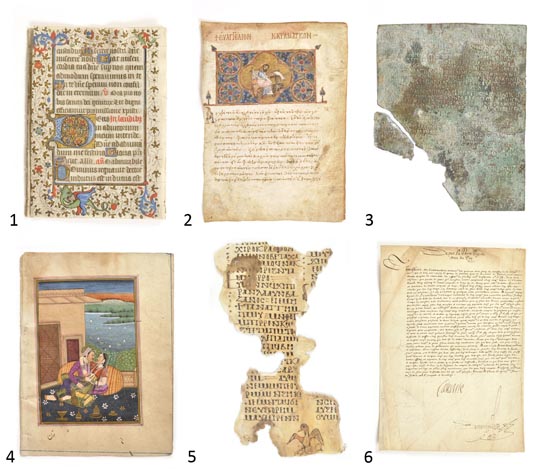
A similar logistical challenge has been the early manuscript housing project, of which the papyrus collection is a subset.  As well as books, the collection includes a wide variety of loose materials, from ancient Roman metal tablets, Ethiopic scrolls, pages from Greek Bibles, papal bulls, and oversized sheets from choral books.

Like the papyri, many of these flat items can go in our own customized mat board folders with either a paper pocket or a clear polyester sleeve.  But items that are oversized, three-dimensional, or particularly fragile have required special solutions.  Some examples can be seen below!

Group of Early Manuscripts
1. Breviary, French 15th century 2. Gospel of Mark, Greek 14th century 3. Roman diploma on bronze, A.D. 209 4. Persian illuminated manuscript page 5. Coptic homily, Egypt 6. Catherine de Medici letter
Housings for Early Manuscripts
Examples of housings for early manuscripts

Post contributed by Grace White, Conservator for Special Collections, as part of our ongoing “In the Conservation Lab” series.


Digitizing the LCRM: Update #1

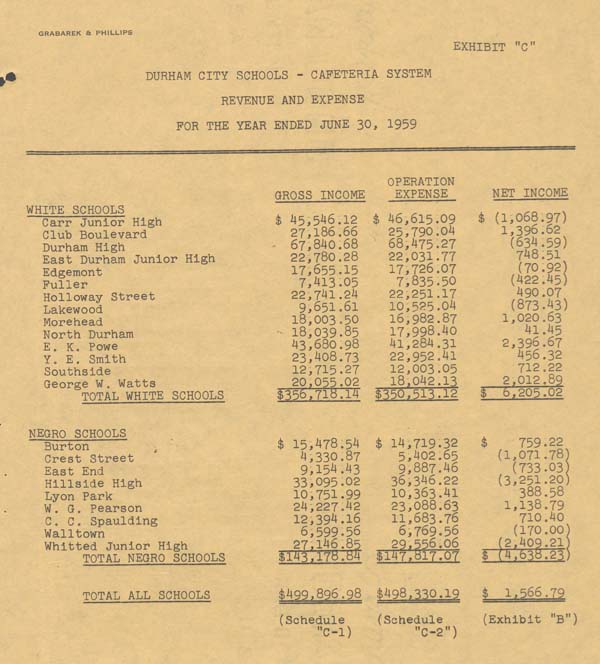
Rencher Nicholas Harris was Durham’s first African-American city councilman as well as a member of the Board of Education and the Secretary for the Board of Directors of Lincoln Hospital. His papers, collected at the Rubenstein Library and now digitized, cover the scope of his civic efforts from public health to transit planning. For example, the document shown below is a budgetary analysis of Durham school cafeterias in 1959—and a prime example of how civic documents demonstrate racial realities.

Rencher Nicholas Harris Document
Click to enlarge.

At first glance, the document lists the budgets of all of the public school cafeterias in Durham, separated into white and “negro” categories. Examine the figures more closely and the depth of racism in the school segregation policy becomes clear. Compare, for example, the operation expenses of white Durham High and African-American Hillside High ($68,475.27 to $39,346.22, respectively). In addition, the white schools show a net income of $6,205.02 versus the net monetary loss of the African-American schools of $4,638.23. It is up to researchers to determine the full explanation and significance of these figures.

Fortunately, this document, along with a host of other records containing information on historic impetuses and efforts for civil equality in North Carolina, will soon become available online. Duke University Libraries’ Digital Production Center is currently participating in the Content, Context, and Capacity Project led by the Triangle Research Libraries Network (Duke, NC State, UNC, and NC Central).

This grant-funded initiative is designed to digitize selected manuscripts and photographs relating to the long civil rights movement. For more information on this project, including updates on the progress of digitization, please check out the CCC website. As part of the outreach efforts of the CCC Project, monthly blog posts to The Devil’s Tale will provide updates on the latest Rubenstein Library collections to be digitized for the project. Stay tuned!

Post contributed by Josh Hager, CCC Graduate Assistant.

Student Photographs Duke Construction

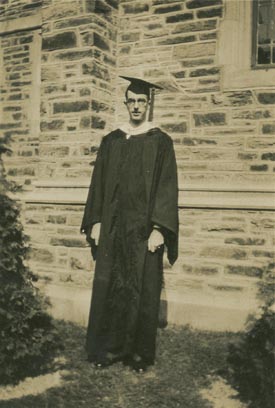
Charles Wesley Clay at Commencement, 1929One of the best parts about being the University Archivist is the unexpected treasure that sometimes arrives in the mail.

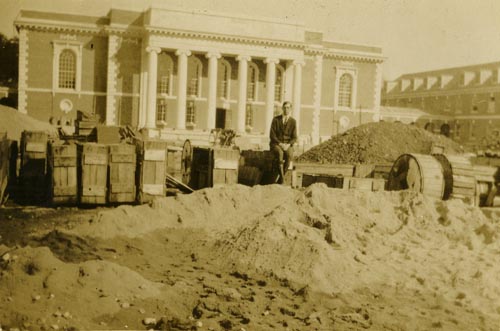
Recently, I received a small packet of photographs from the family of Charles Wesley Clay, a Methodist minister and alumnus from the classes of 1929 and 1932. Clay earned bachelor’s degrees from Trinity and Divinity, and he happened to be on campus from 1925 to 1932, during the heyday of construction on East and West campus.

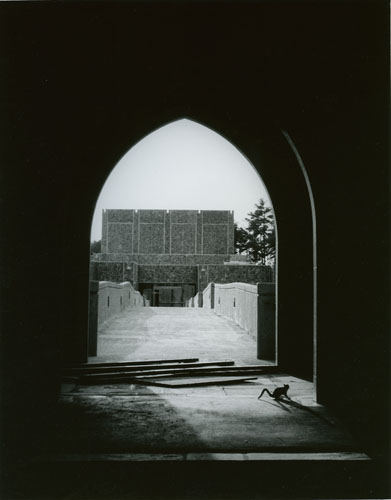
This small collection of 42 snapshots includes Clay posing next to Duke buildings—some completed, some under construction—as well as shots of equipment, scaffolding, and snowfall on the as-yet unmanicured quads.

We have other construction photos taken by Duke’s construction company, but it is revealing to see the “student’s eye view” of what it was like to be at Duke in these early, exciting days.

Charles Wesley Clay at East Campus Union, 1927
Charles Wesley Clay in front of the East Campus Union in the spring of 1927.
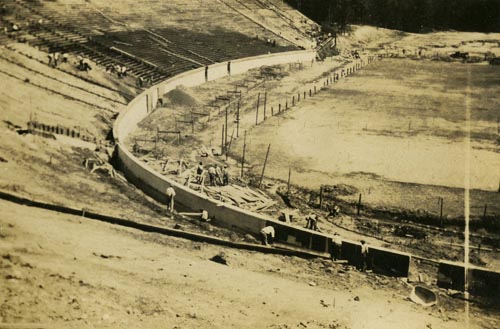
Construction of Duke Stadium, 1929
Duke's football stadium (now known as Wallace Wade Stadium) under construction in 1929.
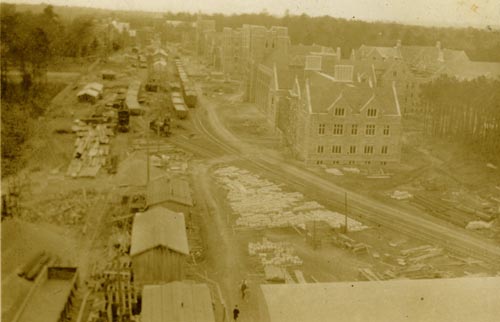
View of West Campus Construction, 1929
A view of West Campus from the Medical School in the fall of 1929. Note the railroad spur that brought Duke stone from Hillsborough directly to campus.

Check out the whole collection on Flickr!

The University Archives is interested in documenting student life through materials like photographs, diaries, and scrapbooks. Please contact us if you have items you would like to donate.

Post contributed by Val Gillispie, Duke University Archivist.

Historical Duke Squirrels

As we rush headlong into exams, we at the Duke University Archives thought everyone could use an entertaining diversion. So we’re embracing the Duke Squirrels meme, and adding a historical perspective—courtesy of our collections!

Pee Wee the Squirrel Visits the East Duke Building

In the 1930s, Pee Wee the Squirrel was a frequent visitor to the offices of the Duke University Press (when it was based in East Duke Building). Exie Duncan, a longtime employee of the press, snapped this picture of Pee Wee having his mid-day snack.

The squirrels had many favorite eateries on West Campus, too. (This is before Armadillo Grill, so they had to make do with something other than queso!)

A Squirrel Visits a Trash Can outside Old Chem

When they weren’t busy snacking, the Duke squirrels occupied themselves with photobombing would-be-charming photos of campus buildings. We imagine this photo below (of the Bryan Center walkway) never made it into a Duke promotional brochure.

Squirrel on the Bryan Center Walkway

Following those brief adventures, the squirrels went right back to eating. Our favorite find was an August 11, 1966 letter from Security Division chief W. C. A. Bear to director of operations Henry F. Bowers. The letter is a carbon copy, so it’s tricky to read (click on the image to enlarge it)—but well worth it!

Letter about Vending Machine Theft by Squirrel, August 11, 1966
(click to enlarge)


Crazy Assassin or Crazy Housepainter?

On this day in 1865 the infamous John Wilkes Booth, assassin of President Abraham Lincoln, died of a gunshot wound on the porch of the Garrett home in Virginia after twelve days on the lam.  Or did he?

What if I told you that Booth was actually a tobacco merchant in east Texas in 1873?  Or that he was a Shakespeare-quoting house painter in Enid, Oklahoma in the early 20th century?  And that one could view his mummified remains at various circuses after the First World War?  Crazy, right?

Not according to Finis L. Bates, a lawyer from Memphis, TN, in his 1907 confessional, The Escape and Suicide of John Wilkes Booth.

According to Bates, John St. Helen, a merchant in Granbury, TX, confessed his true identity while suffering from an illness to which he supposed he would eventually succumb. After his unexpected recovery, St. Helen elaborated on his confession to Bates and offered additional details of the conspiracy to assassinate Lincoln. The most explosive of these was the originator of the assassination plot, Vice-President Andrew Johnson. He also offered the true identity of the man mortally wounded by a Federal soldier at the Garrett farm. Bates immediately notified the State Department and Department of Defense but his pleas fell on deaf ears (conspiracy, anyone?).

In 1903, a house painter from Oklahoma named David E. George, committed suicide with a fatal dose of arsenic. Among some papers found on George was a note requesting that Bates be summoned. Upon his arrival several days later, Bates was able to identify the deceased George as his friend from Texas, John St. Helen, nee John Wilkes Booth. After claiming possession of the body, Bates then toured mummified remains around the United States, and, eventually, even offering for purchase to Henry Ford.

Come to the Rubenstein Library and read this true account of the life and death of John Wilkes Booth. Conspiracy theorists welcome!

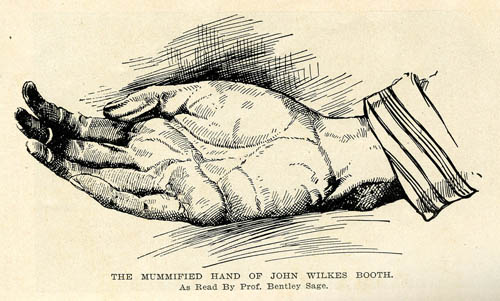
Engraving of John Wilkes Booth's Mummified Hand
Engraving from The Escape and Suicide of John Wilkes Booth.

Post contributed by Joshua Larkin Rowley, Research Services Coordinator.