Quick Pic: Matching Outfits

We just love this illustration of a Dacian warrior and his horse in armor from Thomas Hope’s Costumes of the Greeks and Romans (1962 edition).

Illustration of Dacian warrior riding a horse, both in chainmail armor

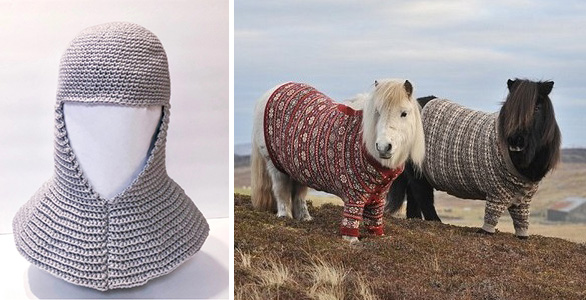
At first glance, though, it kind of looks like they were wearing matching crocheted outfits. I don’t know that such a thing has been done before, but based on the number of images I can find of crocheted chainmail and horses in sweaters, it seems entirely possible.

Crochet armor, horses in sweaters

Quick Pic: New Press Day

Today we welcomed a new resident to the lab. Everyone, meet our new T. W. & C. B. Sheridan Co. standing press!

Pictured here absolutely dwarfing our W.O. Hickok press.

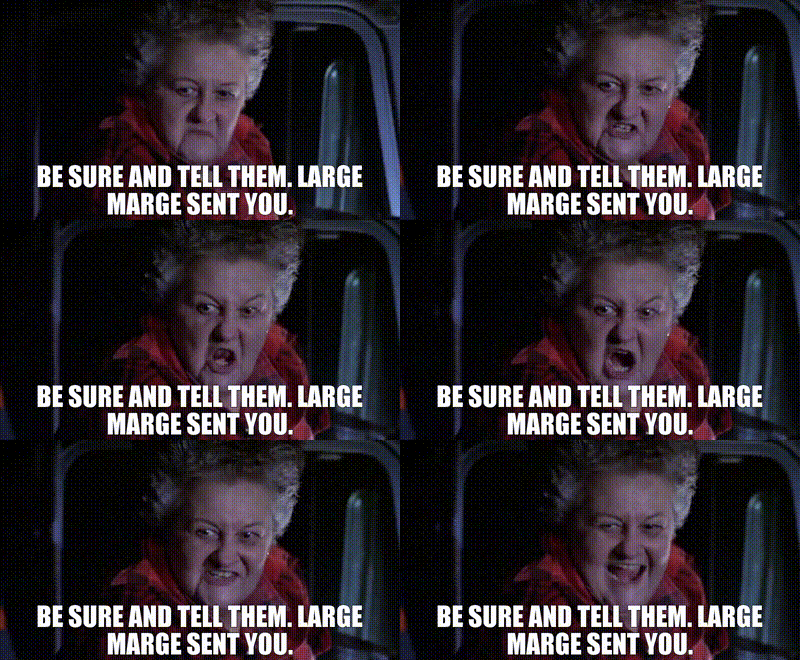
We will need to clean the new Sheridan up a little before we can put her to use, but in the meantime we’ve decided to call her  “Large Marge” in honor of the late Alice Nunn. Stay tuned for our forthcoming press glow-up!

Be sure and tell them. Large Marge sent you.


FY2022: By The Numbers

It’s annual statistics time! We love a good stat.

One Stat That Stands Out

42% of overall productivity in FY2022 was disaster recovery, mostly attributed to mold removal.

FY 2022 Statistics

371 Book repairs
964 Pamphlet bindings
16 Treatments: Other (objects, textiles, etc.)
694 Flat Paper repairs (includes paper, parchment, and photos)
3,094 Protective enclosures
3,784 Disaster recovery
3 Exhibit mounts [these are primarily done in the Exhibits Department now]
44 Hours in support of Exhibits (meetings, treatment, installation, etc.)
123 Digital preparation repairs
8 Hours in support of Digital Projects (meetings, consultations, handling, etc.)

73% of production was for Special Collections
27% of production was for Circulating Collections

42.7% of work was Level 1 [less than 15 minutes to complete;  3,810 items]
54.5% of work was Level 2 [15 minutes – 2 hours to complete;  4,864 items]
2.7% of work was Level 3 [2 – 5 hours to complete;  240 items]
0.1% of work was Level 4 [more than 5 hours; 12 items]

Staffing: 5 full time conservation staff, 1 student assistant

We are still seeing the effects of the pandemic on our total production. But we are also seeing a bounce back from the last two years. We remain hopeful that FY2023 will be closer to “normal,” whatever that is these days.

Totals FY19 FY20 FY21 FY22
Level 1 9556 5422 1841 3810
Level 2 15725 1522 972 4864
Level 3 246 146 94 240
Level 4 19 31 10 12
total 25546 7121 2917 8926
Total Productivity 2003 to 2022

This year we surpassed the 280,800 mark for total production since the department began in 2002. Overall, enclosures are still the largest single type of work we do, holding steady at 44% of output.  Followed by disaster recovery at 20%, and pamphlet binding at 18%.

Other Things We Did This Year
  • We received a LYRASIS Catalyst Fund grant to digitize our legacy conservation treatment documentation. We are calling it the Conservation Documentation Archive (CDA). This includes both written and photographic documentation, reaching back to the earliest treatment records we have. You will be hearing much more about that in the coming year as we get these materials into our digital repository.
  • We had several internal conversations about the lack of diversity in our treatment terminology. We aim to be more cognizant of this going forward. We want to fill in the gaps in our knowledge of book history so that we can be more inclusive in describing the materials we work on.
  • We took a deeper dive into issues of diversity, equity, and inclusion within the conservation profession and our department this year through readings and discussions. These will be  ongoing conversations. We are focusing on ideas that can be put into action now, while also identifying stretch goals that may take more time and resources than what we have at the moment.
  • The Lilly Library renovation is back on track. We are in the middle of preparing the collections, and the art and artifacts for the move. Much more to come on this project.
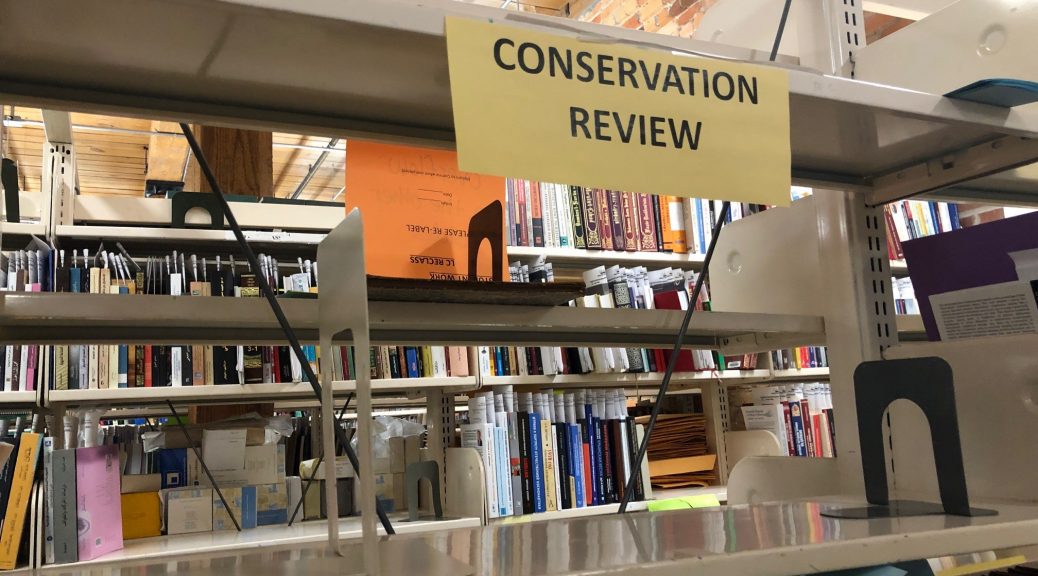
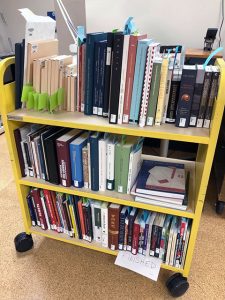
Picture of empty bookshelf with sign that says conservation review
Here’s to FY2023!

Hidden Print Waste

A lot of different materials go into producing a book’s binding and for centuries bookbinders have used pieces of broken or discarded books to produce new ones. We often find scraps of manuscript or print, on either paper or parchment, used as spine linings, as endsheets, or even as full covers for bindings (see images from the collections of Princeton or Library of Congress here). We often describe this practice as waste (manuscript waste, printer’s waste, binding waste, etc.). Some important texts have only survived because they were reused in this way.

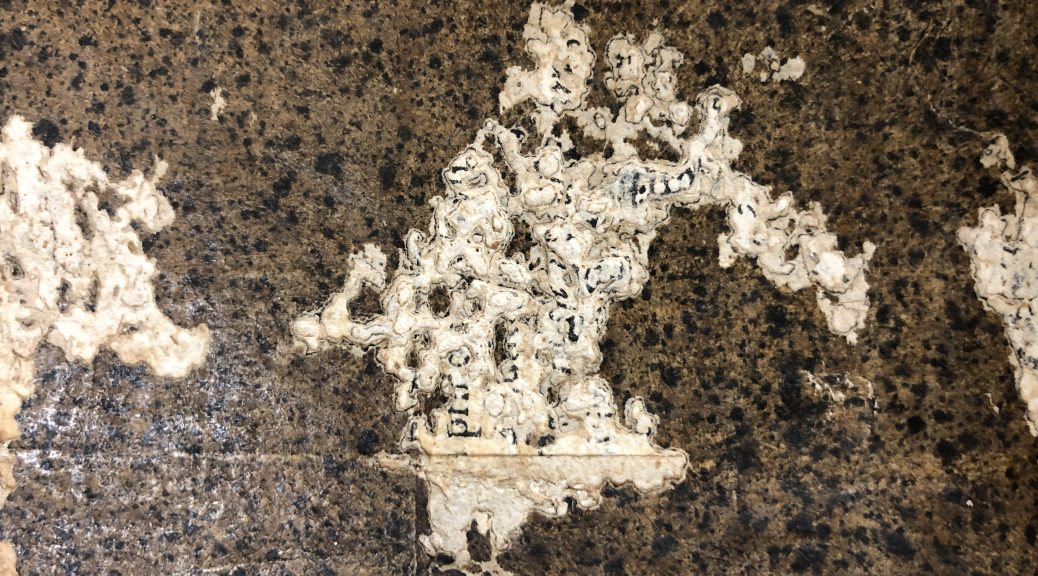
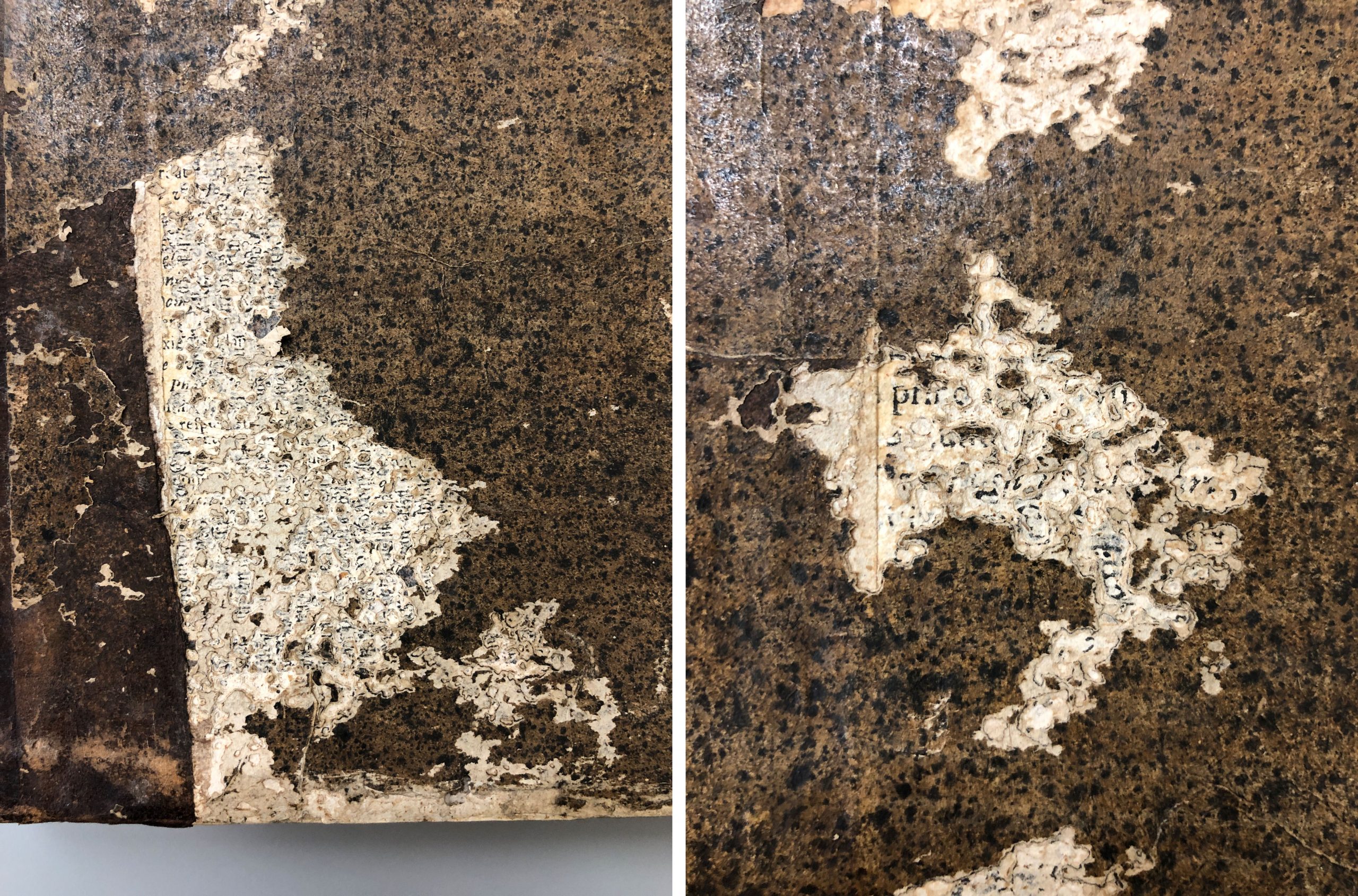
While some examples of binding waste (like covers or endleaves) are immediately obvious, others are only revealed by damage. This early 18th century printed book came in for rehousing recently and shows some of the fascinating things that can be hidden beneath the surface.

In areas where leather corners have come off or the sprinkled brown paper sides have lifted you can see some text peaking through. The book itself is printed in Latin, but the waste used in the binding is in German. This edition was printed in Munich, so it makes sense that a contemporary binding would also include waste in German.

In addition to the mechanical damage to the paper covering material along the board corners and edges, there is also some insect damage along the faces of both boards.

The insects have eaten away at the first several layers of binding material, revealing many layers of print – sometimes in different orientations. It seems our print waste was not just used as a board lining, but the boards themselves are composed of many layers of print laminated together.

I am usually not excited to encounter an insect-damaged book, but in this case the bugs have created a rather beautiful object – almost like a typographic topographical map – and have revealed useful information about its production.

The Week in Conservation: We’ve Been Busy!

It’s been a busy week this week in the Underground. We hosted a tour for the Class of 1990, who had their 20th Reunion a bit late due to the pandemic.

Tour group listens to department head
Our first in-person tour of the new academic year.

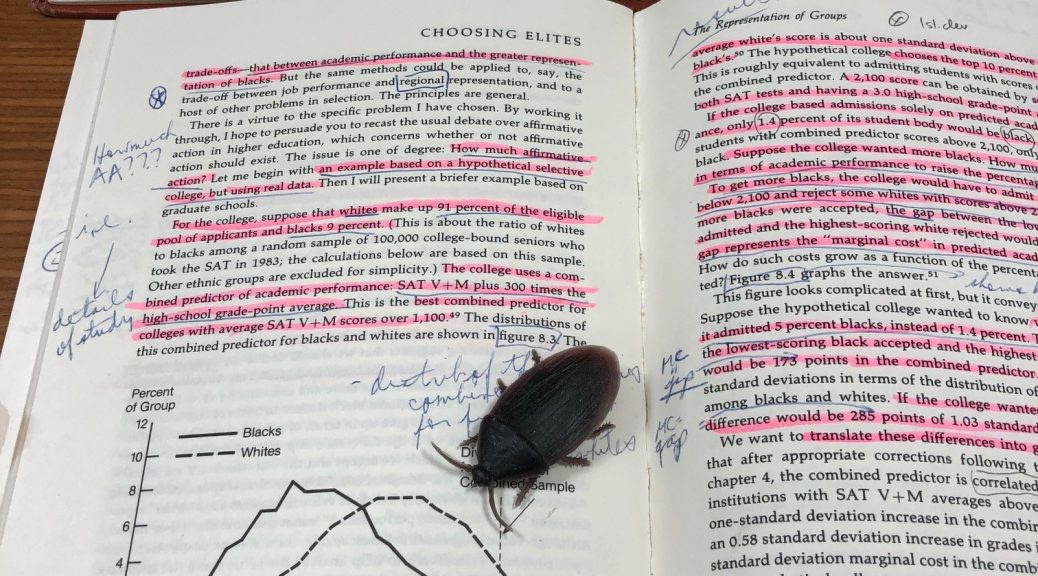
We have a tremendous amount of mold recovery work in the lab at the moment. We have been drying and vacuuming materials pretty much non-stop for several weeks. There is no light at the end of the tunnel yet, but every page gets us closer.

vacuuming mold spores from paper
Vacuuming mold is both satisfying and disappointing. It’s like the Schrödinger’s Cat of treatments.

We had an all-hands-on-deck repair day for the circulating collections backlog. With no summer students this year, we had a lot of materials waiting for their 15 minutes of fame aka Quick Repair. We got through 107 items in half a day.

book truck with finished repairs
Quick repairs are very satisfying and great for the stats.

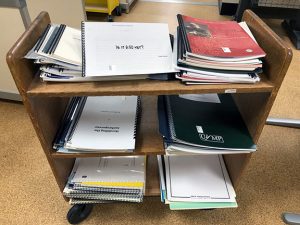
Speaking of backlogs…Technical Services has been working through a lot of musical scores lately and they have backed up a bit in the lab. This workflow is next on our list of “get it done” projects.

Book truck with music scores ready for binding.
Can scores have existential crises?

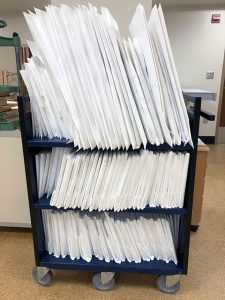
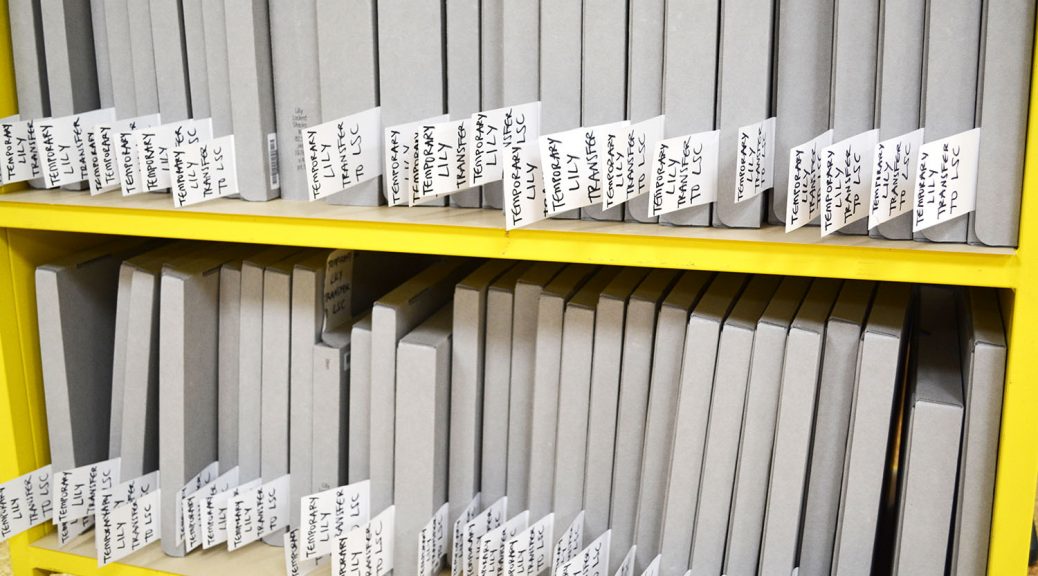
Preparations for the Lilly Library renovation started back in 2019 and really hasn’t stopped. We are getting close to finishing a huge project to provide enclosures for items going to the Library Service Center for the duration of the renovation project. Tyvek envelopes are a quick and economical enclosure for brittle and fragile materials that we can’t treat before going off site.

book truck with enveloped collection material
So. Many. Envelopes.

Our student assistant is back, and plowing through work. Look at all the brittle pamphlets she has put into binders this week. We love seeing work pile up on the QC shelf.

A shelf of finished pamphlets await quality control
We love seeing the QC shelf pile up with work.

And of course, at the time of writing this post, we are experiencing the remnants of Hurricane Ian. We spent Thursday afternoon putting out absorbent pads around our known leaks, and making sure everyone knew the disaster team’s contact information.

Map of Hurricane Ian
Hurricane Ian’s impact. Image Raleigh News & Observer

For organizations looking for recovery help, here are some resources:

We are thinking of all our colleagues in Florida whose institutions took a direct hit, as well as everyone who has experienced the ravages of this storm.

Invasion of the Binding Snatchers

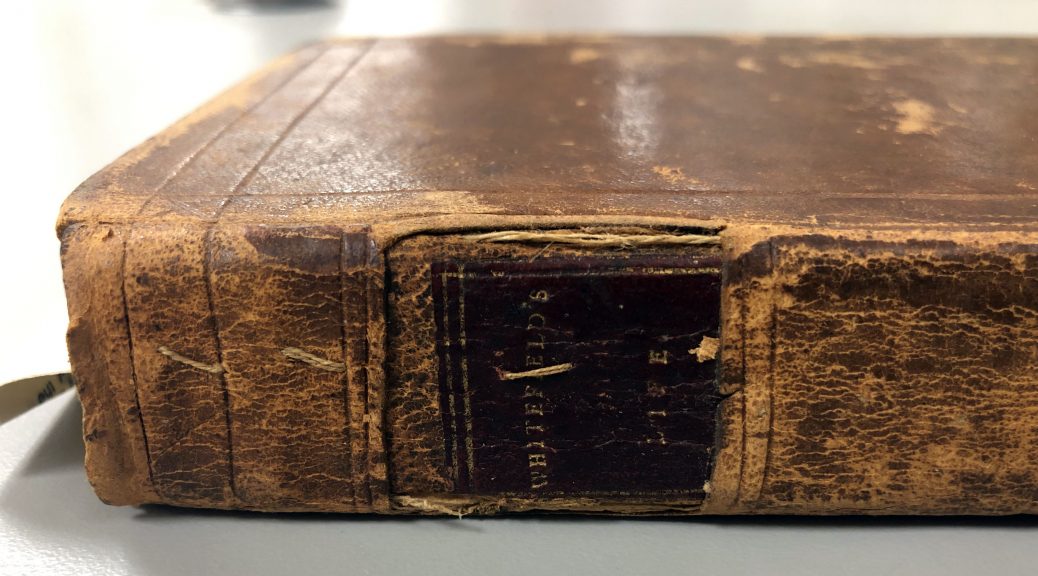
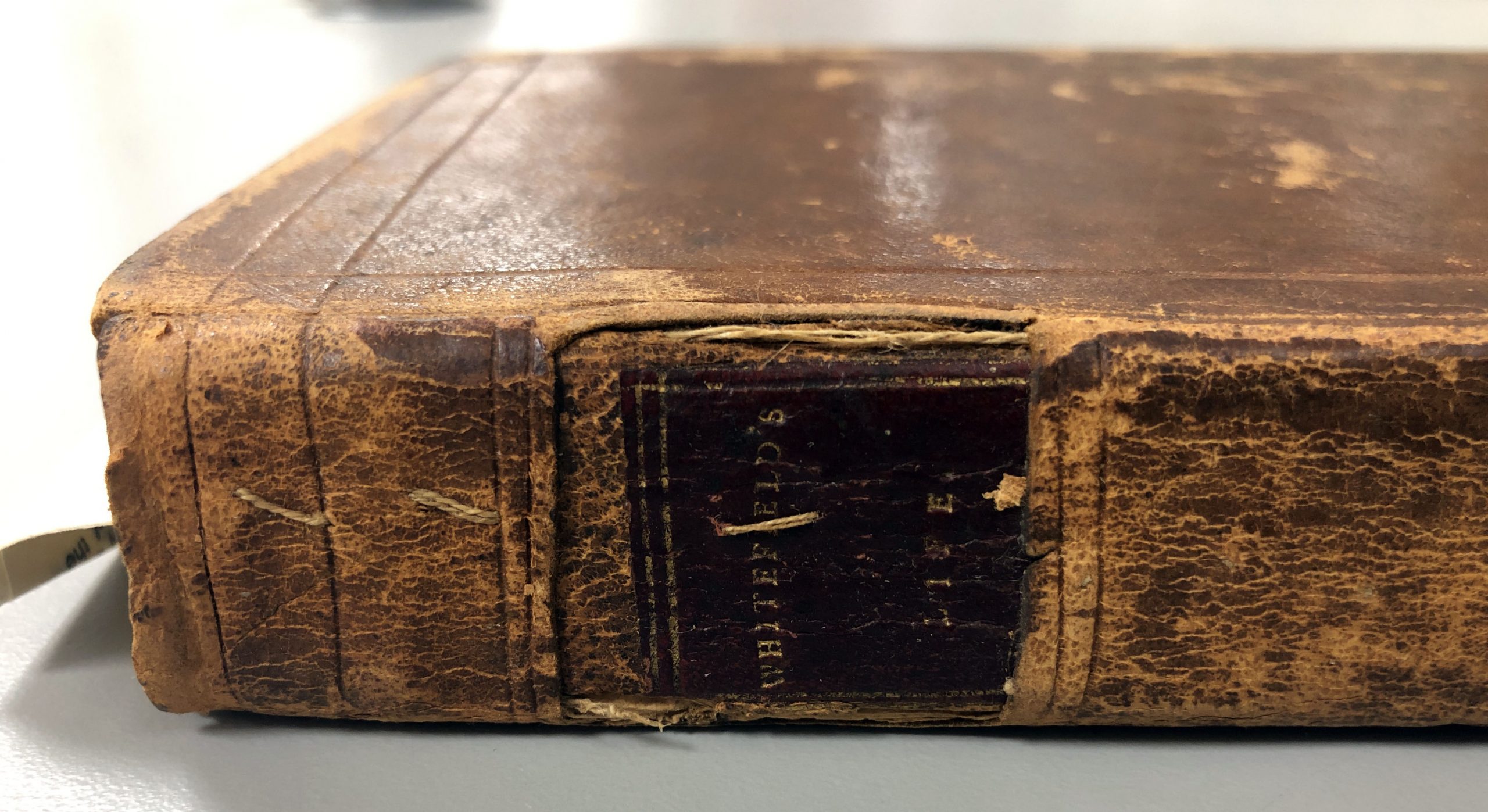
When this copy of Memoirs of the life of the Reverend George Whitefield (1798) came into the lab the other day, we knew pretty quickly that something was off.

The label on the spine looked like it was sitting inside a little window of leather, and not even very well lined up. Looking closer, you could also see some stitching running vertically along the center of the spine.

We often see examples of home-made repairs for bindings, but I had never seen one like this before. It appears that someone has just swapped bindings from another book!

I’m guessing that the original boards had come off of the book and, rather than having it rebacked, a previous owner had just located a similarly sized-volume as a donor. On the interior of the boards, you can see evidence of cord from the previous board attachment. After removing the binding from it’s original textblock, a little window was cut in one of the spine panels to allow the correct titling to mostly show through, and then the new textblock was glued (and sewn) in at the spine. It’s a pretty clever solution, but it must have been difficult to find a donor binding of similar enough size to work. I always enjoy finding evidence of historical repairs and seeing the creative approaches that people have taken to keep their books in usable condition.

Edit: Today I learned that there is a term that could be applied to this item: remboîtage.  It is interesting to compare the definitions from Etherington & Roberts and Ligatus (derived from Carter’s ABC for Book Collectors). Most folks would not think of this as an example of a recase, because that term implies putting the textblock back into it’s own binding. Carter’s definition of remboîtage goes to great lengths to describe it as putting a textblock in a more elegant, more desirable, or superior binding. This rather crudely executed swap may be a bit of a stretch for Carter, but one could argue that a functioning binding is more desirable than a broken one.

When the Paper is too Nice

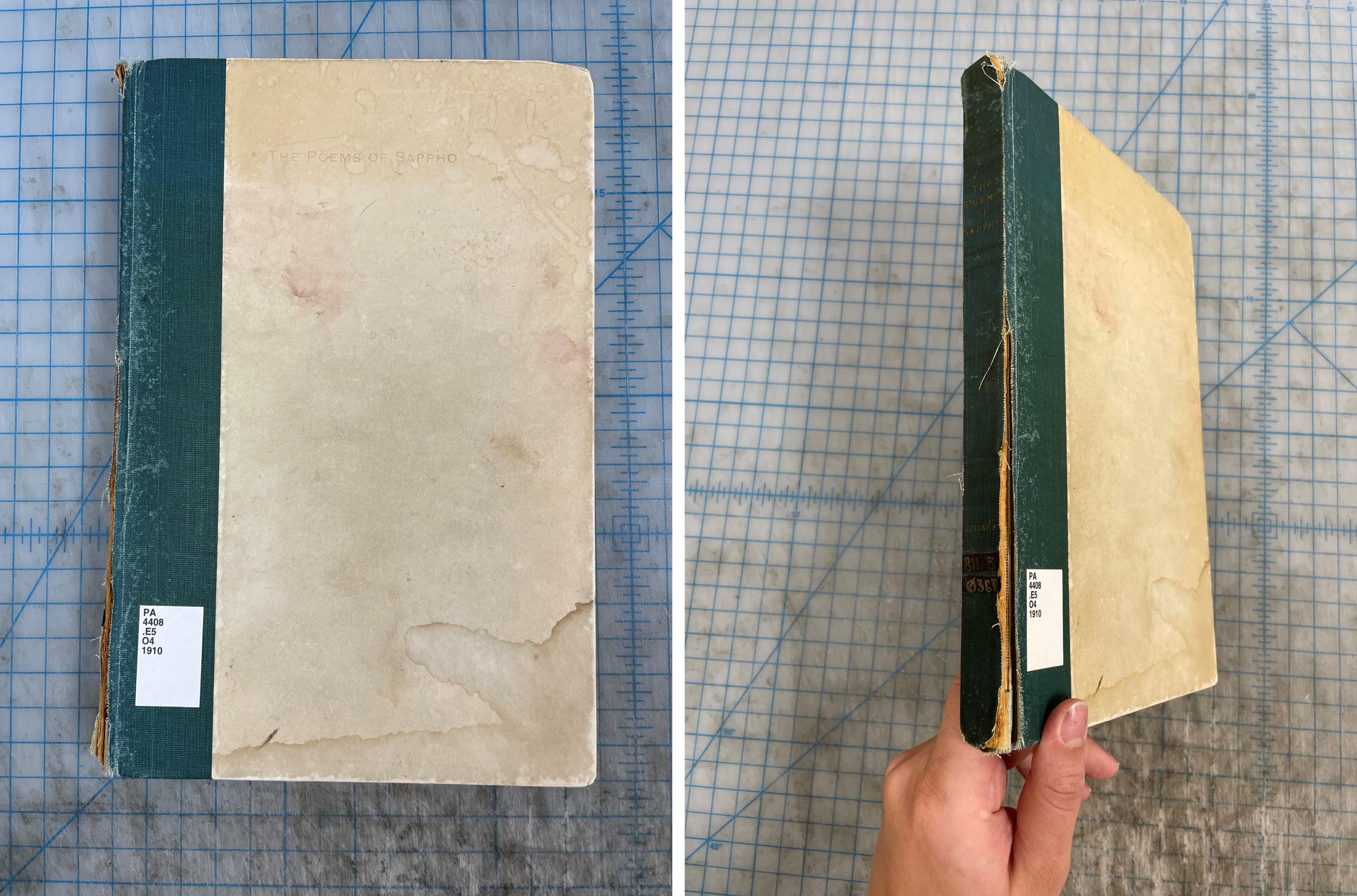
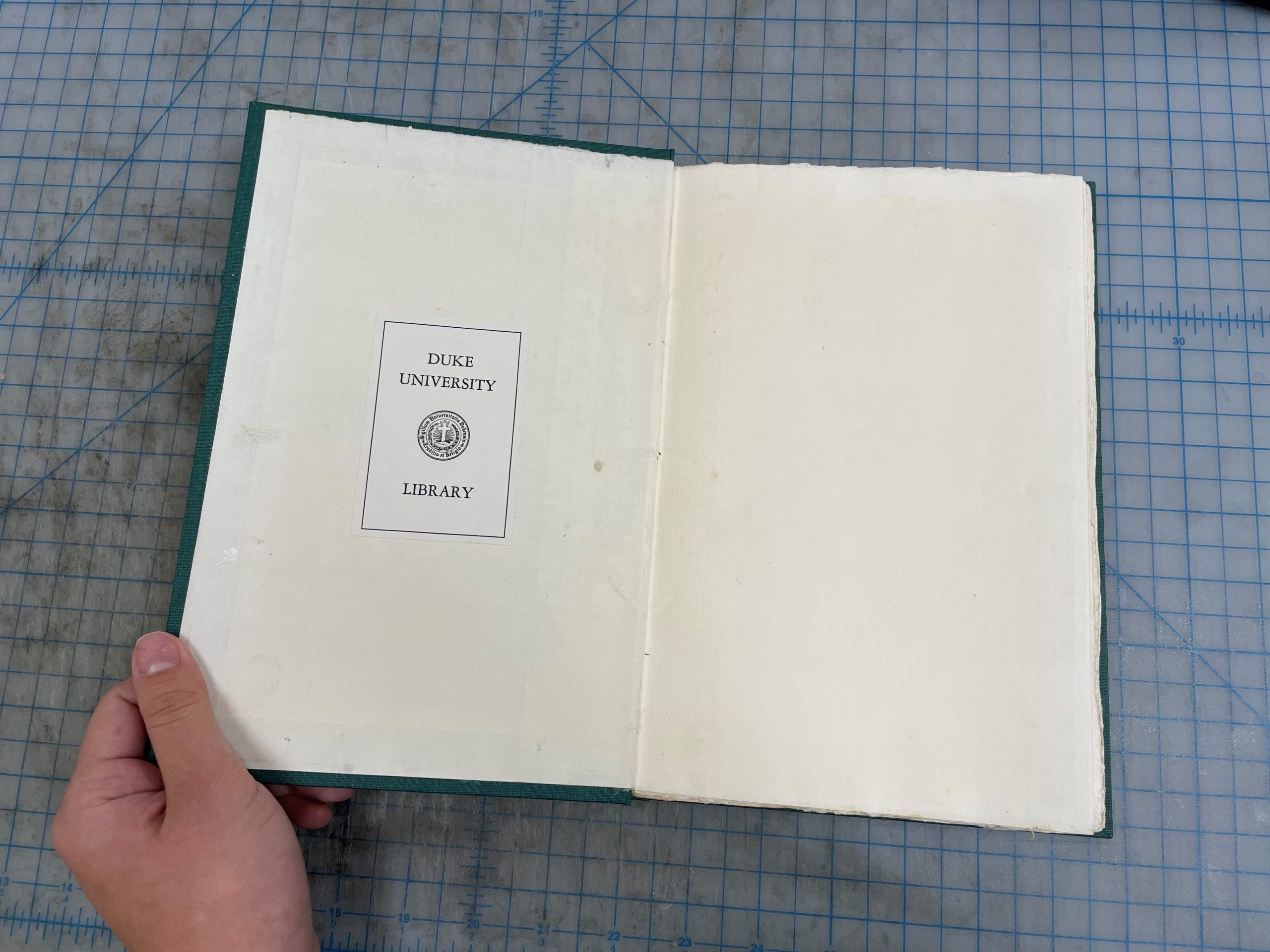
There’s something special about a book made with handmade paper. You don’t come across it too often in general collections, but, when you do, you want to take extra good care of it. This week a beautiful example of this arrived at the lab in the form of The Poems of Sappho, printed in 1910. As you can see in the images below, the book was in rather rough shape. I could tell it would be the perfect candidate for a new case. This means I would need to make new covers for this book.

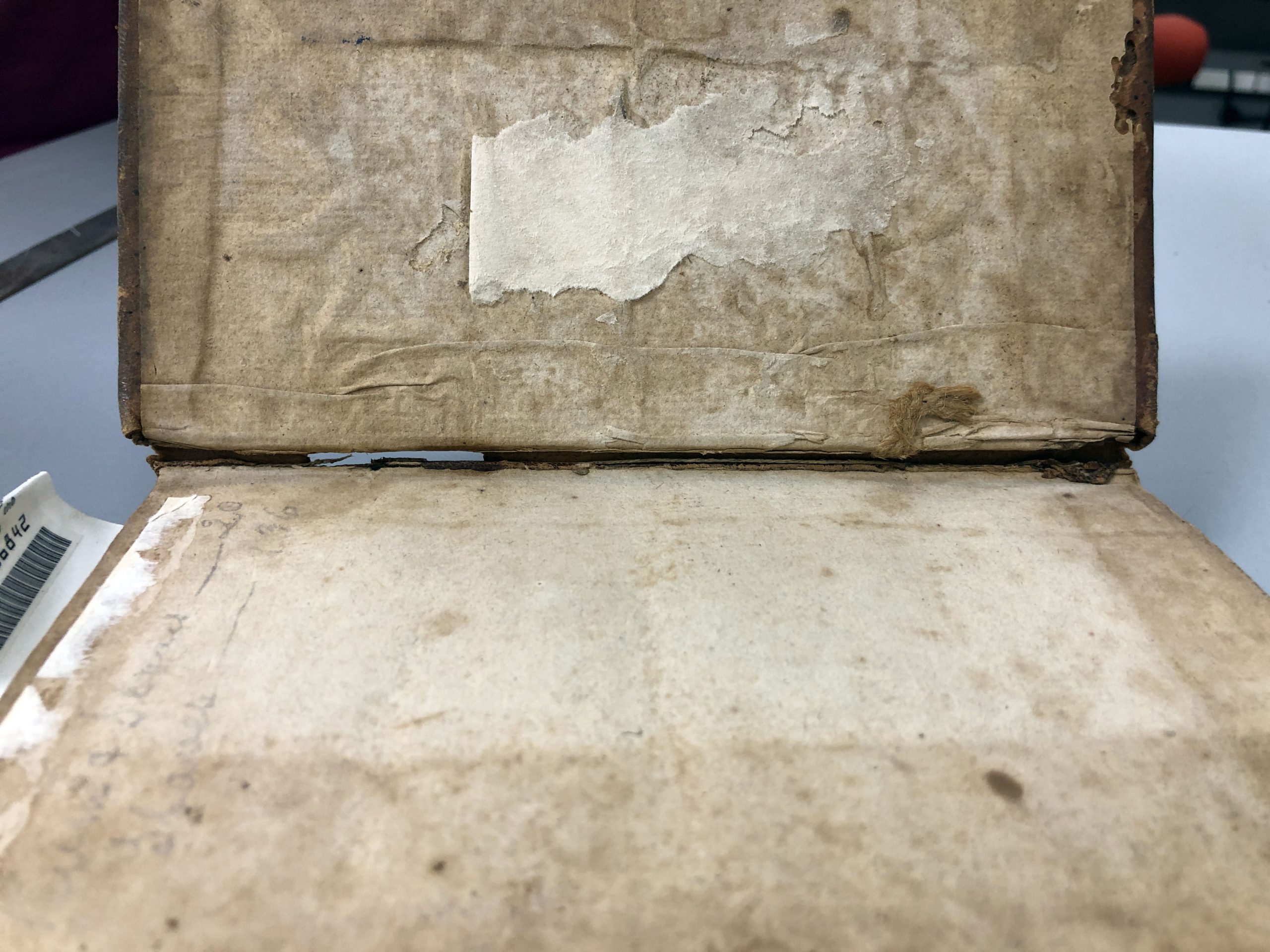
Upon opening it, I immediately noticed the lovely deckled edges of the paper and what appeared to be a watermark.

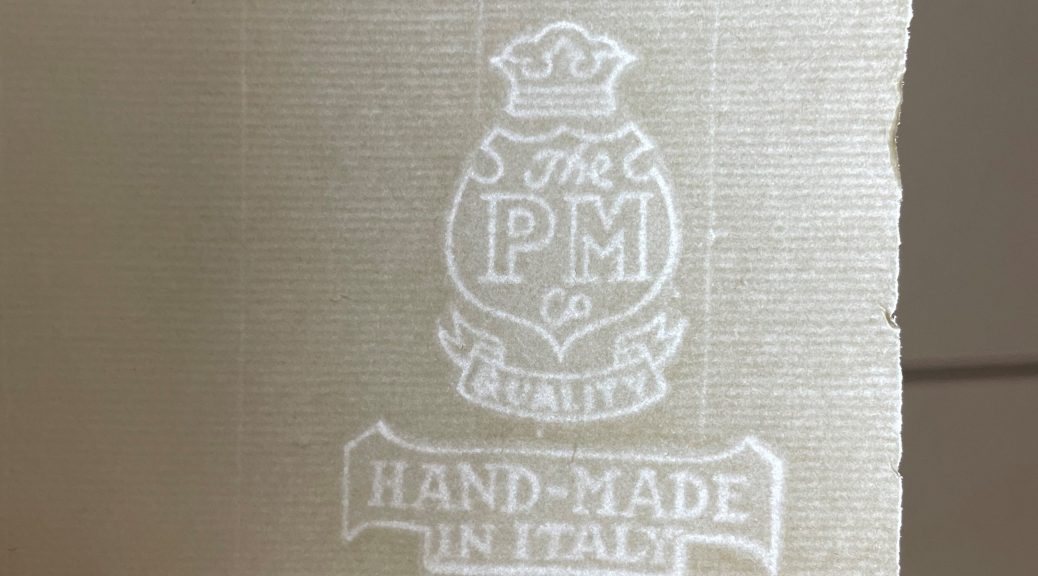
A watermark is an image or design that is impressed into the paper during the papermaking process. This is easier to see when you hold the paper up to a light like so.

The main purpose of a watermark is to identify the papermaker; however, this watermark goes even further and tells us where the paper was made as well. In this case, the paper was handmade in Italy by a group called “The PM co”, which could possibly refer to The Paper Mills Company.

Saving this paper and the vital information on it is going to be my priority as I treat this book. This should be relatively straightforward, but what happens when two of these pages have been glued to the covers?

Preserving the Paper

When the book was bound, the pastedowns were made with the first and last sheet of the textblock of the book rather than using a separate decorative paper.

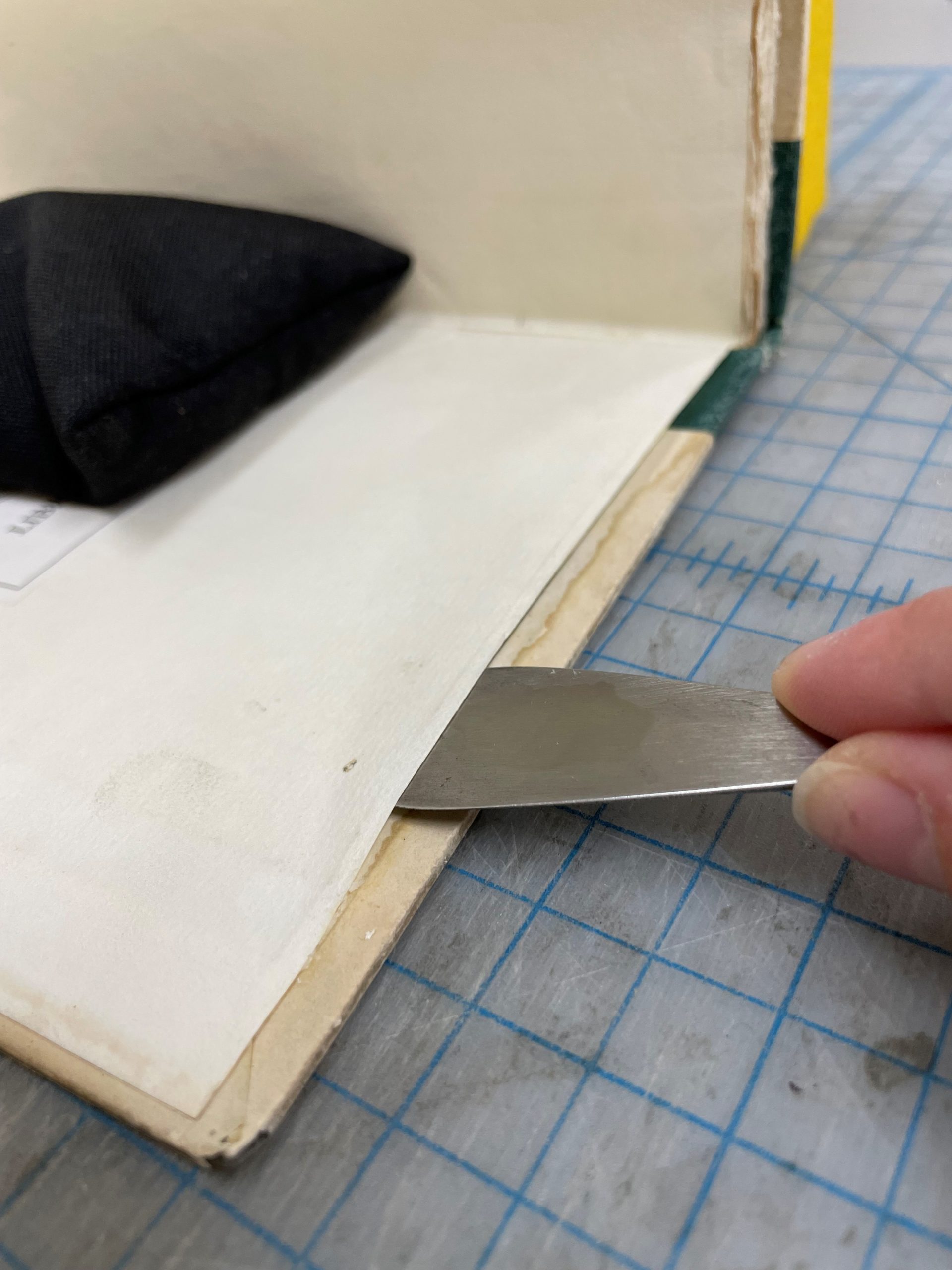
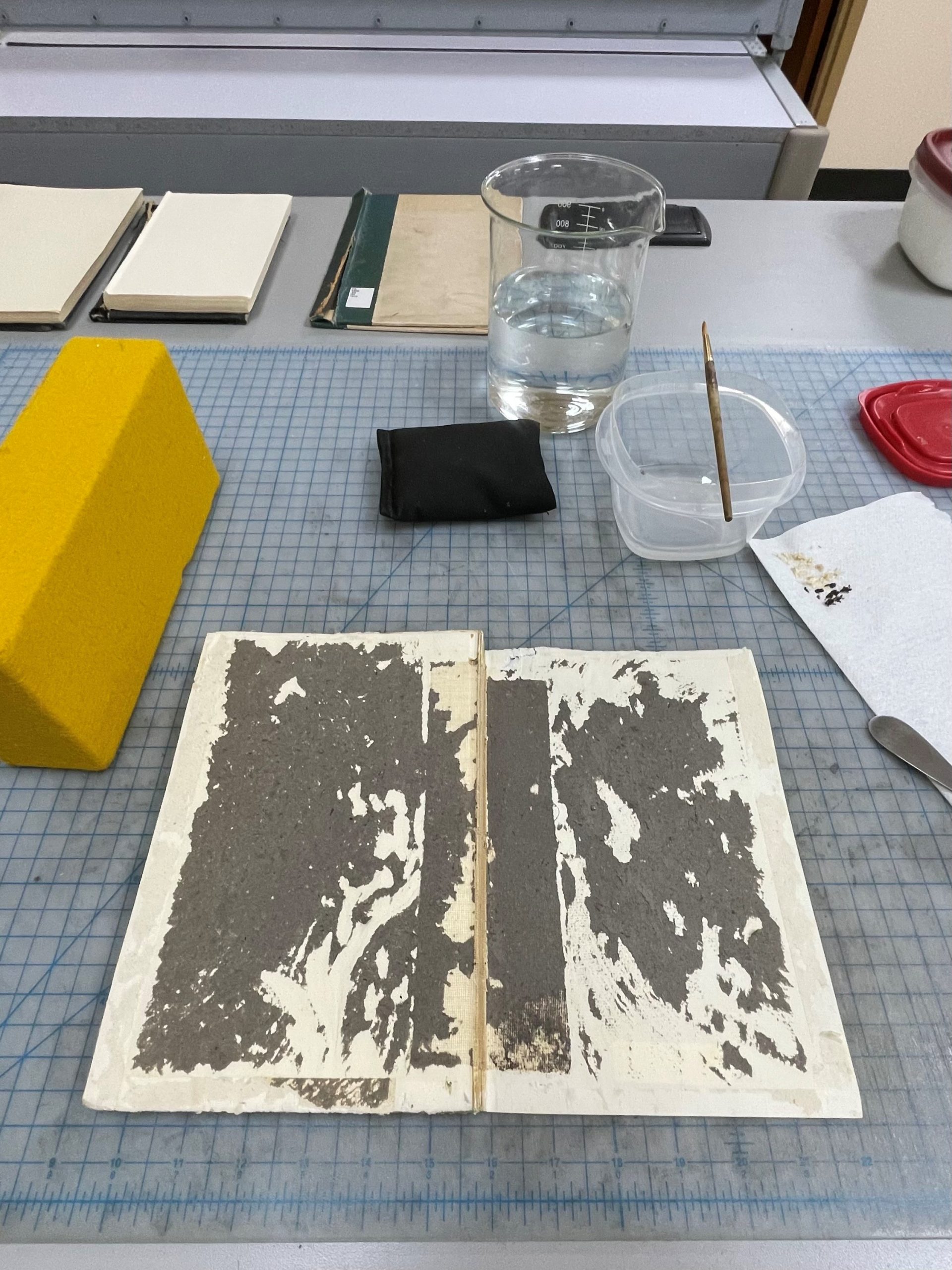
In order to make a new case for a book, I have to remove the old covers.  I must lift the original handmade paper from the front and back boards to retain it. This can be done by taking an exceptionally thin metal spatula and running it back and forth under the paper to loosen and separate the paper from the covers.

This can be a tricky and time-consuming process if the paper is old and brittle, or if the paper is well adhered to the covers and doesn’t want to come off. Luckily, both pages cooperated with me and I managed to remove the covers without damaging the paper.

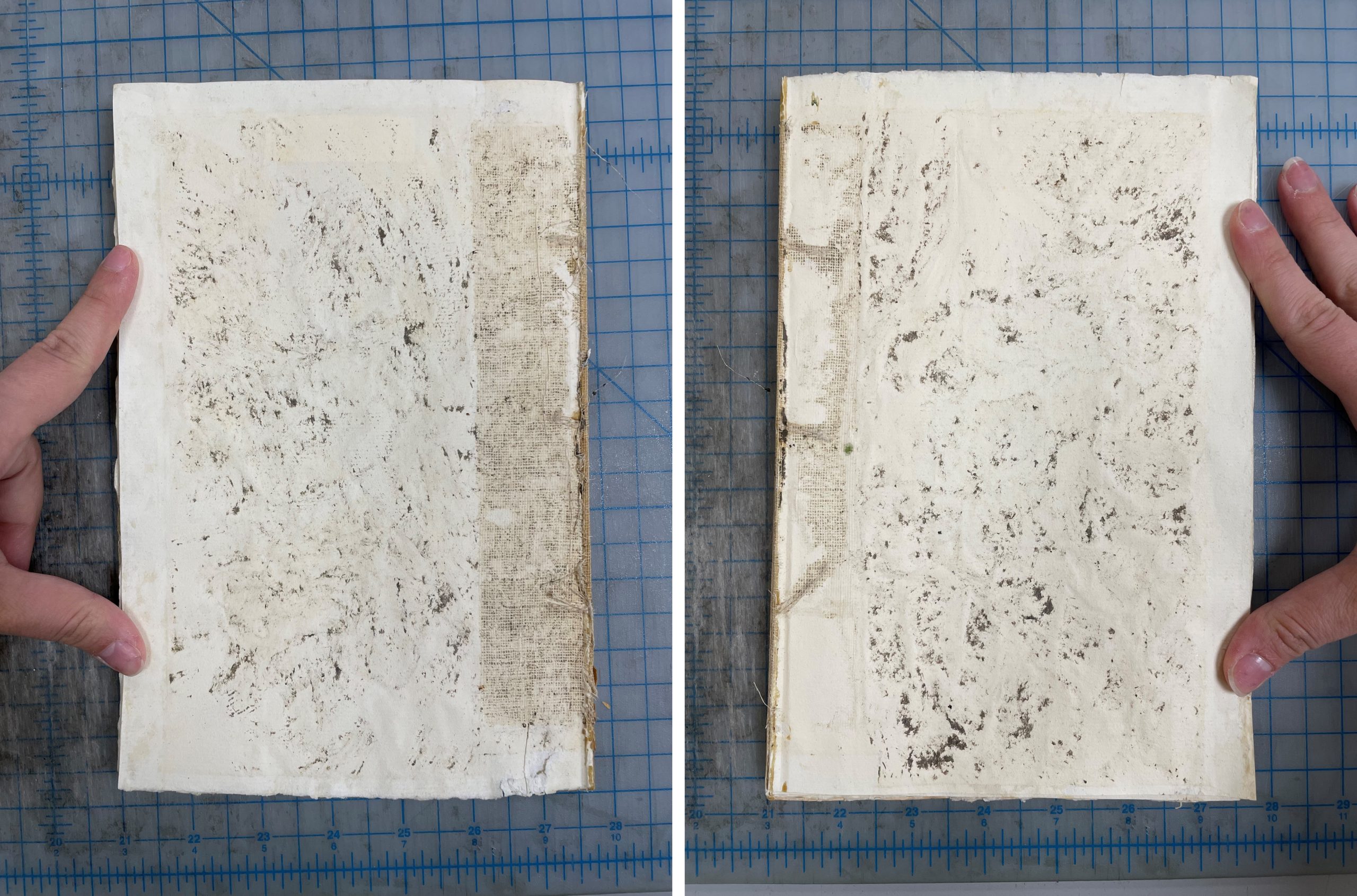
A lot of the original board material had to be lifted along with the paper, so the next step is to remove that material from the pages. Leaving it on would make it nearly impossible to neatly reattach the pastedowns when I made a new case for this book. So, I removed as much as I could mechanically before moving onto the rest of the treatment.

With the brand-new case complete, the book and it’s handmade paper are better protected and ready to be handled.

What’s In The Lab: Thursday Edition

Things have been quiet this week as we await the upcoming move-in day. The camps have ended, there are fewer tours happening on the quad. It’s been nice to just get some work done.
We like big books and we cannot lie. Especially History of Medicine items. Tabulae arteriarum corporis humani (1822)
Charming Chinese pamphlet. 陈梦海写 ; 韩敏画 (1966)
removing glue
Removing glue from spines is a great way to spend your afternoon.
book truck with a lot of boxes
Books with enclosures, ready to go to the Library Service Center.

Duke University Libraries Preservation