Welcome to the second installment of the photo diary of the Rubenstein Library’s move! We’re going to start off by showing you our new secure stacks, the future home of many of our archival collections and rare printed materials for the duration of the renovation.
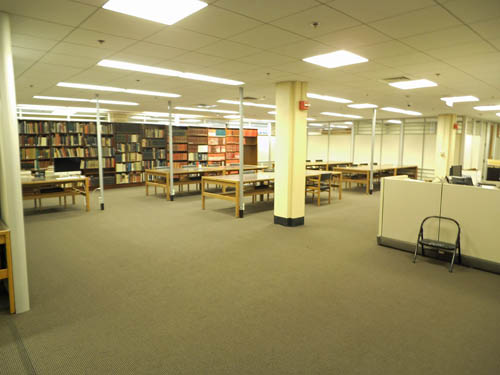
Our new stacks!
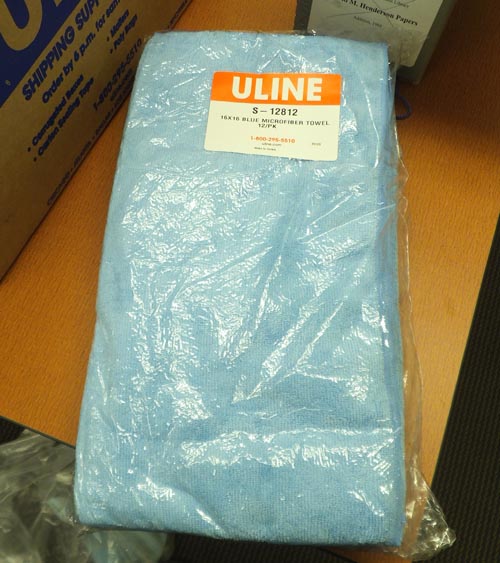
Nice and empty, right? But they were a teensy bit dusty . . . So we organized a Rubenstein staff flash dusting mob yesterday afternoon!
Our dusting cloths. We apologize for their color.The dusting flash mob in action.
And now our new stacks are clean and ready to be loaded with collections materials. Just in time, too, because the collections move starts on Monday!
Dear readers, did you enjoy your winter break? We did, too—but we were busy!
Since December 17th, we’ve been packing our offices, our reading room, our common workspaces—basically, everything that’s not a rare book or archival collection—and moved to our new digs on the 3rd floor of Perkins Library. This is where you’ll come to do research (and visit us!) during the renovation, which is currently slated for completion in the summer of 2015.
Now that we’re all settled into our new space, we’ll be spending the rest of January and the first half of February moving our collections from their current stacks locations to our 3rd floor Perkins stacks or to the Library Service Center. (Yes, you’ll still be able to visit and do research during this collections move. Visit our “FAQ for Researchers” to learn more about researching at the Rubenstein Library during the move period.)
Since we need all hands on deck to ensure that our collections are moved safely and securely, we’re going to be temporarily turning the blog into a photo diary of the move process. Check back a few times each week to get a behind-the-scenes glimpse at a logistical process that’s been a couple of years in the making! (And the blog will return to its normal self on February 18th.)
And now, we present “What We Did Over Our Winter Vacation” by the Rubenstein Staff:
Our paper finding aids are packed and ready to go! What’s a finding aid?Doughnuts increase packing efficiency. Especially when they’re homemade salted caramel chocolate doughnuts. We were surprised to find even one left when we arrived to take this photo.3rd floor Perkins Reading Room, before the move.3rd floor Perkins Reading Room, after the move. Looks like home!
As the German Judaica Intern for the Rubenstein Rare Book and Manuscript Library, I have had the opportunity to work with a number of rare and interesting materials. I am currently processing a collection of German Judaica books dating from the late eighteenth century through the twentieth century. These materials represent a range of topics, including prayer books, histories of the Jewish people, commentary in German on Jewish religious texts, Zionism, and works on the “Jewish question.” My job is to catalog these books so that they can be made available to the public. Over the course of this project several books have piqued my interest, and I would like to share them with you.
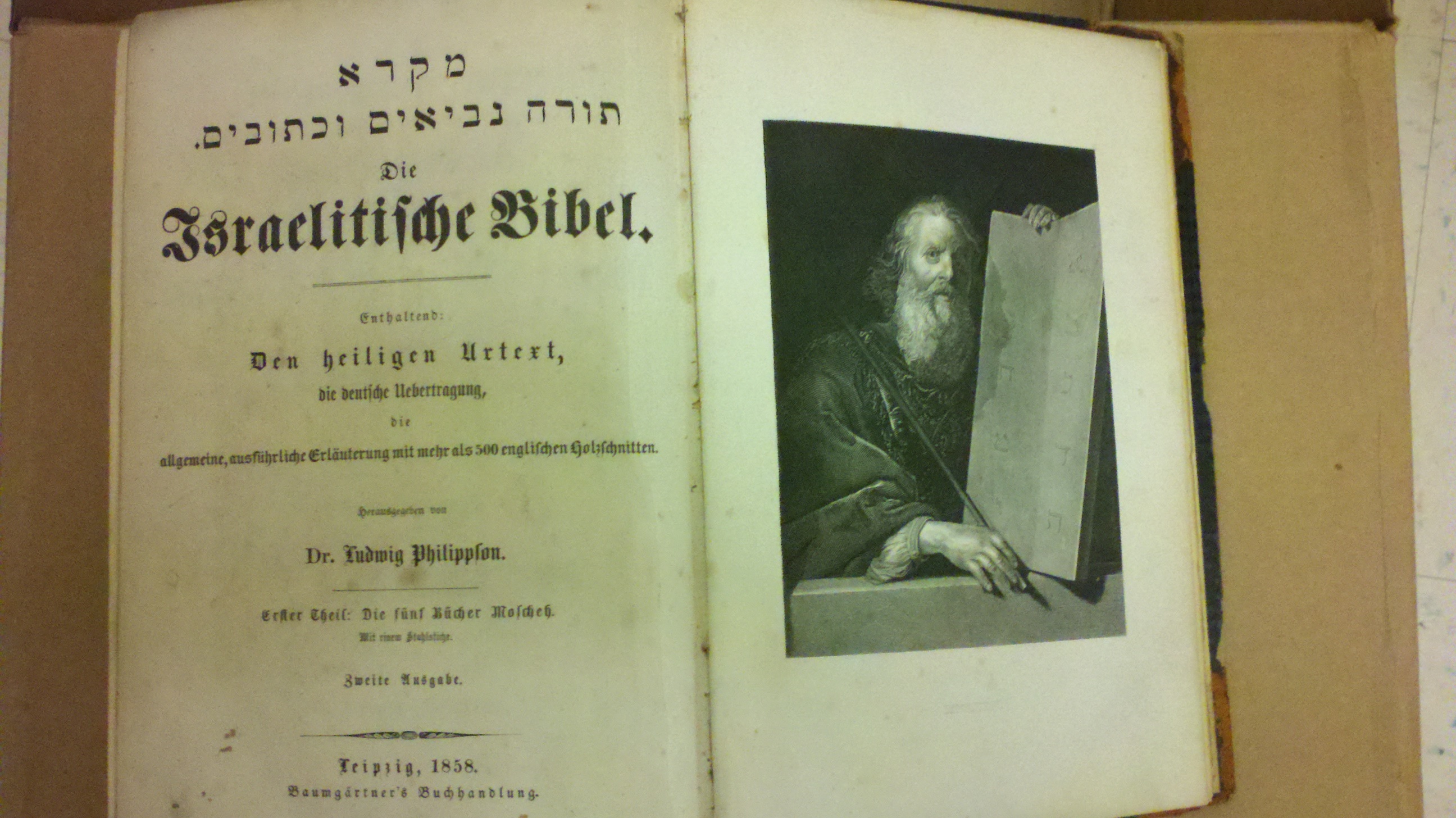
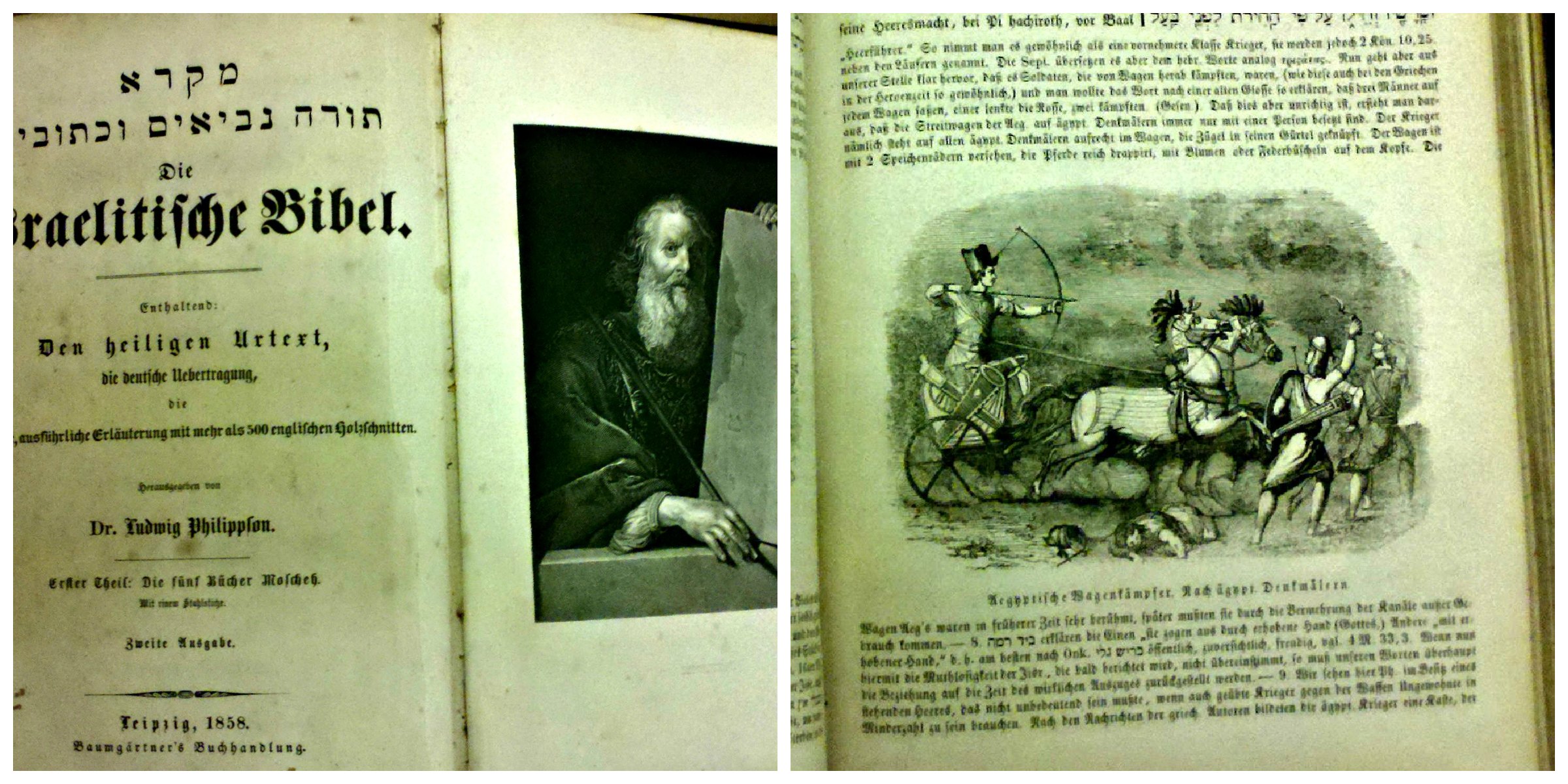
The first are two pictures from the book Die Israelitische Bibel, a mid-nineteenth century illustrated Hebrew and German Bible with annotations by Ludwig Philippson.
Die Israelitische Bibel
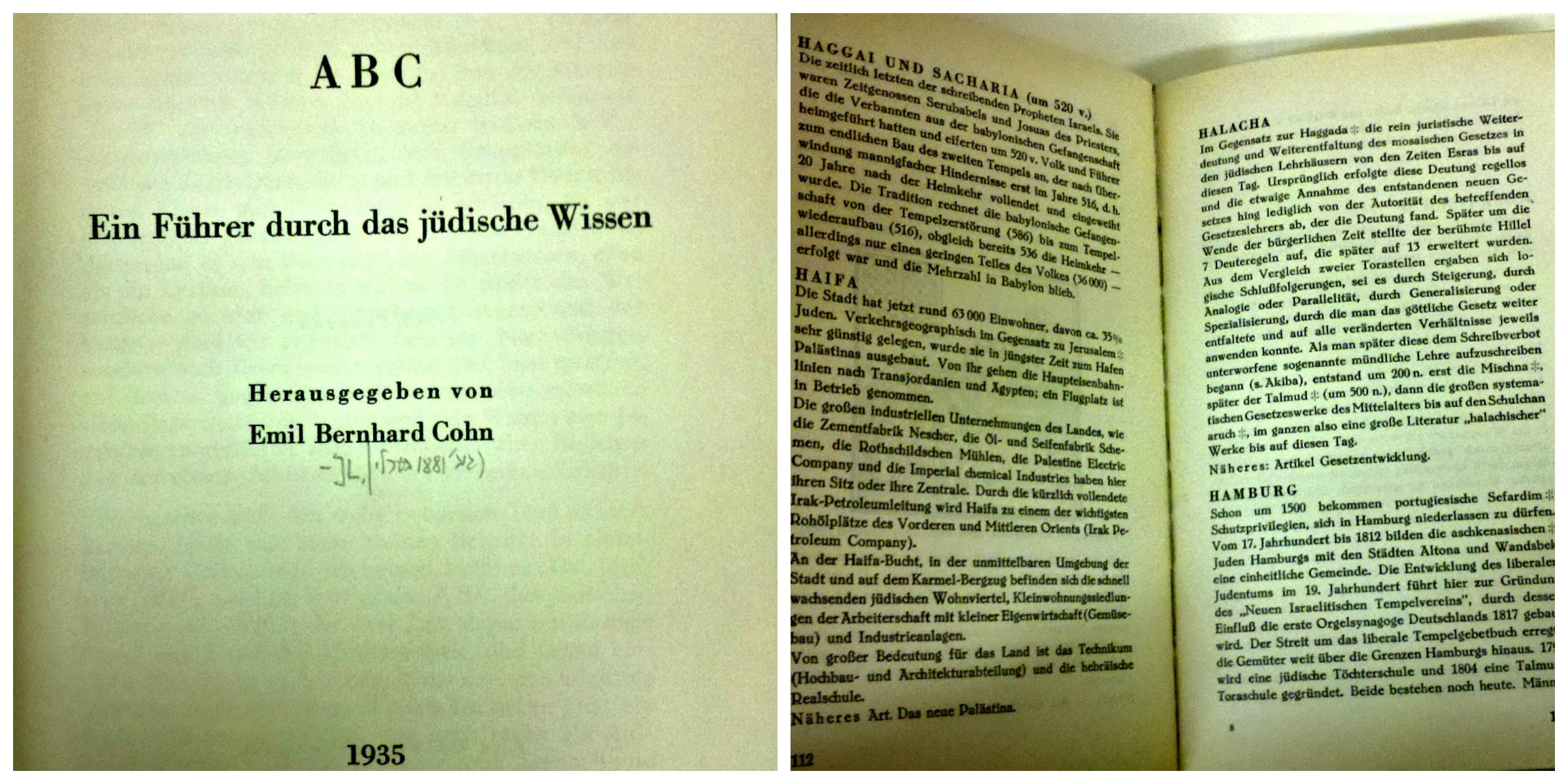
The second book is titled Das Judische ABC. It is a dictionary of sorts about key figures and events in Jewish history, covering topics such ranging from the patriarch Abraham to authors such as Martin Buber.
Das Judische ABC, with entries from the letter “H.”
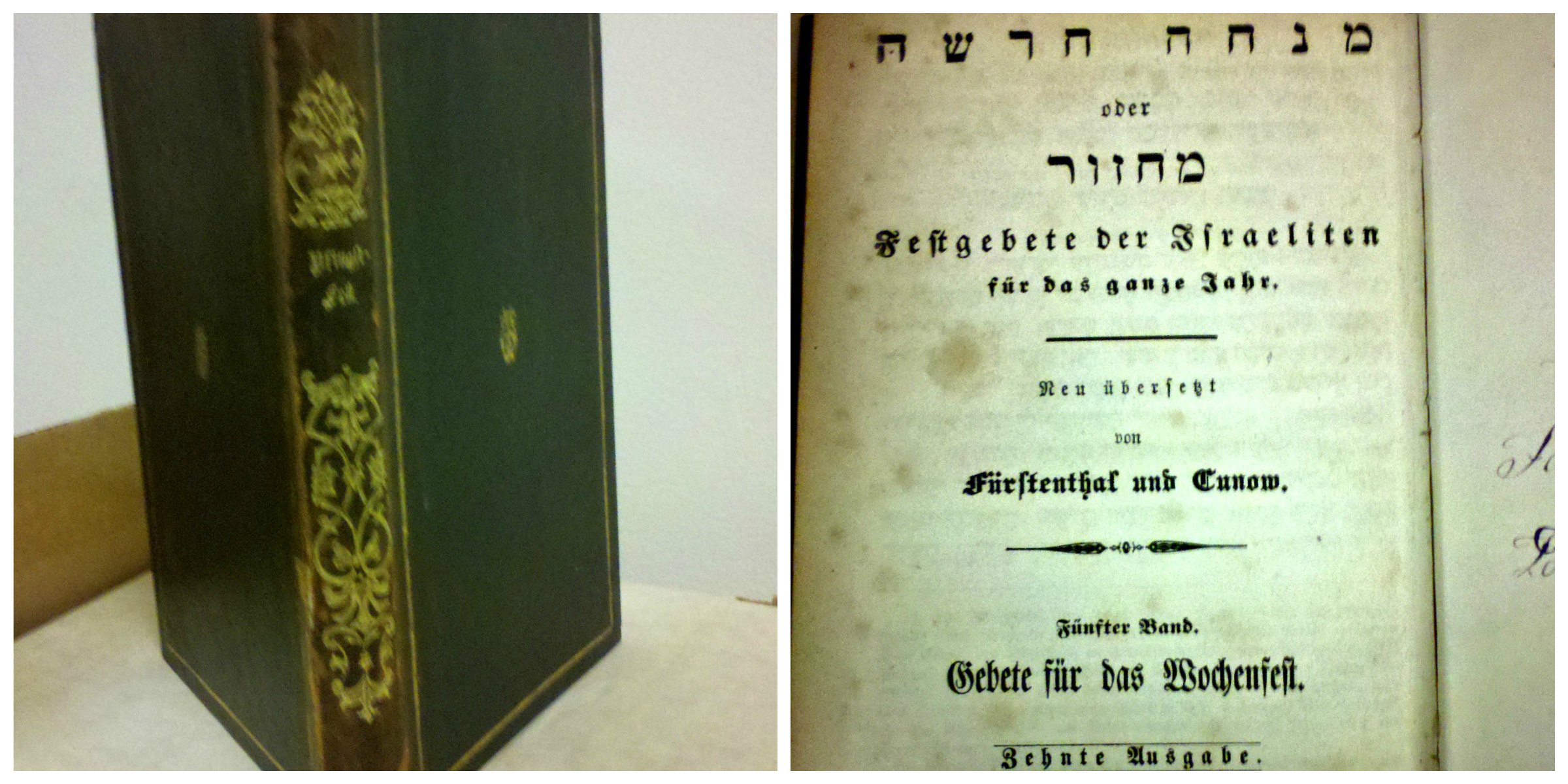
The final book I would like to highlight is a prayerbook. A number of these types of books have been cataloged, including holiday prayer books and daily prayer books. Many of them are in Hebrew, and have elegant covers and pages lined in gold leaf.
Prayerbook from the collection.
The collection as a whole is extensive and an excellent addition to the Duke Library. My hope is that through cataloging these materials, more people can have access and utilize them in their research.
Post contributed by Crystal Reinhardt, intern for the German Judaica Project in Rubenstein Technical Services.
Reminder: The Rubenstein Library is closed until Jan. 7!
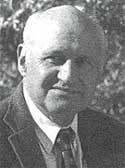
Martin Shubik, from the Yale Dept. of Economics webpage.
As research fellows at Duke’s Center for the History of Political Economy, this summer we processed the papers of Martin Shubik, emeritus professor of mathematical institutional economics at Yale University. By arranging and describing Shubik’s life-long correspondence, his class notes from the time of his graduate training at Princeton in the late 1940s, files of professional engagements, as well as materials related to nearly all of his published works, we had the chance to get an overview of Shubik’s distinguished career as an academic and a practicing economist during an important historical period encompassing the Cold War years in the United States.
While Shubik was born in New York City in 1926, he received his early education in England. After moving to Canada, he graduated with a B.A. in mathematics and subsequently with an M.A. in political economy from the University of Toronto in 1947. Equipped with this background, Shubik arrived at Princeton University in 1949, where the archival record begins. He received a Ph.D. in economics in 1953 under the supervision of Oskar Morgenstern, one of the founding fathers of game theory. The influence of his supervisor becomes apparent in Shubik’s collection, not only through the class notes Shubik took of Morgenstern’s lectures and in the correspondence with him throughout the years, but also indirectly through Shubik’s life-long contributions to game theory and its application to economic problems. And, like Morgenstern, Shubik frequently voiced a critical attitude towards purely theoretical work.
Shubik’s collection is a treasure-house of primary resources on economics, especially for researchers interested in the early years of game theory. Shubik was part of an inspiring group of students during his stay at Princeton, including Harold Kuhn, John McCarthy, John Milnor, John Nash (Nobel Prize, 1994), Norman Shapiro, and Lloyd Shapley (Nobel Prize, 2012), who were pioneers in the field of game theory and would continue to shape the history of American mathematical economics during the second half of the 20th century. Innumerable drafts of Shubik’s collaborative works, often accompanied by correspondence and research notes by his co-authors, afford an inspiring set of resources evoking that historical period. The collection contains Shubik’s and Shapley’s drafts and notes on their joint works on game theory, from their early papers in the 1950s to their collaboration during the 1970s at the RAND corporation. The collection also allows for personal glimpses into Shubik’s life. For example, Shubik’s life-long friendship and professional collaboration with Shapley is reflected in the extensive correspondence throughout their academic careers. Similarly, Shubik’s exchanges with Nash (sometimes through humorous cards and joke letters) offer a unique source for historians interested in the early years of game theory and the history of modern economics.
While Shubik made fundamental contributions to mathematical economics, the collection shows that his interests were not confined to academia. Very early in his career, he took on consultancy positions for companies including General Electric and the Watson Research Lab of IBM. He also took on research and teaching responsibilities outside of the U.S., participating in projects such as the Cowles Commission’s research on simulation modeling in Latin America. The collection also contains a large amount of correspondence, trip reports, memoranda, and conference invitations that reflect Shubik’s professional development as an expert in the strategic analysis of warfare. More generally, the material reflects not only the increasing use of mathematical methods in American economics during the Postwar period, but also affords insights into the actual application of those new theoretical tools to specific problems that economists were concerned with during that time, and the institutional context within which those undertakings were embedded.
The papers of Martin Shubik reveal the mosaic of the career of an exceptional and multi-faceted economist during a highly charged professional and political climate, and the degree to which the field of economics is built on collaborative research. In short, it is a must for any historian interested in the origins of modern economics.
Post contributed by Catherine Herfeld and Danilo Silva, research fellows at Duke’s Center for the History of Political Economy.
Reminder: The Rubenstein Library is closed until Jan. 7!
After all the talk, it’s time to walk the walk: our library is now closed to researchers until January 7, 2013, as we relocate staff offices and begin shifting materials to our new space on the 3rd floor of Perkins Library. Check out the Renovation webpage for more information, and stay tuned for photos of our progress!
Conservation is nearing the end of a project that we have been working on since 2009, the broadside collection. In addition to broadsides, this collection includes thousands of posters, handbills, maps, diplomas, and a variety of paper ephemera. We in the conservation department have been coordinating with the Digital Production Center (DPC) to enable the safe handling of these materials during digitization.
Many of the broadsides come to us encapsulated in Mylar that has been sealed with sticky tape. The items must be removed from the encapsulation prior to digitization, and this step also gives us the chance to repair damage that might grow worse with handling during digitization. Many of the broadsides are extremely brittle, and so there are often tears to mend.
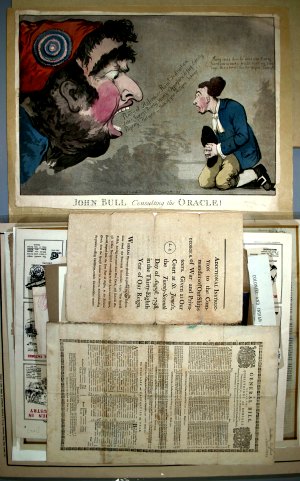
The items are organized in folders by state or country, and it is always a surprise to open a folder and see what’s inside. So many of the items are historically fascinating and visually beautiful! To the right is a folder from Britain containing government notices and a caricature print from 1798.
The British folder also contained some much later posters from World War II (below).
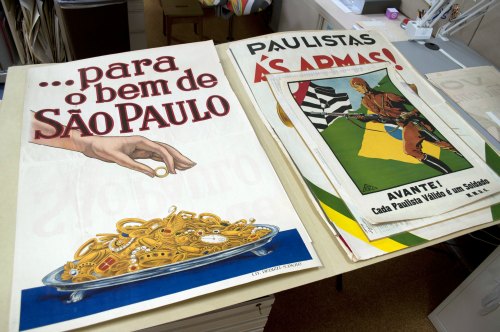
This folder of items from Brazil contained broadsides from the Constitutionalist Revolution of 1932.
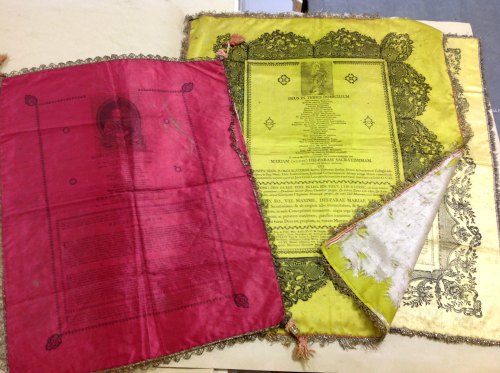
Also included in this batch of broadsides were highly elaborate diplomas, some on silk with embroidery and some with wax seals and ribbons.
It’s been fun treating such beautiful and fascinating items. Take a closer look at them all in the newly digitized Broadsides and Ephemera Collection!
To see more about this project (including a video), check out our posts at Preservation Underground:
Hanukkah card sent to Marshall Meyer by Débora Benchoam, November 1981. From the Marshall T. Meyer Papers.
The Hanukkah celebrations of 1981 were especially meaningful for Débora Benchoam and Rabbi Marshall T. Meyer. Benchoam had just been released from four years of brutal imprisonment during Argentina’s “Dirty War,” thanks in large part to the efforts of Meyer. She sent this card to Meyer on 26 November 1981. The card and the letter it contains have been digitized and are available for viewing in Duke’s Digital Collections.
Thanks to all of the students who came to the Rare Book Room for our special study hall yesterday! We hope the golden light and monumental tomes inspired you. And don’t forget to grab a cookie or two at tonight’s study break in the Perkins lobby!
Photo by Kate Collins, Research Services Librarian.
At the same time, we are working on the finishing touches of the Elna Spaulding Papers, the largest collection that Duke is contributing to the CCC Project. Look for more updates on these collections in upcoming blog posts on The Devil’s Tale.
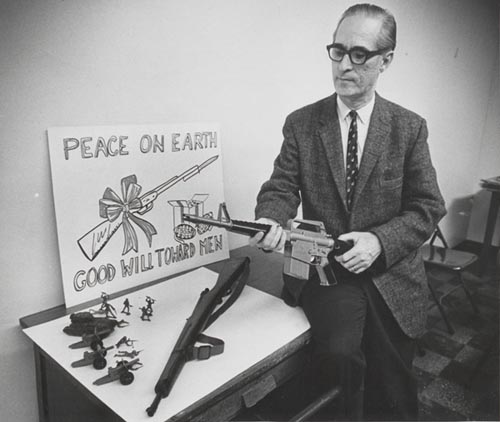
For this month, we wanted to highlight a photograph that conveys the holiday spirit. We recognize that it is the season for peace on Earth, good will toward all, and (toy) firearms.
Photograph taken by Jim Thornton for the Durham Herald-Sun, undated. Women-in-Action for the Prevention of Violence and Its Causes Records, Box 11, Folder 1: wiams11001036
If we were giving out year-end awards for the CCC Project, this photograph has to win the “Most Ironic” trophy. Normally, at this point, we would provide context that would explain exactly what this spokesman is trying to convey. Unfortunately, all that we know about this photograph is that it appeared in the Durham Herald-Sun and the photographer was Jim Thornton. The fact that this photograph appears in the Women-in-Action records indicates that the event was some sort of anti-violence demonstration that perhaps encouraged parents to avoid purchasing violent toys for Christmas. However, this explanation is at best an educated hypothesis.
No matter the explanation, this photograph and the rest of the CCC materials are quite thought-provoking. And our final thought for this update: Happy Holidays from the CCC Staff!
To learn more about the CCC Project, please visit CCC on Facebook.
The grant-funded CCC Project is designed to digitize selected manuscripts and photographs relating to the long civil rights movement. For more about Rubenstein Library materials being digitized through the CCC Project, check out previous progress updates posted here at The Devil’s Tale!
Post contributed by Josh Hager, CCC Graduate Assistant.
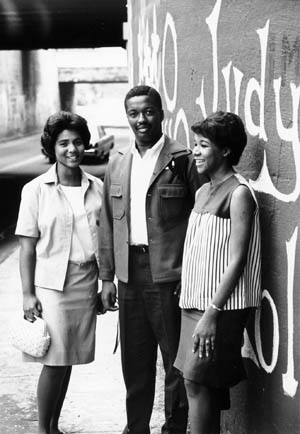
Wilhelmina Reuben-Cooke, Nathaniel White, Jr., and Mary Mitchell Harris, the first African-American undergraduates to receive degrees from Duke University. From the University Archives Photograph Collection.
Fifty years ago, Duke University first admitted African-American students into its undergraduate classes. Drawing upon the collections of the Duke University Archives, “The Road to Desegregation at Duke” uses historic photographs, correspondence, flyers, newspapers, and more to tell the story of how Duke became a more diverse university.
The exhibit examines the contributions of African Americans at Duke prior to integration, the process of desegregation at the University, and the ways in which black students have shaped Duke since 1963.
Part of a larger, campus-wide commemoration of this milestone anniversary, “The Road to Desegregation” is a thought-provoking look at why Duke changed, and what it meant to become a truly integrated university.
If you’re not able to visit the Duke University Libraries to see the exhibit, please have a look at the online exhibit!
Post contributed by exhibit curators Valerie Gillispie, University Archivist, and Maureen McCormick, Isobel Craven Drill Intern.
Dispatches from the David M. Rubenstein Rare Book and Manuscript Library at Duke University