All posts by Amy McDonald

The African Americans: Rubenstein Recap #2

Each Tuesday, PBS is showing the next installment of a six-part series, The African Americans: Many Rivers to Cross. Written and narrated by Dr. Henry Louis Gates, Jr., the documentary traces African American history from the shores of West Africa to the election of Barack Obama. Join us each week as we feature documents from the John Hope Franklin Research Center that resonate with the previous week’s episode.

Last Tuesday’s episode  focused on the slavery at its height in the American South. Episode 2: The Age of Slavery (1800 – 1860) began at the end of the Revolutionary War, a time when slavery was still legal in all thirteen states. While the demands of enslaved African Americans for freedom and mounting moral appeals helped end human bondage in the North, the exploding international demand for cotton only deepened the South’s reliance on slave labor.
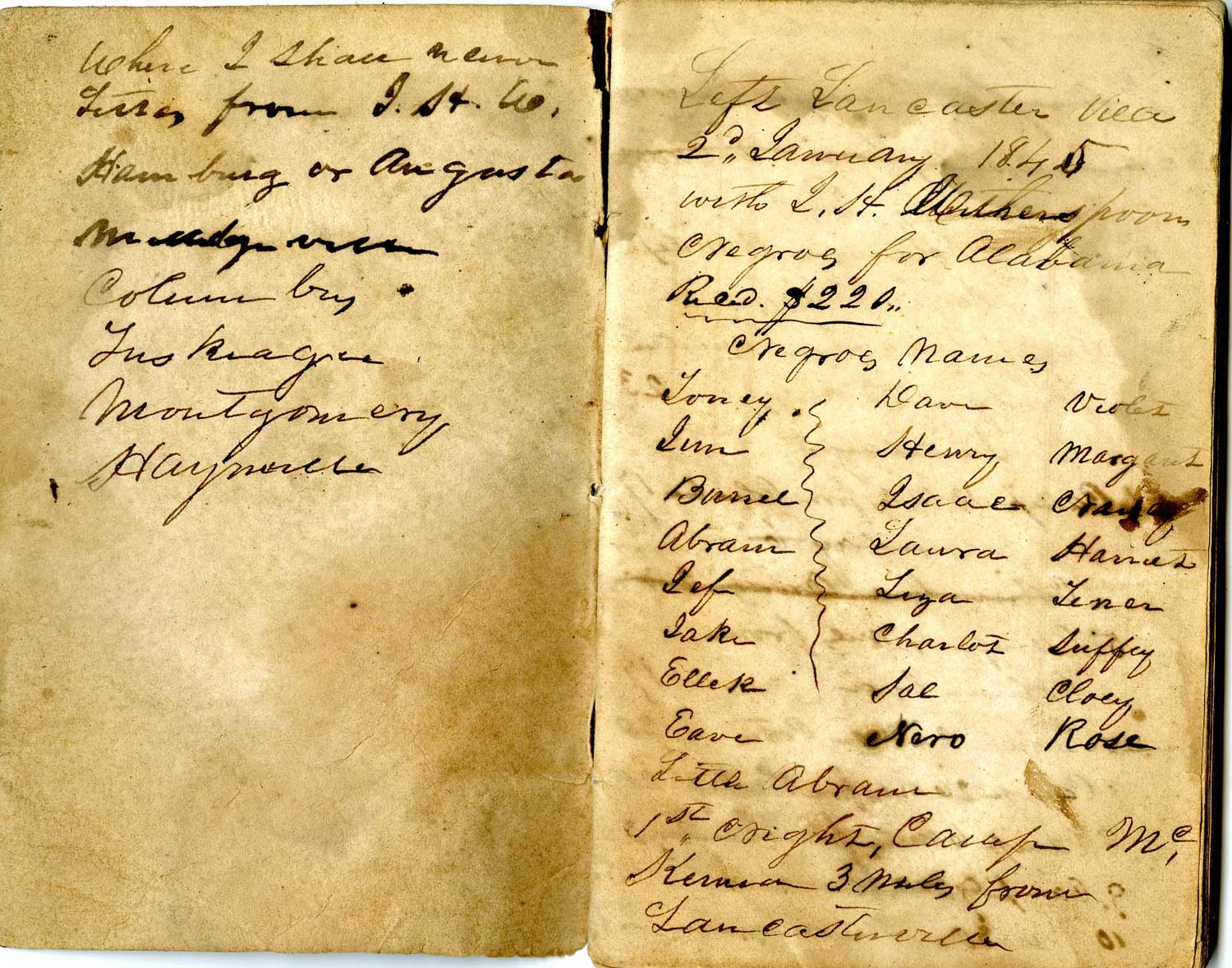
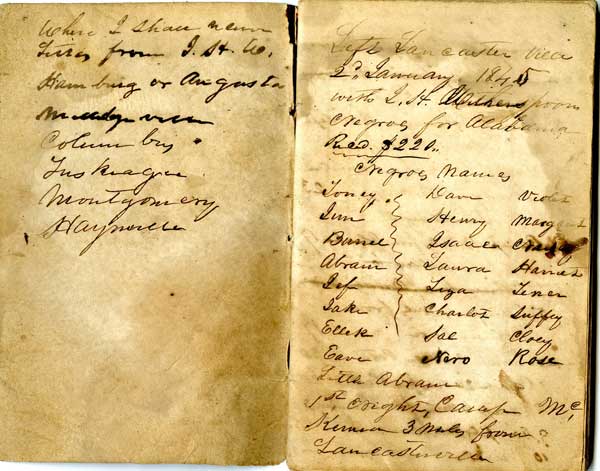
The notebook of a slave transporter who delivered twenty-five slaves from Lancaster, South Carolina to Montgomery, Alabama in 1845.
The notebook of a slave transporter who delivered twenty-five slaves from Lancaster, South Carolina to Montgomery, Alabama in 1845. (Slave transporter’s notebook, 1845). Click to enlarge.


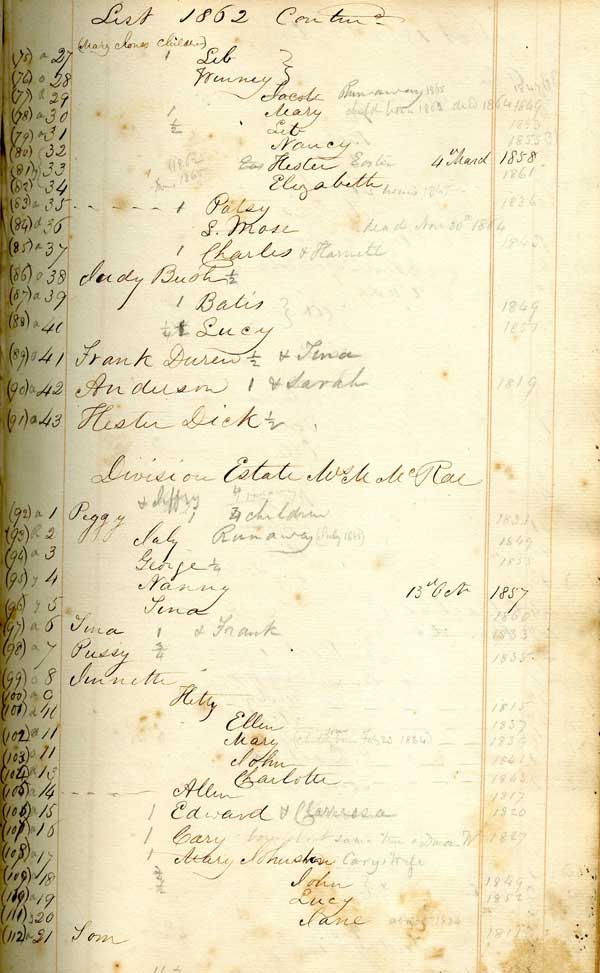
Lineage of slave families on the McRae Plantation near Camden, South Carolina in the 1800s. Jacob and July are noted as runaways.
Lineage of slave families on the McRae Plantation near Camden, South Carolina in the 1800s. Jacob and July are noted as runaways. (Plantation Memorandum Book, McRae Plantation)

Enslaved men and women ran away, revolted, and resisted this brutal system in any way they could. The luckiest made their way to freedom in Canada, but the vast majority had little chance of escaping the cotton fields.

List of black men and women emigrating from Essex County, Canada to Haiti in 1861.
List of black men and women emigrating from Essex County, Canada to Haiti in 1861. Alexander Proctor and his wife Margaret were born free in the South and migrated to Ohio before moving to Canada and finally Haiti. Also on the list is William Turner, who is noted as a fugitive. (Alexander Proctor Papers, 1837-1895).
Click to enlarge.

By the mid-19th century, abolitionists and free black citizens, like escaped slave Frederick Douglass, had launched a passionate battle to end slavery in the United States.
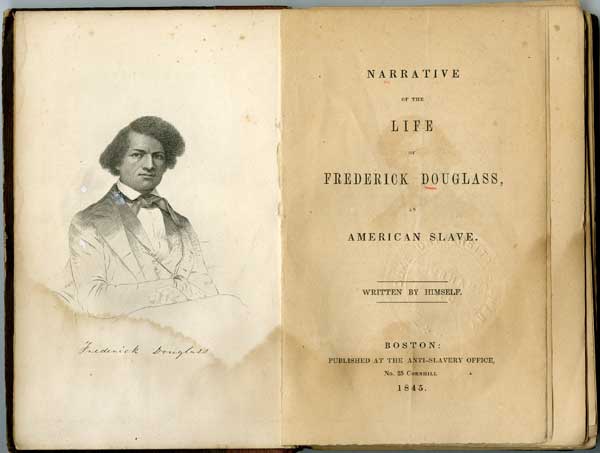
Narrative of the Life of Frederick Douglass, an American Slave (1845)

Post contributed by Karlyn Forner, John Hope Franklin Research Center Graduate Student Intern and John Gartrell, John Hope Franklin Research Center Director
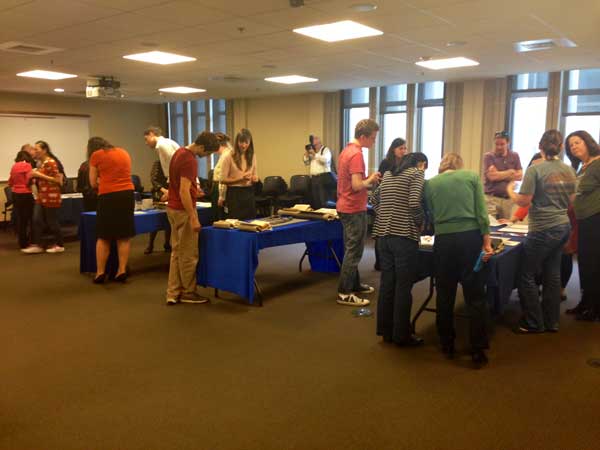
Screamfest in Pictures

Look at all of the boys and ghouls (sorry, we had to) at our Haunted Library Screamfest!

Screamfest Visitors

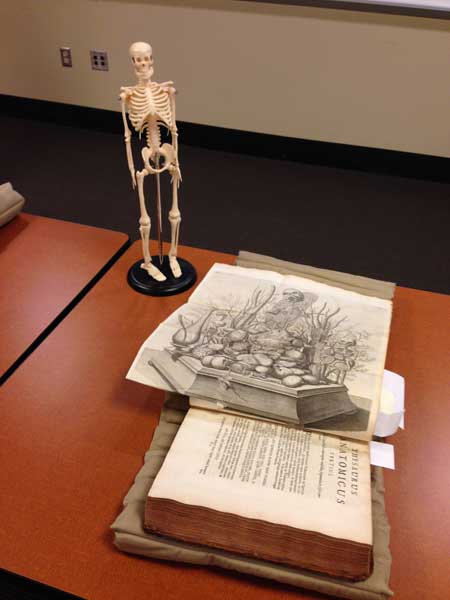
We had materials on display from all of the creepy, spooky corners of the Rubenstein Library, including these items from the History of Medicine Collections:

History of Medicine Collections Materials at Screamfest

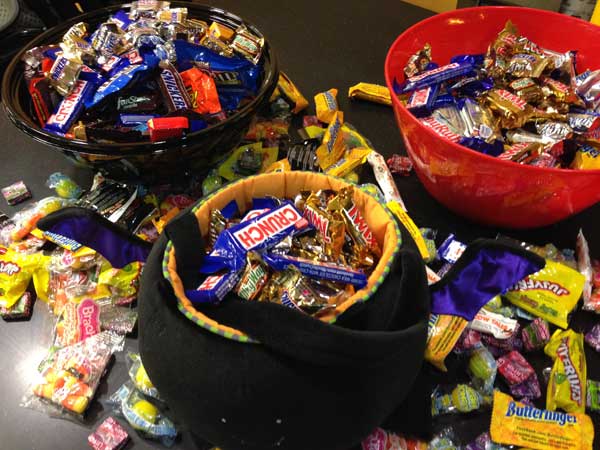
And no, the skeleton wasn’t made of white chocolate. Although some of this was!

Screamfest Candy

Visit the Screamfest 2013 set on the Duke University Libraries’s Flickr photostream for more pictures of the fun. And check out Duke Today’s report!

Welcome to Blogging, Medical Center Archives!

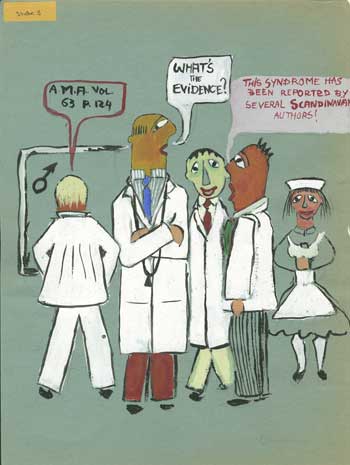
Illustration from the Malcolm Tyor Papers, Duke University Medical Center Archives.
From the Malcolm Tyor Papers, Duke University Medical Center Archives.

This morning, we’re sending best wishes to our friends at the Duke University Medical Center Archives, who have just entered the blogosphere!

Visit their new blog for stories about the history of the DUMC community; interesting images, artifacts, and documents from their collections (like the illustration at right); and information about their resources, services, news, and events.

Recent posts include:

All illustrated with great finds from the Medical Center Archives’ collections.

Look for new posts every other week! Happy blogging, y’all!


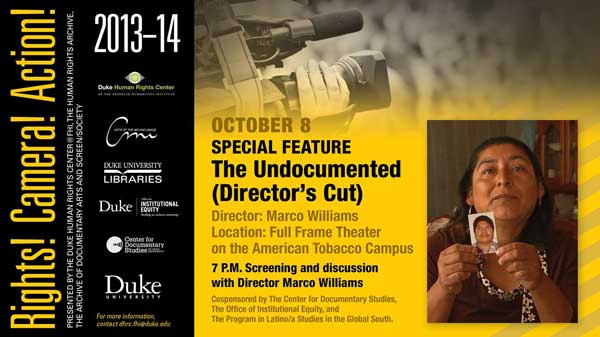
Rights! Camera! Action!: The Undocumented (Director’s Cut)

Date: Tuesday, October 8, 2013
Time: 7:00 p.m.
Location: Full Frame Theater on the American Tobacco Campus (directions & parking information)
Contact: Patrick Stawski, patrick.stawski(at)duke.edu

Marcos Hernandez lives and works in Chicago. He came to the United States from Mexico, after a life-threatening border crossing through the Sonora Desert in southern Arizona. Each month, he sends money to his mother in Mexico City to buy medicine for his brother, Gustavo, who needs a kidney transplant. The Undocumented, by acclaimed filmmaker Marco Williams, is Marcos’s story—as well as the story of countless other migrants.

Chronicling Arizona’s deadliest summer months, award-winning documentary and fiction film director Marco Williams (Banished, Two Towns of Jasper, In Search of Our Fathers) weaves Marcos’s search with the efforts of humanitarians and Border Patrol agents who are fighting to prevent migrant deaths, the medical investigators and Mexican Consulate workers who are trying to identify dead border crossers, and Mexican families who are struggling to accept the loss of a loved one.

Poster for Screening of The Undocumented

In true cinéma vérité style, The Undocumented (91:00 TRT; 2013 Full Frame Honorable Mention for Kathleen Bryan Edwards Award for Human Rights) reveals the ongoing impact of immigration laws and economic policies on the very people who continue to be affected by them. By going beyond politics, the film also tells a story that is deeply personal.

The screening, which is free and open to the public, will be followed by a panel discussion featuring director Marco Williams and Duke University professor Charlie Thompson.

Rights!Camera!Action! is sponsored by the Archive of Documentary Arts and the Human Rights Archive in the Rubenstein Library, the Duke Human Rights Center @ FHI, and the Program in the Arts of the Moving Image.

Rights! Camera! Action!: We Still Live Here / Âs Nutayuneân

Date: Thursday, September 19, 2013
Time: 7:00 p.m.
Location: FHI Garage, Bay 4, Smith Warehouse (directions & parking information)
Contact: Patrick Stawski, patrick.stawski(at)duke.edu

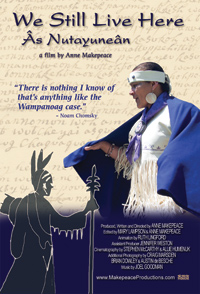
Poster for We Still Live HereWinner of the Full Frame Inspiration Award, We Still Live Here/ Âs Nutayuneân (TRT 56:00) tells the story of the revival of the language of the Wampanoag people of New England. All speakers of the language had died out when in 1994 Jessie Little Doe, a Wampanoag social worker, began to wonder if it could be recovered.

With M.I.T. linguist Ken Hale, with whom she earned a Master’s degree, she and other linguists pieced the language together from old documents and related Native American languages. Through community-wide efforts among the Aquinnah and Mashpee Wampanoag, the language is being spoken again, and Jessie’s young daughter is the first native speaker of Wampanoag in more than a hundred years.

The screening will be followed by a panel discussion featuring Dr. Liliana Paredes and Dr. Benjamin Frey.

Dr. Liliana Paredes is Associate Professor of the Practice of Spanish and Director of the Duke Spanish Language Program. She holds expertise in the areas of sociolinguistics, minority languages, and Amerindian languages.

Dr. Benjamin Frey is a Fellow in the Carolina Postdoctoral Program for Faculty Diversity at UNC. He completed his Ph.D. in Germanic linguistics at the University of Wisconsin – Madison in August 2013. His research examines language shift among minority communities in the United States from their traditional languages to English, with specific focus on German in Wisconsin and Cherokee in North Carolina. Frey is a member of the Eastern Band of Cherokee Indians.

Rights!Camera!Action is sponsored by the Archive of Documentary Arts and the Human Rights Archive in the Rubenstein Library, the Duke Human Rights Center @ FHI, and the Program in the Arts of the Moving Image.

Post contributed by Patrick Stawski, Human Rights Archivist.

Revisiting the Allen Building Takeover

In 2013, Duke University is commemorating the 50 year anniversary of its first black undergraduate students. Events, exhibits, and performances have been taking place over the year, and will culminate during the weekend of October 3-6.

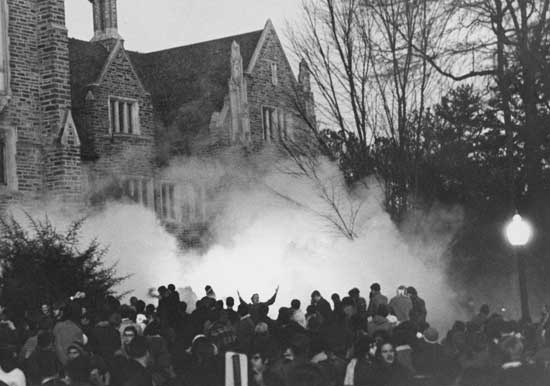
As we reflect on the milestone of integration, we must also consider the challenges faced by African American students at Duke, especially during the 1960s. This upcoming February will mark 45 years since the Allen Building Takeover of 1969. The Takeover was a seminal event in which nearly 100 black students occupied the administrative building for a day, demanding changes to a number of policies. After leaving peacefully, a crowd gathered outside the building confronted police, and teargas was fired on the crowd.

Allen Building Takeover, 1969

A new exhibit on the Takeover, curated by Caitlin M. Johnson, Trinity ’12, is now on display on the first floor of the Allen Building. Thirty panels describe the build-up to the protest, the events of that day, and the outcome of the Takeover. Featuring many images from the University Archives and the Durham Morning Herald and Durham Sun, Johnson’s exhibit forms a powerful narrative about Duke’s path toward real integration.

An opening reception for the exhibit will be held on Thursday, September 12 from 3:30 to 5:00 p.m. in the Allen Building.

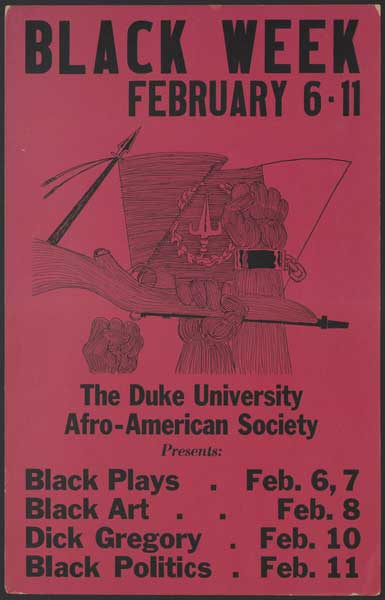
At 6:00 p.m. that evening, Dr. Jack Preiss, Professor Emeritus at Duke, will be speaking at the School of Nursing about desegregation at the University. Dr. Preiss was intimately involved in encouraging the Board of Trustees to change its policies on admissions. The University Archives holds a collection of his papers, including this poster from Black Week, which immediately preceded the Allen Building Takeover.

Black Week Poster, 1969

Email sharon.caple@duke.edu to RSVP for the Sept. 12 exhibit reception or the talk by Dr. Preiss.

Post contributed by Val Gillispie, University Archivist.

Transforming Knowledge: A Reading with Dr. Jean Fox O’Barr

Date: Tuesday, September 17, 2013
Time: 6:00 p.m.
Location: Thomas Room, Lilly Library, Duke University East Campus (directions to Lilly Library)
Contact Information: Kelly Wooten, kelly.wooten(at)duke.edu

Jean Fox O'Barr Dr. Jean Fox O’Barr will read from her new book, Transforming Knowledge: Public Talks on Women’s Studies, 1976-2011. This collection chronicles her personal journey, which unfolded alongside the women’s movement and the evolution of Women’s Studies. Now retired, Dr. O’Barr founded and led the Duke University Women’s Studies Program for two decades. Her records are preserved at the Sallie Bingham Center.

Read more about this book or order online from She Writes Press.  This event, which is free and open to the public, is co-sponsored by the Sallie Bingham Center for Women’s History and Culture at Duke University Libraries and the Resource Center for Women and Ministry in the South.

RSVP for this event (optional).

Post contributed by Kelly Wooten, Research Services and Collection Development Librarian for the Bingham Center.

Postcard from New Orleans

This past week, many of us from the Rubenstein—including the entire staff of the Duke University Archives—has been in New Orleans for the annual conference of the Society of American Archivists.

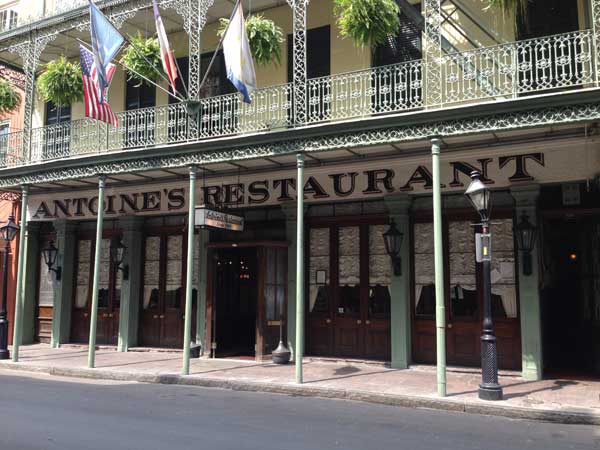
When we haven’t been attending presentations on the latest and greatest in our profession or meeting our fellow archivists, we’ve been exploring this awesome city. A few evenings ago, we stumbled upon a familiar place.

antoines-web

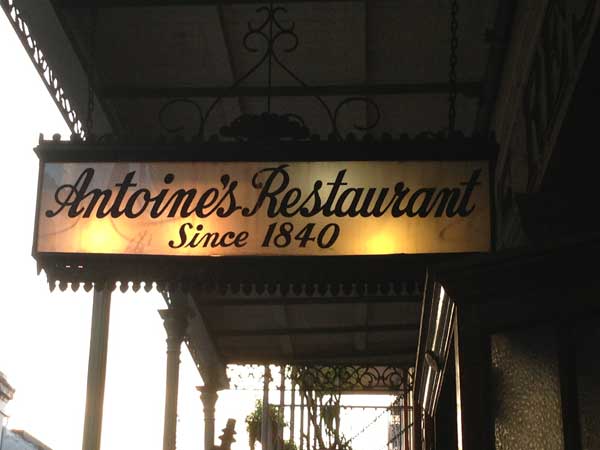
The venerable Antoine’s has stood in New Orleans’s French Quarter since 1840. And, of course, archivists have a soft spot for old things!

Sign for Antoine's Restaurant

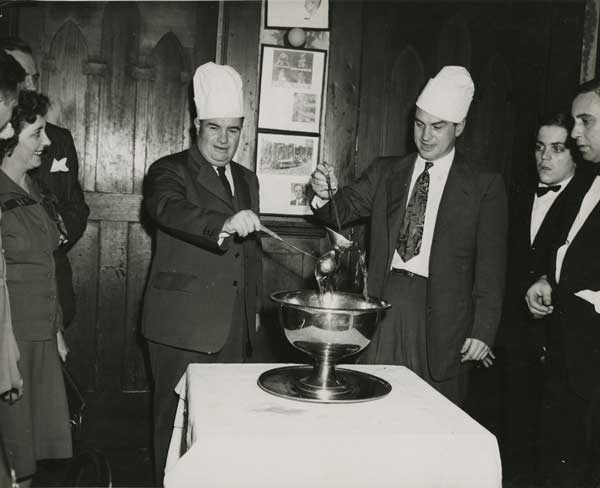
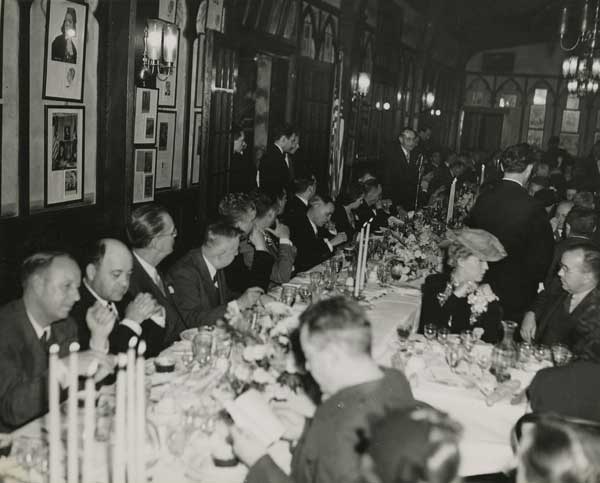
The restaurant is familiar to those of us in the University Archives because of Eddie Cameron—specifically, a scrapbook of photos, clippings, and ephemera from the Duke football team’s trip to play in the 1945 Sugar Bowl. Among the pre-game celebrations was a dinner at Antoine’s with the team’s University of Alabama opponents.

Dinner at Antoine's, 1944

We love this photo of Eddie Cameron and Alabama head coach Frank Thomas mixing up some Café Brûlot Diabolique. Thankfully, the game wasn’t the following day! (Duke won, 29-26, incidentally.)

Eddie Cameron and Frank Thomas at Antoine's, 1944

Most of us will be leaving today, to return to our normal Durham lives of collecting, processing, cataloging, answering questions, teaching, and, well, helping to make the Rubenstein the great place that it is. But we’ll be back here soon, we hope! Thank you, New Orleans, and thanks, Antoine’s, for reminding us of a fun evening in Duke’s history!

A Woman’s Place is on Home, First, Second, and Third

The title of this blog post comes from one of the taglines for the 1992 film A League of Their Own, a fictionalized account of the formation of the All-American Girls Professional Baseball League.

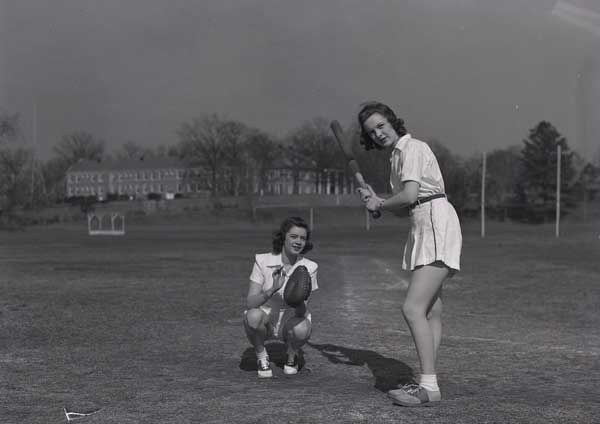
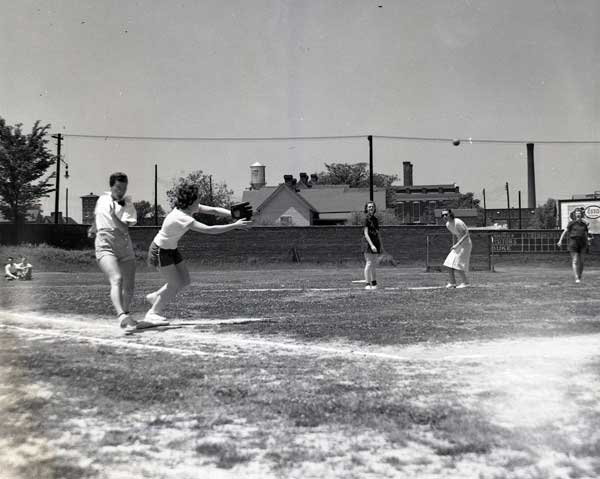
I’m currently working to inventory approximately 28,000 acetate negatives of Duke athletics from circa 1928-1982 and recently came across a few images of women playing baseball from as early as 1934 to as late as 1941.

Baseball, Women's Athletic Association, 1941
Baseball, Women’s Athletic Association, 1941

In the decades before Title IX, Duke women participated in sports activities organized by the Women’s Athletic Association.  The W.A.A. formed in 1929 as an “outlet for the athletic urge than the physical education classes were able to offer” and to provide a “program of sports activity for women, similar to that afforded to the men by the intramural athletic program.”   The W.A.A.’s purpose was to “stimulate interest in athletics, to provide a chance for those interested in sports to develop more skill, and to give the women opportunities for fellowship and recreation.”

Baseball, Women's Athletic Association, May 6, 1939
Baseball, Women’s Athletic Association, May 6, 1939

In addition to baseball (not softball), women competed in tennis, golf, track & field, equestrian events, field hockey, soccer, fencing, swimming, basketball, and archery. The W.A.A. also sponsored several events and activities, including dances, weekend parties, hikes, and open houses in the gym.  It also used a point system to determine which 10 seniors received a blue “D.”  The 7 seniors who accrued the highest number of points received white sweaters with the blue “D” attached.

Post contributed by Kim Sims, Technical Services Archivist for the Duke University Archives.