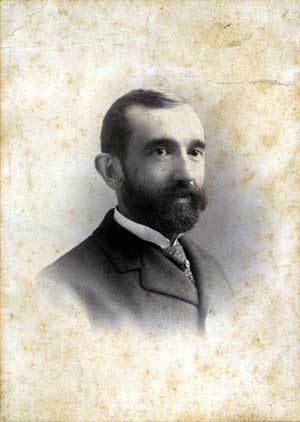
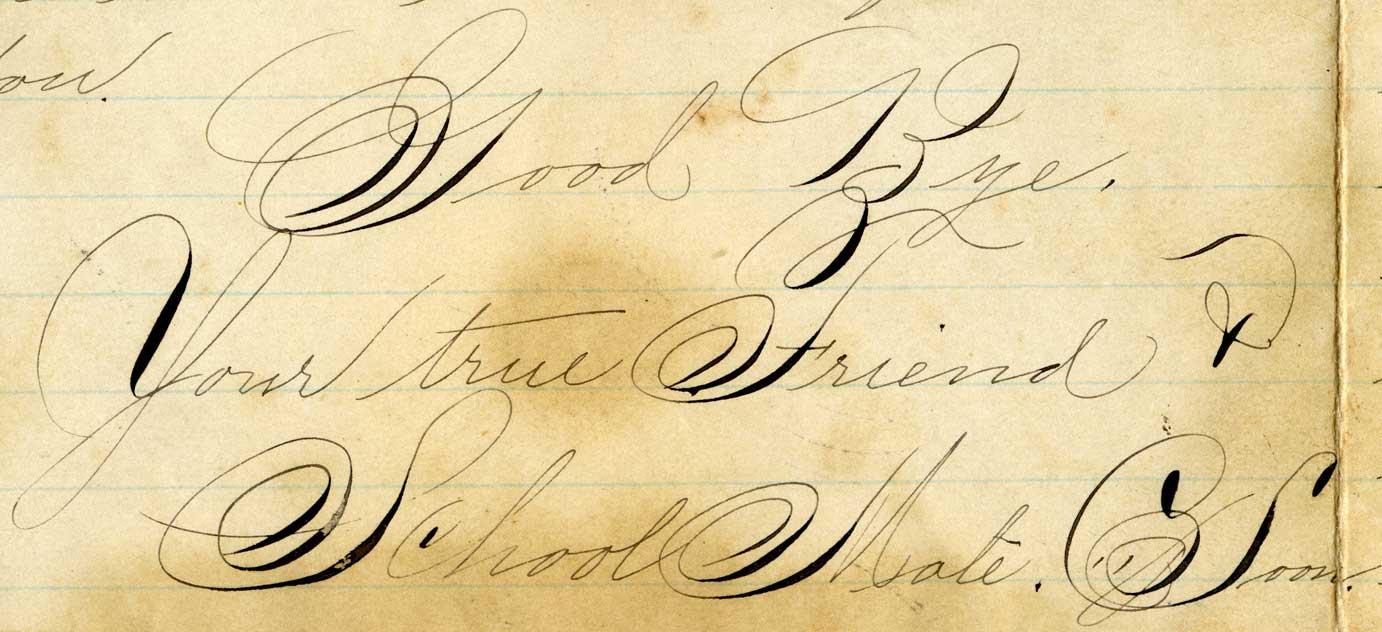
Our colleague Mary Mellon is currently reprocessing the Benjamin Duke Papers to provide more refined description. Among the many fascinating pieces of correspondence within the collection, she has found a letter, dated November 16, 1896, from Trustee A. P. Tyer to Ben Duke. In it, he makes a not-so-modest proposal: that Duke give a $500,000 endowment and that the school be renamed Duke College.
“The only hope that Trinity College has of ever being endowed is found in the Dukes. I therefore ask that you give the College five hundred thousand dollars as endowment and allow the Trustees to name it “Duke College.”
In 1896, the school was just four years old in its new Durham location. There was great concern about longterm viability, despite the generosity of the Duke family up to that point, including providing the funds to bring the school to Durham. $500,000 in 1896 would have been around $13 million in today’s money.
To sweeten the deal, Mr. Tyer added,
“This will forever take away the feeling of uncertainty, make the college an assured success forever, put the Dukes in front of all southern benefactors, largely increase the number of students, bring even a better class of patronage to the college, make it possible for others to give to it, be the greatest monument any southern man will ever build, be a perpetual benefit and blessing to the human family, and constantly glorify God your Father.”
Ben Duke remained a steady and heavily involved benefactor, but never made a gift at the level requested in the letter. The month after this letter was received, Washington Duke, Ben’s father, gave a $100,000 endowment, contingent on women being admitted on equal footing with men. In 1924, Ben’s brother, James B. Duke, established the Duke Endowment, which helped fund a massive expansion of the college, and led to the renaming of the school—not to Duke College, but to Duke University.
Click to enlarge.Click to enlarge.Click to enlarge.
Post contributed by Valerie Gillispie, University Archivist, with assistance from Mary Mellon, Technical Services Intern.
I was looking through the May 1944 issue of Duke’s Divinity School Bulletin when I came across a brief article about a Bo tree (Ficus religiosa) presented to the Divinity School in honor of then-Ivey Professor of the History of Religion and Missions James Cannon III. (He’d later serve as the Divinity School’s dean from 1951 to 1958.)
You’ve possibly heard the tradition that Gautama Buddha was sitting beneath a tree when he attained Enlightenment. That tree was a Bo, or Bodhi, tree, and it is, as a result, sacred to Buddhists.
Professor Cannon’s Bo tree had its own august history, as the article relates:
The Cannon Bo-tree is descended from the Bo-tree planted at the ruined city of Anuradhapura, near Kandy, in Ceylon. In the year 288 B.C., King Asoka of India sent a shoot from the parent tree to Ceylon. To this day the tree is worshiped by throngs of pilgrims. In 1929 an American tourist obtained a shoot from the Ceylon Bo-tree, planted it on his Florida estate, and several months ago presented a shoot to Duke.
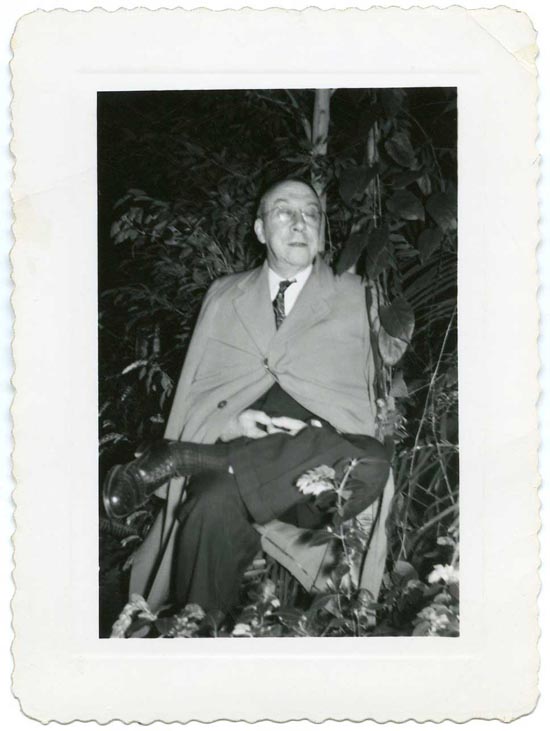
We found snapshots of Professor Cannon with his Bo tree in his papers. He looks very serene, doesn’t he? A note from the back of one of the snapshot states that his “topcoat is supposed to represent Buddha’s ‘yellow robe.'”
Professor James Cannon beneath the Bo tree, March 6, 1951.
We’re not certain of the current whereabouts of Duke’s Bo tree. Do you have any information about it?
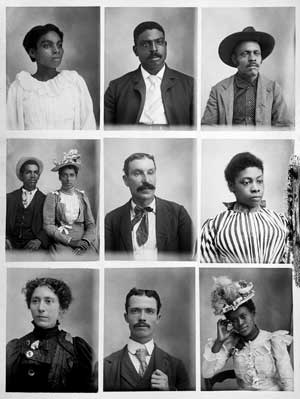
Portrait photos by Hugh Mangum. From the Hugh Mangum Photographs, #N258.
The portraits of Durham photographer Hugh Mangum are the subject of a new exhibit, opening July 22nd at the Museum of Durham History’s History Hub. “Hugh Mangum on Main Street: Portraits from the Early 20th Century” shows Mangum’s largely unknown portraits of Southern society after Reconstruction.
Mangum was born in Durham in 1877 and began establishing studios and working as an itinerant photographer in the early 1890s. During his career, Mangum attracted and cultivated a clientele that drew heavily from both black and white communities, a rarity for his time. Mangum’s photographs are now part of the Rubenstein Library’s Archive of Documentary Arts.
“Although the late-19th-century American South in which he worked was marked by disenfranchisement, segregation and inequality — between black and white, men and women, rich and poor — Mangum portrayed all of his sitters with candor, humor, and spirit. Each client appears as valuable as the next, no story less significant,” said curator Sarah Stacke. “His portraits reveal personalities as immediate as if the photos were taken yesterday.”
Stacke, a photographer and a 2014-2015 Lewis Hine Fellow at Duke’s Center for Documentary Studies, and Margaret Sartor, who teaches at CDS, are working together on a book about Mangum’s life and work. This new exhibit expands on “Keep All You Wish,” an exhibit of Mangum’s work that Stacke curated for CDS in 2012.
“Hugh Mangum on Main Street: Portraits from the Early 20th Century” opens at the History Hub, 500 W. Main St., on Tuesday, July 22 and runs through August. The exhibition will be in the Our Bull City area.
The public is invited to a launch party for the exhibition on Wednesday, July 23, from 5:30pm to 7pm, and a program on Mangum and his work at 3pm on Sunday, August 10.There is no charge for the exhibit, program, or party. The Hub is open Tuesday-Saturday, 10am to 5pm.
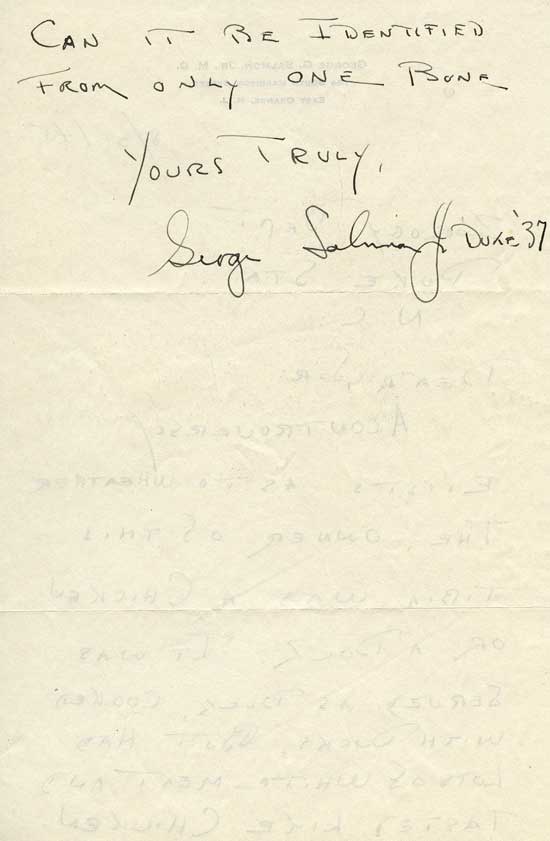
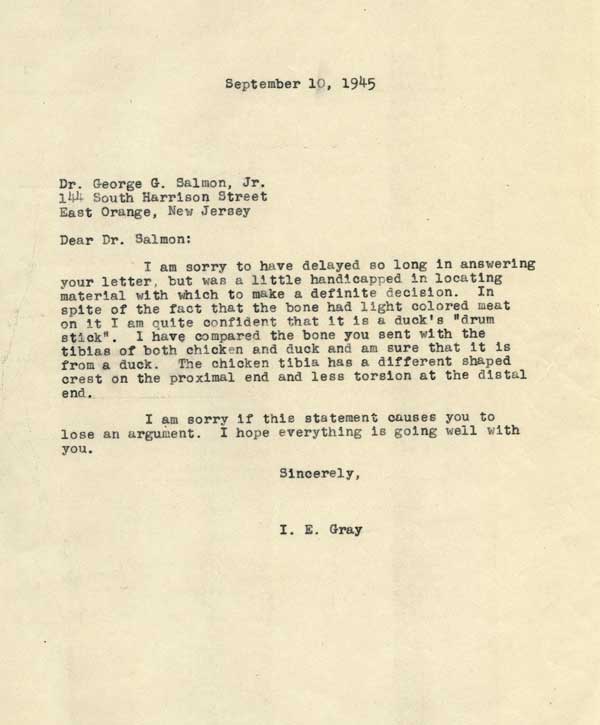
In late August 1945, Dr. George Salmon, Jr. of New Jersey wrote a letter to Duke’s Zoology Dept., asking for help in identifying whether a tibia bone he sent belonged to a duck or to a chicken.
I found the description amusing as to why he wanted to know this as well as the fact that he actually mailed the bone in question.
Equally as amusing to me is that Irving Gray, Chair of the Zoology Dept., took the time to reply.
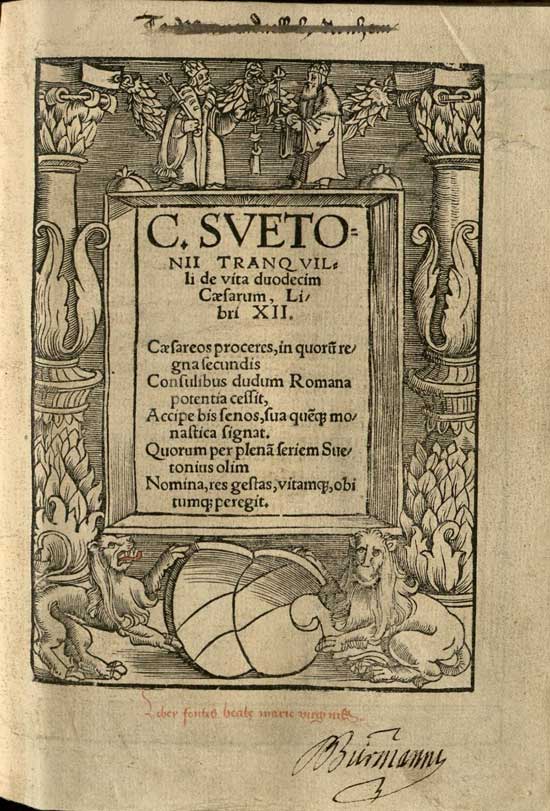
At an unknown moment in the 16th century, no earlier than 1520, a European bookbinder reached for scrap vellum to complete the binding of a recently printed book, an edition of Suetonius’ De Vita Duodecim Caesarum Libri XII (Lives of the Twelve Caesars) printed by Johann Prüss in Strassburg.
Title page of De Vita Duodecim Caesarum Libri XII
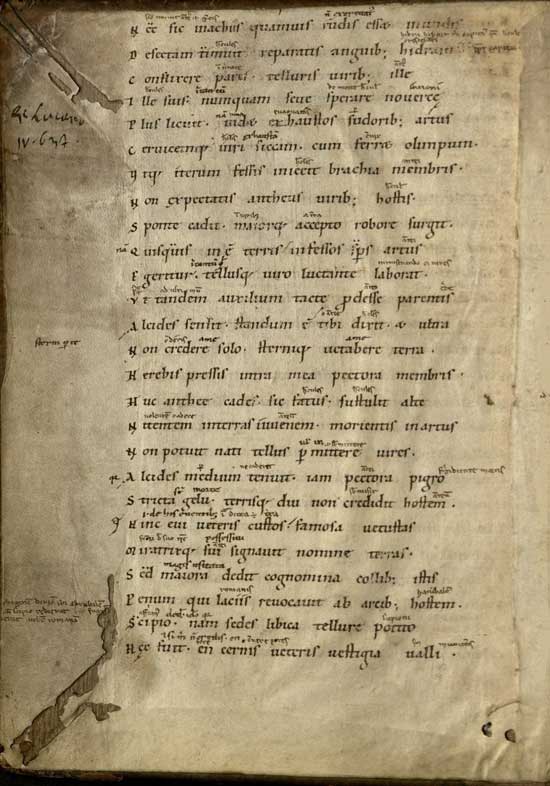
The bookbinder’s exterior work, beautifully blind-stamped calf over oak boards, stands in contrast to what’s found inside. The first interior views for a reader would be these centuries-old vellum scraps, encountered as paste-downs and flyleaves, before and after Suetonius’ work.
What’s found on these vellum pieces is something wonderful. The vellum features a manuscript of Lucan’s Pharsalia, or Civil War, Book 4, lines 634-659, 667-692, and 700-725. The epic poem, which narrates the war between Caesar and Pompey, was written in the first century C.E. This book of the Pharsalia recounts a legendary battle between Hercules (Alcides) and the terrible Antaeus, a creature who gains renewed strength simply by touching the earth beneath his feet. In the end, Hercules understands that to defeat his enemy, he has to lift him from the ground—and at last he’s victorious.
This manuscript is very clear, clean, and legible, and can easily be read. For instance, the leaf above begins with lines 634-637:
nec sic Inachiis, quamuis rudis esset, in undis
desectam timuit reparatis anguibus hydram.
conflixere pares, Telluris uiribus ille,
ille suis.
Even in the Inachan waves, although he was inexperienced, he was not afraid when the hydra regenerated her snakes after being cut.
They struggled equally, one with the strength of Mother Earth, the other with his own. (trans. Paolo Asso)
It’s striking that the bookbinder used fragments of the Pharsalia, a poem concerning Caesar, in his work on the Lives of the Twelve Caesars. Was the choice purposeful? Was it accidental?
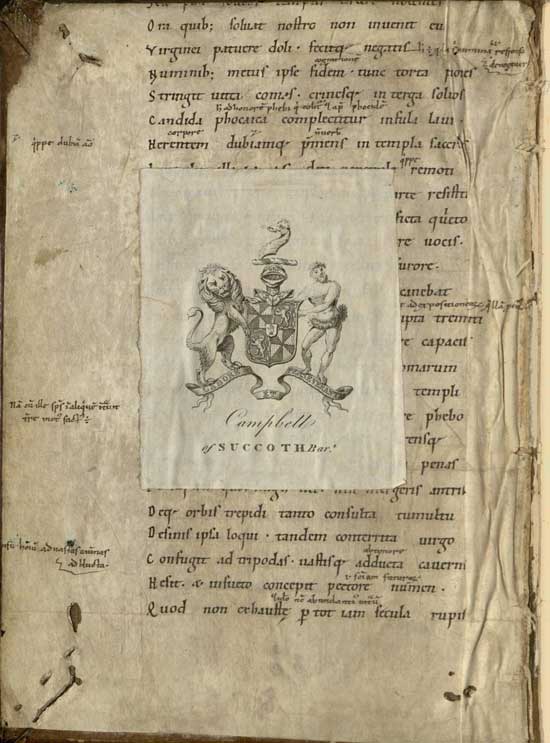
Dating as early as the 11th century, this fragment of Lucan is one of Duke’s earliest Latin manuscripts (Duke Latin MS 125). The book bears evidence of its provenance. It was purchased by Duke in 1970; in its distant past, the book was owned by classical scholar Pieter Burman (1668-1741) (or his son, also named Pieter Burman!) and bears annotations by him. It bears the (somewhat intrusive!) bookplate of a British owner named Campbell.
Date: Wednesday, June 18, 2014 Time: 12:00 PM Location: Room 102, Duke Medical Center Library Contact: Beverly Murphy, beverly.murphy@duke.edu
Please join us on Wednesday, June 18 at noon for a lecture by Dr. Margaret Humphreys titled “Finding Dr. Harris: an African American Surgeon in the U.S. Civil War.” The event will be held in Room 102 of the Duke University Medical Center Library. Lunch will be provided.
Dr. Humphreys is the Josiah Charles Trent Professor of the History of Medicine and Professor of Medicine at Duke University and current President of the American Association for the History of Medicine. She is the author most recently of Marrow of Tragedy: The Health Crisis of the American Civil War (Johns Hopkins University Press); a book for which she was a finalist for the Gilder Lehrman Lincoln Prize—awarded annually for the finest scholarly work in English on Abraham Lincoln or the American Civil War era.
Dr. Humphreys’ talk coincides with several exhibits at the Duke Medical Library. From June 9 through July 19, 2014, the Medical Library & Archives will host the National Library of Medicine’s travelling exhibit Binding Wounds, Pushing Boundaries: African Americans in Civil War Medicine. The lower level of the Medical Library includes an exhibition on Civil War medicine, highlighting many materials from the History of Medicine Collections and Rubenstein Rare Book & Manuscript Library on display through September of 2014.
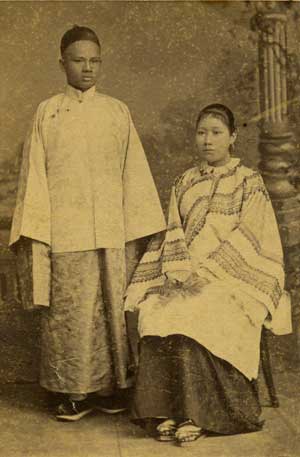
Charlie and Mamie Soong. From the Rubenstein Library Picture File.
After nearly eight years in the United States, Charlie finally returned to China, armed with a degree from Vanderbilt, in January 1886. The transition to being part of the Methodist mission in Shanghai was hardly an easy one, however, as he revealed in a June 1886 letter addressed to “My dearest friend.” For one thing, Charlie was homesick, and Shanghai was, in effect, a foreign land to a man who had never been far from his birthplace of Hainan when he had lived in China. He wrote, “I am walking once more in the land that gave me birth, but it is far being from a homelike place to me. I felt more homelike in America than I do in Shanghai.” To make matters worse, Charlie had to rely heavily on English as he learned the unfamiliar dialect spoken in the region.
Charlie also immediately chafed under the stern leadership of Dr. Young J. Allen, whom he nicknamed “the great Mogul.” For example, Charlie was denied permission to visit his parents, whom he had not seen for thirteen years, until 1887, prompting him to show a little of his rebellious side in his letter:
“I am very much displeased with this sort of authority; but I must bear it patiently. If I were to take a rash action the people at home might not fail to understand the nature of the case, and they (my Durham friends especially) might think that I am an unloyal Methodist and a law breaker, so I have kept silent as a mouse. But when the fullness of time has come, I will shake off all the assuming authority of the present Supt. [Superintendent] in spite of all his protestation, assuming authority, and the detestation of the native ministry.”
The last statement points to another problem that would plague Charlie throughout his service, namely racial discrimination within the mission. Despite his collegiate training, Charlie felt he was denied the “privileges and equality which [he was] entitled to,” instead receiving the lower pay and position typical of the second-class status of locally-trained, native Chinese ministers.
Yet Charlie stayed with the mission, experiencing ups and downs his first years with the mission. He was finally able to visit his parents, but was crushed to learn of Annie Southgate’s untimely death back in Durham in 1887. Charlie wrote his condolences to James Southgate from Kunshan (future home of Duke Kunshan University) in February 1887, stating that “Miss Annie was one of my best friends.” Later that year, Charlie married Ni Kwei-tseng, also known as Mamie, with whom he would have six children: Ai-ling, Ching-ling, May-ling, Tse-ven, Tse-liang, and Tse-an.
Charlie finally set off on his own in 1892 after six years of missionary work. Addressing rumors back in North Carolina that he had rejected his faith, Charlie wrote to the Raleigh Christian Advocate:
“My reason for leaving the Mission was it did not give me sufficient to live upon. I could not support myself, wife and children with about fifteen dollars of United States money per month. I hope my friends will understand that my leaving the Mission does not mean the giving up of preaching Christ and him crucified.”
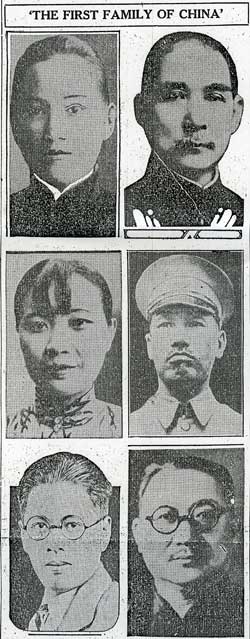
Photos from June 28, 1936 News and Observer article by Mike Bradshaw, Jr., “Chinese Lad Left Trinity College to Found Own Dynasty.” Pictured from top left to bottom right: Soong Ching-ling, Sun Yat-sen, Soong May-ling, Chiang Kai-Shek, Soong Tse-ven, H. H. Kung.
Charlie’s initial forays into private enterprise were closely connected with his faith. He started a publishing business, Mei-hua shu-kuan, printing bibles and religious tracts for the American Bible Society. The family’s fortunes increased with further business ventures, such as managing a flour mill and importing manufacturing equipment. Charlie soon began taking an interest in politics. After meeting Sun Yat-sen in 1894, he remained a longtime friend and political supporter of the revolutionary and future leader.
Charlie did quite well financially over time, making enough money to send all six of his children to school in the United States. The education the Soong children received, along with the family’s growing connections in China, put them on the path to creating powerful political and financial dynasty for the first half of the twentieth century. After spending some time as secretary to Sun Yat-sen, Ai-ling married H. H. Kung, a powerful businessman who would later become China’s finance minister. Ching-ling married Sun Yat-sen and wielded considerable political influence during her lifetime. May-ling, a graduate of Wellesley, married Chiang Kai-shek and became a determined and charismatic advocate for the cause of Republican China in the United States. Tse-ven used his Harvard economics degree to great success in the business sector, served as the head of the Central Bank of China, and also acted as China’s finance minister from 1928 to 1933.
Charlie passed away in 1918, before he could fully see the astronomical rise of his family. If he had lived a bit longer, he would also have witnessed a revival of interest in his own life story in the United States, prompted by publicity tours by May-ling, a.k.a. “Madame Chiang Kai-shek,” in the 1930s and 1940s. At Duke University, Soong will never be forgotten as the intrepid young student who helped open up the institution to a wider, more diverse world.
Additional Resources:
“Charles Soong” by University Archivist Emeritus William E. King. Reprinted from Duke Dialogue, January 30, 1998
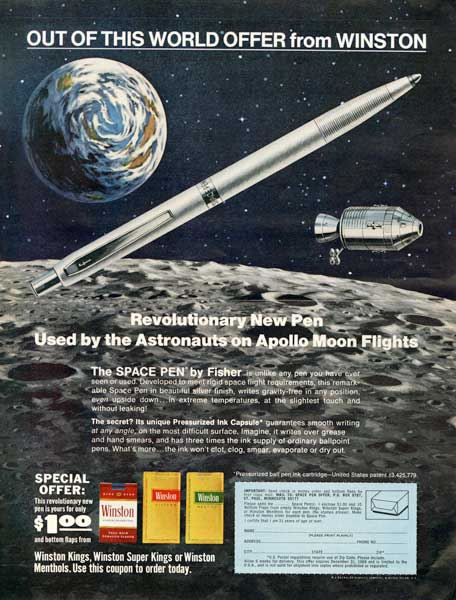
Mad Men‘s midseason finale juxtaposes the U.S. space program and Napoleon as twin parables on the successes and failures of grand vision and ambition. The Apollo 11 launch and landing on the moon in July 1969 provides a running theme through the episode, and creates a poignant contrast between everyday life and a preoccupation with events 100,000 miles out in space.
The episode opens with Bert Cooper trying to watch the Apollo liftoff and yelling at the maid to turn off the vacuum cleaner. Meanwhile in California, Ted Chaough’s existential crisis while flying over Claremont terrifies the Sunkist representatives; in a later phone call he tells Jim Cutler that he wants to leave advertising altogether. Lou Avery complains to Jim Cutler that Don’s appearance in the Philip Morris client meeting cost them the Commander business to Leo Burnett. Betty entertains house guests that include surly teenager Sean and his nerdy younger brother Neil. Harry’s partnership in the firm is still under consideration, not finalized, and serves as a nodal point in a power struggle between Jim Cutler and Roger Sterling. The creative team preps for their presentation to Burger Chef in Indianapolis, while Pete worries that “now we just have to pray everything goes smoothly on the moon.”
Elsewhere at the agency, SC&P staff members speculate on the consistency of the moon’s surface while Don receives a breach of contract letter from the agency attorney. It turns out that Jim Cutler had initiated the letter in an attempt to force Don out, a move that enrages some of the other partners who hadn’t been notified before their names were placed on the letter. Don calls for a vote on his status, which is affirmed with only Joan and Jim voting to remove him. Joan, bitter that Don’s actions have cost her money, nonetheless criticizes Jim for his tactics: “You shouldn’t have done that.” Don phones Megan to tell her about the tensions at the agency, but when he suggests to her that it may be an opportunity to start over on the west coast, Megan hesitates before breaking things off with Don.
On Sunday all eyes are watching the lunar landing on television; most are amazed but surly Sean complains about the cost of the space race. When Sally repeats this to Don over the phone, he tells her “Don’t be so cynical.” Bert Cooper says a quiet “Bravo.” Shortly after, Roger receives a call that Bert has died, and goes to the office to remove Bert’s name plate from his door. He meets Joan and Jim Cutler there. Jim uses Bert’s death to suggest an opportunity to get rid of Don, to which Roger objects. Roger informs Don of Bert’s passing, and Don goes to Peggy’s hotel room to tell her to do the Burger Chef presentation herself. Roger meets with an associate at McCann Erickson who wants the Chevy team for the Buick account, but Roger suggests that McCann buy a stake in SC&P. McCann is interested only if Roger can keep the creative team of Don and Ted together.
The Burger Chef management is wowed by Peggy’s presentation, where she used the lunar landing event as a symbol of people’s hunger for connection and turned it into an analogy for the kinds of connections often missed at family dinners mediated by ever-present television. Burger Chef, she argues, offers a place to re-connect families. Her presentation ultimately wins the account. When Don returns home from Indianapolis, Roger is waiting for him and tells him of the McCann offer. Roger says it’s the only way to save the agency, as he fears Jim won’t stop until he gets rid of everyone. The next day Roger calls a partners’ meeting to announce the McCann offer; Don talks Ted into staying on and the partners’ unanimously agree to the buyout—including Jim Cutler who sees he has been outmaneuvered by Roger. On his way back to his office, Don sees the ghost of Bert Cooper, singing “The Best Things in Life Are Free.”
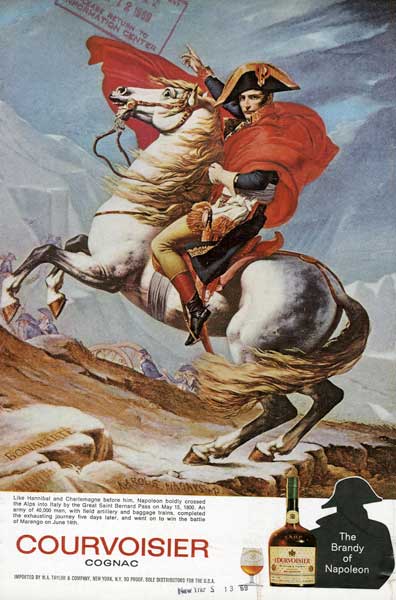
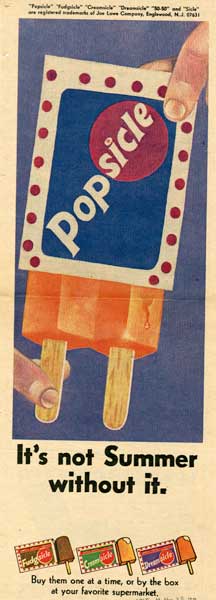
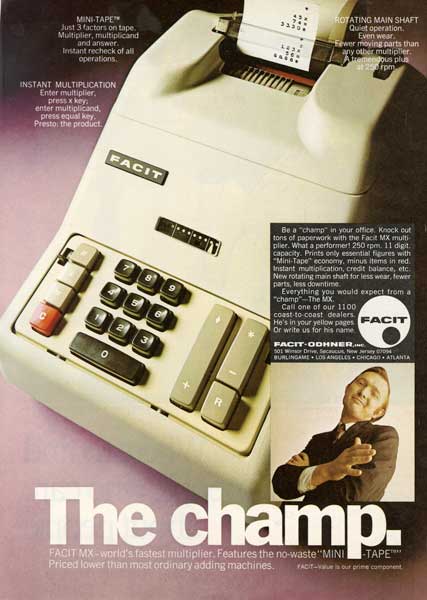
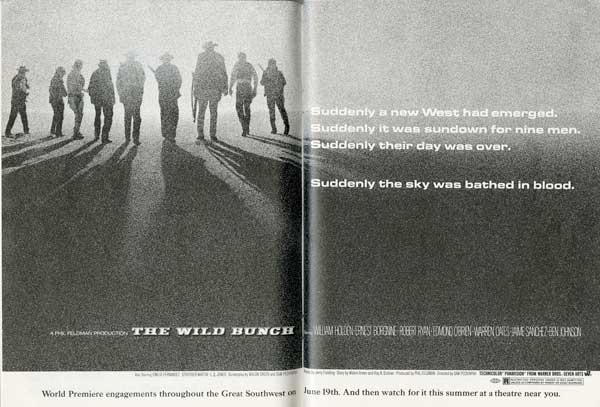
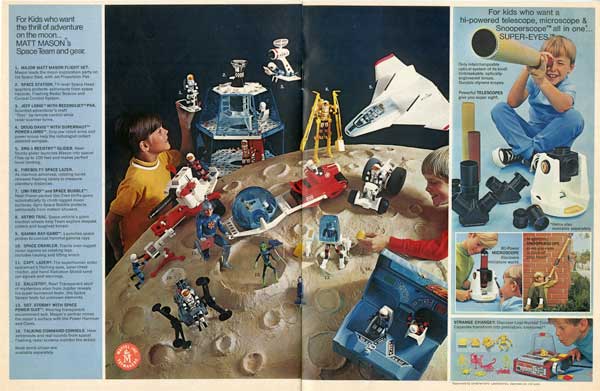
Last night’s episode featured references to the space mission, Napoleon, Newport, Popsicle, electric percolators and The Wild Bunch, among other things. Enjoy our selection of highlighted ads that reflect the brands and themes that Mad Men characters interacted with last night.
A gallery of our selected images may also be found on Flickr.
When Charles J. “Charlie” Soong arrived at Trinity College in 1881 as the school’s first international student, he had already seen much more of the world than the average student. Born in Hainan Province, China as Han Chiao-shun in 1866, Charlie traveled to the Dutch East Indies as a young boy to work, eventually sailing to Boston in 1878 to work for his maternal uncle’s tea and silk business. After his uncle adopted him, Charlie’s name changed for the first time to Soon Chai-Jui.
Little is known of Charlie’s time in Boston, except that it took less than a year for him to realize he wanted more in life than working for his uncle. His first step in a new direction was to join the Revenue Cutter Service, predecessor to today’s U.S. Coast Guard, in January 1879. The popular rumor is that he stowed away, but this was not mentioned in a 1943 report on Charlie’s service by a Coast Guard representative. Influenced by his new captain, Eric Gabrielson, Charlie became interested in Methodism.
Charlie’s new career took him all along the East Coast, including the port city of Wilmington, North Carolina, where he was baptized in the Methodist Church as Charles Jones Soon (the “g” is added after he returns to China). It is also in Wilmington that he met the Reverend Thomas Ricaud, who first brought Charlie to the attention of his future benefactors: Julian Carr, Durham tobacco magnate and philanthropist, and Braxton Craven, president of Trinity College in Randolph County. Approving of Charlie’s new desire to become a Methodist missionary, and intrigued by the idea of a native Chinese minister joining existing church missions in China, Trinity College agreed to enroll Charlie as a special student in April 1881. His tuition was paid by Julian Carr.
Attending Trinity must have been a huge adjustment for Charlie. He had lived in the United States for less than three years, most of that time spent in the cutter service. Then there was the fact that he was moving from the northeast to attend what was very much a “Southern” college, less than twenty years after the conclusion of the Civil War. Trinity College was hardly a racially or geographically diverse institution, with 93% of students from North Carolina and none from farther north than Virginia. There were eighteen students from present-day Cherokee, North Carolina, although little is known about these students other than they were, like Charlie, were enrolled in a special course of study.
According to fellow student Jerome Dowd, Charlie “attracted a great deal of attention from the faculty, the students, and the people of the village because of his racial contrast to the Caucasian and because of his exceptional sprightliness.” Some of this attention was negative, as Dowd notes, “boys were disposed to tease him and play all sorts of pranks upon him.” Yet Charlie persevered, remaining “very amiable, full of fun, and always ready to respond in a playful spirit.” While at Trinity, Charlie lodged at the house of Professor Gannaway, and his studies focused primarily on English language and the Bible.
The strongest traces of Charlie’s time in North Carolina are preserved through the contact that he had with his Durham and Trinity friends. Besides the Carr family, Charlie befriended James H. Southgate, a successful Durham insurance agent, and his daughters Mattie and Annie. To “Miss Mattie” in 1882, Charlie sticks to fairly innocent topics. He reports that he recently received a letter from “Miss Annie” (Mattie’s sister), that “all the boys are well” but they “have to study heaps” for the end of the semester.
Charlie Soong’s signature.
Another of Charlie’s early letters, written in elegant script although imperfect English, is addressed to J. Gordon Hackett, who was a schoolmate boarding in the same house as Charlie. Writing shortly after commencement in June 1882, Charlie talks about in Randolph County, President Craven’s illness (he died later that year), and missing Hackett’s company. But like any teenage boy might, he talks mainly about…well…girls:
“[B]oth of Misses Field are here yet they will go home next friday morning. I tell you they are very pleasant young Ladies I like them ever so much. I had heard they spoke good words of you and your welfare. I was very much interesting when they compliments you so highly. I enjoyed it. Trinity is very pleasant now, but I don’t know what it will be after the [girls] go off. Dr. Gunn went off this morning and Fortisty moved down here last evening. He is now in your room. Miss Bidgood is here yet I believed. She will stay until next month. She looks as pretty as ever. I went to see her and Miss Cassie sometime since. She talk right lively…
Golden, I been had good times with the [girls] all day long. never looked at the books hardly since [Commencement] except the Bible. Everything is [quiet] now. Miss Mamie and two other [girls] gone to visiting last night we did had big time all the [girls] Fortisty and I we went to called on Ella Carr and we had the best time you ever heard of…”
It was even rumored that the reason Charlie left Trinity to attend Vanderbilt in fall 1882 was that he had become involved with Ella Carr, niece of Julian and daughter of a professor at the College. In fact, there were ample reasons for him to transfer without a supposed illicit romance. The seminary at Vanderbilt had more specialized training for missionaries, and the Board of Missions of the Methodist Episcopal Church South was headquartered in Nashville. After graduating in 1885, Charlie returned to North Carolina for several months, lecturing and preaching while visiting old friends. When he finally returned to China in 1886 as a trained missionary, Charlie would use his education and experience to build an extraordinary life and powerful family.
Additional Resources:
“Charles Soong” by University Archivist Emeritus William E. King. Reprinted from Duke Dialogue, January 30, 1998
After weeks of angst and anxiety, Mad Men showed viewers a happier Don Draper and Peggy Olsen last night. They are finally back in sync and working well together. Peggy and Mathis survey mothers at a Burger Chef restaurant about their reasons for buying family dinners there. Pete and Bonnie fly to New York together. Peggy presents a seemingly successful Burger Chef pitch to Lou and others, but is told that Don should be the one to present it to the client, which angers her.
Megan comes to New York for the weekend and spends time looking for her fondue pot and other items she wants to bring back to Los Angeles, while Don tries to make her nostalgic for her New York home. Bob Benson comes to New York with representatives from Chevy. He has to bail one of them out of jail and is told that GM will be pulling the Chevy account and giving it to Campbell-Ewald, but that Bob will be offered a job at Buick. Peggy second guesses the Burger Chef pitch and works on it all weekend.
Pete visits his daughter Tammy, who barely recognizes him, and he is angry that Trudy is not around. He gets drunk and waits for her return, only to be told that he is no longer part of that family and doesn’t get to complain. Bonnie is angry that Pete doesn’t spend time with her in New York and leaves to go back to Los Angeles.
Don comes in to help Peggy rework the Burger Chef campaign and they manage to have productive and candid conversations. Their creative compatibility shows through and their conversations inspire a better pitch for Burger Chef. Bob visits with Joan and her family, bearing gifts for everyone. He proposes to Joan, and tells her that a marriage would be good for both of them. She says no, stating that she will hold out for love. The SC&P partners meet to discuss losing Chevy. They decide to make Harry Crane a partner, with some dissention from Joan and Roger. Don and Peggy meet Pete at a Burger Chef to sell him on the new pitch.
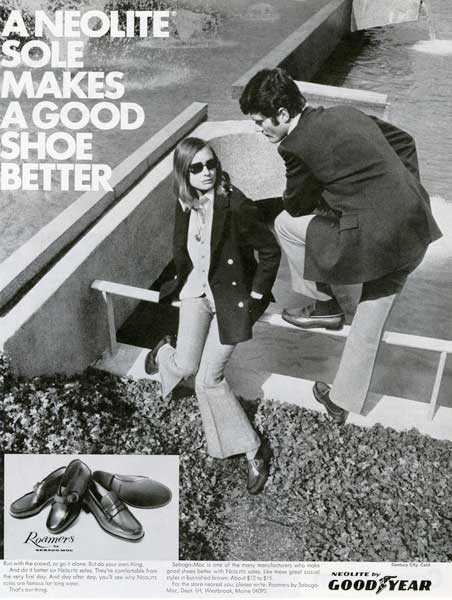
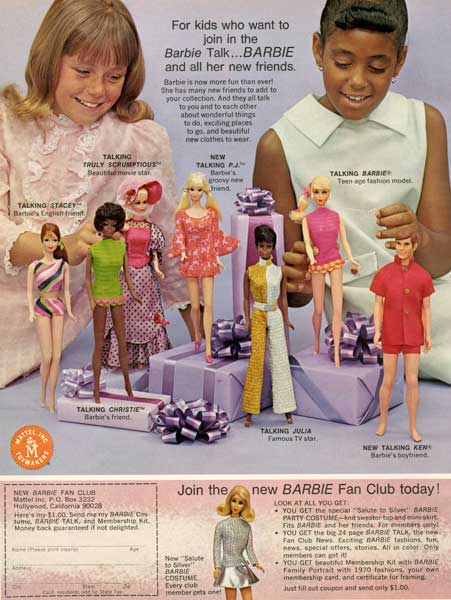
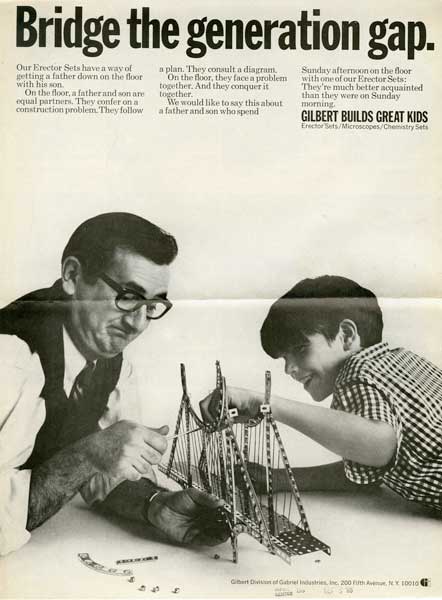
Last night’s episode featured references to loafers, Buick, Barbie, Fondue pots, among other things. Enjoy our selection of highlighted ads that reflect the brands and themes that Mad Men characters interacted with last night.
A gallery of our selected images may also be found on Flickr.
Dispatches from the David M. Rubenstein Rare Book and Manuscript Library at Duke University