Last night’s episode of Mad Men features several characters whose elevated hopes for connections with others get dashed. Don flies out to Los Angeles after Megan’s agent calls him to say that she was desperate and demanding with a director after an audition. She is happy to see him, but then gets upset when she realizes why he came. He is forced to admit that SC&P put him on leave and she asks him to go for being dishonest. Peggy is upset that her St. Joseph’s commercial wasn’t nominated for a Clio, and later finds out that Lou only submitted work that he could claim as his own. Betty meets Francine for lunch and Francine brags about her new career as a travel agent. She tells Betty that working in an office is her reward for raising kids. Later Betty tells Bobby that she will chaperone his field trip the next day and he is thrilled to spend time with her. Harry exaggerates SC&P’s media capability to the clients from Koss, and later tells Jim that they need a computer to compete. Don meets with two men from Wells Rich Greene and gets an offer to work for them. Don takes that offer to Roger, who agrees to let Don come back the following Monday. Betty and Bobby have a good time on the field trip until Bobby gives away Betty’s sandwich to a friend. Don arrives at SC&P on Monday morning, and awkwardly greets the staff until Roger comes in around lunchtime. The partners are upset that Don is back, but realize it will cost them too much to fire him officially. Instead they agree to take him back only if he can adhere to several restrictive rules and reports to Lou. He agrees.
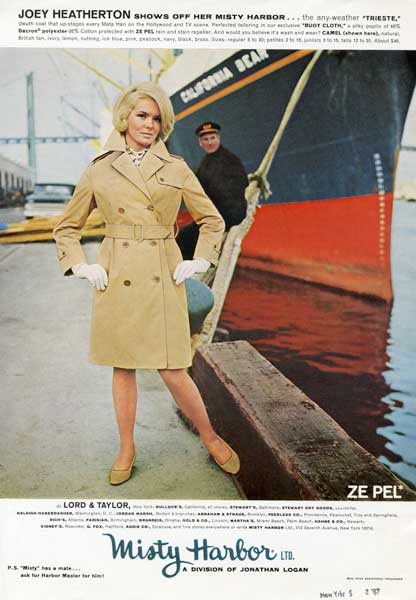
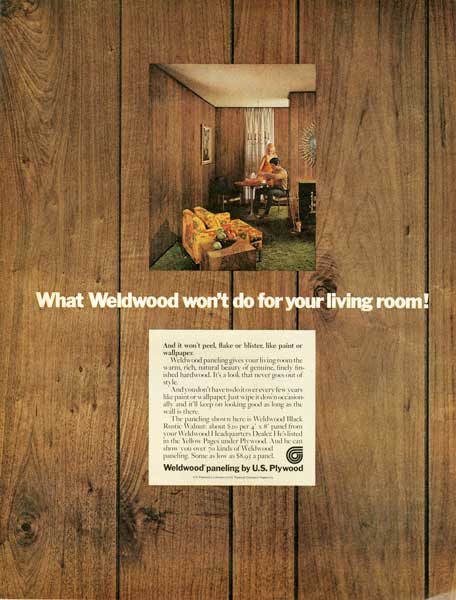
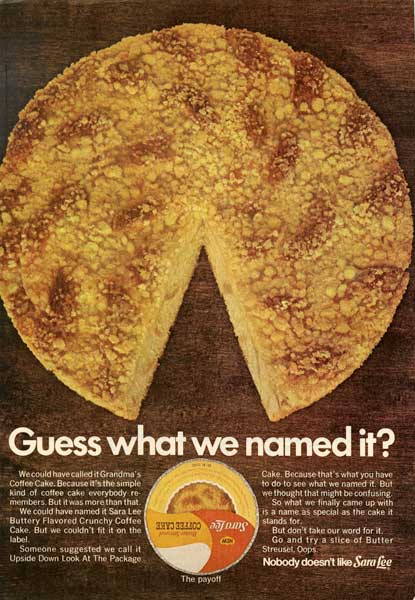
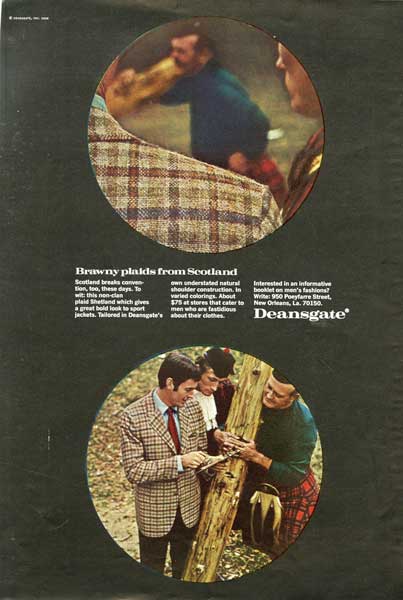
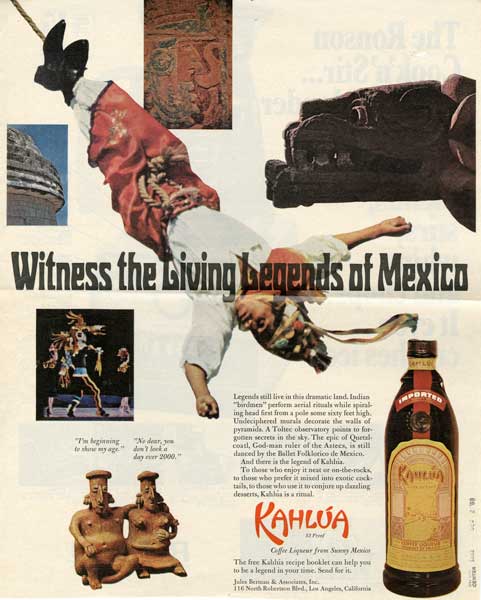
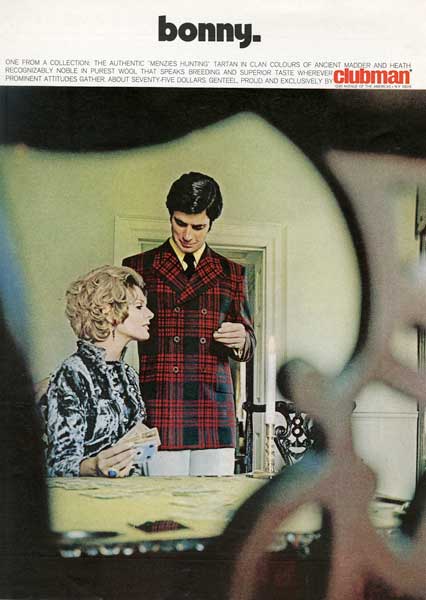
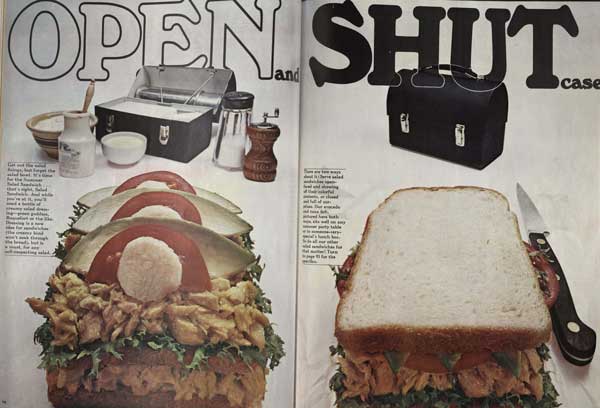
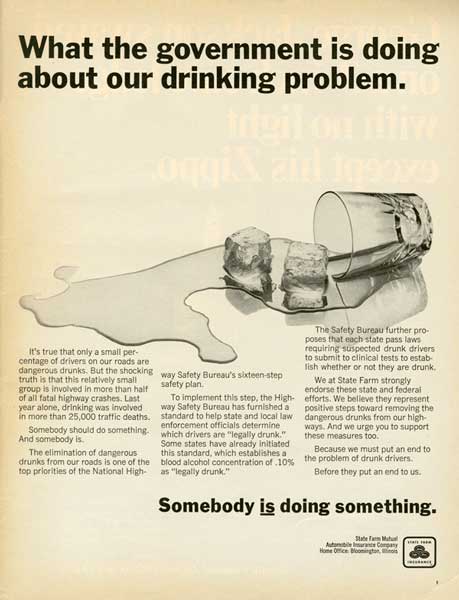
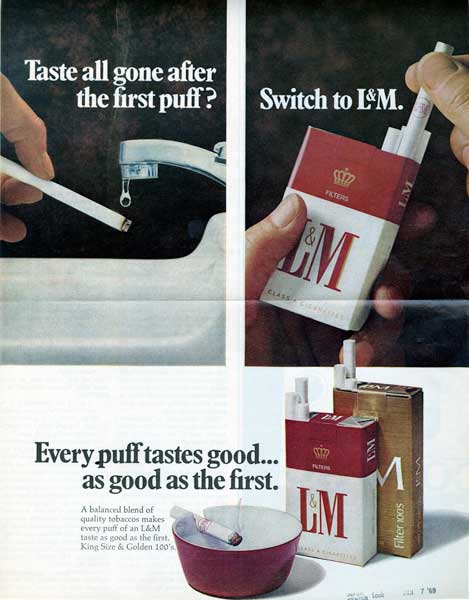
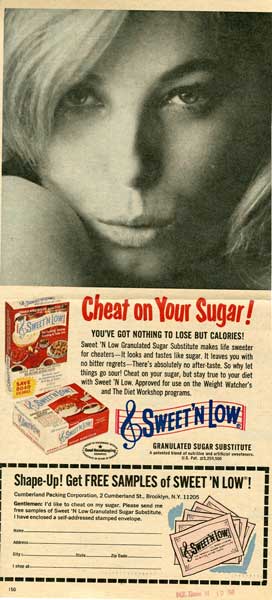
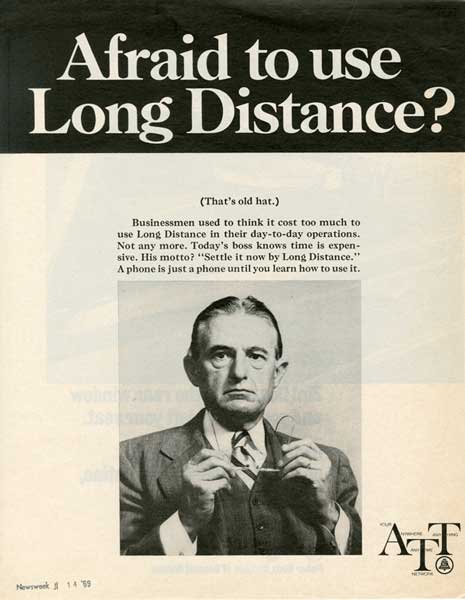
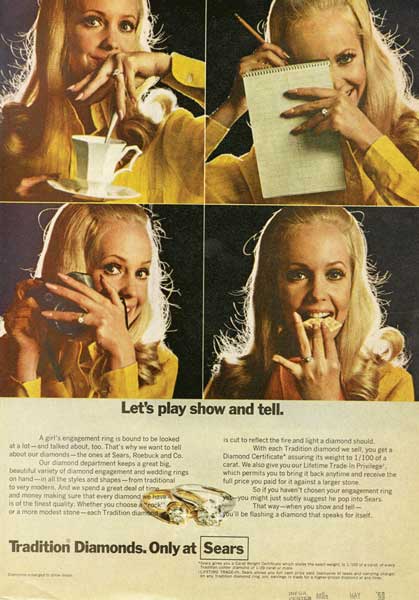
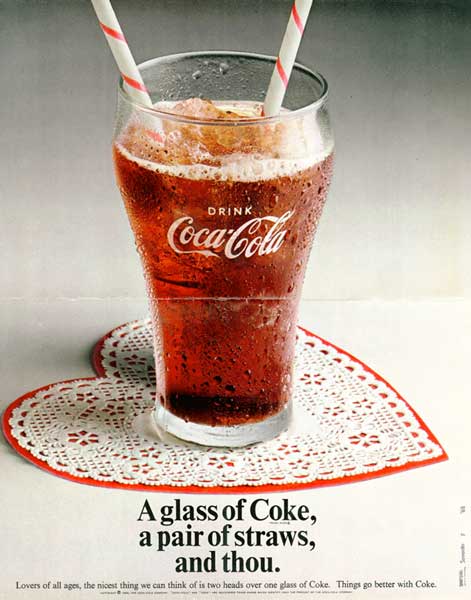
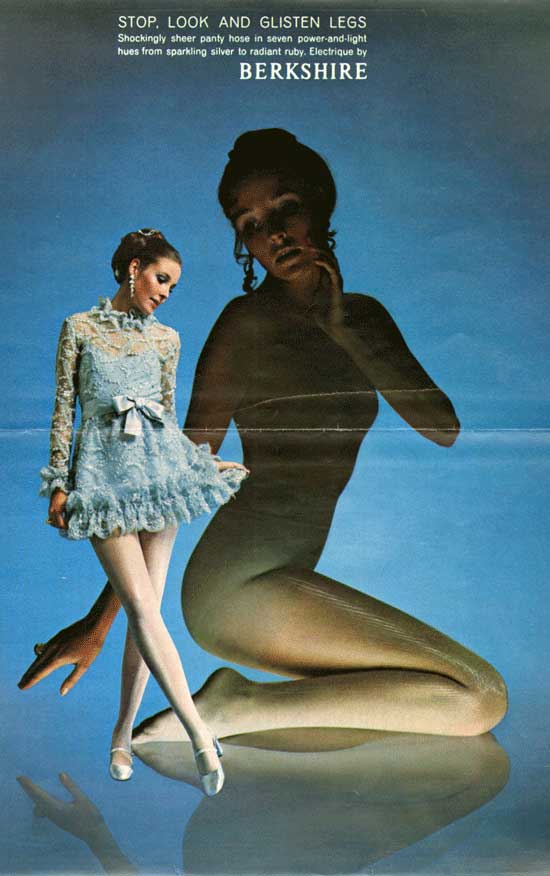
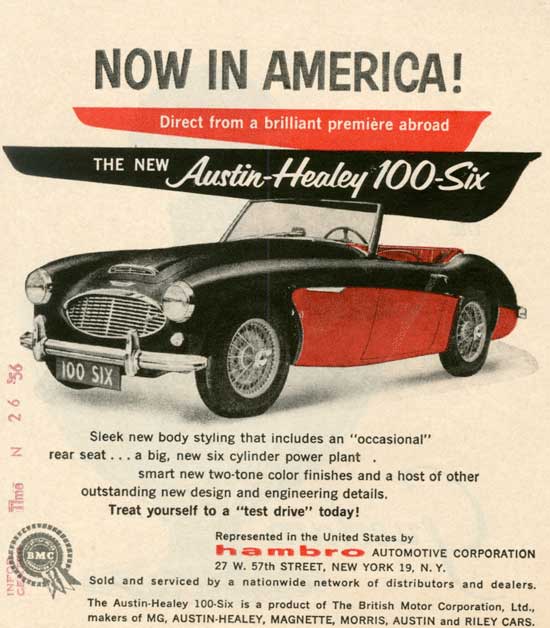
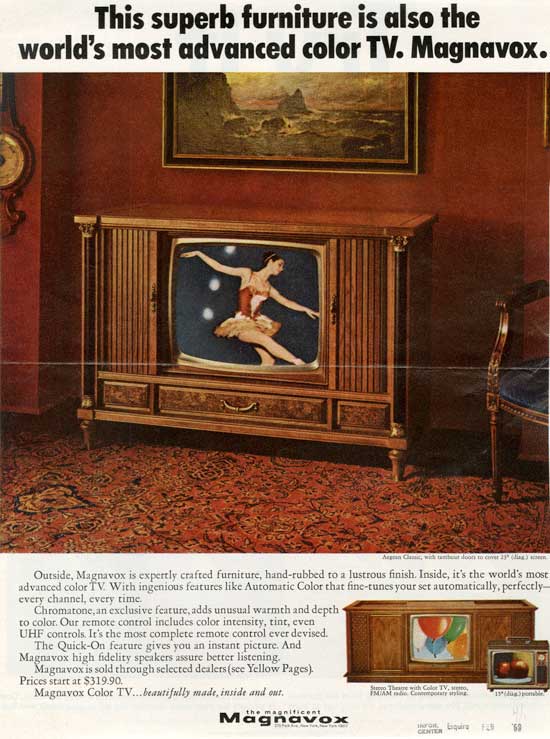
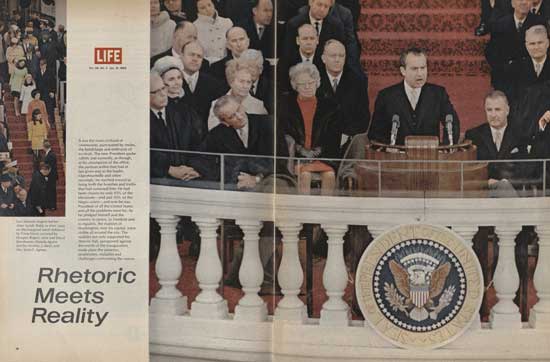
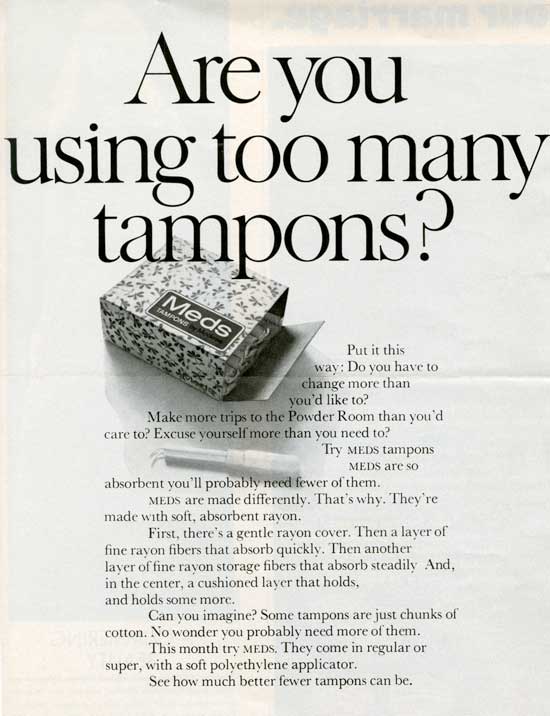
Last night’s episode featured references to typewriters, Kahlua, plaid jackets, and bras, among other things. Enjoy our selection of highlighted ads that reflect the brands and themes that Mad Men characters interacted with last night.
A gallery of our selected images may also be found on Flickr.
The Rubenstein Library’s three research center annually award travel grants to undergraduate and graduate students, faculty, and independent scholars through a competitive application process. Congratulations to this year’s recipients, we look forward to working with all of you!
Courtney Thompson will use materials related to phrenology such as this small ivory bust in her research.
History of Medicine
Cali Buckley, Pennsylvania State University, Department of Art History, for dissertation work on, “Women of Substance: The Materiality of Anatomical Models and the Control of Women’s Medicine in Early Modern Europe.”
Alicia Puglionesi, Johns Hopkins University, Institute of the History of Medicine, for dissertation work on “The Astonishment of Experience: Americans and Psychical Research, 1885-1935.”
Courtney Thompson, Yale University, Department of the History of Science and Medicine, for dissertation work on “Criminal Minds: Medicine, Law, and the Phrenological Impulse in America, 1830-1890.”
John W. Hartman Center for Sales, Advertising & Marketing History
FOARE Fellowship for Outdoor Advertising Research
Craig Lee, Department of Art History, University of Delaware, “Letter Building: Signage, Supergraphics, and the Rise of Semiotic Structure in Modern American Architecture”
Daniel Towns, Department of History, Stanford University, “The View and the Value: Historical Geography of Signs in San Francisco”
John Furr Fellowships for JWT Research
Lisa Haushofer, Department of History, Harvard University, “Edible Health: ‘Health Foods’ in Science, Industry, Culture in Britain and the United States, 1884-1950
Alvin A. Achenbaum Travel Grants
Dr. Cynthia Meyers, Department of Communications, College of Mount Saint Vincent, “Advertising Agencies and the Decline of Sponsorship in the Network Era of Television”
Dr. Cristina Ziliani: Economics, University of Parma, Italy, “Premium Sales Promotions: A History of Practice and Research, 1890-1990”
Cara Fallon, Department of History, Harvard University, “The Emerging Concept of Healthy Aging in the United States, 1920-1990”
Catherine Hennessey Wolter, Musicology, University of Illinois, Urbana-Champaign, “Sound Conversions in Print: A Cultural History of the Player Piano and Early Radio in America Through the Lens of Print Media”
Kelly Jones, History of Medicine, State University of New York – Stony Brook, “’New Hope for Headache Sufferers’: Pain and its Control in Advertisements for Headache Remedies, 1950s-1970s
Daniel McKay, Independent Scholar, “Trading Fears: Marketing the ‘Japan Brand’ to American Tourists and Consumers”
John Hope Franklin Research Center 2014-15 Travel Grant Awardees
Emilye Crosby, State University of New York-Geneseo Topic: “Anything I Was Big Enough To Do: Women and Gender in SNCC”
Paul Grant, University of Wisconsin-Madison, Topic: “Unimagining the Christian Nation: Alienation, Memory, and German-African Reciprocity in Akropong, Ghana 1835-1938”
Nicole Maurantonio, University of Richmond, Topic: “Ombudsman for Humanity: Chuck Stone, Mediation, and the Graterford Prison Hostage Crisis”
Gilet Rosenblith, University of Virginia, Topic: “Low Income African American Women in the South and the Carceral State”
Nicholas Syrett, University of Northern Colorado, Topic: “American Child Bride: A History of Minors and Marriage in the United States”
Adam Wolkoff, Rutgers University-New Brunswick, Topic: “Possession and Power: A comparative social and legal history of capitalist social relations in the late nineteenth-century United States”
Sallie Bingham Center for Women’s History and Culture Mary Lily Travel Grants
Dr. Georgina Colby, linguistics and cultural studies, University of Westminster, for a book on Kathy Acker combining philosophical analysis with literary and critical theory, exploring connections between feminist theory, Acker’s use of philosophy, and her experimental writing practices.
From the Kathy Acker Papers
Dr. Donna Drucker, civil and environmental engineering, Technische Universität Darmstadt, for a journal article on sexual behavior and the science of contraceptive testing in the mid-twentieth century United States.
Sara Mameni, Ph.D. candidate, visual arts, University of California, San Diego, for dissertation research on Iran-US relations in the 1960s and 1970s—leading up to Iran’s Islamic Revolution of 1979—through the lens of queer theory, feminist theory, and postcolonial studies.
Ivy McIntyre, Ph.D. candidate, history, St. Louis University, for dissertation research on South Carolina families in times of personal crisis in the early Republic.
Andrew Pope, Ph.D. candidate, history, Harvard University, for dissertation research on radical social movements and the New South in Georgia from 1968-1996.
Dr. Jason Scott, Dr. Annalisa Castaldo, and Jennifer Lynn Pollitt, for an edited collection of essays looking at how kink identities, behaviors, and lifestyles are represented in popular and cultural studies.
Mairead Sullivan, Ph.D. candidate, women’s, gender, and sexuality studies, Emory University, for dissertation research on questions of breastedness in feminist and queer theory.
Hope Tucker, independent scholar, for an artist’s video on the fragility of reproductive rights in the American South, as seen through the work of those who documented and labored for these rights in the second half of the twentieth century.
Last night’s episode of Mad Men depicts Valentine’s Day at SC&P. Several characters are upset when they are treated poorly or shuffled around, but by the end of the episode we see that there is housekeeping afoot that reveals new opportunities. Don’s day to day existence is exposed through sleeping late, cracker eating, and flipping through magazines. Only when he is preparing for Dawn to come by and brief him does he clean up and get dressed to preserve the illusion that he is his normal steely self. Sally and her friends are given leave to go to New York City to attend the funeral of another friend’s mother and subsequently sneak off to go shopping before their return. Once Sally realizes that she lost her purse, she goes to SC&P to ask Don for train fare. Her encounter with Lou Avery exposes Don’s subterfuge and gets Dawn unfairly demoted to reception. Sally waits for Don at his apartment and when he returns from lunch with a contact at Wells Rich Greene he drives her back to boarding school. Peggy mistakes Shirley’s roses as ones for her from Ted, which causes a chain reaction of frustration and awkwardness for the two women. Joan is aggravated when her colleagues keep demanding that she solve their problems with secretarial staff by shifting them around. Pete is angry that he has to defer to Bob Benson and Chevrolet’s permission when he lands the SoCal Chevy Dealers Association account. Sally and Don finally have a frank conversation on the way back to school that begins to repair their damaged relationship. Jim Cutler offers Joan the opportunity to focus on account management, which allows her to leave behind the frustrations of human resources. Joan’s parting gesture as she moves to her new office is to reward Dawn with a promotion to human resources. We see Dawn smile as she settles into her new office.
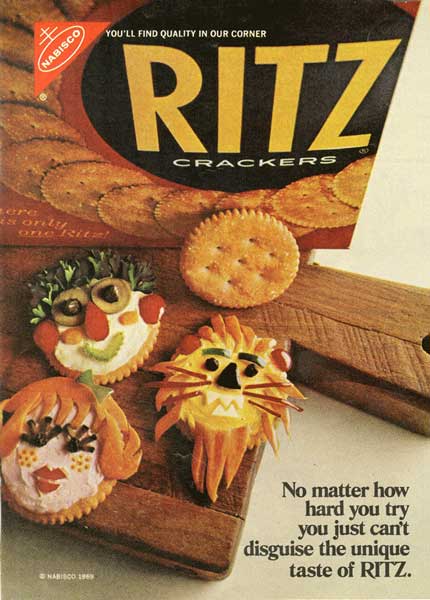
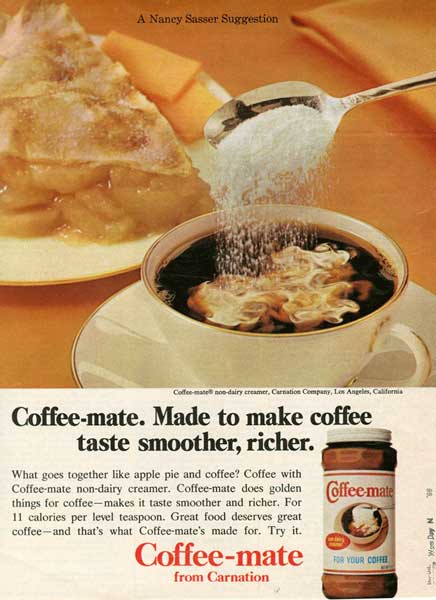
Last night’s episode featured references to Ritz crackers, Coffee Mate, Chevy Dealers Association, and Cutty Sark, among other things. Enjoy our selection of highlighted ads that reflect the brands and themes that Mad Men characters interacted with last night.
A gallery of our selected images may also be found on Flickr.
Dearest readers, do you ever feel that there’s not enough Rubenstein Library in your social media day? True, we’re on Facebook, and we have this wonderful blog, and many of our collecting centers also have extensive social media presences (check out the list in the right-hand column) . . . but what if you could follow our every rare-book-and-manuscript action on Twitter?
Well, do we have good news for you! We’ve joined the twitterverse! Come follow us @rubensteinlib, let us know about your research projects and your latest special collections discoveries, and get a behind-the-scenes look at how we spend our working days (and sometimes our non-working days).
Everyone’s favorite ad men and women are back with Season 7 of Mad Men! Join the Hartman Center as we look back at some ads that resonate with each episode of the new season in what we call Mad Men Mondays.
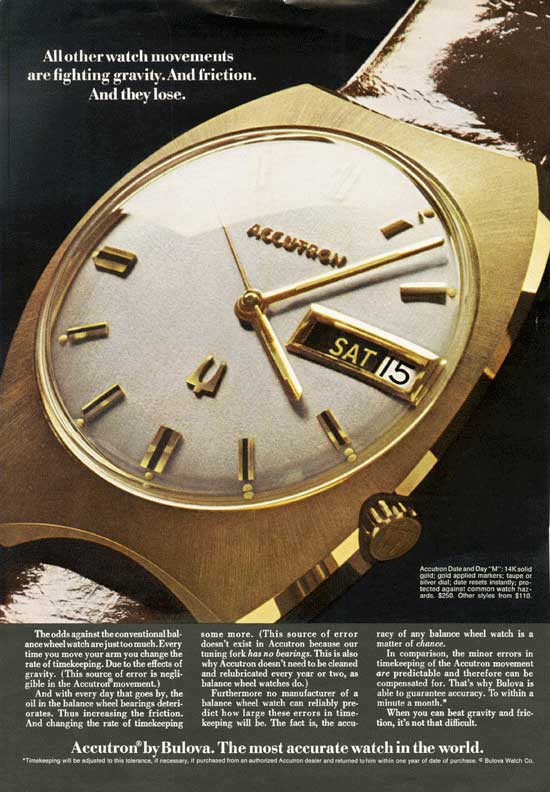
The episode begins in January 1969 with freelancer Freddy Rumsen pitching a commercial for Accutron watches to an enthusiastic Peggy. Later Peggy pitches a variation on the same ad to new SC&P creative director Lou Avery and is disappointed when he opts for a blander slogan.
Roger wakes up amongst a group of naked sleeping people on the floor of his messy hotel room when his daughter calls to invite him to brunch. A harried and overworked Ken asks Joan to meet with a representative from Butler Footwear in his stead.She quickly realizes that Butler’s marketing director intends to move all advertising in-house and dismiss SC&P.
Don visits Megan in Los Angeles for the weekend and they have a series of awkward encounters. Don also meets up with a happy, suntanned Pete, who shows him around the new office and brings him up to speed on SC&P gossip. Peggy and Ted have an awkward exchange when he visits the New York office. Joan meets with a Columbia University business professor to get an analysis of Butler Footwear’s plans.The professor’s ideas help Joan keep Butler’s account from firing SC&P right away.
Roger’s daughter forgives him for all of his transgressions over brunch, which doesn’t seem to sink in with him until later when he lies down with his lover and another man. Don meets a woman on the plane back to New York and they have a candid conversation about their lives, but he declines her offer of more. Peggy has to deal with her tenant’s toilet problems and is frustrated with her life.
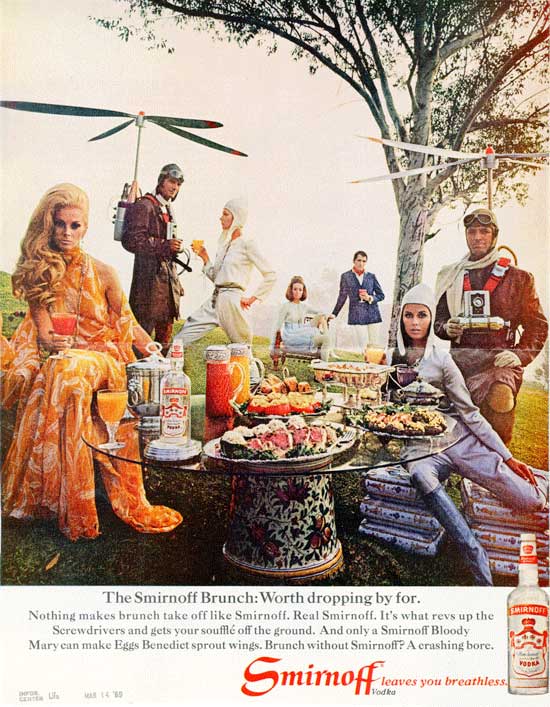
Last night’s episode featured references to Accutron watches, Austin Healy, brunch, vodka, and sliding doors, among other things.Enjoy our selection of highlighted ads that reflect the brands and themes that Mad Men characters interacted with last night.
Date: Tuesday, March 4th Time: 5:30 PM, reception to follow Location: Perkins Library room 217 Contact: Jacqueline Reid Wachholz, j.reid(at)duke.edu
“From Niche to Mainstream: Planet Brands and the Rise of the Socially Conscious Consumer”
Trish Wheaton is CMO of Wunderman and Managing Partner of Y&R Advertising, two global marketing giants. In her role for both companies, Wheaton identified the untapped marketing opportunity around sustainability and now leads a cross-disciplinary sustainability consulting practice that works with major brands to tell their sustainability story credibly and compellingly.
In this talk, Wheaton will share how many of the world’s leading brands are becoming more sustainable in their operations, their manufacturing, and in the products they make. These “Planet Brands” are leading the way to take sustainability from niche interest to a mainstream sentiment.
Wheaton will also introduce you to a rapidly growing global market of socially conscious consumers, “The Aspirationals,” who are demanding that companies be part of solving social and environment problems. And in an age of increasing transparency, The Aspirationals also want companies to talk about what they are doing: “If you do it, say it.” Wheaton’s talk will also include best case examples of companies who have told their sustainability story credibly and well.
We are pleased to announce one of Rubenstein’s newest digital collections: over 1,600 newsletters of the J. Walter Thompson Co. advertising agency from 1916 to 1986. These internally distributed newsletters touch on myriad topics of interest to the company, such as account and client news; general and client-specific marketing surveys; developments in print, radio, and television advertising and marketing research; as well as personnel news such as new hires, transfers, promotions, and brief biographical sketches.
The agency’s newsletters are among the most requested and circulated collections in the J. Walter Thompson Co. Archives. Thanks to the work of the Duke University Libraries’ Digital Projects and Production Services Department and Conservation Department, this tremendously rich resource is now available online. You can browse by title, year, and date, and can also search by keyword. Some select issues include:
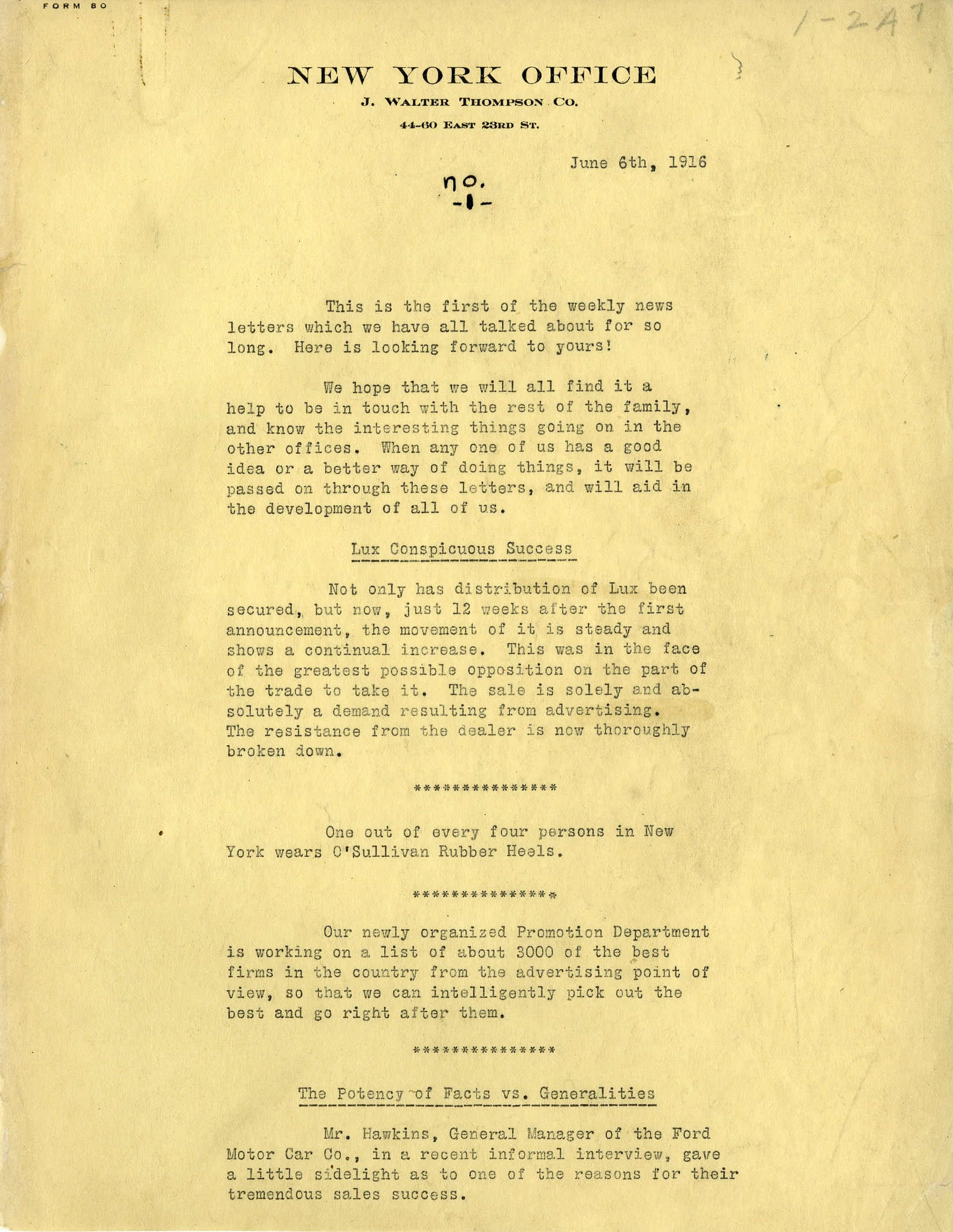
Issue No. 1, June 6, 1916
The first J. Walter Thompson Co. newsletter contains client and product news. It also includes an article, “Selling to the Multitude,” which discusses the professionalization of the advertising industry, its superiority over traditional modes of salesmanship, and the hope that one day advertising will be a budget line in all industries, right alongside “material, labor, overhead, and personal selling.”
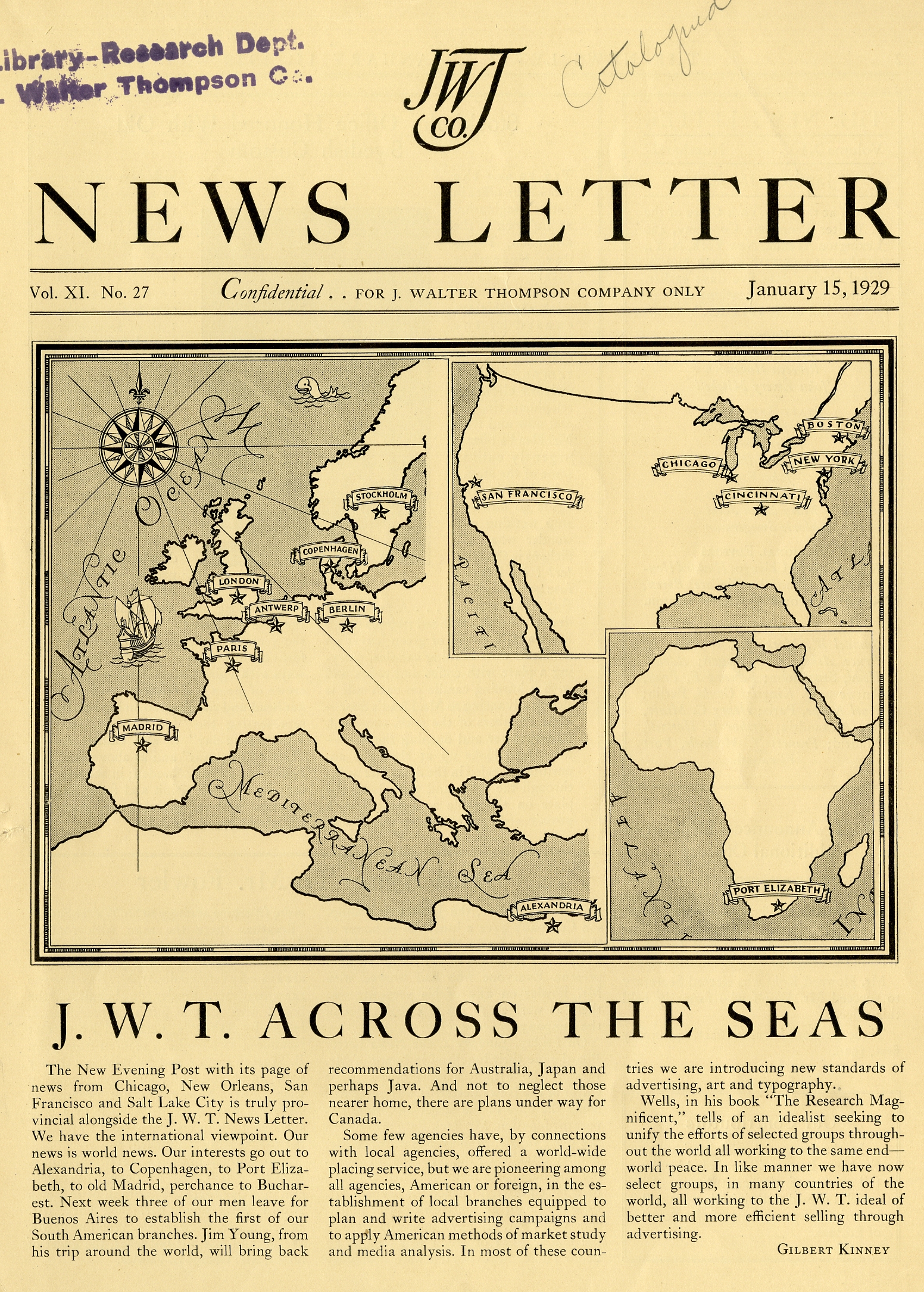
“JWT Across the Seas,” January 15, 1929
This particular newsletter is focused on news briefs from various overseas offices including London, Stockholm, Copenhagen, Antwerp, Paris, Berlin, and Madrid.
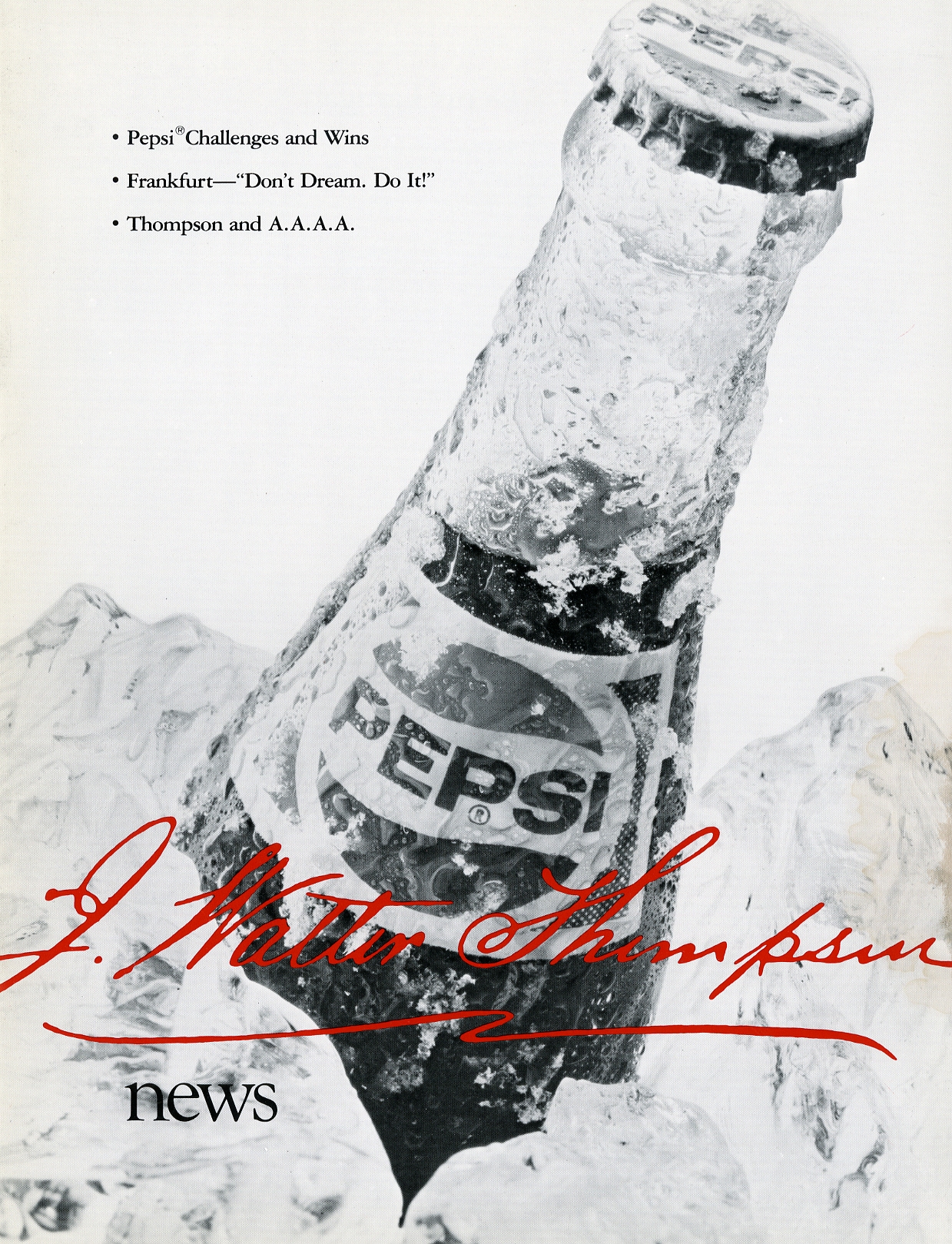
“Pepsi Challenges and Wins,” Fall 1982.
The fall 1982 newsletter highlights the success of the “Challenge” campaign in foreign markets. JWT launched the international campaign in Canada in 1976; it is considered the first notable worldwide application of an aggressive comparative campaign.
Check out the rest of the collection online and be sure to tune in to the Digital Collections blog for more information about this new collection.
Post contributed by Joshua Larkin Rowley, Hartman Center Reference Archivist.
Trying to find a way to visit the Rubenstein Library to use our collections? You’re in luck! The David M. Rubenstein Rare Book & Manuscript Library is now accepting applications for our 2014-2015 travel grants.
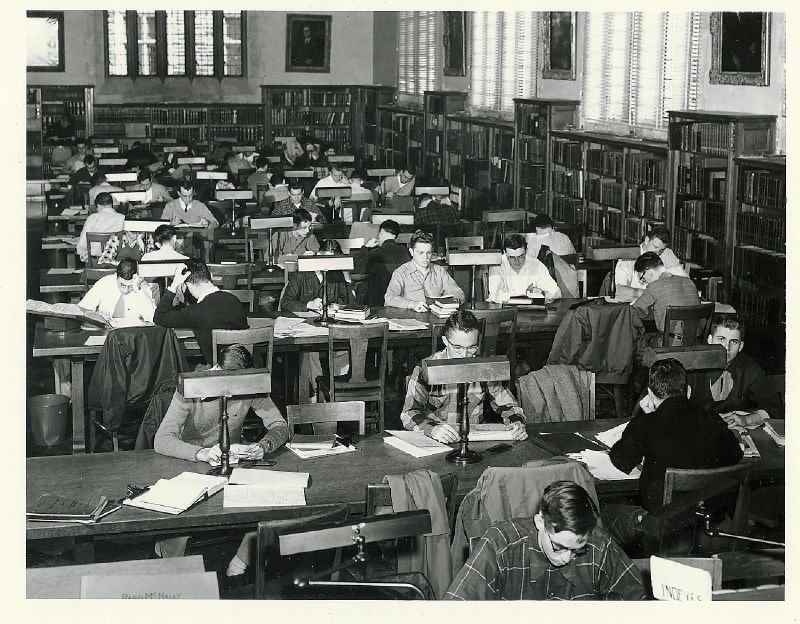
Want to be as cool as these gentlemen? Apply for a travel grant and come visit us!
The grants are open to undergraduate and graduate students, faculty, independent scholars, artists, and activists who live more than 100 miles from Durham, NC, and whose research projects would benefit from access to collections held by one of the centers and collecting areas.
The deadline for applications is January 31, 2014. Announcement of grant recipients will be no later than March 28, 2014. Travel grants must be used between April 2014 and June 2015.
Another change this year – our application process is now online. You can find more details including the online application on our travel grant website.
On Thursday, November 7th, twenty of Al Achenbaum’s family and close friends joined Duke library staff and faculty in a ceremony to dedicate his papers as part of the John W. Hartman Center for Sales, Advertising & Marketing History. In a series of comments given by Hartman Center staff, Achenbaum’s papers were lauded for their unique insight into building brand equity, strategic marketing planning, maximizing advertising agency-client relationships, and using systematic quantitative research as a guide to effective decision-making.
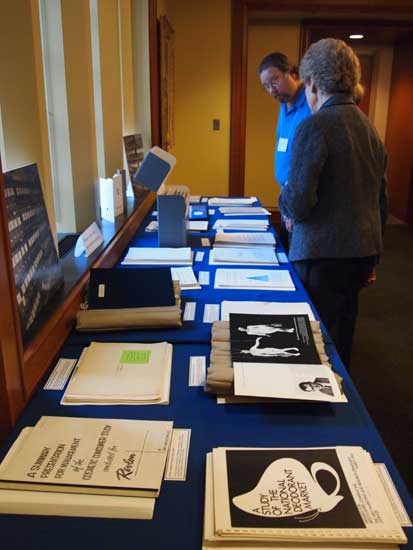
A display of materials from the Alvin A, Achenbaum Papers.
Over a remarkable 60-year career, he advised leading global marketers, including Procter & Gamble, GE, Toyota and Nestlé, on how to use marketing tools to improve the economic value of their businesses. He held senior executive positions at four major advertising agencies in New York, and was chairman of a series of leading marketing consulting firms which provided over 150 companies with systematic tools for addressing complex business challenges.
This 233-box collection will enrich the experiences of many students and scholars interested in the evolution of the advertising industry in the second half of the 20th century or the career of Al Achenbaum, known to many as the “Einstein of Advertising” and one of Advertising Age’s 100 most influential advertising people of the 20th century. Al’s son, Jon Achenbaum, described his father as the reason he started his own career in marketing, applying many of the marketing innovations that Al brought into the business world and read two passages from Al’s upcoming book.
Rounding out the event were remarks by Al Achenbaum himself, in which he stated that “marketing is the single most important driver of our modern economy” and that it will “continue to play a critical role in economic success – both in the U.S. and abroad.” He expressed his gratitude to his family and friends for supporting him throughout his life and career and expressed his enthusiasm for donating his papers to Duke and the Hartman Center.
To top off the ceremony, he announced that he is endowing the Hartman Center’s travel grant program, which will be named the Alvin A. Achenbaum Travel Grants. These travel grants will enable students and scholars to come from afar to use Hartman Center collections as part of their research each year. Since Achenbaum is in many ways a scholar of advertising and marketing himself, this is a wonderful way to continue his legacy in perpetuity.
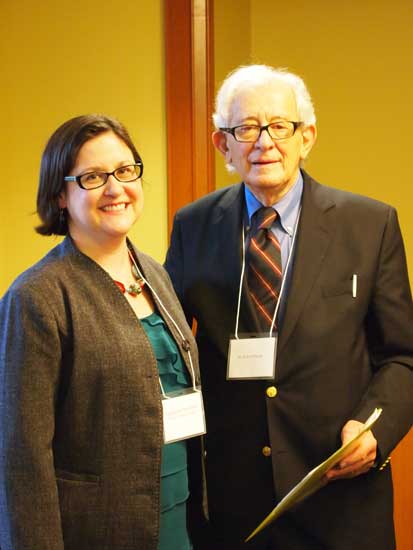
Hartman Center director Jackie Reid Wachholz and Al Achenbaum.
Date: Wednesday, October 23, 2013 Time: 5:30 p.m. Location: Room 217, Perkins Library, Duke University Contact: Rachel Ingold, (919) 684-8459 or rachel.ingold(at)duke.edu
Join the History of Medicine Collections for our fall Trent History of Medicine Lecture Series event to be held on Wednesday, October 23, 2013, in Room 217 of Perkins Library on Duke University’s West Campus. Jeremy Greene, M.D., Ph.D., will be presenting “The materiality of the brand: Form, function and the pharmaceutical trademark.”
Dr. Greene’s talk will explore the limits of patents and trademarks in the sphere of pharmaceutical intellectual property, and illuminate a century of controversy over the clinical, public health, and financial value of “look-alike drugs,” generic drugs that imitated their brand-name counterparts down to exact parameters of size, shape, and color. His historical analysis addresses thorny questions about which qualities of a brand-name drug are considered private property and whether parts of a drug other than its active ingredients (e.g., pill color) can affect its clinical function.
Dr. Greene is Associate Professor, Elizabeth Treide and A. McGehee Harvey Chair in the History of Medicine at the Johns Hopkins University’s Institute for the History of Medicine. His broader research interests focus on the history of disease, the history of global health, and the relationship between medicine and the marketplace. Dr. Greene also practices internal medicine at the East Baltimore Medical Center and the Johns Hopkins University Hospital. He has published on a wide variety of topics and his most recent book with Elizabeth Siegel Watkins is, Prescribed: Writing, Filling, Using, and Abusing the Prescription in Modern America, Johns Hopkins University Press, 2012.
Please note Dr. Greene will also be giving a talk at noon on October 23 on Imitation and Innovation: A Brief History of ‘Me-Too’ Drugs. This talk will be held from 12:00-1:00 pm in the Great Hall of the Mary Duke Biddle Trent Semans Center for Health Education at the Duke University Medical Center.