Category Archives: From Our Collections

Heschel Highlights, Part 5

The Wow! Factor

Welcome to the fifth post in a series documenting the processing of the Abraham Joshua Heschel Papers.

It’s no secret I have an affinity for oversize materials (see here).  And while the Abraham Joshua Heschel Collection only contains a modest number of oversize materials, those that are in the collection are proving to be quite extraordinary. Here are just a few of my favorites:
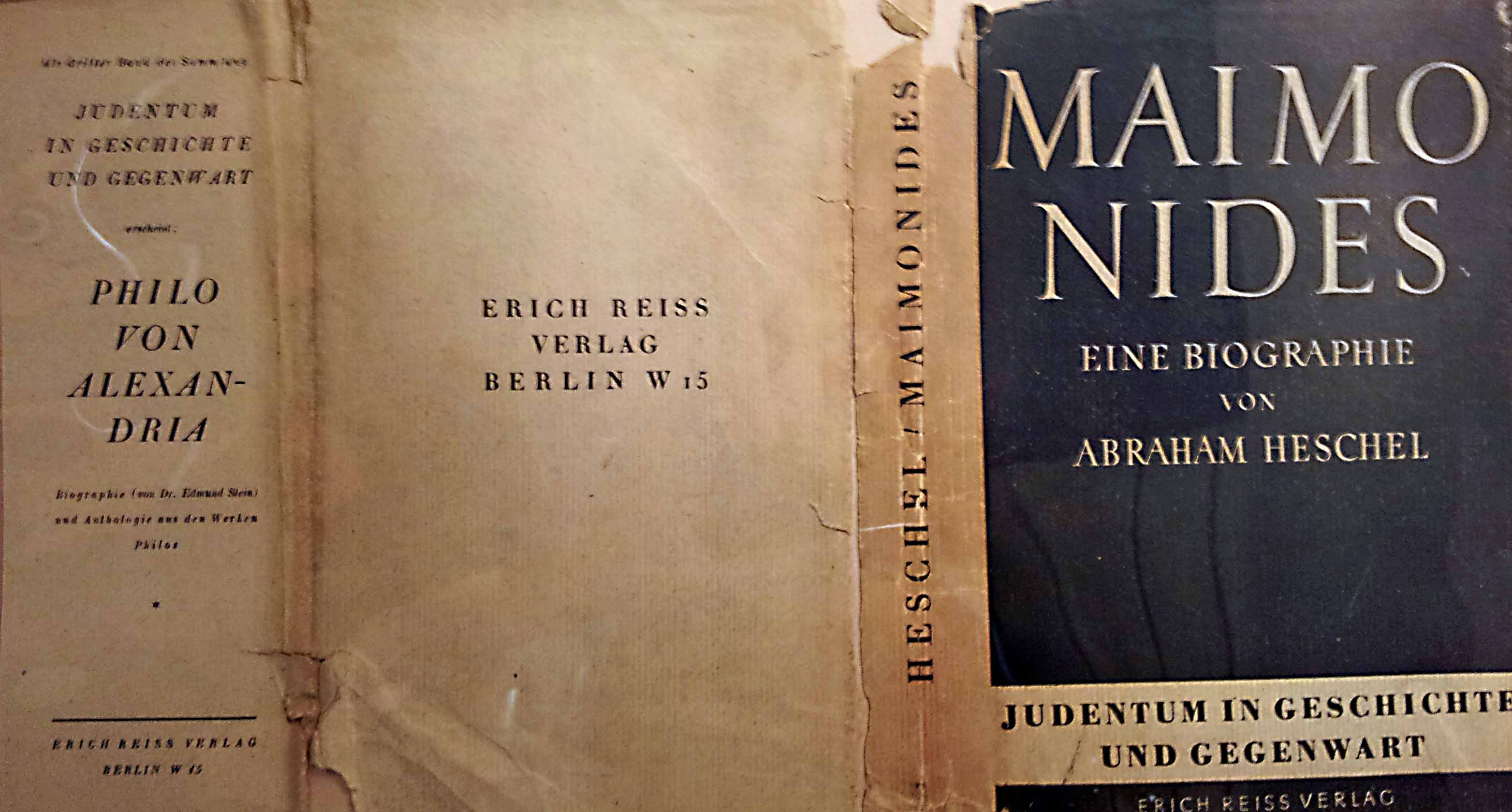
MaimonidesDust jacket from first edition of Maimonides eine Biographie, 1935.

Completed in only 7 months, the book was Heschel’s first major work. He was 28 years old.
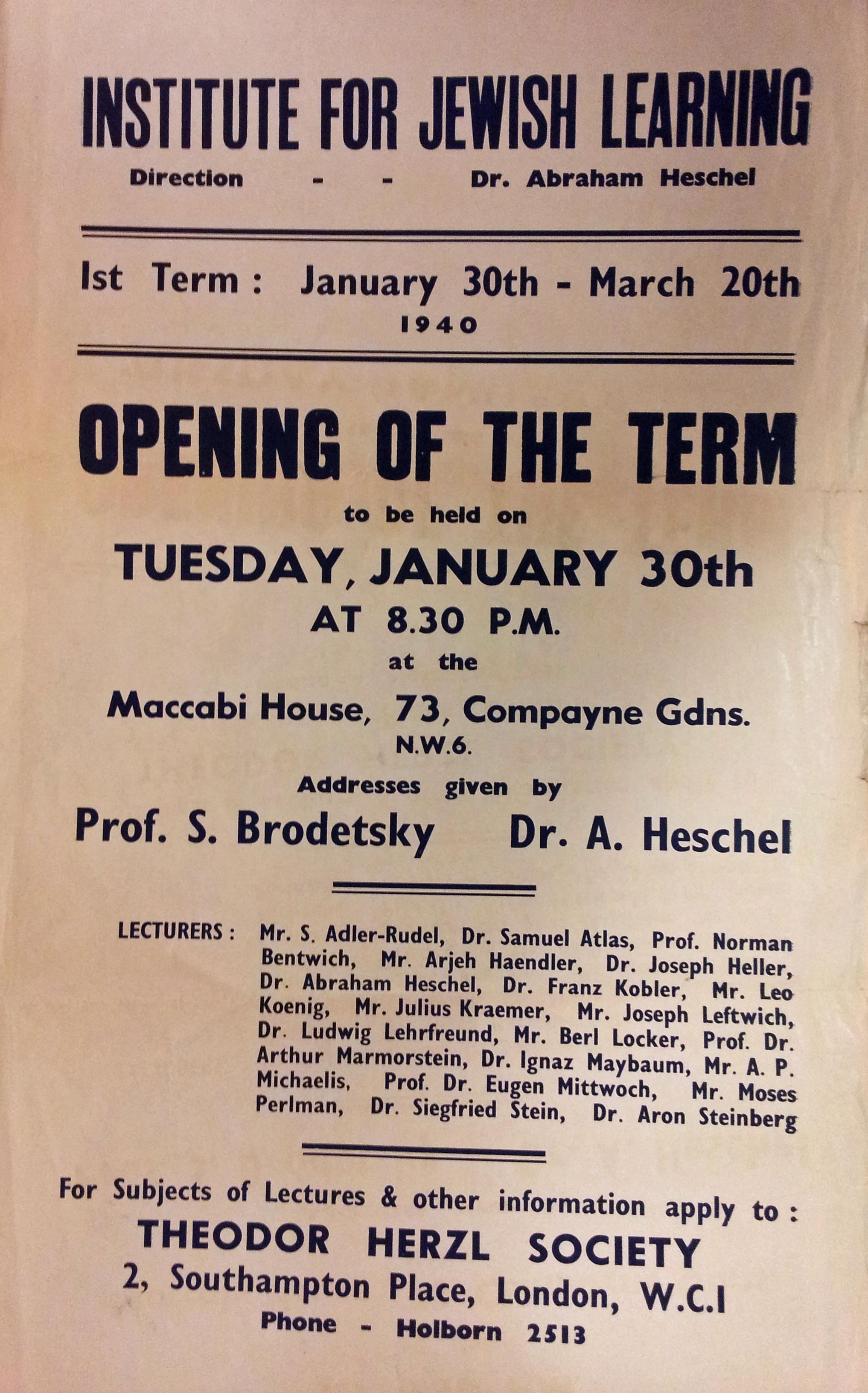
InstitutePoster, Opening of the Term at the Institute for Jewish Learning, London, 1940.

In 1939 Heschel received official confirmation from Julian Morgenstern, president of Hebrew Union College in Cincinnati, OH, of a position of a research fellow in Bible and Jewish Philosophy. Heschel left Warsaw for London, England to obtain an American visa for emigration to the United States. While in London, he founded the Institute for Jewish Learning to “introduce all ages and classes of Jew to the history and tradition of their forbears.”

Antwort“Antwort an Einstein” in Aufbau, 1940

Heschel’s article “Answer to Einstein” in the newspaper Aufbau (Reconstruction) which was a rebuttal to Albert Einstein’s paper “Science and Religion.” As a recent immigrant, this was an audacious and surprising move for Heschel.

Post contributed by Mary Samouelian, Heschel Processing Archivist in Rubenstein Technical Services.
“No car, no money, no food…just me.”

In the mid 1980s, Duke history student Joseph Sinsheimer interviewed veterans of the fight for voting rights in early-1960s Mississippi. The generational distance between the interviews and the subject worked in Sinsheimer’s favor: his narrators had gained the perspective of years but many still had their youth, with memory intact, and were ready to talk at length of their experiences. The collection guide to these remarkable interviews is a roll call of Civil Rights Movement leadership in the deep South:  C.C. Bryant, Robert Moses, Lawrence Guyot, Willie Peacock, Hollis Watkins and others detail Mississippi’s struggle through stories of their involvement.

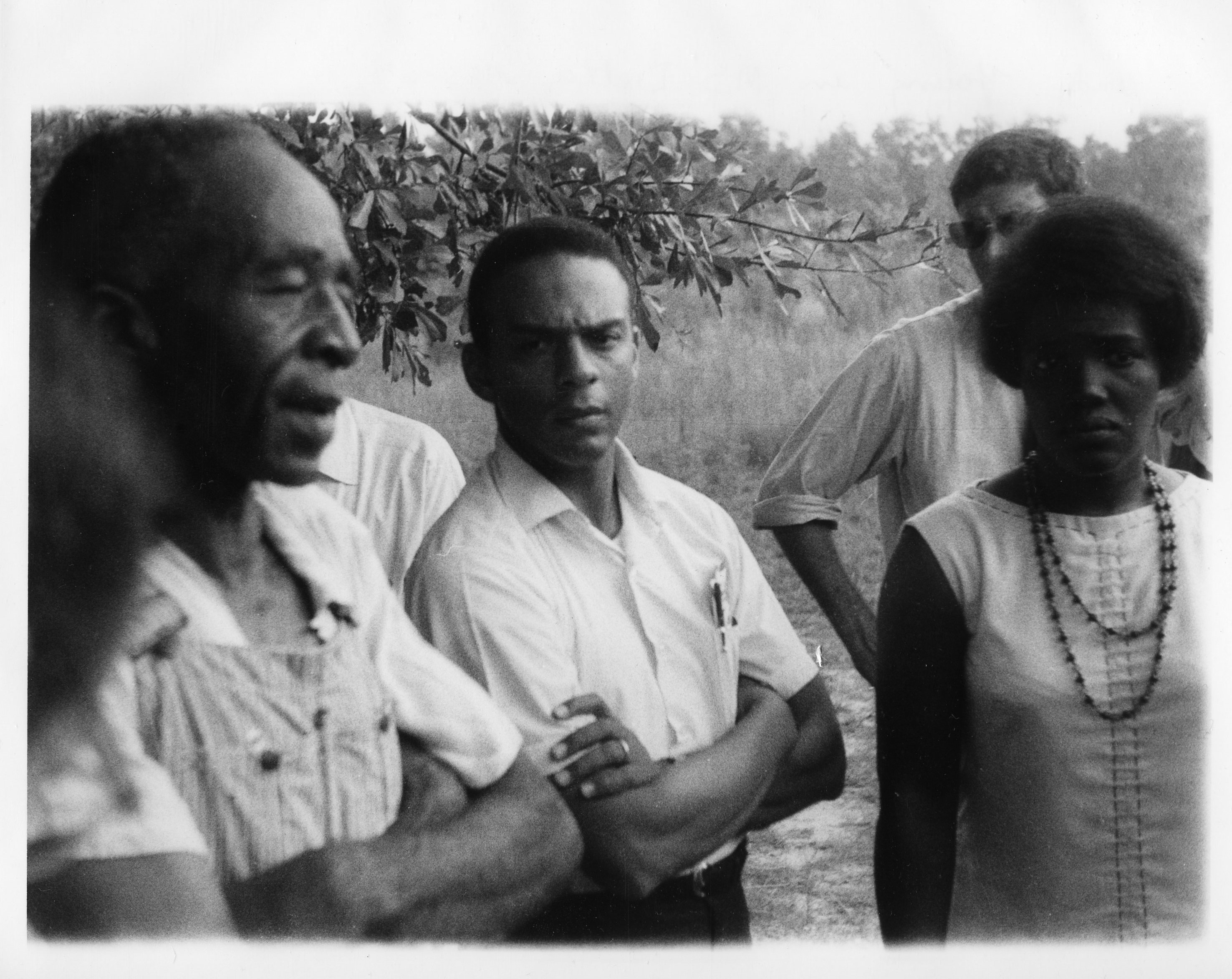
Andrew Young in Mississippi, 1963
Andrew Young during Mississippi’s Freedom Summer, 1963. From the Joseph Sinsheimer Papers.

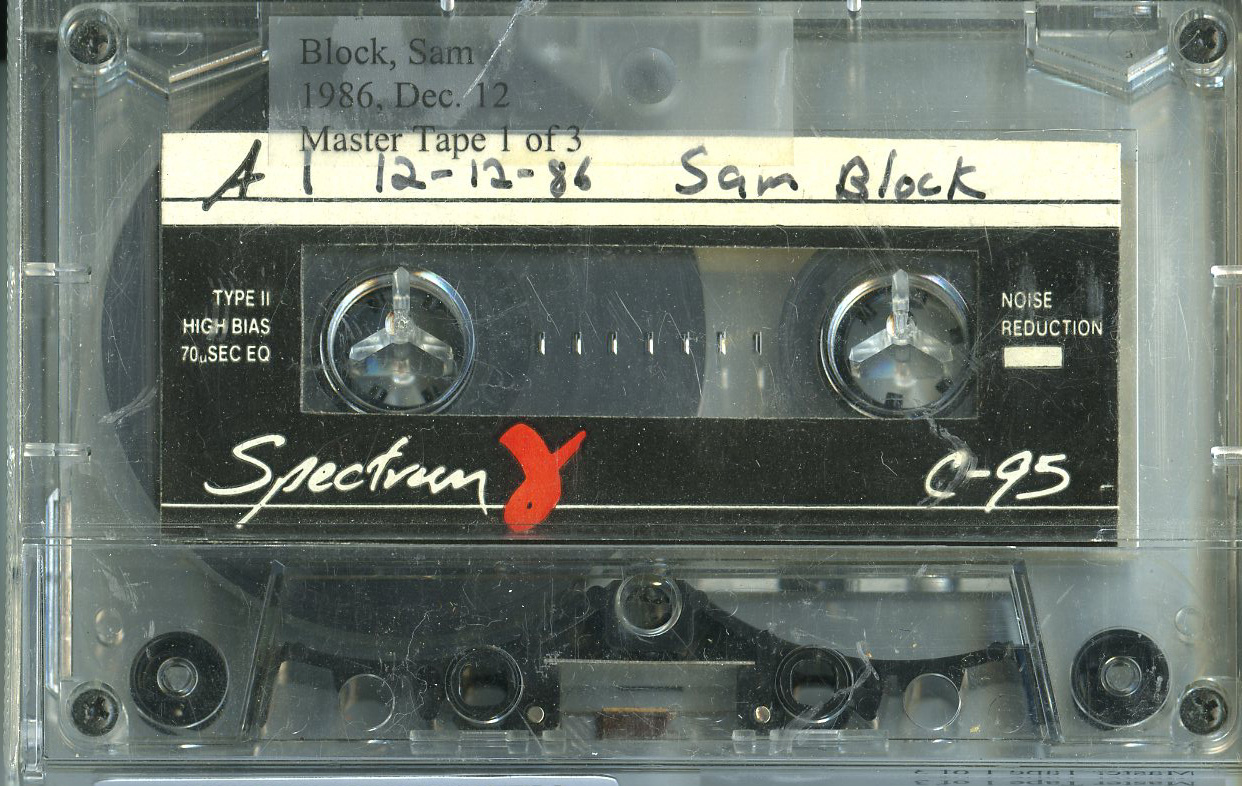
As we digitize the audiocassettes that Sinsheimer used to record the interviews, one story immediately stands out. Activist Sam Block’s retelling of how he came to be involved in the movement is a coming-of-age story informed by the death of Emmett Till and galvanized by a confrontation with a white customer at his uncle’s service station. His subsequent recruitment into the Movement via the Student Nonviolent Coordinating Committee, and his training at Highlander Folk School, were prologue to the courage Block demonstrated when he asked Robert Moses to drop him in Greenwood, Mississippi, with “no car, no money, no food…just me.”

Listen here: Sam Block interviewed by Joseph Sinsheimer

BlockTape_Sinsheimer

Post contributed by Craig Breaden, Audiovisual Archivist in the Technical Services Dept.

Unveiling the Haitian Declaration of Independence

HaitiDeclaration1blog
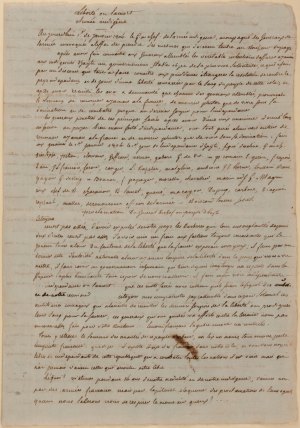
The first page of the manuscript copy of the Haitian Declaration of Independence now at the Rubenstein Library.

Date: Tuesday, January 21, 2014
Time: 5:00-7:00 PM
Location: John Hope Franklin Center for International and Interdisciplinary Studies, 2204 Erwin Road, Room 240
Contact Information: Will Hansen, william.hansen(at)duke.edu

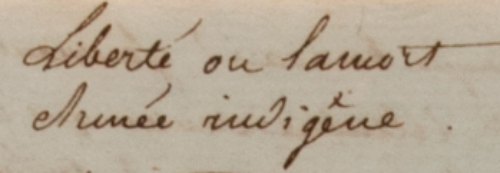
The Rubenstein Library has acquired a very rare manuscript copy of the Haitian Declaration of Independence.  This declaration by the army of black Haitians, of liberty from French colonial rule or death, made on 1 January 1804, carries strong echoes of the rhetoric of the American Revolution some thirty years earlier.  It established the first black republic in the world, and is the first declaration of independence written after the American version of 1776.

The scribal copy of the Declaration now at the Rubenstein was found in the papers of Jean Baptiste Pierre Aime Colheux de Longpré, a French colonizer of Saint-Domingue (Haiti) who fled the country during its revolution and settled in New Orleans.  The copy was very likely made shortly after the Declaration took effect on 1 January, 1804. It is one of only a few contemporary or near-contemporary manuscript copies known to scholars, joining copies at the British Library, the French National Archives, and the National Library of Jamaica.

HaitianDeclarationLiberte

A celebration of the Haitian Declaration of Independence will be held on 21 January at the John Hope Franklin Center for International and Interdisciplinary Studies, in collaboration with faculty and staff from Duke’s Haiti Lab.  A round table of scholars of the Haitian Declaration, including Duke Professors Laurent Dubois and Deborah Jenson, Assistant Prof. (and Duke PhD) Julia Gaffield of Georgia State University, and Prof. Richard Rabinowitz and Lynda Kaplan of the American History Workshop, will discuss its history and creation.  The Rubenstein Library’s manuscript copy of the Declaration will be on display in the Center’s gallery. Haitian specialties will be served.

Fantastical Characters for Twelfth Night

Tonight is Twelfth Night, with the conclusion of the twelve days of Christmas (and coming of the Epiphany celebration) on tomorrow, 6 January.  In England, Twelfth Night is a time of celebration with rich food and drink; traditionally, and especially in the Tudor era, it was also a festival of fantasy and role-reversal presided over by a Lord of Misrule.  Shakespeare’s Twelfth Night was written as a fitting performance for the night.

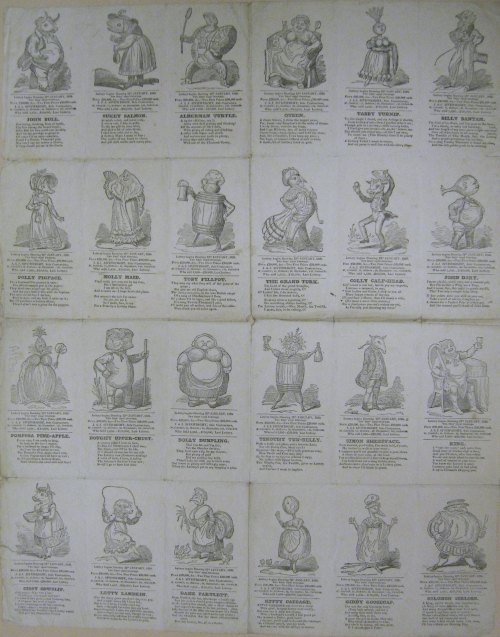
By the nineteenth century, these associations were inspiring many commercial endeavors as well.  A recently acquired sheet of advertisements for a lottery to be held in January 1820 features a menagerie of 24 Twelfth Night characters, mostly anthropomorphic edibles, from “Tabby Turnip” to “Solomon Sirloin.”

Uncut sheet of lottery puffs featuring Twelfth Night characters by George Cruikshank, 1820.

These advertisements, known as “puffs,” were made to be cut apart and handed out on the street to encourage the Lottery Puffs Tunbellypurchase of lottery tickets.  The characters were engraved by George Cruikshank, and this sheet is a rare, early example of his work, before he became famous as a caricaturist and illustrator of the works of Charles Dickens and others.

Twelfth Night, with its sudden elevation of commoner to (mock)  royalty, was a logical association to cultivate for a lottery.  The eight-line poems beneath each character all promote the lottery.  For instance, the poem for Timothy Tun-Belly reads:

With a bottle and glass, and a favorite Lass,
For old Daddy Care, what care I?
Supporters like mine — fill’d with generous wine,
Blue Devils and Care may defy.
By the drop in my eye, — a scheme I espy;
My cellars with liquor to store,
This Month, Sirs, the Twelfth, gives us Lottery wealth,
And Fortune I mean to implore.

Browsing the Chanticleer

Title Page of Chanticleer, 1939In August of this past year, I was hired as the student assistant for the Duke University Archives. The position is a thrill because it enables me to get paid for a hobby of mine: learning about Duke’s rich and diverse history.

Several of my projects have required me to use the Chanticleer, the university’s yearbook (view digitized volumes!), as a research tool. Scanning through old Chanticleers, it is interesting to observe the transformations in styles of clothes and hair from 1912 to the present day. Additionally, it is interesting to look at students with American history in mind. While researching, I found evidence of students’ mindsets during various points in American history: the world wars; the Jim Crow Era; the integration of Duke; the assassinations of President Kennedy and Martin Luther King, Jr.; Vietnam; Watergate; and 9/11.

The Chanticleer makes it very clear that Dukies of yesteryear—like Dukies of today—enjoy their time at Duke. Duke students have always been dedicated to making Duke a home through involvement in various organizations, academics, and general college fun.

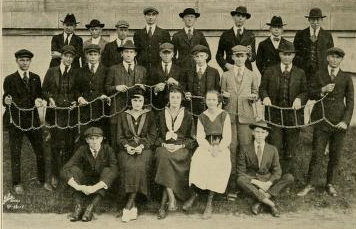
The Hades Club, circa 1920

One club that caught my attention as representing the jest of college students was the Hades Club, which existed during the 1920s. The club described itself as, “An organization of ministers’ sons and daughters who have never been caught,” and club members referred to themselves as “imps and impesses.”

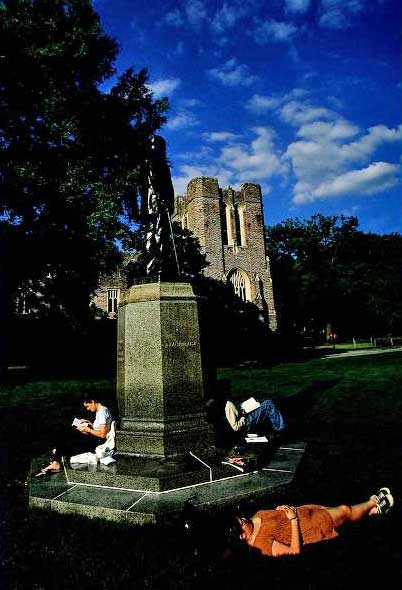
From the 1998 Chanticleer.

The sight of familiar buildings has been most impactful during my research. Amidst all the natural construction that takes place in academia, Duke has remained remarkably unchanged since about 1928. Students throughout the Chanticleer are posed and candidly photographed around West Union, Baldwin and Page, the Plaza, Wallace Wade and Cameron, and the various dorms. These scenes around Duke serve as a link between the eras.

After a semester discovering more Duke history, I now often walk the university’s unchanged pathways and look at its unchanged buildings wondering, “What fellow Dukie was walking these very steps fifty or one hundred years ago? What was on his or her mind that day? What was he or she headed to? Was it the same thing I am going to do now?”

It feels incredible to be part of the Duke legacy.

Post contributed by C. Bradford Ellison, student assistant for the Duke University Archives.

JWT Newsletters Are Now Available Online!

We are pleased to announce one of Rubenstein’s newest digital collections: over 1,600 newsletters of the J. Walter Thompson Co. advertising agency from 1916 to 1986. These internally distributed newsletters touch on myriad topics of interest to the company, such as account and client news; general and client-specific marketing surveys; developments in print, radio, and television advertising and marketing research; as well as personnel news such as new hires, transfers, promotions, and brief biographical sketches.

The agency’s newsletters are among the most requested and circulated collections in the J. Walter Thompson Co. Archives. Thanks to the work of the Duke University Libraries’ Digital Projects and Production Services Department and Conservation Department, this tremendously rich resource is now available online. You can browse by title, year, and date, and can also search by keyword. Some select issues include:

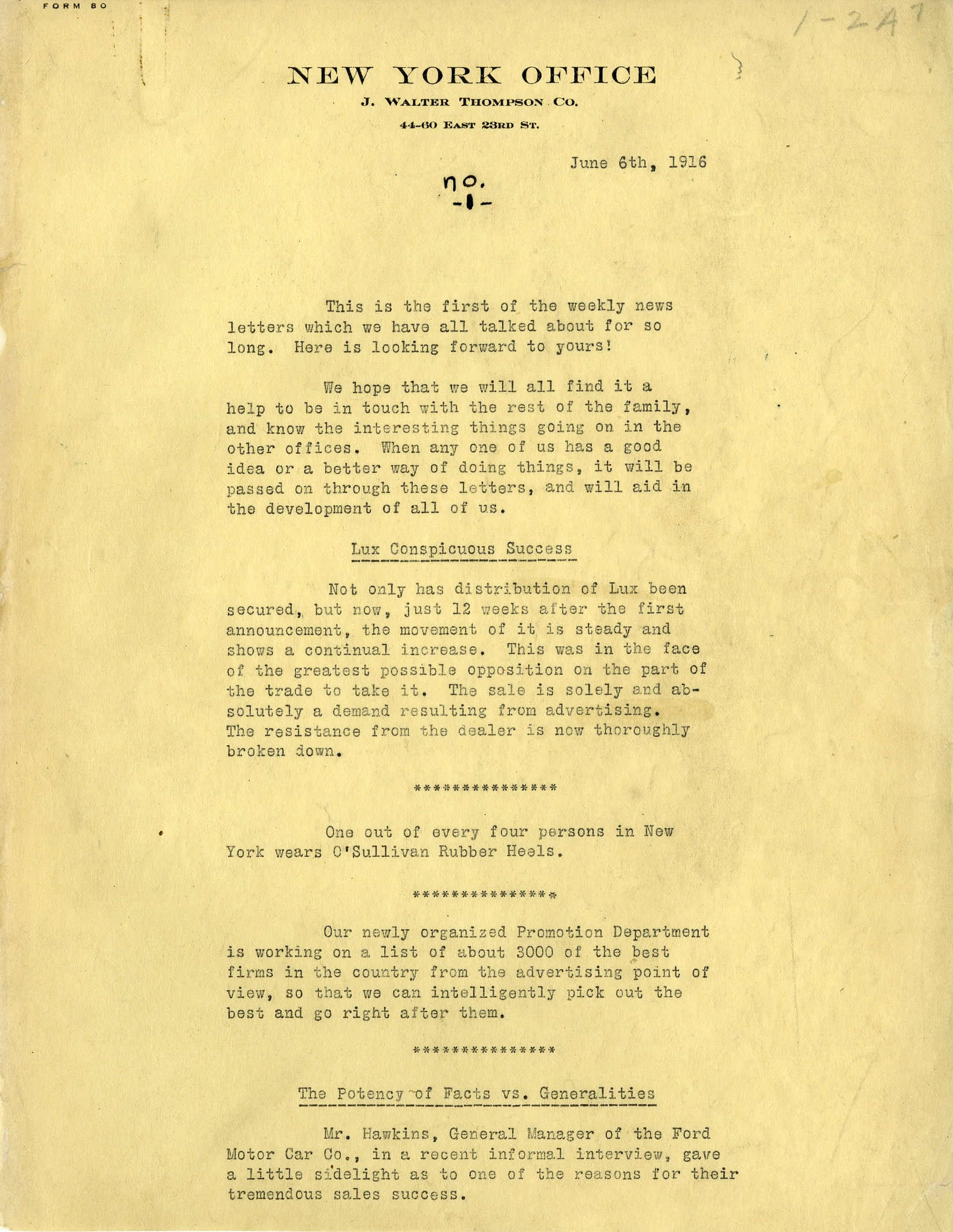
Issue No. 1, June 6, 1916

The first J. Walter Thompson Co. newsletter contains client and product news. It also includes an article, “Selling to the Multitude,” which discusses the professionalization of the advertising industry, its superiority over traditional modes of salesmanship, and the hope that one day advertising will be a budget line in all industries, right alongside “material, labor, overhead, and personal selling.”

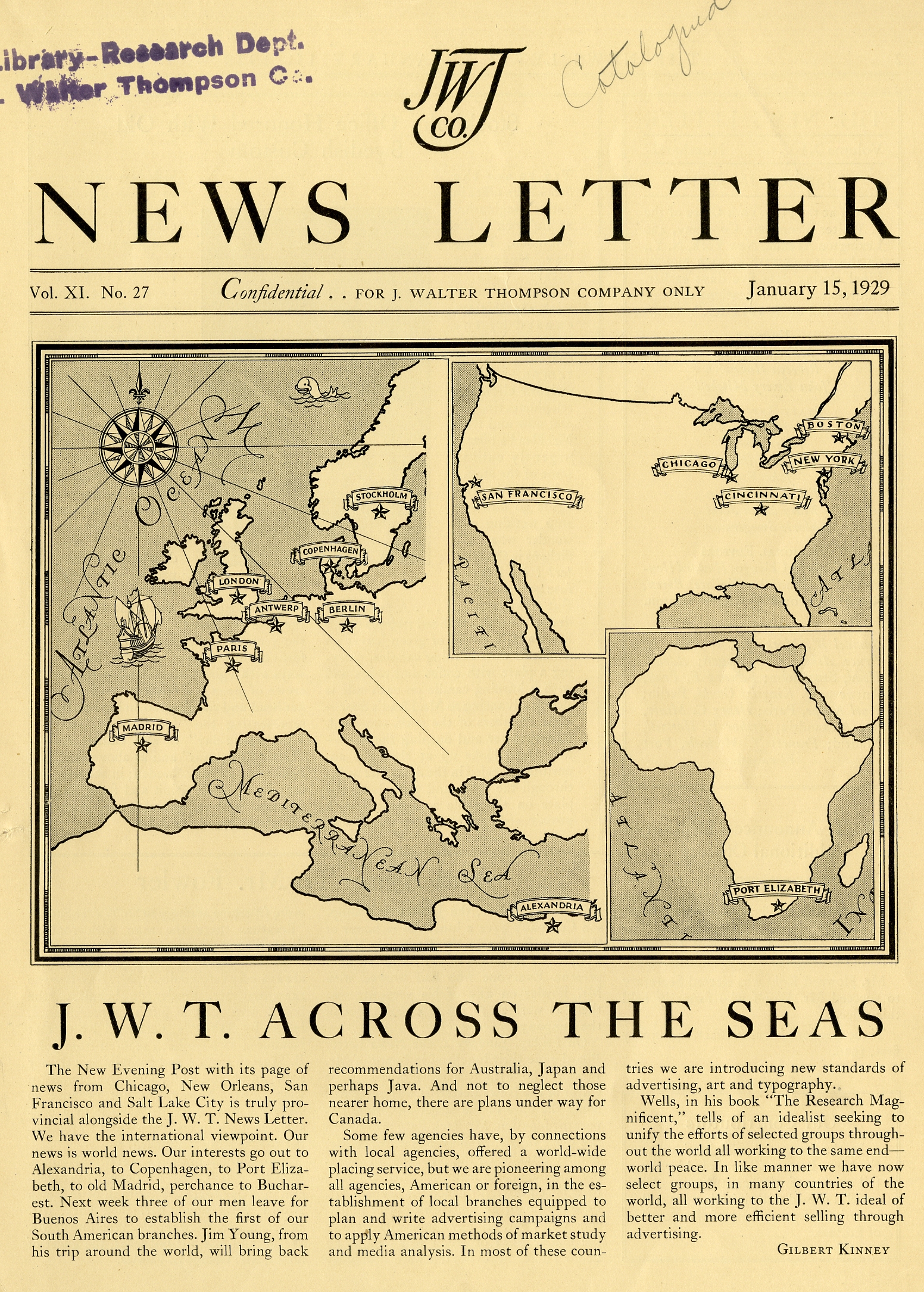
“JWT Across the Seas,”  January 15, 1929
“JWT Across the Seas,” January 15, 1929

This particular newsletter is focused on news briefs from various overseas offices including London, Stockholm, Copenhagen, Antwerp, Paris, Berlin, and Madrid.

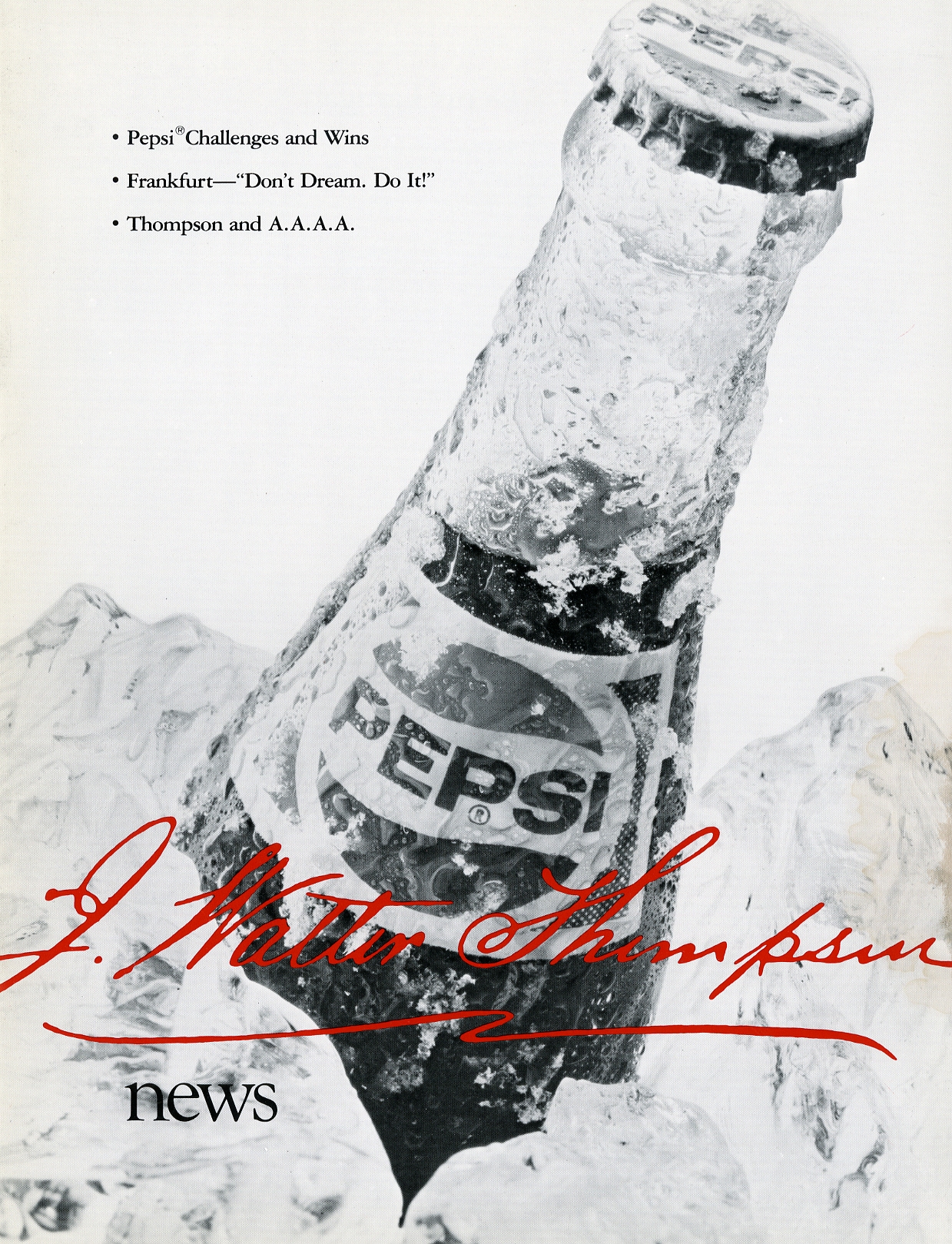
“Pepsi Challenges and Wins,” Fall 1982.

The fall 1982 newsletter highlights the success of the “Challenge” campaign in foreign markets.  JWT launched the international campaign in Canada in 1976; it is considered the first notable worldwide application of an aggressive comparative campaign.

Check out the rest of the collection online and be sure to tune in to the Digital Collections blog for more information about this new collection.

Post contributed by Joshua Larkin Rowley, Hartman Center Reference Archivist.

‘Tis the Season: Gifts to the Rubenstein Library, Day Five

To celebrate the holiday season this week, we’re highlighting a few of the many wonderful books that the Rubenstein Library has received as gifts over the past year.  We are truly grateful for the generosity of our donors.  A hearty “Happy holidays” and thanks and to all of those who have contributed to making 2013 a wonderful year for the Rubenstein Library!

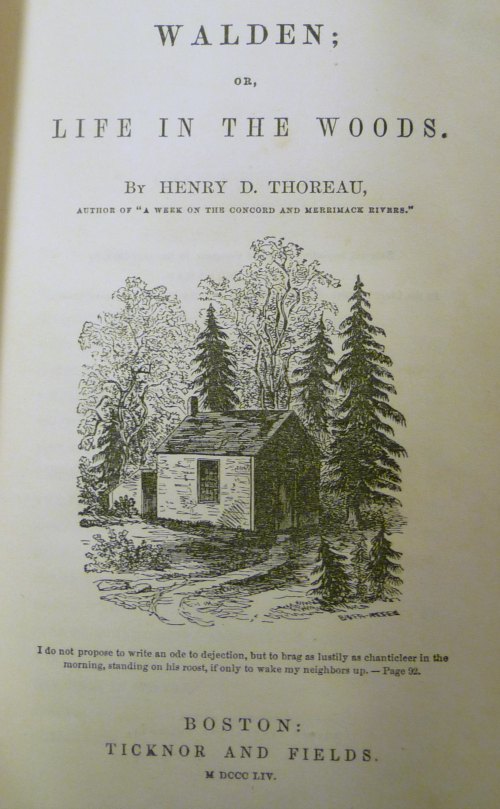
A beautiful copy of one of the pinnacles of American literature, the 1854 first edition of Henry David Thoreau’s Walden; or, Life in the Woods, has been donated to the Rubenstein Library by Professor Leland Phelps.

WaldenTitlePage

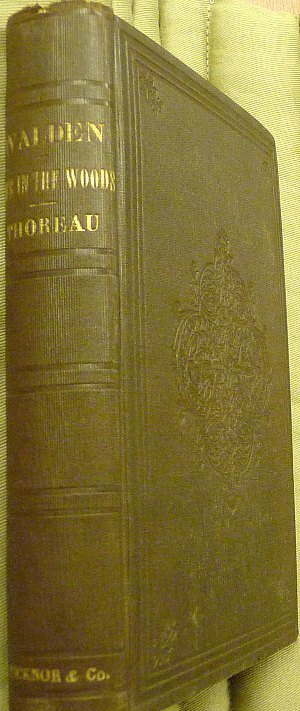
Thoreau’s genre-bending record of his experiment in simple living in the forest by Walden Pond has been an WaldenSpineCoverimportant influence and inspiration for literary scholars, naturalists, environmentalist, philosophers, economists, and many others for over 150 years.  While it was immediately recognized as an important work by many of Thoreau’s transcendentalist contemporaries, such as his friend (and owner of the land on which Thoreau  Ralph Waldo Emerson, the 2000 copies printed for the first edition took almost five years to sell.

The copy donated by Professor Phelps to Duke was formerly owned by Professor Frederick Whiley Hilles and is in excellent condition, with its original binding and remarkably bright pages.  Thanks to this gift, students and scholars at Duke will have the opportunity to experience this iconic text in its original form, nearly as it would have been encountered in 1854, fresh from the press.

Walden is one of the highlights of a large donation by Professor Phelps this year, which also includes other editions of nineteenth- and twentieth-century American literature such as a remarkable collection of William Faulkner’s works (including many first editions), and many important books in art and architecture.  We are honored by his support of the Rubenstein Library and thankful for his remarkable donation!

‘Tis the Season: Gifts to the Rubenstein Library, Day Four

To celebrate the holiday season this week, we’re highlighting a few of the many wonderful books that the Rubenstein Library has received as gifts over the past year.  We are truly grateful for the generosity of our donors.  A hearty “Happy holidays” and thanks and to all of those who have contributed to making 2013 a wonderful year for the Rubenstein Library!

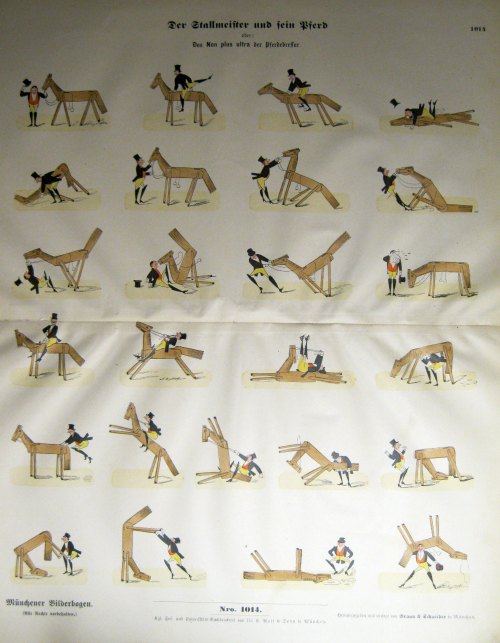
The Münchener Bilderbogen are a famous series of illustrated broadsides produced in Munich for over fifty years, from 1848 into the first decade of the twentieth century.  Important documents in the development of comic strips and cartooning, and quite influential in Europe’s visual culture in the nineteenth century, the Bilderbogen were created by German artists, illustrators, and writers such as Wilhelm Busch, Lothar Meggendorfer, and Adolf Oberlander.

MunchenerBilderbogenStallmeister
“Der Stallmeister und sein Pferd” (“The Stableman and His Horse”), Munchener Bilderbogen no. 1014, ca. 1886.

Seventeen bound volumes of the Bilderbogen were donated this year to the Rubenstein Library by Christine L. Shore in honor of her mother Ottilie Tusler Lowenbach.

MunchenerBilderbogenRabbits
“Vom Osterhasen” (“The Easter Bunny”), Munchener Bilderbogen no. 1015, ca. 1886.

This generous gift complements existing Rubenstein Library holdings related to caricature and cartoons, and our comic book collections.  Our thanks to Christine Shore!

‘Tis the Season: Gifts to the Rubenstein Library, Day Three

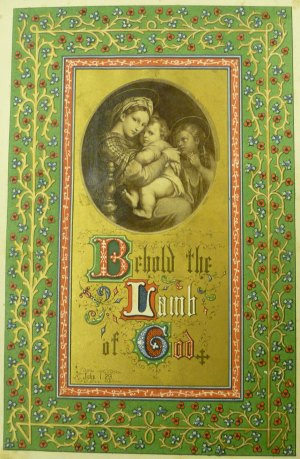
Frontispiece of Holy Bible, with circular photographic onlay.

To celebrate the holiday season this week, we’re highlighting a few of the many wonderful books that the Rubenstein Library has received as gifts over the past year.  We are truly grateful for the generosity of our donors.  A hearty “Happy holidays” and thanks and to all of those who have contributed to making 2013 a wonderful year for the Rubenstein Library!

Funds donated to the Rubenstein Library in 2013 facilitated the purchase of two very different books featuring photographs.  One, the Holy Bible published by Eyre and Spottiswoode in 1865, features twenty mounted photographs by Francis Frith.  Frith, an Englishman, was a pioneering photographer of the Middle East in the 1850s, and some of the early photographic views of Holy Land sites such as Bethlehem and Jerusalem are included in this Bible.  This purchase was made possible by the addition of funds to the Leland Phelps Rare Book Endowment Fund.

"Bethlehem with Church of the Nativity," by Francis Frith, from Holy Bible.
“Bethlehem with Church of the Nativity,” by Francis Frith, from Holy Bible, 1865.

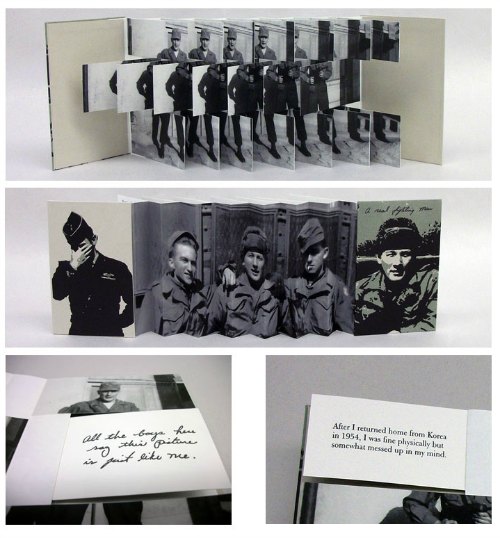
A generous donation of funds for materials related to military history facilitated the acquisition of Lee and Amy Pirkle’s work A Real Fighting Man.  Published in an edition of twenty copies in 2012, A Real Fighting Man is an artist’s book that combines art based on snapshots sent home by Lee Pirkle (Amy’s grandfather) from the Korean War with text chosen by Amy from an essay that Lee wrote about his wartime experience.

PirkleRealFightingMan
Lee and Amy Pirkle, A Real Fighting Man. Image courtesy of Vamp & Tramp Booksellers.

A Real Fighting Man‘s flag book structure, as seen above, allows the reader to juxtapose sections of image and text in many revealing ways.

‘Tis the Season: Gifts to the Rubenstein Library, Day Two

MagnaChartaBindingTo celebrate the holiday season this week, we’re highlighting a few of the many wonderful books that the Rubenstein Library has received as gifts over the past year.  We are truly grateful for the generosity of our donors.  A hearty “Happy holidays” and thanks and to all of those who have contributed to making 2013 a wonderful year for the Rubenstein Library!

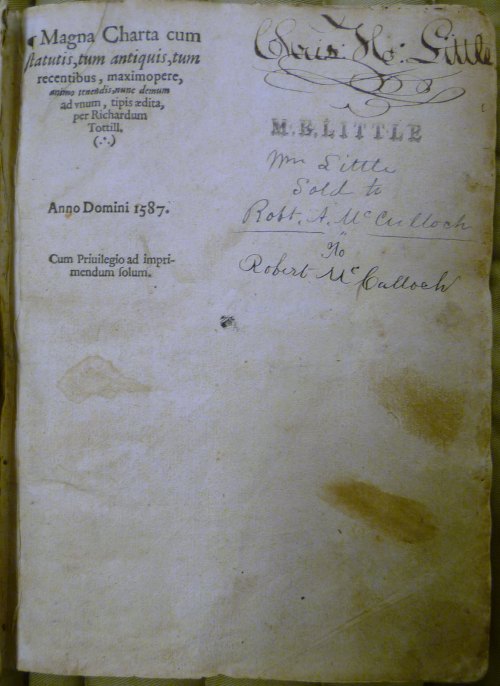
Richard Heitzenrater, William Kellon Quick Professor Emeritus of Church History and Wesley Studies in Duke’s Divinity School, donated a number of books in the fields of law, religion, and literature to the Rubenstein Library this year.  Among them is an early printing of the Magna Carta and other laws of England, Magna Charta cum Statutis tum Antiquis tum Recentibus, published in 1587 by Richard Tottell, the foremost printer and bookseller of law books in Elizabethan London.

A rare and important book in any condition, the copy donated by Prof. Heitzenrater is particularly notable for its unusual format: the paper is much larger than in typical copies of the book, and the printing confined to one upper corner of each page, as seen on the title page below.

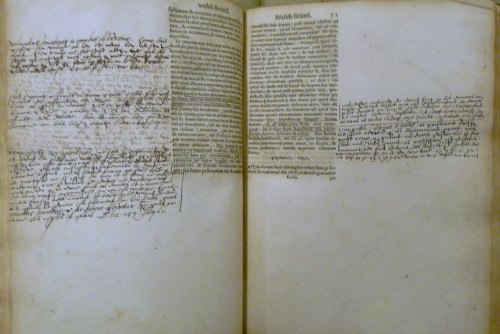
MagnaChartaTitlePageThis format allowed for very large margins in which those in the legal professions could record their notes and cite additional or updated statutes.  Indeed, this copy contains many early (probably seventeenth-century) handwritten notes and citations throughout the text.

MagnaChartaMarginaliaOur thanks to Prof. Heitzenrater for this important document of the Elizabethan era!