Category Archives: From Our Collections

The Tweetable Letters of “Mother Whitman”

Louisa Van Velsor Whitman. From the Trent Collection of Whitmaniana.

Wesley Raabe, Assistant Professor in the Department of English at Kent State University, has published an edition of the letters of Walt Whitman’s mother, Louisa Van Velsor Whitman, on the Walt Whitman Archive website.  Entitled “walter dear”: The Letters from Louisa Van Velsor Whitman to Her Son Walt, the edition includes a critical introduction, images of the original letters, transcriptions, and extensive explanatory annotations on each letter. 144 of the 170 letters in the edition are held in the Trent Collection of Whitmaniana here at the Rubenstein Library.

In addition, Prof. Raabe shares thoughts on editing these fragile letters, and on the treatment they have received from our Conservation Services Department here at Duke,  in a thought-provoking blog post entitled “Restoring Fragile Remains: Two Louisa Van Velsor Whitman Letters.”  If it strikes a chord with you, please consider adopting an item from the Trent Collection of Whitmaniana or another selection in the Libraries’ new Adopt-a-Book program to support the conservation of our materials.

Finally, Prof. Raabe has created a Twitter account to share excerpts from Louisa’s eminently quotable letters.  Follow @MotherWhitman for such gems as:

Post contributed by Will Hansen, Assistant Curator of Collections.

Thank You, Steven Frownington McWhiskers

During renovations to the Rubenstein Library, a new carving was discovered in a remote corner of the stacks. The image of a fairly grumpy looking cat is a tribute to a campus friend named Steven Frownington McWhiskers—affectionately known as Steve.

GRUMPY

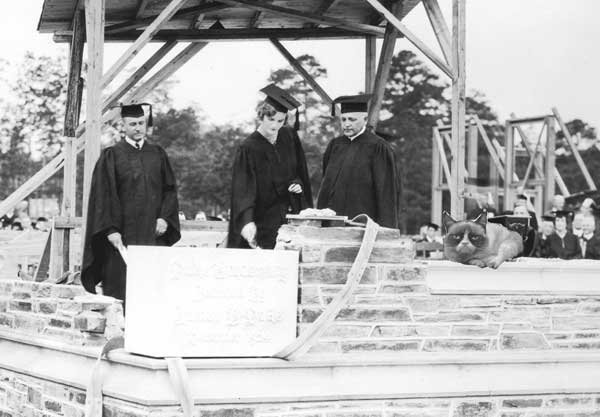
Steve was a local farm cat who took a great interest in the construction on West Campus between 1927 and 1932. Present for everything from the placement of the cornerstone in the Union to the erection of the Chapel spire, Steve was a steadfast friend and critic. His smoldering glare reminded the stonecarvers that even a single errant stone would mar the beauty of the campus. With a low growl and a hiss, Steve reminded all that he watched over them—and did not approve of anything short of perfection.

Grumpy Cat at the West Campus cornerstone-laying ceremony, 1928

Grumpy Cat helps with Duke Chapel construction, 1932

We fondly remember Steve today for his efforts to ensure that Duke University would be a place of great beauty for people and cats alike.

Post contributed by Valerie Gillispie, Duke University Archivist.

Rubenstein Library Acquires Radio Haiti Archives

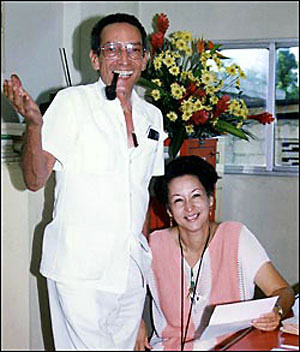
Jean Dominique and Michèle Montas in the Radio Haiti newsroom.
Jean Dominique and Michèle Montas celebrating the anniversary of the station in the Radio Haiti newsroom, 1990. From the Radio Haiti Records.

The Human Rights Archive at Duke University’s Rubenstein Library and the estate of broadcaster Jean Dominique have announced a partnership to preserve the broadcast archives of the journalist’s iconic Radio Haiti station.  From the 1960s to 2002, Radio Haiti was that country’s first independent radio station, promoting democratic freedoms, speaking out against human rights abuses, and celebrating Haitian life and culture. The station’s archive includes approximately 2,500 audio recordings of programs, as well as 28 boxes of paper records. Recordings include daily coverage of events, cultural programs, interviews on public affairs, political analysis, and roundtable discussions on different aspects of Haiti’s recent history.

“The Radio Haiti collection is an incredibly important resource for understanding the recent history of Haiti,” said Laurent Dubois, Marcello Lotti Professor of Romance Studies and History at Duke. “Because the station broadcast news and reportage largely in Creole and extensively covered events both in Port-au-Prince and the rural areas of Haiti, the collection gives us unequalled access to an understanding of one of the most important grassroots democratic movements in recent history: the movement that overthrew the Duvalier dictatorship in 1986.”

The Radio Haiti archives were donated to the Rubenstein Library by Michèle Montas, station co-anchor and widow of Jean Dominique. Dominique had an unquenchable passion for Haiti and its people, and his quest for truth and justice may have led to his assassination in 2000.

According to Montas the archives “capture a time and place in which journalists and broadcast journalism played a major role in redefining a country and reaching a people. Beyond Haiti, they bear witness to the turbulent transition from a dictatorship to a functioning democracy. ”

Montas stressed that the archives matter today because they touch on and track issues that remain of paramount importance in Haitian society. “By saving these archives and making them once more accessible to large audiences, Duke and the Rubenstein Library are playing a crucial role in advancing the dialogue about Haiti and its future.”

On April 3, Montas will be at Duke to discuss the history of Radio Haiti and its archive. Archivists from the Rubenstein Library will also share some of the challenges of preserving such a large audio collection and discuss the importance this archive has for the broader Haitian community and the human rights movement.  Those interested in learning more about preserving Radio Haiti can visit Duke Library’s Youtube channel.  The event is free and open to the public and will be held at 12 p.m. in the Forum for Scholars and Publics, Old Chemistry Building Room 011, on Duke’s West Campus. Lunch will be provided.

The Radio Haiti archives join other recent acquisitions by the Rubenstein Library documenting the history of Haiti, including the records of the National Coalition for Haitian Rights, the Mark Danner Papers, and a scribal copy of the Haitian Declaration of Independence dating from 1804.

The Radio Haiti archives will open for research after conservation review and archival processing are complete. For more information, contact Patrick Stawski, Human Rights Archivist.

Preserving Radio Haiti

RadioHaiti_blog_photo

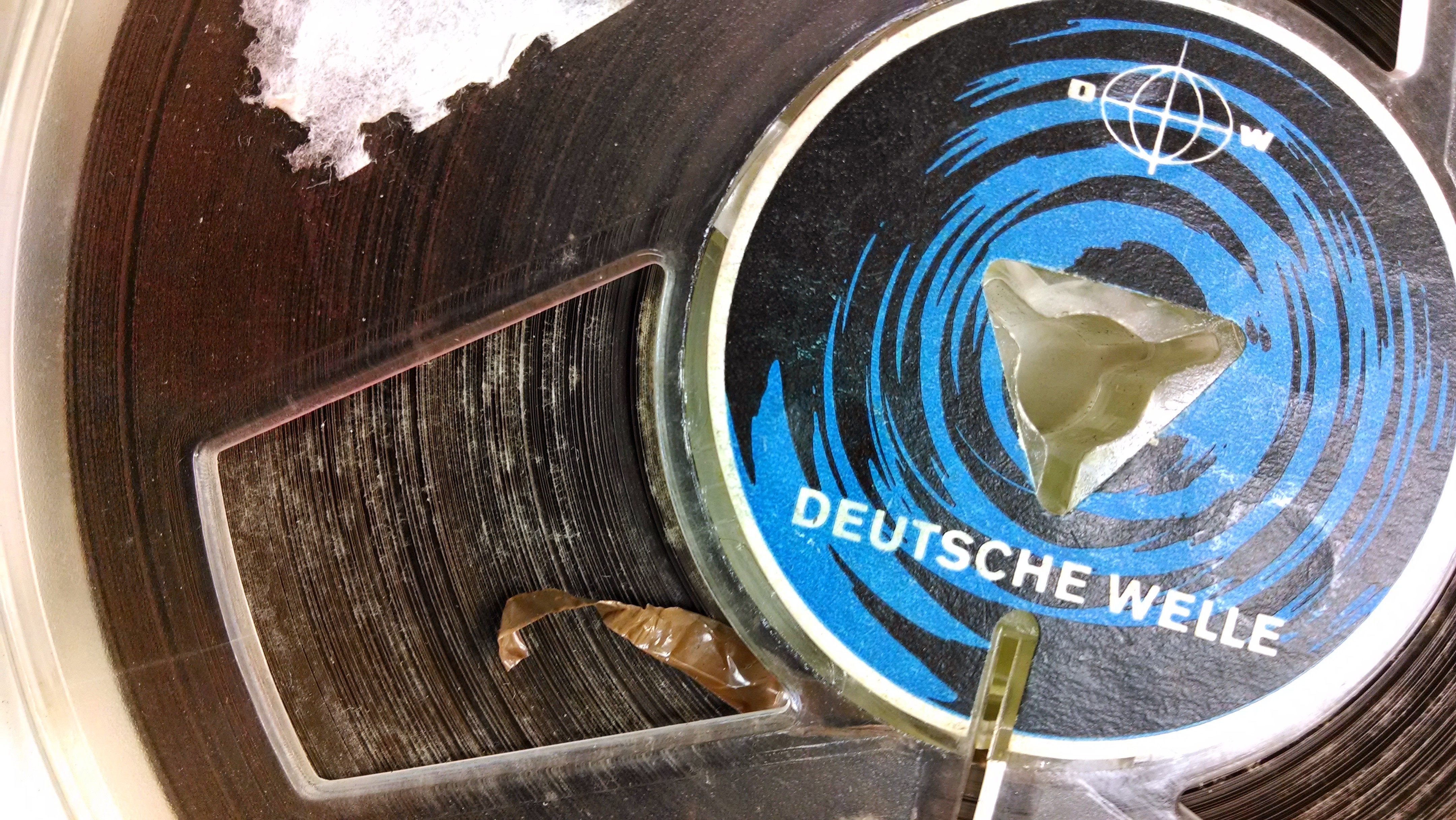
The Radio Haiti Records are the fruit of the work of Haitian dissident and “agronomist” Jean Dominique, and chronicle the station’s role in fighting for the people of Haiti.  Jean Dominique was assassinated on April 3, 2000.  His widow and Radio Haiti partner, former UN Spokesperson Michele Montas, brought the Radio Haiti Records to the Rubenstein Library last year, and while it has its challenges – its primary language is Haitian Kreyol and its 3,420 analog tape recordings have spent the better of their lives in a mold-inducing tropical climate – it is that rare collection where value (historical, cultural, human) outweighs almost any conceivable obstacle to making it accessible.

To begin the process of digitizing the recordings, as a first step to transcription and translation, we have created a small pilot project that tests our capabilities and captures the kinds of numbers we need to evaluate the costs associated with preserving Radio Haiti in the long term.  We made the video below to demonstrate some of the basic considerations in approaching the preservation of this important collection.  For more information, check out the Preservation Underground blog, where Head of Conservation Beth Doyle discusses the process we used to clean the mold off the tapes.

Post contributed by Craig Breaden, Audiovisual Archivist

Bruno Foa’s Trip to Jerusalem

foa1
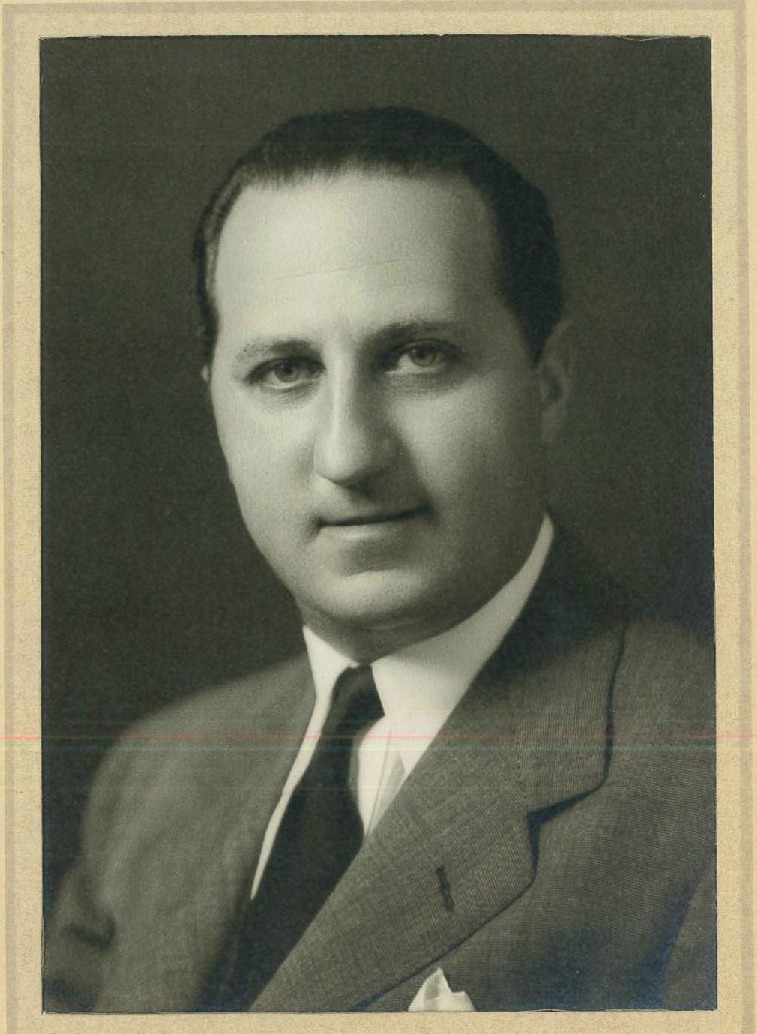
Portrait of Foa from the Bruno Foa Papers.

Bruno Foa (1905-1999) was an Italian-born, Jewish economist, lawyer, consultant, and professor. Educated in Italy as an economist and lawyer, Foa became Italy’s youngest full professor of economics at age 28. In 1937, he married Lisa Haimann, a refugee from Munich, and they moved to London in 1938. While in London, Foa worked for the British Broadcasting Company, the National Institute of Economic and Social Research, and guest lectured at the London School of Economics. In 1940, Foa moved his family to the United States. He began work at Princeton University on a Rockefeller Foundation Grant and later moved to Washington D.C., where he worked for the Rockefeller Foundation, the Office of Inter-American Affairs, the Bureau of Latin American Affairs and the Federal Reserve Board.

We have recently re-processed the Bruno Foa Papers in order to enhance their description and access for researchers as part of the Economists Papers Project here at the Rubenstein Library. The papers include interesting details about his many trips abroad to Italy, Somalia, Spain, and the newly-established country of Israel. It is an added bonus when a collection we acquired for its relevance to the history of economics ends up including materials on other topics too–like mid-twentieth-century travel writings.

foa3
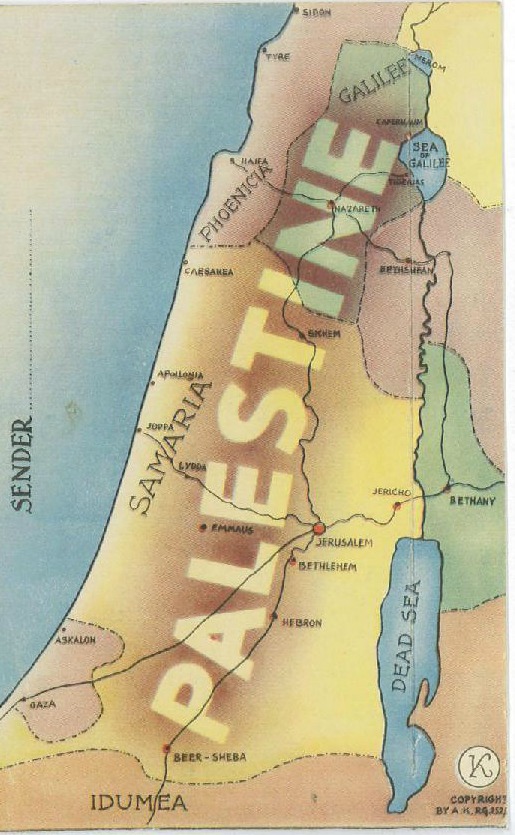
Souvenir postcard collected by Foa during his trip to Jerusalem.

During his life, Foa was invited several times to guest lecture at the Hebrew University in Jerusalem. His first trip was in 1946, just two years before Israel was declared a state. From his writings, Jerusalem seemed to be a city split between the struggles of the time and the echoes of the past. Foa writes, “Jerusalem is indeed an armed camp, and looks like a besieged place. Barbed wire–miles of it– is spread around all public buildings and throughout the city. Tanks and armored cars scout the streets day and night: one of them its Bren guns ready to fire, is permanently stationed at the center of Jaffa Road.” His letter then describes the resiliency of a people who have come to accept as normal daily bomb and landmine explosions, and the strain and tension developing between the Jewish and Arab populations.

But Foa also talks about the natural beauty of the city. From atop Mount Scopus, the view of the city seems to transcend the struggles going on below. “It is a stern view, since Jerusalem is built on stones (beautiful yellow stones) and is surrounded by rocky hills–yet it is a glorious view, when bathed by the warm Palestinian sunshine or the glory of the moon. There, on Mount Scopus, Titus and his legions stood, and from there laid siege to the city. There is the Valley of Final Judgement–as stern as death itself. On the other side, one can see the Jordan, the Dead Sea, the desert of Judaea and the mountains of Noab. Beauty, history and tragedy fill the air. It is a most unforgettable sight.” Bruno Foa’s writings allow us to take a step into the past and see Jerusalem as it stood nearly 70 years ago.

Post contributed by Vicki Eastman, a graduate student at Duke’s Center for the History of Political Economy.

Rights!Camera!Action!: The Devil Came on Horseback

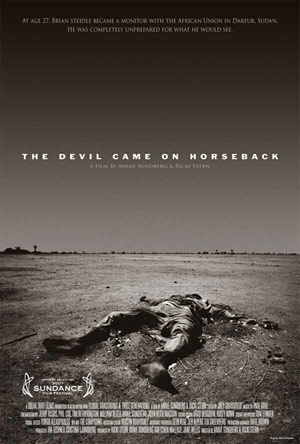
the_devil_came_on_horsebackWhen: Thursday, March 20th, 7:00pm
Location: FHI Garage, Bay 4, Smith Warehouse
Free and open to the public.
The Devil Came on Horseback, 2007 (TRT: 87 minutes)
Directors: Ricki Stern and Annie Sundberg; Full Frame/Working Films Award and the Seeds of War 2007

An up-close and uncompromising look at the crisis in Darfur, this film exposes the ongoing tragedy in Sudan as seen through the eyes of one American witness, former U.S. Marine Captain Brian Steidle, an official military observer. Armed with just a camera, paper and pen, but with access far beyond that of a journalist, Steidle’s photographs and testimony reveal a genocide that had by 2007 claimed over 400,000 lives. The film presents the historical and economic basis for the Sudanese government’s support and encouragement of the atrocities, alongside UN and US debates on the definition of “genocide,” as millions of people suffer. In Arabic and English with English subtitles. A panel discussion follows the screening.

Contact: Patrick Stawski, Duke University Libraries, 919-660-5823, patrick.stawski@duke.edu

Heschel Highlights, Part 6

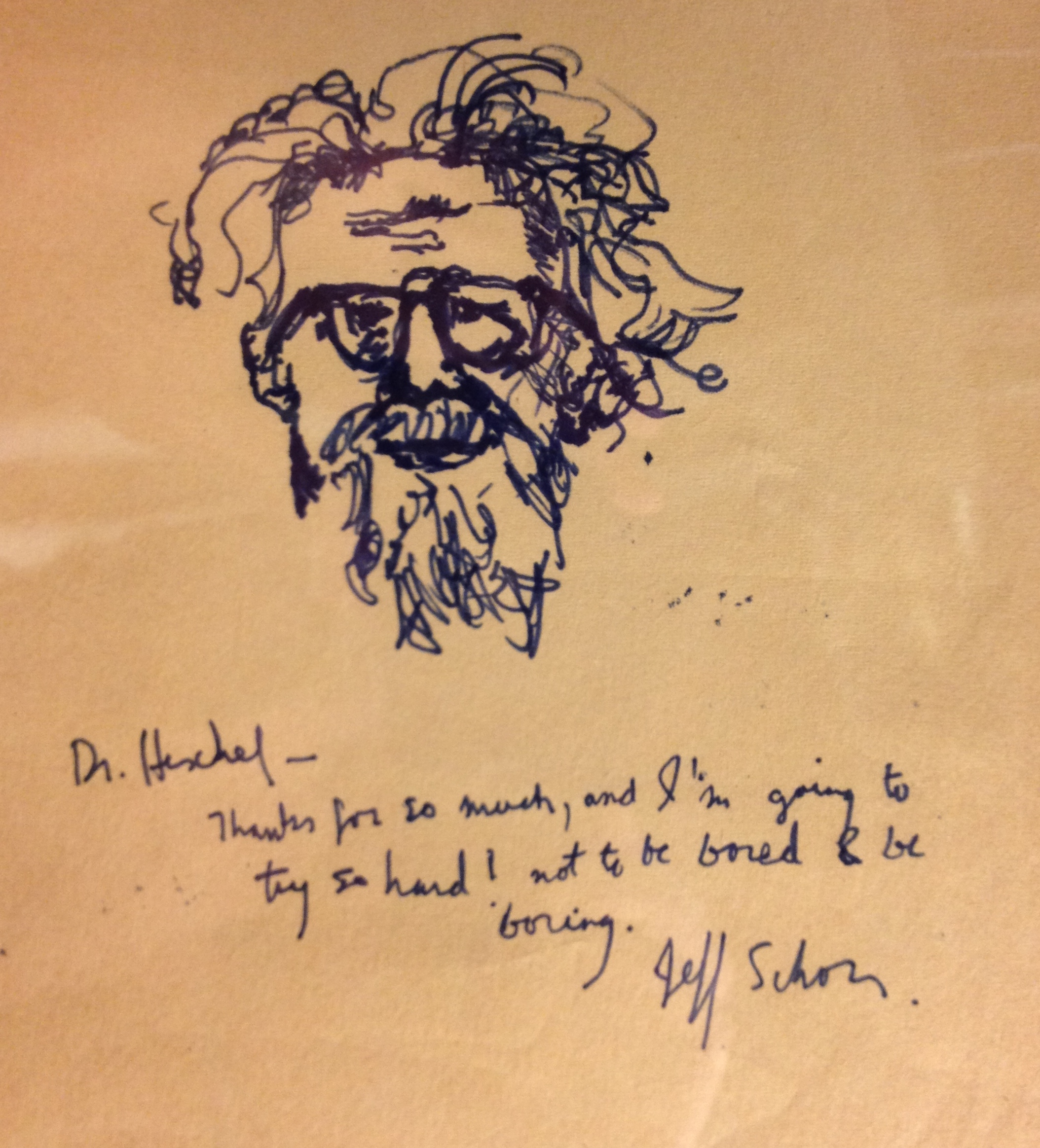
Abraham Joshua Heschel: The Voice on the Back of the Page

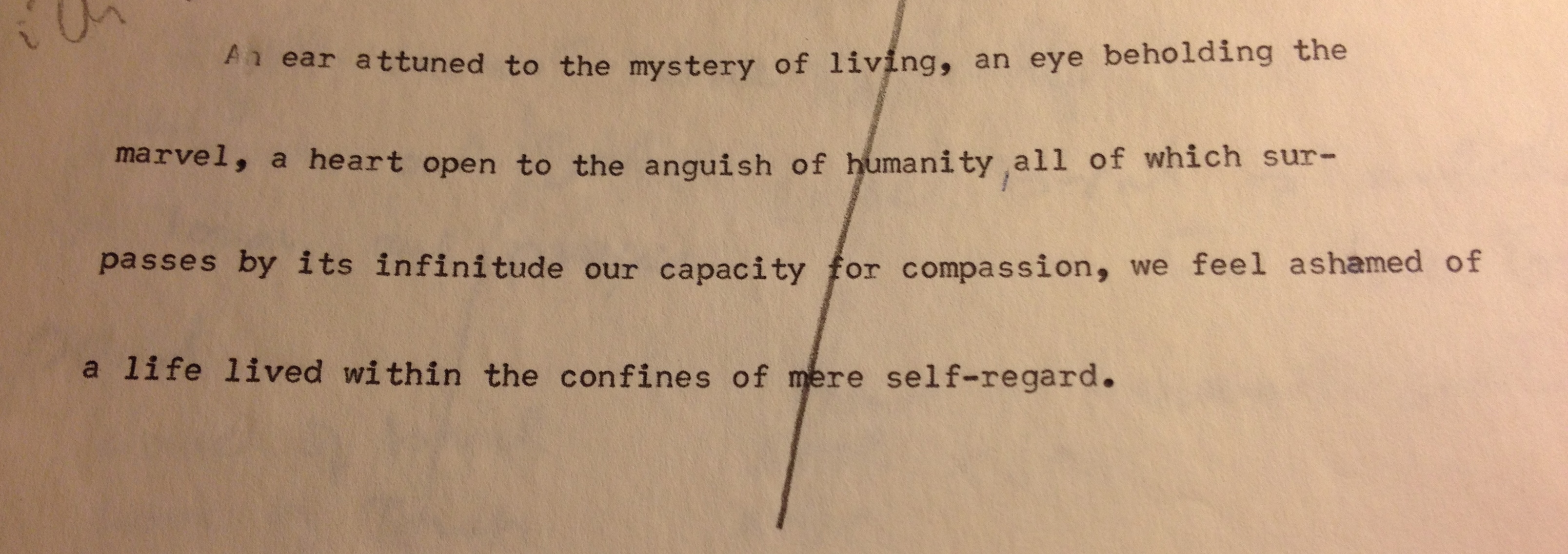
1 HeschelAnyone familiar with Abraham Joshua Heschel’s English writings has encountered the distinctive cadence of his sentences. From the early book The Earth is the Lord’s (1949) to his final work A Passion for Truth (1973), one can hear and feel the rhythm that we now all find so familiar. Reliant on evocative words, on short phrases strung together mostly through suggestions, his sentences pile steadily one atop another, compelled from within as if by their own heartbeat.

2 HeschelHeschel saved nearly every scrap of paper on which he wrote. From napkins and hotel stationary to JTS announcements and publisher’s proofs, often what we record in the database is only the “front” of the page—what appears to us to be a paper’s final use. But the other side, the crossed out side, is often just as lively, covered in sentence fragments, Talmudic quotations, half-written letters of thanks or condolence. Often these backsides record, as if by sheer happenstance, a couple of seconds of Heschel’s mind, a brief instance when a thought, a turn of phrase, caught him amid other actions and was hastily scribbled down.

3 Heschel
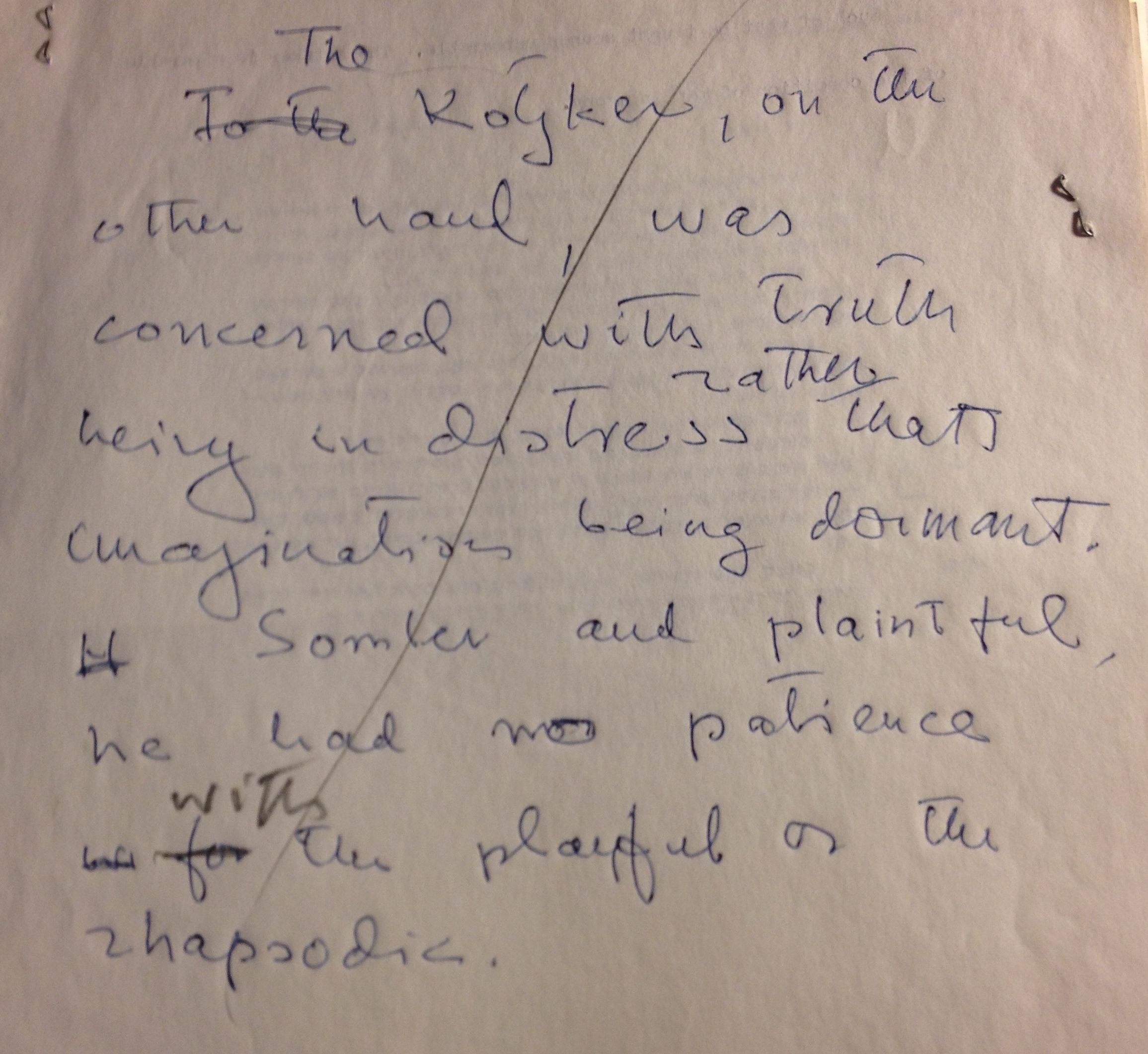
“The Kotzker, on the other hand, was concerned with truth, being in distress {rather} that imagination being dormant. Somber and plaintive he had no patience with the playful or the rhapsodic.”

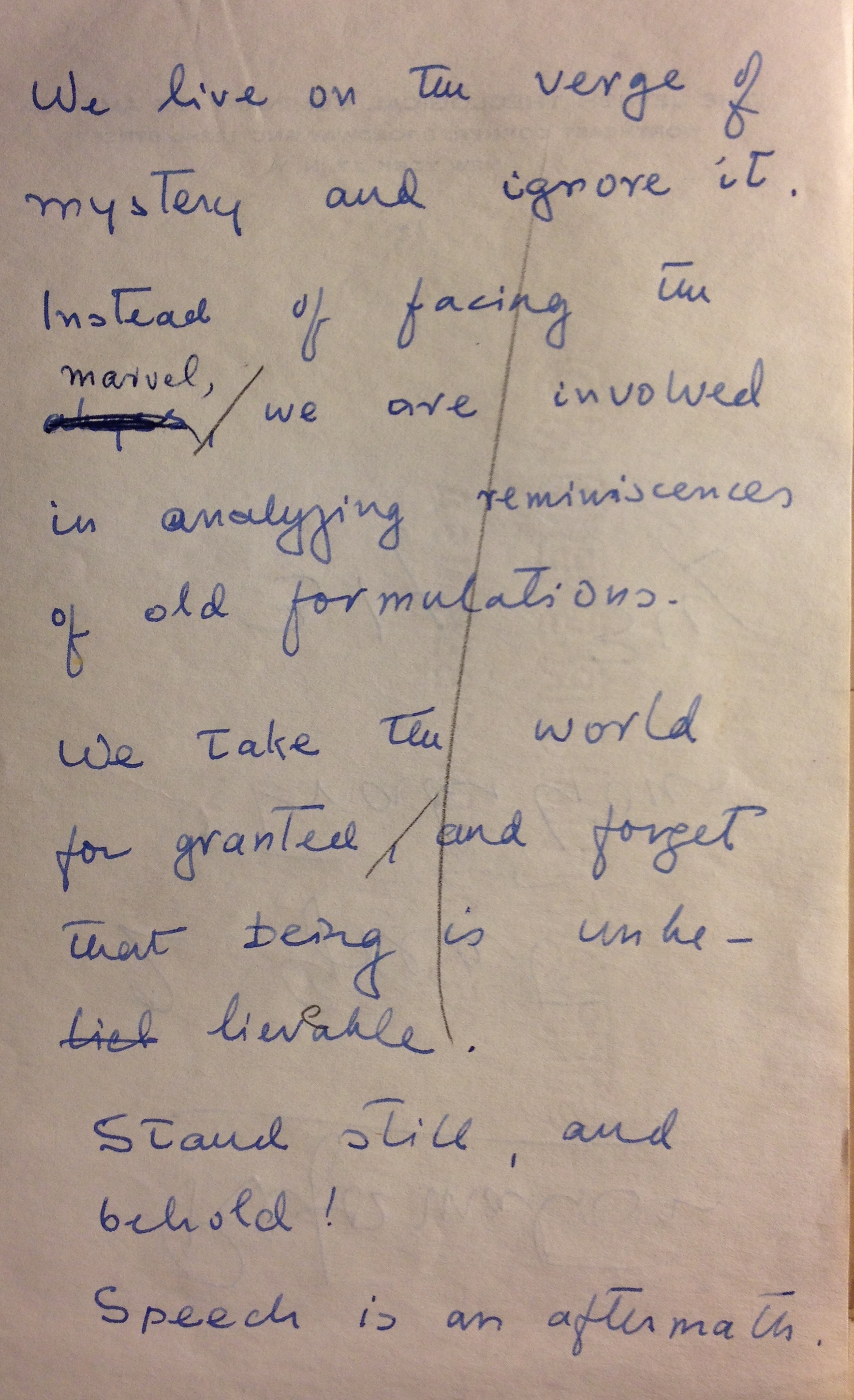
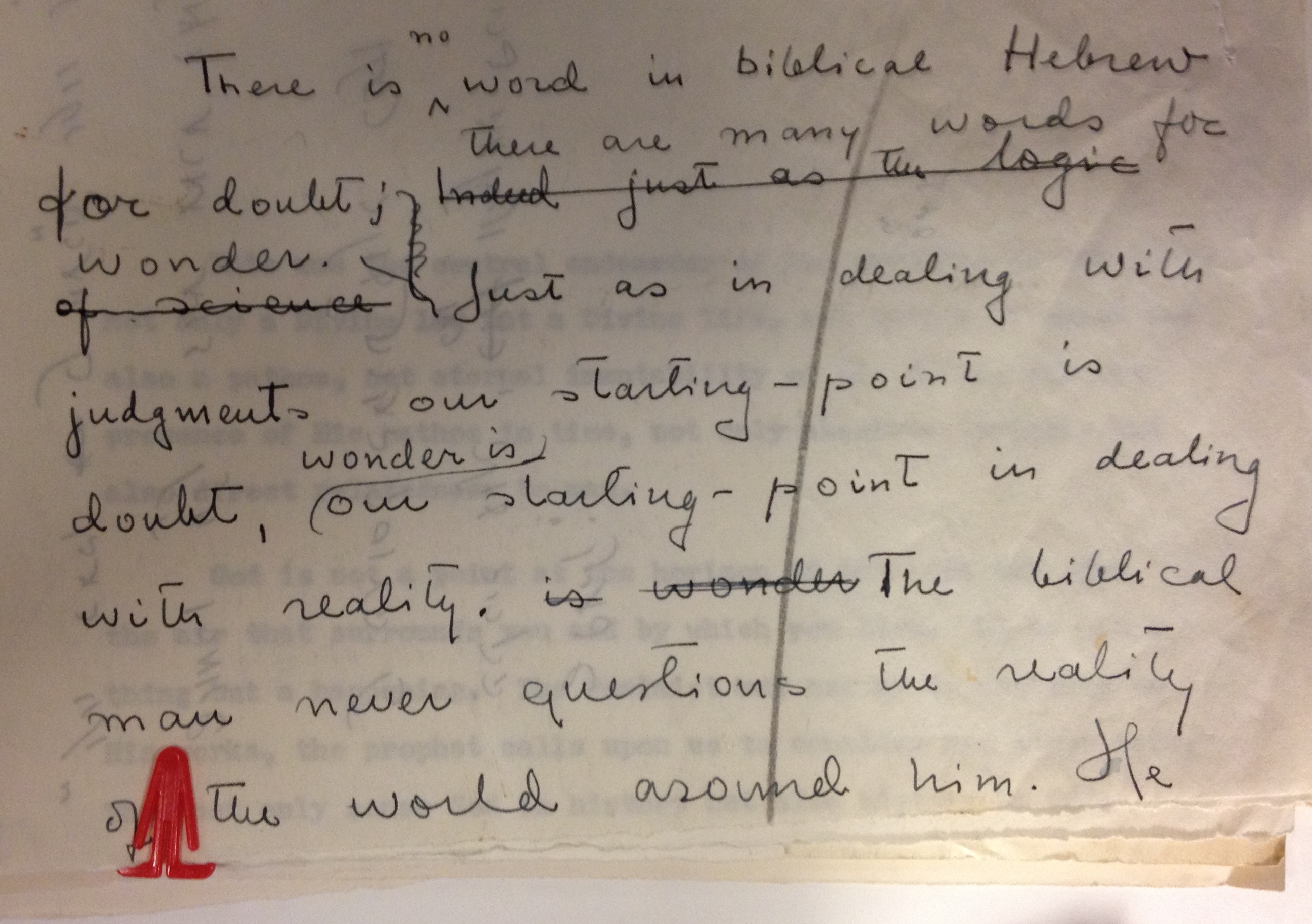
More often than not Heschel returned to these scraps, edited them, sounding after each change more rhythmically alike to the unhurried but morally tugging voice that characterize his finished prose.

4 Heschel
“We live on the verge of mystery and ignore it. Instead of facing the abyss marvel, we are involved in analyzing reminiscences of old formulations. We take the world for granted, and forget that being is unbelievable. Stand still and behold! Speech is an aftermath.”

5 Heschel
“There is {no} word in biblical Hebrew for doubt. Indeed just as the logic of science ; there are many words for wonder. Just as in dealing with judgment, our starting-point is doubt, {wonder is} our starting-point in dealing with reality. is wonder The biblical man never questions the reality of the world around him. He [unfinished].”
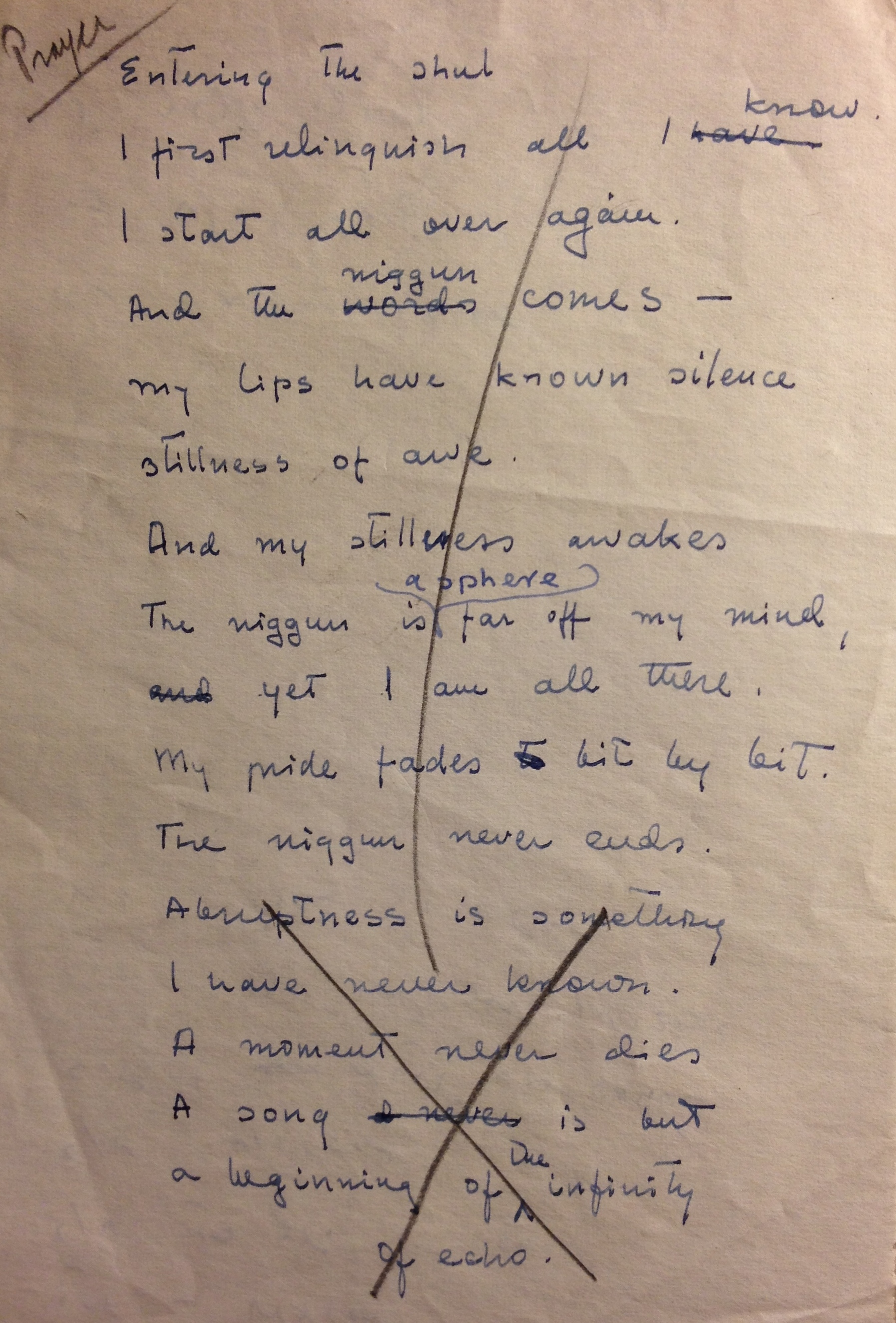
Though he wrote almost without ceasing, few of Heschel’s notes reveal autobiographical awareness. “I” was not a word he employed readily. Coming upon a personal reflection can feel momentous.

6 Heschel[“Prayer
Entering the shul
I first relinquish all I have know.
I start all over again.
And the words niggun comes —
my lips have known silence
stillness of awe
And my stillness awakes
The niggun is {a sphere} far off my mind,
and yet I am all there.
My pride fades to bit by bit.
The niggun never ends.
Abruptness is something
I have never known.
A moment never dies
A song is never is but
a beginning of {one} infinity
of echo.]


But sometimes, too, there are the pages punctuated by sadness, when the search for God recedes behind the dark memory of all that Heschel, and Judaism, has lost.

7 Heschel
“My people was burned to death in Poland. Almost all traces of its existence are thousand year history were wiped out. Since 1945 the country was rebuilt, the last remnants of its survivors driven out. No one misses mourns for us in Poland, no one seems to remember us in Poland.”

Post contributed by Samuel J. Kessler, intern for the Abraham Joshua Heschel processing project.

Clarissa Sligh: Jake in Transition

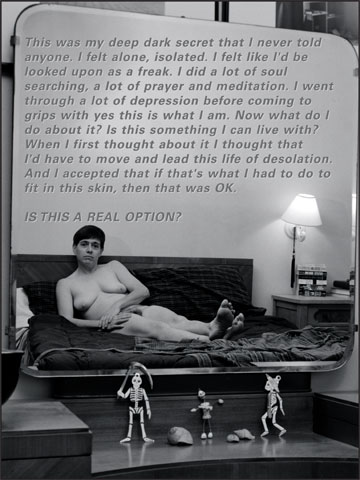
Sometimes in Technical Services, we get to work with the visual arts as they intersect with the Rubenstein Library’s mission of cultural documentation.  One such collection, acquired by the Sallie Bingham Center for Women’s History and Culture, is the Clarissa Sligh Papers. Sligh is a visual artist, writer, and lecturer. As a teenager, she was the lead plaintiff in a 1955 school desegregation case in Virginia which later inspired her book “It Wasn’t Little Rock”. After working in math and science with NASA and later in business, she began her career as an artist, using photographs, drawings, text, and personal stories to explore themes of transformation and social justice.

The Bingham Center began acquiring Sligh’s work in the 1990s as part of a collection of artists’ books by women. In 2011, we began the process of transferring her archive to Duke. One of the works represented in her papers is Jake in Transition, a series of 51 black and white photographs, some superimposed with text, documenting one man’s transition from female to male. The project explores issues of gender, identity, and physicality. Sligh revisited those themes in her book Wrongly Bodied Two, which juxtaposes Jake’s story with that of a female slave who escapes to the North by passing as a white man.

Jakeintransition

Sligh took the original “Jake” photographs between 1996 and 2000, a time when transgender issues were still largely ignored. Her work is particularly relevant now that the transgender rights movement has gone mainstream. This isn’t surprising for a woman who has been ahead of her time since at least 1955.

Post contributed by Megan Lewis, Technical Services Archivist for the Sallie Bingham Center for Women’s History and Culture.