Marley and Jason Braun donate Slave Bill of Sale to the Rubenstein Library
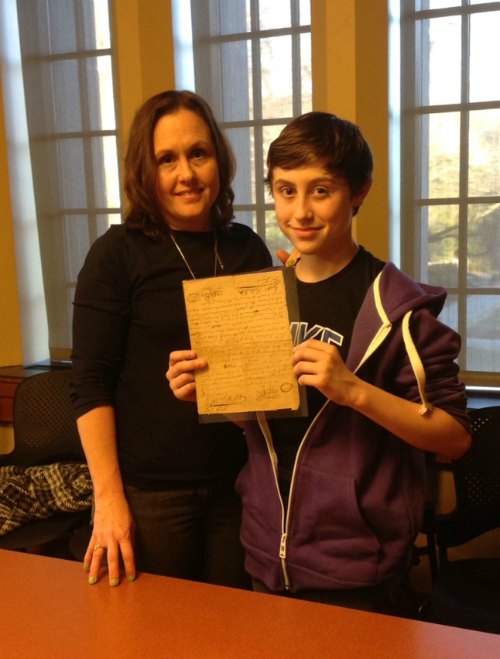
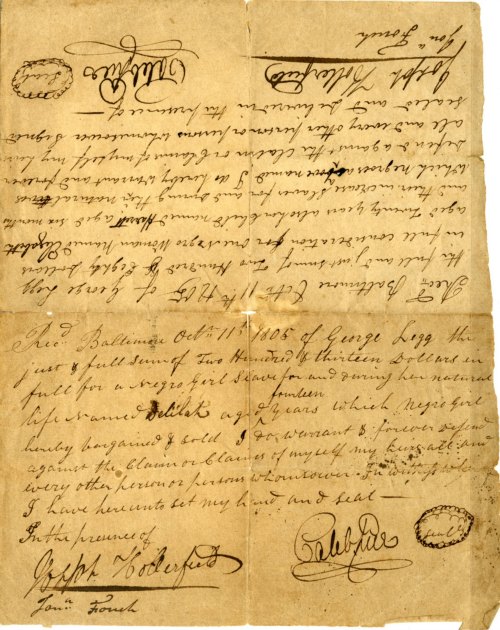
Marley Braun recently contacted the Rubenstein Library because she wanted to find a proper home for a very peculiar “letter” that belonged to her great-grandmother, Mrs. Edna Balderston. Perhaps Mrs. Balderston was shocked when she opened the “letter” envelope to find that it actually contained two bills of sale for 3 slaves in Baltimore dated October 11, 1805. The slaves listed in the bills were named Elizabeth, age 20, Harriet (her daughter), 6 months, and Delilah, age 14, for a total of $493.
Bill of Sale, October 11, 1805
The slave bills stayed in the family for a few generations behind glass until Marley, a former 10-year Duke employee, and her husband Andy, ’92 Duke alum, decided the bill deserved a place where it could not only be cared for but shared with people interested in its history. Marley and her son Jason came to the Rubenstein this past week to donate the bill of sale and view other bills of sale currently held by the Rubenstein in the African American Miscellany Collection. The bills within this collection span from 1757-1863 and this new addition will further help document the experience of African Americans during the era of slavery; thanks to the Braun family, Marley, Andy, Jason, and Hayley for this fascinating addition to our collections.
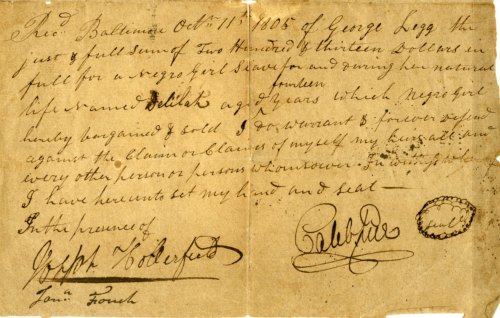
Bill of Sale, Delilah, age 14
Bill of Sale, Delilah, age 14
Post contributed by John Gartrell, John Hope Franklin Research Center Director.
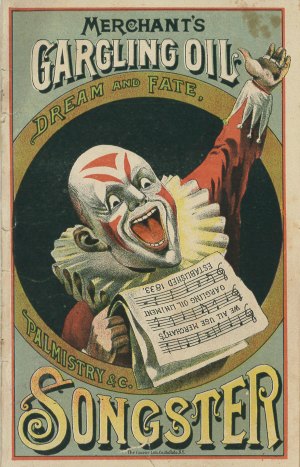
Cover of Merchant’s Gargling Oil Dream and Fate, Palmistry, &c. Songster, Lockport, NY, ca. 1880-1890s.
We’ve seen many advertising campaigns of yesteryear here at the Rubenstein Library, thanks to the John W. Hartman Center for Sales, Advertising, and Marketing History. Our History of Medicine Collections contain many examples of promotional items for patent medicines and related remedies. And the Library holds an extensive collection of American songsters, or ephemeral booklets of song lyrics popular in the nineteenth century. But never have we seen more terrifying examples of any of these genres than the Merchant’s Gargling Oil Songsters, which feature scary clowns on their covers.
We have the Merchant’s Gargling Oil Co. to thank for these frightful specimens. The Hagley Museum and Library’s online exhibit on patent medicines tells us that the oil was “primarily used as a topical ointment to treat horses and other animals for burns, scalds, sprains, and bruises,” but could also be used to treat other odd ailments, from foot rot to mange. The oil was not, apparently, gargled.
We know what you’re asking: why use scary clowns to promote veterinary medicine? We presume that the clowns used to promote the Merchant’s Gargling Oil Liniment were not intentionally scary. Perhaps they were not creepy at all to the nineteenth-century eye, but rather appeared amusing, colorful, and whimsical. However, the fact that these particular songsters combined popular song lyrics with instruction on dream interpretation and fortune telling lends itself to the belief that there’s more to these clowns than meets the eye. Not to mention the owl on the shoulder of one of the clowns, and the deranged look in the eyes of the other.
Cover of Merchant’s Gargling Oil Songster, Lockport, NY, ca. 1880-1890s.
We wouldn’t want to meet either of these clowns on a dark Halloween night, but you’re welcome to come see them in person in the Library’s reading room… if you dare. Happy Halloween!
Post contributed by Will Hansen, Assistant Curator of Collections.
Much of Roth’s work involves decision-making and matching within markets; perhaps the most important real-world application of his ideas involves more efficiently matching organ donors to those in need of a transplant. His papers at the Rubenstein include drafts of his writings on these and other topics, a wealth of information from Roth’s early career at the University of Pittsburgh, and correspondence with dozens of economists including his fellow Nobel laureate Lloyd Shapley, Robert Aumann, and many more.
The Alvin Roth Papers join many other important collections in the Economists’ Papers Project in game theory and market design, including the papers of Leonid Hurwicz, Oskar Morgenstern, Martin Shubik, and Vernon Smith. Congratulations, Professor Roth!
Post contributed by Will Hansen, Assistant Curator of Collections.
In an earlier blog post, we mentioned that we’ve been processing thousands of sports-related negatives and prints transferred to the Duke University Archives by Duke’s Sports Information Office.
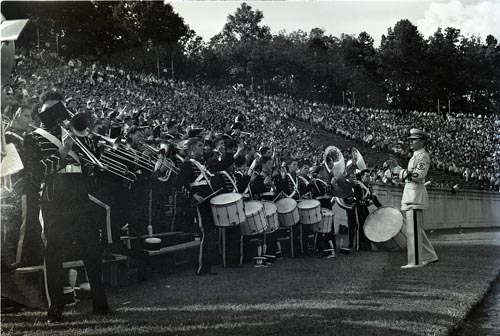
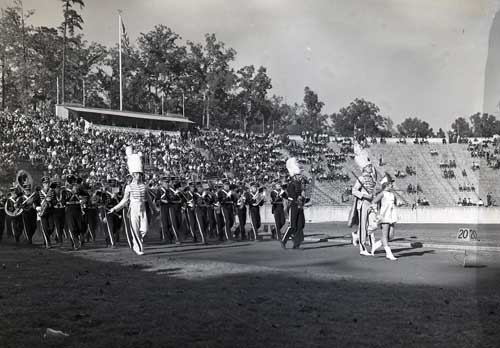
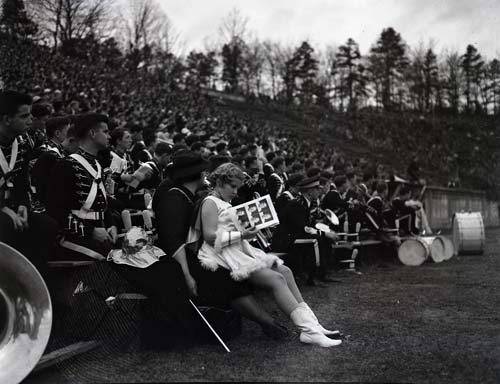
I recently began reviewing images from the 1930s and 1940s. In envelopes labeled “football sidelights” are negatives of the Duke University Marching Band, fondly known as DUMB.
In existence since the early 1900s, DUMB is an integral part of Duke sports, providing music and vocal support at games, and has established a reputation for performing creative and highly entertaining halftime shows. For more information, take a look at the finding aid to DUMB’s own records, part of the University Archives’s collections. Below are a few of my favorite images.
Duke University Marching Band, October 7, 1939Duke University Marching Band Drum Line, October 21, 1939Duke University Marching Band, October 28, 1939Majorette Lucille King and her Mother, November 19, 1938Duke University Marching Band and Blue Devil, 1940
This past Saturday, Duke’s football team defeated Wake Forest, 34-27 (Go, Duke!).
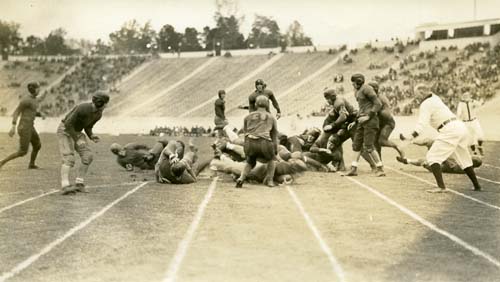
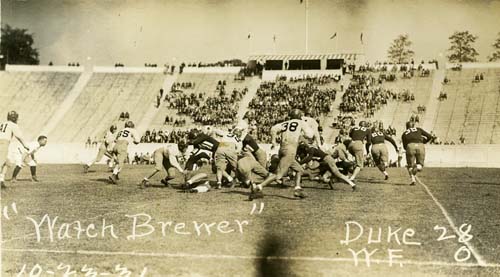
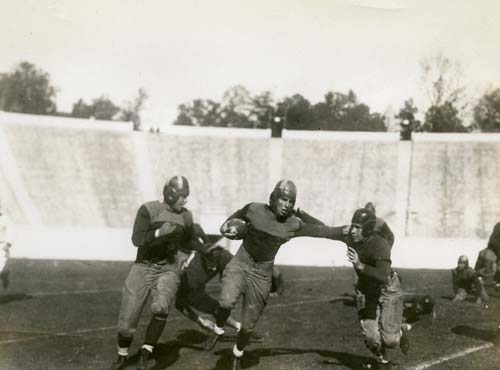
In honor of this victory, the Duke University Archives thought it would be fun to share some historical photos we recently received from the Sports Information Office. These action shots are from football games in 1931 and 1932 show Duke playing (and defeating: 28-0 in 1931 and 9-0 in 1932) Wake Forest.
Duke vs. Wake Forest, October 1931Duke vs. Wake Forest, October 1931Duke vs. Wake Forest, October 1932Duke vs. Wake Forest, October 1932
We are excited to introduce TWO new staff members! First we have Rachel Penniman, a transplant from Vermont who is our new Library Assistant for Technical Services and Research Services. She will be accessioning new archival collections, ordering and wrangling our vast number of archival supplies, and managing ILL requests in Research Services. In her spare time, Rachel likes to roller derby.
We’re also pleased to introduce Lauren Reno, a rare materials cataloger from the Newberry Library in Chicago who will now be cataloging for us here at Duke. We have lots of rare books and maps that are ready and waiting for her. When she’s not cataloging, Lauren enjoys studying German and running.
New Staff: Lauren Reno and Rachel Penniman
Rachel is splitting her time between Rubenstein’s Smith Warehouse and Perkins Library locations. Lauren is based at Smith fulltime. We are thrilled that both are here to help us keep things moving in the Rubenstein!
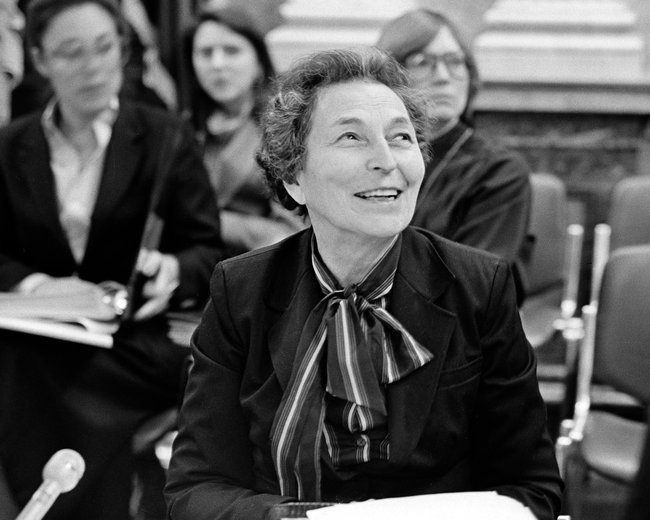
I am pleased to announce a new finding aid for one of our newest collections, the Anna Schwartz Papers. Schwartz was an economist at the National Bureau for Economic Research, and collaborated with Milton Friedman on numerous works, including A Monetary History of the United States, 1867-1960. She also served as the executive director of the United States Gold Commission from 1981 to 1982. Her papers are an exciting addition to the Rubenstein’s Economists’ Papers Project.
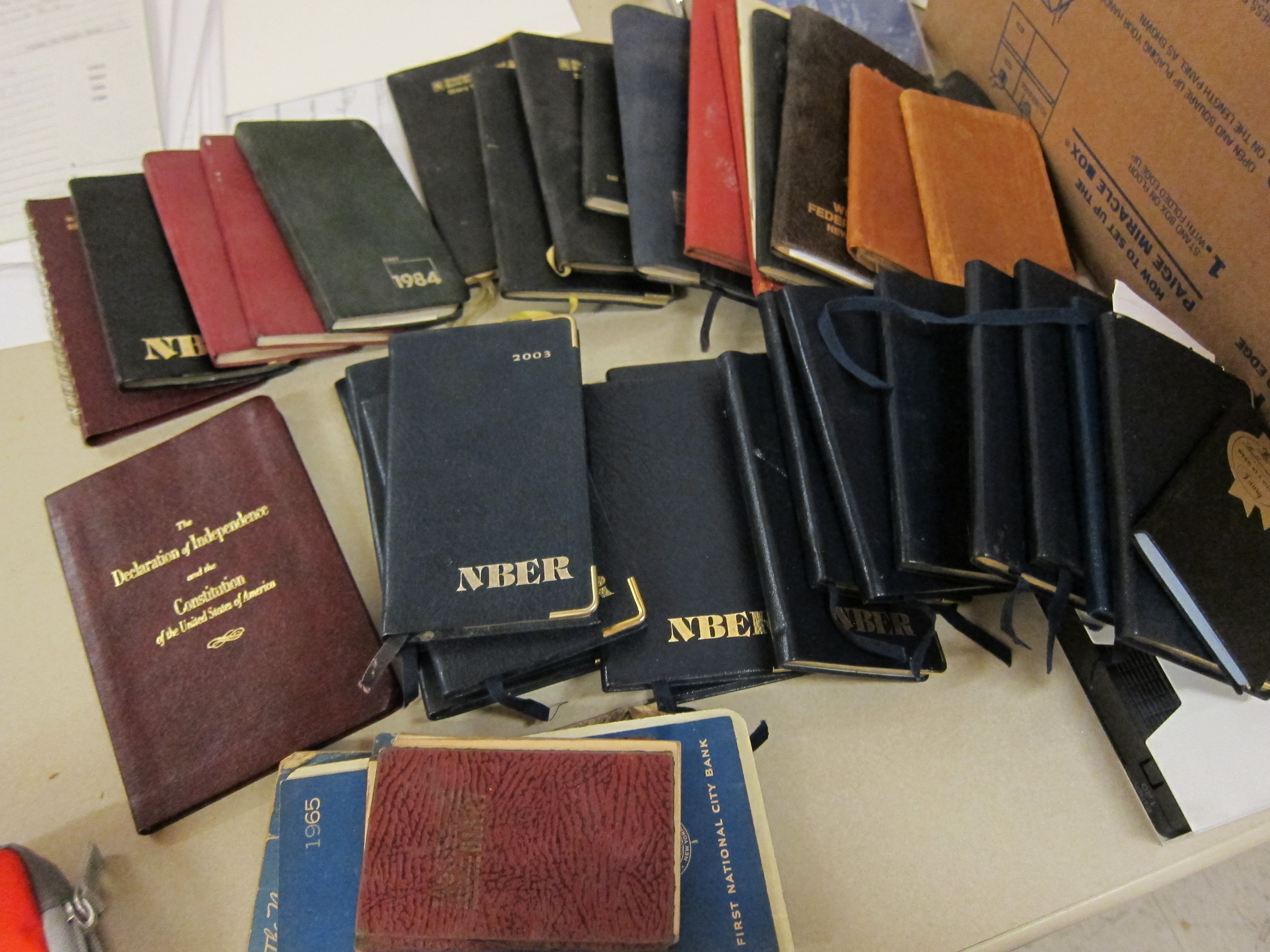
The vast majority of the Anna Schwartz Papers are all business: her research and subject files on banking, monetary policy, currency, and the Federal Reserve; Gold Commission materials, including correspondence with fellow commissioner Ron Paul; collaborations and correspondence between Schwartz and Milton Friedman; and numerous articles and lectures by Schwartz from throughout her 70-year career. One bit of material that shows a more personal side of Schwartz are her many datebooks, from the 1950s to 2012, which help document her appointments, schedule, and contacts over the course of her life. I also really enjoyed seeing material from her time at Barnard College in the 1930s. She seemed to constantly win honors there, including Phi Beta Kappa.
Dozens of datebooks from the Anna Schwartz Papers.
Upon Schwartz’s death earlier this year, her New York Times obituary described her as “a research economist who wrote monumental works on American financial history in collaboration with the Nobel laureate Milton Friedman while remaining largely in his shadow.” Now, with the opening of this collection, Anna Schwartz’s contributions and scholarship are finally out of the shadows, so to say, and freely available for everyone to use.
Post contributed by Meghan Lyon, Technical Services Archivist.
John Hope Franklin and Alfred Moss edit a new edition of From Slavery to Freedom in 1986.
We are pleased to announce a major addition to the John Hope Franklin Papers. This gift includes over 300 boxes of papers and other materials belonging to late historian and Duke professor John Hope Franklin.
Franklin is widely credited with transforming the study of American history through his scholarship, while helping to transform American society through his activism. He is best known for his ground-breaking history From Slavery to Freedom: A History of African-Americans (1947) and for his leadership on President Clinton’s 1997 National Advisory Board on Race.
Franklin donated a small collection of his personal papers to Duke in 2003. This large addition, donated by Franklin’s son and daughter-in-law John Whittington Franklin and Karen Roberts Franklin, completes the archive of one of the twentieth century’s most distinguished public scholars.
After receiving a doctorate from Harvard in 1941, John Hope Franklin taught at St. Augustine’s University, North Carolina Central University, Howard University, Brooklyn College, University of Chicago, and Duke University—breaking many racial barriers along the way. Deeply involved in the Civil Rights movement, he worked with Thurgood Marshall on the Brown v. Board of Education case and joined protestors in the march led by Martin Luther King, Jr., from Selma to Montgomery, Alabama. He was the recipient of more than 100 honorary degrees, and President Clinton awarded him the Medal of Freedom in 1995. He died in Durham, North Carolina, in 2009.
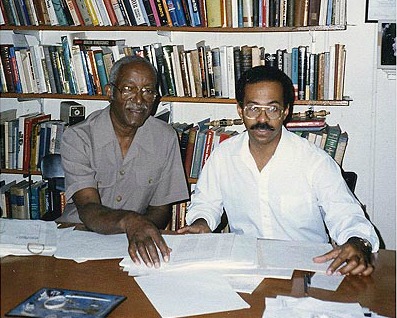
The Franklin Papers include a selection of photographs of John Hope Franklin and his family.
The donation of papers includes diaries, correspondence, manuscripts of writings and speeches, awards and honors, extensive research files, photographs, and video recordings. The collection also includes materials that trace the Franklin family’s personal history, including their long involvement with the civil rights struggle in Tulsa, Oklahoma.
Two letters from Thurgood Marshall and Terry Sanford from the John Hope Franklin Papers.
The papers will be held in the John Hope Franklin Research Center for African and African American History and Culture, part of the David M. Rubenstein Rare Book & Manuscript Library at Duke. The papers will open for research after conservation review and archival processing are complete. The opening will be announced on the Rubenstein Library’s website.
“John Hope Franklin always wanted his papers to have an academic home where they would get into the hands of students and scholars quickly,” noted John W. Franklin. “He wanted to make sure that they would be used. We found such a home for his papers in the David M. Rubenstein Rare Book and Manuscript Library of the Duke Libraries with a dedicated staff to care for the collection.”
The Duke University Libraries will celebrate the John Hope Franklin papers with a reception on September 14, 2012, at 5:30 p.m. in the Gothic Reading Room of the Rubenstein Library. The event is free and open to the public.
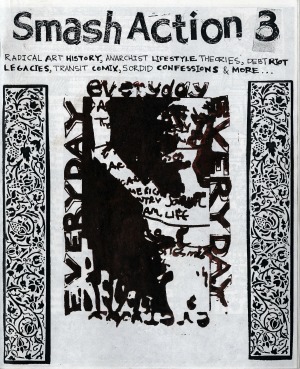
Dixon wrote in an email to Bingham Center archivists:
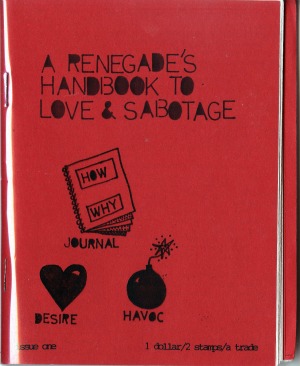
While DJing a party last night at a professor’s house, I was told by a faculty member in the Music Dept that my zine collection was being used by a grad instructor teaching a course on punk history. I was so thrilled, as you can imagine, and it inspired me to unbox the last treasured horde of zines. I must confess I held the best in reserve in my initial donation. I have approx. 68 zines that are aesthetically, politically, and creatively rich. Hand-screened covers, some of the best zine writing ever, and incendiary politics that changed my life. I want others to be moved, too—by Mimi Nguyen’s Slander zine, by [anonymous’] Quiet Nights of Quiet Stars zine, by the dense tangle of punk and race and gender and a changing America of the last 2 decades.
As Dixon mentions in his note, classes frequently use zines as a resource for learning. As with any other historical manuscript or artifact, zines help illuminate specific aspects of culture through their method of creation and their content. Zine authors use the freedom of the medium to confront important cultural issues as well as to divulge their own reflections and emotions. The handmade nature of zines also allows for more artistic presentations of information, creating visually engaging objects that also serve as reading material.
While zine culture still exists in a variety of vibrant formats, the movement was at its most powerful from the late 1980’s to the mid-1990’s. During that time, Dixon snapped up a great number of these publications and eventually gifted them to the Bingham Center in 2001 with an initial donation of over a hundred zines. Including the latest addition, the Dixon collection now contains almost two hundred zines chronicling topics such as body image, depression, politics, racial inequality, history, and personal exploration.
The new addition has been added to the finding aid and is now available for research. Come take a look!
Post contributed by Rosemary K. J. Davis, Bingham Center volunteer.
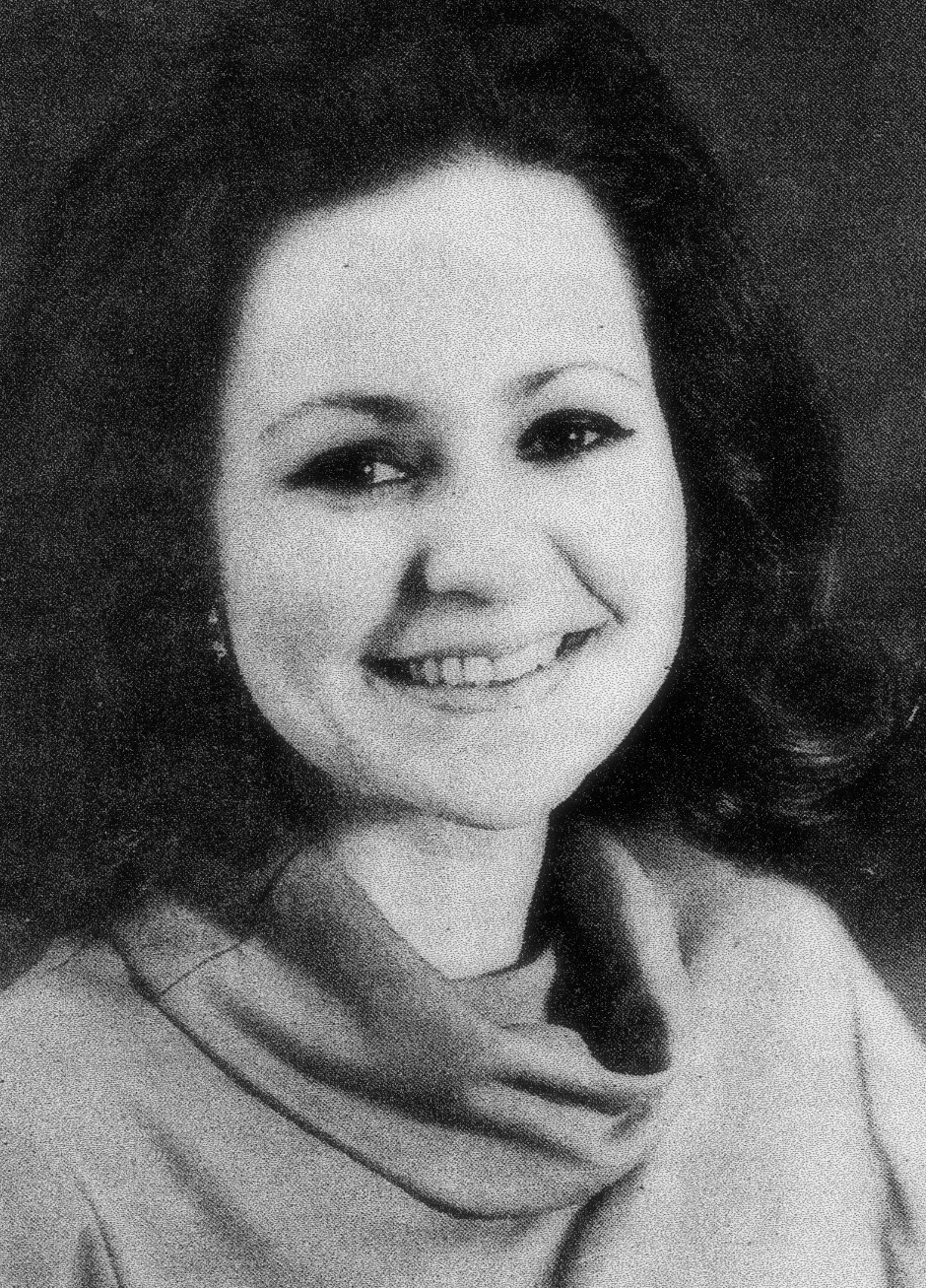
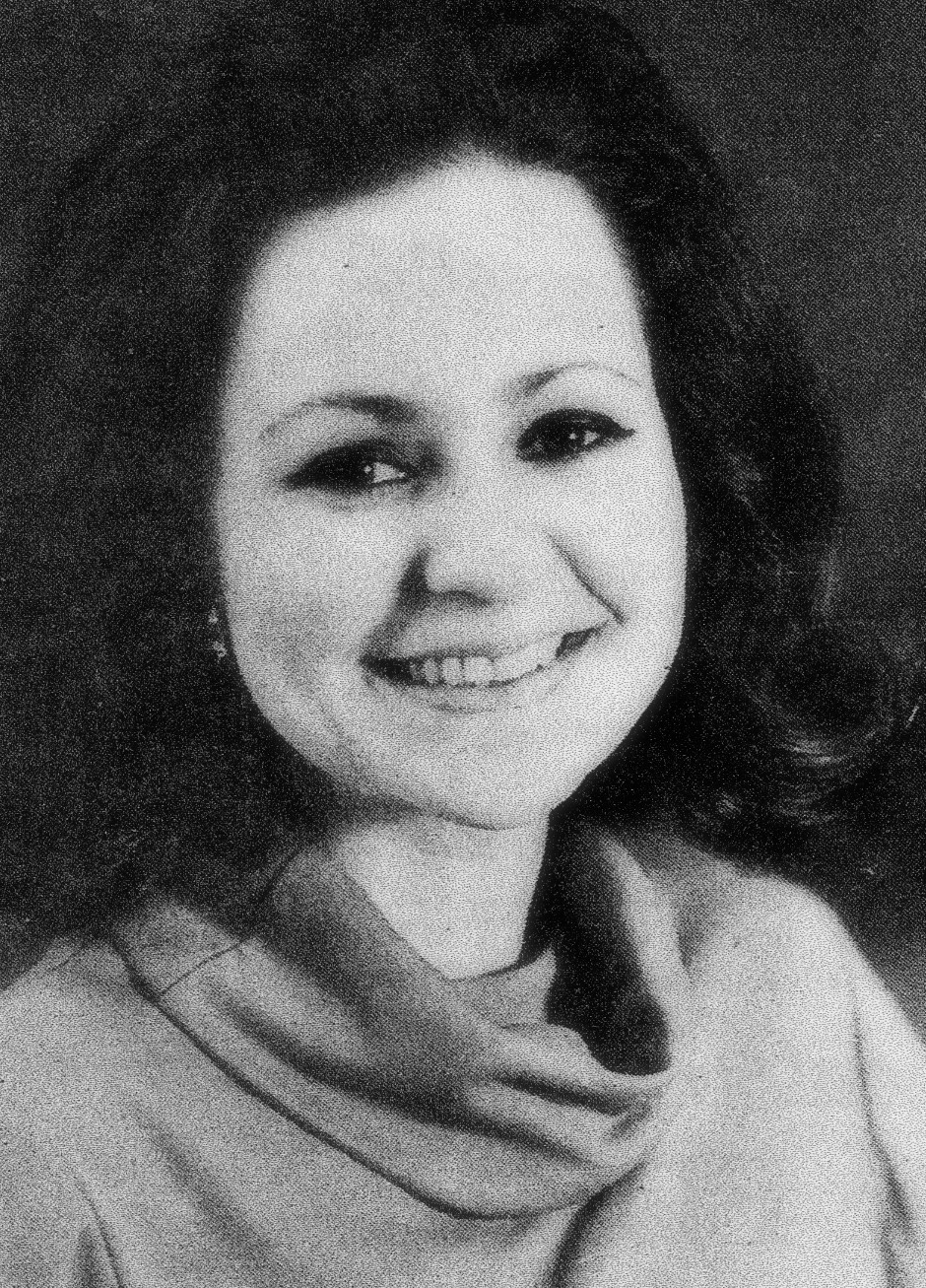
The John W. Hartman Center recently acquired the papers of Adrienne Cohen, an advertising copy writer and creative director who worked for several agencies from the 1960s to the 1990s, including Young & Rubicam, McCann-Erickson and a number of agencies in the Atlanta, Ga. area. Ms. Cohen was the recipient of numerous advertising industry awards and was highly regarded in her field.
Adrienne Cohen in 1974.
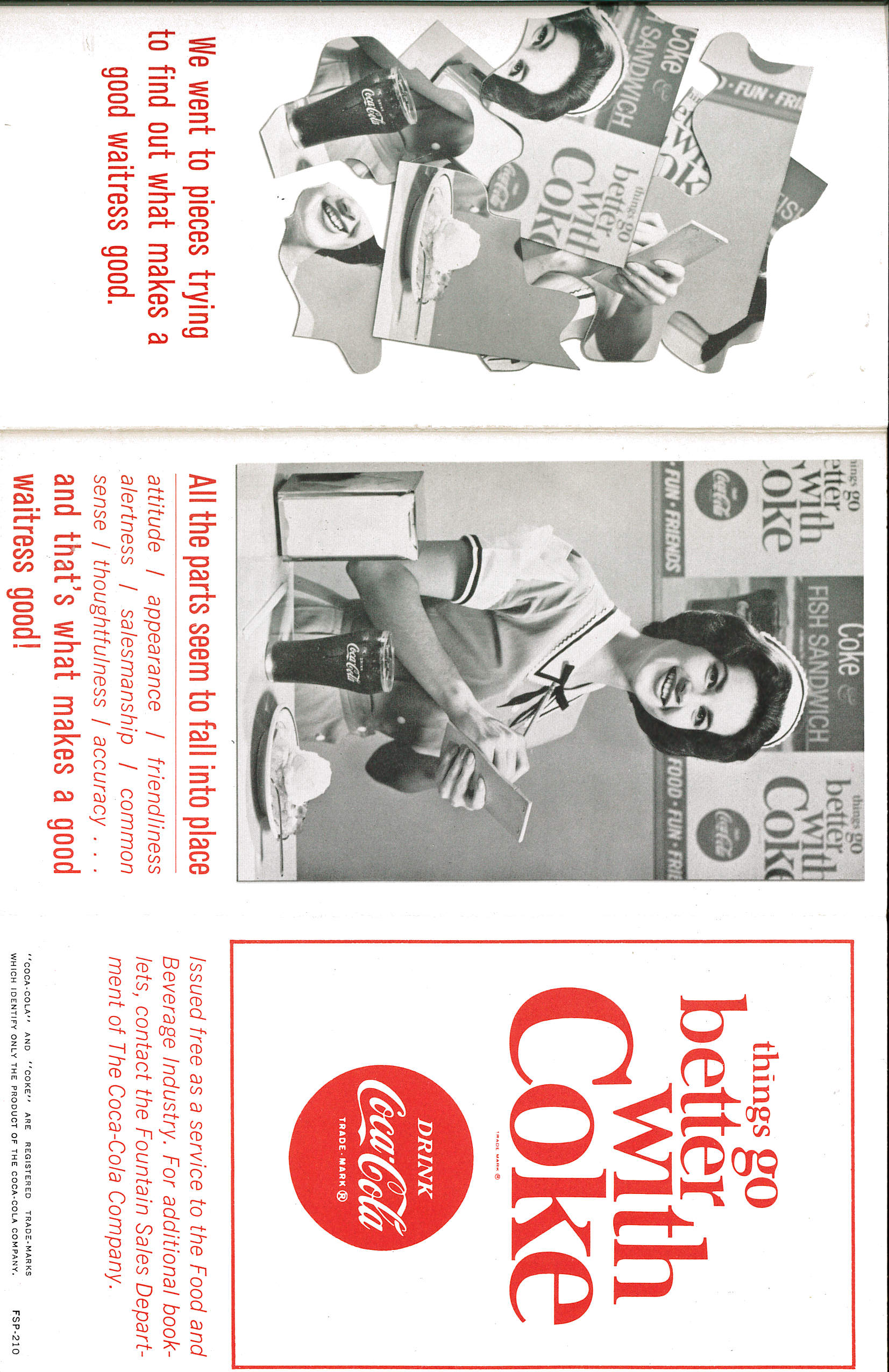
She worked on the Coca-Cola account during the early 1960s, and her papers include several pamphlets produced for the food and beverage industry intended to provide sales and comportment training to waitresses. The pamphlets sought to show restaurant and café managers how the wait staff could boost sales through a program called “Plusmanship” that emphasized the waitress’s power of suggestion to guide diners’ menu item selection. The title quote and image below come from two of the pamphlets.
These materials add to the Hartman Center’s growing collection of sales and sales training literature, and especially materials pertaining to Coca-Cola retailing.
Post contributed by Rick Collier, Technical Services Archivist for the Hartman Center.
Dispatches from the David M. Rubenstein Rare Book and Manuscript Library at Duke University