Category Archives: Featured

Gay Liberation and Incarceration in Underground Newspapers

Contributed by Benjamin Serby, Visiting Assistant Professor, Adelphi University; 2019-2022 Recipient of a Harry H. Harkins T’73 Travel Grant for Lesbian, Gay, Bisexual, and Transgender History

With the assistance of a Harry H. Harkins, Jr., Travel Grant, I visited the Rubenstein Library in the summer of 2019 to carry out research for my dissertation, an intellectual history of the gay liberation movement in the United States in the late 1960s and early 1970s. At the Rubenstein Library, I consulted several collections, including the Atlanta Lesbian Feminist Alliance (ALFA) Archives and the Faith Holsaert papers, with the intention of tracing the reception of certain understandings of “liberation” in the movement through the lives of key activists, the records of organizations, and the extensive print culture that spanned the country during this time.

In the course of my visit, I encountered a surprising number of fascinating documents that were authored by incarcerated queer and trans people who overcame censorship and the threat of retaliation to demand assistance and recognition from activists and readers on the outside. These sources informed an article that I subsequently published in the Journal of the History of Sexuality.[i] One relevant item is a note to readers of the Atlanta underground newspaper Great Speckled Bird, dated September 5, 1972, which explains that a prisoner, H. Alan “Bunny” Vaughan, was being punished by the authorities for having smuggled photographs of the Atlanta Penitentiary’s segregated gay cell block to the newspaper. One of those illicit images accompanies the report, which praises Vaughan for his commitment to “the fight for dignity and self-respect within prison walls.” This document (which, it should be noted, did not appear in a specifically “gay” publication) raises a number of questions about the oppressive and discriminatory conditions faced by queer and trans prisoners, their relationship to the gay liberation movement, and the role of the press—particularly the underground press—as a means of publicizing the struggles of some of the most marginalized members of the LGBT community.
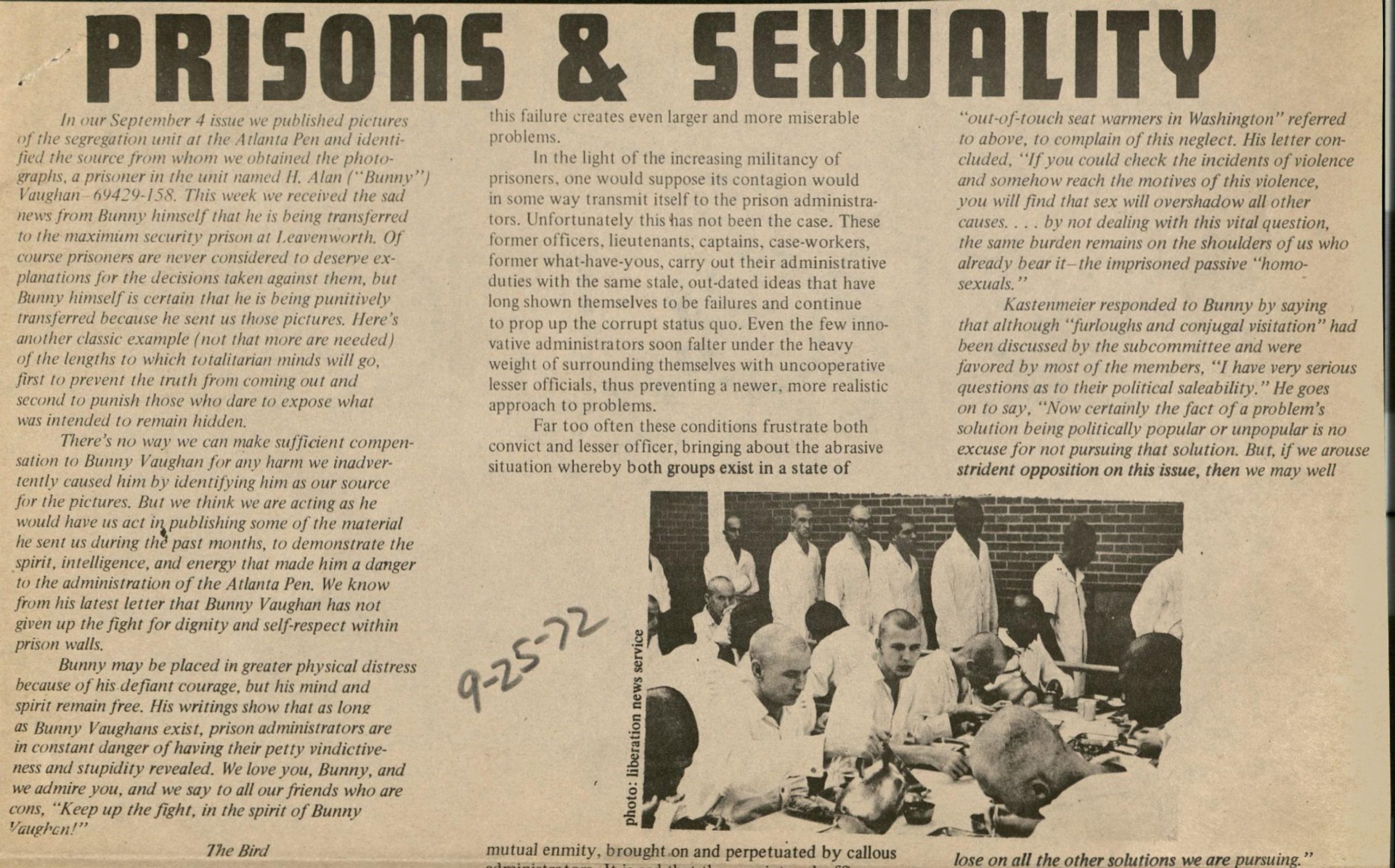
Newspaper clipping with the headline "Prisons & Sexuality"
“Prisons and Sexuality,” Great Speckled Bird (Atlanta, GA), September 25, 1972
Carbon copy of a typewriter written document from the National Gay Prisoners Council
Statement of the National Gay Prisoners Coalition

A related document that stopped me in my tracks when I first encountered it is the founding statement of the National Gay Prisoners Coalition (NGPC), an obscure organization that was established at Washington State Penitentiary in Walla Walla sometime in the early 1970s. The undated text calls for the abolition of sodomy laws, demands an investigation into the treatment of queer and trans prisoners, and urges members of the LGBT community to join and support the new organization. Its author, who is listed as C. Chris Wheeler, wrote “for publication” in pen at the top, but it is unlikely that this text was ever published. Prior to visiting the Rubinstein Library, I had seen Wheeler’s name in print on a number of occasions. A transgender inmate at Walla Walla, they published countless open letters in several gay liberationist newspapers between 1970 and 1973 that detailed their mistreatment and that of their fellow inmates, appealed to readers for material and emotional support, and facilitated political organizing among queer and trans prisoners across institutions. The NGPC statement is a testament to the extent of that organizing.

Just as they challenged a largely middle-class movement to extend its solidarities to the poor, the nonwhite, and the incarcerated, materials such as these provoked me to incorporate a much broader array of social actors into my narrative and to realize that the activist and print networks that I was mapping were far more expansive and inclusive than I had initially thought. Still, we are left with only a trace, and many questions remain unanswered. What became of Vaughan? Wheeler? The other Walla Walla prisoners? The NGPC?

[i] Serby, Benjamin. “‘Not to Produce Newspapers, but Committed Radicals’: The Underground Press, the New Left, and the Gay Liberation Counterpublic in the United States, 1965-1976.” Journal of the History of Sexuality, vol. 32, no. 1, Jan. 2023. http://dx.doi.org/10.7560/JHS32101

Announcing our 2023-2024 Travel Grant Recipients

The Rubenstein Rare Book & Manuscript Library is pleased to announce the recipients of the 2023-2024 travel grants. Our research centers annually award travel grants to students, scholars, and independent researchers through a competitive application process. We extend a warm congratulations to this year’s awardees. We look forward to meeting and working with you!

Sallie Bingham Center for Women’s History and Culture (Mary Lily Research Grants)

Ola Aboukhsaiwan, Ph.D. candidate, London School of Economics and Political Science, “Surviving Abortion: Clinics, Competition, and Connections.”

Sophie Abramowitz, Independent Researcher, “Rosetta Records Creative Reissue Project.”

Anne Gray Fischer, Faculty, University of Texas at Dallas, “Women Killers: Murder in the Era of Feminist Liberation.”

Wendy Rouse, Faculty, San Jose State University, “The Feminist Self-Defense Movement in the Era of Women’s Liberation.”

Rachel Tang, Ph.D. candidate, Harvard University; Department of History of Art and Architecture, “Lessons in Repair: History, Materials, and Processes of Pedagogy in American Art.”

Tessel Veneboer, Ph.D. candidate, Ghent University, “Negativity, sexuality, and formal innovation Kathy Acker’s literary experiments.”

John Hope Franklin Center for African and African American History and Culture

Anna Duensing, Postdoctoral fellow, Carter G. Woodson Institute, University of Virginia, “Fascism Is Already Here: Civil Rights and the Making of a Black Antifascist Tradition”

Monique Hayes, Writer, “Sally Forth,” a historical novel based on African-American experiences during the American Revolution, 1771-1785.

Marie Hubbard, Ph.D. candidate, Department of English and Comparative Literature, “‘Ivy and Cane’: New and Old Forms of Trans-Atlantic Exchange in the Literature of Ayi Kwei Armah.”

Breanna Moore,  Ph.D. candidate, University of Pennsylvania, “‘Whose Loss?’: Reparations, Indemnities, and Sovereignty During the Era of Slave Trade Abolition in the Atlantic World.”

Elizabeth Schlabach, Faculty, Department of History, Lawrence University, “Segregated and in the Shadows: Black Women’s Off the Books Labor in Jim Crow Southern Cities.”

Katharina Weygold,  Ph.D. candidate, Brown University, “African American Women and Haiti During the U.S. Occupation, 1915 – 1934.”

Harry H. Harkins T’73 Travel Grants for Lesbian, Gay, Bisexual, and Transgender History

Courtney Block, Faculty, Indiana University Southeast Library, “Rhea White & Margaret Anderson Letters.”

Adam Kocurek, Ph.D. candidate, CUNY Graduate Center, “Academic Closets and Labor Trials: LGBTQ+ Academics and Activism in the Industry from 1960-Present.”

Suisui (Sway) Wang, Ph.D. candidate, Department of Gender Studies, Indiana University Bloomington, “Answering the Call(s): Sexual Politics of Hotlines and Technopolitics of Sexuality.”

John W. Hartman Center for Sales, Advertising, and Marketing History

John Furr Fellowship for J. Walter Thompson Archives Research

Cara Fallon, Faculty, Jackson School of Global Affairs, Yale University, “Ageism in twentieth and twenty-first century United States as it permeated American culture, medicine, and society.”

Susana Sosenski, Faculty, Instituto de Investigaciones Historicas, Universidad Nacional Autónoma de México, “The arrival of Kellogg’s breakfasts in Mexico: a history of the advertising campaign 1940-1970.”

FOARE Fellowship for Outdoor Advertising Research

Jacob Saindon, Ph.D. candidate, Department of Geography, University of Kentucky, “The Production of Commercial Attention: Advertising, Space, and ‘New’ Media in the Contemporary U.S.”

Alvin Achenbaum Travel Grants

Maria Elena Aramendia-Muneta, Faculty, Universidad Pública de Navarra, “The use of new energies and technologies for advertising purposes in the atomic age (50s and 60s).”

Aimée Plukker, Ph.D. candidate, Department of History, Cornell University, “Europe Calling: The Marshall Plan, U.S. Tourism to Europe, and the Making of “the West.””

Pierre-Yves Donzé, Faculty, Graduate School of Economics, Osaka University, “Making Swiss watches and luxury good: the cooperation between J. Walter Thompson and Rolex, 1960-1990.”

Keely Mruk, Ph.D. candidate, Departments of History and History of Science, Medicine, and Technology, University of Wisconsin-Madison, “A Taste for Existential Threat: Women, Food, and Technologies of Preservation in Cold War America.”

Dael Norwood, Faculty, Department of History, University of Delaware, “The Beginnings of the Businessman:  How Exclusion, Education, and Globalization Shaped an American Identity.”

Stephanie Vincent, Faculty, Department of History, Kent State University, “From Luxury to Defense: Glass, Silver, and China During World War II.”

History of Medicine Collections

Christopher Blakley, Faculty, Core Program, Occidental College, “”Race Science and the Senses in the US Exploring Expedition, 1838-1842.”

Austin Bryan, Ph.D. candidate, Department of Anthropology, Northwestern University, “‘It’s Our Aid’: Liberation Through Disease in Uganda.”

Sarah Parker, Faculty, School of Humanities, Jacksonville University, “Science as Spectacle:  Satirizing Scientific Discourse in Shadwell’s The Virtuoso (1676).”

Matthew Soleiman, Ph.D. candidate, Department of History, University of California San Diego, “The Person in Pain: A Genealogy of Bodily Experience.”

Human Rights Archive

Amy Kerner, Faculty, Department of History, University of Texas at Dallas, “Human Rights Activism and Forced Disappearance from the 1976 Coup to the Rome Statute.”

Claudia Monterroza Rivera, Ph.D. candidate, Vanderbilt University, “‘Defender Nuestros Derechos:’ Catholic Women and Transnational Human Rights Activism in Central America and the United States, 1970s-1980s.”

Carolyn Robbins, Ph.D. candidate, Department of Communication, University of Maryland, “Riot Rhetorics: The Language of the Unheard.”

Debbie Sharnak, Faculty, Department of History, Rowan University, “Jewish Internationalism and the Southern Cone Dictatorships.”

Brigitte Stepanov, Faculty, George Institute of Technology, “Cruelty, War, Fiction: Redefining the In-Human.”

Eve Kosofsky Sedgwick Research Travel Grants

Matilde Manara, Postdoctoral Fellow, Collège de France, “Proustmania! Reading, writing, sewing Proust today.”

Christina Olivares, Ph.D. candidate, Department of English Education, Teachers College at Columbia University, “Reparative Gestures/Queering Education: Eve Kosofsky Sedwick’s pedagogical practices and James Sears’ research in adolescent education.”

Evan Pavka, Faculty, Department of Art & Art History, Wayne State University, “Reconstructing ‘Queer Space’.”

Anthony B. Atkinson Papers Open for Research

Post contributed by Zachary Tumlin, Project Archivist for the Economists’ Papers Archive.

The Anthony B. Atkinson papers are now open for research as part of the Economists’ Papers Archive, a joint venture between the Rubenstein Library and the Center for the History of Political Economy. Sir Anthony Barnes Atkinson (1944-2017) was a white British academic economist who studied poverty, inequality, and the distribution of income in Britain and countries around the world. Although these subjects are much more popular today in 2023—in research, government, and society at large—they were not when he began his studies in the 1960s. As economic inequality grew, he became a leading figure on the topic, known for his theoretical and empirical research, and he is considered to be one of the founders of public economics. In recognition of his contributions to economics, he was made a Knight Bachelor in 2000, Chevalier de la Légion d’Honneur (France’s highest honor) in 2001, and considered a strong candidate for a Nobel Prize.

Atkinson kneels before Queen Elizabeth II, who is tapping a saber on his right shoulder.
Figure 1: Atkinson being knighted by Queen Elizabeth II, 2000, Box 57, Folder Knighthood.

Before describing this collection, it is important to note that it is not the only collection of Atkinson’s papers in existence. He donated his office files to the London School of Economics (LSE) in 2014 and his records of the Rowntree-Lavers follow up surveys to the University of York in 2015 (he held a named chair at LSE from 1980-1992 and visiting professorship from 2010-2017, and the surveys were of the residents of York). Nuffield College, Oxford University also has university archive records from his tenure as warden from 1994-2005, including a backup of his university email account and office computer hard drive. This collection at Duke was donated by his wife in 2018 and contains files that were kept in their home. It totals 121 boxes/125 linear feet and 10 gigabytes, and the following is a short list of some interesting items in the collection.

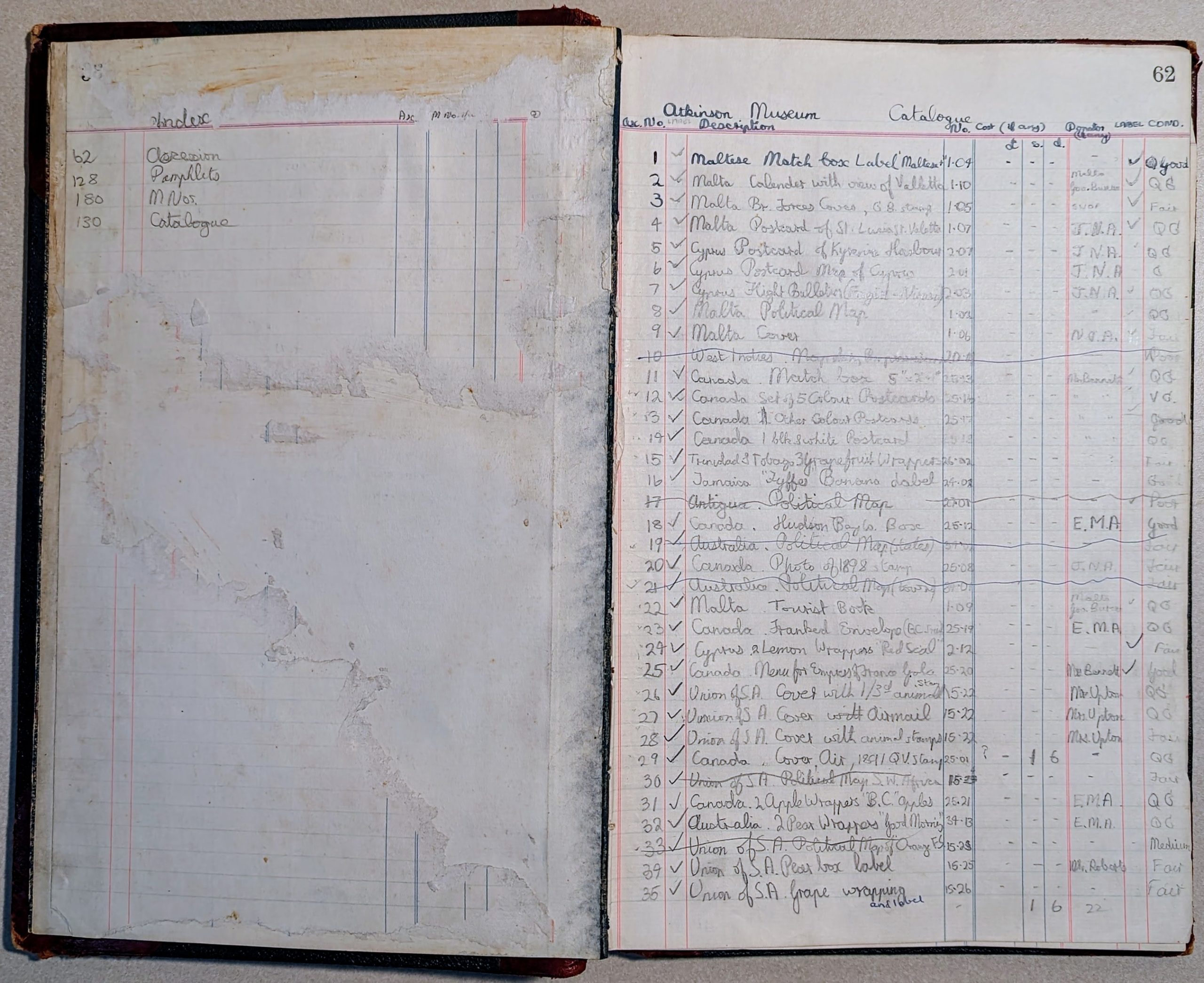
Handwritten inventory in bound, hardcover ledger. There are columns for index and catalogue number, description, condition, and donor.
Figure 2: Ledger with inventory for the fictional “Atkinson Museum,” circa 1950s-1960s, Box 110, Folder Museum Inventory.

One bound inventory and four pamphlets for a fictional “A. B. Atkinson Museum” in Bexleyheath, where he grew up after World War II but before becoming a boarder at Cranbrook School. The inventory lists items that a child could reasonably collect (matchbooks, postcards, labels/wrappers, currency, maps, etc.) from/representing not just Great Britain but many former territories of the British Empire, such as Nigeria and Rhodesia (now Zimbabwe), which three pamphlets are about. This awareness of British colonization can be seen in the country-based research files and a group of six working papers on top incomes in former colonies in Africa. He showed concern for the welfare of people around the world, not just British citizens, and believed that economics was a social and moral science. He also believed in the importance of quality data and rigorous analysis, making his findings understandable outside the field of economics, and using his findings as a basis for policy recommendations.

Atkinson shakes hands with Pope John Paul II. Amartya Sen is in line to Atkinson's right in the background.
Figure 3: Arturo Mari, Atkinson and Amartya Sen meet Pope John Paul II, 1990, Box 108, Folder Photographs: Events.

Six folders of photographic prints, both professional and personal, largely found among the varied contents of two dozen small boxes that Atkinson had labeled “Personal History.” He can be seen giving conference presentations and invited talks, posing for solo and group portraits, meeting notable public figures (such as Pope John Paul II in 1990 and Prime Minister Jonathan Major in 1996), receiving honorary doctorates (there are records for 12 and his CV lists 19), engaging in his hobby of sailing, and being a husband to Judith (born Judith Mandeville) and father to Richard, Sarah, and Charles Atkinson. Besides photos, there is a notable amount of personal correspondence with his family, including a folder of handwritten/drawn items from the children. Judith goes into great detail about their life together in a 2022 self-published memoir available online.

12 members of the Atkinson family pose for a family portrait outdoors, their attire suggesting this might be after a semi-formal event. Four young children are in front on a mix of toy cars, tricycles, and rocking horses.
Figure 4: Atkinson family, circa late 1960s-early 1970s, Box 57, Folder Photographs: Family. Anthony is on the far left behind Judith. Also pictured are father Norman, mother Betty, brothers John and Peter, and sisters-in-law Nyria and Valerie.

One bound logbook that Atkinson used to record royalties from his first two books: Poverty in Britain and the Reform of Social Security (1969) and Unequal Shares: Wealth in Britain (1972), typically by taping statements onto the pages. This practice surely proved unsustainable, as he would go on to author or coauthor 24 books and edit or coedit 17 books and reports. He also published over 350 articles and book chapters, an unknown number of book reviews and journalistic writings (in particular, for New Society magazine), and left 13 working papers at the time of his death. This collection includes 13 unpublished writings, some with evidence of having been rejected for publication or only ever presented, and six folders of journalistic writings about him or that quote him. Fittingly, his final completed book and the culmination of his life’s work, Inequality: What Can Be Done? (2015), can be seen in these records as one of his most popular works.

Atkinson, in close profile, sits dressed in a dark suit with his right hand to his chin/mouth.
Figure 5: Kent Phillips, Atkinson in thought, 1995, Box 57, Folder Photographs: Portraits. Atkinson saw this printed in a newspaper and requested a copy.

A Love Letter

Post contributed by Michelle Wolfson, Josiah Charles Trent History of Medicine Intern.

This exhibit is based on a lot of things. Its main foci are the horrors and heroes of Hiroshima. Three out of forty-five hospitals remained standing after the atomic bombing of Hiroshima, though greatly damaged still, and according to numerous resources, 90-93% of doctors and nurses were killed or injured. The medical staff who survived suffered from pain—physical, emotional, and otherwise—and extreme uncertainty and fear, but gave the best care possible to their community. Even with rumors of the atomic bomb making for unsafe conditions for seventy-five years, they did not leave; and some came from outside the city with offers of help and supplies.

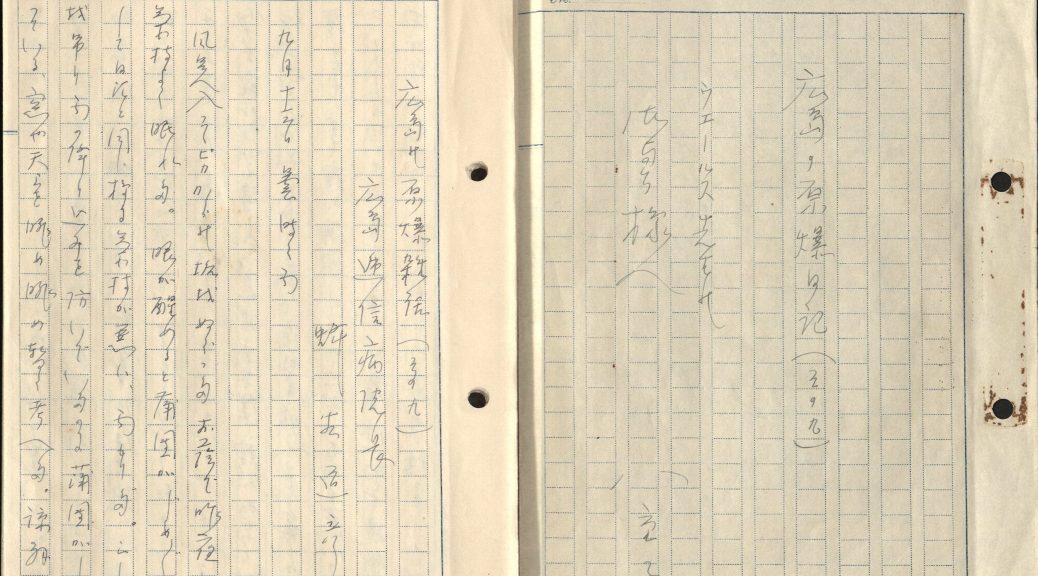
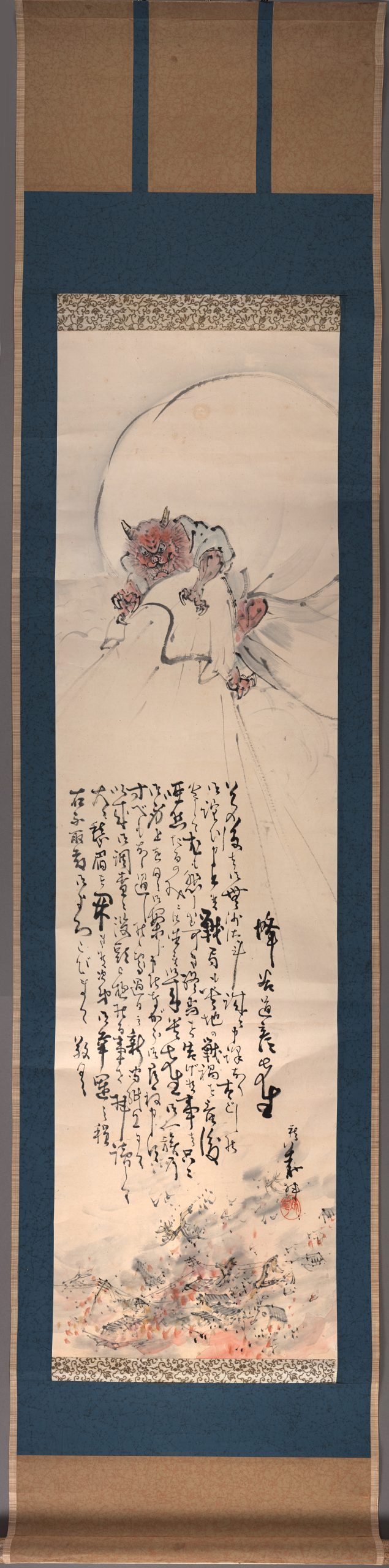
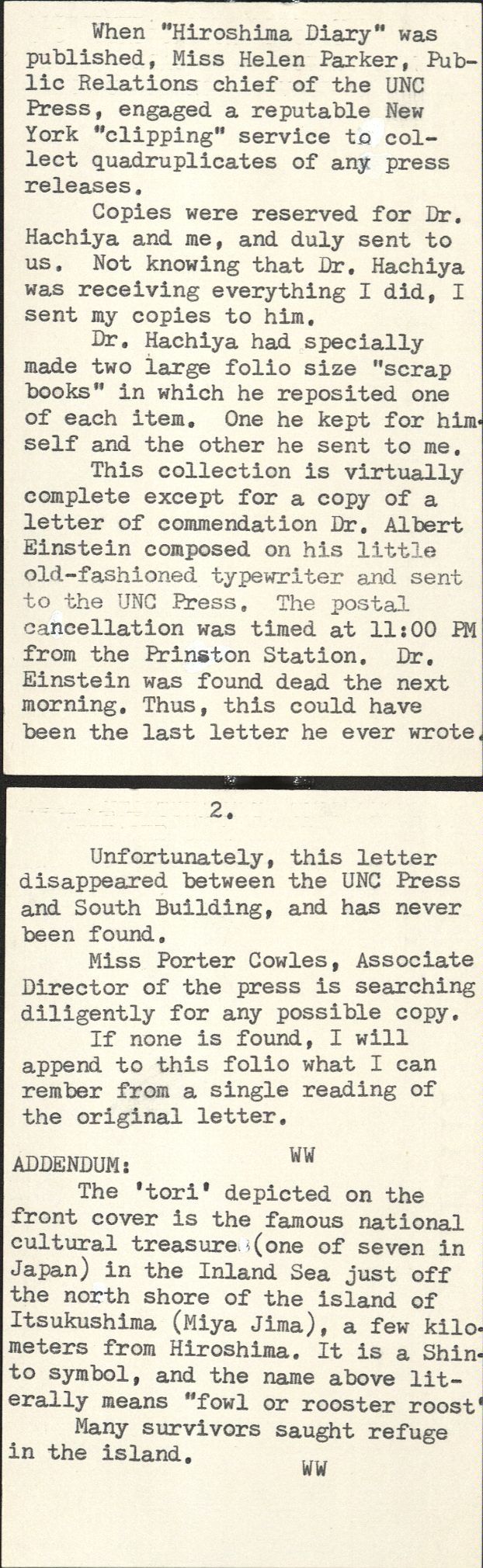
But what are the actual things in this exhibit and what do they mean? For me, it is an exhibit based on letters. Letters to oneself in the form of a diary  as seen in the Japanese manuscript written for the medical journal Teishin Igaku. A letter from an artist friend, relieved and grateful to hear of his friend’s survival, in the form of a beautiful scroll. The scroll’s contents were translated and sent by letter to eventually be included in the book that became Hiroshima Diary: The Journal of a Japanese Physician, August 6-September 30, 1945 . A letter—and it is one of many—about the book and the process of it, which serves as a window into the grace, gratitude, and genuine respect and friendship between two doctors. This even became a quest for a missing letter, perhaps Einstein’s last one before passing, still lost but, for me, an education in the world of archives anyway.

Handwritten manuscript for the medical journal Teishin Igaku.
Hiroshima Scroll.
Portuguese edition of Hiroshima Diary.
Letter from Dr. Michihiko Hachiya to Dr. Warner Wells.
A note from Dr. Wells about Einstein’s lost letter.

It is a story based on letters. This exhibit is my own contribution—a love letter to Hiroshima Diary and its creators, for teaching me about Hiroshima in a new way, and the medical staff and people who survived, as well as those that did not. This is what it is to me, and this is what I wanted to share with you. I hope you find meaning in it as I have.

Warmest regards,

Michelle

The exhibit, The Horrors and Heroes of Hiroshima, will be on display from August 17 to October 1, 2023, in the Josiah Charles Trent History of Medicine Room. An online exhibit is also available here. This exhibition was curated by Michelle Wolfson, the Josiah Charles Trent History of Medicine Intern. Wolfson is a graduate student in Library Science at East Carolina University and half-Japanese.

Color Television on Fire

Post contributed by Blake Beaver, a graduate student intern for the John W. Hartman Center for Sales, Advertising & Marketing History.

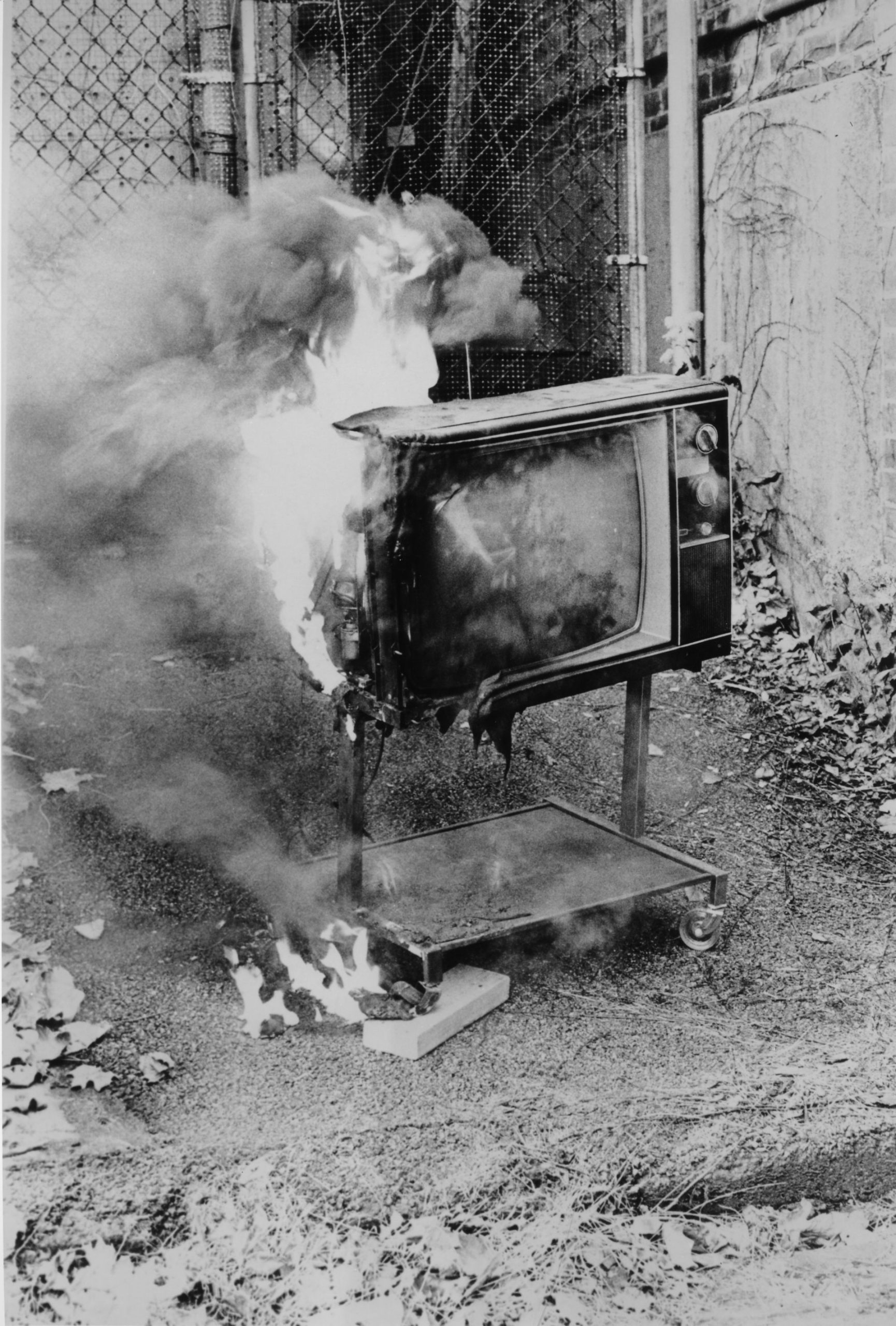
A decade-plus institutional battle occurred between United States television networks, set manufacturers, and governmental agencies over implementing a technical color standard for TV. The National Television Standards Committee (NTSC)’s second standard, implemented in 1953, included color, allowing color television to compete with black-and-white in manufactured sets and programming. Finally, in the early 1970s, color television sales overtook those of black-and-white sets, and all three major television networks (ABC, CBS, and NBC) produced and aired color programs. However, several scares about the safety of color television sets from the late 1960s to the mid-1970s complicated the technology’s hard-won prominence. The radiation levels of color TV sets formed one primary concern. As Susan Murray documents in her history of color television, the panic was “likely exaggerated in its scope and potential dangers,” yet:

It succeeded in bringing to the surface anxieties about the connection between vision problems and television screens, a more general concern over the possibility of radiation leaks from everyday technological objects, a growing mistrust in science toward the decade’s end, and an underlying fear of nuclear war (Murray 2018, 247).

The Rubenstein Library’s recently acquired Consumer Reports Archives shed light on a second safety scare that plagued color television, previously undocumented in Murray and other scholars’ histories: fires.

image showing television set on fire
Product testing for a 19-inch color television set from the Consumer Reports Iconographic materials collection.


Relevant manuscripts from the Technical Department include correspondence with parties as diverse as television consumers, set manufacturers, government agencies, and legal firms, in addition to enclosed reports and ephemera like the National Commission on Product Safety’s press release from January 27, 1970, which publicized the color TV fire hazards. These manuscripts extend our understanding of cultural anxieties about color television beyond the radiation problem.

The collection’s first mention of the fire hazard controversy appears in a letter from consumer Frederick P. Schmitt to the Consumers Union on October 16, 1969. Schmitt attached a clipping of a Newsday article, “U.S. Is Checking TV Fire Danger,” published the same day, which reported on a presidential commission to investigate the fire hazards of color TV sets.

Newsday article on color TV fire hazards from the Consumer Reports Technical Department records.


Schmitt complained to the union that the government protected “the alleged culprits” by omitting the manufacturers’ names and inquired whether the union knew of “these potential killers” so he might prevent the “risk” of “danger” and “possibly death” from his color set. Unfortunately, per the response from Monte Florman, Associate Technical Director at the Consumers Union, the presidential commission refused to release information to the union and the public.

The National Commission on Product Safety’s release on the matter advised that “approximately 22 million color TV sets” were in use at the time and provided a staggering statistic about the disproportionate flammability of color television sets compared with their black-and-white counterparts: “a smoke and fire incident ratio” of “about 40 to 1.”

National Commission on Product Safety press release header from the Consumer Reports Technical Department records.

Although the commission’s press release applauded “the industry for its efforts” to ameliorate the hazards, not all television set manufacturers handled the controversy in this manner. We observe this fact in the collection’s most extensive exchange about the fire controversy, a series of letters from 1970 between consumer Melvyn L. Marks of Silver Springs, Maryland, Sylvania Entertainment Products, and the Consumers Union. Sylvania’s lackluster response to Marks, whose 21LC 28 M set experienced a fire in its “high voltage flyback transformer,” speaks to manufacturers’ inconsistent approach to such a crisis.

Melvyn L. Marks’s letter to Sylvania Entertainment Products from the Consumer Reports Technical Department records.


After repeatedly reaching out to Sylvania about their intentions to “correct or pay for correction of these faulty units,” which “other companies have publicized that they will,” Sylvania subjected Marks to the rigamarole of numerous follow-up communications and a comprehensive service history. Marks signs off in a particularly zesty follow-up, “Awaiting your long overdue reply.”

In addition to consumers, insurance companies and their legal representatives communicated with Consumer Reports. In a letter dated June 3, 1970, San Francisco-based attorney Warren Sullivan wrote the union on behalf of his client, Balboa-Newport Insurance Company, seeking the union’s assistance in “[recovering] [a] loss of $11,000, which occurred by reason of a fire to [their] assured’s home” and which they claim was caused by the client’s Sears & Roebuck “colored television set” catching fire or exploding “in the middle of the night while the set was in the ‘turned off’ position.”

These concerns over the flammability of color television sets continued into the mid-1970s. Tragically, some of these fires proved fatal. In 1973, a memo from the newly formed United States Consumer Product Safety Commission (CPSC), launched a year prior by the Consumer Product Safety Act (CPSA), announced “a possible fire hazard in 12,000 Zenith 19-inch table model color television sets,” in one instance causing the death of “several members of the family.’

This brief glimpse into an overlooked scandal in U.S. television history is just one example of the diverse research trajectories that the Consumer Reports Archives facilitate. In addition to consumer electronics, the Technical Department records collection includes materials on testing procedures, methods, data, and evaluations for appliances, automobiles, chemicals, foods, public services, special projects, and textiles. The collection is available at Duke University’s Rubenstein Library, and the finding aid can be found here.

References

Consumer Product Safety Commission, memorandum. September 13, 1973. Washington D.C. Consumer Reports. Technical Department records, David M. Rubenstein Rare Book & Manuscript Library, Duke University.

Melvyn L. Marks to Sylvania Entertainment Productions Division, letter. February 16, 1970. Silver Springs, M.D. Consumer Reports, Technical Department records, David M. Rubenstein Rare Book & Manuscript Library, Duke University.

Melvyn L. Marks to Sylvania Entertainment Productions Division, letter. May 18, 1970. Silver Springs, M.D. Consumer Reports, Technical Department records, David M. Rubenstein Rare Book & Manuscript Library, Duke University.

Susan Murray. 2018. Bright Signals: A History of Color Television. Durham, N.C.: Duke University Press.

National Commission on Product Safety, press release. “Commission Releases Information on Color TV Hazards.” January 27, 1970. Washington D.C. Consumer Reports. Technical Department records, David M. Rubenstein Rare Book & Manuscript Library, Duke University.

Warren Sullivan to Consumer Reports, letter. June 3, 1970. San Francisco, C.A. Consumer Reports. Technical Department records, David M. Rubenstein Rare Book & Manuscript Library, Duke University.

Announcing the winners of the 2023 Andrew T. Nadell Prize for Book Collecting

We are pleased to announce the winners for the 2023 Andrew T. Nadell Prize for Book Collecting. The submitted collections were creative and inspiring and the judges found it challenging to select the winners.

In the Undergraduate category, Javah Xie, a Computer Science and Philosophy major, won first place for their collection “A Philosopher’s Collection; Or, A Collector’s Philosophy.” Second place went to Lily Elman, a Trinity Program II major studying Disabled Bodies as Minority Bodies in Theory and Practice, for her collection “The Wounded Storyteller: Disability, Illness, and Memoir.” And Rebecca Schneid, an English major, won honorable mention for her collection “Barely Hidden, Yet Always Here: Queer Poetics and Queer Poetic Influences.”

In the Graduate/Professional Schools category, first place went to Joshua Shelly, a doctoral candidate in the Carolina-Duke German Studies Program, for his collection “Alte Bücher in Haifa: (Re)building a German Jewish Library in the 21st Century.” Merlin Ganzevoort, also a doctoral candidate in the Carolina-Duke German Studies Program, won second place for his collection “Turbayne, Morris, and Thomson: A Collection of Victorian Book Art.”

In addition to cash prizes ($1,500 for first, $750 for second, $500 for honorable mention), all six winners will receive any in-print Grolier Club book of their choice and a three-year membership in the Bibliographical Society of America.

Since 1947, the Duke University Libraries have awarded the prize in alternate years to promote reading for enjoyment and the development of students’ personal libraries.  In recent years, winners of the Andrew T. Nadell Prize for Book Collecting have gone on to place highly at the National Collegiate Book Collecting Contest, hosted by the Library of Congress. The Andrew T. Nadell Prize for Book Collecting is named for Dr. Andrew T. Nadell M’74, who began collecting rare books when he was a student at Duke.  He now collects early books and manuscripts on the learned professions and skilled trades, an expansion of his earlier interest in medicine as a profession.  With his wife, Eleanore Edwards Ramsey, he also collects the nineteenth-century Gothic Revival.  He credits his interest in rare books to two of his mentors at Duke, Professor of Medical Bibliography G.S.T. Cavanagh and Professor of the History of Medicine Gert H. Brieger. We greatly appreciate Dr. Nadell’s support of this prize.

Diseases, Drugs, and Dosages

A Q&A with Jeremy Montgomery, PhD candidate in History at Mississippi State University in the History of Science, Technology, and Medicine Node of Excellence and a History of Medicine Collections travel grant recipient.

What is your research project?

My dissertation examines the medical armamentarium in the United States between 1800-1860. Taking a synchronic view, my project seeks to describe medical education, knowledge production, and treatment options between the regions. It takes seriously the diverse medical marketplace by incorporating discussions about “regular” and “irregular” forms of medicine. In addition to the types of medical care, my project examines the black and white body, free and enslaved, also. Lastly, my dissertation discusses and describes symptomology, therapeutics, and Materia Medica within the early-to-mid nineteenth century.

The opening pages of the M.M. Haworth Diary.


What collection(s) did you use from Duke’s History of Medicine Collections?

While at the Rubenstein Library, I reviewed multiple sources. For this trip, I narrowed my search for sources that discussed Materia Medica and therapeutics. In particular, I reviewed the Peter Washington Little Manuscript, Notes on the Lectures of Materia Medica by Benjamin Barton, M.M. Haworth Medical Diary and Journal, Isaac Brooks Headen papers, Caleb Budlong Physician’s account books, Henry Fish Papers, Salisbury, [Mass.]., Lee Griggs daybook, Lee Griggs physician’s ledger, Lectures on the diseases of children, New Haven; Charles Watts papers, New Orleans, Physician’s account book, Lectures on Materia Medica and Therapeutics, Elements of Materia Medica and Therapeutics, On the Teaching of Pharmacology, Materia Medica, and Therapeutics in Our Medical Schools, Materia Medica and Therapeutics, and last but not least The Essentials of Materia Medica and Therapeutics.

What surprised you, or was an unexpected find, in the collection you used?

I was surprised by my findings in the M.M. Haworth Diary. From the opening pages (see above) to his prescription list, I found this to be a rich primary source. This source list the diseases and their prescription(s). The multiple prescriptions are revealing because this time period does not connect a particular pathogen to a disease so it may be argued that the treatments will be different. In addition, this source listed the dosages. The apothecary symbols next to the prescriptions allow greater depth with regards to the medical armamentarium in the nineteenth-century. In short, it was a great day!

A list of diseases with their prescriptions from the M.M. Haworth Medical Diary.


Anything else you’d like to share?

Yes! The History of Medicine Collections travel grant was my first travel grant I have received in my professional career, and it was generous. Furthermore, the staff at the Rubenstein Library are incredible. I had the pleasure of meeting Rachel Ingold—Curator, History of Medicine Collections. Rachel helped me navigate the application process and invited me for coffee when I arrived.  If she invites you for coffee, please accept. We discussed my project some more and she was able to point me to additional resources that I was able to view on my week-long trip. In fact, the M.M. Haworth Diary is an example of an additional source that Rachel was able to help me review on my trip.

Graduate Student Workshop: The Efficient Archival Researcher

Date: Tuesday, April 18, 2023
Time: 9:00am – 1:30pm
Location: Rubenstein Library 249 (Carpenter Conference Room)
Registration required: https://duke.libcal.com/calendar/events/archivesresearch

In this workshop, explore the challenges of working with published and unpublished archival materials. Learn how to find appropriate archives for your research and how to plan a research visit, including for international research. Develop strategies for managing the many files and images you will collect when doing archival research. This session will also cover legal and ethical issues that surround accessing, using, and reproducing rare materials.

The workshop will end with a lunch panel of graduate students who will share the challenges and opportunities of their work in archives and special collections.

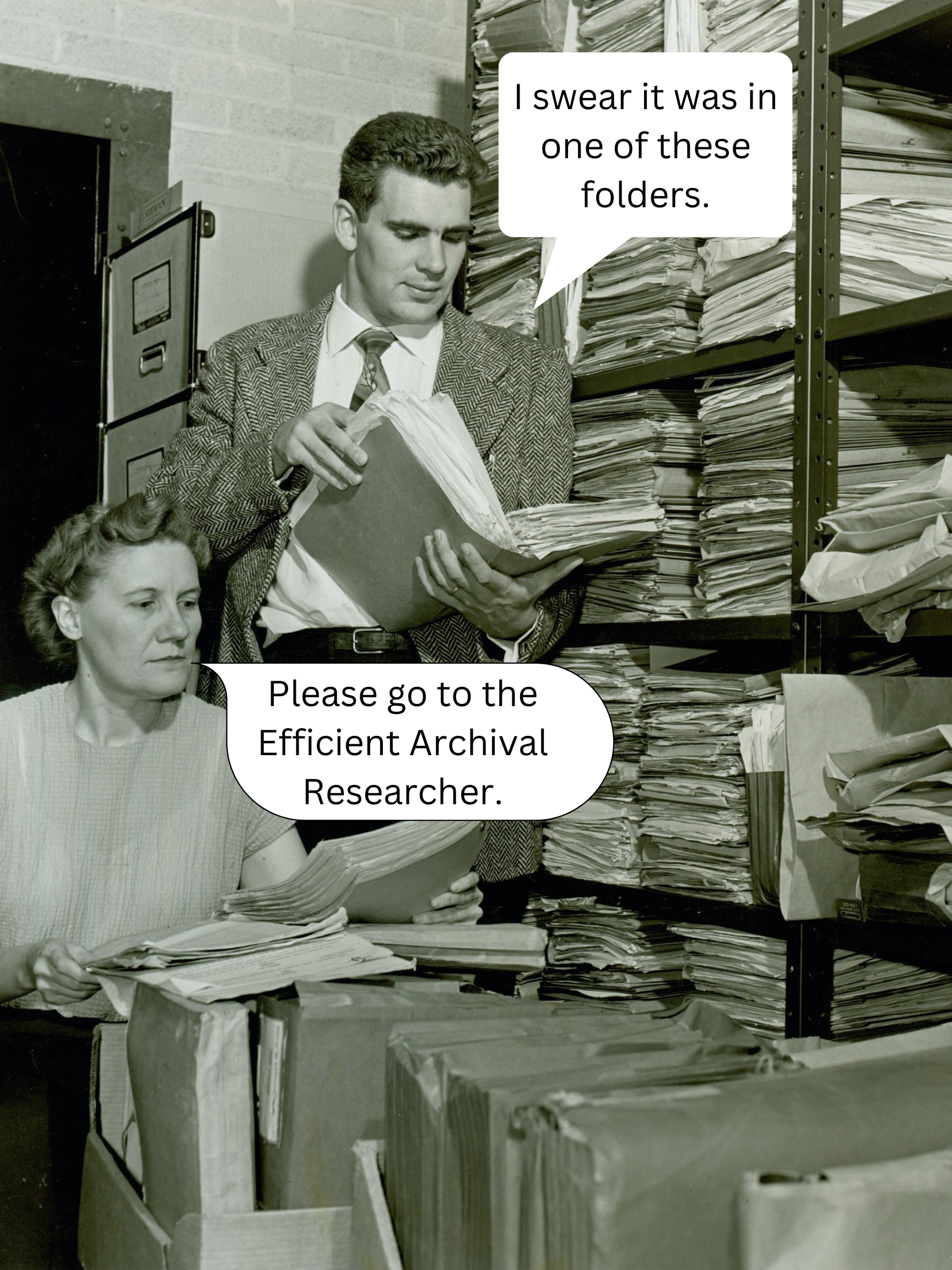
Black and white photograph with a white man and white woman wearing mid-century clothing, in a small room filled with file folders, each leafing through documents. Speech bubbles have been added. The man's speech bubble says "I swear it was in one of these folders." The woman's speech bubble says "Please go to the Efficient Archival Researcher"In the workshop you will:

  • Gain skills to locate, use, cite, and manage information related to special collections and archival materials at Duke and elsewhere
  • Learn about key ethical, legal, and scholarly communication-related issues pertinent to special collections research
  • Develop information management best practices and increase your knowledge of tools and expertise available to help you build an information management strategy
  • Connect with other graduate students 

The Strange Case of “Dr. Anonymous,” a Mystery in the Early History of Coronary Artery Disease : Passion, Discovery, and Serendipity in Book Collecting with Paul Kligfield, MD

Date: Tuesday, April 11, 2023

Time: 5:30 p.m.

Location: Holsti-Anderson Family Assembly Room, Rubenstein Library Room 153

Contact: Rachel Ingold, rachel.ingold@duke.edu

Please join us on Tuesday, April 11, at 5:30 p.m. for our next Trent History of Medicine Lecture Series event. Paul Kligfield, MD, will present The Strange Case of “Dr. Anonymous,”  a Mystery in the Early History of Coronary Artery Disease :  Passion, Discovery, and Serendipity in Book Collecting.

William Heberden’s classic description of angina pectoris in the 18th century contained no speculation as to its cause, now known to be coronary artery disease.  Shortly after publication of his paper by the Royal College of Physicians, he received a letter from a man offering his body for autopsy to help search for a pathologic basis for his symptoms.  Indeed, death occurred within weeks of his correspondence and autopsy was performed by John Hunter.  The writer’s clinical description of his own symptoms of angina and impending sudden death was so medically accurate that historians have identified him as an unknown physician, described as “Dr Anonymous.”  Nearly half a century of interest in the history of cardiology, combined with passion and serendipity in medical book collecting, have now uncovered the true identity of Heberden’s previously unknown correspondent.  Come and share the discovery.

Paul Kligfield, MD, is Professor Emeritus of Medicine at Weill Cornell Medical College, whose interests in the history of medicine include the development and early use of the stethoscope, the origins and technology of the electrocardiogram, and the development of the pathophysiologic understanding of angina pectoris. Dr. Kligfield has served on the Board of Governors of the American College of Cardiology, as President of the International Society for Computerized Electrocardiography, as President of the New York Cardiological Society, as a Director of the New York Heart Association, as Secretary and Trustee of the New York Academy of Medicine, and as President of the American Osler Society. He is a member of The Grolier Club of New York and an admitted bibliophile and recovering bibliomaniac.


Inaugural Janie K. Long Speaker Series: Queer Student Activism at Duke, April 29

Dr. Janie Long

Join the Duke University Libraries as we honor Dr. Janie Long, retired Associate Vice Provost for Undergraduate Education at Duke and former Director of the Center for Sexual and Gender Diversity, with a dedicated study space and the launch of a new speaker series, the first in our history named for an LGBTQ administrator.

Panel Discussion: Queer Student Activism at Duke

Moderated by Steven Petrow T’78, Contributing columnist, The Washington Post, and author, in conversation with:

  • Mandy Carter, Activist
  • Angel Collie, Duke University Center for Sexual and Gender Diversity
  • Liam Miranda T’16 SPP’21, The Inclusion Playbook
  • Janelle Taylor T’19, Georgetown University Law Center

Date: Saturday, April 29
Time: 3:00 – 4:30 p.m.
Location: Holsti-Anderson Family Assembly Room (Rubenstein Library room 153)

Reception to follow. Please register here to help us estimate attendance and refreshments.