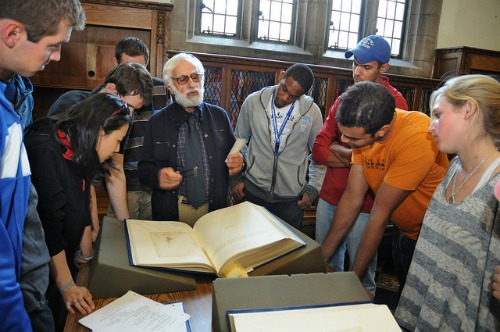
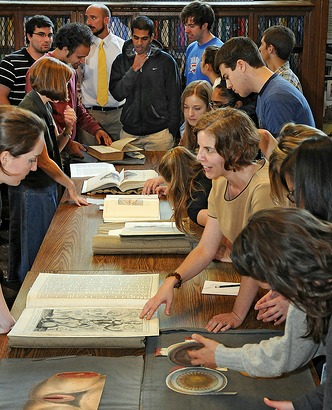
This was another busy semester for Rubenstein librarians, who taught or co-taught more than 70 classes between September and early December! The classes ranged widely in subject, from feminist comics to medical history.
One exciting event, nicknamed “Anatomy Day,” brought 100 medical students to the Gothic Reading Room to investigate historical anatomical atlases and other books and manuscripts from the History of Medicine Collections. Rachel Ingold, Curator of the History of Medicine Collections, led a team of Rubenstein librarians in presenting these treasures to the students.
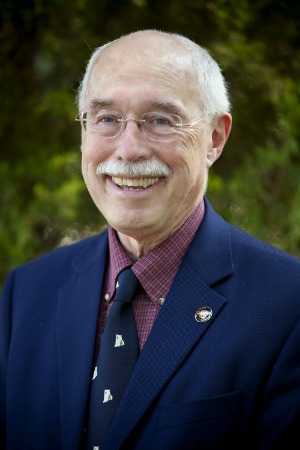
Rachel Ingold, Curator of the History of Medicine Collections
A few of the Duke classes that met in the Rubenstein Library this past semester are:
Beyond Wonder Women: Comic and Graphic Novel Feminisms
History of Photography, 1839 to the Present
Documentary Photography and the Southern Culture Landscape
Early Soviet Culture 1917-1934
American Slavery/Emancipation
Accelerated Intermediate Italian
On the Boundaries of Medicine
The Physician in History
Hidden Children
Dante and the Afterlife of the Book
We also hosted classes from North Carolina State University and the University of North Carolina – Chapel Hill.
The Rubenstein staff offers a vast array of class instruction and support options. Please contact us to learn more about what the Rubenstein staff can do for your class!
Date: Tuesday, December 13, 2011
Time: 7pm-9pm
Location: Biddle Rare Book Room
Contact Information: Will Hansen, 919-660-5958 or william.hansen@duke.edu
Is studying for finals stressing you out? Or do you need a break from hectic holiday shopping? Please join the staff of the Rubenstein Library to for a night of fun and games to celebrate the opening for research of the Edwin and Terry Murray Collection of Role-Playing Games. The collection, one of the first to be available at a research institution, contains thousands of boxed sets, game books, accessories, card games, and manuscript records from the 1970s to the present, documenting the history of a medium that has grown into a worldwide cultural phenomenon. Rare and unique materials from the collection will be on display.
Come play a classic board or card game with friends old and new, enjoy refreshments, and learn more about the history of games. We hope to see you there!
Dr. Frances A. Neelon will speak on Caleb Parry and Parry's Disease
Please join us on Tuesday, December 6, 2011, in Room 102 of the Duke Medical Center Library for the next lecture of the Trent History of Medicine Society Speaker Series. Dr. Francis A. Neelon, Medical Director of the Rice Diet Program and Associate Professor, Emeritus will be discussing Dr. Caleb Parry and the brief life of Parry’s disease.
Caleb Hillier Parry was a polymathic physician and natural scientist of late 18th-century and early 19th-century England. A graduate of the medical school at Edinburgh, he was made a Fellow of the Royal Society, not for his doctoring but for his work on breeding Merino sheep.
Parry made a number of important observations on the nature of angina and recognized that it reflected an inability of the heart to respond to physiological demand. He was the first to record an accurate description of exophthalmic goiter, and recognized the connection between thyroid gland enlargement and cardiac abnormalities (although he did not realize which was cart and which horse). His plans to include his case notes in a magnum opus on disease went awry when he suffered a debilitating stroke in 1816, but his physician-son, Charles, published his unfinished works in 1925.
Parry’s observations clearly antedated the descriptions of toxic goiter by Graves and Basedow, but their names remain associated with this disorder to the present (which you choose depends on where you live) while Parry’s does not. William Osler briefly championed Parry’s case, but eventually abandoned his attempts to immortalize the “fine old Bath physician.” Dr. Neelon will try again to rescue Parry’s name from obscurity.
There will be a light buffet supper at 5:30 pm, and the lecture will begin at 6 pm. The event is open to the public. Please contact Rachel Ingold at (919)684-8549 or rachel.ingold@duke.edu for more information.
(L to R) Panelists Holly Smith, Dr. L. Teresa Church, and Jenn Thompson. Photo courtesy SCOSAA-UNC.
Rubenstein Library staff visited our neighbors in Chapel Hill last week to speak on two panels sponsored by UNC-Chapel Hill’s Student Chapter of the Society of American Archivists (SCOSAA). Jenn Thompson, the Research Services and Collection Development Librarian for the John Hope Franklin Research Center for African and African American History and Culture, spoke on November 7 about the Franklin Center’s collections as part of a panel entitled “Diversifying the Archives.” Naomi Nelson, the Rubenstein’s Director, spoke on November 10 about reappraisal of archival materials with colleagues from UNC’s Wilson Library. For more information on the panels, see SCOSAA’s blog (linked above) or their Facebook page.
Naomi Nelson (back row center) with fellow panelists Bill Landis, Tim West, and attendees of panel. Photo by Patrick Michael Brown, courtesy SCOSAA-UNC.
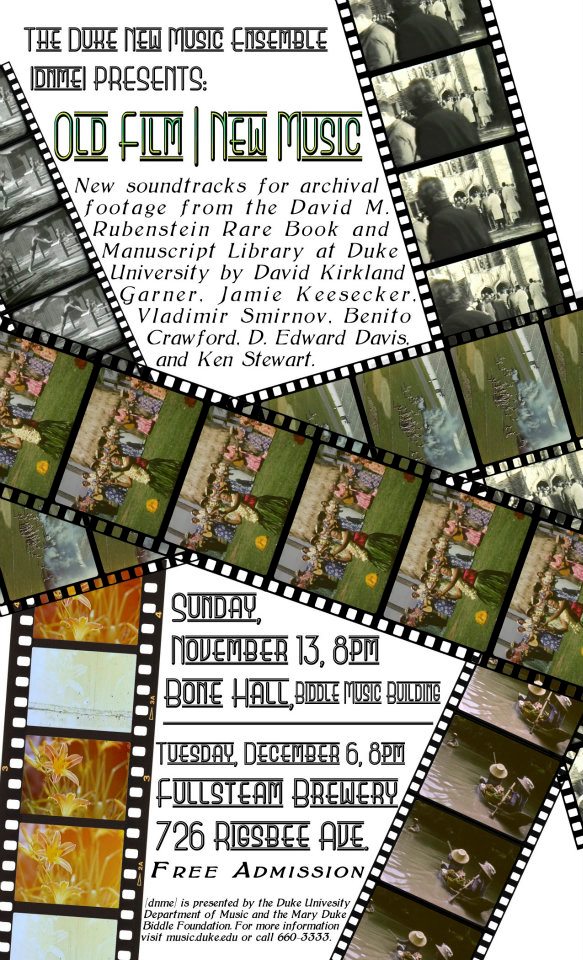
Tonight and on December 6th, the Duke New Music Ensemble will be performing new compositions written as soundtracks for films from the Rubenstein Library’s collections. We asked the dnme composers to tell us a little bit about the films they chose and how they inspired their compositions. For more details about the performances, visit the group’s Facebook page or click the poster at right to enlarge it.
David Kirkland Garner
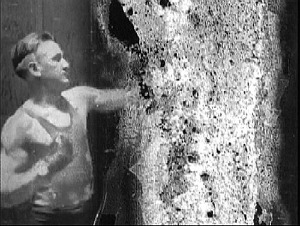
The video I chose to use is from H. Lee Water’s “Spindale ’37” film (from the H. Lee Waters Film Collection). I chose the portions of the video having to do with the factory for Yelton’s Flour, opening with footage of the flour refining process from inside the building then turning to the procession of workers leaving the factory at the end of the day. The music I wrote is not meant to be closely synced with the video. Rather, it creates a singular mood for the film images. The music is created in two parts: a repeating groove in the keyboard, bass and 3 banjos and a slowly unfolding melody in the other instruments. At the beginning and end of the piece the ensemble uses percussion instruments to imitate the sounds of summer in rural North Carolina.
Jamie Keesecker
Margolin’s 1965 Hawaii film footage (from the Morris and Dorothy Margolin Film Collection) presents a challenge in that almost every moment captured in the footage comes from a performance that was originally accompanied by music, and the musicians themselves can be seen throughout most of the film. Seeing the musicians strumming guitars and ukeleles in unison is one of the aspects that attracted me to this film. But rather than attempting to recreate the music that would have originally accompanied the images in the video, I have written music that is merely meant to represent my own reactions to seeing the film. At the same time, I have chosen to write for a consort of mostly plucked string instruments similar to those depicted in the video. Musical gestures are at times intended to be synchronized with the musicians on film, and other times not, just as the musical material itself contains hints of Hawaiian tropes while remaining, on the whole, quite different from what would actually have been played by the musicians on film.
D. Edward Davis
My archival footage is of a student protest that occurred at Duke University in 1969 (from the Radio TV Services Records). Despite the “homemade” image quality (or perhaps because of it), the images capture the drama of the protesters in action, with the cameraman acting as a participant and not a spectator. I’m drawn to this film because of its connection with the University’s history, and I tried to mirror the intensity but also the sinister beauty of these images with my music. As students are presently (Nov 2011) involved in “Occupying Duke” in the same physical location as the 1969 protests, I love how the film has both a distant timeless quality and a captivating immediacy. Thanks to the staff of the Archives for preserving this footage and also for making it accessible to researchers and artists.
Vladimir Smirnov
The video I chose was footage of traveling down a river (the Chao Phraya, I presume?) in Bangkok from a collection of travel footage by former Duke Professor Margolin (from the Morris and Dorothy Margolin Film Collection). I myself have never traveled to Thailand, and the video drew me in with its images of a very exotic world and with its slow hypnotic pace. I tried to create a musical atmosphere that the video suggested to me with very gentle and exotic sounds—muted piano, bowed vibes, slow swells on the guitar and bass, flute that is sung into at the same time as it’s played, banjo, and very sparse strings. I didn’t really think too much that I was working with archive film when writing, I just focused on the images and atmosphere.
Kenneth David Stewart
The footage I selected is of the Sarah P. Duke Gardens from 1937 (from the Radio TV Services Records). What moves me about this footage is how striking the color of the flowers appears as captured by the Kodachrome film. It is interesting how this footage from 1937 is just two years after Kodak made this kind of film commercially available—in fact, the famous color scenes in the Wizard of Oz were shot with this same film. This captured color, to me, almost has its own texture independent of the hue itself.
The written music for the instruments is based on the live ensemble playing the role of three choirs simultaneously ‘singing’ different music, but at the same time each contributing to a larger, composite texture. In addition to this, there is an electronic track with supporting harmony and the sounds of a typical journey in the rain from my home to the Biddle Music Building recorded onto microcassette.
The process used to construct the visual narrative is based on whether the camera shot is close to the flowers themselves or farther, panning across the gardens. At the same time a ‘chord progression’ of color directs the footage from yellow to orange to red to pink to white to ivory and back to yellow again to repeat the cycle. None of these textures are more important than another and in this way, the whole is truly greater than the sum of its parts.
My mother, a former professional horticulturalist, instilled in me a love of plants and flowers at a young age. Some of my fondest childhood memories are of my mother and I outside planting flowers and vegetables in our family garden. This piece is dedicated to her.
Post contributed by the members of the Duke New Music Ensemble.
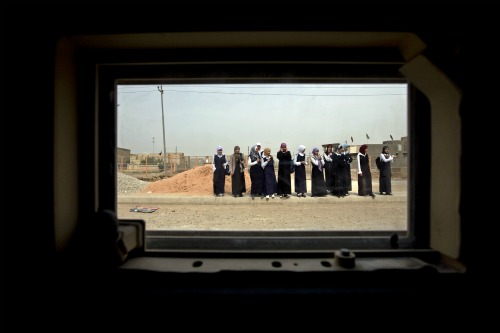
Lowy’s powerful and arresting color photographs taken through Humvee windows and military-issue night vision goggles capture the desolation of a war-ravaged Iraq as well as the tension and anxiety of both U.S. soldiers and Iraqi civilians.
Lowy received a BFA from Washington University in St. Louis in 2002 and began his career in 2003 when he joined Corbis and embedded with the U.S. Army’s 101st Airborne Division to cover the Iraq War. In 2005 Photo District News chose Lowy’s Iraq images as some of the most iconic of the start of the 21st century. Lowy’s photographs appear regularly in national and international such publications as the New York Times Magazine, Newsweek, Fortune, the New Yorker, Vanity Fair, Stern, and Rolling Stone. His work has been exhibited at San Francisco MOMA, Tate Modern, Open Society Institute’s Moving Walls, Noorderlicht Photofestival, Battlespace, and the Houston Center for Photography, among others.
For more details about the exhibit, on display through December 11th in the Rubenstein Library Gallery, visit this blog post or view the online exhibit.
Date: Tuesday, November 15, 2011 Time: 7:00 PM Location: Franklin Humanities Institute Garage, Bay 4, Smith Warehouse (map) Contact Information: Patrick Stawski, 919-660-5823 or patrick.stawski(at)duke.edu, or Kirston Johnson, 919-681-7963 or kirston.johnson(at)duke.edu
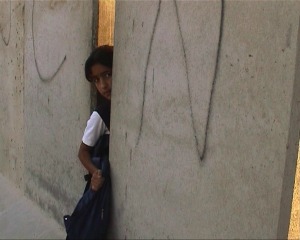
Join us for a screening of Good Times (31 minutes, Hebrew/ Arabic/ English with English subtitles), the second film in the 2011-2012 Rights! Camera! Action! series and the winner of the 2004 Full Frame Jury Award for Best Short.
Good Times was shot in Abu Dis, a small Palestinian village divided in two by a wall built by the Israeli government. The film follows the villagers’ lives before the wall was built and through the construction of a temporary, then a permanent, wall. Moving in colliding microcosms, the inhabitants of the village and the Israeli soldiers protecting the border create an absurd routine of mutual respect and resentment.
Following the film, students from Duke’s BorderWork(s) Humanities Lab will give a presentation on their work this semester.
The screening is free and open to the public, and free popcorn will be provided!
Date: October 24-December 11, 2011 Location and Time: Rubenstein Library Gallery during library hours Contact Information: Karen Glynn, 919-660-5968 or karen.glynn(at)duke.edu
Benjamin Lowy’s powerful and arresting color photographs, taken through Humvee windows and military-issue night vision goggles, capture the desolation of a war-ravaged Iraq, as well as the tension and anxiety of both U.S. soldiers and Iraqi civilians.
To photograph on the streets unprotected was impossible for Lowy, so he came up with the brilliant approach of making images that illuminate this difficulty by shooting through the windows and goggles meant to help him, and soldiers, to see. In doing so he provides us with a new way of looking at the war—an entirely different framework for regarding and thinking about the everyday activities of Iraqis in a devastated landscape and the movements of soldiers on patrol, as well as the alarm and apprehension of nighttime raids.
Lowy’s work was selected from over two hundred entries in the fifth biennial Center for Documentary Studies/Honickman First Book Prize in Photography competition, judged by William Eggleston. Lowy will speak about his work during the exhibit’s opening reception on Thursday, November 10th at 5:30 PM in the Rare Book Room.
An online exhibit is available on the Libraries’ website as well.
Lowy received a BFA from Washington University in St. Louis in 2002 and began his career in 2003 when he joined Corbis and embedded with the U.S. Army’s 101st Airborne Division to cover the Iraq War. In 2005 Photo District News chose Lowy’s Iraq images as some of the most iconic of the start of the 21st century. Lowy’s photographs appear regularly in national and international such publications as the New York Times Magazine, Newsweek, Fortune, the New Yorker, Vanity Fair, Stern, and Rolling Stone. His work has been exhibited at San Francisco MOMA, Tate Modern, Open Society Institute’s Moving Walls, Noorderlicht Photofestival, Battlespace, and the Houston Center for Photography, among others.
The Archive of Documentary Arts at the Rubenstein Library acquired the exhibit photographs through the generosity of the Honickman Foundation established by Lynne Honickman. Harold Honickman sits on the board of the Honickman Foundation and is a member of the Duke University Library Advisory Board. The gift of Benjamin Lowy’s photographs supports the Rubenstein Library’s commitment to acquiring photographic collections that have artistic merit and that reflect the visionary purposes and documentary impulses of their creators.
Made from deteriorating reels of film, Bill Morrison’s experimental film Decasia is a symphony in decay. With a score composed by Bang on a Can’s Michael Gordon, this “haunting modern masterpiece” (The Guardian) will be presented in a rare screening, followed by a Q & A with Morrison. Tickets are $5 at the Carolina Theatre box office.
Filmmaker and artist Bill Morrison will talk with Duke graduate composers about the process of collaborating with composers scoring for film. Morrison has collaborated with an impressive line-up of composers, including John Adams, Bill Frisell, Steve Reich, and Vijay Iyer. This event is free and open to the public.
Morrison created a film for Bill Frisell’s new work, The Great Flood, which Duke Performances presented this past Saturday.
Date: October 26, 2011-January 22, 2012 Location and Time: Rare Book Room cases during library hours Contact Information: Valerie Gillispie, 919-684-8929 or valerie.gillispie(at)duke.edu
Did you know that Duke hosted the only Rose Bowl played outside of Pasadena, CA?
Did you know that Duke chemistry students and professors created special bullets for training soldiers?
Did you know that Duke women played a pivotal role in wartime service and morale-raising?
Did you know that the Tarheels once liked the Blue Devils so much they were willing to loan them their football bleachers?
You can learn more about all these things (and even more!) by visiting “From Campus to Cockpit: Duke during World War II,” currently on display in the hallway cases outside the Rare Book Room.
The exhibit documents the academic, military, and humanitarian accomplishments of the Duke University community during World War II. Photographs, papers, artifacts, and archival film footage tell the story of the university’s spirited efforts to support the nation during a turbulent time of war—including hosting the 1942 Rose Bowl, expanding the possibilities for women in the academic realm, and cooperating with the city of Durham to host fundraising events.
Highlights of the exhibition include images of the first women engineering students at Duke, an original 1942 Rose Bowl ticket, a Red Cross bandage, memorabilia from “Rose Bowl Week” in Durham, and a variety of 1940’s-era military patches and insignia.
If you can’t stop by the display, you can also see many of the artifacts—along with Rose Bowl game footage, bonus materials and research resources—in our online exhibition.
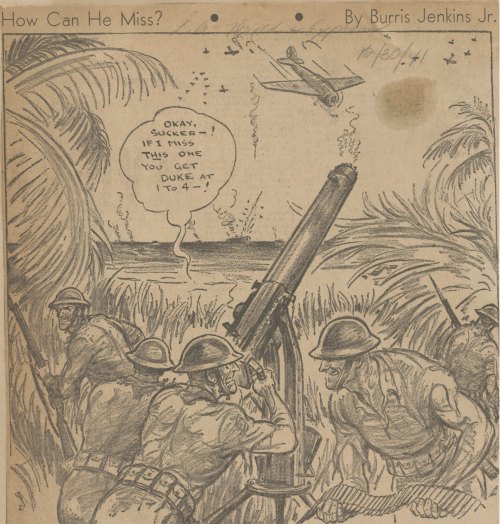
Editorial cartoon from the Los Angeles Herald & Express, December 30, 1941.
Post contributed by exhibit curators Rosemary K. J. Davis, Isobel Craven Drill Intern, and Jessica Wood, William E. King Reference Intern.
Dispatches from the David M. Rubenstein Rare Book and Manuscript Library at Duke University