Category Archives: Bingham Center

Meet our Interns

Every fall the Rubenstein Library welcomes a new group of graduate student interns from Duke and other area universities.  Maybe I just have a soft spot for our interns since I was once one, but I think anyone at the Rubenstein would tell you that our interns are an integral part of the work we do, helping us with processing collections, creating finding aids, answering reference questions, coordinating events, and much more. I’d like to introduce you to some of the interns who are working with the Research Services department this year:

Dominique Dery, Research Services Intern

What she’s studying: I’m currently a PhD student studying Political Theory and Religion and Politics in the Political Science department at Duke. My dissertation links historical accounts of civic friendship with contemporary theoretical and ethnographic work on civic engagement and community service.
What’s she’s been working on at the Rubenstein Library: As the Research Services intern, I serve patrons at the front desk of the Rubenstein, and I also respond to queries from researchers who can’t make it in to the library themselves. So far I’ve searched through and ordered reproductions of letters, sheet music, and pamphlets.
What she likes to do when she’s not with us: When I’m not writing or at the Rubenstein, I love to help out at a friend’s farm in Rougemont and hike along the Eno.
Most interesting thing she’s come across in our collections:  The most interesting thing I’ve come across so far has been the correspondence between Carson McCullers and Tennessee Williams while on the hunt for mention of another writer in McCullers’ papers; I love McCullers’ fiction and it was fascinating to get to see some of her letters to her dear friend Tennessee (also known as ’10’ in some of the letters).

Williams to McCullers Letter
Letter from Tennessee Williams to Carson McCullers


Danielle Lupton, Hartman Center for Sales, Advertising & Marketing History Intern

What she’s studying: I am a sixth year graduate student in Political Science at Duke University. I focus on international relations, and my work looks at how leaders interact during international crises.
What’s she’s been working on at the Rubenstein Library: In doing research for patrons, I have come across some really neat old advertisements, including some fascinating ads from the turn of the century. I am also doing research for the Hartman Center on Pan American Airlines. Both my parents are pilots, and my father flew for Delta Airlines, who bought out Pan Am. I really feel a connection to the material.
What she likes to do when she’s not with us: In my free time, I am an avid tennis player.
Most interesting thing she’s come across in our collections: I came across this beautiful advertisement from 1896 for Liberty Bicycles on the back of a Kodak ad I was searching for. I think as a political scientist the tag line really resonates with me, and the artwork is a beautiful example of Art Nouveau in advertising.
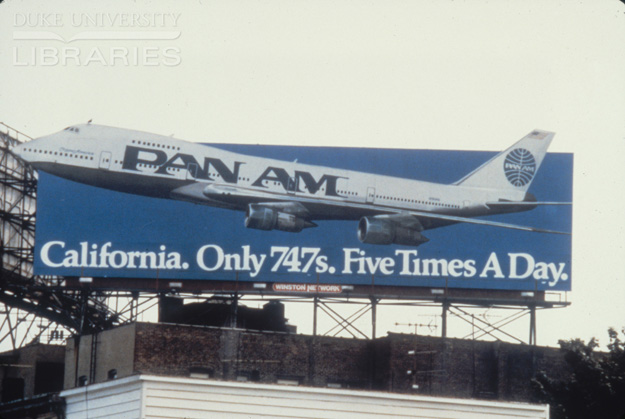
pan am
1987 Pan Am Billboard


Mary Mellon, University Archives William King Intern

What she’s studying: I’m a library and information science student at UNC-Chapel Hill.
What’s she’s working on at the Rubenstein Library: Various projects for the University Archives, including the Chapel sermon recordings digitization project (some of the recordings are being used in the Great Black Preachers of Duke Chapel series on iTunes U), and creating information pages about members of the Duke family.
What she likes to do when she’s not with us: Outside of work and school, I love knitting, baking, and Duke basketball!
Most interesting thing she’s come across in our collections: A 1958 Duke Law School banquet program signed by “Dick Nixon.”
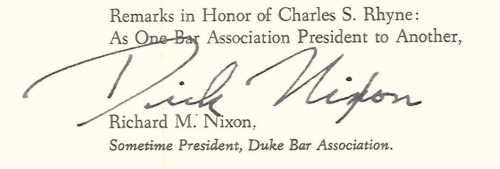
Richard Nixon Signature
Signature of Dick Nixon, Sometime President of the Duke Bar Association


Claire Radcliffe, Sallie Bingham Center for Women’s History & Culture Public Services Intern

What she’s studying: I’m working on a dual masters degree; I just finished my MA in Public History at NC State, and I’m working on my MSLS from Chapel Hill.
What she’s working on at the Rubenstein Library: I’ve been working on a range of things: migrating the website to Drupal, migrating subject guides to LibGuides (and revamping some of them), assisting with remote reference and reproduction, assisting with preparation for classes, helping out with 25th anniversary events, and processing zines.
What she likes to do when she’s not with us: Outside of school and work, I’m interested in photography, old movies, traveling, baking, dance fitness classes, and used bookshops. Although there is distressingly little time outside of school and work.
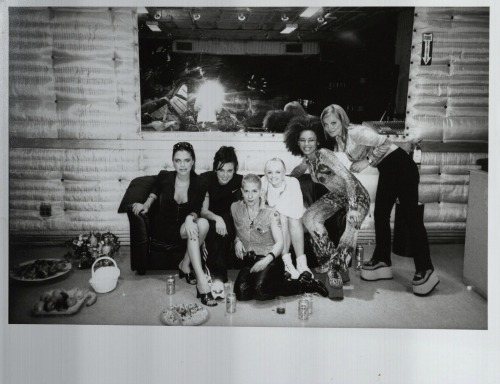
Most interesting thing she’s come across in our collections: Two of the most interesting things I’ve come across were the pink corset book  and a picture of Kathy Acker with the Spice Girls.
Kathy Acker and Spice Girls
Kathy Acker, third from left, with the Spice Girls

My Rubenstein Library: Mary Ziegler on The Abortion Wars

With generous assistance from a 2013 Mary Lily Research Grant, I visited the Sallie Bingham Center for Women’s History and Culture last summer to do research for an article and for my book, now under contract with Harvard University Press, The Lost History of the Abortion Debate.

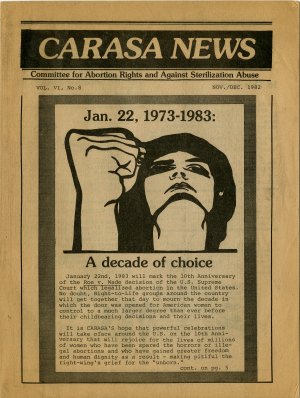
CARASA001resizedThe Bingham Center offers researchers access to many forgotten voices from the abortion wars, from pioneering feminists to founding members of the women’s health movement. I focused on materials documenting the policies and struggles of abortion providers in the years after Roe v. Wade. My search uncovered documents chronicling the work of individual clinics and the activities of political organizations, like the National Coalition of Abortion Providers, that lobby for those working in clinics. These documents revealed a complex legal discourse forged by lay actors—women, clinic staff, providers and activists seeking to redefine what abortion rights meant. Non-lawyers routinely interpreted Supreme Court decisions, using them as raw material for new visions of reproductive freedom.

The story told by the documents housed at the Bingham Center differs substantially from the conventional narrative of post-1973 abortion politics. We often believe that the Supreme Court set the course for the abortion wars of future decades. In particular, by defining abortion as a privacy issue, the Court supposedly short-circuited popular debate about what abortion rights ought to mean. The materials I found complicated this narrative. Far from leaving constitutional issues to the courts, providers, patients, and political activists drew on judicial decisions in creating bold, new ideas about the rights women deserved. The documents I found at the Bingham Center provide indispensable evidence of the true impact of Roe, since the Bingham collections recapture the often-neglected voices of abortion providers. We stand to learn a great deal from studying these materials. I certainly did.

Post contributed by Mary Ziegler, an assistant professor of law at Florida State University College of Law.


Women in the Movement Part One: Reflections Unheard: Black Women in Civil Rights

Date: Thursday, September 26, 2013
Time: 5:30-8:00 p.m.
Location: FHI Garage, Bay 4, Smith Warehouse (directions & parking information)
Contact: John Gartrell, john.gartrell(at)duke.edu

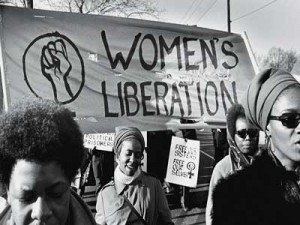
reflections_imageReflections Unheard: Black Women in Civil Rights focuses on black women activists and their marginalization within the Black Power and Feminist movements of the 1960s and 1970s. Filmmaker Nevline Nnaji looks at how each movement failed to fully recognize black women’s overlapping identities and include them as both African Americans and women. Through interviews and archival footage, Reflections Unheard tells the story of these black female activists’ political mobilization and fight for recognition.

The screening will be followed by a discussion with producer and director, Nevline Nnaji.

Part 1 of 2 in the Women in the Movement series is co-sponsored by John Hope Franklin Research Center, the Department of African & African American Studies, the Center for Documentary Studies, the Sallie Bingham Center for Women’s History and Culture, the Center for African and African American Research, the Franklin Humanities Institute, and the Program in Women’s Studies.


Transforming Knowledge: A Reading with Dr. Jean Fox O’Barr

Date: Tuesday, September 17, 2013
Time: 6:00 p.m.
Location: Thomas Room, Lilly Library, Duke University East Campus (directions to Lilly Library)
Contact Information: Kelly Wooten, kelly.wooten(at)duke.edu

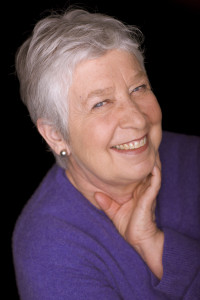
Jean Fox O'Barr Dr. Jean Fox O’Barr will read from her new book, Transforming Knowledge: Public Talks on Women’s Studies, 1976-2011. This collection chronicles her personal journey, which unfolded alongside the women’s movement and the evolution of Women’s Studies. Now retired, Dr. O’Barr founded and led the Duke University Women’s Studies Program for two decades. Her records are preserved at the Sallie Bingham Center.

Read more about this book or order online from She Writes Press.  This event, which is free and open to the public, is co-sponsored by the Sallie Bingham Center for Women’s History and Culture at Duke University Libraries and the Resource Center for Women and Ministry in the South.

RSVP for this event (optional).

Post contributed by Kelly Wooten, Research Services and Collection Development Librarian for the Bingham Center.

Catherine Nicholson

Sinister Wisdom
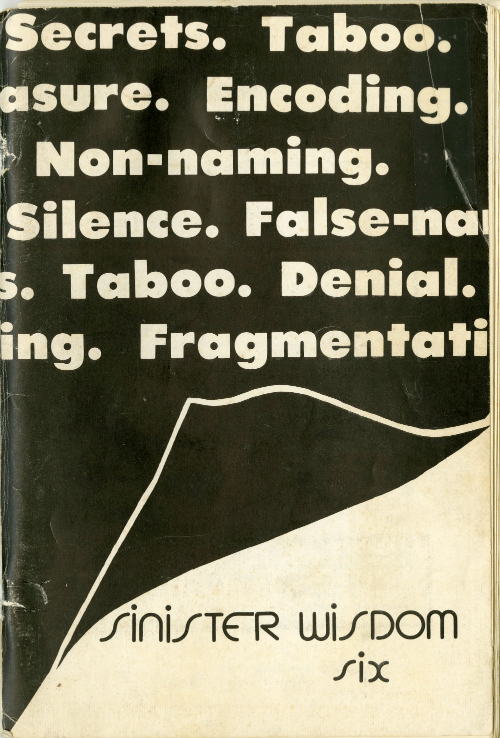
Sinister Wisdom, the journal Nicholson co-founded

With great admiration, the Rubenstein Library pays tribute to Catherine Nicholson (1922-2013), theater director/producer, and pioneering co-founder and editor of Sinister Wisdom, who died June 16, 2013. Nicholson’s papers, which are held by the Sallie Bingham Center for Women’s History and Culture, document her life as a scholar and activist. Beth Hodges, former contributing editor, honored Nicholson with an obituary to be published in the fall issue of Sinister Wisdom. Hodges writes, “Friends remember Catherine as a dedicated lesbian feminist cultural worker, gifted writer, thinker, teacher, conversationalist, and a steadfast friend. Catherine possessed exceptional abilities, vision, and creativity and was also unusually motivated and self-disciplined. She chose to do her best in whatever she undertook, be it acting; directing; editing and publishing a women’s journal; [and] teaching theater and producing the world-premiere of a Monique Wittig play.”

With her partner, Harriet Ellenberger, Nicholson founded Sinister Wisdom, subtitled “A Journal of Words and Pictures for the Lesbian Imagination in All Women.” Hodges writes, “Sinister Wisdom became Catherine and Harriet’s life, took over their house, determined they would drive a truck rather than a sports car, even decided where the couple would live. The job of ‘creating a women’s community on paper,’ as one woman put it, was all-consuming.” Michelle Cliff and Adrienne Rich were the next editors to take the helm of Sinister Wisdom, which continues to be published today under the editorship of Julie Enszer.

Several students from the Duke Women’s Studies Senior Seminar class “Feminist Theory: Durham 1960-1990,” taught by Professor Kathy Rudy during spring, 2013 used this collection in their research on Durham’s activist community of the 1960s-70s. One of those students, Chantel Liggett, received the Middlesworth Award for her paper “Divergent Priorities, Diverging Visions: Lesbian Separatist versus Gay Male Integrationist Ideology Surrounding Duke in the 1970s and 80s.”

Post contributed by Kelly Wooten, Research Services and Collection Development Librarian, Sallie Bingham Center

New Acquisitions: A Gender and Sexuality Side Show with Beat Connections

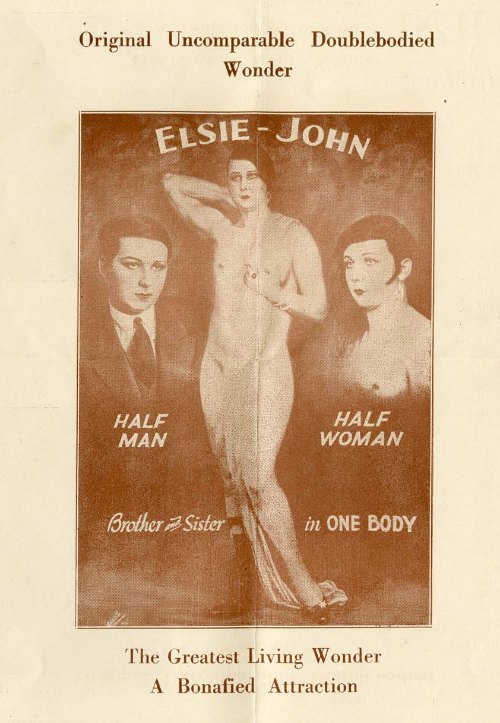
The Sallie Bingham Center for Women’s History and Culture recently acquired a rare ephemeral promotional pamphlet, possibly published in Chicago in the 1930’s, European Enigma, International Sensation: Elsie-John, Half Man, Half Woman: Brother and Sister in One Body: Widely Imitated, Never Successfully Duplicated.  The pamphlet promotes a German-born “hermaphrodite” performer, also known as a “half-and-half” in the parlance of the side show or “freak” show trade because of the custom of presenting one of half of the body with attributes of a typical male and the other half female.

elsie john back web

Beginning as a popular pastime in seventeenth-century Europe, freak shows featured performances intended to shock viewers such as exhibitions of biological rarities or heavily tattooed or pierced people, as well as extreme activities like fire-eating and sword-swallowing. Performers could be physically unusual humans such as those uncommonly large or small, those with both male and female secondary sexual characteristics, and people with other extraordinary diseases and conditions. As attitudes changed about physical differences and previously mysterious anomalies were scientifically explained, laws were passed restricting the freak show resulting in a decline in this form of entertainment.

The pamphlet includes six halftone views of Elsie-John as a man and as a woman as well as an autobiographical sketch. Elsie John, a performer in Chicago in the 1930s and 1940s, was connected to the Beat Generation of writers. The poet Herbert Huncke (1915-1996), who appears as a thinly-veiled character in both William S. Burroughs’ 1953 novel Junkie and Jack Kerouac’s On the Road, and was by some accounts the source of the term “Beat,” wrote that he had been taken at an early age under the wing of Elsie John, who appears to have introduced Huncke both to heroin and to the gay underground of 1930s Chicago. Huncke’s short memoir “Elsie John” is an unsentimental but affectionate sketch of the performer.

Post contributed by Laura Micham, Merle Hoffman Director, Sallie Bingham Center for Women’s History and Culture and Curator, Gender and Sexuality History Collections.

New Acquisitions: Scenes from the Life of St. Catherine

In June and July we’re celebrating the beginning of a new fiscal year by highlighting new acquisitions from the past year. All of these amazing resources will be available for today’s scholars, and for future generations of researchers in the Rubenstein Library!  Today’s post features a remarkable addition to the Sallie Bingham Center for Women’s History and Culture. Check out additional posts in the series here.

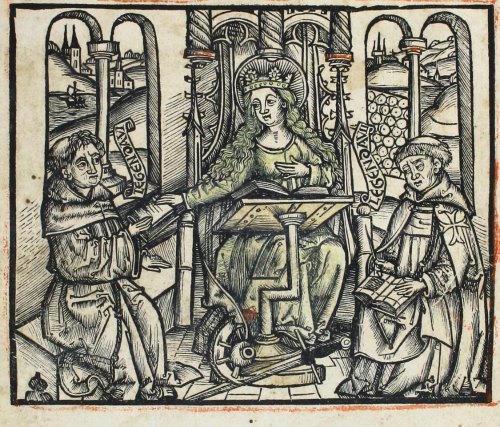
The Library has acquired a rare incunable (item printed from moveable type in Europe before 1501), the Legenda de Vita S. Catharinae by Frater Petrus, published in Strasbourg on April 6, 1500.  It tells the story of St. Catherine of Binding of Legenda Vita de s. Catharinae, Strasbourg, 1500Alexandria, one of the most popular and important saints in late medieval Europe, and an enduring icon of women’s learning.  She was said to have won a debate with the Roman emperor’s elite philosophers over the value of Christianity, leading to her imprisonment and torture on the breaking wheel, now often called the Catherine wheel.

This edition includes seventeen beautiful woodcuts attributed to the artist known as the “Master of Terence,” who worked frequently for the book’s publisher, Johann Grüninger. The copy now in the Rubenstein Library, just the third known copy in an American institution, also features a contemporary binding with elaborate tooling and a brass clasp, and extensive rubrication both in the text and bordering the woodcuts.  It will reward a variety of research approaches, from literary scholars interested in book history and the popular medieval genre of saints’ lives to those working in women’s history, religious history, and art history.

New Acquisitions: Artists’ Books by Women

In June and July we’ll celebrate the beginning of a new fiscal year by highlighting new acquisitions from the past year.  All of these amazing resources will be available for today’s scholars, and for future generations of researchers in the Rubenstein Library! Today’s post features additions to the collection of artists’ books by women in the Library’s Sallie Bingham Center for Women’s History and Culture.  Check out additional posts in the series here.

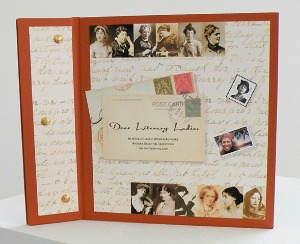
nava2resized
Image courtesy of Nava Atlas.

Dear Literary Ladies by Nava Atlas. New Paltz, New York: Amberwood Press, Inc., 2010. Edition of 15. Gift of the author.

According to Atlas, “this artist’s book fancifully poses questions on writing and the writing life, with the replies derived from classic authors’ letters, journals, and autobiographies. Reaching back to answer contemporary questions with voices from literary history reveals the timeless concerns and challenges of writers, with a particular emphasis on these issues from a female perspective.” The book was also produced in a trade edition.

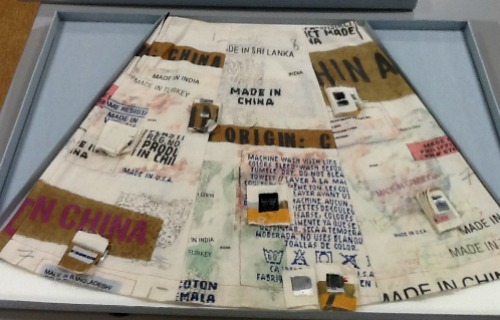
Skirt Book: Made in the USA by Julie Mader-Meersman. 2010.

This unique artists’ book is made in the form of a skirt with custom fabric printed with scans of country of origin tags from clothing. Booklets made from fabric remnants and original textile tags are sewn on around the garment.

skirtbookresized

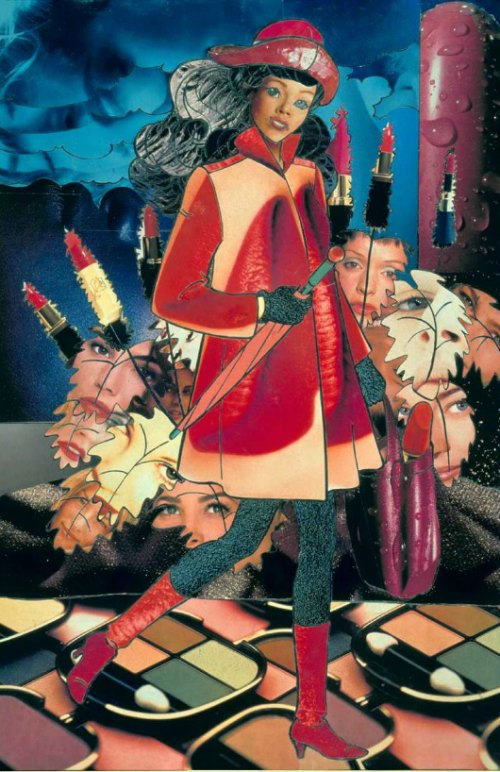
32 Big Pictures: A bound series of hand cut collages about Barbie by Dana F. Smith. San Francisco, California, 2011.

The images in this book were originally created from magazine collages overlayed on the pages of an over-sized Barbie coloring book. According to the artist, “it was created as a painstaking labor of love and reveals untold ways that Barbie is interlaced with modern American culture.”

barbiemakeover
“Barbie’s Makeover.” Image courtesy of Dana F. Smith.

Post contributed by Kelly Wooten, Research Services and Collection Development Librarian, Sallie Bingham Center for Women’s History and Culture.  


Congratulations to this year’s travel grant recipients!

The Rubenstein Library’s three research center annually award travel grants to undergraduate and graduate students, faculty, and independent scholars through a competitive application process. Congratulations to this year’s recipients, we look forward to working with all of you!


John Hope Franklin Research Center for African and African American History and Culture Travel Grant Recipients

Dr. Richard Bell, Associate Professor, Department of History, University of Maryland, College Park; Project: “Slavery’s Market: A Microhistory.”

Dr. Frederick Carroll, Instructor, Department of History, Norfolk State University; Project: “Race News: How Black Reporters and Readers Shaped the Fight for Racial Injustice, 1910-1978.”

Ms. Mandy Jolly, Undergraduate, Department of History, Lenoir-Ryhne University; Project: “Journalistic Racism from Early Travel/Exploration Logs from the 19th and 20th Century.”

Dr. Phillip Misevich, Assistant Professor of History, St. John’s University; Project: “On the Frontier of Freedom: Abolition and the Growth of Atlantic Commerce in Southern Sierra Leone, c1790s to 1880s.”

Ms. Marie Stango, PhD Candidate, Department of History, University of Michigan; Project: “Antislavery and Colonization: African American Women in Nineteenth Century West Africa.”

Dr. Shirley Thompson, Associate Professor of African and African Diaspora Studies, University of Texas at Austin; Project: “No More Auction Block for Me: African Americans and the Problem of Property.”

Dr. Charlotte Walker-Said, Theodore W. Lentz Fellow in Peace Studies and Human Rights, Webster University; Project: “Traditional Marriage for the Modern Nation: Family Formation and the Politics of Religion in Colonial and Postcolonial Africa.”

Mr. James Wall, PhD Candidate, Department of History, University of Georgia; Project: “Redefining Success: The Strule for Freedom Rights in Southwest Georgia, 1945-1985”


John W. Hartman Center for Sales, Advertising & Marketing History Fellowship and Travel Grant Recipients

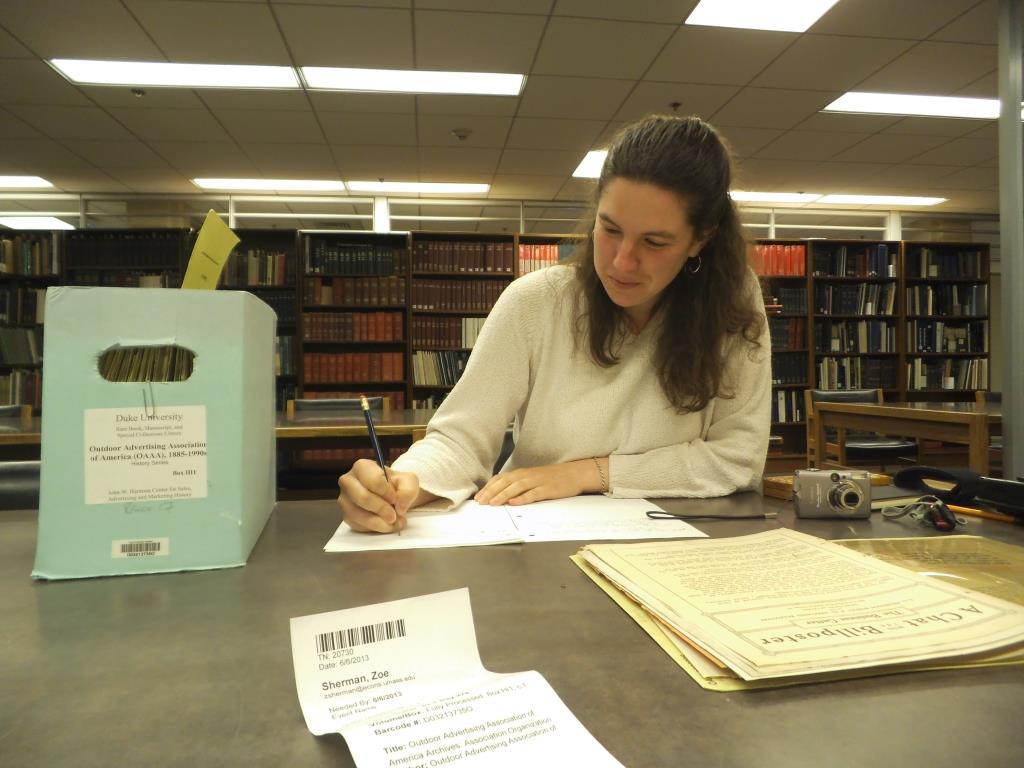
Zoe Sherman, a Hartman Center grantee, uses the Outdoor Advertising Association of America Records
Zoe Sherman uses the Outdoor Advertising Association of America Records

FOARE Fellowships for Outdoor Advertising Research:

Elizabeth Semler: History of Science, Technology and Medicine, University of Minnesota, “’Got Milk?’: Dairy Advertising and Scientific Authority in the late 20th Century”

Zoe Sherman: Economics, University of Massachusetts – Amherst, “The Commodification of Audience Attention in the US, 1865-1920”


John Furr Fellowships for JWT Research:

Ai Hisano: History, University of Delaware, “A History of Food Color in the United States, 1880s-1970s”

Cristina Sánchez-Blanco: Media Management, University of Navarra (Spain), “Advertising Account Planning in JWT”

Hartman Center Travel Grants:

Francesca Russello Ammon: American Academy of Arts & Sciences, “Culture of Clearance: Waging War on the Landscape in Postwar America”

Leslie Anderson: University of California – Merced, “The Politics of Domesticity” (Senior Thesis)

Mary Bridges: International Studies, Yale University, “Global Infrastructure of US Business Activities in the Interwar and World War II Periods”

Jessica Burch: History Department, Vanderbilt University, “Soap and Hope: culture, Capitalism, and Direct Sales in World War II America”

Dr. Andrew Case: Nelson Institute for Environmental Studies, University of Wisconsin – Madison, “Dear Friend: Direct Mail Marketing and the Transformation of Buying and Selling in Postwar America”

Kristi Whitfield Johnson: Baton Rouge, LA, “Canning Foods and Selling Modernity: The Canned Food Industry and Consumer Culture, 1898-1945”

Dr. Richard K. Popp: Journalism, Advertising and Media Studies, University of Wisconsin – Milwaukee, “Direct Marketing, Communication Networks, and the Remaking of consumer Culture, 1960-2000”


Sallie Bingham Center for Women’s History and Culture Travel Grant Recipients

Valerie Behrer, English, University of Minnesota, for dissertation research on the connections between girls’ subjectivities, autobiographical practices, and the development of American radical feminism from the late 1960s to the 1970s.

Erin Leigh Durban-Albrecht, Gender & Women’s Studies, University of Arizona, for a set of related projects—including a film and her dissertation—that use Kathy Acker’s Kathy Goes to Haiti to explore racialized gender and sexuality, cultural production, and U.S.‐Haiti relations in the 20th and early 21st century.

Dr. Lauren Gutterman, Center for Gender and Sexuality Law, Columbia Law School, for a book that will examine the personal experiences and public representation of American wives who desired women, 1945 to 1979.

Monica Miller, English and Women’s & Gender Studies, Louisiana State University, for dissertation research on the use of ugly women as characters that defy the stereotype of the beautiful belle in the work of 20th century Southern women writers.

Michelle Pronovost, Fashion Institute of Technology, for research on the confrontational fashion of riot grrrls in zines from the 1990s.

Dr. Andrea Walton, Department of Educational Leadership and Policy Studies, Indiana University Bloomington, for research supporting an article and book chapter on philanthropist Eleanor Thomas Elliott.

Kelly Weber, History, Rice University, for dissertation research related to the politics of daughterhood in the New South, 1880 to 1920.

Stacy J. Williams, Sociology, University of California, San Diego, for dissertation research on how social movements have affected feminist discourse about cooking, 1874 to 2013.

Dr. Mary Ziegler, St. Louis University, for a book about how abortion providers helped define lay understandings of the constitutional, statutory, and common law concerning abortion in the United States.


Eleanore and Harold Jantz Fellowship

The first recipient of the Eleanore and Harold Jantz Fellowship is Chunjie Zhang, Assistant Professor of German at the University of California, Davis.  Dr. Zhang is a graduate of Duke (PhD 2010). Her project is “Representations of non-European cultures in the German discourse in the eighteenth century.”

Workin’ 9 to 5 on Administrative Professionals Day

Administrative Professionals Day began as part of what was originally called “National Secretaries Week,” founded in 1952 by an organization now known as the International Association of Administrative Professionals, both to honor the work of secretaries and administrative professionals and attract people to the career.

When you think of a secretary in the 1950s, an image like this one, from the back of the Smith-Corona’s Complete Secretary’s Handbook (1951) probably comes to mind:

Image from Smith-Corona’s Complete Secretary’s Handbook (1951)

A recent report from the Bureau of Labor Statistics revealed that sixty years later, “secretary” is still the most common job for women. In fact, in 2011, 96% of all secretaries and administrative assistants were women.

The Sallie Bingham Center for Women’s History and Culture has many collections that document organizational efforts to improve job opportunities for women, whether that means advocating for access to jobs higher-paying male-dominated fields or fighting against sexual harassment in the workplace, including the records of the Southeast Women’s Employment Coalition, founded in 1979 in order to expand the limited employment opportunities for women in the rural South, and the papers of labor activist Theresa El-Amin.

Cover of Not Servants, Not Machines by Jean TeppermanOur collection also contains this gem: Not Servants, Not Machines: Office Workers Speak Out by Jean Tepperman (1976). In the acknowledgements, Tepperman explains how women affiliated with the Boston chapter of “9 to 5,” an organization of women office workers, supported the writing of this book which includes interviews with women across the country. Like the “9 to 5” organization, this book aims to share these women’s experiences of discrimination in the workplace due sexism, and provide information about how to organize and improve women’s working conditions, treatment, and most importantly, their pay.

The Rubenstein Library salutes Administrative Professionals, especially our own Nelda Webb, and honors their contributions, as well as those who have worked to improve conditions and compensation for all women in the workplace.

Post contributed by Kelly Wooten, Research Services and Collection Development Librarian for the Bingham Center.