Nothing says Fourth of July like friends and family, outdoor barbeques and, for the adults of course, a cooler of refreshing canned beer.
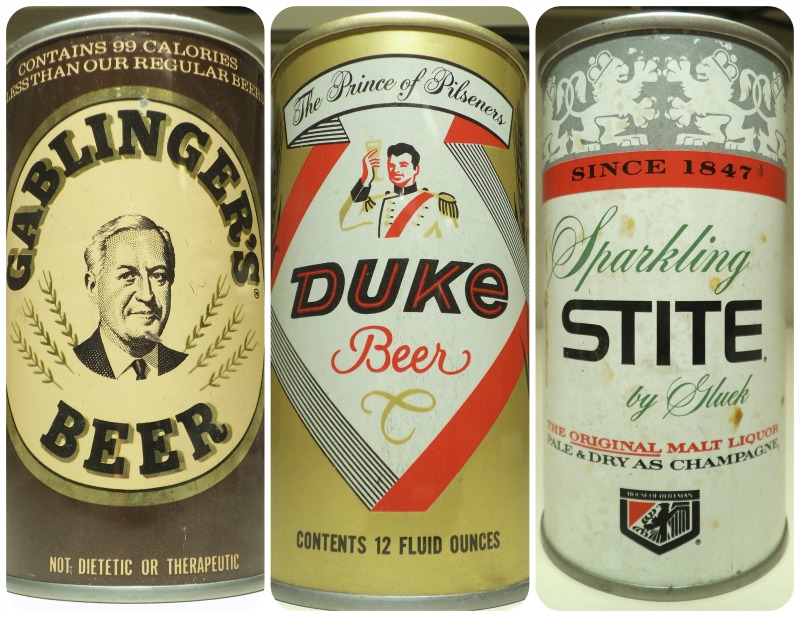
Check out these examples of vintage beer cans found in the corporate archive of the JWT Advertising Agency in the John W. Hartman Center for Sales, Marketing and Advertising History in the Rubenstein Library. The Hamm Brewing Co. was a client of the agency in the 1960s and early 1970s. The agency collected the beer cans of their competitor’s accounts as part of their market research. And just like clothing and automobiles, there’s something here for everyone.
For the conscientious buyer that appreciates brute honesty in advertising, there’s Gablinger’s Beer, “Not Diatetic or Theraputic.” If an element of regal refinement is more your speed why not try a Duke Beer, “The Prince of Pilsner,” or perhaps a Stite, “Pale and Dry as Champagne.”
If you’re not easily wooed by fanciful slogans and colorful graphics then there’s the subtle simplicity of “Cold-Aged!” Genese. If you like a beer can that looks like it’s constructed of wood paneling (and who doesn’t?), then Meister Brau is the beer for you.
For all of you classicists, there’s the iconic Leinenkugel’s of Chippewa Falls, WI, and the “Original” Pabst Blue Ribbon.”
Whatever your choice, we at the Rubenstein wish you a wonderful holiday!
Post contributed by Joshua Larkin Rowley, Research Services Dept.
A couple of weeks ago the finding aid for the Doris Duke Audiovisual Collection was posted on the Rubenstein Library website. The audiovisual collection, which is now opened for research, has a fascinating variety of materials, including film reels, vinyl records, and audio cassettes reflecting Doris’ interests in travel, music, the performing arts, and historical events. It’s chock-full of surprises for those willing to delve into the detailed and intricate collection. Homemade recordings of Doris practicing the piano and singing, four original nitrate film reels of the Nazi Supreme Court Trial of the Anti-Hitler Plot from 1944-45 (which we’re presuming Doris obtained while working for the Office of Strategic Services [OSS] during World War II), and a somewhat sketchy telephone interview with Howard Hughes from the 1970s are just a few of the treasures awaiting discovery in this collection.
The Doris Duke Audiovisual Collection also marks a significant milestone for the Doris Duke Charitable Foundation Historical Archives. It is the final collection in the historical archives to be processed, described, and opened for research, thus ending my three year processing journey.
Working so intimately with the materials has been quite a remarkable experience, and not surprisingly I’ve grown quite attached to both Doris Duke and the materials over the past three years! The nineteen collections comprising the historical archives are filled with artifacts and clues that leave evidence of a woman who did big things, yet they also give insight to unexpected and hidden facets of Doris’ life. Collectively they paint a picture of Doris that challenges the general perception of her as an eccentric and tragic figure.
While I am sincerely grateful for having had the opportunity to process and promote the materials in the historical archives, I am equally thankful for having had the chance to meet researchers and patrons interested in both Doris Duke and the historical archives. Their enthusiasm for learning more about her spurred several of the events, exhibits, and digital initiatives developed during the course of the processing project.
And so a journey for me ends, but the journey for the materials in the historical archives continues!
Post contributed by Mary Samouelian, the former Doris Duke Collection Archivist. Mary will continue in the Technical Services Dept. as the Processing Archivist for the Abraham Joshua Heschel Papers.
The 50th anniversary of a key moment in the desegregation of Durham, North Carolina came and went largely without fanfare last month. It was in May 1963 that, amid growing racial discord in the city, Mayor Wense Grabarek prevailed upon business and community leaders, black and white alike, to cooperate in desegregating the city. The mayor was in an unusual position: having held office for less than a day when a series of sit-ins around Durham resulted in 130 arrests, Grabarek’s first task upon being sworn in was to stop a riot at the jail. Achieving this by letting supporters deliver sandwiches and cigarettes to the jailed protesters, he then turned his attention to the NAACP and CORE, who promised mass demonstrations in the wake of the arrests. Jean Anderson, in Durham County: A History of Durham County, North Carolina, tells the story this way:
He went in person, a slight, dapper man, always with a red carnation in his lapel, to a meeting of protesters, one thousand strong, held at Saint Joseph’s A.M.E. Church. Habitually soft-spoken and immensely polite, he asked permission to enter and address them. Then, pointing out that by their demonstrations they had informed the community of their deeply felt grievances, he spoke about the danger of racial tension and division and promised to take positive steps to respond to their complaints. Finally, he asked for their support and understanding. Impressed by his coming, his tone, his words, they accepted his sincerity and promised to halt demonstrations and give the mayor time to act on his promises.
Mayor Grabarek formed the Durham Interim Committee to reconcile the community’s opposing groups, in so doing acknowledging the damage of segregation and the real possibility that Jim Crow could prevent Durham from realizing its potential, particularly given the economic promise of the newly formed Research Triangle Park. The efforts of Grabarek and of the leaders appointed to the Committee allowed Durham a degree of progress that eluded many other southern cities.
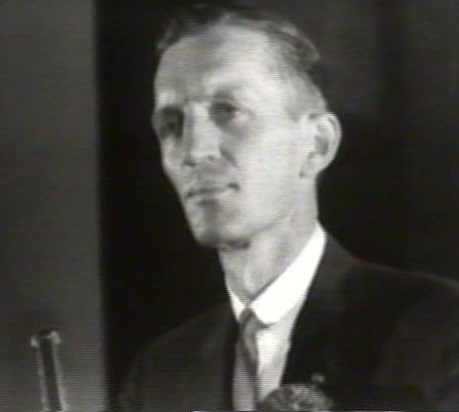
Wense Grabarek addressing the congregation at St. Joseph’s AME Church, May 1963.
A modest man and a successful accountant who continues to work full time six days a week, Wense Grabarek is now 93 years old and eager to add his perspective to the history of Durham, the adopted hometown that called him mayor from 1963 to 1971. To this end he has donated to the Rubenstein Library a number of recorded interviews he has given since the early 2000s, as part of a larger collection of papers that he is gathering for donation later this summer. You can check out the finding aid for the interviews here.
Wense Grabarek in conversation with Tim Tyson, Sept. 2011
The recordings include an interview with Steven Channing for his documentary Durham: A Self Portrait, an 8-hour conversation with author and scholar Tim Tyson detailing his work as mayor, and, presented here, with the permission of WTVD, an interview with Angela Hampton on the events of May 1963:
An oral history has been scheduled with Mr. Grabarek in July, and this time the interviewer will be the Rubenstein Library. We hope to learn more about the mayor’s life before and after the 1960s, including his experiences as a soldier in World War II and the philanthropic work he and his wife have done over the years in education.
Post contributed by Craig Breaden, Audiovisual Materials Archivist in the Technical Services Dept.
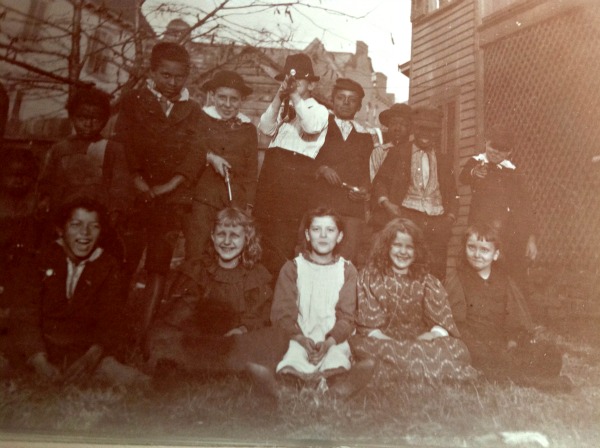
I was absolutely taken with this albumen image as I reviewed the “From Atlanta [,] Georgia to Mammoth Cave [,] Kentucky, November 1895” photograph album prior to my cataloging it. The children are laughing and making faces, perhaps interrupted in a game of “cops and robbers,” since many of the boys are holding guns or rifles. Their sense of fun is infectious and it reminded me of the neighborhood games groups of us played during my childhood. Yet I was surprised that such a large interracial group would have been playing together at this time. Is this a late-nineteenth-century South I never dared imagine?
Post contributed by Alice Poffinberger, Original Cataloger in the Technical Services Department.
The season finale delivered many memorable moments that will keep us guessing until next year. Stan tells Don that he wants to be the one that goes to Los Angeles to open a satellite office that will service the Sunkist account. After a bad phone conversation with Sally, Don gets drunk at a bar when he is supposed to be at work. Later he wakes up in jail. Pete is horrified to find out that his mother is lost at sea. She married Manolo on a cruise and it is presumed that he threw her overboard in order to inherit her money. When Don comes home the next morning he pours out all of the liquor bottles and tells Megan that he wants them to go to Los Angeles so he can start the new SC&P office. She is thrilled and resigns her soap opera job. Peggy changes into a revealing dress and tells Ted, Jim, and Harry that she is leaving early because she has plans. In Detroit, Bob encourages Pete to test drive a stick shift Camaro Z28. Pete knocks over a GM sign in the process and is subsequently taken off the Chevy account. Peggy comes home after her date and finds Ted at her door. He says that he loves her and will leave his wife. They sleep together and make plans for the future. Betty calls Don in the middle of the night to say that Sally bought beer and got drunk with some classmates and is suspended from Miss Porter’s. Ted tells Don that he wants to go to Los Angeles so he can start over with his family. Don makes a great campaign pitch to Hershey’s, but then ruins it by telling them his true story of growing up in a whorehouse and stealing money from the johns to get Hershey’s chocolate. That night Don tells Megan that they are not going to Los Angeles after all. She is upset and talks about leaving him since she already set up meetings in Hollywood to further her acting career. Pete and his brother decide not to pursue an investigation into their mother’s disappearance. They clean out her house and Pete brings some furniture over to Trudy’s house. He tells her and Tammy goodbye, as he is going to California. Ted tells Peggy that he will stay with his wife to protect his kids. She is upset and tells him to get out. Don attends a partners meeting and they confront him about his questionable behavior. They tell him to take some time off and regroup, but refuse to give him a return date. On his way out he sees Duck Phillips bring Lou Avery in, presumably as a replacement. The episode ends when Don picks up his kids for Thanksgiving and shows them the dilapidated house where he grew up.
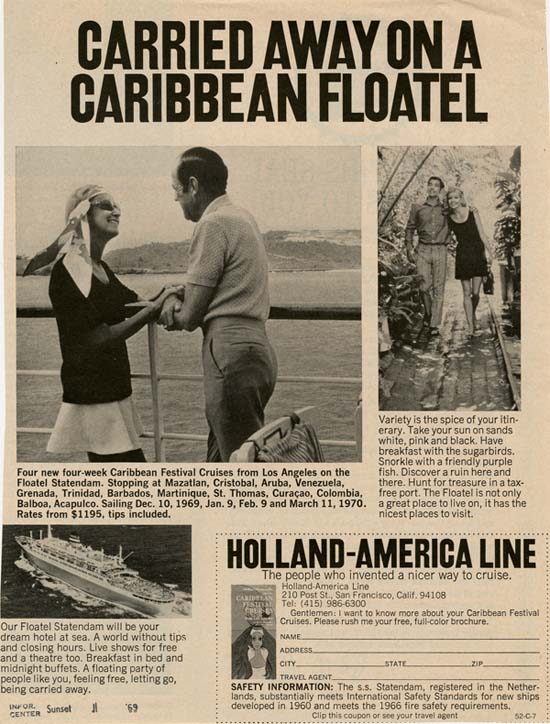
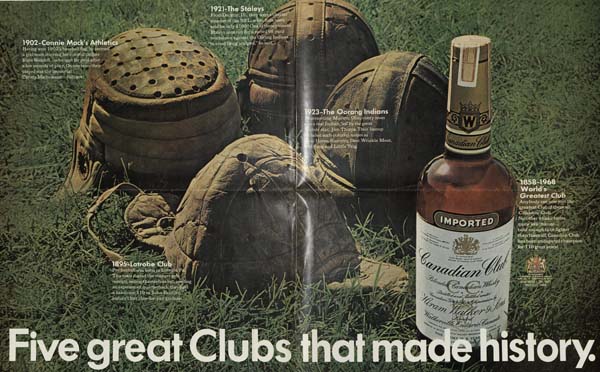
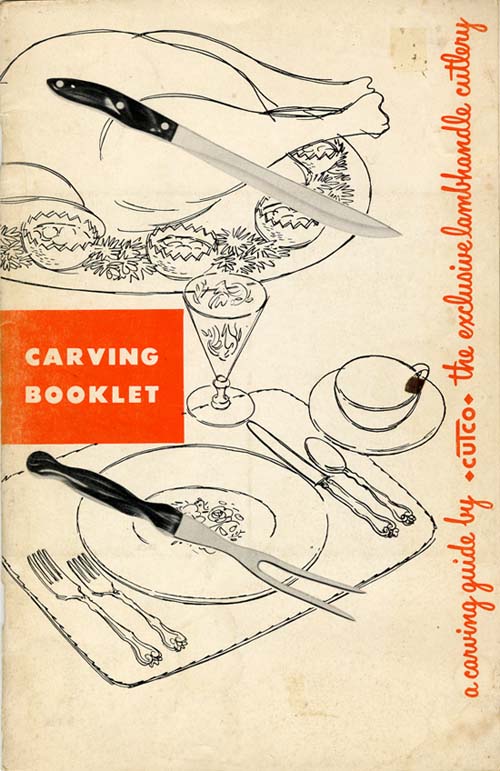
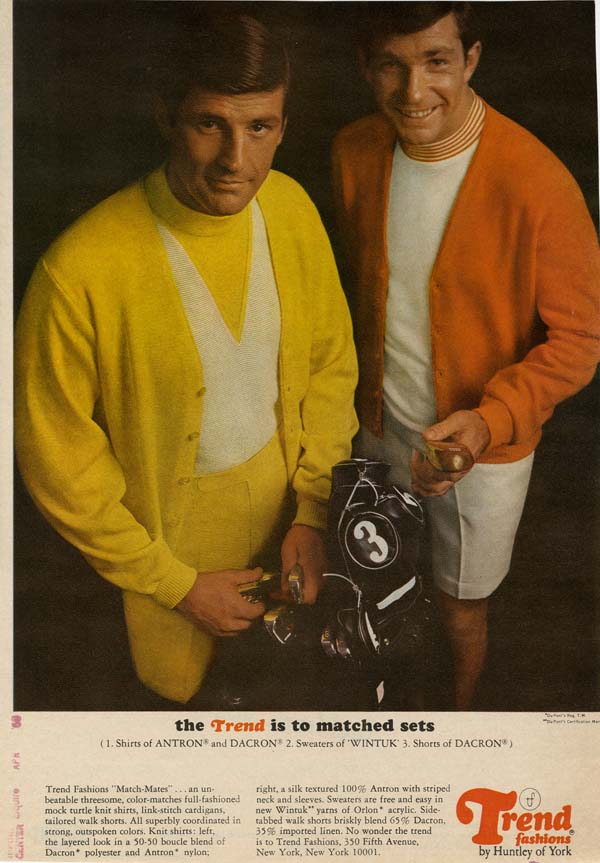
Episode thirteen referred to Chanel #5, Camaros, Thanksgiving, cranberry sauce, and cruises, among other things. Here is a selection of ads and images that illustrate some of the products and cultural references mentioned in last night’s Mad Men. A gallery of our highlighted images may also be found on Pinterest and Flickr.
This year, Duke commemorates the 50th anniversary of racial integration at the university, when in 1963 five African American students matriculated into the undergraduate program. Also in 1963, Pepsi sponsored the production of a record album, “Adventures in Negro History,” recently acquired by the John W. Hartman Center as part of the Douglass Alligood Papers. Alligood was one of the first black executives in the advertising industry, and is currently a Senior Vice President at BBDO agency. Long a champion for minority inclusion in the advertising business, Alligood chairs the BBDO’s Diversity Council, which advises management on diversity policies. He has also worked at RCA and for the minority-owned agency UniWorld Group. The record album contains dramatic readings by Detroit-based actors, including Jerry Blocker, Burniece Avery and Jiam Desjardins, which depicts the contributions of people of color to American history. Included are both the famous (Crispus Attucks, Phyllis Wheatley, Ralphe Bunche) and lesser known figures: Christopher Columbus’s pilot, Pedro Nino; Revolutionary War hero Salem Poor; and philanthropist Paul Cuffe.
Post contributed by Rick Collier, Technical Services Archivist.
Any day now, the ticker at the top of the Rubenstein’s finding aids page will turn over and mark a milestone 2000th online finding aid. Doesn’t sound like much, especially when you consider that the Rubenstein Library holds more than 6,000 manuscript collections. But those 2,000 finding aids – narrative maps that guide a researcher through the contents of a manuscript collection’s boxes and folders – also represent thousands of hours of interpretive labor supplied by library staff. The first of these online collection guides debuted around 1996. They are encoded with an XML-derivative called EAD, and are now discoverable to a worldwide audience through any online keyword search. But finding aids – or inventories – or collection guides – go back a lot further than their online counterparts.
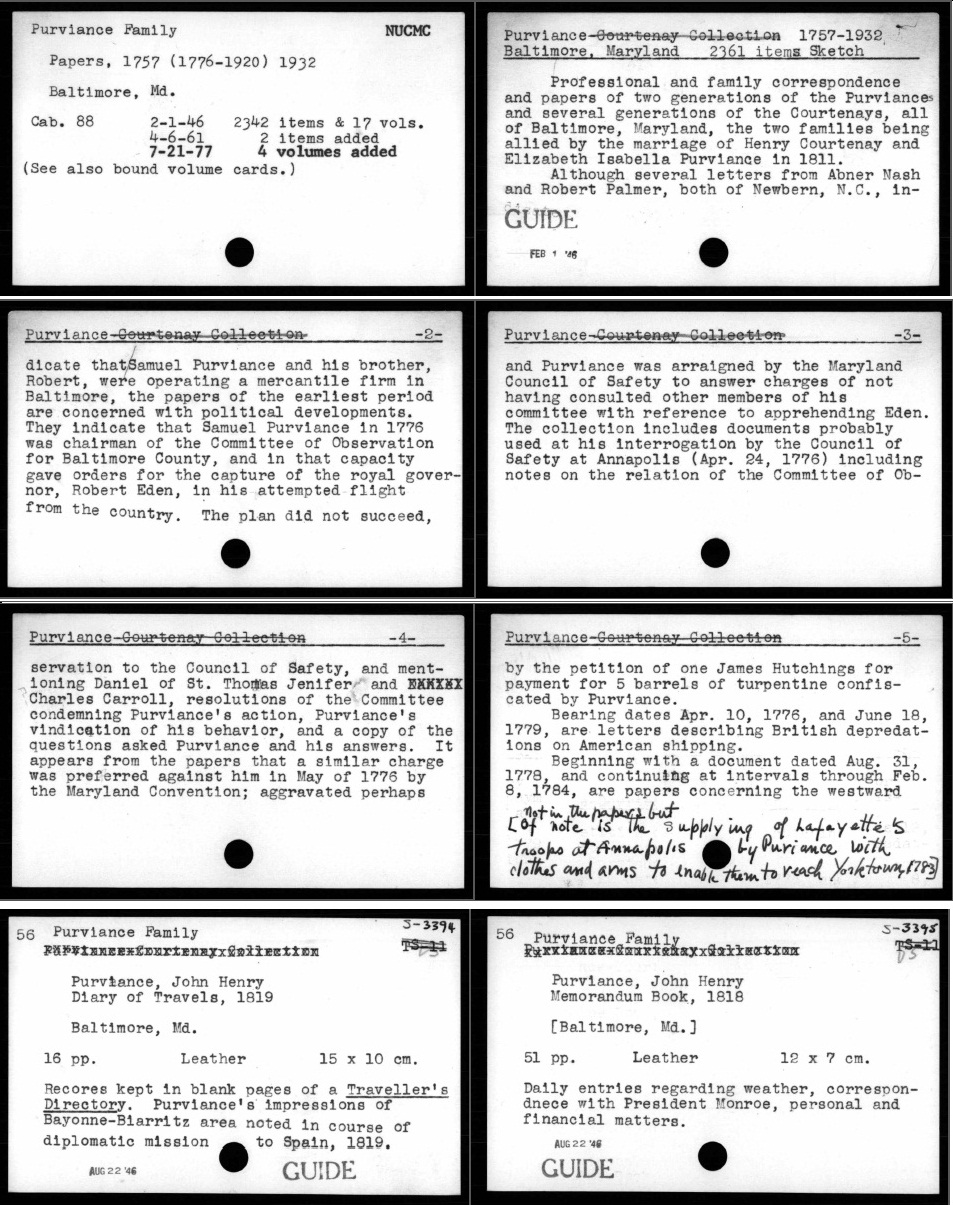
The winner of the 2,000th finding aid spot belongs to the Purviance Family Papers. Acquired as either a purchase or a gift by the Duke University Manuscripts Department in 1943 from an S. S. Barnes in Baltimore, the collection offers over 2300 manuscripts and 10 photographs, 4 maps, and 21 volumes (including an anonymous Civil War diary) belonging to a prominent Revolutionary-era Baltimore family with a compelling history. Shortly after it was received, a Manuscript Department archivist researched the collection and typed up a set of catalog cards: the Purviance Papers “finding aid.”
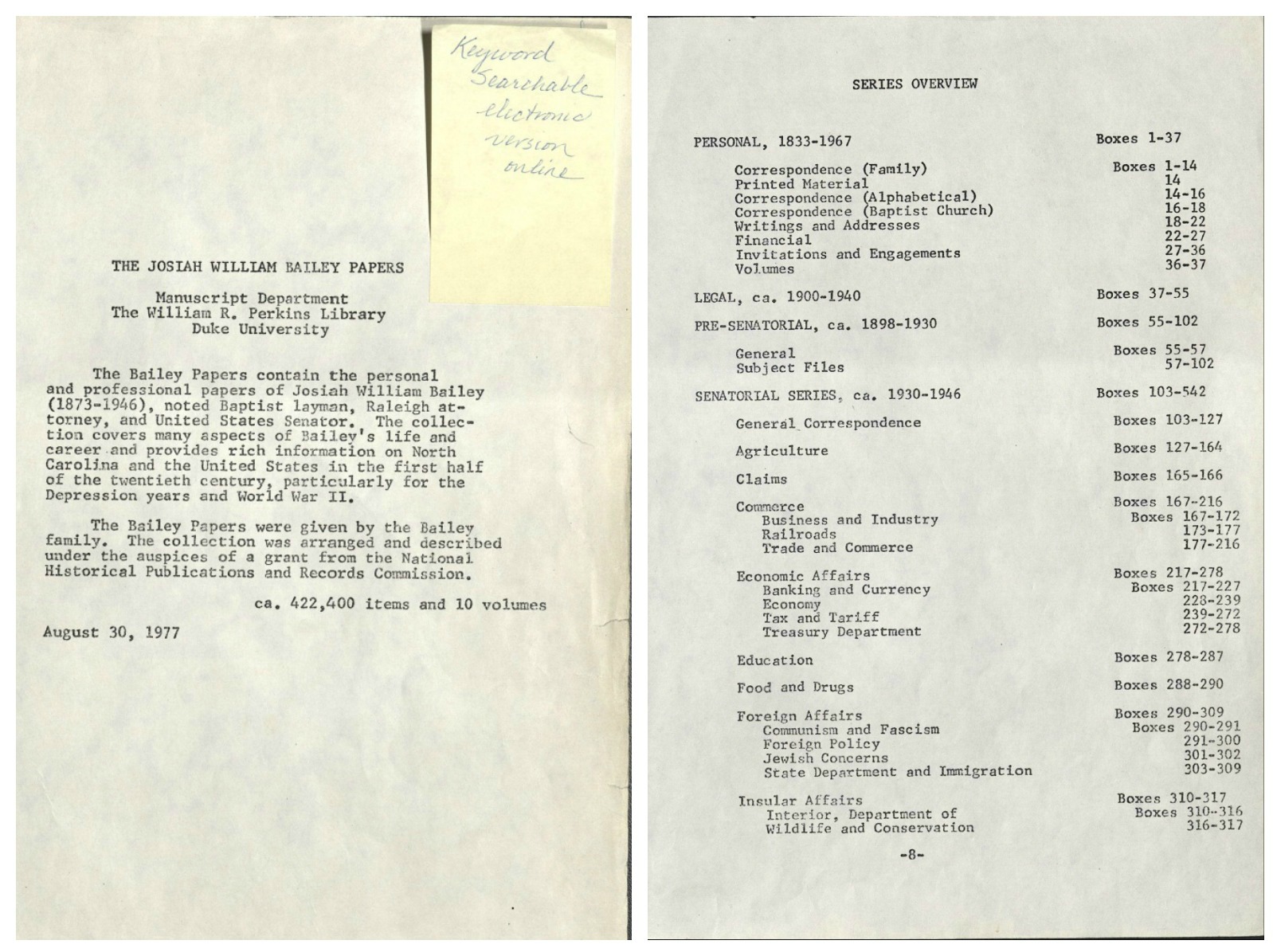
Defined most broadly, archivists consider a finding aid to be any document that assists in charting a path through the contents and topics of an archival collection – a big help when you’re dealing with a very large collection! In the 1940s at Duke, this was the role of the card catalog. Of course, you could only consult the cards if you traveled to the library, or if you could ask a reference archivist to help. Some collections were represented by three or four cards; some had close to a hundred. In 2012 – to the shock of older librarians who never thought they’d see the day – the entire card catalog was digitized and is currently being used as a resource for the reference archivists. Here is a sample of the 92 Purviance cards: Collections were typically a lot smaller back then. As collections grew larger, a new generation of archivists started using more productive strategies for describing thousands of folders of manuscript items, and as part of this effort, they turned to creating more-portable paper inventories (but still on typewriters). Here’s an example of one, with a post-it note that marks a turning point in library history:
Enter the computer and Microsoft Word. When I started working in the library in 1992, the staff was thinking big about the power of computing. Gopher and Mosaic and were on the horizon. More prosaically, electronic-format finding aids could be corrected and added to, and printed out anytime (no more liquid white-out) or viewed online – goodbye, paper (well, sort of). The description for the Purviance Family Papers were still described on cards in the card catalog and in a paper box list until a few months ago. As part of a project to make all of our longer legacy descriptions available online, a library intern, Bob Malme, encoded the Purviance Family Papers collection guide – the Rubenstein Library’s 2,000th finding aid. And it is especially fitting that this inventory was the work of one of our interns: an integral part of our library practically since our founding, they have provided a huge amount of support for our collections and their finding aids – in every format.
As a member of the Technical Services Department, whose job it is to crank out all these finding aids, I was – and still am, I guess – an EAD Warrior. That moniker comes from a Duke Special Collections Library group whose early work on standards for Duke online finding aids would shape our goal for total online access for all of our finding aids – cards and paper. How many finding aids will that eventually be? Oh, another 4,000 at least. We’re working on it already!
Post contributed by Paula Jeannet Mangiafico, Senior Processing Archivist.
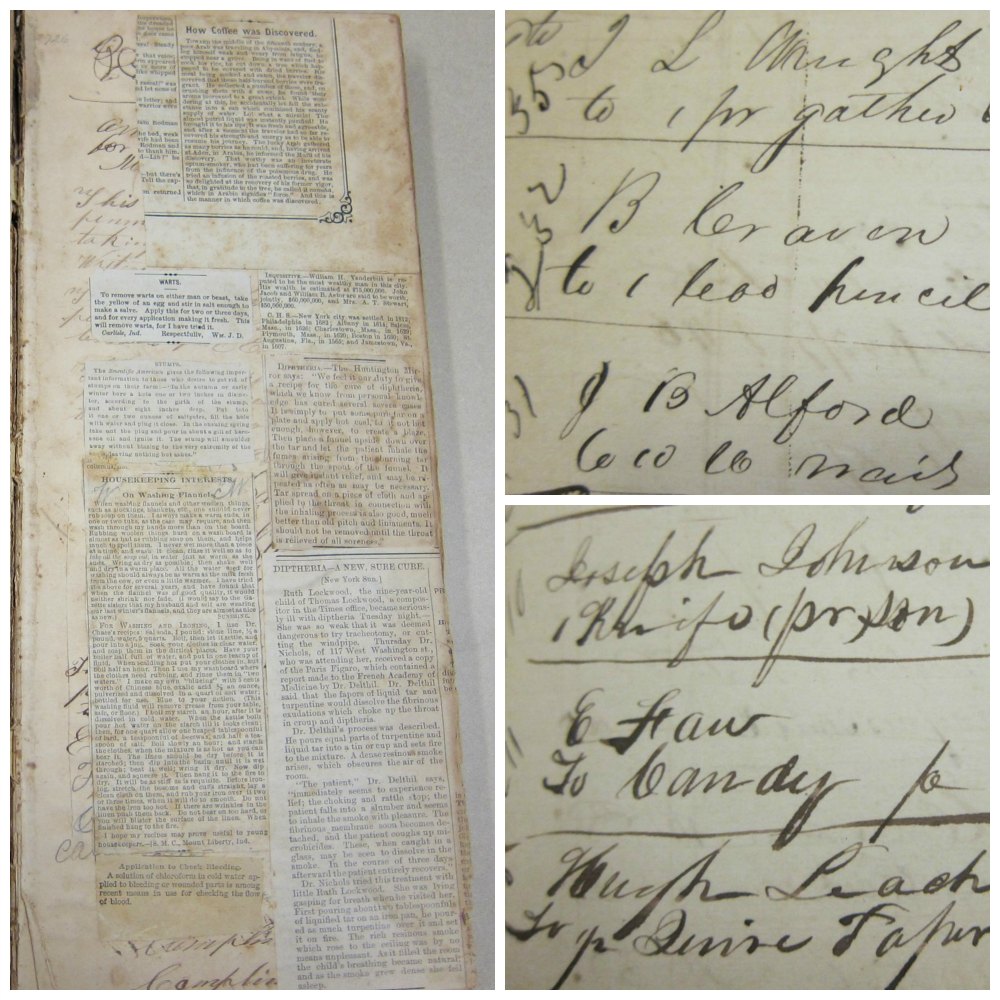
Our manuscripts cataloger, Alice Poffinberger, recently showed me a merchant’s daybook from Normal College, Randolph County, NC. For those unfamiliar with the history of Duke, Normal College was renamed Trinity College in 1859, which was renamed Duke University in 1924. The Normal College daybook dates from 1852 to 1853, and includes the names of the school’s students and faculty, including its president, Braxton Craven, and Enoch Faw.
Inside the daybook, including entries mentioning Braxton Craven and Enoch Faw.
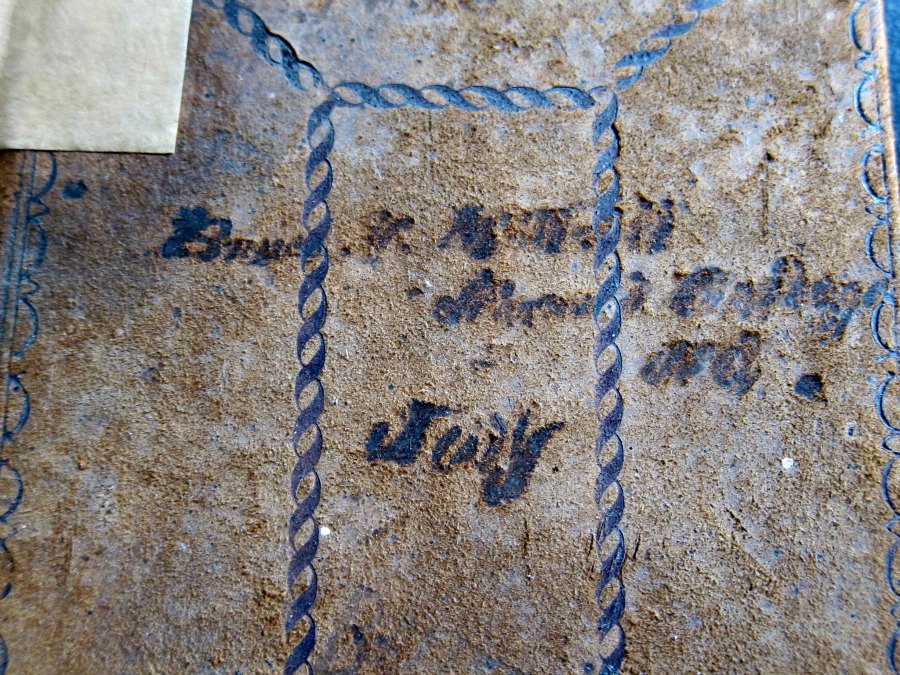
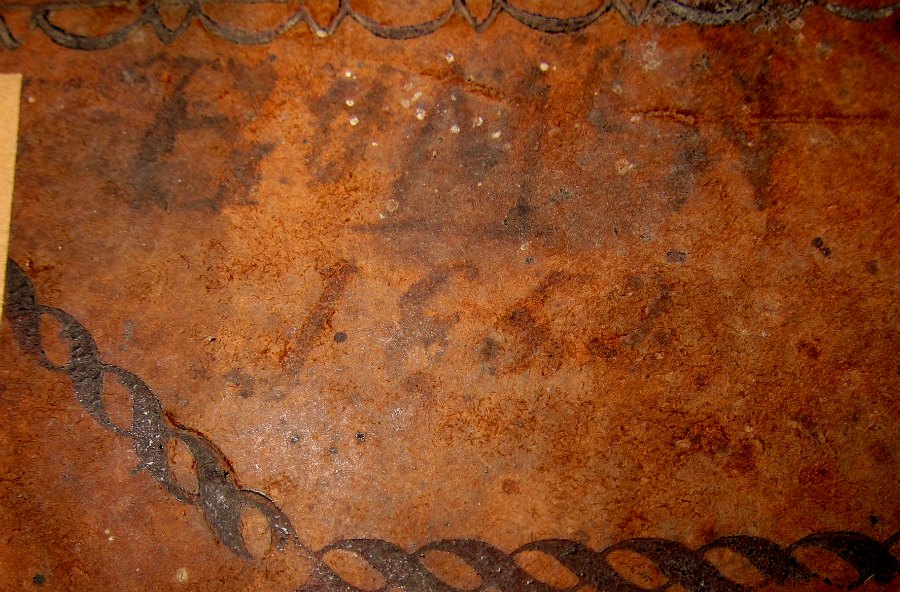
Identifying the name of the merchant or store, however, has proven to be a challenge. It was first cataloged in the 1940s as the S. C. Bruce Daybook, even though Bruce’s name appears prominently as a customer, not the merchant. Later attempts to trace the origin of the daybook culminated in consulting the 1850 census. They deduced that because both William Moffett and N. D. Bain were listed at households no. 6 and no. 8, respectively, and because both were listed as merchants, that the daybook likely belonged to the firm of Bain & Moffett. Also, on the upper left corner of the daybook’s front cover are the letters B and M with what was thought to be an ampersand between them.
The upper left corner of the daybook’s front cover.Upper left corner of the daybook’s back cover.
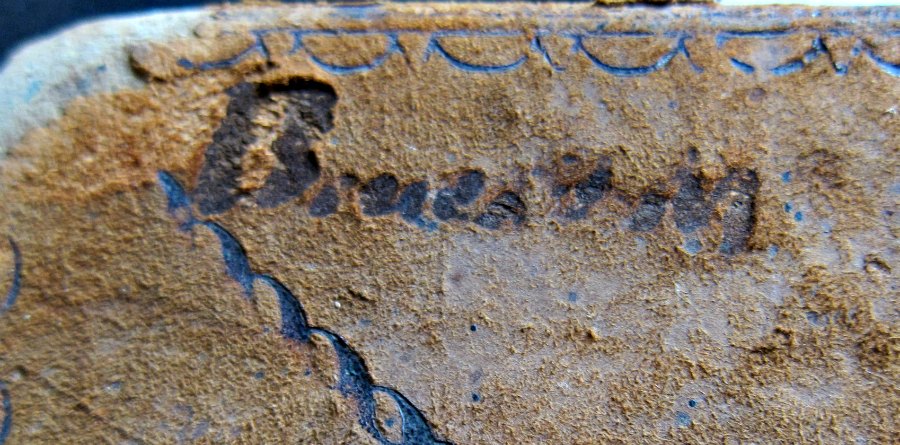
While the item is cataloged as the “Bain & Moffett [?] Daybook,” Alice and I remain unconvinced that this is its true identity. It may be difficult to tell from the photographs, but in person, the branding on the cover looks more like Bruce than Bain and what is thought to be Moffett looks like it could be McNeill. What’s been assumed to be an ampersand looks more like an H or N.
Branding on the front cover of the daybook.
The North Carolina Digital Heritage Center’s DigitalNC site provides access to city directories from across the state. Unfortunately, the earliest available issue for Randolph County was published in 1894, making our wish to positively identify the daybook’s original owner a bit more difficult. We will continue to pursue this item’s identity as time allows. We will also graciously accept any help or insight.
What do you think? Is it Bain & Moffett, or something completely different?
Post contributed by Kimberly Sims, Technical Services Archivist for Univeristy Archives.
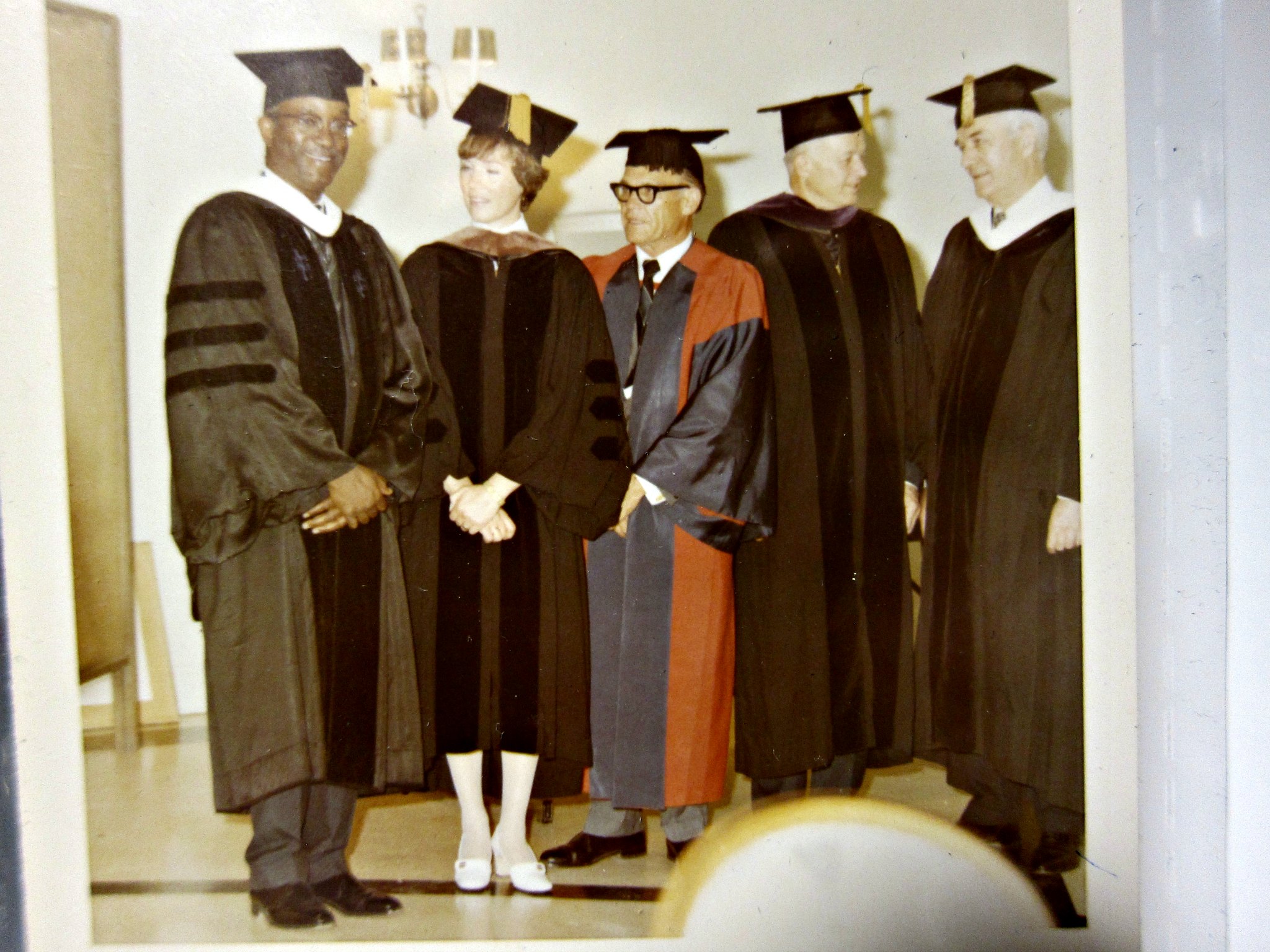
One of the most interesting batch of records I’ve worked with in the ongoing processing of the John Hope Franklin Papers are the Honorary Degrees, a subseries of Franklin’s Honors and Awards. In the course of his life, Franklin collected over 130 honorary degrees from colleges and universities all over the United States. Franklin appeared to cherish these awards, never turning one down unless it conflicted with a pre-existing engagement. By the 1970s and 1980s, Franklin’s weekends in May and June were booked — so booked that he would occasionally receive one degree on a Saturday, and another on a Sunday. Franklin also delivered the commencement addresses at many of these ceremonies, sometimes serving as the school’s first African American commencement speaker.
Honorary degree recipients John Hope Franklin, Julie Andrews, Edwin Gott, and Logan Wilson with University President Wilson Elkins at the University of Maryland commencement on June 6, 1970.
There is more to this series than a bunch of diplomas (although there are plenty of those, too). The pomp and circumstance occasionally overshadow the tense relationships between historically white university administrations and the growing numbers of African American faculty and students campaigning for civil rights in the United States. For example, before receiving his honorary degree at the University of Maryland (alongside Mary Poppins herself, Julie Andrews), Franklin was contacted by the campus’s Democratic Radical Union of Maryland and informed that the campus was still “effectively segregated” and under “virtual Marshall law.” The group of about 50 faculty urged him “not to help the administration at Maryland legitimize their power by taking part in one of their ceremonies on their terms, but rather to attend and stand with us against the political and racial repression that exists at this university” (telegram, June 3, 1970). Franklin went ahead with the ceremony, much to the frustration of the DRUM. He was the school’s first black honorary degree recipient.
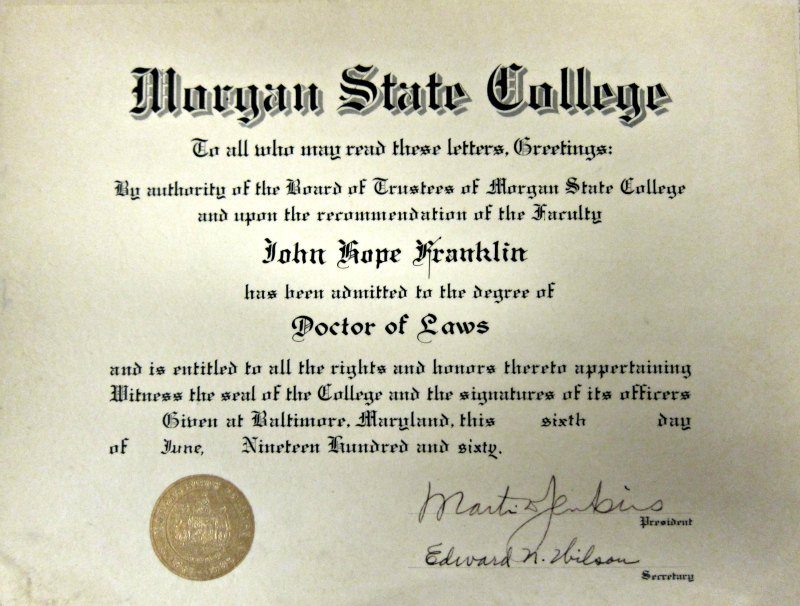
Franklin’s honorary degrees also reveal the wide-sweeping connections he established over the course of his life in scholarship. Many of his early honorary degrees were from historically black colleges, allowing him to further engage with leaders of the civil rights movement. In 1960, Franklin delivered the commencement address at the Morgan State ceremony that honored both him and W.E.B. Du Bois with honorary degrees, shortly before Du Bois moved to Ghana. This was only one of several occasions when the two men interacted with each other. In 1961, Franklin received an honorary degree from Lincoln University at a commencement addressed by Martin Luther King, Jr. He later joined King on the march to Selma.
Franklin’s honorary degree from Morgan State College, 1960.
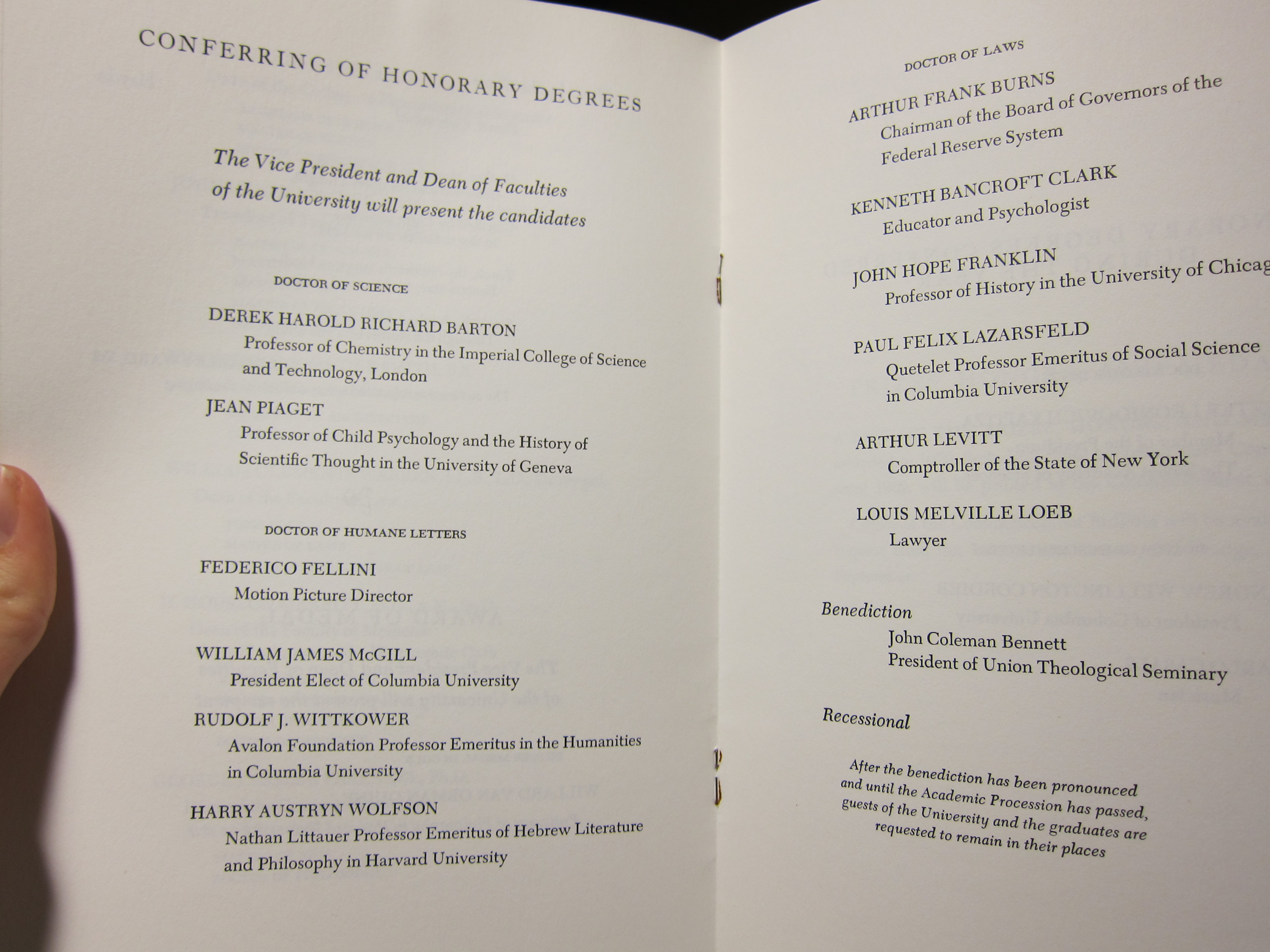
Later degrees attest to the random connections and coincidences of academic life. For example, at the Yale commencement in 1977, Franklin was honored alongside President Gerald Ford and musician B.B. King. He received his 1970 honorary degree from Columbia University with Arthur Burns, an economist and former chairman of the Federal Reserve whose papers are held at Duke. A 1984 ceremony at the University of Connecticut honored him alongside Marian Anderson, celebrated contralto.
Commencement program for Columbia University, June 2, 1970.
I was curious how John Hope Franklin’s 130+ degrees compared to other honorary degree holders — so I did some online searching. Most people come nowhere close to Franklin. Sir David Attenborough, scientist and documentary filmmaker behind the epic Planet Earth series, holds the record in the United Kingdom for the most honorary degrees: 31. Maya Angelou, U.S. Poet Laureate and one of Franklin’s close friends, has also received over 30 honorary degrees. Two Nobel Peace Prize winners come closer to Franklin’s total: the Dalai Lama has received at least 70 honorary degrees, including two last month from the University of Maryland and Maitripa College. Another Nobel laureate, Elie Wiesel, cannot remember how many honorary degrees he’s received, but reckons they number over 100. But, lest you think we have a record-holder at the Rubenstein, Franklin’s degrees pale in comparison to Daisaku Ikeda, a Buddhist philosopher and educator who has received over 300 honorary degrees and professorships from universities and colleges around the world. One can only imagine what Ikeda’s weekends look like.
Post contributed by Meghan Lyon, Technical Services Archivist.
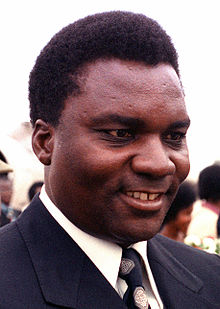
The Rwandan audiotapes of the International Monitor Institute (IMI) records are comprised almost entirely of the transcripts of radio broadcasts translated from Kinyarwanda into French and English. These are the broadcasts which aired in 1994 during the Rwandan genocide, which took place from April through early July of that year and in which 800,000 Tutsis and moderate Hutus were massacred. The genocide was triggered by the assassination of Hutu President Habyarimana on April 6, 1994. An IMI piece on radio as a tool of genocide (available in the organizational records) summarizes these events: “His plane was shot down on his return from Arusha, Tanzania, where he met with RPF leaders and signed an agreement further limiting his regime’s hold on power (known as the August 1993 Arusha Accords).”
President Juvénal Habyarimana
During colonization from the late 19th to the mid-20th century, the German and Belgian colonial elite manufactured a native elite in the Tutsis, a process of colonization that Franz Fanon describes in The Wretched of the Earth. Hutus thus experienced discrimination in education and various sectors of the economy. In 1959, Hutus took control of Rwanda following the independence movement, forcing many Tutsis to seek refuge in neighboring countries. In 1990, the Rwandan Patriotic Front (RPF) comprised of exiled Tutsis, invaded Rwanda, initiating a civil war. Habyarimana’s assassination resulted in an escalation of Hutu anxiety that the Tutsis would seize power of the government and that discrimination against Hutus would be reestablished.
Radio became a powerful weapon used to incite and direct the Rwandan genocide. The majority of radio broadcasts in the Rwandan audiotapes collection are from the privately-owned Radio Télévision Libre des Milles Collines (RTLM). What I found especially interesting about the content of these broadcasts (the transcripts of which can be found in the IMI organizational records and the audiotapes of which can be found in the Rwandan Videotapes and Audiotapes inventory) was the way in which its efforts to direct the extermination of the Tutsi population was paralleled by its efforts to claim authority over the telling of history. The radio broadcasts reveal a struggle over who gets to tell history and, therefore, a struggle over a monopoly on truth. In other words, the RTLM broadcasts exhibit a phenomenon which seems to be more universally true, which is the political necessity of storytelling.
There are a few particularly conspicuous aspects of the history-telling of the RTLM broadcasts, one being the discourse of revelation or enlightenment – the idea that if we only peel back the layers, we can finally see the truth. And this encounter with the truth is the basis for political action, or, in this case, the basis on which genocide becomes justified. “Slavery,” for example, is a term that is repeated throughout these broadcasts. Several journalists recall the state of Hutu slavery during colonization in order to characterize the discrimination Hutus experienced. Drawing on such a vocabulary, the radio broadcasts attempt to illuminate the Rwandan genocide as a slave rebellion. Freedom from slavery, according to this narrative, lies in the ability to discover the true history and nature of that discrimination, in opposition to the stories of the colonizers and the native elite. For the same reason, I’m less interested in the truth or accuracy of this, or any, construction of history than in the need and tendency to construct history more generally.
In one broadcast which aired on April 12, 1994 (6 days after Habyarimana’s assassination),[ii] Georges Ruggiu gives his audience a history lesson. He evokes Tutsi discrimination against Hutus in the colonial educational system and the ways in which the Germans and Belgians perpetuated this discrimination. Ruggiu situates the RPF’s efforts to seize power in Rwanda and oppress Hutus within that context. “Now we are going to continue with history,” he begins one segment. He goes on to describe how Hutus, beginning with the first school for Tutsis in 1917, were denied education and how, as a result of this denial of access, the Hutu became slaves to the Tutsi “who, according to the colonial legend, were born to rule.” I suspect that Ruggiu does not understand Hutu slavery as merely metaphorical. The discourse of slavery in these broadcasts seems to represent Hutu slavery as naked reality; that is, these broadcasts understand historical Hutu slavery to be literal. Indeed, in the segment that follows, Ruggiu draws on historical documents that testify to the fact that historically “Tutsis killed Hutu kings and enslaved Hutu people.”
In a second broadcast from April 17, 1994 (11 days after the assassination), journalist Agenesta Mukarutama leads a roundtable discussion about how the RPF seeks to return Rwanda to its pre-revolutionary time in which the Tutsi commanded and the Hutu obeyed. “But,” the broadcast tells us, “Rwandans have learned their history and are ‘saying no’ to a repetition of history.” Genocide is perceived as the only way to break out of an historical cycle of discrimination and oppression. Murego argues that “what it [the RPF] did not understand is a lesson from history. In fact, the political skeleton before ‘59 is clear: Some people command and others obeyed, and the RPF inserted its objectives in that scope . . . Since the conditions have changed, there is now no way to impose oneself as it was before . . . what happened is that it is a genuine restoration of the former reality where some people commanded, you understand who, and others have learnt to say ‘no.’ That is where the president of the PL [le Parti libéral] has made an important statement: ‘those who are saying no today, they are saying no considering their history, the history of their country . . .’” (emphasis is mine).
By suggesting that “there is now no way,” that is, that it would be either impracticable or unbearable for Rwanda to return to a pre-revolutionary state governed by colonial structures, Murego essentially makes a philosophical statement about history – not just what the content of that history is, but more specifically, the temporality in which revolutionary history operates. The Rwandan genocide here is not just a “saying no” to Tutsi rule; it is a “saying no” to a particular conception of the temporality of history that stands in opposition to the revolutionary conception of history. Murego’s argument, here, seems to be that the RPF does not understand how historical time actually works. Ngirumpatse, a participant of the roundtable, follows this up:
“First thing, at the risk of disappointing many Rwandans, especially the educated people, I have always considered the Arusha Agreements as an exception in the people’s history. No any people make a revolution just once. France has made a Revolution, it had two or three restorations, it took 100 years for the Republic to impose itself. When I say Republic, I mean the power of people. . . . So I consider the Arusha Agreements as an exception in the people’s history.” Ngirumpatse makes this claim repeatedly: “I consider the Arusha agreements as an exception in history.”
Ngirumpatse refers to the Arusha Accords as exceptional insofar as they are exceptionally generous; this generosity, it seems, arises from the mistaken belief among Rwandans that their revolution was finished once and for all. But again, what is more interesting to me is the temporality of the historical discourse within the broadcasts themselves – the repetition of the insistence that history cannot and will not repeat itself.
Post contributed by Clare Callahan, graduate student assistant in Rubenstein Technical Services and the Human Rights Archive.
Dispatches from the David M. Rubenstein Rare Book and Manuscript Library at Duke University



 Whatever your choice, we at the Rubenstein wish you a wonderful holiday!