All posts by Amy McDonald

Digitizing the LCRM Update #10: A Project Milestone and an Iconic Signature

In this month’s Digitizing the Long Civil Rights Movement update, we are happy to announce that initial scanning for all of Duke’s manuscript content in the Content, Context, and Capacity Project is complete. Over 66,000 scans are now either published or are being processed to enable publication as soon as possible. We encourage you to check out the CCC Content Page as a portal for looking at all of Duke’s CCC Collections as well as those digitized by NC State, UNC-Chapel Hill, and NC Central. Meanwhile, we are beginning work on digitizing the audio oral histories from North Carolina found in the Behind the Veil Collection, which will be our primary focus during the upcoming third year of the grant.

For our collection highlight this month, we turn to the Charles N. Hunter Papers. Born to enslaved parents in Raleigh in 1851, Hunter would go on to become one of the most prominent African-American educators and advocates in North Carolina. Aside from industrial activism and prolific writings, Hunter served as a teacher and principal at several schools, mostly in the Triangle and its environs. As part of that work, he corresponded with the Tuskegee Institute and its founder, Booker T. Washington.

Letter, Booker T. Washington to Charles N. Hunter, July 7, 1914.  Charles N. Hunter Papers
Letter, Booker T. Washington to Charles N. Hunter, July 7, 1914. Charles N. Hunter Papers, Box 2, Folder 2, Item ID: cnhms02002037. Click to enlarge.

The letter shown here is from Booker T. Washington to Charles N. Hunter. Written in 1914, it concerns a project, led by Hunter, concerned with building rural schools for African-Americans throughout the South. Hunter worked with Washington and the Tuskegee Institute for this project and continued to correspond with the institute after Washington’s death in November 1915. Given Hunter’s work with Washington, it is appropriate that the last school at which he served as a principal was Booker T. Washington School in Johnston County.

The Charles N. Hunter Papers, and other CCC Collections, will be published in the coming months.

For more information on the CCC Project, please visit our website or like us on Facebook.

The grant-funded CCC Project is designed to digitize selected manuscripts and photographs relating to the long civil rights movement. For more about Rubenstein Library materials being digitized through the CCC Project, check out previous progress updates posted here at The Devil’s Tale!

Post contributed by Josh Hager, CCC Project Graduate Assistant.
Workin’ 9 to 5 on Administrative Professionals Day

Administrative Professionals Day began as part of what was originally called “National Secretaries Week,” founded in 1952 by an organization now known as the International Association of Administrative Professionals, both to honor the work of secretaries and administrative professionals and attract people to the career.

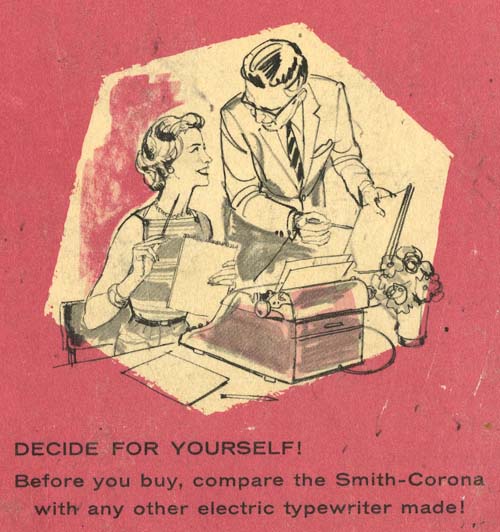
When you think of a secretary in the 1950s, an image like this one, from the back of the Smith-Corona’s Complete Secretary’s Handbook (1951) probably comes to mind:

Image from Smith-Corona’s Complete Secretary’s Handbook (1951)

A recent report from the Bureau of Labor Statistics revealed that sixty years later, “secretary” is still the most common job for women. In fact, in 2011, 96% of all secretaries and administrative assistants were women.

The Sallie Bingham Center for Women’s History and Culture has many collections that document organizational efforts to improve job opportunities for women, whether that means advocating for access to jobs higher-paying male-dominated fields or fighting against sexual harassment in the workplace, including the records of the Southeast Women’s Employment Coalition, founded in 1979 in order to expand the limited employment opportunities for women in the rural South, and the papers of labor activist Theresa El-Amin.

Cover of Not Servants, Not Machines by Jean TeppermanOur collection also contains this gem: Not Servants, Not Machines: Office Workers Speak Out by Jean Tepperman (1976). In the acknowledgements, Tepperman explains how women affiliated with the Boston chapter of “9 to 5,” an organization of women office workers, supported the writing of this book which includes interviews with women across the country. Like the “9 to 5” organization, this book aims to share these women’s experiences of discrimination in the workplace due sexism, and provide information about how to organize and improve women’s working conditions, treatment, and most importantly, their pay.
The Rubenstein Library salutes Administrative Professionals, especially our own Nelda Webb, and honors their contributions, as well as those who have worked to improve conditions and compensation for all women in the workplace.

Post contributed by Kelly Wooten, Research Services and Collection Development Librarian for the Bingham Center.

Mad Men Monday, Episode 4

Mad Men Mondays logo

Episode 4, which aired on April 21st, featured a number of awkward moments for the characters of Mad Men. Several characters were pressured or had to do things that made them uncomfortable. Dawn was asked to clock out for Scarlett when she left early. Megan had to do her first love scene. She and Don were asked to participate in a foursome by Arlene and Mel. Peggy had to pitch a new ketchup campaign to Heinz after awkwardly running into Don and Stan at the Roosevelt Hotel. Later she and Ted have a drink at the same bar as the SCDP team. Joan had to tag along with her friend Kate when she wanted to have a fling with a younger man.

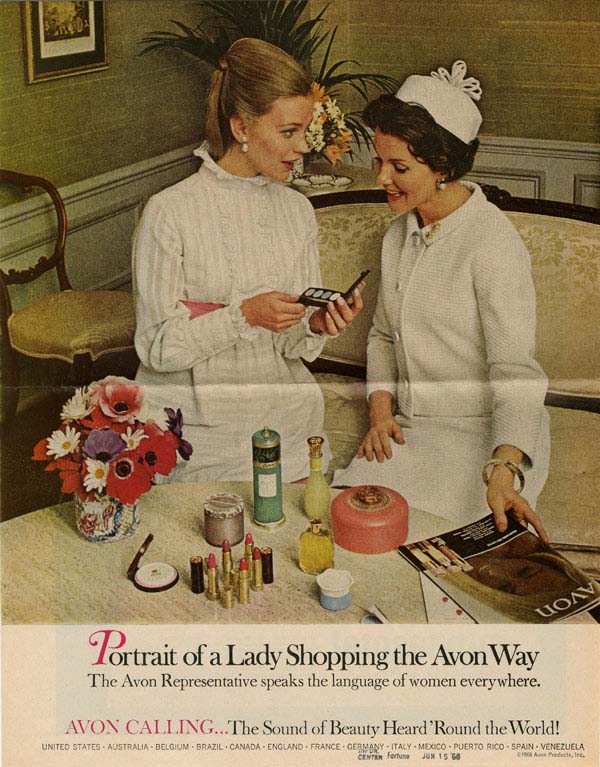
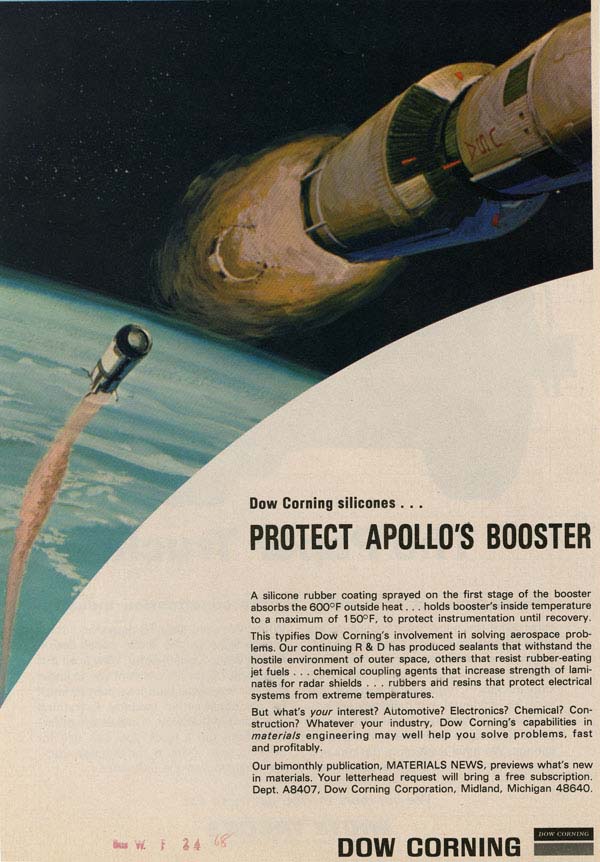
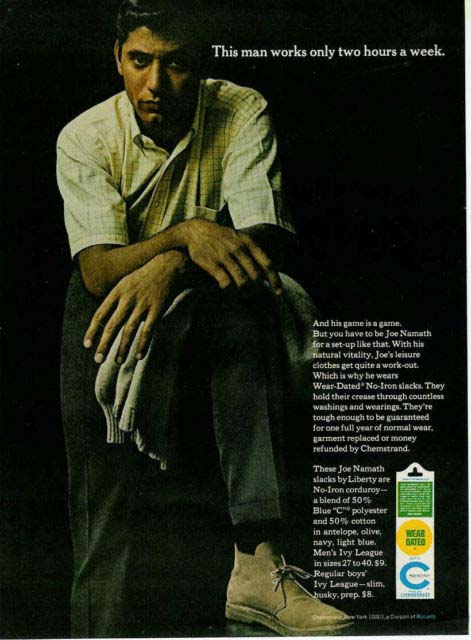
There were references to Avon, Birdseye, Dow Chemical, Joe Namath, and J. Walter Thompson, among other brands. And as usual there was lots of drinking. Here are a selection of ads that refer to some of the products and cultural references mentioned in last night’s episode of Mad Men. A gallery of our selected images may also be found on Pinterest and Flickr.

Avon Portrait of a Lady043 - blog

Birds Eye045 - blog

Dow046 - blog

joe namath

JWT Owl042 - blog

Sports Illustrated047 - blog

AAA9516 - blog2

Before Game of Thrones

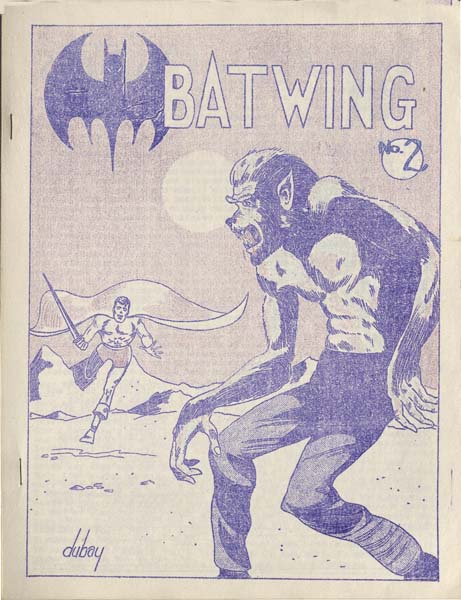
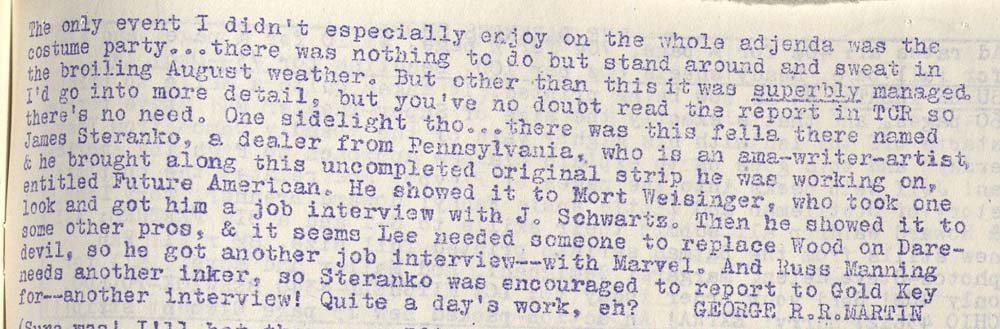
Before Game of Thrones, renowned fantasy author George R. R. Martin was a fan of all things nerd, just like you (and me)!  Check out this 1965 fan letter written by a 16 year-old Martin to Batwing, a fanzine published in Texas  by prolific fanzine writer Larry Herndon (and now included in our Edwin and Terry Murray Fanzine Collection).

Cover of Batwing #2


Batwing Letter, page 1
Click to enlarge.
Click to enlarge.
Click to enlarge.

Post contributed by Josh Larkin-Rowley, Research Services Coordinator.

Nevermind: The Concert That Wasn’t

Hello again from the Duke University Union records!  When last we met, I told you about a mysterious memorandum concerning CORE and the fact that it was not known to suffer from any communist infiltration.  Now, I have an equally interesting tale, involving an unlikely cast of characters: President Keith Brodie, Coach K, and Nirvana.

This undated paper was in a folder titled simply “Concerts Lost.”  It details the negotiations that apparently took place before it was decided not to book the willing-to-play Nirvana at Duke.

Notes about possible Nirvana concert, 1991? From the Duke University Union Records.
Notes about possible Nirvana concert, 1991? From the Duke University Union Records. (Click to enlarge.)

While the document more or less speaks for itself, I will highlight two of my favorite excerpts:

“Even [President] Brodie is unable to make Krzyzewski move practice.”

“If we could talk them into one of the other dates, Brodie would buy tix for senior class.”

Buried deep within the record is a notation that helps us to date the document as being from 1991: “talked to Brodie today; he’s excited about Nirvana because that’s one of the bands they tried for last year.”  This is a key clue in dating the record for the following reasons:

  1. In May, 1990, Nirvana played both in Chapel Hill (at Cat’s Cradle) and Charlotte.  Because of the proximity, it would be reasonable that Duke would have also tried to get a date on their first major headliner tour.
  2. Nevermind, Nirvana’s first major label success album was released in the fall of 1991.  Based on the fact that Durham is not located in suburban Seattle, it seems like a safe bet that they were relatively unknown in the area until they started to play the college circuit in 1990, and then they were catapulted into the spotlight with the release of the international hit album Nevermind.

Nirvana, of course was a band that was riddled with both controversy and tragedy.  Frontman Kurt Cobain famously battled a heroin addiction and, in 1994, committed suicide.  However, Nirvana is also largely credited with expanding the grunge—and later, alternative—rock genre beyond the Pacific Northwest.

Unfortunately, the story of Nirvana at Duke is found only in records of the Duke University Union, in a folder entitled “Concerts Lost.”  A final note about this record: Duke won the 1991-1992 seasons National Championship for men’s basketball.  Apparently those unmoveable practices paid off that year.

Post contributed by Maureen McCormick Harlow, Drill Intern for the Duke University Archives.

Digitizing the LCRM Update #9: Remembering the Allen Building Takeover

This month’s Digitizing the Long Civil Rights Movement update pauses to look back into Duke’s own past struggles with racial equality.  On February 13, 1969, students in the Afro-American Society occupied the Allen Building where the university’s primary administration offices were (and still are) located.  These students demanded that Duke take steps to enact racial equality on campus, including the founding of an African-American Studies department, the hiring of more African-American professors, and the establishment of an African-American cultural center on campus.  Similar demands had been made before from members of the Black Studies Program, as featured in our fourth update in this blog series.

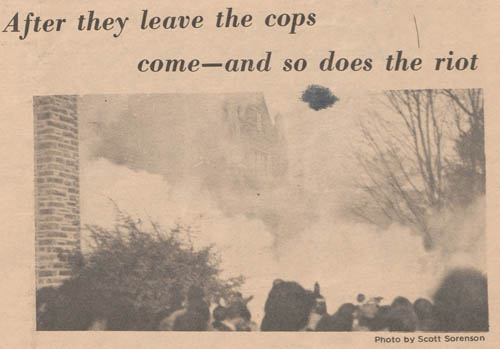
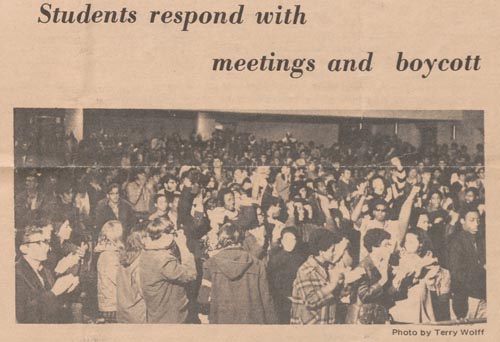
What distinguished the Allen Building Takeover from the previous efforts for reform was its forcefulness—on both sides of the debate.  The Takeover marked the first such occupation by students in Duke’s history.  The administration’s response also became notable for what some members of the student body perceived to be its brutality.  Police officers dispatched to the scene used tear gas to disperse a crowd that had gathered around the building, leading to a “riot” on the main quad of West Campus.

Photos from <i>The Chronicle</i>, February 16, 1969.

Photos from <i>The Chronicle</i>, February 16, 1969.
Both photos from The Chronicle, February 16, 1969.
Allen Building Takeover Collection, Box 1, Folder 10: abtms01010035

In the wake of the Takeover, students rallied to enact the suggested agenda of the original occupiers.  Eventually, most of the demands did become standard practice at Duke, but the change occurred more gradually than what the galvanized student body had wanted in February 1969.  The items selected above are from a photo essay published by The Chronicle (Duke’s independent student newspaper) that encapsulated the events of Takeover.

We are happy to announce that the Allen Building Takeover Collection and its wealth of primary documents and remembrances of the important event will soon become available online to researchers.

For more information on the Content, Context, and Capacity Project for Digitizing the LCRM, please visit our website or like us on Facebook.

The grant-funded CCC Project is designed to digitize selected manuscripts and photographs relating to the long civil rights movement. For more about Rubenstein Library materials being digitized through the CCC Project, check out previous progress updates posted here at The Devil’s Tale

Post contributed by Josh Hager, CCC Graduate Assistant.

Investigating CORE in the Duke Student Union Records

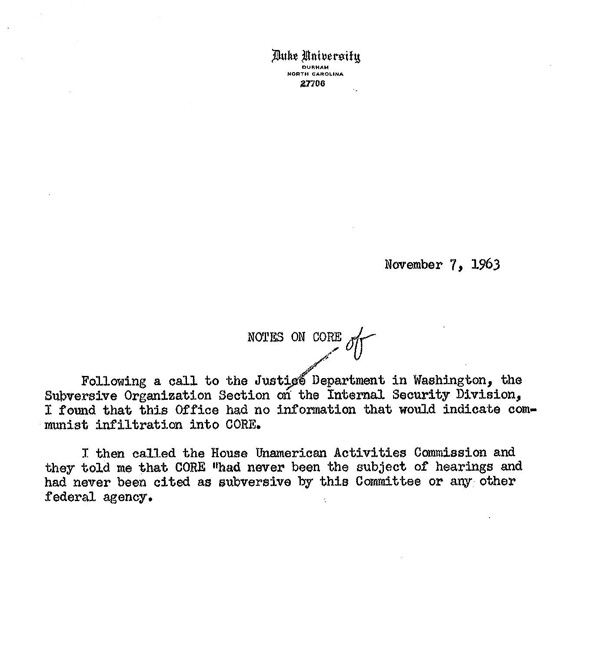
For the last several months, I have been processing the collection of the Duke University Union for the Duke Archives.  The collection contains a wide variety of records and information: want to know how many people were injured during the Grateful Dead concert at Duke?  Check the Union records!  Interested in a local artist that showed her work at Duke in the 1970s?  The Union records are the place to be!  But the subject of this blog post involves this curious, unsigned letter that I found in the records:

Unsigned letter about CORE, November 7, 1963. From the Duke University Union Records.

CORE, the Congress of Racial Equality, was an interracial civil rights organization that, according to its website, began as “a nonhierarchical, decentralized organization funded entirely by the voluntary contributions of its members.” By the early 1960s, chapters and projects existed in many states and were self-funded and self-led.

The early 1960s were a pivotal time for CORE chapters, particularly those throughout the south. 1960, of course, saw the Greensboro sit-ins, and CORE was instrumental in formulating responses throughout the region. In 1961, CORE chapters, the Student Non-Violent Coordinating Committee (SNCC), and other civil rights organizations both participated in and organized “Freedom Rides”  throughout the segregated south in order to desegregate interstate travel. And during 1964’s Freedom Summer, CORE members James Chaney, Andrew Goldman, and Michael Schwerner were murdered in the infamous “Mississippi Burning” case.

Perhaps it was something about the “nonhierarchical, decentralized” language that piqued the curiosity of Duke administrators and compelled them to check with both the United States Department of Justice and the House of Unamerican Activities Commission before approving a CORE chapter at Duke.  The motivation behind such actions may have been lost to time . . . or maybe it’s buried deeper in the Union records!

Post contributed by Maureen McCormick Harlow, Drill Intern for the Duke University Archives.

Come Visit! We’re Now Taking Applications for Travel Grants

Researchers! The David M. Rubenstein Rare Book & Manuscript Library is now accepting applications for our 2013-2014 travel grants.

The Sallie Bingham Center for Women’s History and Culture, the John Hope Franklin Research Center for African and African American History and Culture, and the John W. Hartman Center for Sales, Advertising & Marketing History will award up to $1,000 per recipient to fund travel and other expenses related to visiting the Rubenstein Library.

The grants are open to undergraduate and graduate students, faculty, independent scholars, artists, and activists who live more than 100 miles from Durham, NC and whose research projects would benefit from access to collections held by one of the centers.

More details—and the grant application—may be found on our grants website. Applications must be postmarked or e-mailed no later than 5:00 PM EST on March 29, 2013. Recipients will be announced in April 2013.

NC Travel Billboard, "Only a Day's Drive," undated. From the Outdoor Advertising Association of America Archives.
NC Travel Billboard, “Only a Day’s Drive,” undated. From the Outdoor Advertising Association of America Archives.

Some of last year’s recipients include:

At the Sallie Bingham Center for Women’s History and Culture:

  • Bridget Collins, a graduate student in the History of Science, Medicine, and Technology at the University of Wisconsin-Madison, used prescriptive literature held by the Bingham Center as part of her research for her dissertation, “From the Cradle to the Grave: Infectious Disease in the Twentieth Century American Home.”
  • Laura Foxworth, a graduate student in the Department of History at the University of South Carolina, for research for her dissertation, “The Spiritual is Political: How the Southern Baptist Convention Debated Feminism and Found the New Right.” You can read more about her visit here.
  • Jessica Lancia, a graduate student at the University of Florida, conducted research for her dissertation, “Borderless Feminisms: A Transnational History of the U.S. Women’s Movement, 1967-1985.” You can read more about her visit in the Fall 2012 issue of the Bingham Center newsletter.

At the John Hope Franklin Research Center for African and African American History and Culture:

  • Brooke N. Newman, Assistant Professor in the Department of History at Virginia Commonwealth University, for a study on gender, race, and power in the eighteenth century British Caribbean.
  • Kathryn Banks, Assistant Professor in the History and Political Science Department at Andrews University, for an examination of African-American employment in the Southern textile industry from 1895 to 1945.
  • Max L. Grivno, Associate Professor from the Department of History at the University of Southern Mississippi, for an analysis of slavery in Mississippi, 1690-1865.

At the John W. Hartman Center for Sales, Advertising, and Marketing History:

  • Anne Schmidt of the Max Planck Institute for Human Development in Berlin, Germany, for research for her book about the meaning and importance of emotions in advertising throughout the twentieth century in Germany and ways emotions were a constitutive element of capitalist practices of production and consumption.
  • Marcia Chatelain, Assistant Professor in the Department of History at Georgetown University, conducted research on the ways in which segregation shaped African-American food culture in the South for her book, A Taste of Freedom: African-American Dining Culture and the Struggle for Civil Rights.
  • Rochelle Pereira-Alvares, a graduate student in the Department of History at the University of Guelph, Canada, exploring how the marketing and advertising initiatives of Hiram Walker and Seagram influenced the way in which consumers purchased and imbibed spirits, and the impact consumers’ changing tastes had on the companies’ marketing and product development decisions, 1950-1990.
  • Bryce C. Lowery, a graduate student in Public Policy at the University of Southern California, for research for his dissertation, “The Consumable Landscapes of Los Angeles: How the Spatial Ecology of Outdoor Advertising Influences the Quality of Life.”

Post contributed by Stephanie Barnwell, Bingham Center intern.

New Office Hours for the Medical Center Archives!

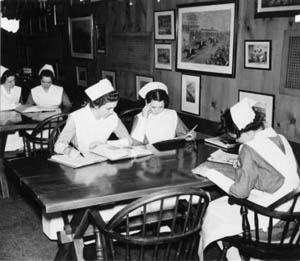
Nursing students study in the School of Medicine Library. Courtesy of the Duke University Medical Center Archives.

Nursing students study in the School of Medicine Library. Courtesy of the Duke University Medical Center Archives.

The University Archives has collections from every area of the Duke campus—except the Medical Center. Those materials are collected by the Medical Center Archives, which has an off-campus facility. The location of the office is not far from campus but not easily walkable or accessible by bus.

Recently, however, our friends at the Med Center Archives have started providing regular office hours at the Medical Center Library in the Seeley Mudd Building. Each day from 9:00 AM to 4:00 PM, they are available on Level 1 in Room 102A to meet with patrons, explain resources, and even (with advance notice) provide access to historical materials.

If you want to make an appointment with a Med Center Archives staff member, you can simply stop by, or contact them at dumc.archives(at)mc.duke.edu or (919) 660-1144.

Post contributed by Val Gillispie, Duke University Archivist.

The Lovers, the Dreamers, and the Rubenstein Movers

Hi Rubenstein Library move diary readers! We’re into Week 4 here at Rubenstein Library Move HQ. And one of the fun things about moving our collections out of our soon-to-be-renovated stacks has been marveling at the expanses of empty shelving. We have a lot of stuff!

Our stacks weren’t always, well, ours. A few decades ago, some of our floors were home to part of the Perkins Library’s circulating books collection and provided study space for lots and lots of undergraduates. As we’ve been preparing for the move, we’ve discovered many fine examples of library patron graffiti, some of which were pictured in a recent issue of Duke Magazine.

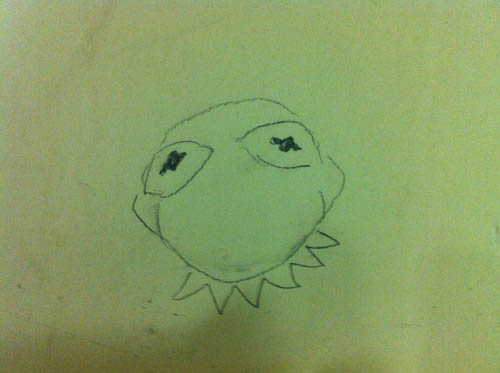
Now that our stacks are clearing out, it’s become easier to spot these pencilled masterpieces. Like the one shown below, which graces a second floor wall.

Kermit Graffiti from Rubenstein 2nd Floor Stacks

(And we will neither confirm nor deny that the voice in our head that squealed “KERMIEEEEEE!” was Miss Piggy’s. OK, we will confirm it.)