
Category Archives: Technical Stuff

Bringing the Rubenstein to Wikipedia

Wikipedia—love it or hate it, it’s a hallmark of Internet culture. It’s also one of the most common ways students and scholars begin a research project. That’s why, as a field experience student in the Rubenstein this semester, I’ve begun a project to incorporate content from the Rubenstein into Wikipedia and Wikimedia Commons.

Adding a link to an archival finding aid in a Wikipedia article can direct readers to more information on a subject, and it can serve as a reference for adding new content to an existing article.

I’ve been editing Wikipedia in two main ways. The most straightforward edit is to find a biographical article on Wikipedia and link from the article to the finding aid for that person’s papers on the Rubenstein’s finding aids site. For example, I’ve linked finding aids for many of the prominent economists’ papers housed at the Rubenstein, notably Nobel Prize winners such as Kenneth Arrow and this year’s Nobel Prize-winner Alvin E. Roth.

If the Rubenstein holds someone’s personal papers and they don’t yet have a Wikipedia article, that’s a perfect opportunity to create one. This was the case with economist and journalist Leonard Silk and North Carolina filmmaker Herbert Lee Waters.
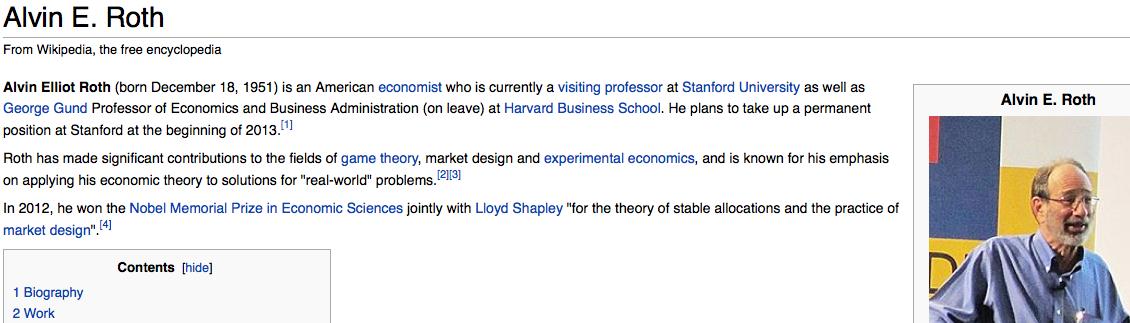
A visitor to the Wikipedia article on Alvin Roth, 2012 co-winner of the Nobel Prize in Economics, will also find a link to the finding aid for his papers at the Rubenstein.

The other main type of contribution I have been making has been uploading selected photos from Duke’s Digital Collections to Wikimedia Commons and then using those photos to enhance Wikipedia articles. My favorite contribution so far has been adding a photo from the Sidney Gamble Collection to the gallery in the Wikipedia article on Tiananmen Square. I can’t say why the people in the photo are gathered, but it illustrates (as photos do so well!) the historical importance of the square as a place for public demonstration.
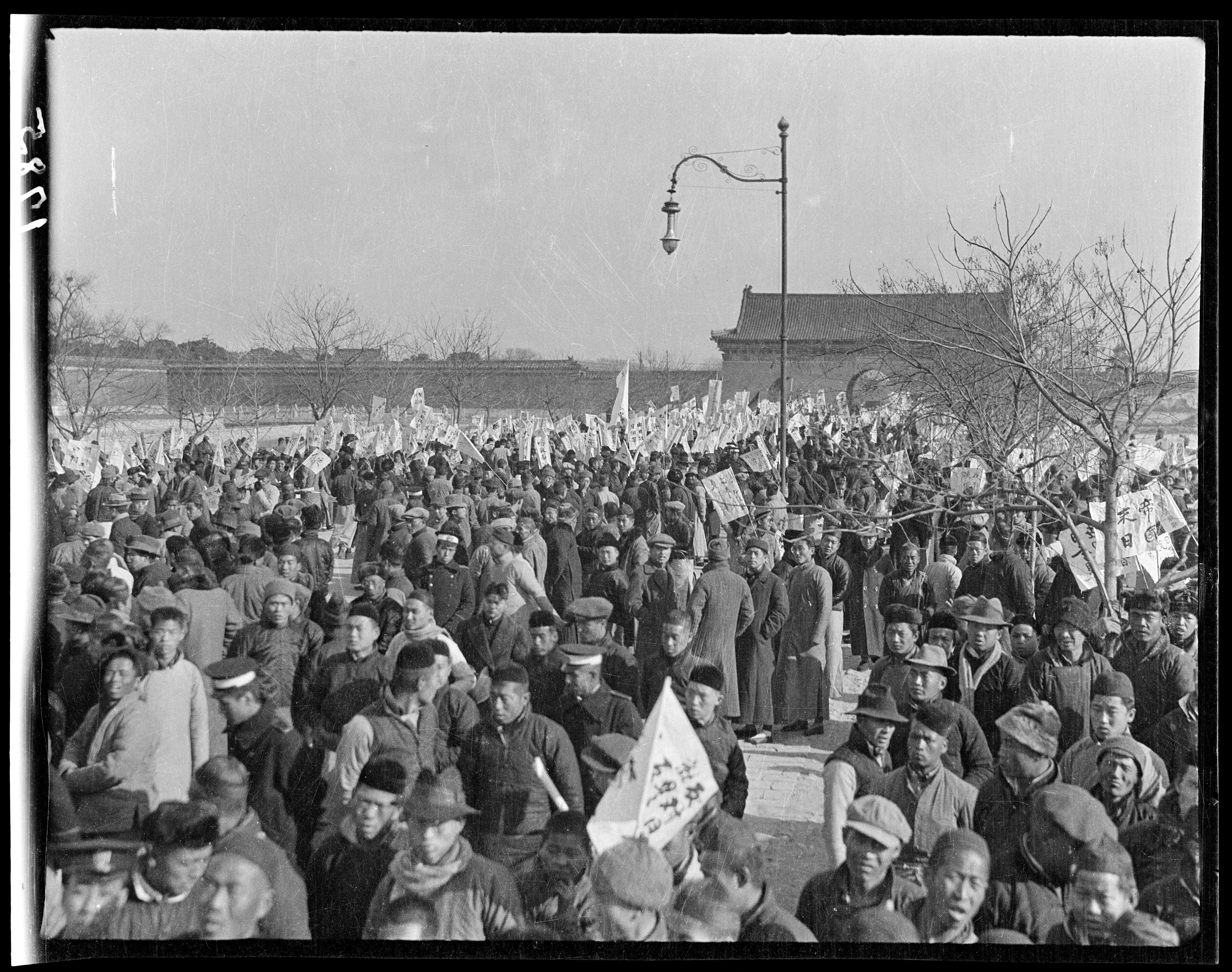
Sidney Gamble’s photo of a student protest in Tiananmen Square, ca. 1917-1919

This project has been a great way to get familiar with the treasure trove of collections held by the Rubenstein, but there are many more ways to highlight archival collections in Wikipedia. If you’ve used the Rubenstein’s collections and found something you want to share with the world, why not include it in Wikipedia?

Kristi Krueger is a field experience student from UNC’s SILS working in the Rubenstein Technical Services Dept.
The Titans of Commerce and Industry

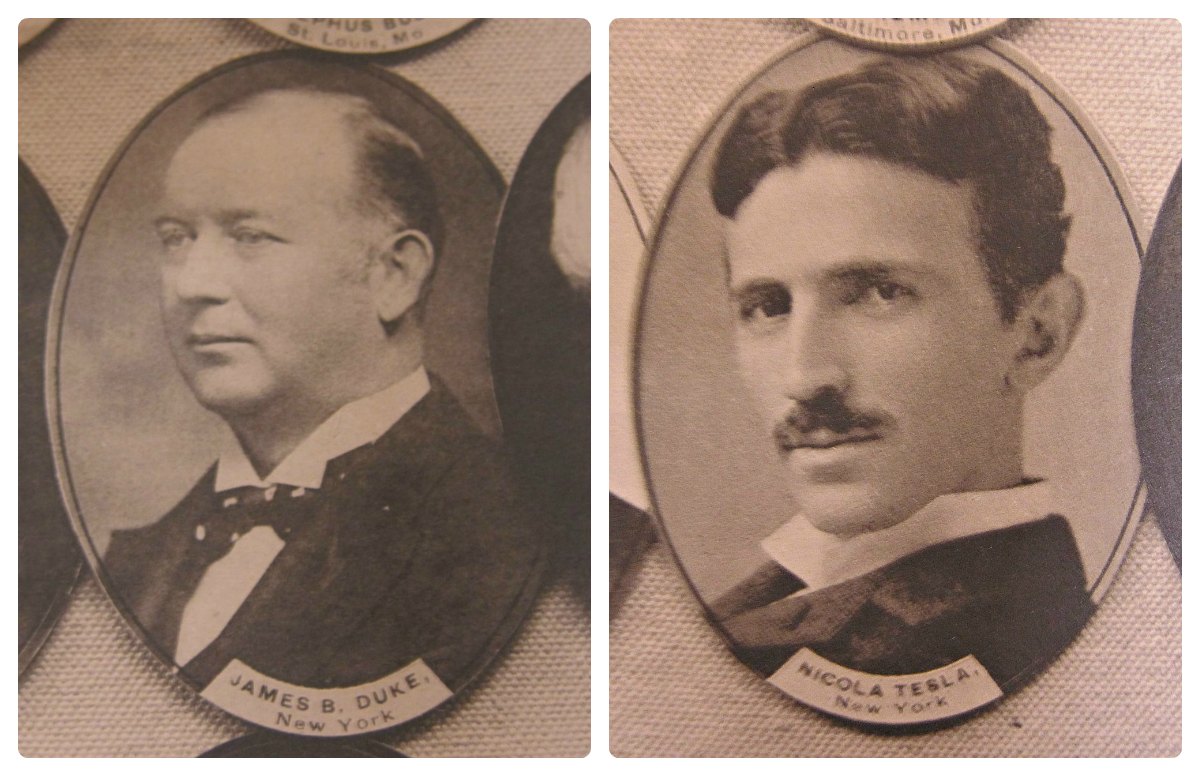
The History Channel recently aired “The Men Who Built America,” a docu-series about the titans of the early industrial age featuring Cornelius Vanderbilt, Andrew Carnegie, J. Pierpont Morgan, and John D. Rockefeller. As a self-described history junkie, I was immediately hooked. So imagine my delight when I came across a poster of Hosts & Guests at a banquet tendered for HRH Prince Henry of Prussia, New York, dated 1902 Feb 26 (reprinted 1905) while processing the photographs in the Doris Duke collection.

The portraits in the poster represent a veritable “Who’s-who” of the movers and shakers of the early 20th century, including Vanderbilt’s son William, Rockefeller (and son), Morgan, Nikola Tesla (with his wavy hair and dreamy eyes), his arch-nemeses Thomas A. Edison, Adolphus Busch and Frederick Pabst (for our beer lovers), Marshall Field (perhaps the most well-dressed?), and our very own James B. Duke.

So what brought these men together?

In 1902 Germany made a concerted effort to improve its relationship with the United States. One of the warmest displays of this diplomatic effort was a visit by the younger brother of German Emperor William II, His Royal Highness (HRR) Prince Henry of Prussia (1862-1929). The two week tour (February 22-March 11) was specifically designed to allay misgivings arising from a conflict between the United States and German fleets in Manila in 1898.

On February 25th, HRH Prince Henry made a brief stop in New York City. The next day he attended a formal luncheon with the “representatives of commerce and industry” at 12:30 p.m. after which he continued sightseeing in New York. The banquet was commemorated by the poster now housed in the soon to be available Doris Duke Photograph Collection.

Want to learn more about Prince Henry’s visit? The Internet Archive has made available the “Tour of His Royal Highness Prince Henry of Prussia in the United States of America: Under the Personally-Conducted System of the Pennsylvania Railroad,” a floridly detailed itinerary or “General Programme” of his visit to the United States.

Post contributed by Mary Samouelian, Doris Duke Collection Archivist.

Take This Shelf and Hang It!

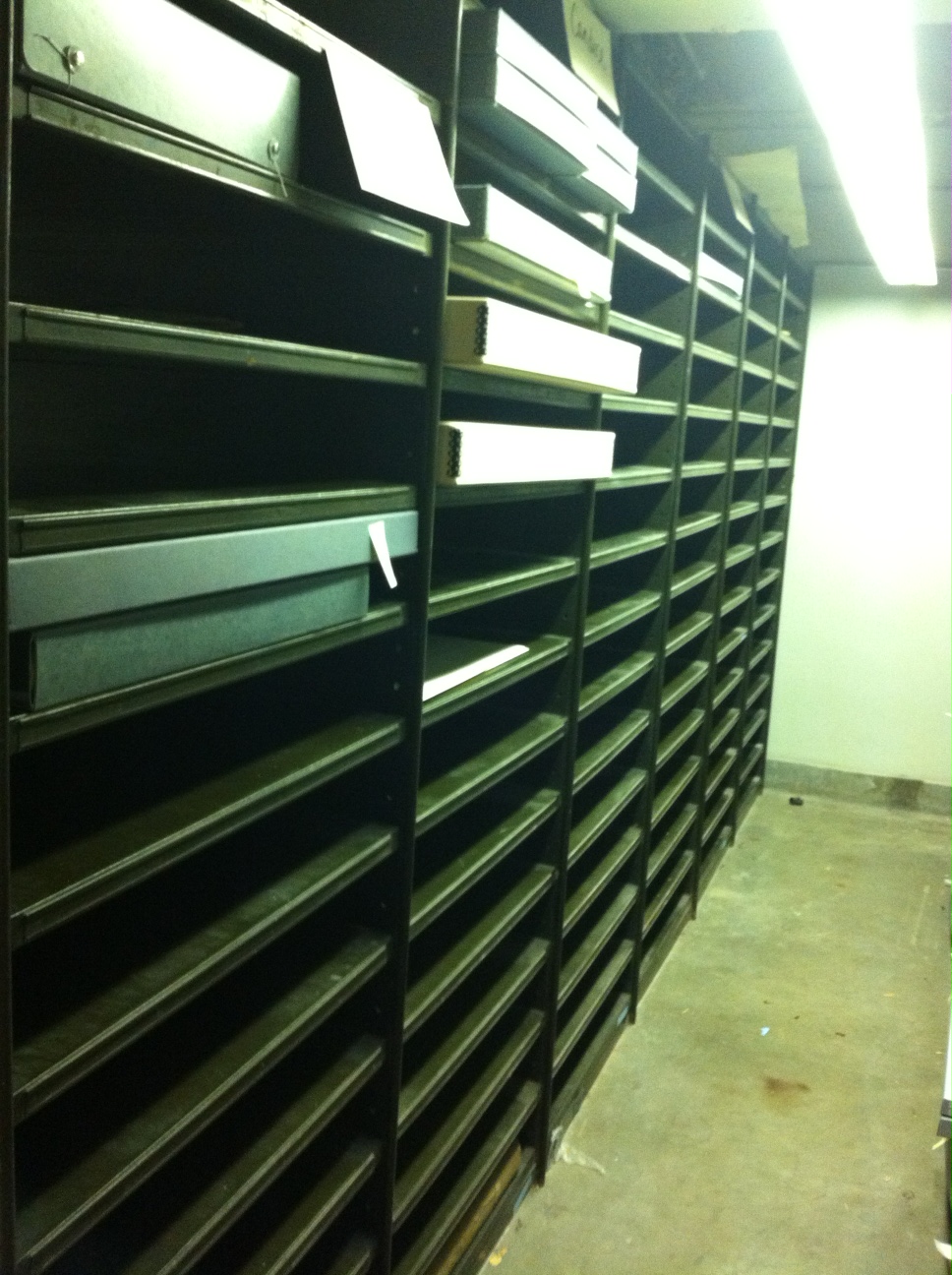
As usual, things are really humming over here at Rubenstein Renovation HQ. We have been slowly shipping newspapers and manuscript collections to our offsite facility since the end of August. It’s been very exciting to watch our collections move offsite. We have been seeing quite a few empty shelves appear, which means we are making some real progress!

The Rubenstein Library has also officially taken occupancy of the 3rd floor of Perkins, our temporary library. Although we are not moving offices or the reading room until mid-late December, we are starting to move in some special shelving and hang it at the heights we require. For those of you who really obsess about this kind of thing (and who doesn’t??), most of the shelving in Perkins/Bostock is 9” wide. We have quite a few 11” shelves in the Rubenstein Library, and the extra space allows us to shelve our records cartons and document cases more efficiently than if we were using 9” shelving. We do not have a lot of space in our temporary location so any space advantage we can manage is key.

The shelf hanging process began this week! It is a tedious process, as you can imagine, but we have been moving quickly. Thanks especially to one of our student assistants who is actually a shelf whisperer!

For more information about the renovation, please visit our renovation website.

Post contributed by Molly Bragg, Collections Move Coordinator in Rubenstein Technical Services.

Recovering the 1970s

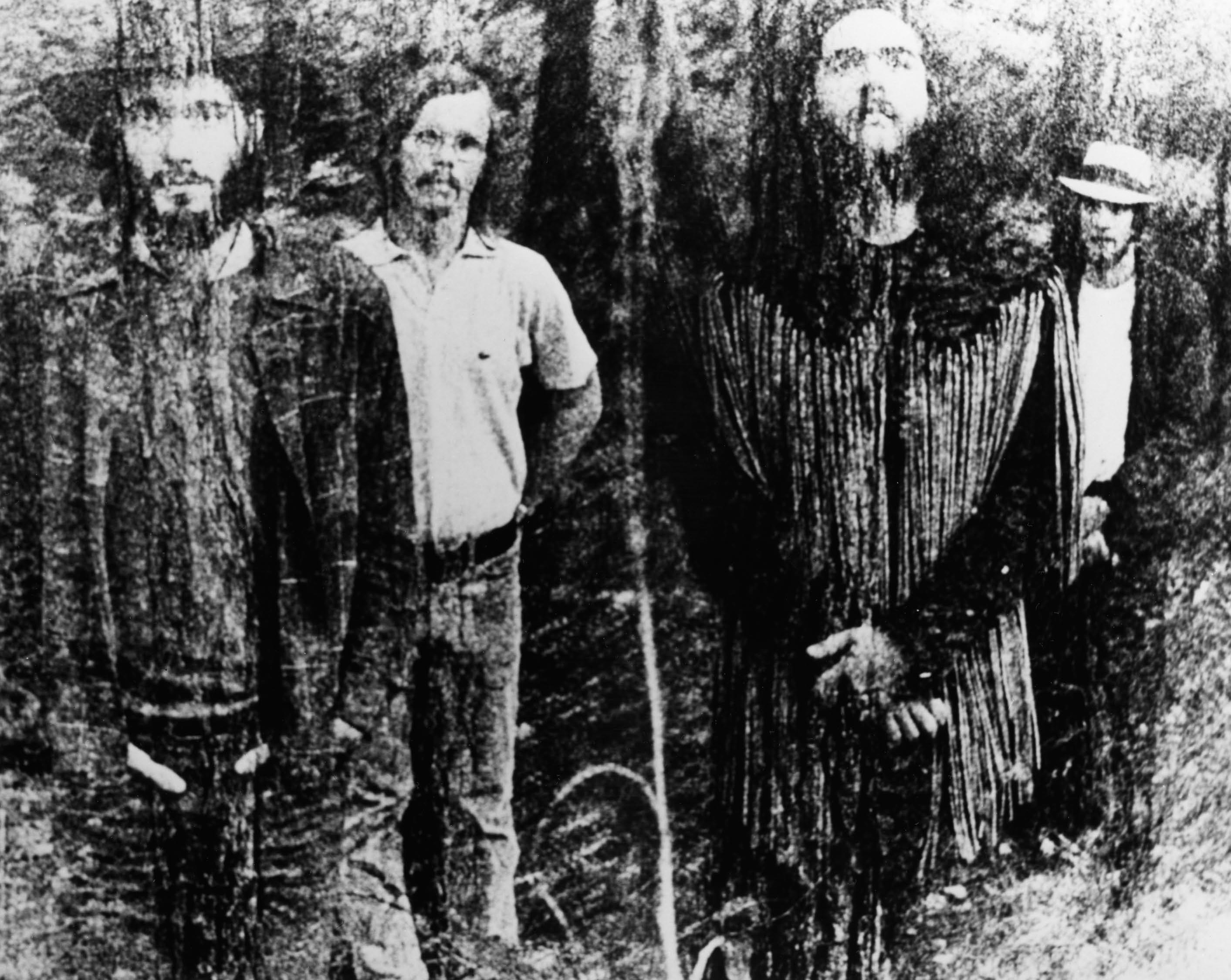
This summer, I began processing a collection of the Office of Student Activities and Facilities’ (OSAF) records. While processing this collection, I stumbled upon a folder simply titled “IFC Functions.” In a haze of student group folders, ASDU folders, DSG folders, etc., I was not particularly struck by this folder. This was a mistake. Upon opening this folder, I found pure gold.  This folder contained memories of the 1970s that I am sure our parents, at least mine, have willfully chosen to forget.

This folder contained information sent to the Inter-Fraternity Council (IFC) of cover bands who wanted to play at Duke. These band promotion packets contained blurbs and publicity about the bands, such as this quote from the promotion pack of a band that called “Hydra”: “Hydra is unquestionably the finest heavy hard rock band in the Southeast. They are also the most danceable group you will find anywhere.”

So I was intrigued and wanted to learn more.  That is when I found the most amazing thing of all.  Every band sent a picture of themselves with their packets; these photos chronicled the outstanding fashion trends of the 70s.

Each band had a different look, a different style, and everyone was fantastic.  There were such bands as “Hydra,” who was 70s Goth; “Radar,” who was bohemian rock; “Brother Bait,” who was a 70s version of what I would call hippy chic; and “Choice,” who struck me as a 70s version of the Jonas Brothers.

Hydra, “the finest heavy hard metal rock band in the Southeast” and “the most danceable group you will find anywhere.”
Radar, more relaxed than Hydra.
Brother Bait: fashionable hippies.
Choice, aka The Jonas Brothers of the 1970s.

This folder was so interesting because it really allowed me to catch a glimpse of such an iconic era.  I thoroughly enjoyed working on this collection as it enabled me to take a step back in time and learn about a fascinating part of Duke’s rich student history.

Post contributed by Julia Eads, Trinity College ’14 and student assistant in Technical Services.

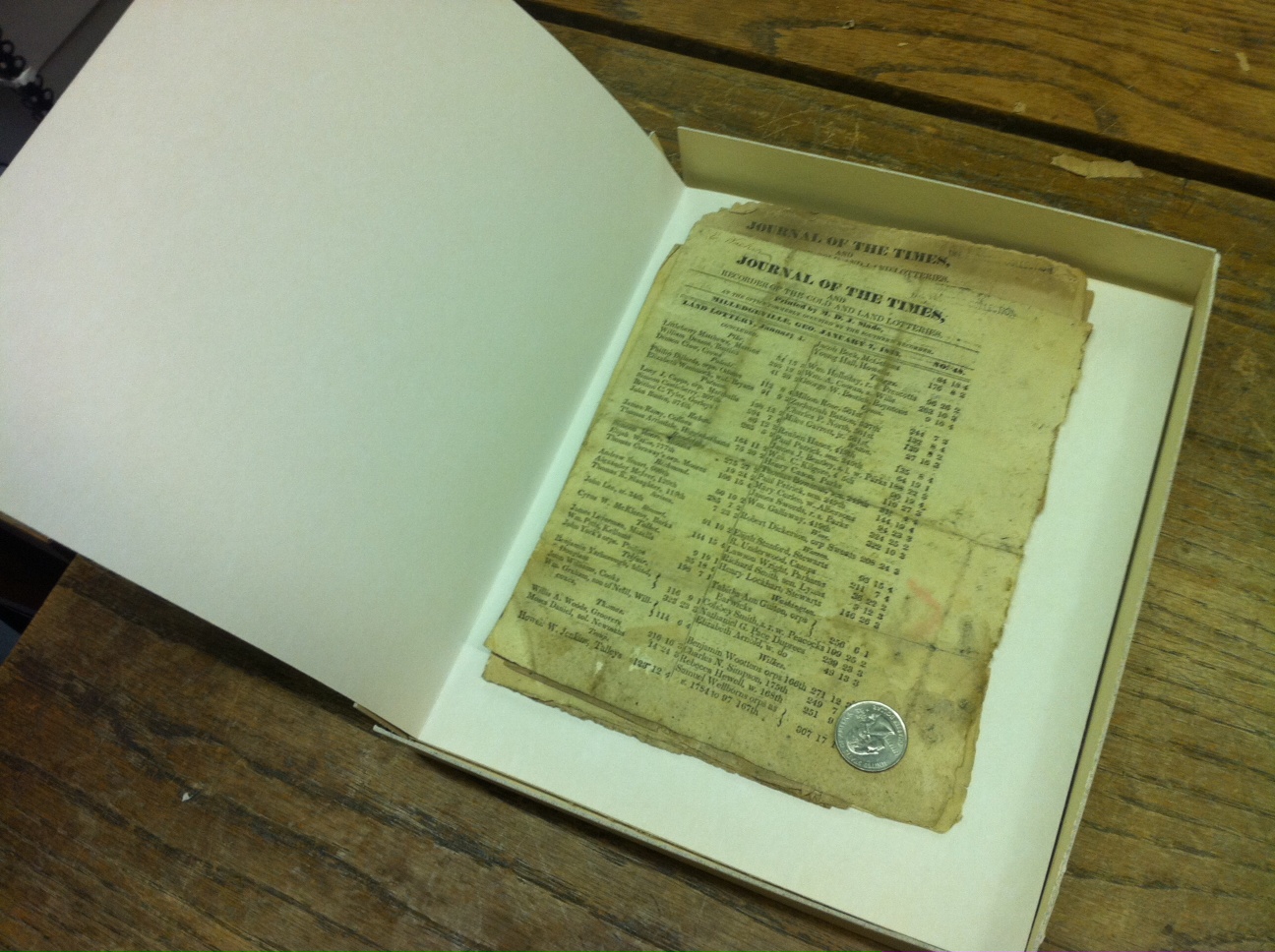
Newspaper Superlatives

As they work their way through the Rubenstein’s basement, the holdings management staff have been nominating newspapers for superlatives. And the winners are…

The Journal of the Times — asserting its cuteness with a quarter for scale.

Post contributed by Jessica Janecki and the Holdings Management Team in Technical Services.


Dispatches from the German Judaica Project

Solving Cataloging Puzzles, or, How Digitization and the Web Makes Our Work More Accurate and Efficient

Difficult cataloging puzzles occur when a volume’s title page is missing. Sometimes information written into the book by a previous owner is correct, sometimes it is not. When I first began cataloging, the only resources were printed bibliographies, printed catalogs, the famous National Union Catalog (NUC), British Library catalog and other specialized catalogs. Unless you could correctly “guess” the title, it was difficult to positively identify such works. Now that Google Books has put so many up for view, the cataloger now has more “tricks” available to solve problems.

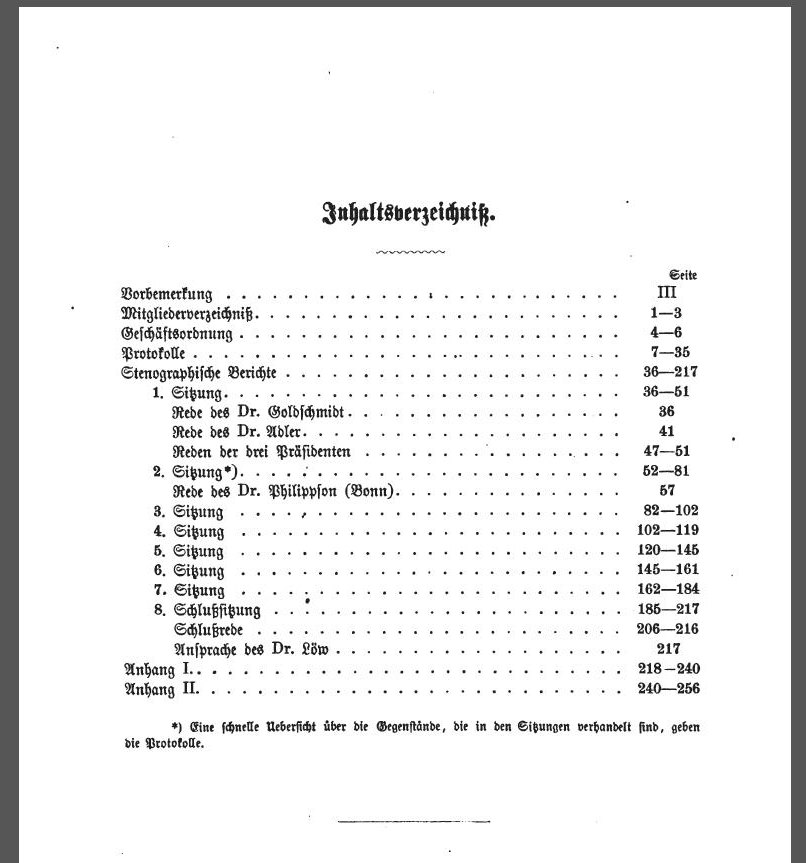
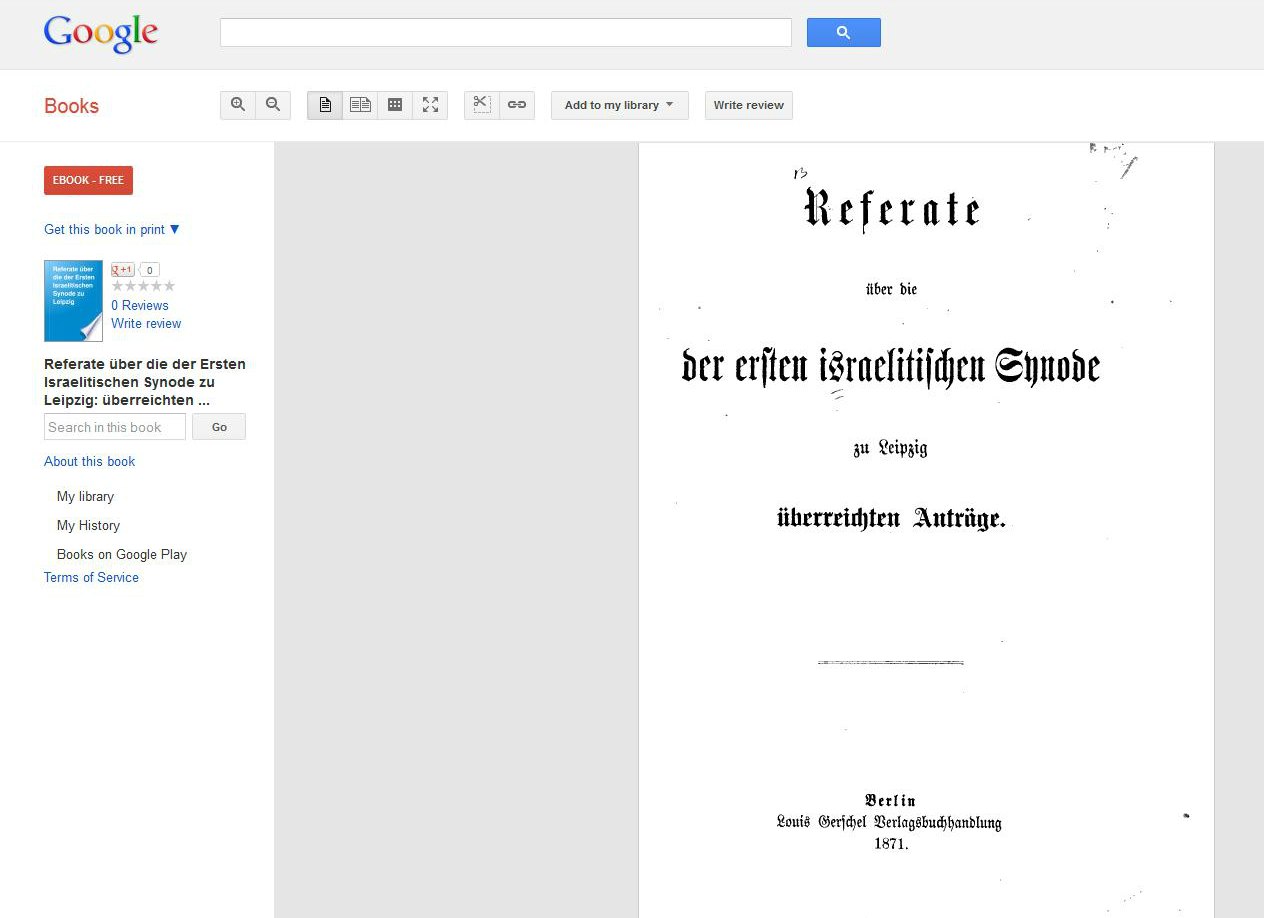
An example of this is a volume that is missing the title page and begins with the Preface, table of contents, and has 246 pages (apparently complete). On the front flyleaf is a penciled note: Verhandlungen der ersten israelitischen Synode in Leipzig vom 29. Juni bis 4. Juli 1869 (Enthaltend: Protokolle, Stenograph. Niederschrift etc.) Berlin 1869. Such a book does exist in OCLC, but it is described as vi, 260 p. Searching for the title in Google Books brings up the following:

Clearly this is not the book in hand, because, not only is the pagination different, but the content is entirely different. Back to the puzzle.

Fortunately, search engines index more than just the title page information. I then search Google Books for significant words from one of the articles (2nd one): referat orgelspiel Sabbath wiener. The resulting “hit” reveals the correct title with matching contents. Once I know the correct title, I can search OCLC and find a good cataloging record.

Google Books solves the puzzle!

You can find the final catalog record for the book here.

Post contributed by Lois Schultz, Catalog Librarian for Monographic Resources in Perkins Technical Services.

Boxy Lady

Figuring out suitable storage for historical artifacts in a collection is a daily challenge for archivists in the Rubenstein Library’s Technical Services Dept. Our goal is to provide easy access to the artifacts while protecting them in a safe and secure manner. Many times we can manage this with the standard boxes and padding materials we have on hand. However, there are times when the artifacts, because of their unusual shape or fragile condition, don’t quite fit the standard. This is when we call on our friends in the Conservation Services Department to find the best storage solution.
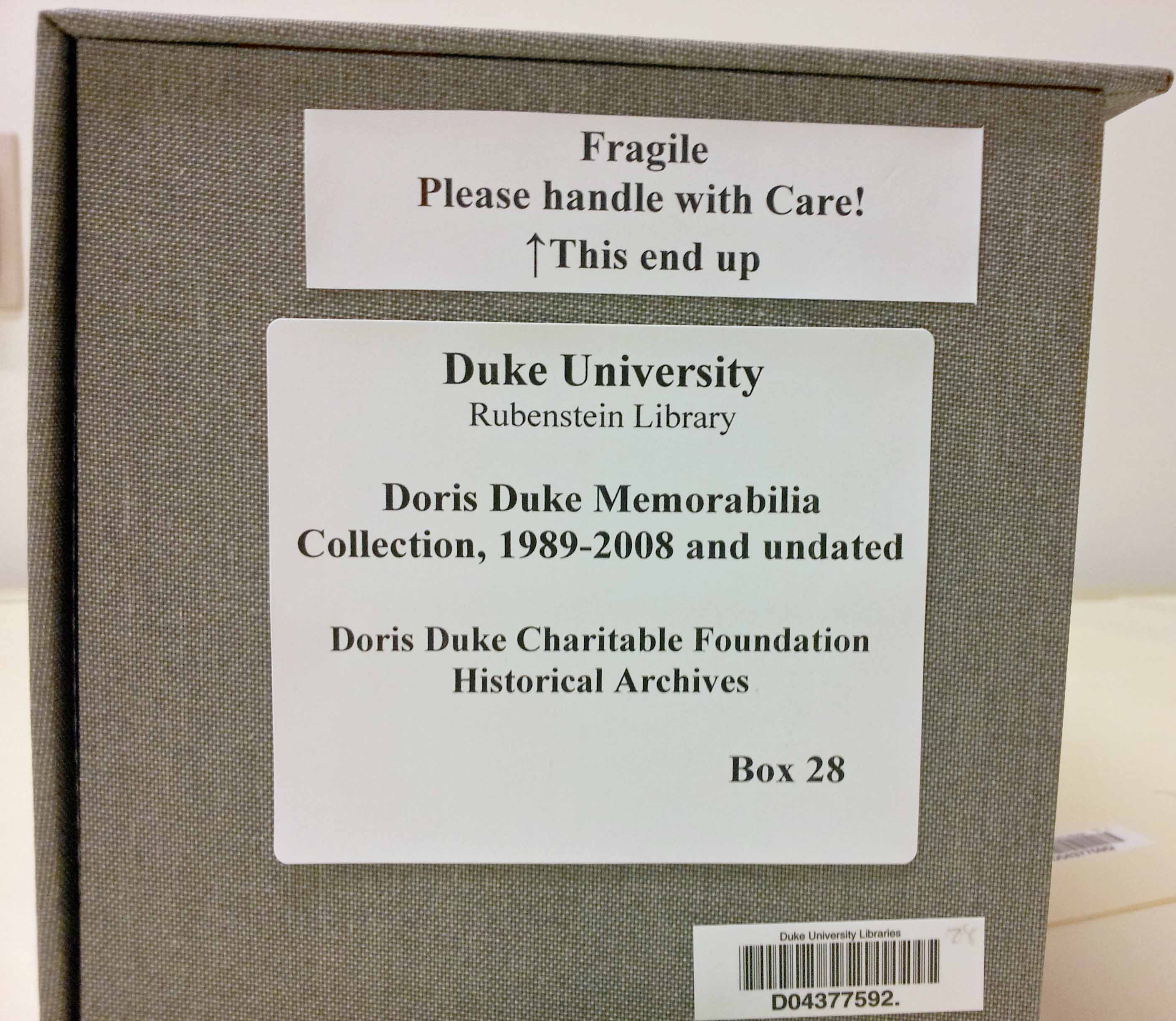
Such was the case with three artifacts in the Doris Duke Memorabilia Collection. A baseball bat with Doris Duke’ name carved through it, a football to Miss Duke from the coaches and players of the Midgets football team that she sponsored, and a partial weathervane believed to be from Duke Farms were prime candidates for Conservation’s resourceful storage solutions. I didn’t know what to expect, but when the newly boxed artifacts safely arrived back to Technical Services for labeling and barcoding, I was truly impressed at the results.

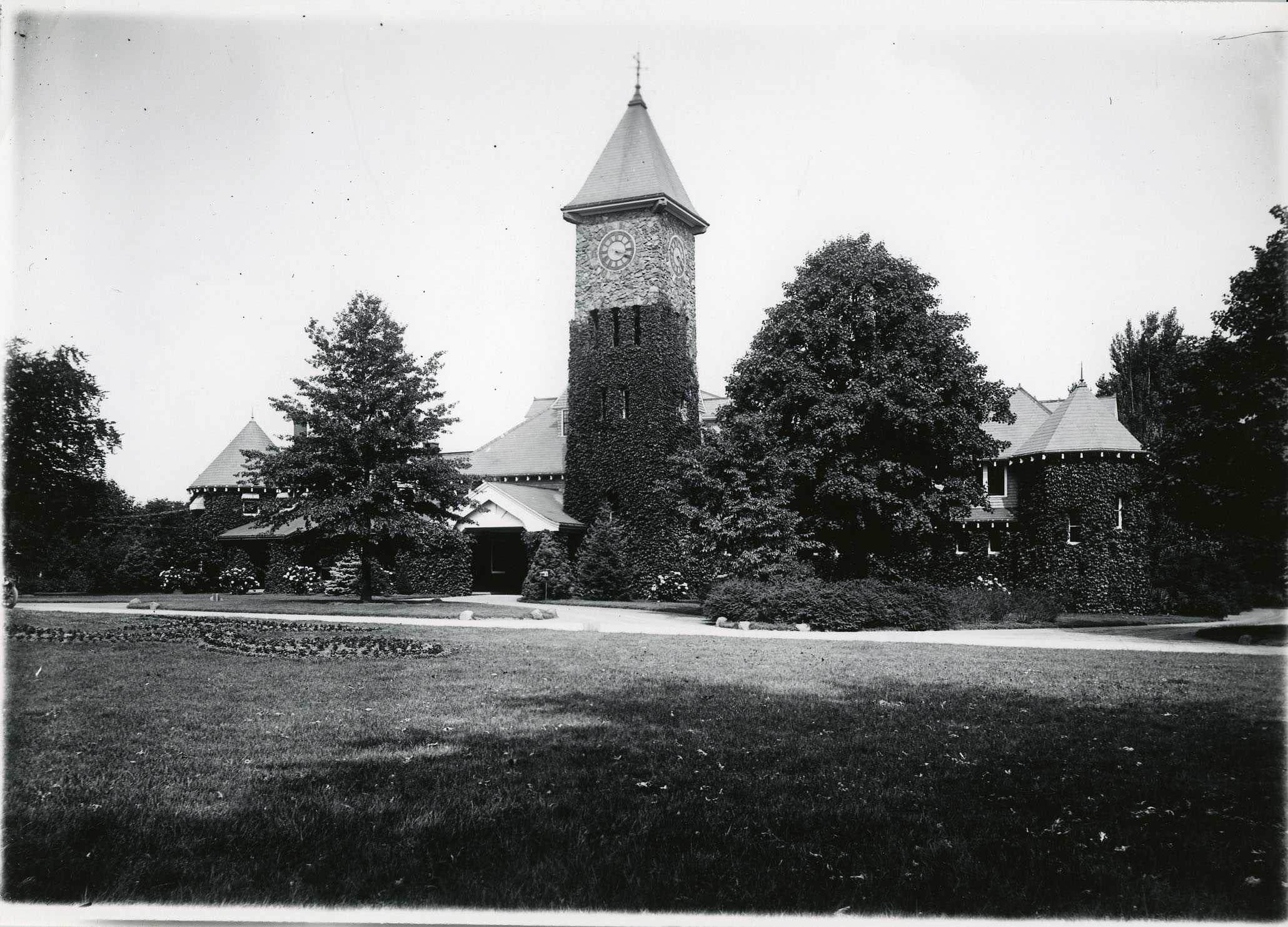
Is this weathervane from the Coach Barn at Duke Farms the same as the one in the Memorabilia collection? It’s up to researchers to find out!

Because of Conservation’s thoughtful and inventive solutions, these three artifacts are now available to researchers. To view the final results and to read how Conservation created these boxes, see the Preservation Underground blog.

All ready for research use!

Post contributed by Mary Samouelian, Doris Duke Collections Archivist.

Dispatches from the German Judaica Project

A cataloger with a photographic  memory could be a source of endless fragments of information. We have only a few minutes with each of the thousands of books that pass through our hands, and much of that time is taking up with verification of details of the title, the imprint, the author’s authorized heading, etc. Subject analysis is often a quick selection from an endless list of dry headings and academic buzzwords—Economic development, Queer theory, Postcolonialism, Lie groups, Wachiperi language—and their associated classification. Some subjects appear over and over. The catalog has 179 entries under “Egypt—History—Protests, 2011-” and more under that heading with subdivisions. In other cases, the cataloger is amazed that even one book has been written on the topic.  The author of a slim volume on Hedjhotep, the Egyptian god of weaving, admitted that this deity is “little known, even among Egyptologists.”

As my memory is far from photographic, sometimes at the end of the day I am hard pressed to remember what parts of the river of human knowledge I have seen flow by. Determining what a book is about, though a fascinating process, gives just a snapshot of the content, and varied snapshots blur together in my mind. After more than thirty years of cataloging as a generalist, I have been exposed to bits and pieces of a wide range of subjects, but questions about any detail send me to Google.

A selection of Jewish prayer books, one for each holiday.

Recently, the library acquired a Judaica collection of more than 6000 late 18th century to early 20th century books. Most are in German, with some Hebrew and Yiddish. As part of a team of catalogers working with this material, I have been able to spend days on end with interrelated books. Questions about the context of a work or an author’s identity send me to Wikipedia, and what I learn there brings more life to the books, which creep into corners of my consciousness not inhabited by my usual work. Opening one dusty anti-Semitic tract after another can be as bone-chilling as the movie Schindler’s List. After cataloging dozens of editions of the Siddur (Jewish daily prayers) I somehow feel that I could step into a German synagogue and pick up a worn black prayer book, and be part of the recitation of words that have comforted so many generations.

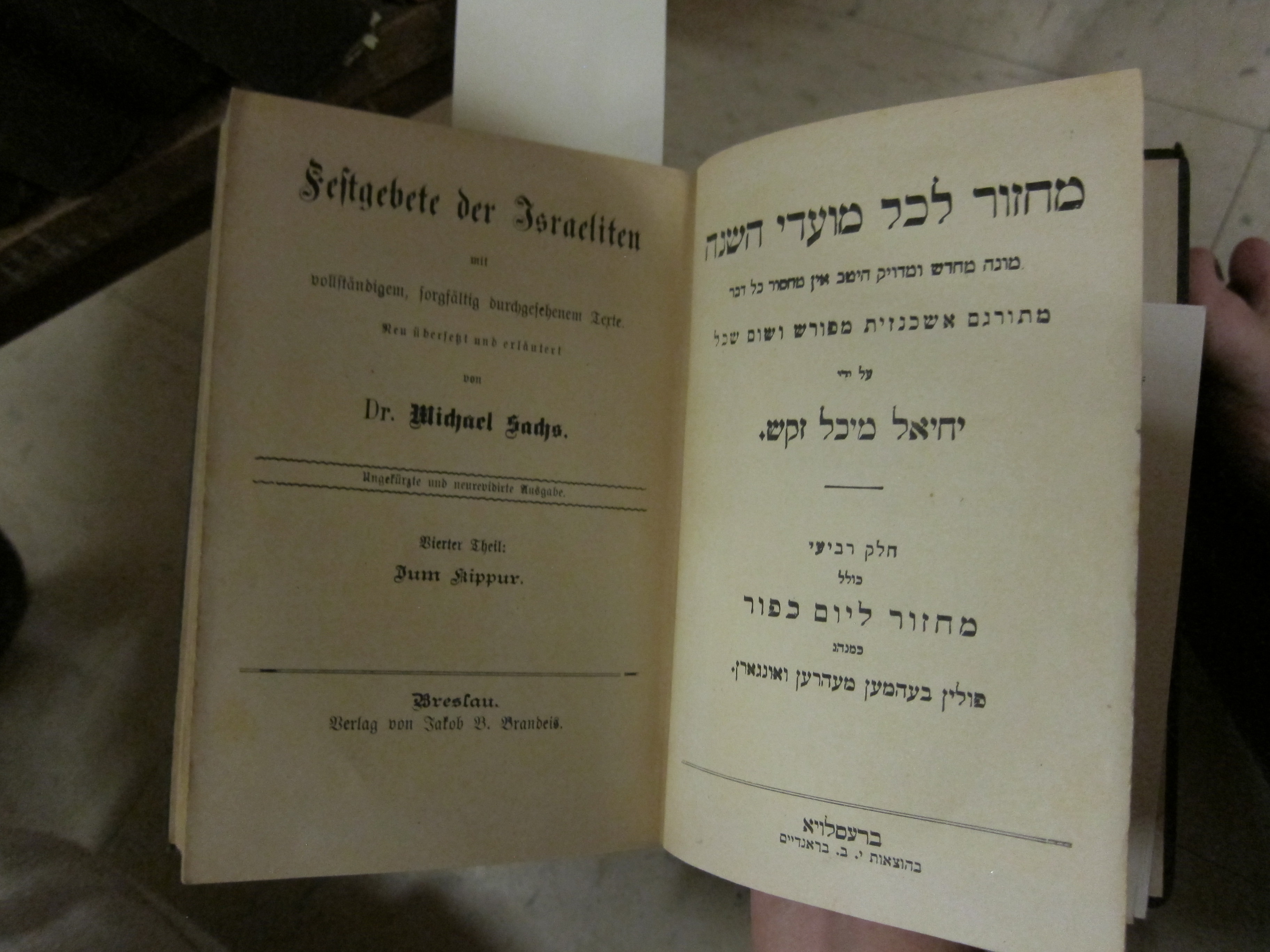
This prayer book for Yom Kippur has a title page in both Hebrew and German.

Post contributed by Amy Turner, Original Cataloger in the Cataloging and Metadata Services Dept.

Welcome New Staff!

We are excited to introduce TWO new staff members! First we have Rachel Penniman, a transplant from Vermont who is our new Library Assistant for Technical Services and Research Services. She will be accessioning new archival collections, ordering and wrangling our vast number of archival supplies, and managing ILL requests in Research Services. In her spare time, Rachel likes to roller derby.

We’re also pleased to introduce Lauren Reno, a rare materials cataloger from the Newberry Library in Chicago who will now be cataloging for us here at Duke. We have lots of rare books and maps that are ready and waiting for her. When she’s not cataloging, Lauren enjoys studying German and running.

New Staff: Lauren Reno and Rachel Penniman

Rachel is splitting her time between Rubenstein’s Smith Warehouse and Perkins Library locations. Lauren is based at Smith fulltime. We are thrilled that both are here to help us keep things moving in the Rubenstein!


Introducing the Anna Schwartz Papers

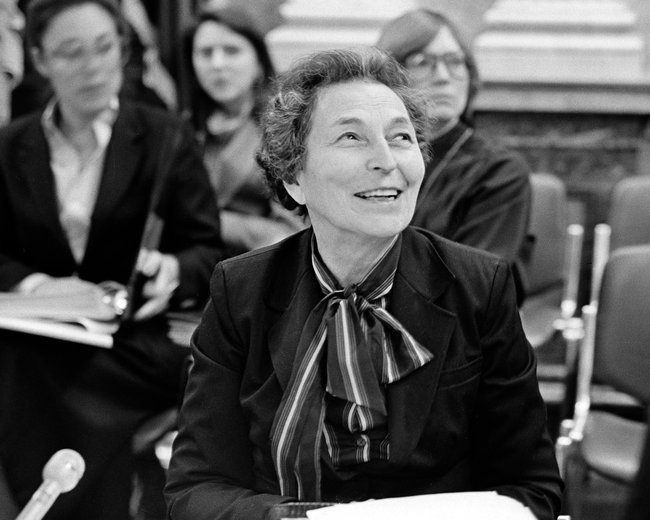
Anna Schwartz in the New York Times, 1982.

I am pleased to announce a new finding aid for one of our newest collections, the Anna Schwartz Papers. Schwartz was an economist at the National Bureau for Economic Research, and collaborated with Milton Friedman on numerous works, including A Monetary History of the United States, 1867-1960. She also served as the executive director of the United States Gold Commission from 1981 to 1982. Her papers are an exciting addition to the Rubenstein’s Economists’ Papers Project.

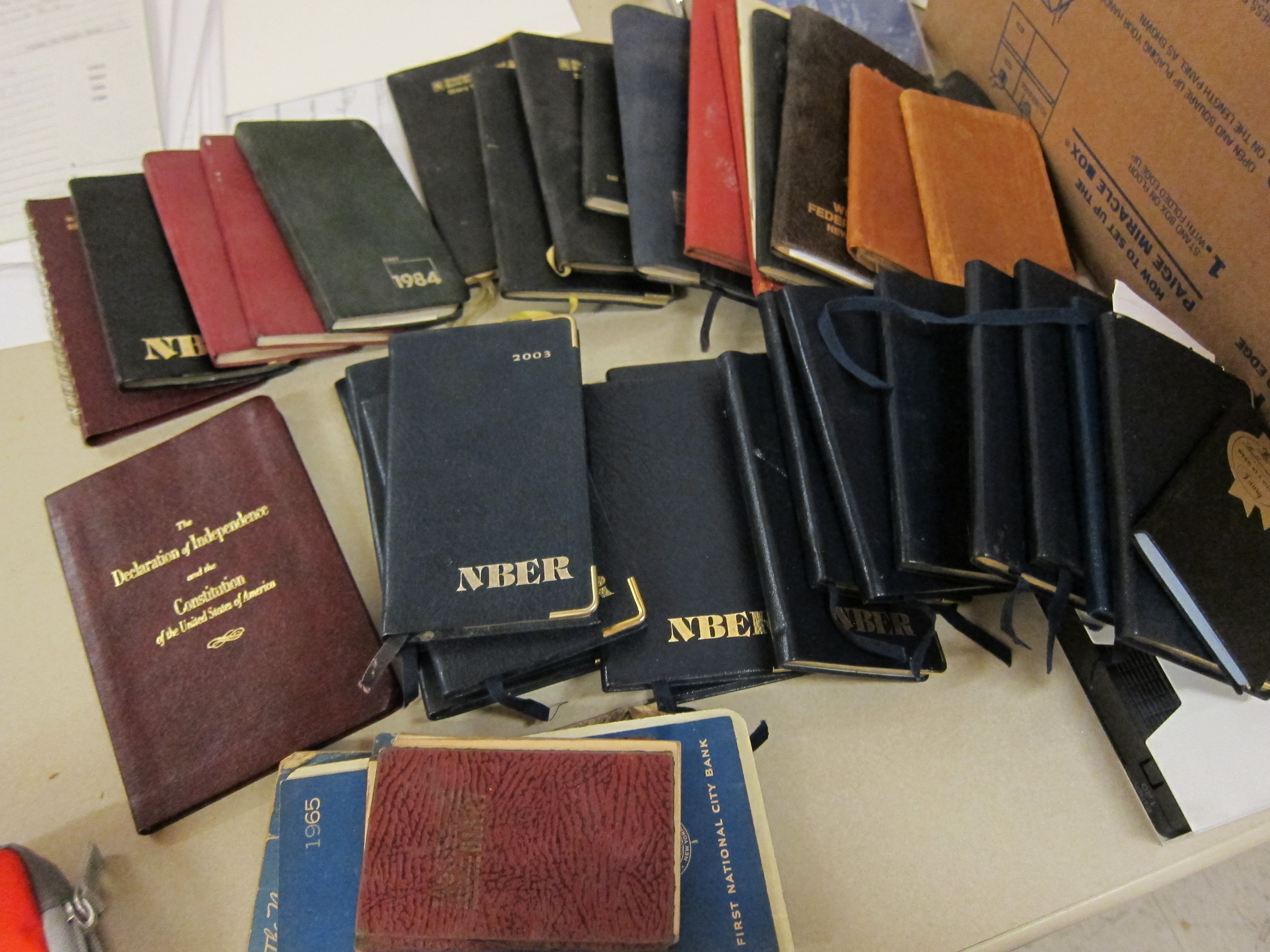
The vast majority of the Anna Schwartz Papers are all business: her research and subject files on banking, monetary policy, currency, and the Federal Reserve; Gold Commission materials, including correspondence with fellow commissioner Ron Paul; collaborations and correspondence between Schwartz and Milton Friedman; and numerous articles and lectures by Schwartz from throughout her 70-year career. One bit of material that shows a more personal side of Schwartz are her many datebooks, from the 1950s to 2012, which help document her appointments, schedule, and contacts over the course of her life. I also really enjoyed seeing material from her time at Barnard College in the 1930s. She seemed to constantly win honors there, including Phi Beta Kappa.

Dozens of datebooks from the Anna Schwartz Papers
Dozens of datebooks from the Anna Schwartz Papers.

Upon Schwartz’s death earlier this year, her New York Times obituary described her as “a research economist who wrote monumental works on American financial history in collaboration with the Nobel laureate Milton Friedman while remaining largely in his shadow.” Now, with the opening of this collection, Anna Schwartz’s contributions and scholarship are finally out of the shadows, so to say, and freely available for everyone to use.

Post contributed by Meghan Lyon, Technical Services Archivist.