Category Archives: From Our Collections

Jack L. Treynor Papers Open for Research

Post contributed by Nestor Lovera Nieto, Part-time Research Scholar for the Economists’ Papers Archive and Visiting Scholar at the Center for the History of Political Economy.

The Jack L. Treynor papers are now open for research as part of the Economists’ Papers Archive, which is a collaboration between the Rubenstein Library and the Center for the History of Political Economy. Jack Lawrence Treynor (1930-2016) was a white American economist who was born in the railroad town of Council Bluffs, Iowa. He graduated with a bachelor’s degree in mathematics from Haverford College in 1951 and a Master of Business Administration (with distinction) from Harvard Business School in 1955. Between these two degrees, he was drafted during the Korean War and served for two years with the US Army Signal Corps in New Jersey.

Treynor was one of the first to explore the capital asset pricing model (CAPM) in “Market Value, Time, and Risk” in 1961. Although part of this writing was not published until 1999, it was mimeographed and widely circulated throughout the profession by colleagues who recognized its value. In fact, some of Treynor’s colleagues speculate that had he published his work on CAPM, he might have been a Nobel Prize laureate. In 1990, William F. Sharpe was awarded the Nobel Memorial Prize in Economics for his role in developing CAPM, which he had done independently of Treynor around the same time and published in 1964.

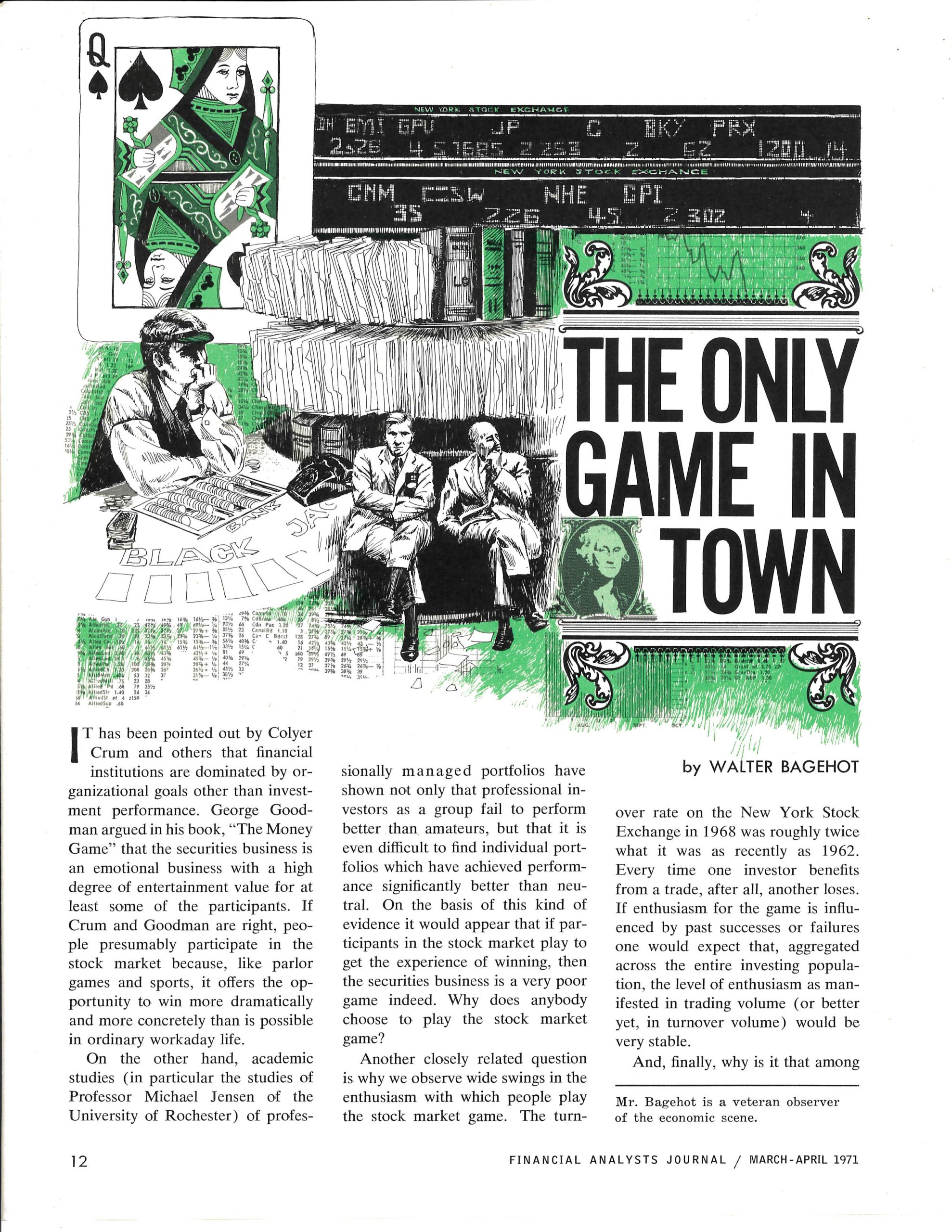
Treynor not only published under his own name but the names of two notable 19th-century economists: Walter Bagehot and Alf(red) Marshall. In fact, one of Treynor’s most cited articles, “The Only Game in Town” (1971), was written under Bagehot rather than Treynor. His motivations for using these pseudonyms and why he specifically chose these two remain a mystery yet to be unraveled.

A page from the "Financial Analysts Journal" dated March-April 1971. It features an article titled "The Only Game in Town" by Jack L. Treynor under the pen name Walter Bagehot. The page combines text, illustrations, and design elements.
First page of “The Only Game in Town” (1971)

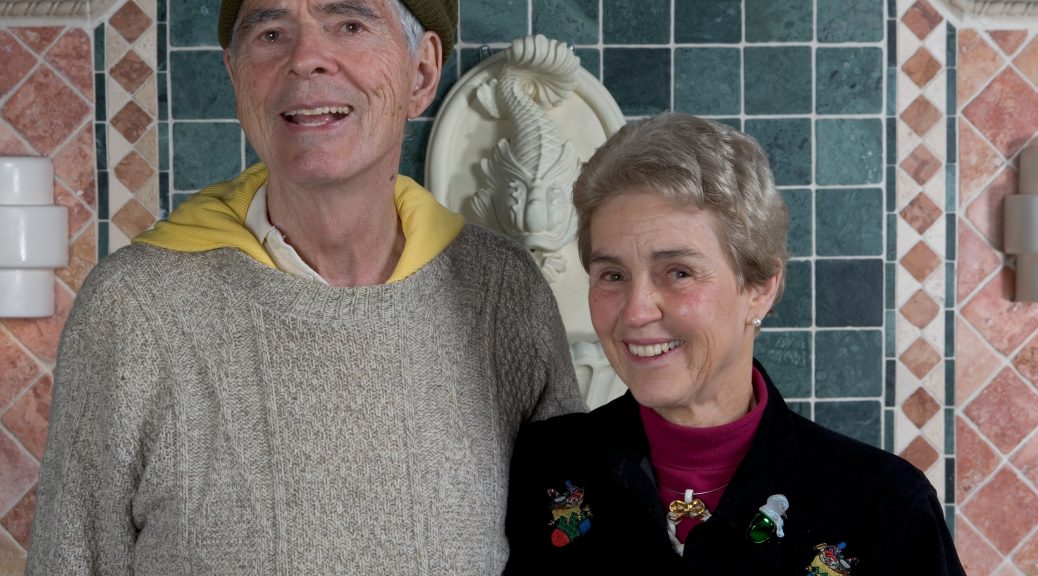
The material in this collection came from Treynor’s home, which doubled as his office for Treynor Capital Management (TCM) after it was established in 1985, and two women from his family directly supported his professional career. His wife Elizabeth “Betsy” Treynor served as TCM’s administrative assistant and played a significant role as the creator or co-creator of many records, including most of the electronic ones. Additionally, there are printouts of emails intended for Jack but addressed to Betsy, with her responding either on his behalf or in her own capacity.

An older man and woman standing in front of an exterior, tiled wall with a wall-mounted fountain.
“Betsy” and Jack Treynor outside their home in Palo Verde Estates, California.

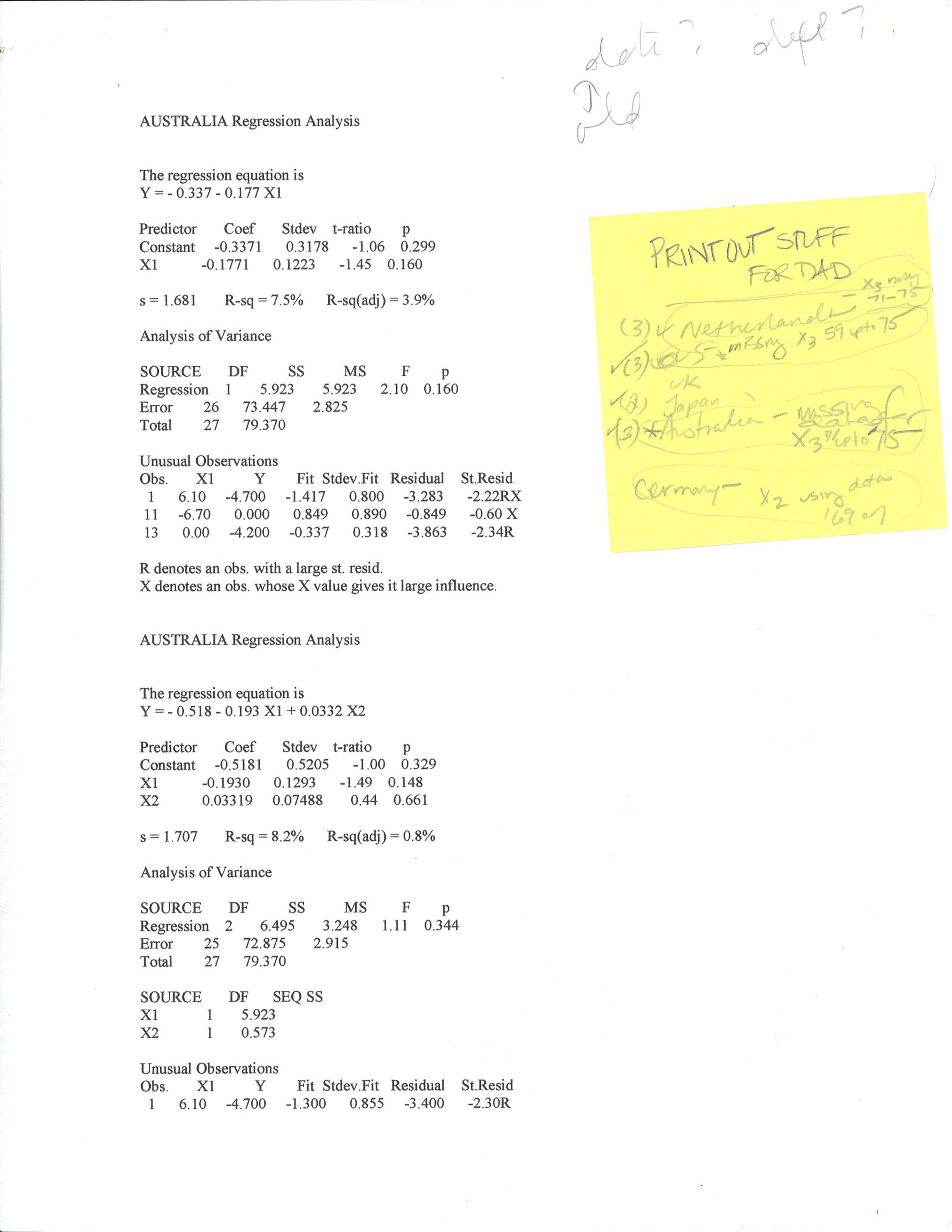
His daughter Wendy Treynor, who double-majored in economics and mathematics before pursuing a career in social psychology, annotated drafts of articles and conducted regression analysis.

This is a page that contains two sections of printed text titled "Australia Regression Analysis," each followed by statistical data and a handwritten yellow sticky note with some text. This note was written by Wendy Treynor as a reminder for her to print for her father any data or analysis possibly related to the printed sections.
Regression analysis conducted by Wendy Treynor.

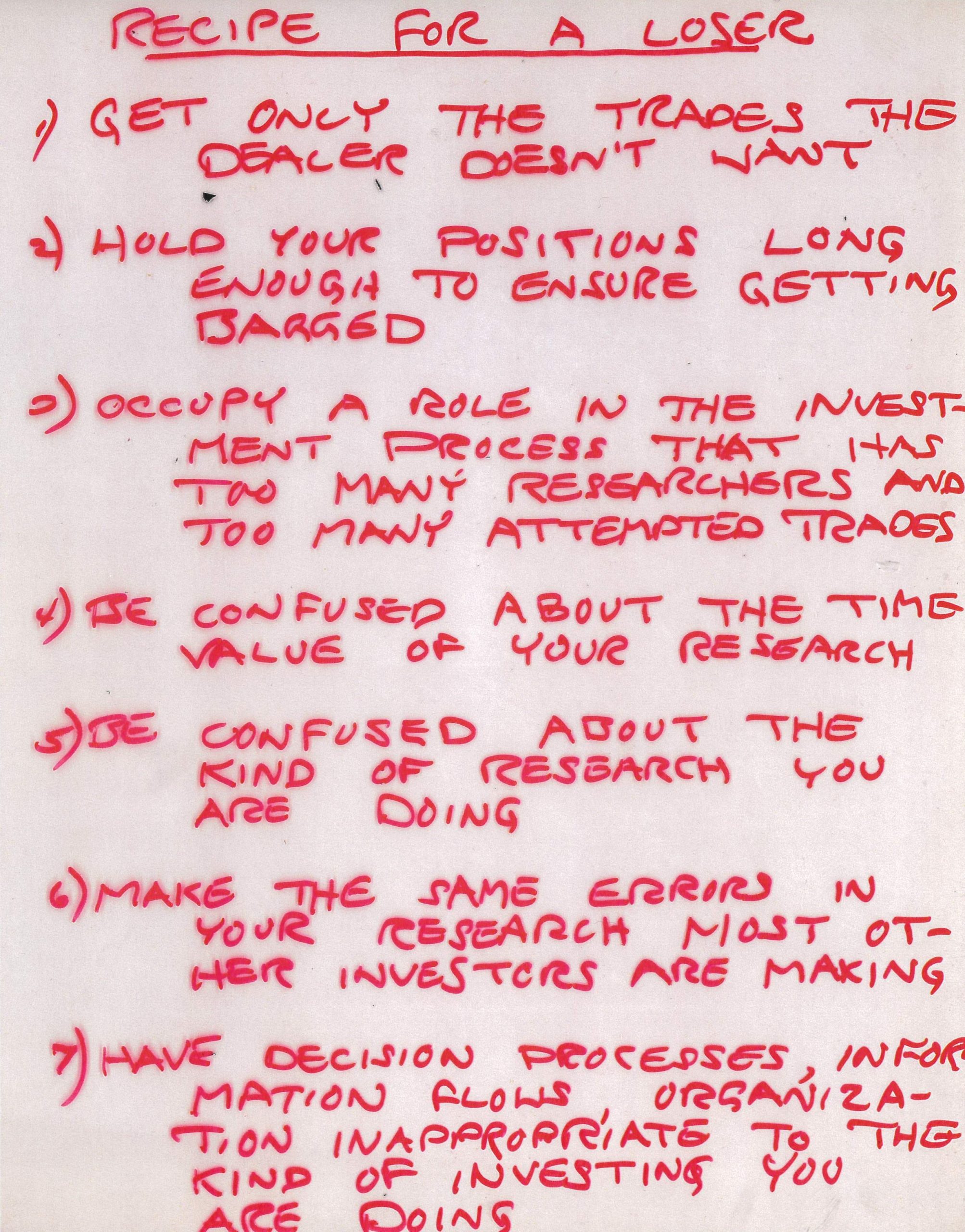
One unique aspect of this collection is the abundance of handwritten items, including over 50 letter-size notepads and hundreds of transparencies (the originals of which have been photocopied and subsequently discarded; preservation photocopies have been retained in the collection).

A handwritten list titled "Recipe for a Loser," it is a copy of a transparency written in red marker. The handwriting is legible but slightly uneven, with some words emphasized by being written in all capital letters.
“Recipe for a Loser,” written in ink on a transparency.

Unlike most other economists represented in the Economists’ Papers Archives, Treynor was not a lifetime academic, having spent only 1985 to 1989 as a visiting professor at two institutions. Instead, his day job was as a financial analyst, with his research and writing on the side.

Treynor made significant contributions to the field of financial analysis, such that his peers in professional associations recognized him as having “changed the direction of the profession.” Demonstrating his innovative spirit, Treynor also registered a patent in 2004 for a “Method for maintaining an absolute risk level for an investment portfolio.”

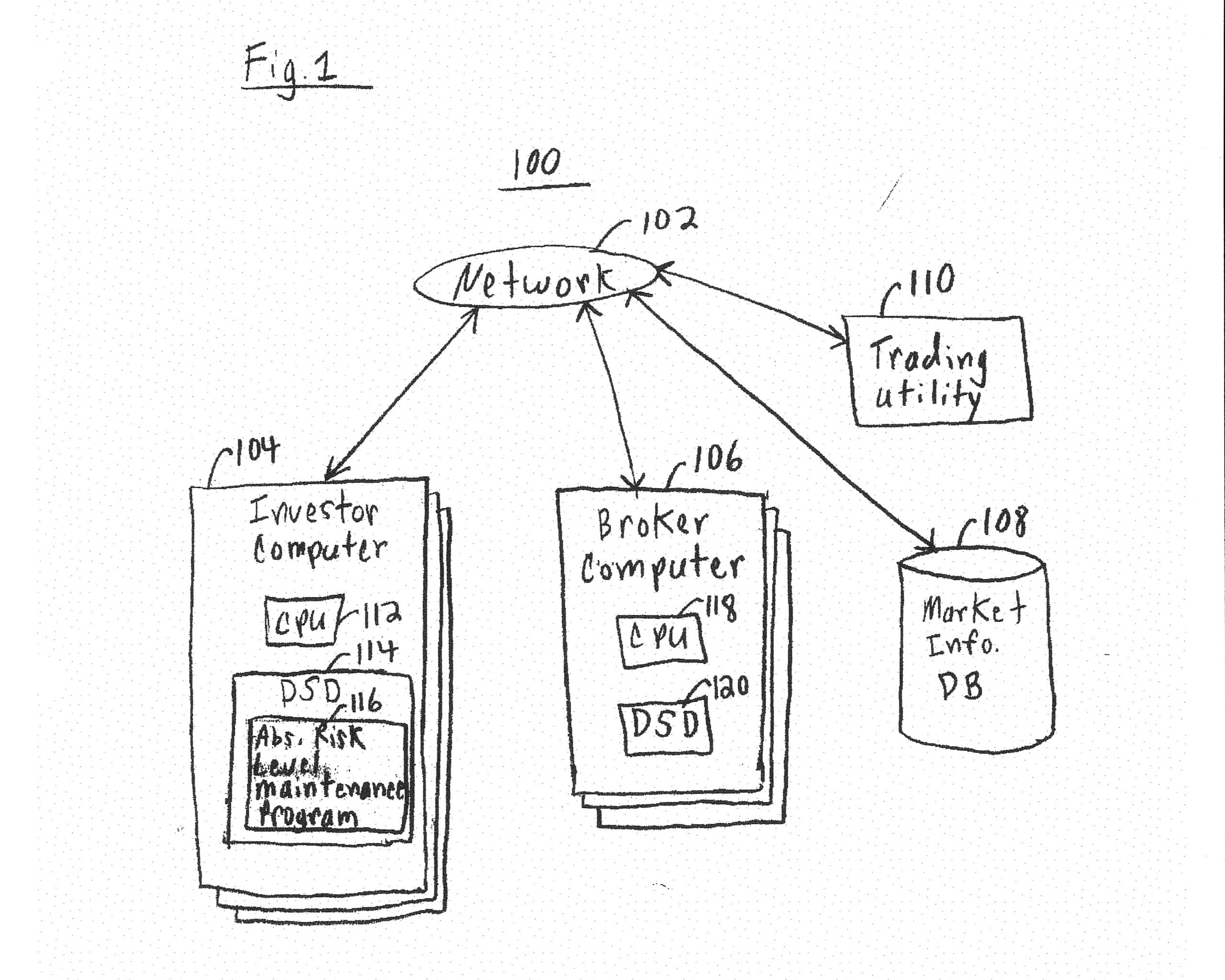
A hand-drawn diagram labeled "Fig. 1," depicting a network of interconnected elements related to trading.
Draft of a diagram for Treynor’s patent application.

Although the above diagram might leave us scratching our heads, it is undeniably cool because it is so well-drawn. Speaking of cool, Treynor was also an avid model train collector and layout builder (a nod to his hometown roots) and enjoyed writing plays in his spare time.

A detailed model train setup in Treynor's two-car garage. The scene features multiple tracks that curve and intersect, with a variety of structures and buildings placed on the layout. There are model trains, including a locomotive, positioned on the tracks. The setup includes industrial elements such as tanks and towers, and there is a bridge spanning some of the tracks. Wooden posts support the ceiling, and the overall layout is intricate and extensive, showing one of Treynor's hobbies. The lighting is provided by overhead fluorescent lights.
Intricate model train layout in Treynor’s two-car garage.

Digging through the Tapes: Exploring the Behind the Veil Collection Pt 4

Post contributed by Mattison Bond, Project Research and Outreach Associate, John Hope Franklin Research Center 

We at the John Hope Franklin Research Center are back again with another blog post to highlight some of the unique oral histories that can be found in the Behind the Veil Digital Collection. Last week’s post featured interviews from folks from Kansas, Louisiana, and Michigan. This week, we take a deeper look into the collection by focusing on the interesting items that can be found from Mississippi, New Jersey, North Carolina, and South Carolina.

You can view Part 3 of this series here: Digging through the Tapes: Exploring the Behind the Veil Collection. Pt. 3 – The Devil’s Tale (duke.edu)

Also all the oral histories that will be featured this week focus on the lives and experiences teachers!

Mississippi

When using the Mississippi location filter, you will find a total of 71 items that are listed in the collection. But using the search bar will let you into another part of the collection that is just as valuable and interesting. It would be a disservice to the researcher to not point to the Mississippi Self-Portrait file that contains a total of 42 pictures of men and women from the 1950s. Flip through the collection to see the faces of graduates, families, couples, and even a Santa Clause.

photo image of a man and woman posing in a picture
Lucinda Gulledge slides
Photo image of boy and girl with a graduation cap and gown
Lucinda Gulledge slides
Photo image of young boy posing with a Santa Clause
Lucinda Gulledge slides


The oral history that is highlighted today is accompanied with just as many interesting photos. Lucinda Gulledge, born on a farming community in 1913 in Hernando, Mississippi. Along with being a teacher assistant, Gulledge was active within the Civil Rights Movement. The first time she began to take part was when she boycotted the Liberty Cash grocery store because they would not allow Blacks within the facility.

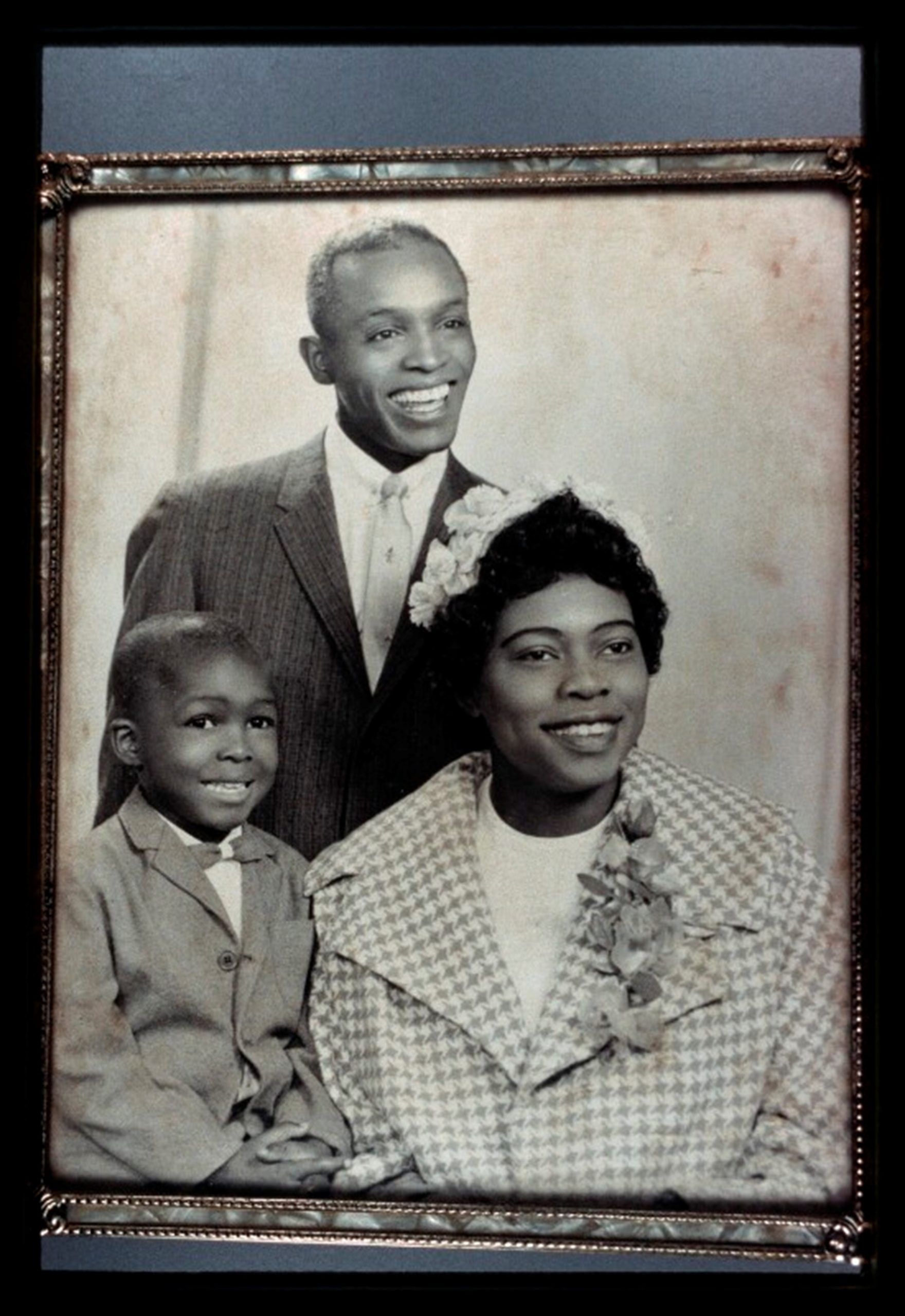
Photo image of a husband, wife and daughter, family of Lucinda Gulledge
Lucinda Gulledge slides: Family portrait, 1940s https://repository.duke.edu/dc/behindtheveil/btvst008001007

Lucinda could be described as fearless and resilient, as she boldly stated on multiple occasions that she did things other people were afraid to do. Such as driving a woman and her children to an integrated school:

Part 2 00:00“People were just plain scared. And so I don’t guess you could blame them for it. They was plain scared. And this one lady and my son and her daughter was the only two kids in my integrated that school. She wouldn’t carry her daughter over there unless I went with her, she was just plain scared. Some people just had that fear, but I never was. Never was. And so when they went from Davis to Greenwood High, I’d get in my car, I’d go over there and pick both of them up. Pick both of them up, bring them on home.”

And housing some of the white protesters that were coming down to participate in the movement.

Part 1 7:40See, I wasn’t like the rest of the Colored people, scared. “No, he ain’t coming to my house.” A lot of them didn’t let them come in their houses. I said, “They can come here.” They come here, and I ain’t never did have to trouble. They stayed as long as they want. Stayed all night. Yeah, they stayed all night. Sure did. When I didn’t cook for them, they would get up and go in there, and fix something their self. Even I had some white ladies to come. Sure did. It was rough, but we made it through.”

Like many folks Gulledge participated in the movement by attending boycotts and marches, even attending a march to see Martin Luther King Jr. She would provide a place to stay to local and sometimes well know civil rights activist like Marian Evelyn Wright, children’s rights activist. She would work with organizations like SNCC and SCLC and help organize voter registration.

You can listen to Lucinda Gulledge here: Lucinda Gulledge interview recording, 1995 August 01 / Behind the Veil / Duke Digital Repository

New Jersey

New Jersey is another one of the smaller location filters within the collection. There is only one oral history within this part of the collection and it belongs to Dolores Bradley, who is actually a North Carolina native from Northampton County.

From Bradley’s interview, researchers gain insight into how the civil rights movement impacted her hometown in rural North Carolina, where she attended Northampton County Training School. She recalls that one of their early fights was for transportation for Black children to attend school. Her father, a principal, and community members organized the NAACP, successfully obtaining buses for Black students and a gym for the school.

Part 1, 12:07 “There weren’t any Black buses originally, I don’t think, when I first started to school, because I can remember my older cousin who was almost 10 years older than me, and his friends. He would wait for them, and they came from a little town, it’s called Pleasant Hill, which was two miles beyond where we lived. They had to walk up almost five miles into town. Then, I can remember a man named Mr. Buffalo, and my dad, Mr. Earl, who was the principal at that time. I guess I must have been between eight and 10 or 11 years old, because I vividly remember when they fought to get the school buses for the Black students to ride. They had meetings and what have you, and basically, that was the same group of people that organized the NAACP in our county”

When Bradley moved to New Jersey, she was originally under the impression that things would be better. She admits to feeling freer in the South than she did up north.

Part 2, 3:41”…I had heard the myth of the North and had bought it. And then, when I moved there, after I was grown and out of college or what have you, I realized that I was no more free than I was in the South. In fact, I think I felt freer, because I was younger and maybe more—Again, I was in that kind of shelter thing in the South. So in some ways, I felt freer than I did in New Jersey.”

She provides listeners with an intimate view of her life as she tries to pursue education, travels to Norfolk, VA, and enjoys holiday celebrations with her family.

Listen to the interview of Dolores Bradley here: Dolores Bradley interview recording, 1995 July 23 / Behind the Veil / Duke Digital Repository

North Carolina

When opening the location filter, you will notice that the first state listed, indicating that it is the largest part of the collection comes from North Carolina. With a total 338 items, the materials within the North Carolina collection span audiocassettes, oral histories, and pictures. Not listed under the location filter are two videos from the Duke University Center for documentary Studies [https://documentarystudies.duke.edu/] that features teachers from Wilmington NC.

These videos detail black education in New Hanover County, giving viewers information about the history of education within the county and the thoughts of different educators about their jobs. For example, Educator Lavinia E. Sneed believed that

 Video 2, 7:17 “teaching gave me good full life, and it was because of my opportunity to help develop my students that I feel like my life has been fulfilled. I’m praising the pression of teaching, because it has been the best thing that I have known.

Some would speak on their experiences dealing with desegregation, attending programs to learn about the problems of desegregation sponsored by UNC Chapel Hill and pushing for it within their own schools. Bertha Boykin Todd, a media specialist spoke about trying to purchase books and materials that taught about desegregation.

Video 2, 1:41:50 “I was reprimanded several times for ordering too many books on the desegregation and integration topics. Of course, that didn’t stymie us too much. We continued to provide for our students what we thought was best.”

While there are many teachers to be found under the North Carolina location filter, these videos allow viewers to connect a face to the voice, and to experience first hand the passion and resilience of educators as they strive to make a difference during Jim Crow.

Both videos can be found at these links:

Wilmington, NC Teachers’ Video – 1, 1990-1995 / Behind the Veil / Duke Digital Repository

Wilmington, NC Teachers’ Video – 2, 1990-1995 / Behind the Veil / Duke Digital Repository

South Carolina

There are a total of 123 items within the collection that can be found under the South Carolina location filter. Fittingly, there were more educators interviewed within this part of the collection and thus we will end this blog post with highlighting educator Lula Homes.

Photo image of four generations of family members, one standing, three siting in the front row
Earnestine Atkins, Lula Holmes, and Louise Nesbit slides: Lula Holmes with four generations of women (Lula Holmes in standing, with her grandmother, mother, and daughter present), 1930s-1992

Throughout Holmes recollections, the oral history provides a vivid picture of the what it was like attending the historic Penn School, located on Saint Helena Island. She speaks about the classes that were offered and which ones especially piqued her interest.

Part 2, 1:17 “Let’s see. English, literature, math, biology, chemistry. I’m trying to think now. And then, we had the industrial. We had Home ec, sewing…My favorite class would be chemistry. I like history. Ancient history or just plain history.”

There was a clear difference in the what was taught between the boys and girls within the school. Regardless, the Penn school provided opportunities for the children to learn skills that would be helpful to not only them, but the surrounding community. She recalls participating in what was called the “better home day” where,

Part 2, 21:08 “the home ec class would take a building in the community that was in disrepair and they would use it as a project. And the girls, the boys would do the woodwork, put in new interiors…the girls would go and we’d make draperies, we’d make the— Even if the bed was an old bed, either we would find somebody who would give a bed. Some of the stores or some White family would donate a bed or some Black family who had an extra bed or an extra table or an extra, not lamp. Well, oil, kerosene lamp then. And the boys would make, if they had a fireplace, they’d make [indistinct 00:23:06] iron, and so that it would be nice looking. And anything in the house that needed repairs was done. And the boys would take old furniture and refinish it. And then we would have a big day, a celebration where the public could go in and out and see what can be done with little or no money. And that involved both the boys and girls in our industrial work. They saw some of the things that we learned at Penn in our classes. That was a big day.”

While there are no photos directly linked to the oral history, searching for “Lula Holmes” on the webpage provides access to photos of Penn students and campus buildings from another part of the collection.

Photo image of a house with the words Praise House written above the doorway
St. Helena Island, South Carolina, Penn School and Penn Center: Prints https://repository.duke.edu/dc/behindtheveil/btvst035019
Group of young women with vegetable sign
Earnestine Atkins, Lula Holmes, and Louise Nesbit slides: Girls with vegetable sign, Farmer Fair, Penn School, St. Helena Island, S.C., 1939 https://repository.duke.edu/dc/behindtheveil/btvst009001001


You can listen to the oral history of Lula Homes Here: Lula Holmes interview recording, 1994 August 10 / Behind the Veil / Duke Digital Repository

Digging through the Tapes: Exploring the Behind the Veil Collection. Pt. 3

Post contributed by Mattison Bond, Project Research and Outreach Associate, John Hope Franklin Research Center 

Highlighting Oral Histories by State Part 3

We at the John Hope Franklin Research Center are back again with another blog post to highlight some of the unique oral histories that can be found in the Behind the Veil Digital Collection. Last week’s post featured interviews from folks from Georgia, Illinois, Kentucky. This week, we take a deeper look into the collection by focusing on the interesting items that can be found from Kansas, Louisiana, Michigan.

You can view Part 2 of this series here: Digging through the Tapes: Exploring the Behind the Veil Collection Pt. 2 – The Devil’s Tale (duke.edu)

Enjoy exploring!!

Kansas

There is only one oral history that falls under the Kansas location tag. This oral history belongs to Ulysses Marshall, factory worker and sharecropper. Marshall was born and raised in St. Louis Missouri until he turned thirteen when his family moved southward to Fargo, Arkansas. When asked about his experience in Fargo, Marshall simply states, “It was bad.” This same sentiment would be repeated throughout the oral history as Marshall recalls his experience living within the South during Jim Crow.

When recalling his first experience with racism:

 Part 1, 14:23 “I was pointing at this here White man. It was something I was pointing to, because I was trying to show my mother and father about it, and my daddy, he knows that could be an offense to point at the White man. That was a bad thing, because he may even think you was talking or making fun of him. He said, “Don’t do that. Don’t never do that. Don’t point at that man,” or something like that. “You could get us all in trouble.” It was just that bad.”

Or when describing police brutality: “Brutalities were bad. Bad. Real bad”

And even when he was recalling his experience as a Navy man:

Part 1, 32:17 “Well, yeah, they would about the prejudices, the hatred, and stuff like that. And this is one reason I couldn’t make a career out of it. Some of them made a career out of it. I said it wasn’t much freedom back here, but it wasn’t no freedom at all, back there, because to me, it was just you’re confined in a prison or something like that. It was just completely, totally discrimination, during that time. So that’s why I got out, and I could never see—well, they tell me the Army was a little better, but it was bad, because my brother, he retired from the Army and he was telling me some of the experiences that he went through, something like that. But they was bad, real bad.”

Marshall would end up in Kansas for the same reason that his father would leave St. Louis, Missouri, in search for work. After a long search for work in California with no success, Marshall would find work at a steel mill in Gary, Indiana. He would then be laid off that would lead to him finding work in Kansas at an airplane factory, where he would retire from.

The oral history of Ulysses Marshall may be bleak to most that take the time to listen to it. His life, filled with struggle and constant racism since moving South, is a reflection and example of the horrors that Jim Crow inflicted on the lives of everyday African Americans. But, as with many of the accounts within the collection, Marshall is still able to leave listeners with true and encouraging words. Interviewer Paul Ortiz would ask Marshall, what was it that “kept [him] going and striving through all the difficult” moments. Marshall, inspired by President Floyd Brown, founder of the Fargo Agricultural School would respond:

Part 2, 9:02 “I got a lot of inspiration from President Brown. Like he said, like his motto used, “work will win,” and to me, I’m a stronger believer in that. I think if a person wants something bad enough and go ahead to work and pursue it, I think he can accomplish. I think a man could reach about any goal that he strive for if he go—you got to put something into it because nothing going to come there and fall in your lap. I mean, if somebody think that, they just fooling theyself. So I kind of like that motto, “work will win.

 You can listen to the oral history of Ulysses Marshall here: Ulysses Marshall interview recording, 1995 July 15 / Behind the Veil / Duke Digital Repository

Louisiana

The Louisiana location filter is the second largest in the collection, with a total of 138 items. When looking for a unique story in this part of the collection, the easiest option would be choosing the oral history of the only cytologist. Michael Gourrier was born and raised in New Orleans. He moved to Columbus, Ohio in 1962 to go to graduate school and then to Indianapolis. It was not until 1969 that he moved to Texas to work as a laboratory supervisor for the United States Public Health Service.

Interestingly enough, listeners do not learn this information, or much information about this particular occupation until closer to the end of the interview. Gourrier’s oral history focuses more on the history and contributions of African Americans to music, particularly Jazz.  His early exposure to all types of music would set the tone and theme of the oral history as one of the first questions he answers is how Jim Crow shaped his life, and the music scene of New Orleans.

Part 1, 8:56New Orleans was a segregated society to an extent. It still is today. But from my perspective, music is a language that transcends all races, ethnic backgrounds and laws, whether legal or illegal…. Well, the other areas of activity around the city as far as the housing and the general accommodations and all, they might not have been able to live up to that particular adage. But as far as music is concerned, I think that it is definitely one of that you could say was really separate but equal, if not better.”

Within the interview, Gourrier provides listeners with a comprehensive history of race relations both outside and inside the music scene of New Orleans. While he believes that “Music has no color. I mean, it’s not black, it’s not white, it’s not red, it’s not green,” he acknowledges that Jim Crow laws significantly influenced the development of musicians, particularly in the South.

Part 1 31:51 “… the backwardness of the South, they were always behind and they were just slow in evolving. And then because of the segregation, Blacks were extra slow in being exposed and afforded the opportunity to be involved in this particular aspect. So I think this was one of the big factors as far as why everything here was, and shall we say, a later stage of development than it were other places. Because I mean, if you go back and you look at the period called the Harlem Renaissance. What were we doing down here? I guess you could say we were just one step past the menstrual shows during that particular period down here”

Gourrier’s passion for educating and sharing his love for Jazz would grow throughout time. He even mentions that after he retires, he hopes to become a jazz historian. Still alive today, he is better known as Mr. Jazz, radio host of WRIR-FM RDIO in Richmond, Virginia.

Image of Michael Gourrier sitting in front a piano with shelves of CDs in the background
Picture of Michael Gourrier, source: “Word and Image: Michael J. “Mr. Jazz” Gourrier Jazz Director at WRIR- Style Weeklyhttps://www.styleweekly.com/word-image-michael-j-mr-jazz-gourrier-jazz-director-at-wrir/

You can learn more about Michael Gourrier here: Michael Gourrier interview recording, 1994 August 04 / Behind the Veil / Duke Digital Repository

Michigan

The Michigan location filter has only two oral histories. Both interviews were conducted in two different cities and while each is unique, one stands out for several reasons. Alex Byrd, the interviewer of both oral histories had the pleasure of interviewing his own father, Sanford Byrd!

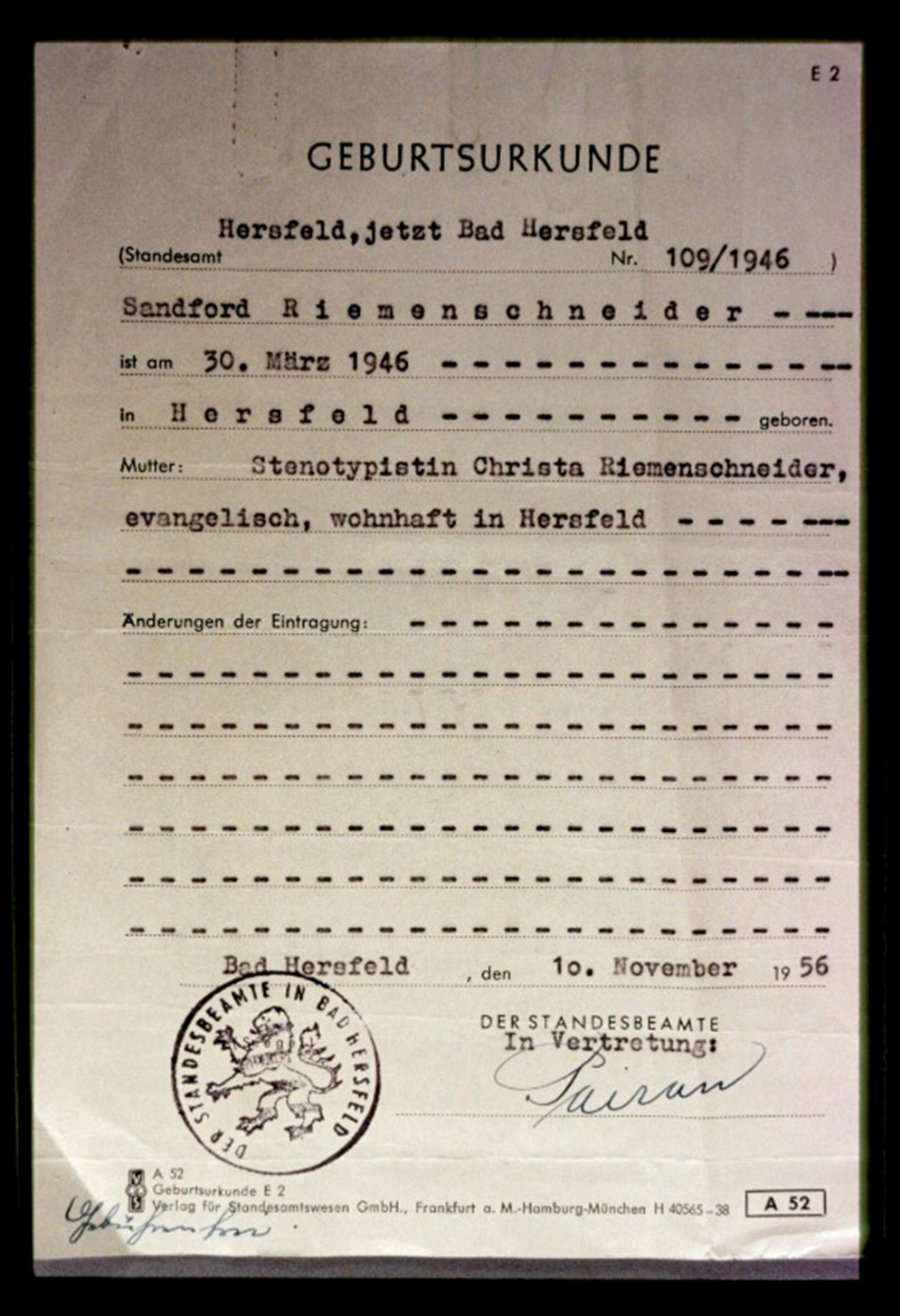
Sanford Byrd’s earliest memories are within an orphanage in Essen and Bad-Herzfeld, Germany. He did not know his biological parents and he also mentions that Sanford is not his actual name. He also is unsure whether the date listed on his birth certificate is correct or not.

Photo image of a birth certificate document for Sanford Byrd, 1946
Sanford Riemenschneider’s (Byrd) birth certificate, 1946 March 30 Alex Byrd slides: Sanford Riemenschneider’s (Byrd) birth certificate, 1946 March 30 / Behind the Veil / Duke Digital Repository

Part 1, 8:58 “But my name in Germany was Franz. That’s F-R-A-N-Z, which I think the English interpretation is Frank. Franz Xavier, which is a Saint’s name since I was Catholic. Well, they told me I was Catholic. I was too young to have any religious beliefs. Xavier and Maria, which really in Germany wasn’t unusual for a boy to have a girl’s name, especially if was a saint, a patron saint. And then Riemschneider. Okay. Riemschneider is spelled R-I-E-M-S-C-H-N-E-I-N-D-E-R. Riemschneider, which literally translated means belt tailor. Riem being a belt, and Schneider is a tailor”

Throughout the oral history Sanford recalls his time within the orphanage and how being black in Germany was much different than being black within the United States. Broken into three parts, listeners are able to travel with Sanford across the states, learn and listen to the German language, and listen to the light banter between father and son as he recalls his personal history.

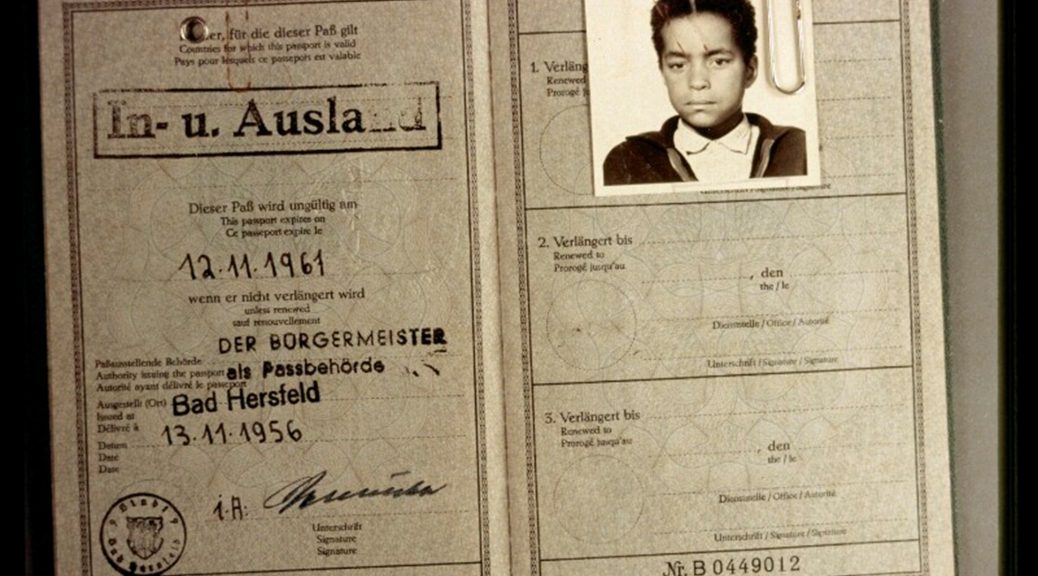
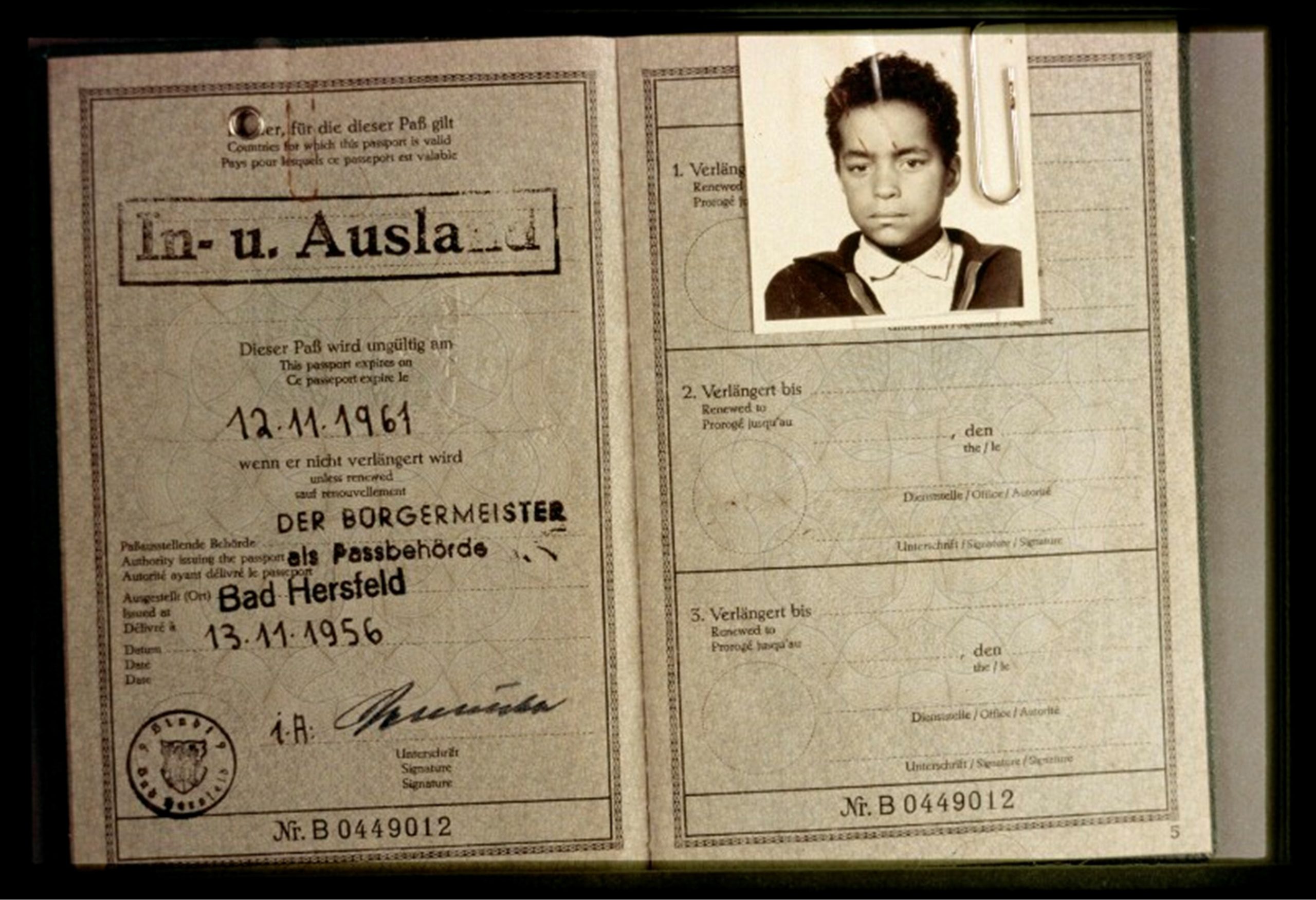
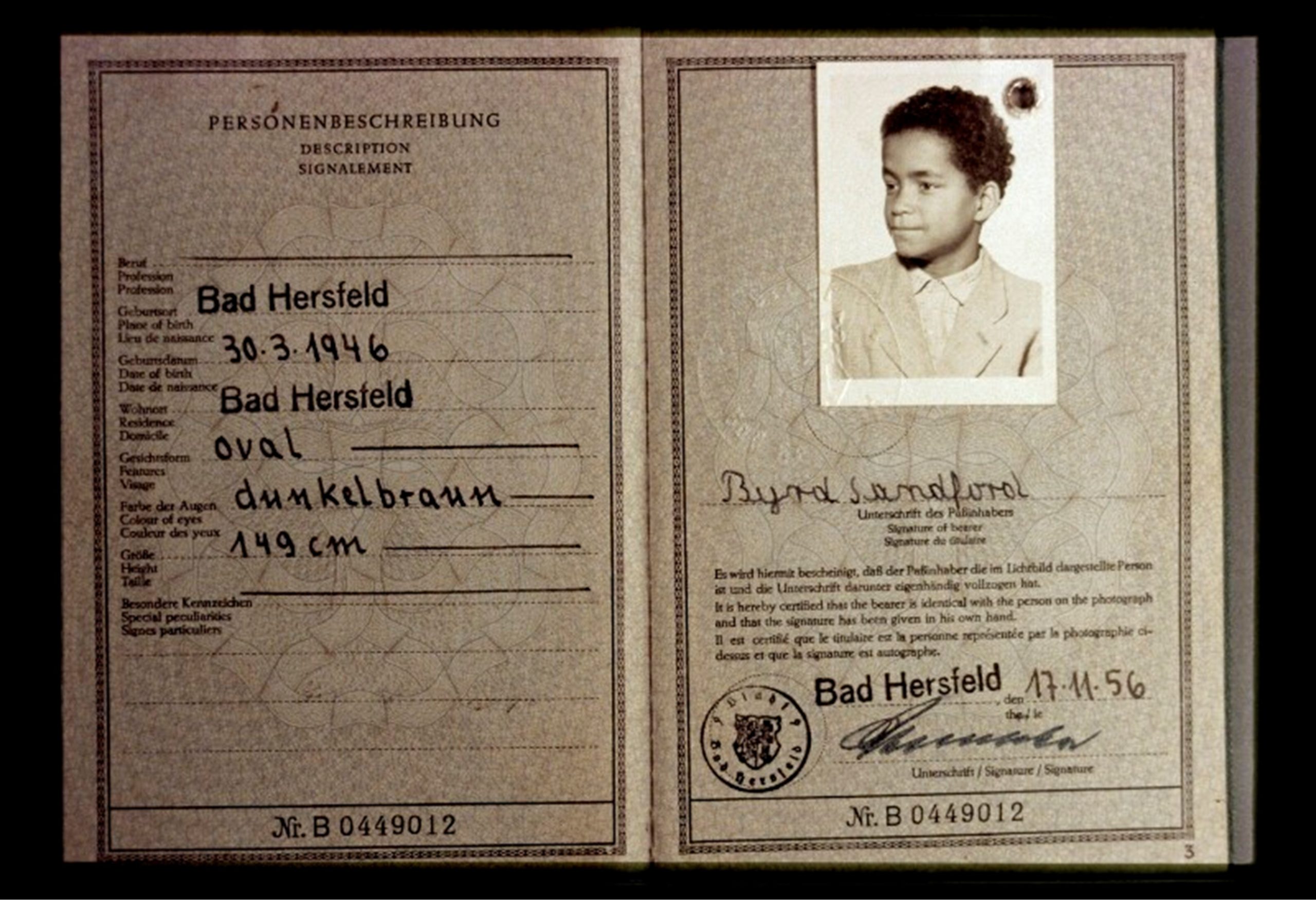
By searching for Sanford’s interview in the search bar at the top of the page, researchers and listeners are also able to come across Sanford’s German adoption files and pictures of young Sanford from his passport.

Photo image of a passport document for Sanford Byrd
Inside of Sanford Byrd’s passport, 1956 Alex Byrd slides: Inside of Sanford Byrd’s passport, 1956 / Behind the Veil / Duke Digital Repository


Photo image of passport document with photo of Sanford Byrd
Inside of Sanford Byrd’s passport, 1956 Alex Byrd slides: Inside of Sanford Byrd’s passport, 1956 / Behind the Veil / Duke Digital Repository


Franklin Research Center Acquires the Celeste and Reggie Hodges Photograph Collection

Post submitted by John B. Gartrell, Director John Hope Franklin Research Center

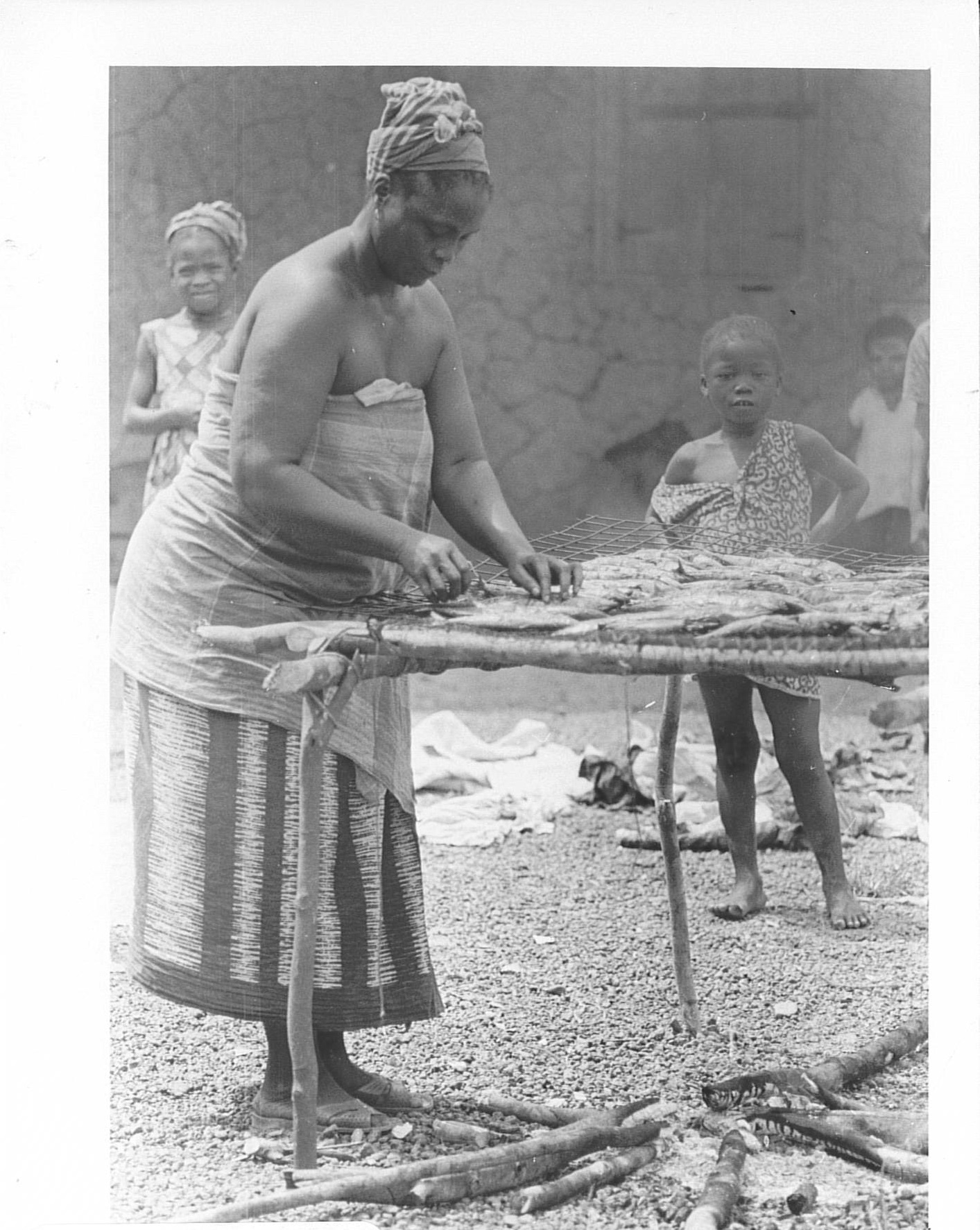
Ceremonial maskThe John Hope Franklin Research Center is happy to share the acquisition of the Celeste and Reggie Hodges Photograph Collection. The collection documents nearly two decades of their life in West Africa, after they joined the Peace Corps in the late 1960s. While there, the Hodges’ worked as teachers and for international agencies but spent years applying their love of amateur photography to document the everyday life of their neighbors and friends with a unique look at the local customs from fishing, basket weaving, husbandry, religious and rites of passage ceremonies. Over that same time, they were also gifted a number of masks, instruments and other artifacts that have been donated to a number of museums over the last few years (https://nasher.duke.edu/stories/a-personal-gift-2/). Both Celeste and Reggie worked behind the camera and developed their film in a makeshift darkroom when they had access to electricity and water in their village. The photographs display African life before the devastation of wars and Ebola in the 1990s affected the people and places where the Hodges’ lived.  The materials now in the Franklin Research Center include their photo negatives, original prints and digital scans, along with printed materials including artwork done by their students. This body of materials provides an intimate, firsthand perspective of this period and people. The collection will be made available once processing is completed.

Woman cleaning fish

Interview with 2023 Archive of Documentary Arts Collection Award Winner – Gabriella Mykal

Post contributed by Shiraz Ahmed, curatorial intern for the Archive of Documentary Arts

Shiraz Ahmed, curatorial intern for the Archive of Documentary Arts interviews filmmaker Gabriella Mykal via email about her film “Rape Play”, one of the winners of the 2023 Archive of Documentary Arts Collection Awards. Since 2015, the awards have recognized excellence in documentary film, photography, and audio, with cash prizes and the chance to have a body of work archivally preserved and exhibited at Duke.

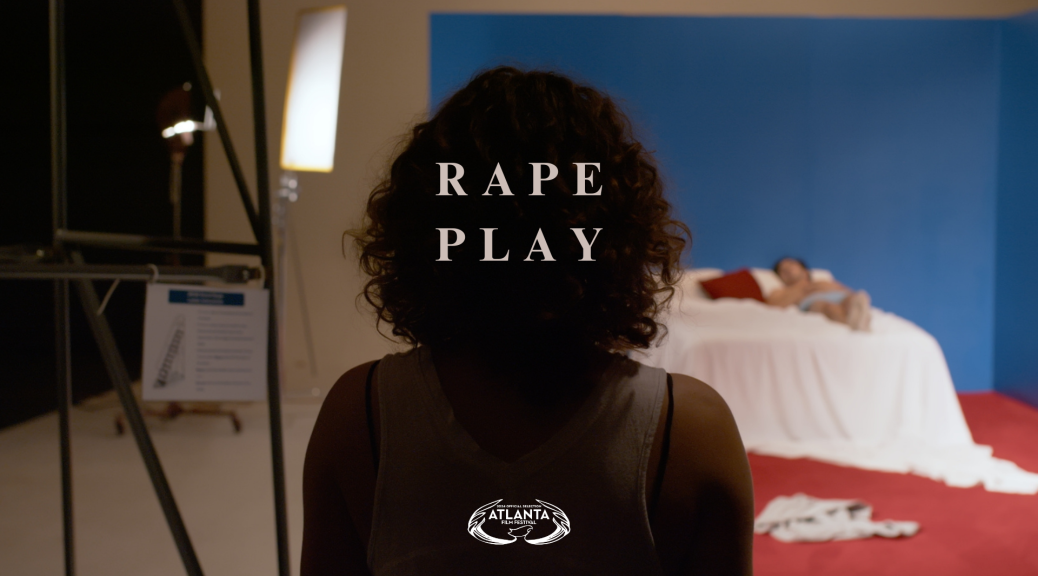
“Rape Play” (2023) by Gabriella Mykal utilizes experimental techniques to explore how a genre of online erotica has troubling ramifications for young women. At times surreal and eyepopping with its colorful aesthetic, the film addresses this difficult topic with humor and a playfulness reflective of a new generation of filmmakers.

The other winners for 2023 include:

Resita Cox | Film| “Freedom Hill” navigates the environmental racism washing away a North Carolina town of under 2,000 residents.

David Fisher | Film | “The Round Number” explores why and how the number six million was written into the canon, and what its meaning can teach us about the Holocaust.

Holly Lynton | Photo | “Meeting Tonight” portrays a historical worshiping community and its evolving traditions in contemporary rural South Carolina.

This Q&A has been lightly edited.


Shiraz Ahmed: What was the starting point for “Rape Play” when you realize this teenage pastime was a larger phenomenon worth of examination?

Gabriella Mykal: “Rape Play” had a false start in 2020 and it took me about a year to get on the right track. The first try was supposed to be a video installation where the visuals involved endurance performances that represented the experience of healing as durational and intentional and efforted. The audio for the installation was going to be interviews with women around me, trusted friends, talking about past experiences of sexual dysfunction and violence.

It just wasn’t working because the approach was not sustainable. The subject matter was too intense, the research too traumatizing. Initially, I was only working around the premise of sexualizing violence. Trends in porn. Visceral assault stories. There was no humor, no lightness to the work. And I realized the form the work was taking was missing the thing I found most interesting about the interviews I was conducting: the tone. These conversations were hyper casual, filled with laughter and speaking in shorthand. I realized the project needed to speak that language, and I needed a point of entry that allowed me enough distance from the subject matter to make my observations without being overwhelmed.

Fanfiction and erotica kept coming back up. Every time we were searching for an analogy, looking for a way to contextualize an abusive ex-boyfriend or a confusing hook up, we would start by saying, “Do you remember reading this fic?” “It’s like this trope.” And we would laugh at the references, and then we would say, “Yes, exactly, I know exactly what you mean.” It became apparent that we all seemed to be moderating and understanding our most intimate experiences through these niche media bubbles. The film needed to look through the same lens.


The film’s first scene involves creative use of dramatization and colorful set design. Why use this particular, playful approach for a topic that gets gradually more serious as the film goes on?

I wanted to intro the audience immediately to the text, because if you’ve never read erotica, fanfiction in particular, the film is sort of meaningless to you. The opening aims to immerse the viewer in some of this context, and then disrupt that immersion to take the viewer into a new imagination, this fictitious interview based on these almost ridiculously light conversations about something so heavy.

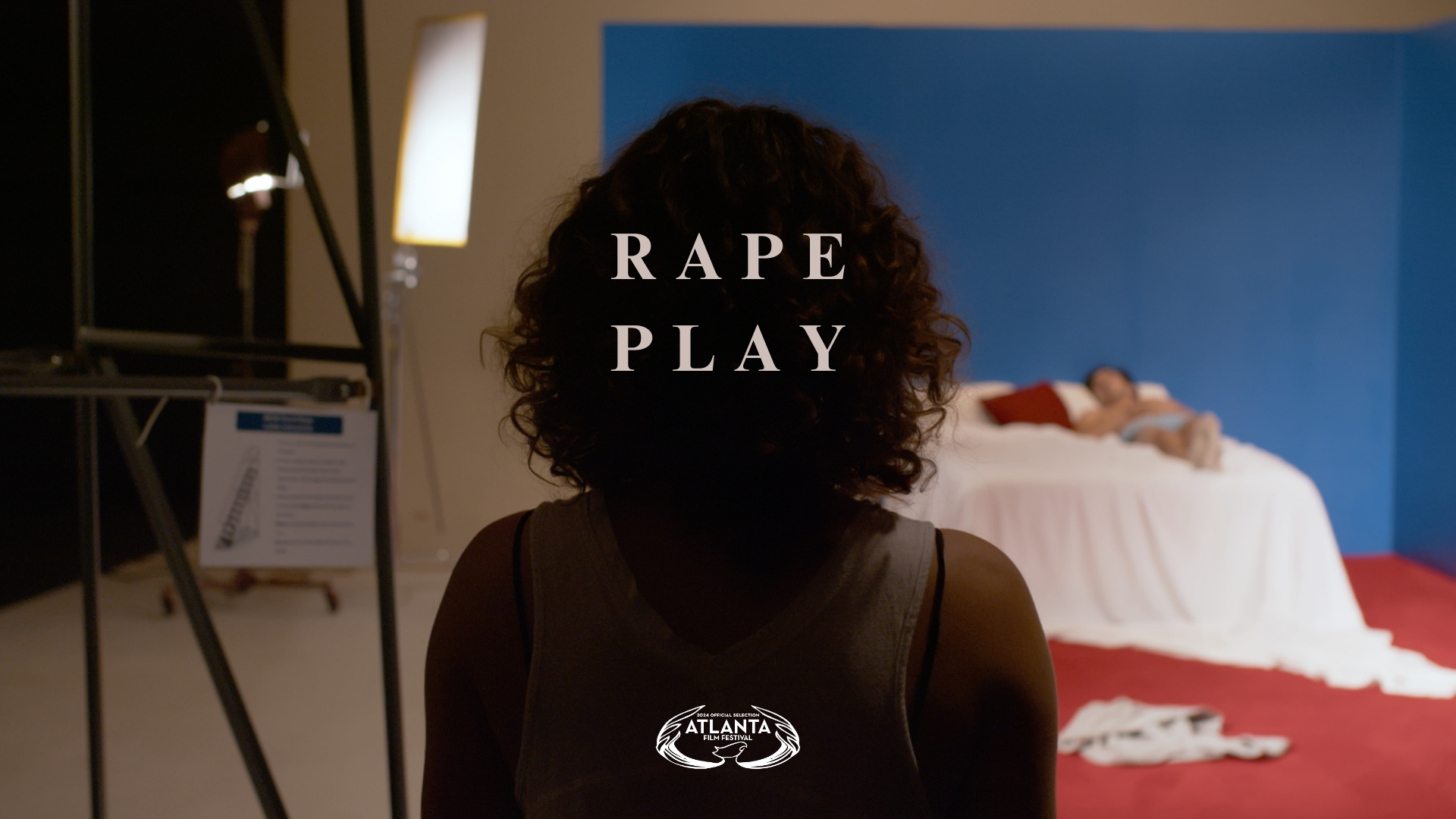
Visually, I can’t claim having any kind of formal reason for the playful design choices. I just had this image in my mind. Blue walls. Red carpet. A bedroom that’s sparse and strange on a set. I wanted the set design to speak to the imagination and the strangeness that is inherent in written erotica, which is to say, for all the details you might be filling in while reading, there’s also a great deal of blanks left. The blue room is an imagined liminal space of desire and trauma.


You interview a number of women who have experience with this genre of erotica, including the actress in your staged scene. How did you approach these individuals and what were you hoping they would gain from this documentary experience?

The process of making this film was a real community effort. The pitch was, “I’m making this film about fan fiction and how it changed my brain chemistry.” I was lucky to find a community of women and queer people who resonated immediately with the subject and wanted to be a part of it.

Everyone I interviewed was not only willing but excited to be open and have these conversations that, when had off camera, are incredibly constructive and healing. Of course, it’s very daunting to have them on camera, so we discussed what we were comfortable with and not comfortable with a great deal before.

What I hoped people would gain by participating was that constructive healing experience that I have when having these conversations, which is to truly relate and level with another person that is coming from a similar place. I think the tone and content of the interviews in the film comes from the fact that you’re watching conversations between dear friends who have a great deal of trust in each other. Putting that on camera, infusing the film with that energy was paramount, that magical bedroom culture that’s created and cultivated by women of all ages constantly. A radical, self-effacing authenticity. A fearless self-exposure.
You often employ clever cinematic techniques that mislead the viewer as to what direction the film is headed in. How do these techniques relate to the overall topic, questions and message you want the film to deliver on?

The thesis of the film is that we have a very complicated relationship to these materials the same way that we have a very complicated relationship to our actual sexual experiences, positive and negative, so the film takes on that complicated relationship. Sometimes it’s highly critical and sometimes it’s celebratory. Oftentimes it’s somewhere in between, or it’s doing both at the same time.

I wanted the film to follow a lineage of meta-modern hybrid docs where the complicated nature of the subject matter informs the film’s ability to “level with you” or to pretend like it’s leveling with you. I’m personally not very interested in documentaries that ever claim to be fully truth telling. I think that docs that use some of these prototypical, historically anthropological formal techniques to allow them credibility are sort of short cutting having to really convince you of anything.

And I think, best case scenario, it’s just the most direct way to go about making nonfiction media, but worst-case scenario, it’s in very bad faith. I wanted “Rape Play” to take a form wherein the content is always in good faith, but the presentation is playful. So, the film is going to, in one moment, make you think that it’s scripted, then make you think that it’s not. Then it’s clearly scripted, but it feels very honest. Then, it’s obviously not scripted, but it’s also highly edited. And then of course there’s the ending sequence in which I talk about a personal experience of sexual violence and the sequence is both deliberate and planned and off-the-cuff.

The film runs on an engine in which the same questions we interrogate ourselves and each other with surrounding sexual violence (is this true, is this valid, is she exaggerating, is she withholding and if so, what?) are reveled in, but deliberately not answered in a way you would expect.


Your choices of interview settings – mostly women’s bedrooms, including your own – play a particular role in this film. What were you hoping for these settings to evoke for the subject and the viewer?

The intuitive choice suddenly became, “I should be talking to these girls in their rooms.” Of course, there are two exceptions. Victoria’s interview, which is outside in the same backyard as her scene, and Avalon, who is interviewed in the blue room set from the opening of the film.

The formal argument is that the film, specifically the essay portion that sets up a great deal of the context for these online subcultures that we’re talking about, is deeply invested in discourse and research surrounding bedroom culture amongst teenage girls and how you can effectively call the teenage girl bedroom a hub of cultural production. Across the world, in their respective private domains, these girls are creating assets that they then put into this egalitarian free market for each other in a share economy. I was one of those girls that was sitting in my bedroom online, producing and receiving for years. In a way, I’m still one of those girls; this film was made largely by me, sitting alone, writing and editing in my bedroom. The film hops between intimate spaces, imagined and real, at the rapid pace and leisure that one might experience being online.

Also, the nature of these conversations was extremely intimate, and I wanted to host them in the spaces that people felt the most comfortable. I wanted the viewer to feel like they were really sitting in the room with us having these conversations, like you’re lying in a friend’s bed half asleep, listening to two friends giggling late into the night about the worst things that have ever happened to them.


The denouement of this experimental essay film has you revealing your own troubling experience with sexual violence. How did you come to the decision to include this material and why did you employ the technique of fictional reenactment for the conclusion?

To me, it felt not only apparent but completely necessary from the moment that I started this project that anything I asked someone else to be willing to do for the film, I needed to be willing to do. If I was going to ask my friends to recite stories about some of these things that have happened to them, I was also going to recite stories about some these that have happened to me. If I was going ask to my friends to be in it, then I would be in it.

I also felt that it would maybe not make any sense if I never told that story. The thing that had finally propelled me into making the film, the moment of clarity I had about what the real entry point was, was not only that these erotic materials that I had been taking in at such a rapid rate when I was younger seemed to thematically speak to this question of how we deal with learned or inherent sexualization of this kind of violence, but that how I grew up online and then what happened to me were completely intrinsically linked.

There was a direct logic there in which it was set up à punchline. I could not understand one without understanding the other. The film then had that same logic and it had to be explained fully from my perspective to finish the argument.

The idea of reenactment was there from the beginning because reenactment also felt totally thematically in line with the premise of imagination and fantasy. The premise that these materials are not “real” so how do we make them look as “real” as they feel. We’re, I would argue, reenacting them in various ways all the time. From there, I became interested in a question: say this traumatizing thing happens to me because in a kind of abstract way, I was trying to enact some of these things from fictions that I had read… How can I repurpose the power of enacting, to act out, to embody, to play? And how can we use that to heal?

I had no interest in using that power of play to relive the traumatic event. Instead, I returned to an obsessive fantasy that had nothing to do with my assailant and instead had everything to do with reconnecting with myself and the people around me. It was a fantasy of resolution. It was a fantasy of moving on.

If we have these two reenactments, one at the beginning and one at the end of the film, then the beginning is what I once would have thought would be the fantasy of how we can use these texts, then the end of the film is a new imagination of how we can use these texts. We don’t just reenact them, we expand on them, and in that expansion, we release ourselves from them.


As part of the David M. Rubenstein Rare Book & Manuscript Library, “Rape Play’” will be available for researchers interested in its construction as much as its content. What has working on the film taught you about the form of documentary and its utilization and ability to reveal uncomfortable truths?

Making “Rape Play” taught me a great deal, maybe too much to put into words, but I’ll say this. Documentary is a playground. Documentary is a stage and a therapist’s office. A courtroom. A long car ride. A bunker and a kitchen table. Documentary owes us shock and laughter and discomfort and embarrassment and outrage, but above all else, Documentary owes us truth. We make non-fiction work to debase, self-efface, expose, explain, illuminate, and confuse because the world as we live in it and our lives as we live them are already strange and dense enough as it is. We do the work because it is honest, if not draining and frightening, work, looking and pointing, describing, and criticizing. Documentary, when done right, is the work of not only revealing, but dissecting and living with uncomfortable truths until the alien and the confusing becomes the familiar and the understood.


Building LGBTQ+ Academic Community & Politics

Contributed by Adam Kocurek, PhD Candidate, History, The City University of New York Graduate Center.

With the assistance of a Harry H. Harkins, Jr. T’73, Travel Grant, I visited the Rubenstein Library in the summer of 2023 to carry out research for my dissertation, a history of LGBTQ+ faculty activism and community building in American higher education from the late 1960s through the late 1990s. During my visit, I explored several collections, ranging from institutional records to the personal papers of LGBTQ+ faculty members.

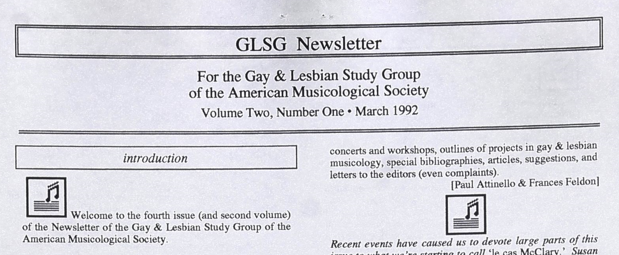
Masthead of the GLSG Newsletter. It's black type on white paper and looks like it was produced in an early desktop publishing application. There is music note clip art.
GLSG Newsletter

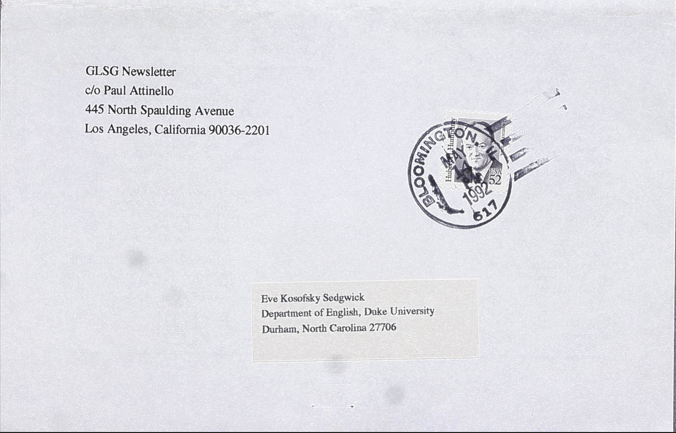
During my visit, I engaged with many magnificent sources that will feature in my dissertation. One such source from the Eve Kosofsky Sedgwick Papers, is volume 2 issue 4 of the Gay and Lesbian Study Group of the American Musicological Society “GLSG Newsletter,” published in March 1992. As a Ph.D. candidate at The CUNY Graduate Center, an institution at which Sedgwick worked and made important scholarly contributions, I found it to be an almost surreal and emotional experience going through her collection at Duke University. While Sedgwick was employed at Duke, she spearheaded LGBTQ+ issues at the university, serving as consultant on the University Coordinating Committee for Lesbian, Gay, and Bisexual Studies, as well as being an active member of the Modern Language Association’s Gay and Lesbian Caucus. Through her scholarly and activist networks, she amassed ephemera from around the country, providing amazing insights into the state of LGBTQ+ faculty’s political and social organizing during the 1980s and 1990s.

The GLSG Newsletter provides a fascinating snapshot of a transitionary period in the history of LGBTQ+ faculty organizing for their rights and recognition within higher education. In the wake of the Stonewall Uprising in 1969, lesbian and gay academics formed the Gay Academic Union (GAU) in 1973, the first group of out academics who strove to transform academia into an industry more accepting of LGBTQ+ scholarship and workers. The GAU grew to be a multidisciplinary national network, though within four years, it began to fragment and ultimately dissolve due to a number of factors, including sexism within the organization that alienated lesbian members, chronic funding and outreach issues, and the challenges of maintaining a nation-wide vision for LGBTQ+ faculty organizing. While initially fueled by the energy of the Gay Liberation movement, by the late 1970s, many of the organization’s most radical members had splintered away. By the 1980s, its president, Jonathan Dunn-Rankin, was struggling to bring GAU’s chapters together. While Gay Academic Unions persisted into the 1990s, they were no longer part of a national radical movement, and instead isolated often into specific campus chapters.

By the 1980s and 1990s, discipline-specific LGBTQ+ faculty organizations began to proliferate across the United States, such as the Society of Lesbian and Gay Anthropologists (SOLGA) which formed in 1979, and the GL/Q Caucus for the Modern Languages (GLQCML). The Gay & Lesbian Study Group (GLSG) of the American Musicological Society, established in 1991, is part of this legacy, and its newsletters provide insights into its vision for LGBTQ+ issues in higher education.

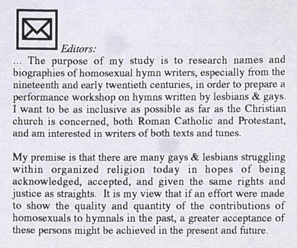
Letter to the editor published by GLSG describing their research on "homosexual hymn writers, especially from the nineteenth and early twentieth centuries."
Letter to the editor in GLSG

The March 1992 GLSG newsletter states that their objectives include “promoting communication among lesbian & gay music scholars, increasing awareness of issues in sexuality and music in the academic community, and establishing a forum for the presentation of lesbian & gay music studies,” as well as “to provide an environment in which to examine the process of coming out in academia, and to contribute to a positive political climate for gay & lesbian affirmative action and curricula.” While professional development and networking were key prerogatives for the GLSG, with letters to the editor frequently soliciting help with research and studies, it is very clear that this organization also serves a social function. The GLSG held meetings during the AMS conventions to encourage LGBTQ+ faculty and students to engage with one another. These letters reveal repeated acknowledgment of the importance of forging community, not only for individual professional advancement or to contribute to the vitality of lesbian and gay studies, but to combat loneliness and isolation experienced by LGBTQ+ academics and to share the progressive changes others were working towards at their home campuses. One such contributor, Patrick Brannon from the University of Northern Iowa, writes, “It’s always good to connect with people from afar – eases the isolation that we here in the Midwest feel from time to time… Some of us have been working on passage of a human rights amendment to the University of Northern Iowa’s charter that will provide protection based on sexual orientation.” Similarly to LGBTQ+ faculty organizations rooted in other disciplines, the GLSG attended to a variety of professional, personal, and intellectual needs faced by LGBTQ+ academics in the early 1990s.

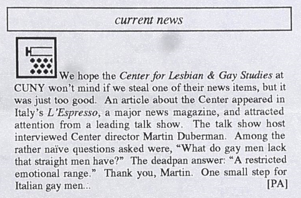
An example of when GLSG newsletter published something from another institution's LGBTQ newsletter, explaining "it was just too good." The director of the CUNY Center for Lesbian & Gay Studies was interviewed on an Italian talk show. The host hasked him "What do gay men lack that straight men have?" And he responded, deadpan, "A restricted emotional range."
News item in GLSG borrowed from the Center for Lesbian & Gay Studies at CUNY.

Something that I find fascinating and have loved exploring with my dissertation is the degree to which these organizations often operated, at least initially, on a very ad hoc basis, openly experimental with their aims and organizing strategies. Many of these groups formed because of the intrepid bravery of a handful of LGBTQ+ faculty who, working without funds and institutional support, were nonetheless able to cater to the needs of LGBTQ+ faculty in their scholarly disciplines. They relied heavily on parallel organizations to provide helpful models and actionable strategies to reach their goals. In this newsletter, under its “News” section, the writers of the GLSG state, “We hope the Center for Lesbian & Gay Studies at CUNY won’t mind if we steal one of their news items, but it was just too good,” later adding, “The same Center for Lesbian & Gay Studies at CUNY, commonly known as CLAGS, has inspired graduate students to request and even push for classes in lesbian & gay studies… This is an interesting model: graduate students requesting and negotiating for classes in gay & lesbian musicology might also be successful elsewhere.”

The early 1990s was a tumultuous period in the history of LGBTQ+ activism. Driven by the desperate conditions of the AIDS crisis, in the wake of earlier organizations like the GAU, LGBTQ+ academics strove for recognition of LGBTQ+ studies as worthy of scholarly validation, for their right to equal treatment and protection from discrimination within the academy, and for community outside of campus boundaries. The GLSG newsletter is an artifact that perfectly captures this dynamic moment in LGBTQ+ history and the history of higher education.

Roderico Yool Díaz Wins Rubenstein Library Digital Storytelling Award

Photojournalist and documentarian Roderico “Rode” Yool Díaz is the winner of this year’s Digital Storytelling Award presented by the Rubenstein Rare Book & Manuscript Library at Duke University.

An older man in a suit and glasses, is in the foreground, facing the camera. He is in a large room with auditorium style seating. The room is crowded with people. Directly behind him are a number of people with cameras and video cameras, seemingly trying to take his picture.
Ríos Montt durante lectura de la sentencia por Genocidio, 2013.

Yool Díaz received the award for his digital project documenting the 2012-2015 genocide trials against former Guatemalan dictator Efraín Ríos Montt. The project includes photos, video, and audio recordings of the trial proceedings, the reading of the verdict, and Ríos-Montt and his legal team reacting to the verdict.

“Time and again documentarians such as Rode remind us that impactful storytelling is contingent on being present,” said Caitlin Kelly, curator for the Rubenstein’s Archive of Documentary Arts, which co-sponsors the award. “Not just to get the shot and leave, but to hold a story with care such that one cannot put it down so easily. Rode’s work isn’t just coverage of a trial, but an unmasking of a legal performance with consequences far beyond the courtroom.”

Born and raised among Guatemala’s indigenous Maya Kaqchikel community, Roderico Yool Díaz has worked as a photojournalist for over 15 years. In Guatemala, he covers issues related to the aftermath of the internal armed conflict (1960-1996) and current economic and political pressures affecting rural campesino and indigenous communities.

A woman standing outside, holding a handwritten sign that reads "Urge gobernabilidad en Nebaj." She is wearing a woven headscarf and her mouth is open like she is yelling. Further behind her is a crowd of people, some of whom are also holding signs.

As Yool Díaz notes, “This collection is part of a larger archive of five years of hearings from the genocide trial against former dictators Efraín Ríos Montt and Romeo Lucas García. While most of my photojournalistic work has focused on the survivors of the genocide, in this collection I wanted to highlight the defendants as a way of unmasking the leaders responsible for the violence suffered by hundreds of thousands during the war and genocide against the Mayan people in the 1980s.”

The project is divided into four sections: Ríos Montt appears in court for the first time (2012); Intermediate phase hearings, when the case is sent to trial (2012-2013); Genocide trial (March-May 2013); Annulment of the sentence and the second trial (2013-2018).

“Trials are such an important and integral element of the human rights movement going back to Nuremberg,” said Patrick Stawski, Human Rights Archivist at the Rubenstein Library. “The Human Rights Archive has extensive documentation on trials from around the world, but Rode’s project reminds us that trials are not just procedural. His images capture an insurgent, emotional, historical event, one that is simultaneously public yet intimate and affectively human through and through.”

A survivor of the genocide himself, Yool Díaz was born in 1975 on a Dutch-owned coffee plantation where his family had lived and worked as sharecroppers for generations. As a small child, Yool Díaz worked picking coffee and cardamom. He and his family were forced to flee in the early 1980s due to repression by the Guatemalan military. Like thousands of others, his family suffered forced disappearances and recruitment by the Guatemalan military and paramilitary forces.

Yool Díaz spent the rest of his childhood separated from his nuclear family. He worked agricultural jobs and attended night classes. He was the first in his family to attend college, where he studied anthropology, supporting forensic teams in exhumations of mass graves from the internal armed conflict.

After the peace accords in 1996, Yool Díaz witnessed continued violence by police and military against rural indigenous communities, acts that many believed to be a thing of the past. He realized he needed to document the violence to prove that it was still happening.

“I think it is important to understand a story is not just a collection of facts or the narrative of a specific event,” said Yool Díaz. “It is a human experience and has to be treated with care. It is essential not to reproduce the extractivist cycle that for so long has been applied to indigenous people and our communities.”

Since moving to North Carolina, Yool Díaz also documents resilience through culture and activism in Latin American immigrant and indigenous communities of the South.

The Rubenstein Library Digital Storytelling Award is co-sponsored by the Human Rights Archive and the Archive of Documentary Arts at the David M. Rubenstein Rare Book & Manuscript Library. The award seeks to support outstanding documentary artists/activists exploring human rights and social justice, while expanding the digital documentary holdings in the archive and ensuring long-term preservation and access to their work. The award seeks to encourage artists/activists that pull from the strengths of multi-modal documentary and digital deployment. Going beyond the core mission of transmitting information, these digital storytellers create deeply contextualized, multi-sensory projects that may include still image, moving image, oral histories, soundscapes, and documentary writing. Winners receive $2,500 and are invited to present their work at Duke University, where they collaborate with a team of archivists to preserve their work.

The David M. Rubenstein Rare Book & Library has a strong commitment to human rights and the documentary arts through collecting and making available works by creators from around the world. Our collections document the impact that organizations and individuals have, and the role documentary plays, to motivate the thinking of others and support action that will transform the world.

Roderico Yool Díaz papers: https://archives.lib.duke.edu/catalog/yooldiazroderico

Roderico Yool Díaz website: https://rodediaz.com/


Come See “Something Special” – Exhibit highlighting the History of the Rubenstein Library and Special Collections at Duke

Post contributed by Roger Peña, Research Services Librarian

Wood paneled room with glass exhibit cases. The items in the cases cannot be clearly seen but look like books and other publications.
Stone Family Gallery on West Campus

What do a Nobel Prize, the first issue of Marvel’s Fantastic Four, a 2000-year old beer receipt, a 1925 advertisement for Heinz Ketchup and a page of the Gutenberg Bible have in common? All these items call Duke University’s Rubenstein Rare Book & Manuscript Library home and are currently on display in the Stone Family Gallery on West Campus.

Special collections at Duke have a long history and the university’s collections of rare books, manuscripts, and archives have grown in both size and scope since it first began collecting rare materials in the 1890s (when it was known as Trinity College). Today the Rubenstein Library holds more than 400,000 rare books and over 12,000 manuscript collections, documenting over twenty centuries of human history, culture, and society. Collections range from ancient papyri to colonial and Civil War era manuscripts, and from first editions of literary classics to social media and born-digital files. Thousands of students, visitors and researchers use the library’s resources each year, both online and in-person.  The growing collections of the David M. Rubenstein Rare Book & Manuscript Library have helped to make Duke University a world renowned institution of primary source research. But where did it all begin?

“Something Special” examines the history of special collections at Duke University, from the Trinity College Historical Society and the Duke endowment of 1924 to the growth and expansion of Duke Libraries into the 21st Century. “Something Special” welcomes you to explore a (small) selection of materials collected throughout the history of Duke’s special collections – on display in the Stone Family Gallery (located on the 1st floor between the Rubenstein Library and Perkins).

Black Lives in Archives Day 2024

Date: Monday, April 1, 2024
Time: 11:00am-2:00pm
Location: Gothic Reading Room, Rubenstein Library 2nd Floor

The Rubenstein Library is pleased to announce our 3rd annual Black Lives in Archives Day.

This one-day only immersive exhibition will allow visitors to browse, touch and feel special selections from the collections of the David M. Rubenstein Rare Book & Manuscript Library by and about Black lives. Feel free to chat with Rubenstein Library staff and explore one-of a kind Black primary source material. From rare first editions books, to published works exploring Black life in Durham, to publications by Black students at Duke, the event will give attendees a hands-on experience with the richness of Black print culture!

This event is free and open to the public. Information on visiting the Rubenstein Library, including parking and campus maps, is available on our website.

Not What the Doctor Ordered

Post contributed by Sarah Bernstein, Josiah Charles Trent History of Medicine Intern. 

Cover of small green paperback booklet with the title ""Healthful Rays." Next to the booklet is a yellow measuring tape showing the booklet is 4.5 inches long.

As someone who studies unorthodox and fringe medicine, I was incredibly pleased to find the large arrangement of unorthodox, fringe, strange, and frankly “quack” medicine within the Rubenstein Library. While the rich History of Medicine Collections includes classics of Western medicine like a first edition of Andreas VesaliusDe Humani Corporis Fabrica, a memento mori in carved ivory, and various microscopes (on permanent display in the Trent Room), I am glad to share that there are also patent medicine bottles, advertisements, and numerous writings and publications on alternative and unorthodox medicine. George Starr White’s My Little Library of Health is one such series of advice from a so-called “quack,” or an illegitimate and opportunistic, doctor.

Advertisement for George Starr White's books. The title, in large font, reads "The Thumb-nail Editions" followed by four paragraphs of text describing the books. The advertisement is black text on green paper. The 1928 “little library” by White is a series of 28 books whose length ranges from 20–48 pages. While small, I would say that calling them “thumb-nail” editions is a little misleading; the books measure at 4.5 inches in height and near 3.5 inches across (3 ⁷⁄₁₆ to be exact) is far from what is considered a miniature book or thumbnail sized. The advertisement at the back for each book boasted that each book contained illustrations, sometimes in color, and provided White’s sound advice on “health building by natural living.” Each book could be purchased for 25 cents (now somewhere near $4.50) or, for 5 dollars prepaid (around $90 for us today), one could score for the entire set.

White was a proponent of chromotherapy, light therapy, and heat therapy. In My Little Library of Health he informed his readers about his research and strong belief in the healing properties of Ultra-Red Rays. Although White’s belief in chromotherapy began by viewing sunlight through oak leaves, based on his account in volume 27, his tests had revealed to him that artificial lights from electric lamps still produced healing effects. In fact, some electric lamps worked better than others. Why? Ultra-Red Rays, that White describes as “the ‘thermalRays upon which all life depends,” more commonly known as infrared light. Based on these beliefs, White developed the “Filteray Pad,” a heat pad which generated Ultra-Red Rays and was meant to be applied to the affected area. The price for this cure-all device? A cool $35 (~$620-30 in 2024).

Image of the Filteray Pad, a light gray, roughly square shaped, cloth with an electrical cord attached.
Figure of the Filteray Pad in Volume 28, page 14, of My Little Library of Health (1928).

White would go on to develop other light-based therapies and medical systems. In 1929, White was unflatteringly covered in the “Bureau of Investigation” section of The Journal of the American Medical Association (volume 92, number 15) for his dubious claim of medical schooling and his career in patent medicines. The article lambasted White and all of his medicines and cures. Along with the “Filteray Pad” there was “Valens Essential Oil Tablets” (sold during the 1918 Flu Epidemic for “Gripping the Flu out of Influenza”) and his methods of “Bio-Dynamic-Chromatic (B-D-C) Diagnosis” and “Ritho-Chrome Therapy” (light-based diagnosis and cure using multiple colored rays that were similar to other forms of chromotherapy; the “Electronic Reactions of Abrams” by Albert Abrams and Dinshah Ghadiali’s “Spectro-Chrome” device respectively).

The Bureau of Investigation (formerly the Propaganda for Reform Department) was created as an outgrowth from the Council on Chemistry and Pharmacy to specifically investigate, disprove, and inform the public about fraudulent nostrums and patent medicine. The effort was headed by Dr. Arthur J. Cramp, a passionate doctor who was highly critical of nostrums, patent medicines, and the lax regulations which enabled proprietors to label and advertise their products as legitimate medicines.

George Starr White was just one of many quacks that Dr. Cramp and The Journal of the American Medical Association investigated and denounced, and who are represented in the Rubenstein Library’s collections. While I would not advise anyone to turn to White for medical advice today, I would encourage people to think about illegitimate medical professionals like White—and the world that they operated in—in contrast to medicine and the medical system today. These quacks from the past can provide insight into how medicine is legitimized, the rise of the medical profession, and continuous efforts throughout history to seek and provide unorthodox care.

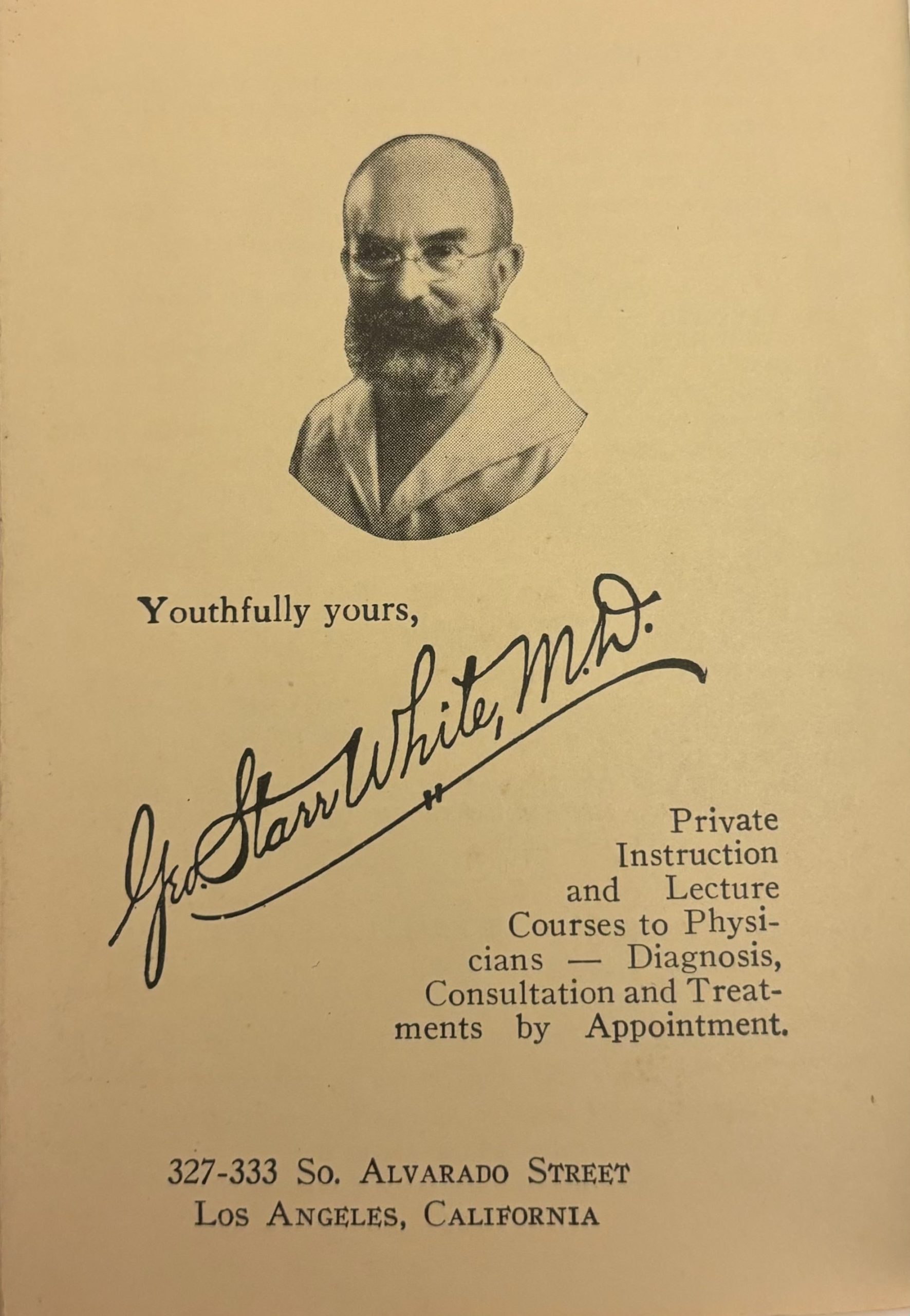
Photograph of George White Starr, a White man with thick beard, wire-rimmed glasses, and balding head. Below the photograph is Starr's large signature.
Page with a portrait of George Starr White signed “Youthfully yours” at the end of each My Little Library of Health (1928) book.