Category Archives: From Our Collections

For the woman who would reduce: Prune soufflé

CK0065-01

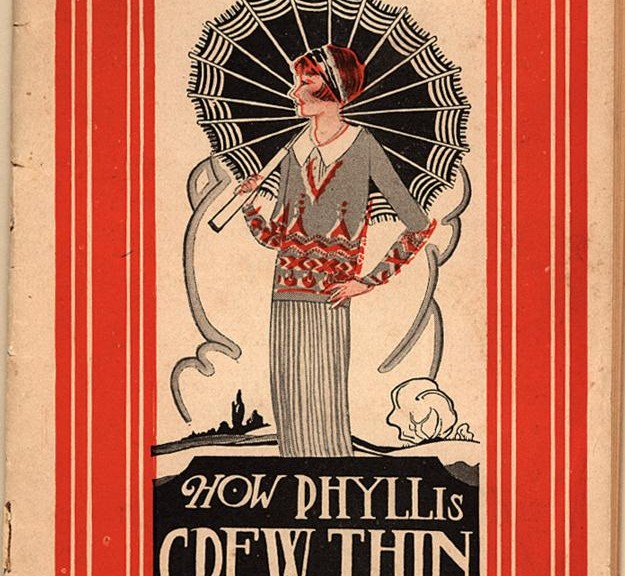
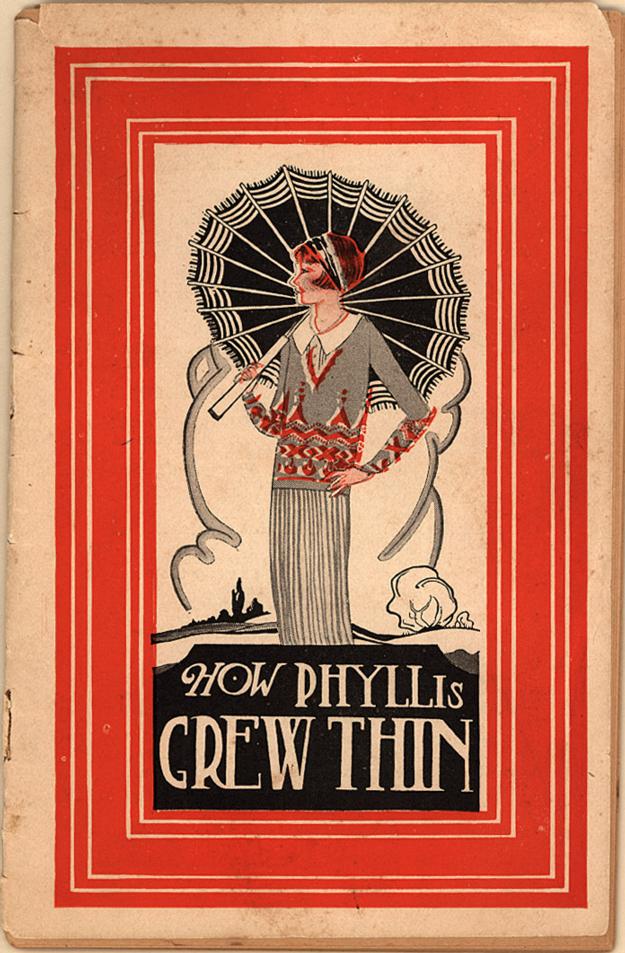
Browsing our digitized collections for Test Kitchen fodder on the recent snow day, I stumbled upon an item from the Emergence of Advertising in America project, How Phyllis Grew Thin, created by the Lydia E. Pinkham Medicine Company and published circa the 1920s. On the advertisement’s cover, Phyllis shields her rosy complexion with a parasol as she gazes off the page, inviting the reader to discover the secret to achieving the willowy frame holding up her stylish sweater and pleated skirt.  We open the booklet and find stories of how women can shed undesired pounds through a reduced diet and relieve menstrual cramps, cycle irregularities, and menopausal symptoms through the use of Lydia E. Pinkham’s products.
Screen Shot 2016-01-28 at 11.43.50 PM

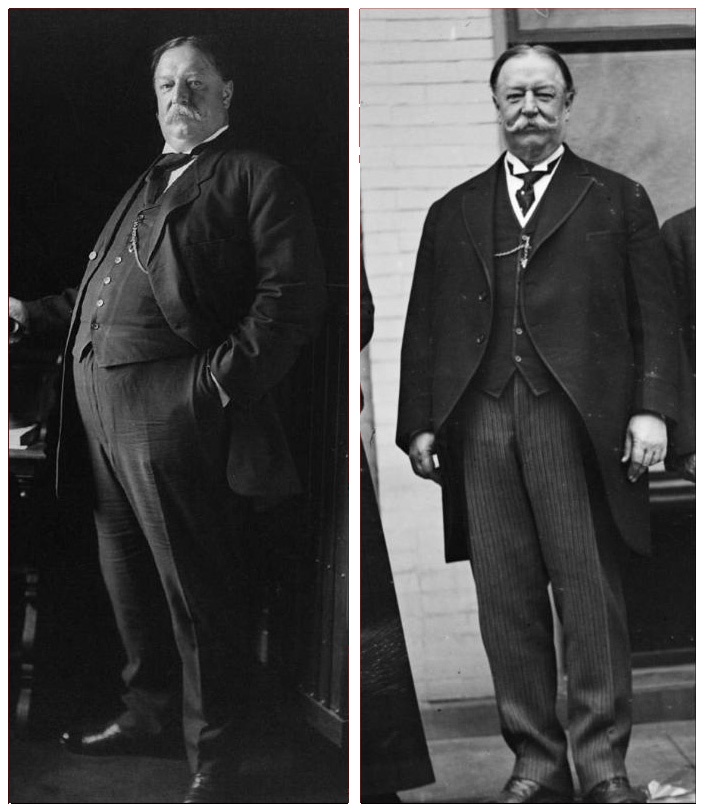
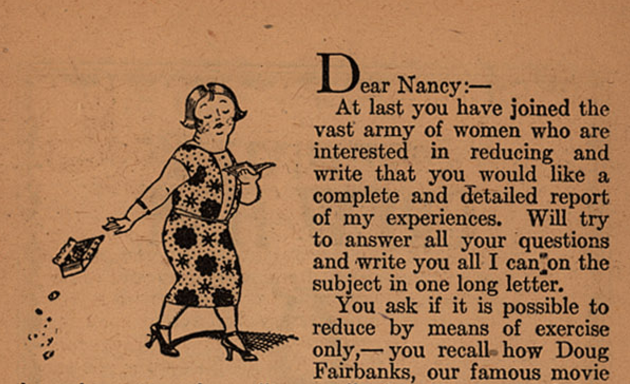
The epistolary advertisement is addressed to Nancy, a pudgy cartoon foil to Phyllis’s elegant watercolor. Phyllis promises to share with Dear Nancy the keys to losing weight through a proper diet. We learn that Phyllis has not always been so effortlessly thin. Inspired by Douglas Fairbanks’ and President Taft’s weight loss, Phyllis determines to do the same. As soon as she announced her intention to lose weight, “the derision and ridicule of my family strengthened me in my determination.” (page 2) In addition to the nourishing fire that comes from wanting to prove someone wrong, her reduced-calorie diet consisted of “plain meat without butter or gravies,” corn, prunes, and the occasional crustless pie. (page 2)   This kind of confessional tone continues to be a mainstay in contemporary weight loss advertising. The letter from Phyllis to Nancy serves as a precursor to current weight loss advertising’s penchant for before-and-after photos, Instagram hashtag culture (check out #transformationtuesday and #fitspo), and celebrity-endorsed diets.  (After a few Google searches for weight loss advertisements, my Facebook feed populated with sponsored content promising me a smaller pant size in mere days.)

Though her crash diet kept the weight off for a few years, Phyllis eventually gained the weight back and got serious about counting calories as a way to reduce again. She shares with Nancy that “it is not necessary for you to know just what a calorie is so long as you remember not to eat foods containing too many of them.” (page 3) The suggested calorie intake is considerably lower than most contemporary diet plans recommended by nutritionists, advising that Nancy (and “the army of women who are interested in reducing”) consume 1000-1200 calories a day. Phyllis then advises Nancy to take Lydia E. Pinkham’s Liver Pills and Pinkham’s Vegetable Compound, claiming that they help alleviate constipation and excessive nervousness, respectively. Lydia E. Pinkham established the Lydia E. Pinkham Medicine Company in 1873. Its signature product, Lydia E. Pinkham’s Vegetable Compound, was a tincture of  “black cohosh, life root, unicorn root, pleurisy root, fenugreek seed, and a substantial amount of alcohol” formulated to ease menstrual cramps and menopausal symptoms (1). Pinkham’s products still line shelves today, each box featuring Lydia Pinkham’s face, promising relief.

pinkham post
Dry toast, baked beans, and fish balls, oh my!

At the top of each page, the booklet provides a daily meal plan with calorie counts for each item. The offerings are spare. One suggested breakfast consists of “4 saltines, 1 tbsp. cream cheese, 2 prunes, tea and lemon (without sugar).” (page 18) An idea for one dinner is little more than bun-less hot dogs and a small bowl of ice cream.

Screen Shot 2016-01-29 at 1.35.27 AM
Does getting to eat ice cream and macaroons make you forget you ate frankfurts and cold slaw for dinner?

Faced with these choices, I considered upping the Test Kitchen ante by following one of the suggested meal plans for a few days. Upon reflection, I thought better and opted to spare my friends and colleagues the monster that I am when not eating enough at regular intervals. Even reading meal plans for day after day of fruit (or saltines!) for breakfast followed by a mayonnaise-laden lunch had me throwing my Phyllis-esque determination out the window. The booklet contained few actual recipes. Oddly, most of them were for desserts: frosting, Brown Betty, orange sherbet, and pudding. The dessert that caught my eye, though, was prune soufflé. Why? Frankly, it sounded so unappetizing that I felt compelled to give it a shot. Maybe I’d been missing its hidden appeal. And, having never tried to make a soufflé, it seemed a fun technical challenge.
Screen Shot 2016-01-29 at 2.05.37 AM

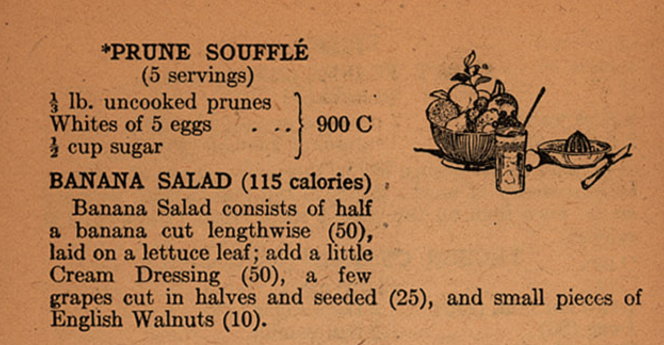
The recipe given by the advertisement is deceptively simple. It’s less a recipe and more a list of ingredients. Perhaps this suggests that Pinkham’s target customer already had a thorough knowledge of soufflé-making and would simply need the inspiration to try a new take on the dessert. Since I have no such skills, I turned to the internet as a supplement, sourcing tips from a 1998 issue of Gourmet.

IMG_3619
The most appetizing shot of the night — and it’s of prunes!

When beginning a cooking project, I recommend ensuring you have all the right tools at your disposal before cracking your eggs. Alas, I did not follow my own advice! I began my soufflé only to find that my  house apparently lacks a hand mixer. Already committed to the recipe, I decided to channel my foremothers and hand-whip the eggs into stiff peaks. If cooks beat eggs into submission for years by hand, then surely I could as well! All those hours spent practicing surya namaskara should be good for something, right?
IMG_3621
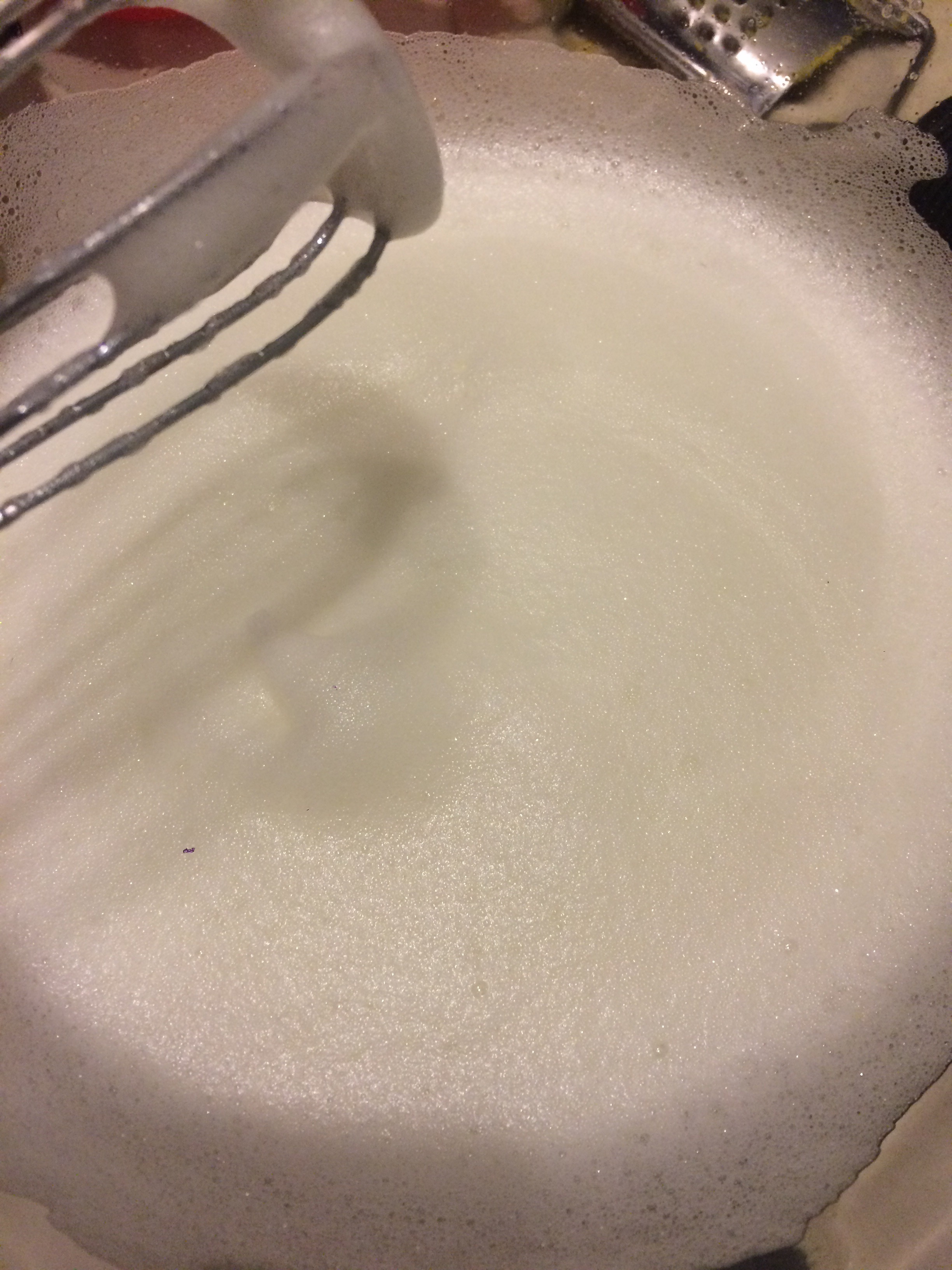
My foam never quite peaked–a souffle’s death knell.

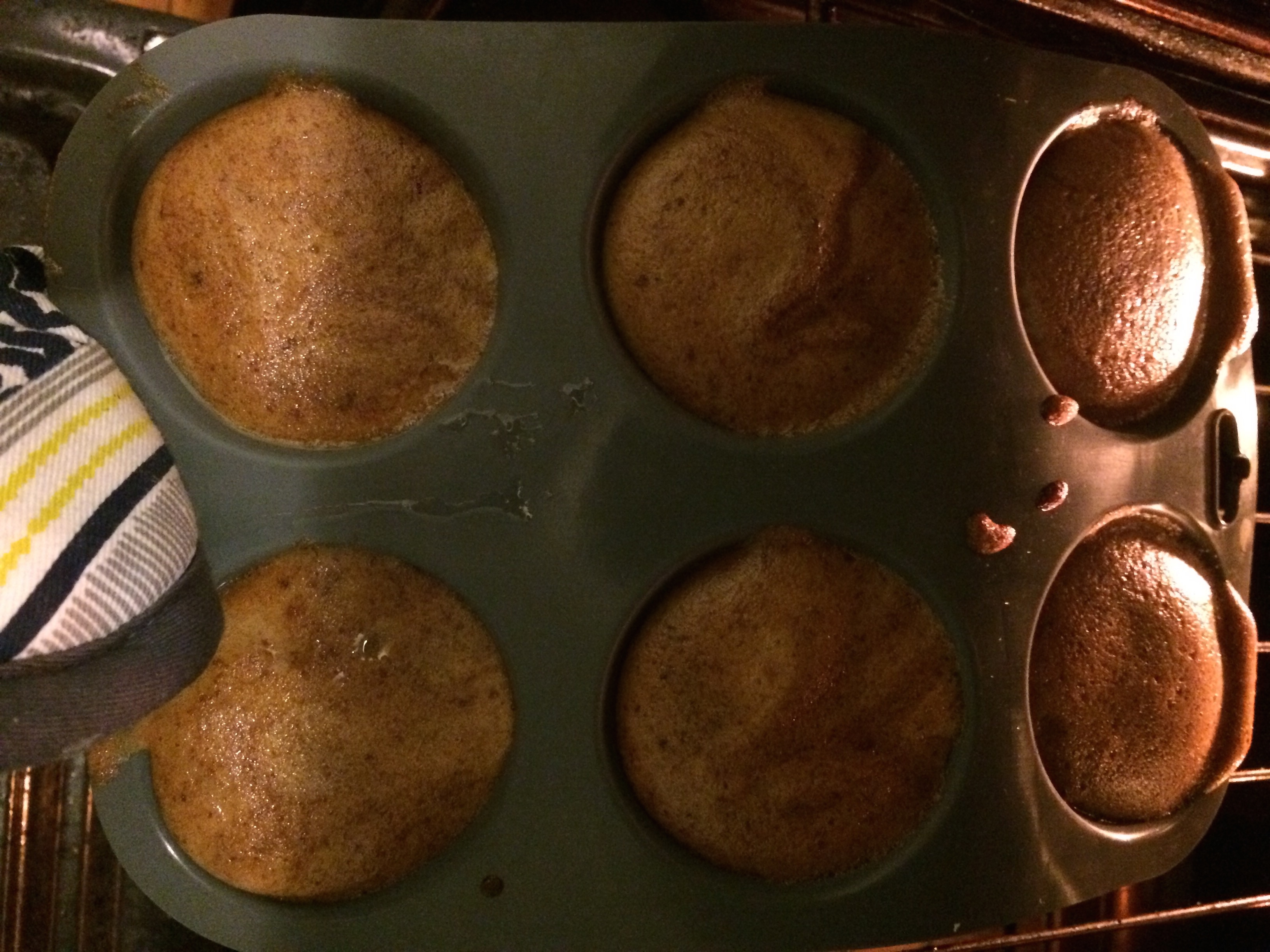
Unfortunately, I underestimated the time and effort needed to beat the eggs into fluffy mountains. I achieved the early stage, a frothy foam, but never progressed to the stiff peaks a soufflé needs to bloom. Still, it was late and I had cracked five eggs to try to make this work, so I soldiered on. Per Gourmet’s  instructions, I had soaked the chopped prunes in hot earl grey tea and lemon zest, hoping to brighten the flavors. After pureeing and cooling them, I slowly folded the foam into the mixture. Uneven in color, bubbly, and flat, I knew things had taken a turn for the worse. Still, I slid the muffin tin into the oven anyway, hoping that even if the souffle didn’t rise, I’d end up with a sweet baked egg fluff?
IMG_3625
In they went anyway!

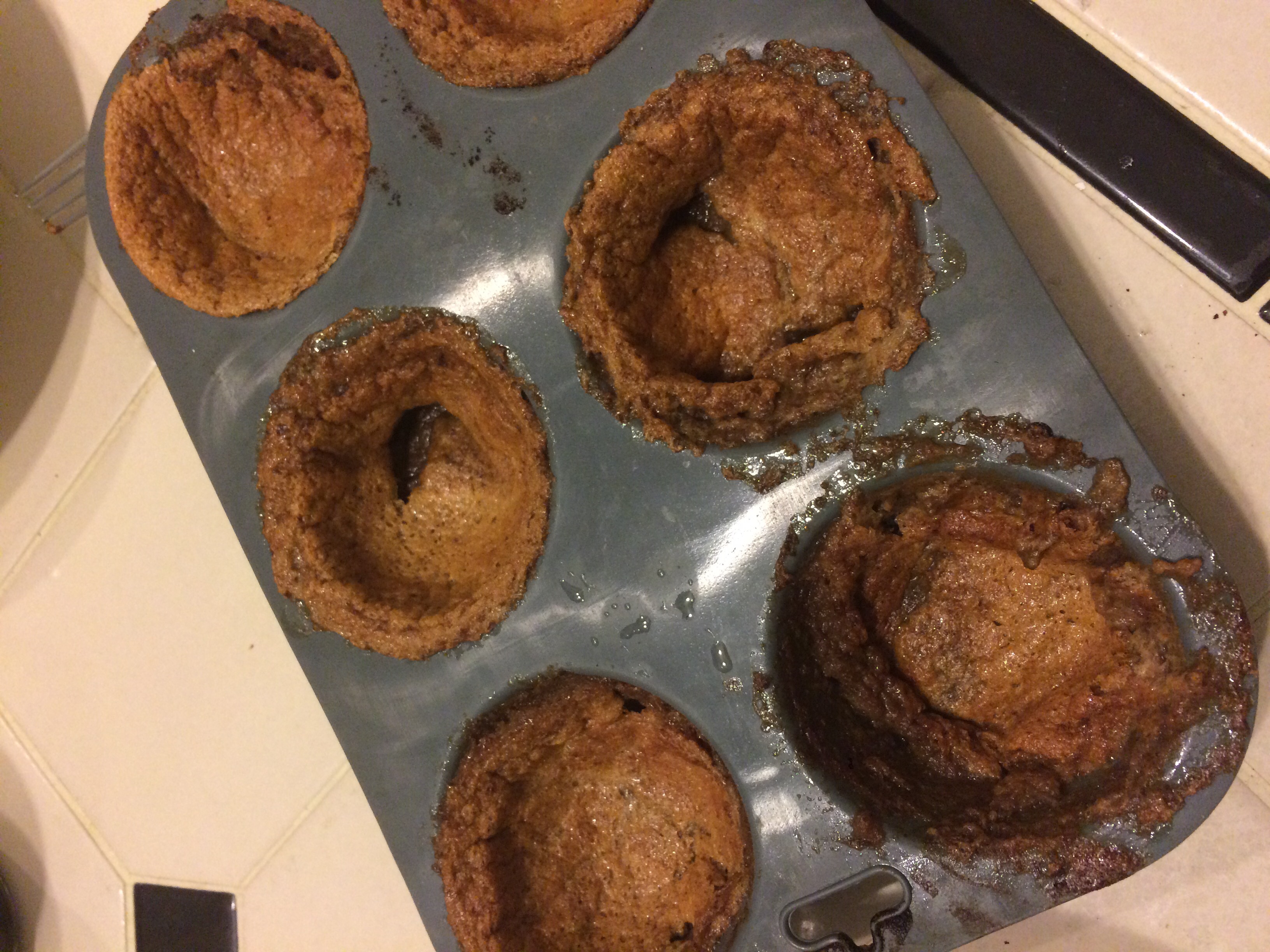
Sixteen minutes later, I pulled them out of the oven to find a sad, deflated pan of brown blobs. I tasted one, and suddenly understood how easy it would be to “reduce” while following this diet. I tossed the remnants and dosed myself with a small handful of chocolate chips, the rest of which will hopefully go into a more successful baking project.
IMG_3627
I have made a terrible mistake.

Post contributed by Katrina Martin, Technical Services Assistant. 
 

Upcoming Talk: Scientists, Midwives, & Healers in the Lisa Unger Baskin Collection

Date: Tuesday, February 9, 2016
Time: 4:00 PM
Location: Holsti-Anderson Family Assembly Room, Rubenstein Library Room 153
Contact: Laura Micham, laura.m@duke.edu
RVSP (optional) via Facebook

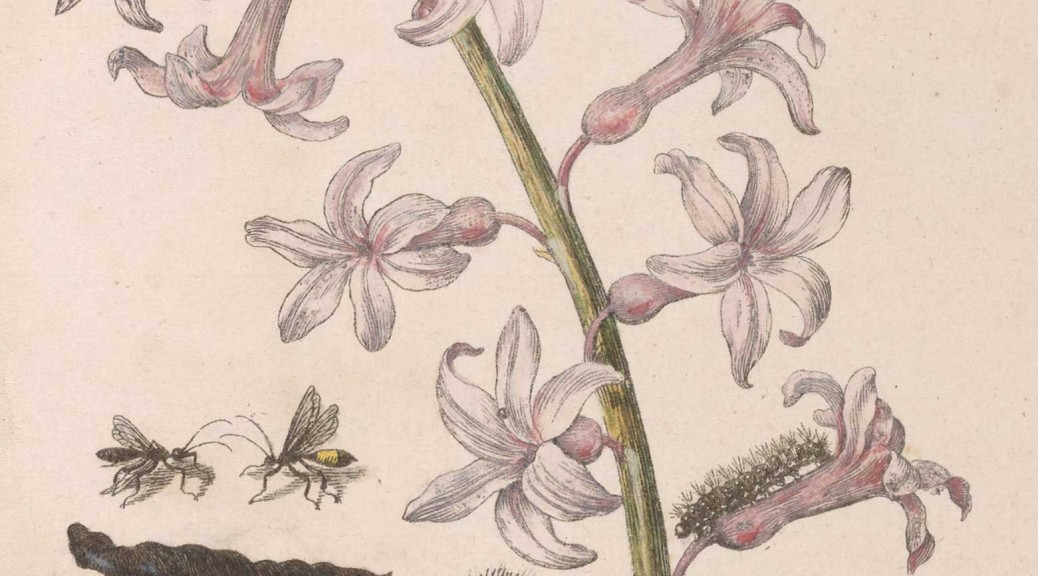
Maria Sibylla Merian. De europische insecten. Tot Amsterdam: by J.F. Bernard, [1730].
Maria Sibylla Merian. De europische insecten. Tot
Amsterdam: by J.F. Bernard, [1730].
Join the staff of the Bingham Center as Duke History Professor Thomas Robisheaux gives a lecture on the Lisa Unger Baskin Collection, highlighting his use of works by naturalist and artist Maria Sibylla Merian. The lecture is free and open to the public; light refreshments will be served.

In celebration of:

Heralding the Way to a New World: Exploring Women in Science and Medicine through the Lisa Unger Baskin Collection

On display in the Michael and Karen Stone Family Gallery from January 20th to April 1st, 2016

From the first entomologist to capture the stages of metamorphosis of the butterfly (1705) to the author who published the first comprehensive volume on contraception (1923), the women in this exhibit were pioneers in science and medicine. Whether self-trained or classically educated, they not only made groundbreaking contributions to their fields, but also helped open the way for future generations to follow in their footsteps. Despite their accomplishments, most of these women remain overlooked or under-recognized.

This exhibition highlights the stories of seven revolutionary women in science and medicine and celebrates the arrival of the Lisa Unger Baskin Collection, from which these materials were selected.

New Exhibit! Malignant Fever: Benjamin Rush and the 1793 Epidemic in Philadelphia

Please visit our new exhibition Malignant Fever: Benjamin Rush and the 1793 Yellow Fever Epidemic in Philadelphia, curated by Mandy Cooper, PhD candidate in Duke University’s History Department. The exhibition will be on display in the Mary Duke Biddle Room through March 11, 2016.

This exhibit highlights the effects of epidemic diseases on society by examining one of the most famous outbreaks in U.S. history – the 1793 yellow fever epidemic in Philadelphia. Drawing chiefly on letters written by Dr. Benjamin Rush, an eighteenth-century physician and U.S. Founding Father, to his wife Julia Stockton Rush, the exhibit examines the timeline of the outbreak, early responses, stages and symptoms, and the “cure” for yellow fever that Rush developed. Finally, the exhibit looks at the anatomy of an epidemic, focusing on the social and psychological effects exemplified by Rush’s emotion-filled letters, as well as stories that emphasize the fear, panic, and mental anguish that accompany epidemic disease outbreaks even today.

Coinciding with this exhibition is a new digital collection of the Benjamin and Julia Stockton Rush papers held by the History of Medicine Collections in the Rubenstein Library.  We encourage you to visit the exhibition and check out the new digital collection as well.

A gallery talk led by Mandy Cooper will be held on Friday, February 26, at 2 pm in the Mary Duke Biddle Room. All are welcome to attend. Light refreshments will be served.

Post contributed by Rachel Ingold, Curator of the History of Medicine Collections

Edwin and Terry Murray Comic Book Collection: Closed for cataloging as of March 1st!

There’s no denying it: we love the Edwin and Terry Murray Comic Book Collection. The product of 40+ years of collecting by Edwin L. and Terry A. Murray, the Murray Comic Book Collection has far-reaching holdings, from mainstays like DC to smaller publishers like Pacific Comics. It has an enormous volume of materials–almost 290 linear feet, or nearly the height of the Statue of Liberty from the ground to torch (305 feet)![i] And it’s very comprehensive: to quote our finding aid, the Marvel series contains “near-complete runs of Avengers, Captain America, Fantastic Four, Daredevil, Incredible Hulk, Punisher, Spider-Man, Thor, and X-Men.

murraypost1
Image via Alyssa Alegre

The Murray Comic Book Collection has been good to us, providing us with ample opportunities to use its holdings for instruction sessions, reference questions, research, and even blog posts. We want to be good to it, too. With the spirit of the New Year at our backs, we’re embarking on a project to reprocess the titles in the collection as serials. Thus, beginning March 1st, 2016, the Edwin and Terry Murray Comic Book Collection will be closed to researcher use.

murraypost2

You may now be wondering: what’s a serial?

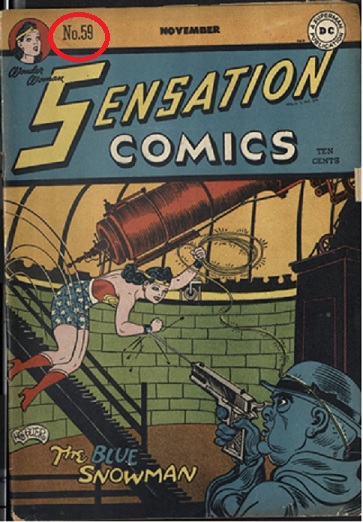
A serial “is a resource issued in successive parts, usually bearing numbering, that has no predetermined conclusion.”[i] When you look at that definition, it’s obvious that many comics are serials. A quick browse of our finding aid shows our comic titles are often issued in successive parts (see the numbering of Sensation Comics below), and there are some that are still going strong after decades of issues. In fact, the Rubenstein has issues of Walt Disney’s Comics and Stories dating from the 1940s!


murraypost22

By thinking of the Murray Comic Book collection as serials rather than as one big collection, we can go over it with a finer toothed comb: we learn even more about what we have, such as when a comic book series spawns a new series, or exactly how many issues we need to make a series complete. With that information, we’re then able to catalog each title individually, creating and/or improving upon records in our library catalog. Once this project is complete, you’ll be able to type in a title—like Action comics—into our search engine, and its very own record will come up. There will be direct access to serial titles, complete with listings of the issues we hold.

As might be expected, this project will take time, which is why we’ve decided to close the collection March 1st. We’ll need to sort those 290 linear feet of comic books, grouping by titles and sleuthing out potential issues. We’ll also look at rehousing the titles in the collection. After that, we’ll catalog them as titles, so that researchers will be able to use their own super powerful research skills to locate our holdings quickly and easily. No lassoing of truth necessary.

Post contributed by Liz Adams, Special Collections Cataloger.


[i]“Statue facts.” The Statue of Liberty Facts. The Statue of Liberty – Ellis Island Foundation, Inc. All Rights Reserved., n.d. Web. 12 Jan. 2016.

http://www.libertyellisfoundation.org/statue-facts

[i]“Serials.” RDA Toolkit. RDA Co-Publishers, n.d. Web. 12 Jan. 2016.

http://access.rdatoolkit.org/

“From Sit-Ins to Hashtags” on Display at Perkins Library

Culture Clash is a series of exhibits, created by the Center for Multicultural Affairs (CMA), traditionally hosted in the Alcove outside of the CMA Lounge. Culture Clash aims to provide multicultural and social justice education to build and/or strengthen bridges between different communities at Duke and beyond. The exhibit provides members of the Duke community and guests of the CMA the opportunity to explore the intricacies of the human experience with the focus on building sustainable, authentic, and healthy relationships and communities.

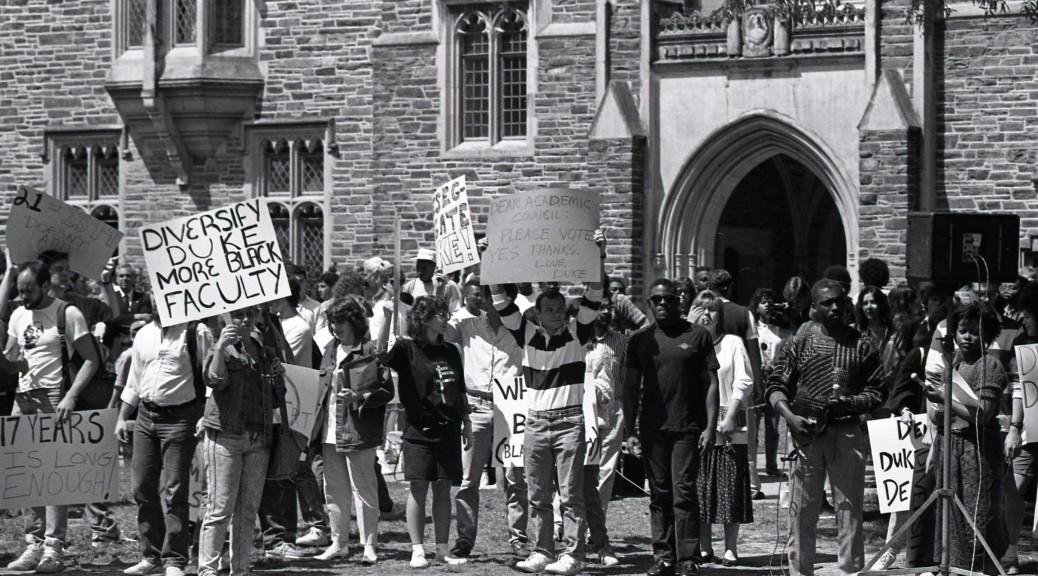
This year’s culture clash, which is on display through February 1st, 2016 at Perkins Library’s Campus Club Wall, is entitled “From Sit-Ins to Hashtags”. The exhibit explores the patterns of student social justice work and activism both at Duke and beyond throughout history. The photos depict different trends and styles of activism in the different decades.

Students protest in favor of the Black Faculty Initiative, April 1988.
Students show support for the Black Faculty Initiative, April 1988.

Curating Culture Clash has been a wonderful learning experience. I have a new appreciation for museums and exhibits; until now I never really realized how much thought and effort goes into a project of this nature. From beginning to end, this project has been about learning. The research aspect of the project was fairly intuitive because here at Duke we are always doing research. Finding movements to document and represent wasn’t overly challenging. Even finding an equal representation of photos from each decade was a fairly smooth process due to the help of the University Archives.

The challenge in this project came with deciding on how to visually present all of the photos. Juggling some 70 odd photos and 19 photo frames and 126 square feet of wall space was an experience. For me especially, I struggle with visualizing; I need something concrete to look at. The later part of the curation process involved a lot of cutting paper models and trying to learn how to visualize the small picture within the big picture. However, teamwork makes the dream work here at the Center. As a team, we made all the pieces come together in the end. We are very happy with the final outcome of the project.

We hope that from this exhibit students can understand how student social justice work has transpired in the past, and perhaps find inspiration to be an advocate for a cause that moves them.

We would like to give a special thanks to Margaret Brown, E. Rhodes and Leona B. Carpenter Foundation Exhibits Coordinator, and Amy McDonald, Assistant University Archivist, for all of their help throughout the curation process.

Related Resources:

Post contributed by Vanessa Lusa, Class of 2018 and Center for Multicultural Affairs Student FACE.

King Cake – Rubenstein Library Test Kitchen

image09-23New Years Eve marked the final celebration in a slew of winter holidays that put my more introverted side through the social ringer. With New Year’s resolutions on my mind, I am eager to settle back into the routine that unraveled during the holidays (perhaps with a few more trips to the gym during the week). More than anything, I want to “get back to normal” and recharge.
Whereas I am cozying up for the long, comfortingly mundane winter, New Orleanians are gearing up for the most magical time of year: Mardi Gras season. That’s right. I said season. Unbeknownst to many, Mardi Gras is not just a day, it’s a weeks-long celebration marked by cloudless skies, community parades, and good street food.

Although Mardi Gras day jumps around from year to year depending on Easter, the season always kicks off on January 6, or the Epiphany – the day in the Christian religious tradition when the three wise men visited Christ, bringing gifts of gold, frankincense, and myrrh. In New Orleans, community members consume brightly colored King Cakes to celebrate the start of the Mardi Gras season.

Continue reading King Cake – Rubenstein Library Test Kitchen

Hoppin’ John (1847) – Rubenstein Library Test Kitchen

As much myth as morsel, the traditional southern dish of black-eyed peas, long-grain rice and salt pork–known as Hoppin’ John—has long been associated with good fortune when eaten on the first day of the new year.

IMG_5257

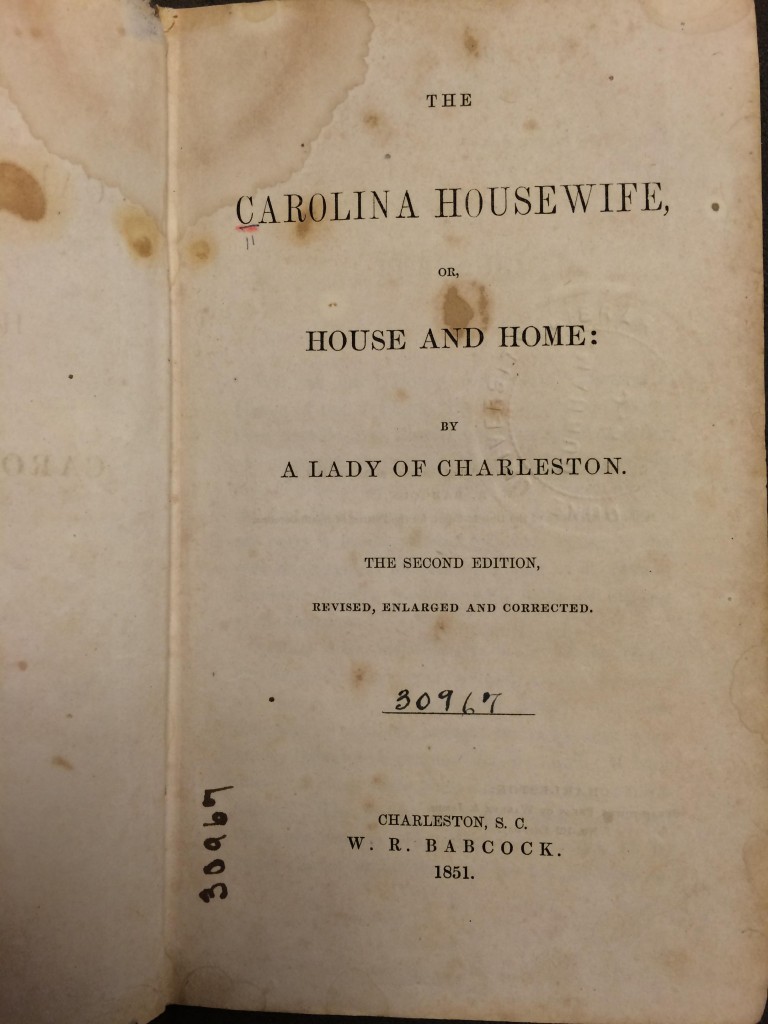
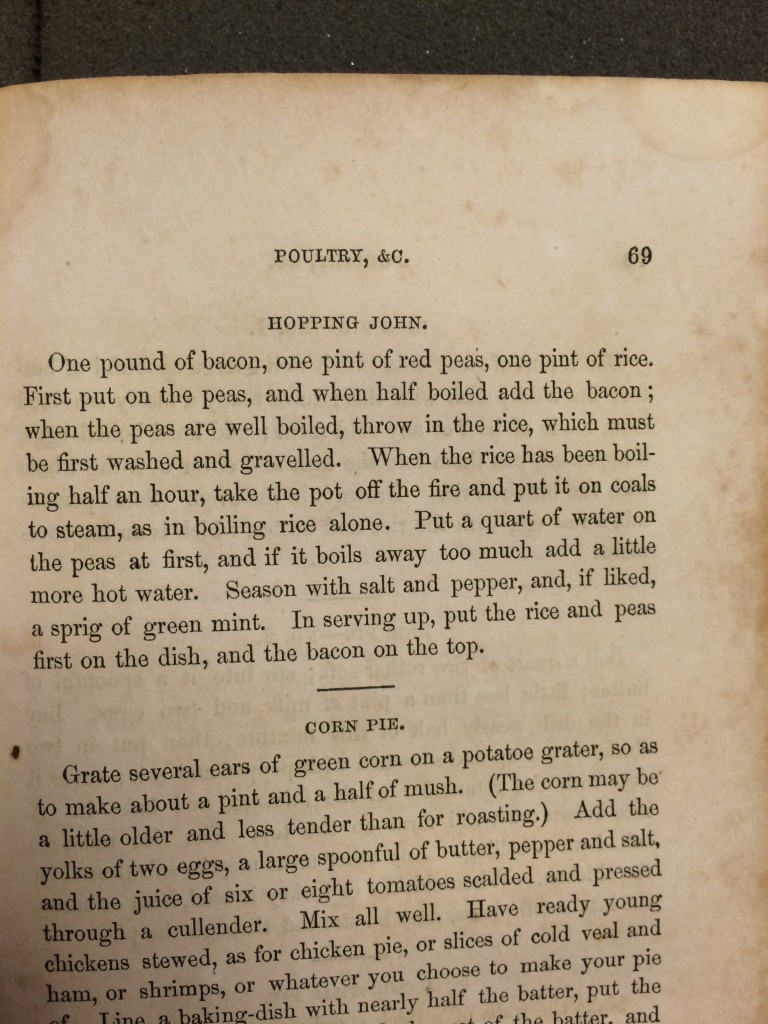
With January 1st fast approaching, I thought I would use the test-kitchen blog to try out the earliest known published recipe for Hoppin’ John, which comes from Sarah Rutledge’s The Carolina Housewife, originally published in 1847.

Book Title Page

But like any good legume dish, half of the work lies in letting the beans soak, so before I get into the recipe itself, I want to spend a little time soaking up the aura of this deceptively simple meal.

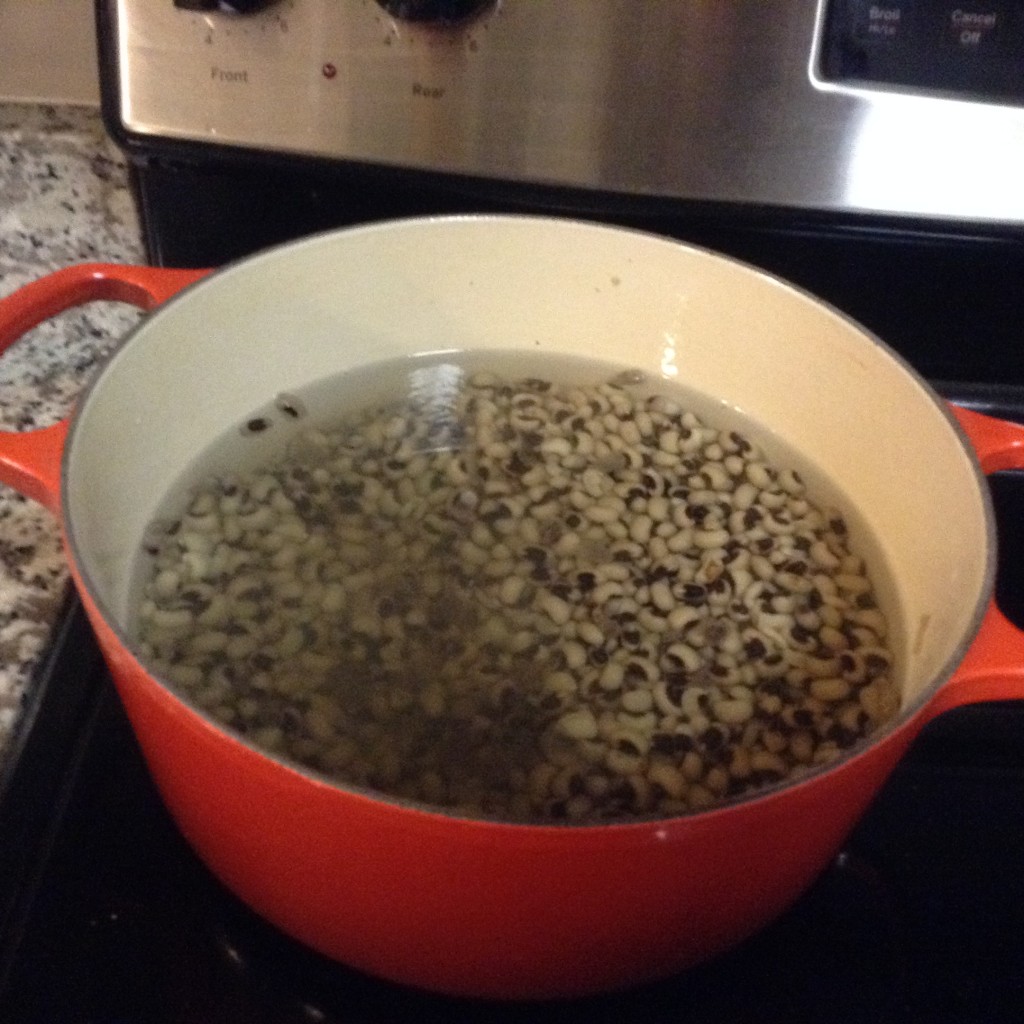
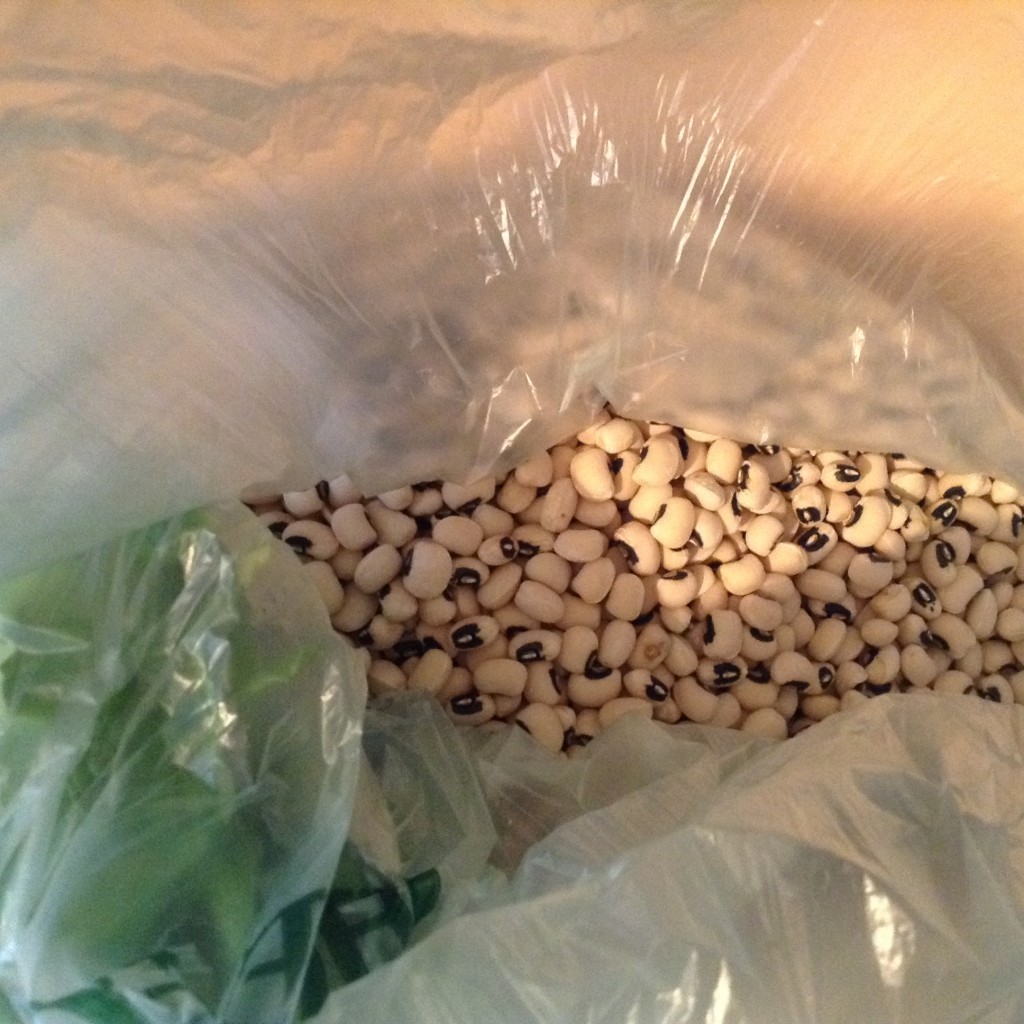
soaking beans

Google the term Hoppin’ John, with or without the conspicuous g-deletion, and you’ll find a veritable cottage industry of food historians contemplating its finer points. While rice and pork are essential features of Hoppin’ John, most commentators center their accounts on the black-eyed pea, known variously as the cow pea, crowder pea and southern pea. Native to West Africa, the black eyed-pea was cultivated throughout the ancient world, from Greece and Rome to the Middle East and Asia. The durability of the dried African bean made it a prime provision aboard the transatlantic slave ship. The hardiness of the plant and its resistance to heat made it a staple crop on southern plantations, where it became a cheap and reliable means of feeding slaves and livestock. Poor whites across the south embraced the food, and in time, it eventually appeared on the table of southern planters, where it was received as a “very nutritious” and “quite healthy” alternative to the English field pea. Despite attempts on the part of the U.S. Department of Agriculture to expand the crop beyond the Mason-Dixon line after WWI, the food has remained part of the often-caricatured culture of the American South.

IMG_0458

And this is to say nothing about the black-eyed pea as prosperity charm or the twisted narrative behind the name Hoppin’ John. In the context of ancient Greece and Egypt, beans were said to possess the spiritual energy of the dead. Whether or not this has any bearing on the America tradition of eating black-eyed peas for good luck is impossible to know. A popular theory as to why the food must be eaten on New Year’s Day revolves around the supposed resemblance of the spotted pods to coins. Similar theories hold that collard greens, often served alongside black-eyed peas, represented paper money. Having grown up in a Tennessee household that regularly consumed black-eyed peas, I called my mother and asked her what she thought. Timid when questioned, she only said: “On New Year’s Day, it didn’t matter what else you had, as long as you had black-eyed peas.” She has a point. It makes sense for the working poor and enslaved to project mythical powers onto the foodstuff that was a ubiquitous part of their everyday lives. When life seems little more than a series of uncontrollable events, strung together by forced migration, famine and persecution, you don’t want to leave matters of good fortune to chance. Or as my mother says, “You don’t go borrowing problems.”

IMG_0461

As for the name Hoppin’ John, there is no definitive etymology. Some researchers focus on the semantic meaning of the term, suggesting that it grew out of a folk idiom for inviting a neighbor to dinner, i.e. Hop in John. Others focus on the phonetic properties of the term, insisting that it is an English appropriation of either a French-Haitian name for the pigeon pea (pois à pigeon) or the Arabic name for a similar dish of beans and rice (bahatta kachang). For me, I think the mystery of the name points back to that essential feature of vernacular culture that Richard Wright proposes in his essay “The Literature of the Negro in the United States,” where he describes black folklore and folkways as “The Form of Things Unknown.” By positing unknowing and mystery as the basis of vernacular culture, one is able to entertain various, competing theories while maintaining a healthy respect for the hermetic resistance of anonymous practices.

IMG_5240

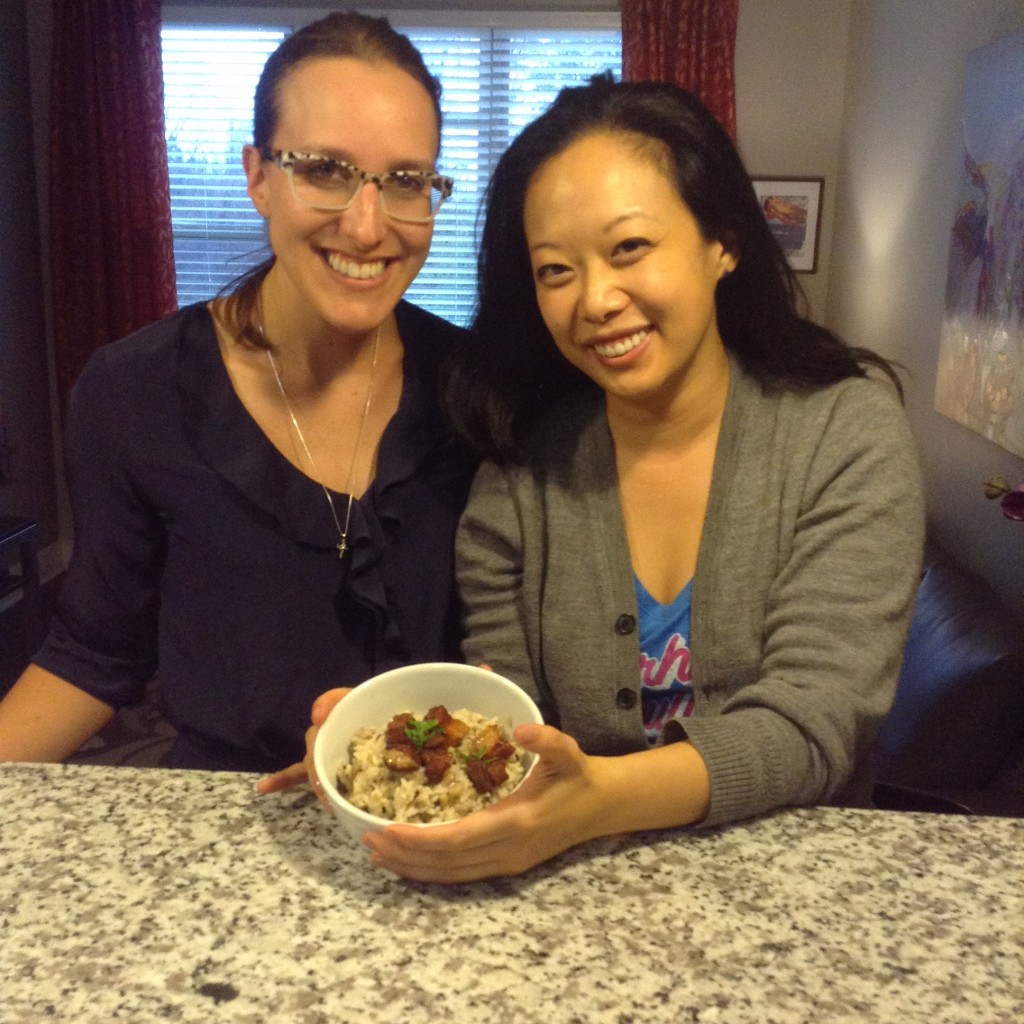
These various theories were debated in real-time as Ashley Young (Duke, History PhD) and Lin Ong (Duke, Marketing Strategy PhD) helped me bring Rutledge’s recipe for Hoppin’ John to life.

IMG_0488

The original recipe is short on details. Here it is in its entirety:

IMG_2538

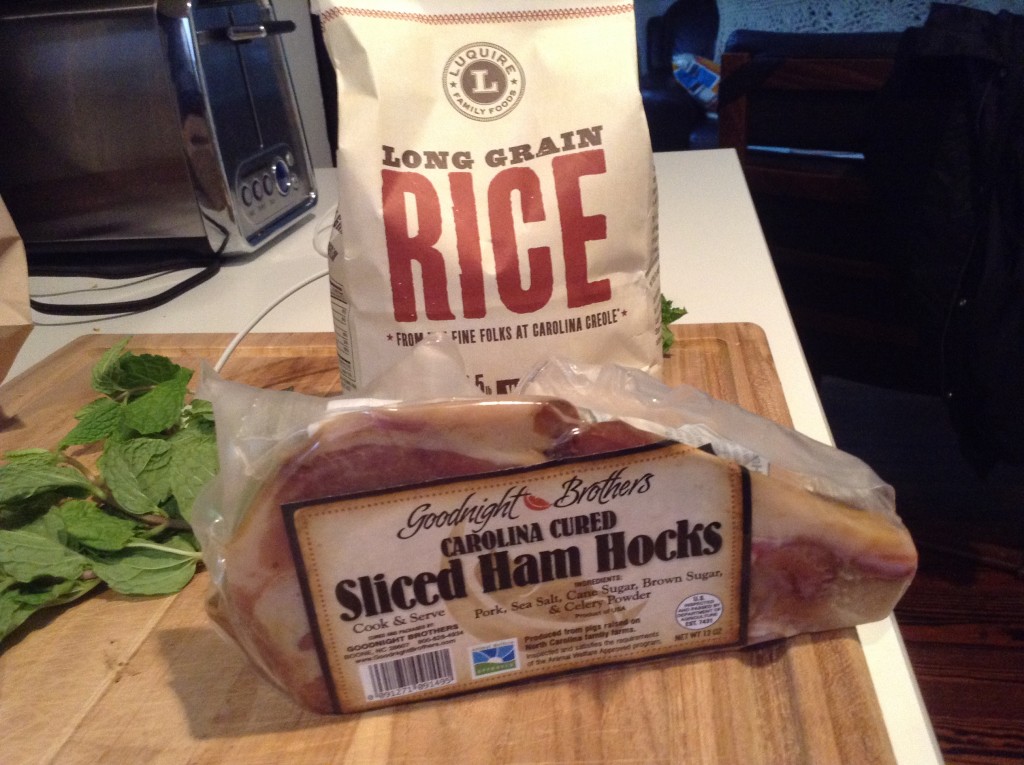
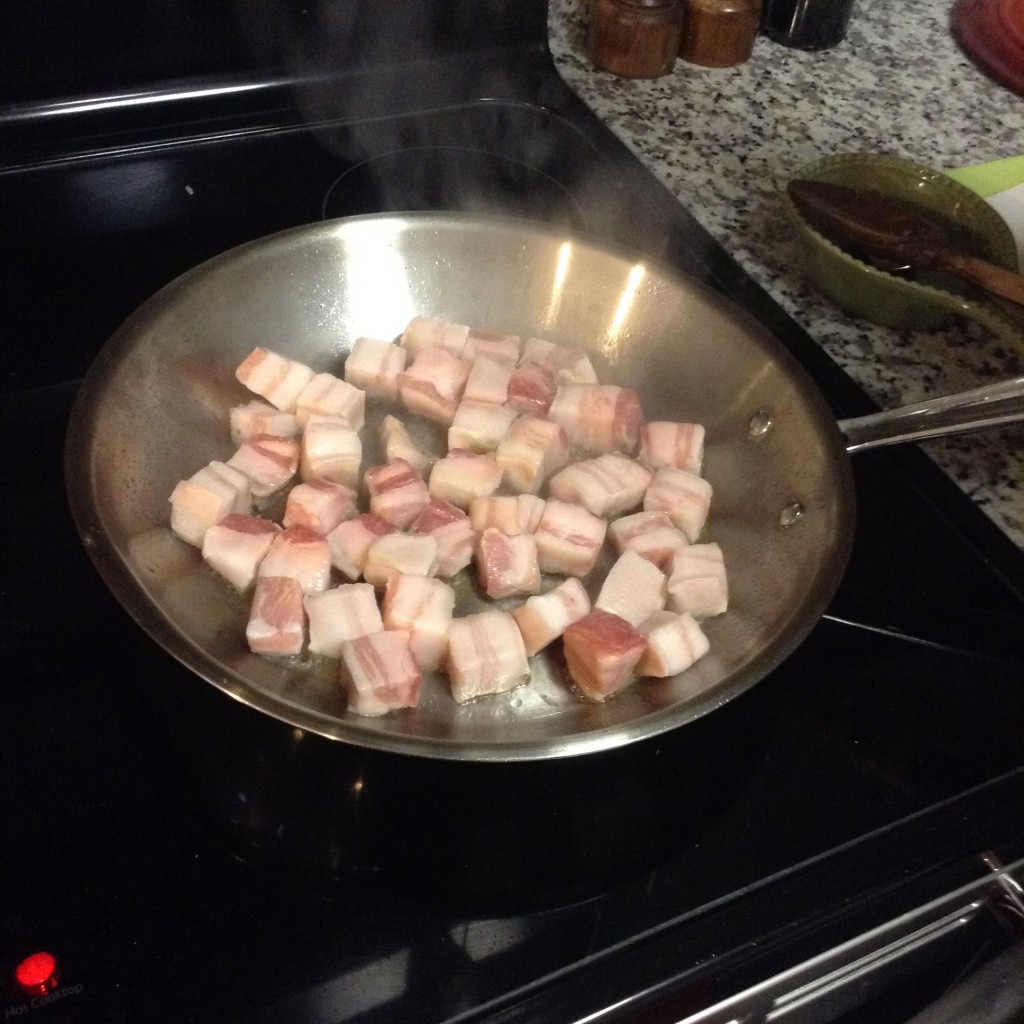
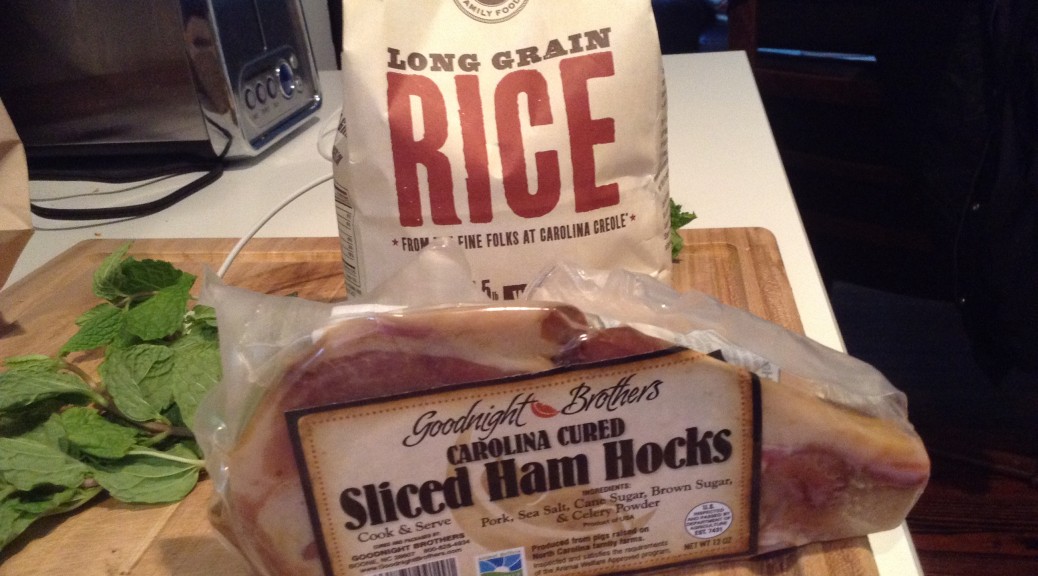
Given the ambiguity of the description and the dramatic changes affecting cultivation and cooking practices, the recipe requires a certain amount of creativity. The cowpeas that Rutledge mentions are prevalent in most parts of the rural south, but I could not find a local store in Durham that carried them in December, so I settled for the black-eyed cousin. As for the rice, I went with Luquire Family Food’s Long Grain Rice on the suggestion of Ashley, a food historian with an eye for unpolished grains. Instead of the standard cured bacon, I decided to go with a medley of swine. A hamhock would provide ample seasoning and flavor, while pieces of pork belly would give a little meat for the actual dish. Lin made the important point that the pork belly would probably take on an unappealing texture if cooked in the boiling stew. So we sliced the pound of pork belly into 1-inch cubes and pan-fried the cubes, adding them (along with a spoonful of the rendering) to the dish at the end.

IMG_0462

IMG_0469

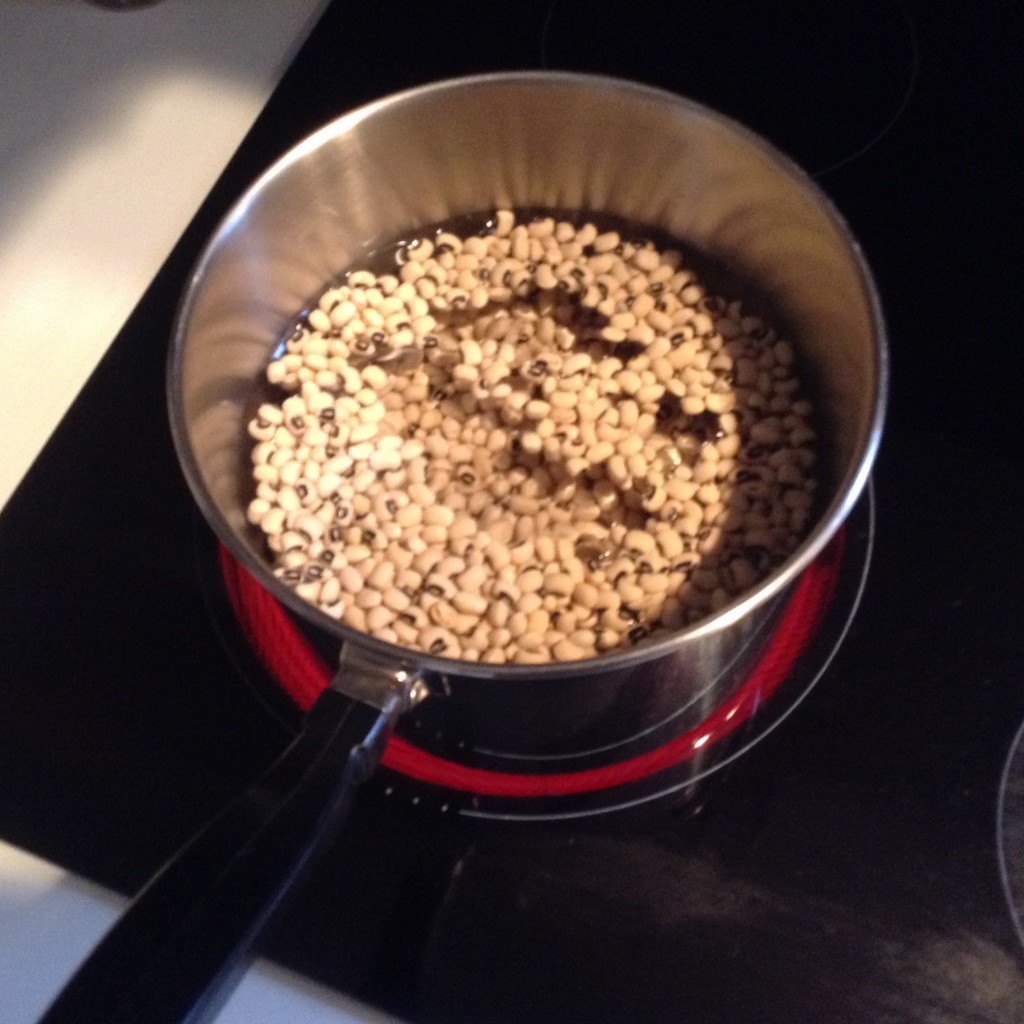
To speed up the cooking time, I soaked the pint of beans by bringing them to boil in a quart of water, letting them boil for a minute and then leaving them to cool for an hour. We then transferred the beans into a new pot with a fresh quart of water and the hamhock. We brought the stew to a boil and then let it simmer for close to an hour. While the beans were cooking, we washed the rice, making sure to remove all pieces of gravel, as per Rutledge’s slightly outdated instructions. With no objective way of determining when the beans were “half-boiled,” we settled on an hour. In that amount of time there was still enough water in the pot to cook the rice. But this seems totally arbitrary. If you like mushy beans (which I do), don’t be afraid of cooking them longer. You can always add more water when it comes time to cook the rice.

IMG_0468

IMG_0471Instead of just placing sprigs of mint on top like a garnish, we decided to slice them into shreds to help bring out the flavor. The experiment paid off. The sharp soprano sweetness of the herb cut against the walking bass notes of the simple grain and savory fat. The end result was a meal that made us feel plenty lucky, if only to have leftovers to go around.
IMG_5264

Notes

One could spend an entire day reading through the many, thoughtfully composed online histories of Hoppin’ John.  Most of the points made in these posts can be traced back to two works.

Miller, Adrian. Soul Food: The Surprising Story of an American Cuisine, One Plate at a Time. Chapel Hill: The University of North Carolina Press, 2013.

Hess, Karen. The Carolina Rice Kitchen: The African Connection. Columbia: University of South Carolina Press, 1998.

Post contributed by Pete Moore, Intern for the Hartman Center for Sales, Advertising, and Marketing History 

Born to Belonging: the Mab Segrest Papers

For the past few months, I have had the pleasure of processing the papers of Dr. Mab Segrest, a leading feminist writer, activist, scholar, and speaker, who has traveled the United States and around the world fighting for social justice. Her papers are a foundational collection for the Sallie Bingham Center and a valuable resource for the study of feminism, race, class, sexuality, and gender, as well as literary theory and social movement history.

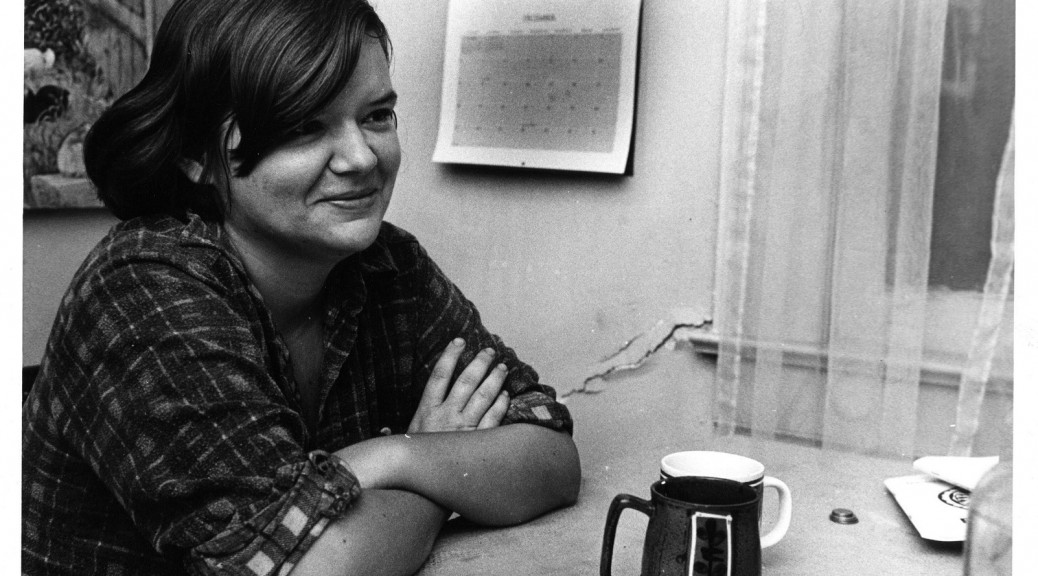
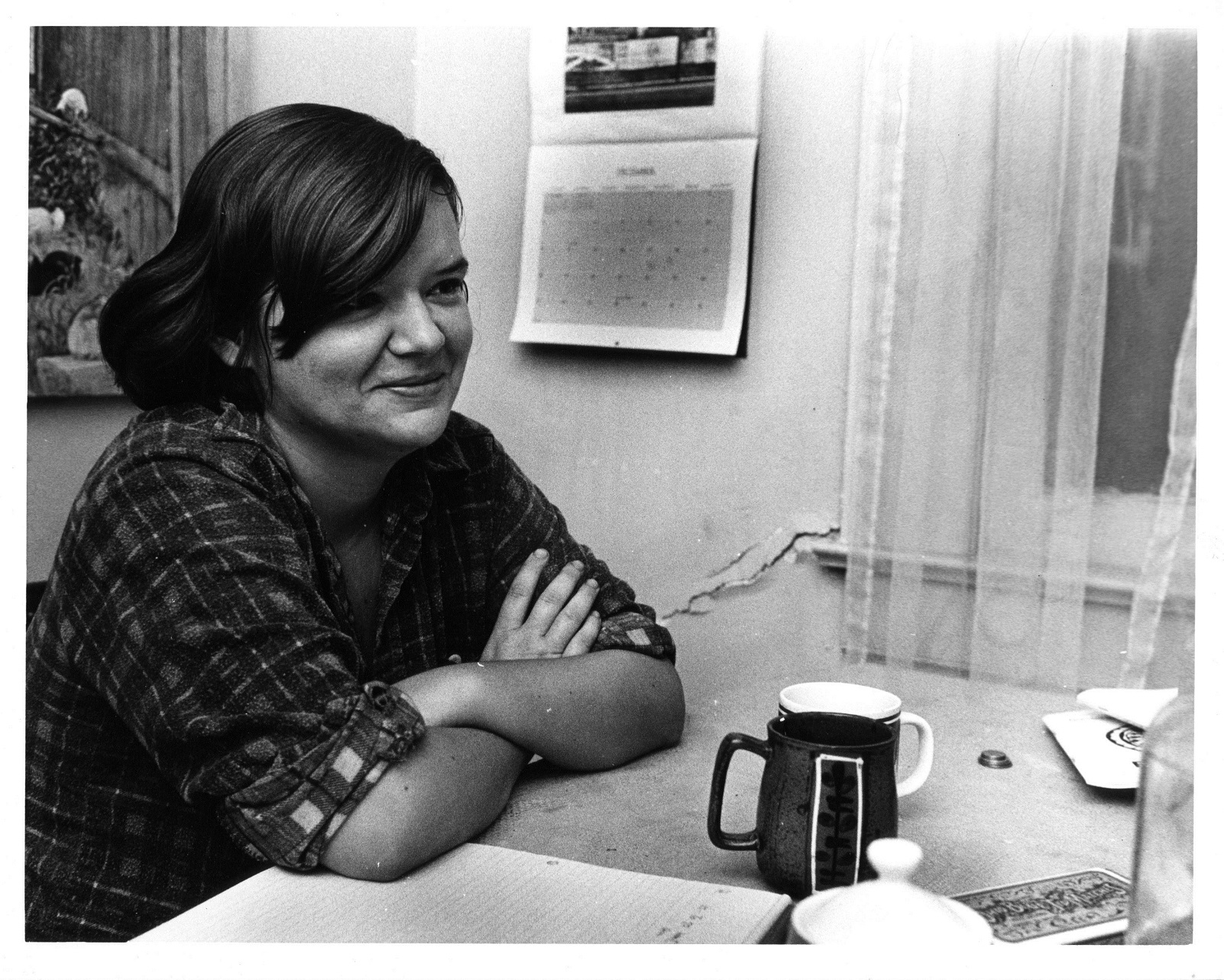
mabsegrest3
Mab Segrest in her home in Durham, circa 1978-80

Filling 124 boxes and spanning from 1889 to the present, the materials document many aspects of Dr. Segrest’s personal and professional history.  In the series related to her family, there are a variety of valuable materials, including correspondence from the Panama Canal, Civil War portraits, and artifacts from her childhood in Tuskegee, Alabama.  Professional materials include everything from correspondence, teaching files, and organizational records to drafts and research materials from her most famous published works, Memoir of a Race Traitor (1994) and My Mama’s Dead Squirrel (1985).

mabsegrest1
Mab Segrest circa 1979

The largest section of the papers document Dr. Segrest’s wide-ranging activism, especially her work with North Carolinians Against Racist and Religious Violence (NCARRV), a public interest organization she co-founded in 1983 that rallied citizens against an epidemic of hate violence in this state. NCARRV files contain public communications as well as materials documenting strategy for on-the-ground activism in which she played a central role.

Dr. Segrest’s papers are a great testament to her long-standing commitment to education. Her teaching career started in 1971 when she accepted a position at Campbell University while working on her Ph.D. dissertation (earned at Duke University in 1979). Dr. Segrest has also taught courses at UNC Chapel Hill and Duke. She taught at Connecticut College from 2002 to 2014 where she was the Fuller-Maathai Professor of Gender and Women’s Studies. Most recently Dr. Segrest has taught at both Emory University and Georgia College while researching the history of Georgia’s state mental hospital in Milledgeville.

mabsegrest2
Mab Segrest, feminist activist, writer, speaker, and educator

There is a good deal of connection among the different dimensions of this collection. In particular, it is impossible to separate Dr. Segrest’s work as an activist from her many academic accomplishments as these parts of her life have informed and shaped one another.  When processing a person’s papers, it is impossible not to feel connected to them in some sense.  I’m moved by Dr. Segrest’s enormous resolve and courage, and my time with her papers has increased my appreciation of her work and her dedication to activism and social justice.

The Mab Segrest Papers are an incredibly deep and rich resource within the Bingham Center and the Rubenstein Library. It has been a privilege to work with this collection and it is exciting to imagine the scores of students, scholars, and others whose work will be informed by these materials.

Post contributed by Rachel Sanders, intern for the Sallie Bingham Center for Women’s History and Culture. 

Boston Apple Pudding (1823) – Rubenstein Library Test Kitchen


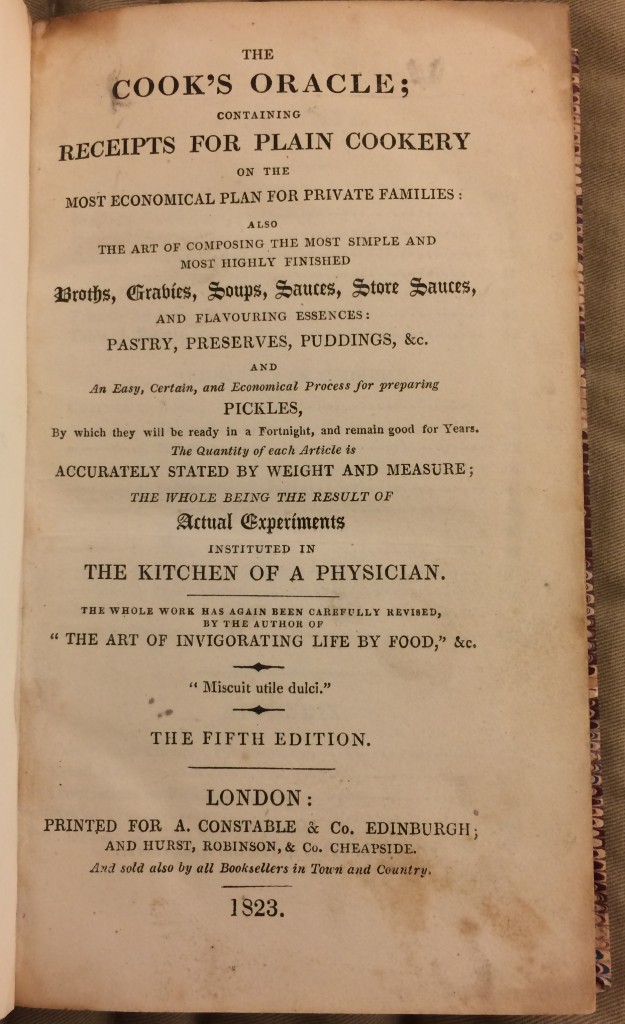
IMG_3277The Cook’s Oracle
was a bestseller when it was first published in 1817. Its author, William Kitchiner (1775-1827), was a household name in England at the time, and was known for being an atypical host to his dinner guests – he prepared the food rather than his staff and even did the cleaning up as well. In addition to being an avid cook and successful cookbook author, Kitchiner was also an optician and inventor of telescopes, which perhaps explains why this particular cookbook is in the History of Medicine Collections here at Duke.

In the United Kingdom, the origin of the potato chip is attributed to Kitchiner, with The Cook’s Oracle including the earliest known recipe. The recipe, “Potatoes fried in Slices or Shavings,” instructs readers to “peel large potatoes, slice them about a quarter of an inch thick, or cut them in shavings round and round, as you would peel a lemon; dry them well in a clean cloth, and fry them in lard or dripping.”

Other notable entries include eleven recipes for ketchup – including two types each for walnut, mushroom, and tomato ketchups – and the recipe for wow-wow sauce, which is parodied (though retains the same name) in the Discworld novels by Terry Pratchett.  [Ed. note: Earlier this year, one of our cooks made Kitchiner’s Shin of Beef Stewed with Wow Wow sauce, complete with mushroom ketchup.]

IMG_3279

Looking through our copy of The Cook’s Oracle, I was drawn to the recipe for Boston Apple Pudding. It seemed like a simple recipe, and I was curious to know what apple pudding would be like.

photo 1


As I was gathering ingredients, some things were unclear. How does one determine what constitutes “one dozen and a half good Apples”? I ended up buying a five pound bag of apples and peeling all of them with the help of a friend.

photo 2

photo 3The apples actually cooked down pretty quickly – it probably took less than thirty minutes in total. I didn’t know what “moist sugar” is, but it turns out it is actually a thing. Because we already had brown sugar, that’s what I used to sweeten the apples.
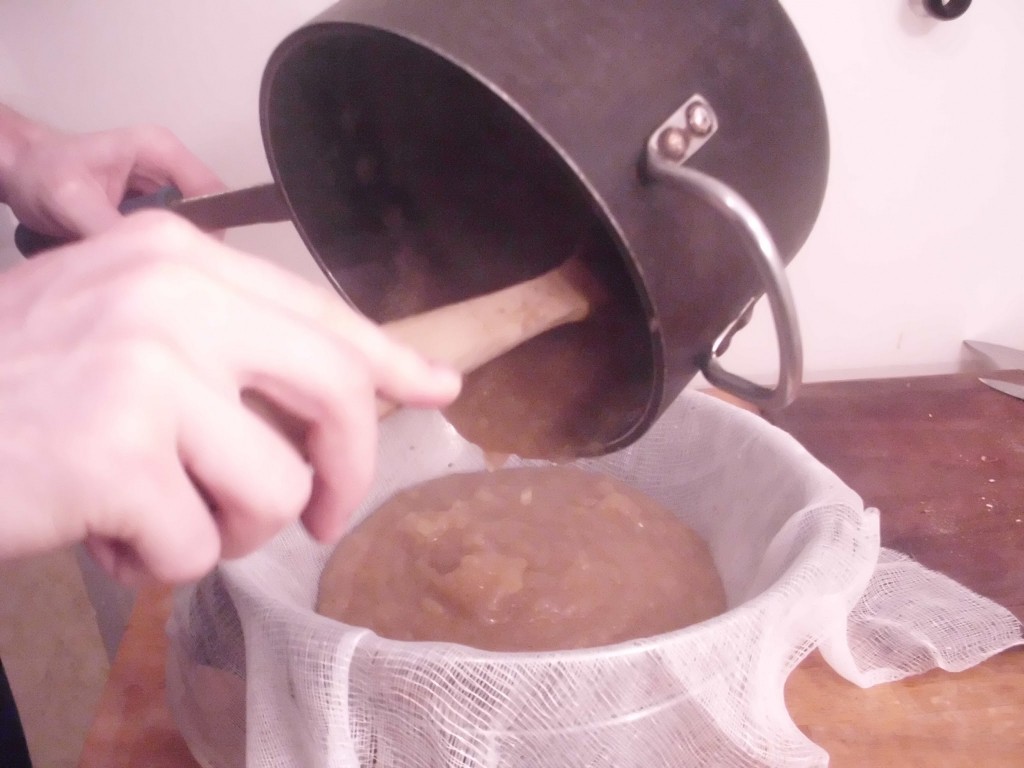
photo 4

Next, it was time to strain the apples through a hair sieve. You can see a hair sieve at the British Museum here – but as it turns out, I don’t have one! We first tried to pass the apples through a fine-mesh sieve, to no success. Next we went out and bought some cheesecloth to try and pass it through that. Again, no luck! Finally, I used my colander to press the apples through.

photo 5

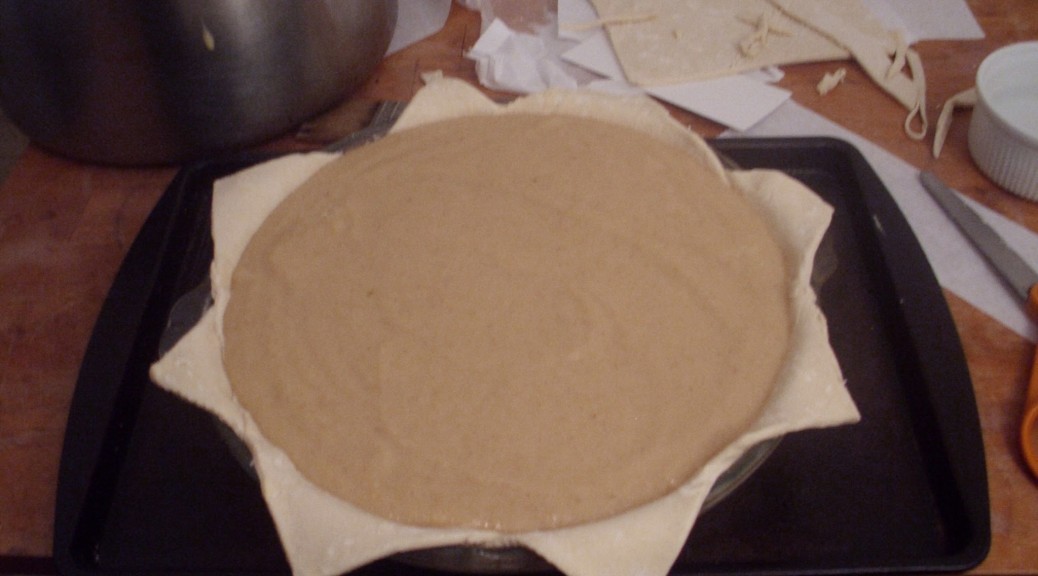
photo 6We mixed in the butter, eggs, and lemon zest. For the crust, I used a sheet of puff pastry, but since puff pastry is square, I used some of the other sheet of puff pastry to fill in the missing pieces. As you can see below, it ended up looking like a giant flower!photo 7
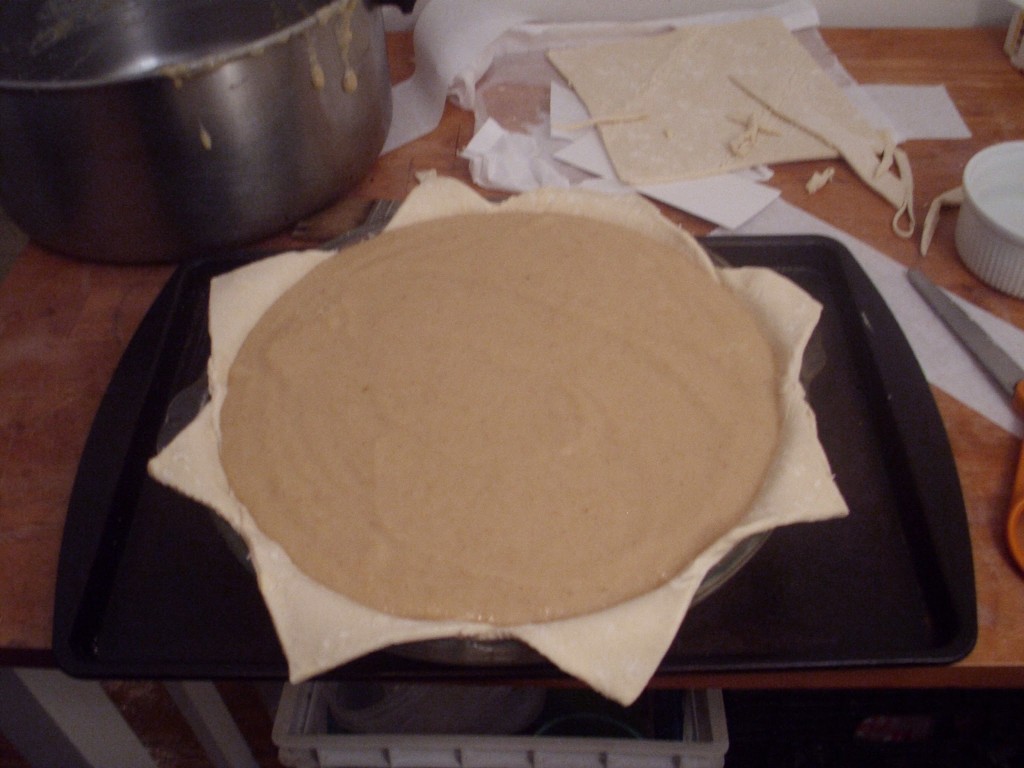
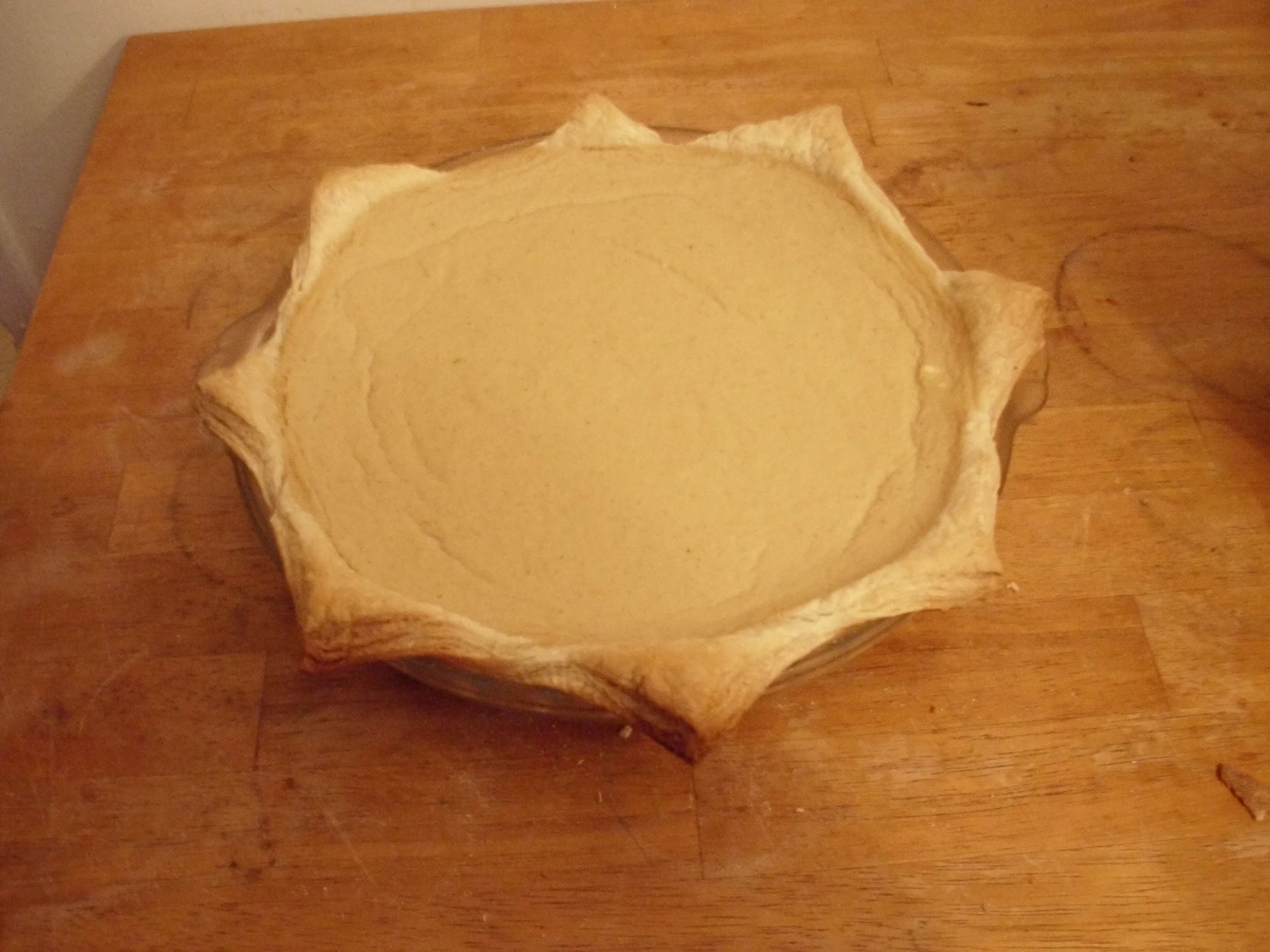
The recipe only says to bake for 30 minutes, so this part required a little finagling. First, I set the oven to 350 degrees and baked for 30 minutes, but the pudding didn’t seem to be setting up, so I added on another ten minutes. It was really unclear what the final product would be like, but even after an additional ten minutes, it still didn’t seem quite right. At this point, I turned off the oven, propped the door open with a large slotted spoon, and left it for a final fifteen minutes. At this point, I was worried about burning the crust, so I accepted the pie as is.

photo 8

The final pudding was really interesting. It wasn’t quite what I think of as a pudding, but it definitely wasn’t a pie either. The crust added a nice variety to the texture, and the apples had a really robust flavor – cooking them with the lemon peel really made a difference.

To see this recipe and others in The Cook’s Oracle, the book can be found in our catalog here.

Post contributed by Amelia Holmes, History of Medicine Collections Intern


The Archives of the Library Answer Person

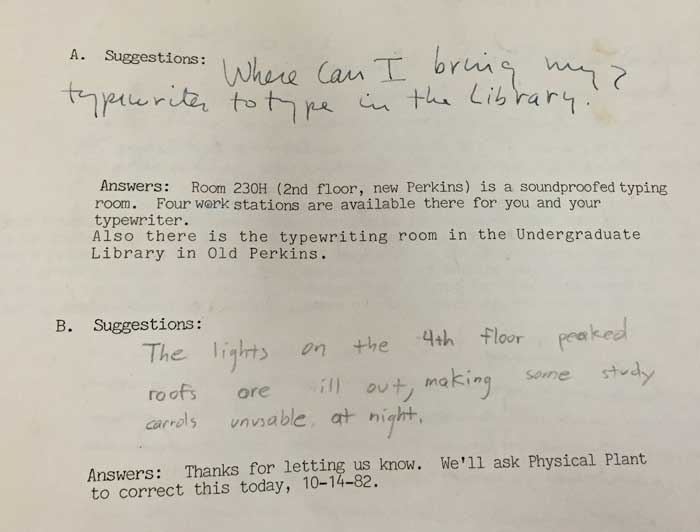
In September of 1982, a librarian at Duke set up a simple loose-leaf binder suggestion book in the lobby of Perkins Library. Each page in the book had a spaces for three suggestions/questions and three answers. In October of that year, the first group of pages with written suggestions and questions were removed, taken home by that librarian and answered in long-hand, then typed up by an administrative assistant directly onto the original pages and placed back in the book for anyone to read. This was the beginning of the Perkins Library Suggestion/Answer Book, a popular tradition that would live on, in more than one form, for more than twenty years.

At first, the binders were available in the Reference area after the pages filled up; then photocopied versions were bound into volumes and included in the Perkins and Lily Library stacks. In 1993, a “best of” selection was printed in a limited run in-house. But now, the original pages—with accumulated detritus of organic material, white-out, pen and pencil scribbling, and water damage—have at last come to the University Archives for preservation and long-term storage. Some pages are missing and the binders were exposed to water at some point; the lovely people in Conservation have already dealt with some inert mold and the pages are now being rehoused in acid-free folders.

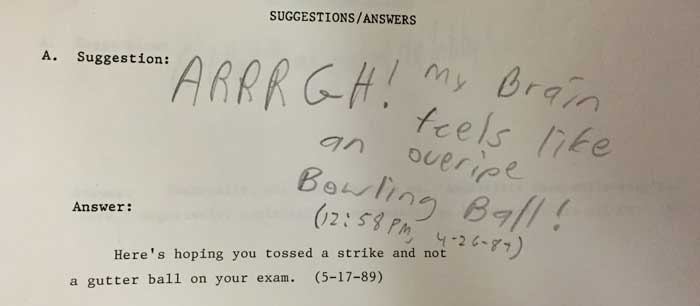
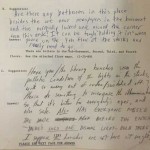
The pages are fascinating. The suggestions and questions are signs of the times, demonstrate student engagement with the library and the University as a whole, and show students being students: curious, angst-y, angry, grateful, silly, and thoughtful. In return, the Answer Person is both serious and facetious, deflecting offensive questions with jokes, omitting names, giving in-depth answers from outside sources, taking constructive suggestions and compliments to heart, and generally being a librarian (often instructing suggest-ers and questioners where they can find their answers instead of simply providing easy answers for them).

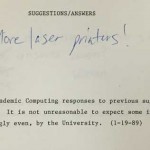
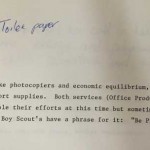
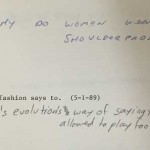
Some concerns are clearly timeless: why is the library so cold, why aren’t the printers working, more bathrooms, more food, more lights, please restock the toilet paper:

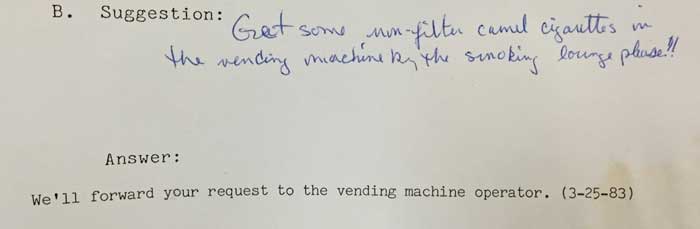
Some other entries are very much of their time, like the suggestion about types of cigarettes for the vending machines (smoking in the library! This archivist is horrified):

Library Answer Person: Smoking in the Library!?

While others are somehow a combination of both, as with this plaintive cry (the very first Library Answer Person question) for space to write and do work on one’s own machine (substitute typewriter with laptop), or this detailed discussion of a current television show (substitute Twin Peaks with Game of Thrones or Man in the High Castle – I mean, whaaaaaat?!):

Library Answer Person: Typewriter

Library Answer Person: Twin Peaks

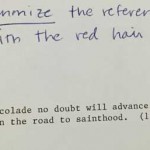
Many discuss the library and how it could be improved or where it is doing nicely, showing a community engagement with the library that is as strong as it is critical.  Also, people really loved the red-haired Reference Librarian and Stuart the Government Documents Librarian:

Then there are the ones I giggled over, the ones that are just people being people, weird and silly:

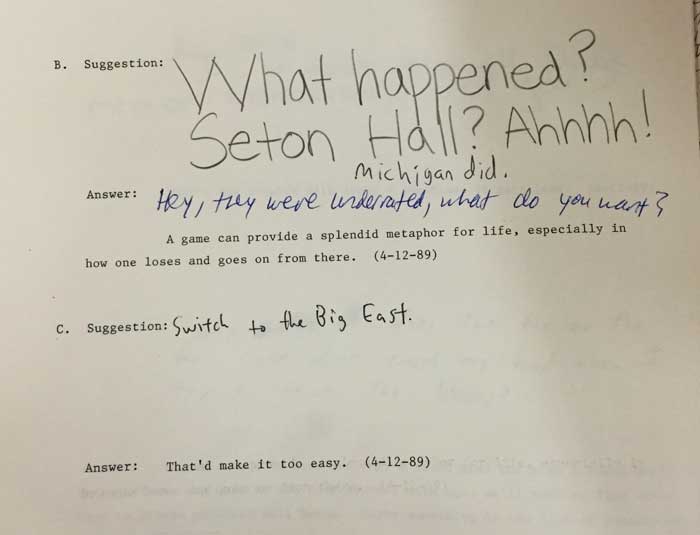
The sports fans:

Library Answer Person: Seton Hall Upset

The studious:

Library Answer Person: Exams are Hard

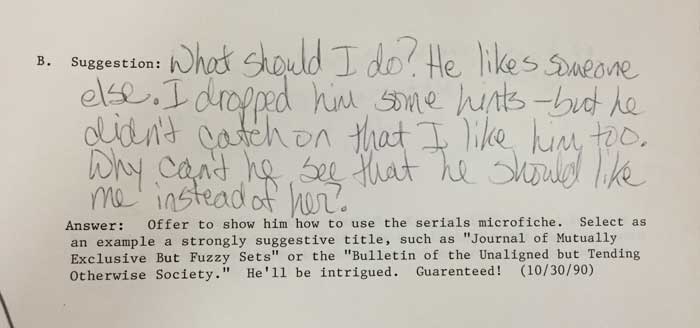
The romantics:
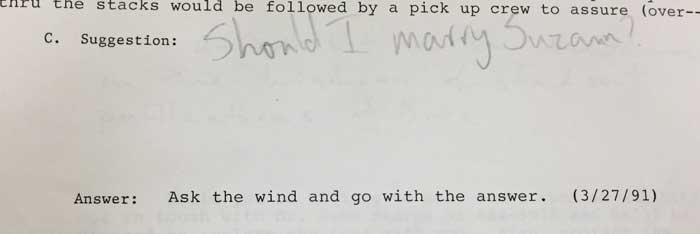
Library Answer Person: How to Woo

Library Answer Person: Suzann

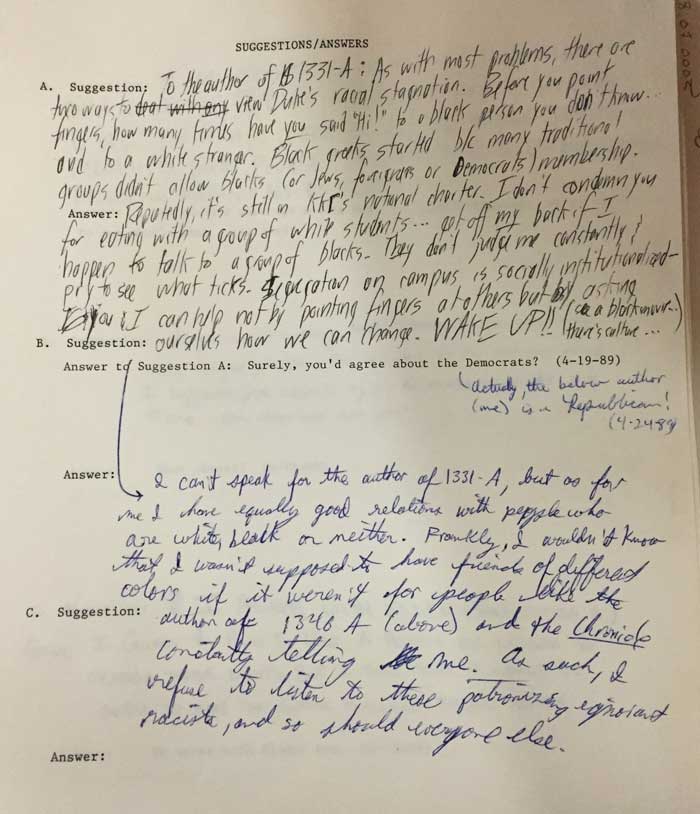
People developed a relationship with the Suggestion/Answer Book, and frequently referred back to earlier questions and answers, coming back to see if their own questions had been answered, and responding to the answers and other peoples’ comments. Frequently, there are multiple commenters on a given entry. This kind of discussion led to some deep discussions on controversial or difficult topics, such as the nature of modern art and race in the Duke community (the page with the question #1346A is responding to is unfortunately missing):

Library Answer Person: Modern Art

Library Answer Person: Race

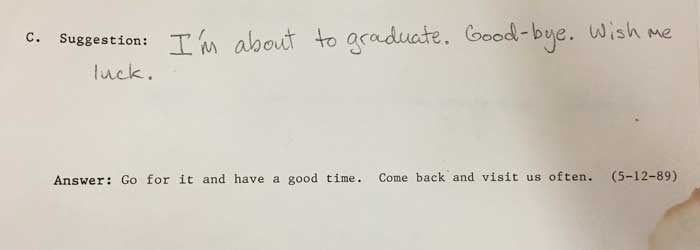
And finally, there are the poignant departures:

Library Answer Person: Good-Bye and Good Luck!

These pages are a tangible window into the Duke student body’s engagement with the Library, with the University, and with each other. Like a proto-Internet comments page, there is a smorgasbord of humanity here: anger, plentiful curse words, sexism, racism, homophobia, compliments, intelligence, optimism, gratitude, tolerance, joy, and well-wishes. Plus a bag of grits.

To give away a decades-old open secret, the Perkins Library Suggestion/Answer Book Person was John Lubans, Public Services Librarian and Assistant University Librarian, here at Duke from 1982-2001 and the donor of these pages to the University Archives.

Post contributed by Tracy Jackson, Technical Services Archivist for the Duke University Archives.