Category Archives: Hartman Center

Mad Men Monday

MadMenLogo1

Don Draper and the whole gang were back last night with the premiere of Mad Men’s Season Six. If you are big fans of the show, like us, then join us as we look back at some ads that resonate with each episode of the new season in what we are calling Mad Men Mondays.

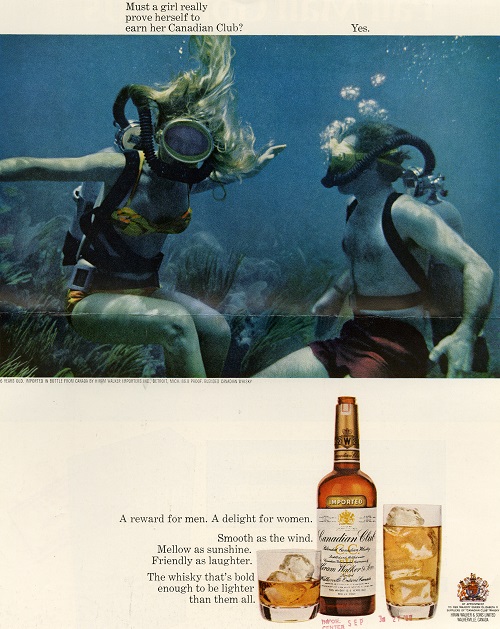
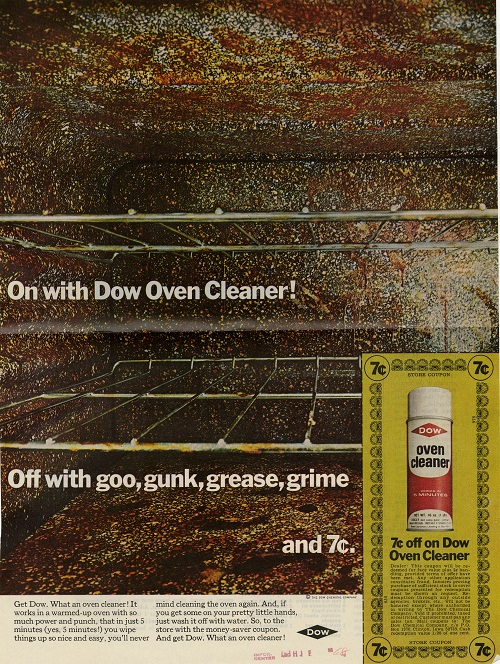
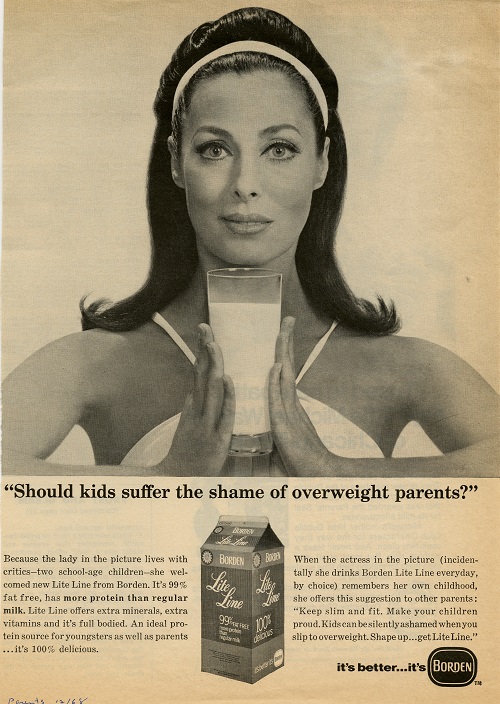
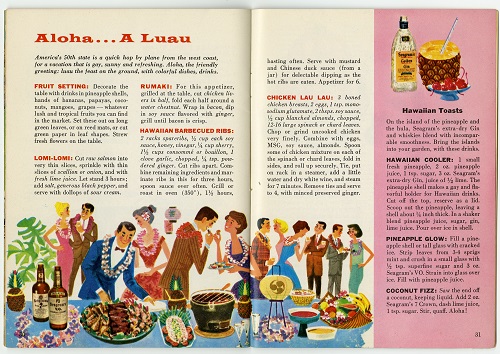
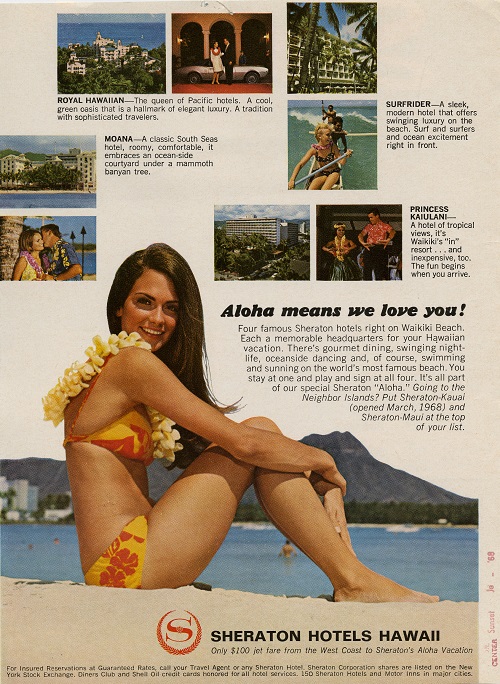
Last night’s episode featured references to the Royal Hawaiian Sheraton, Dow Oven Cleaner, fondue, Canadian Club Whiskey, and dieting, among other things. Enjoy our selection of highlighted ads and advertising cookbooks that reflect the brands and themes that Mad Men characters interacted with last night. A gallery of our selected images can also be found on Pinterest and Flickr.

CanClub-compAdsF330006

DowOven-compAdsH430007

Fondue-CompAds-1

FondueCookbook1960s-0097003  Reduce-compAdsF120009

SeagramCookbook1960sA-0011002

SheratonCompAds-T431010

Whiskey-CompAdsF330005


Come Visit! We’re Now Taking Applications for Travel Grants

Researchers! The David M. Rubenstein Rare Book & Manuscript Library is now accepting applications for our 2013-2014 travel grants.

The Sallie Bingham Center for Women’s History and Culture, the John Hope Franklin Research Center for African and African American History and Culture, and the John W. Hartman Center for Sales, Advertising & Marketing History will award up to $1,000 per recipient to fund travel and other expenses related to visiting the Rubenstein Library.

The grants are open to undergraduate and graduate students, faculty, independent scholars, artists, and activists who live more than 100 miles from Durham, NC and whose research projects would benefit from access to collections held by one of the centers.

More details—and the grant application—may be found on our grants website. Applications must be postmarked or e-mailed no later than 5:00 PM EST on March 29, 2013. Recipients will be announced in April 2013.

NC Travel Billboard, "Only a Day's Drive," undated. From the Outdoor Advertising Association of America Archives.
NC Travel Billboard, “Only a Day’s Drive,” undated. From the Outdoor Advertising Association of America Archives.

Some of last year’s recipients include:

At the Sallie Bingham Center for Women’s History and Culture:

  • Bridget Collins, a graduate student in the History of Science, Medicine, and Technology at the University of Wisconsin-Madison, used prescriptive literature held by the Bingham Center as part of her research for her dissertation, “From the Cradle to the Grave: Infectious Disease in the Twentieth Century American Home.”
  • Laura Foxworth, a graduate student in the Department of History at the University of South Carolina, for research for her dissertation, “The Spiritual is Political: How the Southern Baptist Convention Debated Feminism and Found the New Right.” You can read more about her visit here.
  • Jessica Lancia, a graduate student at the University of Florida, conducted research for her dissertation, “Borderless Feminisms: A Transnational History of the U.S. Women’s Movement, 1967-1985.” You can read more about her visit in the Fall 2012 issue of the Bingham Center newsletter.

At the John Hope Franklin Research Center for African and African American History and Culture:

  • Brooke N. Newman, Assistant Professor in the Department of History at Virginia Commonwealth University, for a study on gender, race, and power in the eighteenth century British Caribbean.
  • Kathryn Banks, Assistant Professor in the History and Political Science Department at Andrews University, for an examination of African-American employment in the Southern textile industry from 1895 to 1945.
  • Max L. Grivno, Associate Professor from the Department of History at the University of Southern Mississippi, for an analysis of slavery in Mississippi, 1690-1865.

At the John W. Hartman Center for Sales, Advertising, and Marketing History:

  • Anne Schmidt of the Max Planck Institute for Human Development in Berlin, Germany, for research for her book about the meaning and importance of emotions in advertising throughout the twentieth century in Germany and ways emotions were a constitutive element of capitalist practices of production and consumption.
  • Marcia Chatelain, Assistant Professor in the Department of History at Georgetown University, conducted research on the ways in which segregation shaped African-American food culture in the South for her book, A Taste of Freedom: African-American Dining Culture and the Struggle for Civil Rights.
  • Rochelle Pereira-Alvares, a graduate student in the Department of History at the University of Guelph, Canada, exploring how the marketing and advertising initiatives of Hiram Walker and Seagram influenced the way in which consumers purchased and imbibed spirits, and the impact consumers’ changing tastes had on the companies’ marketing and product development decisions, 1950-1990.
  • Bryce C. Lowery, a graduate student in Public Policy at the University of Southern California, for research for his dissertation, “The Consumable Landscapes of Los Angeles: How the Spatial Ecology of Outdoor Advertising Influences the Quality of Life.”

Post contributed by Stephanie Barnwell, Bingham Center intern.

Collections for a rainy day

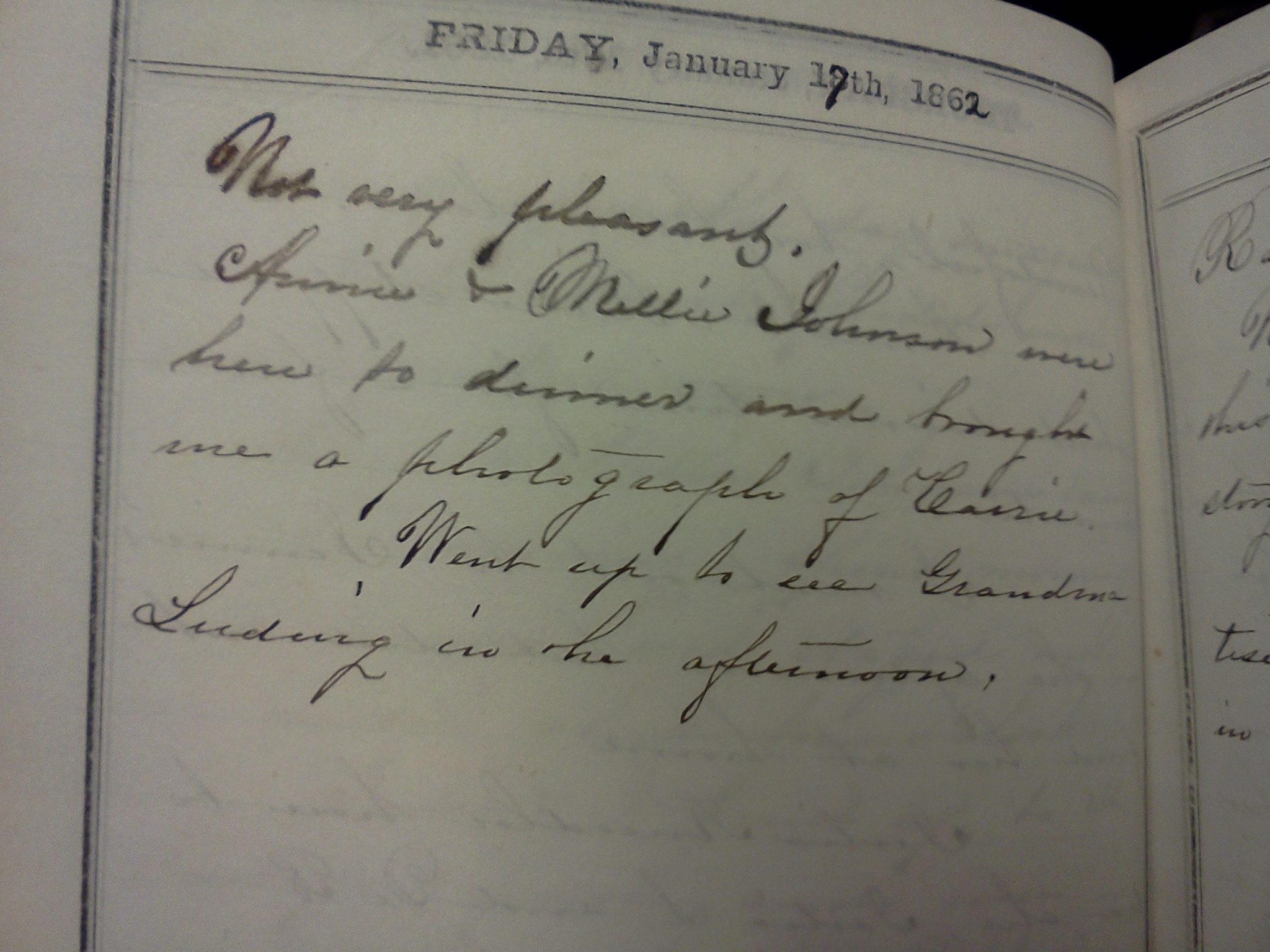
The weather for the past week has been nothing but rain here in North Carolina. Just for fun, I looked up the January 17, 1862 entry in this diary from Philadelphia, and guess what I found?

January 17, 1862: Not very pleasant.

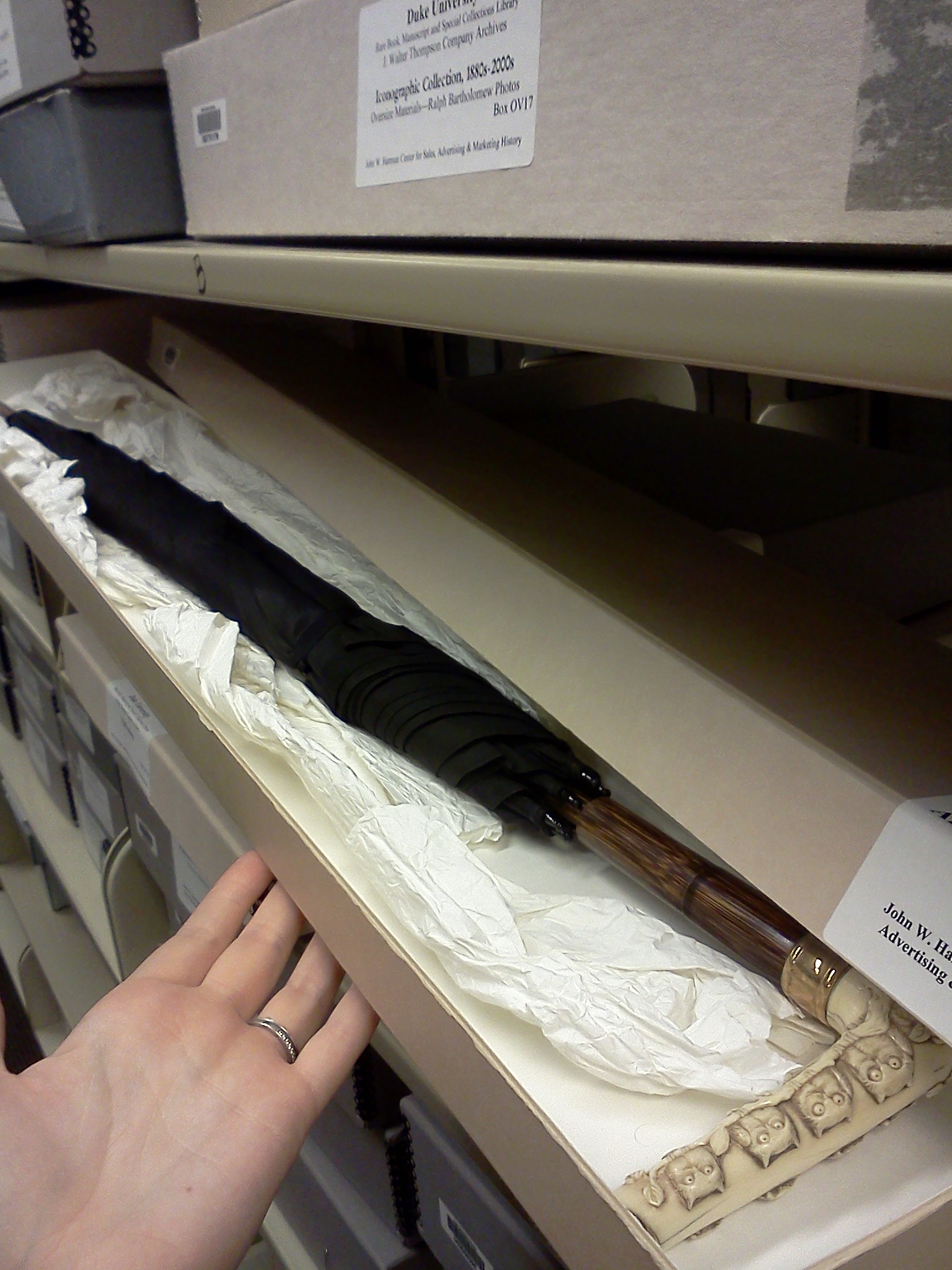
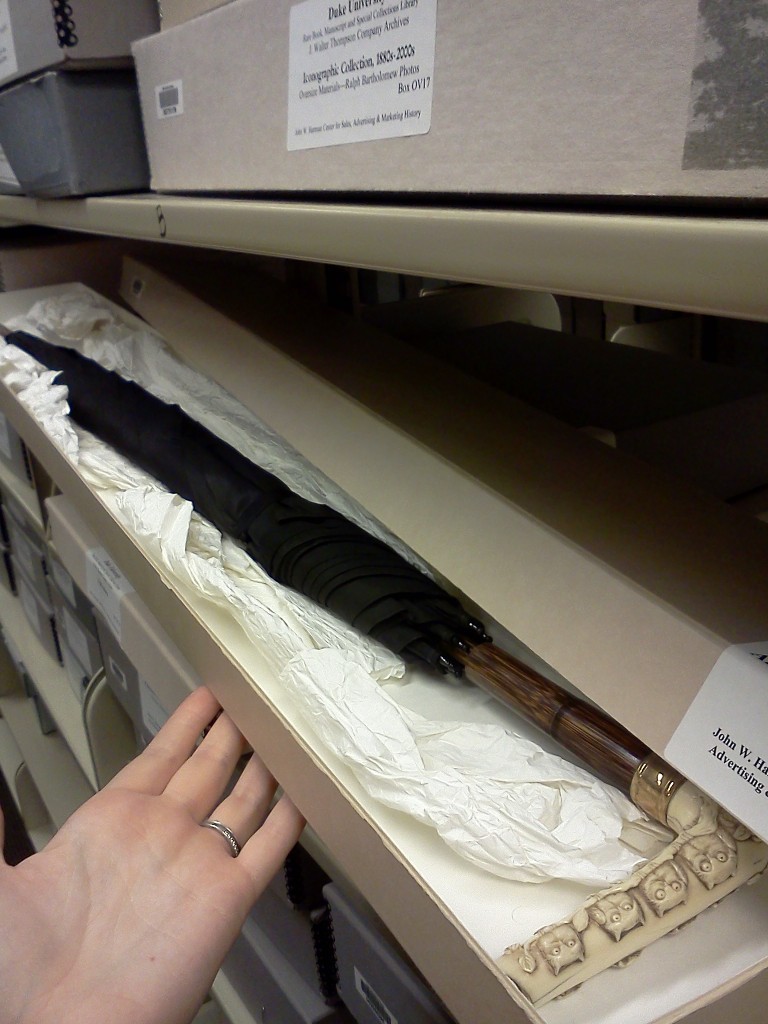
January 17, 1862: Not very pleasant. (It was also “rainy and unpleasant” on January 18.) Perhaps this woman should have borrowed J. Walter Thompson’s umbrella, from the J. Walter Thompson Artifacts and Memorabilia collection.

IMG_20130117_113605
J. Walter Thompson’s umbrella.

Despite the rain, both of these collections safely made it to swing space today.

Nancy Fletcher on Outdoor Advertising

Date: Thursday, November 8, 2012
Time: 5:00 PM reception, 6:00 PM talk
Location: Gothic Reading Room, Perkins Library
Contact information: Jacqueline Reid Wachholz, 919-660-5836 or j.reid(at)duke.edu.

The John W. Hartman Center for Sales, Advertising & Marketing History at Duke University celebrates its 20th Anniversary in 2012 with a lecture series of advertising luminaries. Please join us next Thursday for the fourth talk in the series.
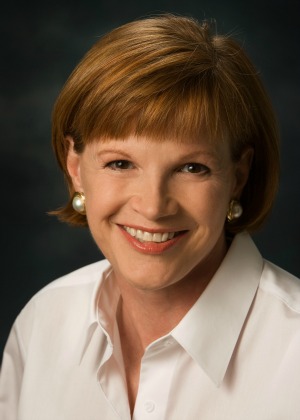
Nancy Fletcher, CEO of the Outdoor Advertising Association of America (OAAA) will talk about Outdoor Advertising: Unified Vision. Bold Future. Outdoor advertising is one of the oldest forms of media in existence, dating back to the circus posters of the 1800’s. Since those early days, outdoor advertising has constantly evolved to adapt to new markets, formats, technology, and opportunities. Please join us and take another look at one of the fastest-growing advertising media around. The event is free and open to the public. For more information, visit the lecture series website.

This 20th Anniversary Lecture Series event is sponsored by the Duke University Office of the Provost, Fuqua School of Business, Trinity College of Arts & Sciences, Markets & Management Studies, Duke Marketing Club, NCOAA, SCOAA, Fairway Outdoor Advertising, and Adams Outdoor.

Post contributed by Jacqueline Reid Wachholz, Director of the John W. Hartman Center for Sales, Advertising, and Marketing History.


Two Words for Halloween: Scary Clowns!

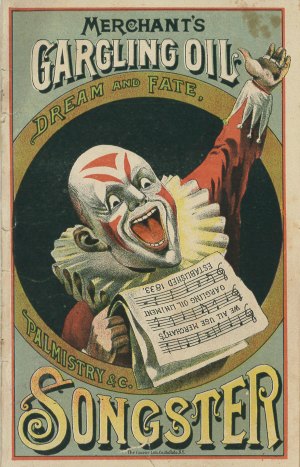
Cover of Merchant’s Gargling Oil Dream and Fate, Palmistry, &c. Songster, Lockport, NY, ca. 1880-1890s.

We’ve seen many advertising campaigns of yesteryear here at the Rubenstein Library, thanks to the John W. Hartman Center for Sales, Advertising, and Marketing History.  Our History of Medicine Collections contain many examples of promotional items for patent medicines and related remedies.  And the Library holds an extensive collection of American songsters, or ephemeral booklets of song lyrics popular in the nineteenth century.  But never have we seen more terrifying examples of any of these genres than the Merchant’s Gargling Oil Songsters, which feature scary clowns on their covers.

We have the Merchant’s Gargling Oil Co. to thank for these frightful specimens.  The Hagley Museum and Library’s online exhibit on patent medicines tells us that the oil was “primarily used as a topical ointment to treat horses and other animals for burns, scalds, sprains, and bruises,” but could also be used to treat other odd ailments, from foot rot to mange.  The oil was not, apparently, gargled.

We know what you’re asking: why use scary clowns to promote veterinary medicine?  We presume that the clowns used to promote the Merchant’s Gargling Oil Liniment were not intentionally scary.   Perhaps they were not creepy at all to the nineteenth-century eye, but rather appeared amusing, colorful, and whimsical.  However, the fact that these particular songsters combined popular song lyrics with instruction on dream interpretation and fortune telling lends itself to the belief that there’s more to these clowns than meets the eye. Not to mention the owl on the shoulder of one of the clowns, and the deranged look in the eyes of the other.

Cover of Merchant’s Gargling Oil Songster, Lockport, NY, ca. 1880-1890s.

We wouldn’t want to meet either of these clowns on a dark Halloween night, but you’re welcome to come see them in person in the Library’s reading room… if you dare. Happy Halloween!

Post contributed by Will Hansen, Assistant Curator of Collections. 


Conversation with an Advertising Legend

Date: Thursday, October 25, 2012
Time: 3:00 to 4:30 PM
Location: Biddle Rare Book Room, Perkins Library
Contact information: Jacqueline Reid Wachholz, 919-660-5836 or j.reid(at)duke.edu.

The John W. Hartman Center for Sales, Advertising & Marketing History at Duke University will be hosting “Tea and Conversation with Carl Spielvogel.” University of North Carolina at Chapel Hill James L. Knight advertising professor, Robert Lauterborn will moderate and lead the Ambassador in a discussion of his career in advertising.  Spielvogel’s journey from the NY Times, to McCann Erickson, Interpublic, and Backer Spielvogel ultimately lead to his appointment as Ambassador to the Slovak Republic by President Clinton. Please join us for this fascinating discussion.

The event is free and open to the public. Refreshments will be served.  For more information, visit the Hartman Center homepage or contact Jacqueline Wachholz.

Post contributed by Jacqueline Reid Wachholz, Director of the John W. Hartman Center for Sales, Advertising, and Marketing History.
The Future of Trendspotting: JWT’s Ann Mack

Date: Thursday, October 18, 2012
Time: 5:00 PM reception, 6:00 PM talk
Location: Gothic Reading Room, Perkins Library
Contact information: Jacqueline Reid Wachholz, 919-660-5836 or j.reid(at)duke.edu.

The John W. Hartman Center for Sales, Advertising & Marketing History at Duke University celebrates its 20th Anniversary in 2012 with a lecture series of advertising luminaries. Please join us next Thursday for the third talk in the series.

Ann MackAnn Mack, Director of Trendspotting at JWT will talk about 10 Trends that will Shape the World in 2012 and Beyond, sharing details on some of the key trends that brands will need to understand in the years ahead. Mack will outline these changes in the global zeitgeist, explain what’s driving them, and detail how they’re starting to play out in society. She will also discuss the role of trends at JWT and her process, as well as her career trajectory.

The event is free and open to the public. For more information, visit the lecture series website.

This 20th Anniversary Lecture Series event is sponsored by the Duke University Office of the Provost, Fuqua School of Business, Trinity College of Arts & Sciences, Markets & Management Studies, Duke Marketing Club, and JWT.

Post contributed by Jacqueline Reid Wachholz, Director of the John W. Hartman Center for Sales, Advertising, and Marketing History.
Coke in the Jumbo Size, Sir?

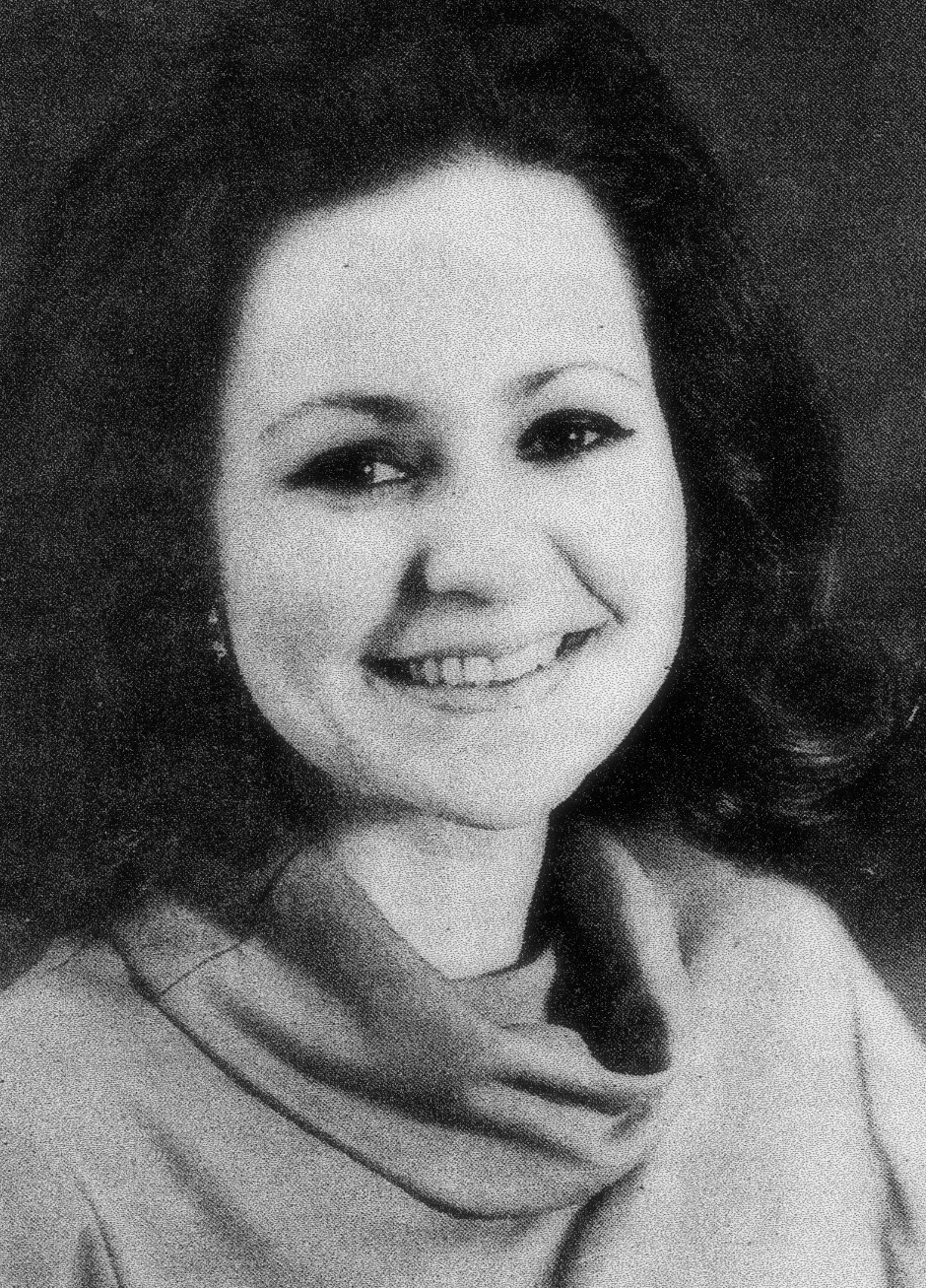
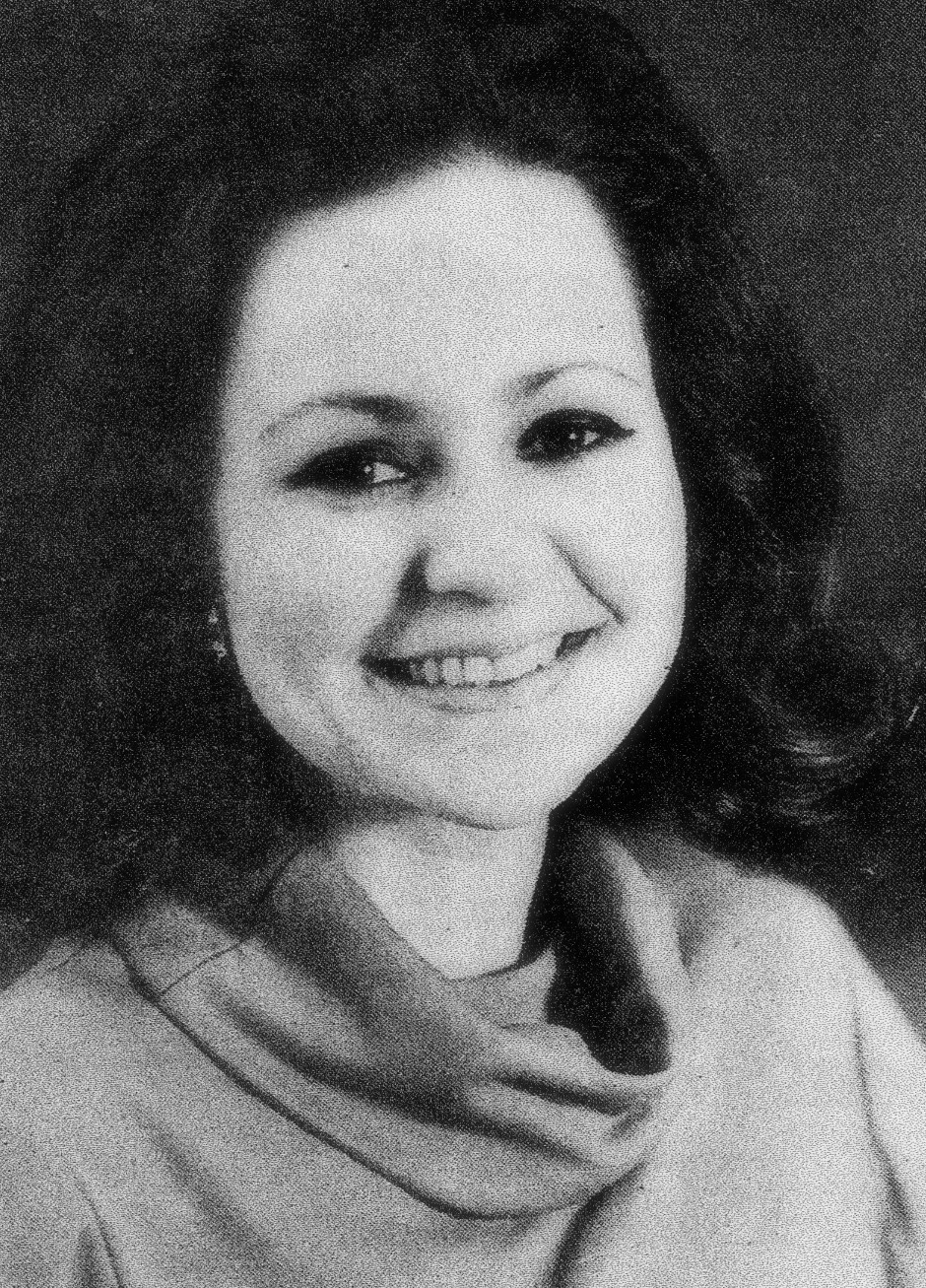
The John W. Hartman Center recently acquired the papers of Adrienne Cohen, an advertising copy writer and creative director who worked for several agencies from the 1960s to the 1990s, including Young & Rubicam, McCann-Erickson and a number of agencies in the Atlanta, Ga. area. Ms. Cohen was the recipient of numerous advertising industry awards and was highly regarded in her field.

Adrienne Cohen
Adrienne Cohen in 1974.

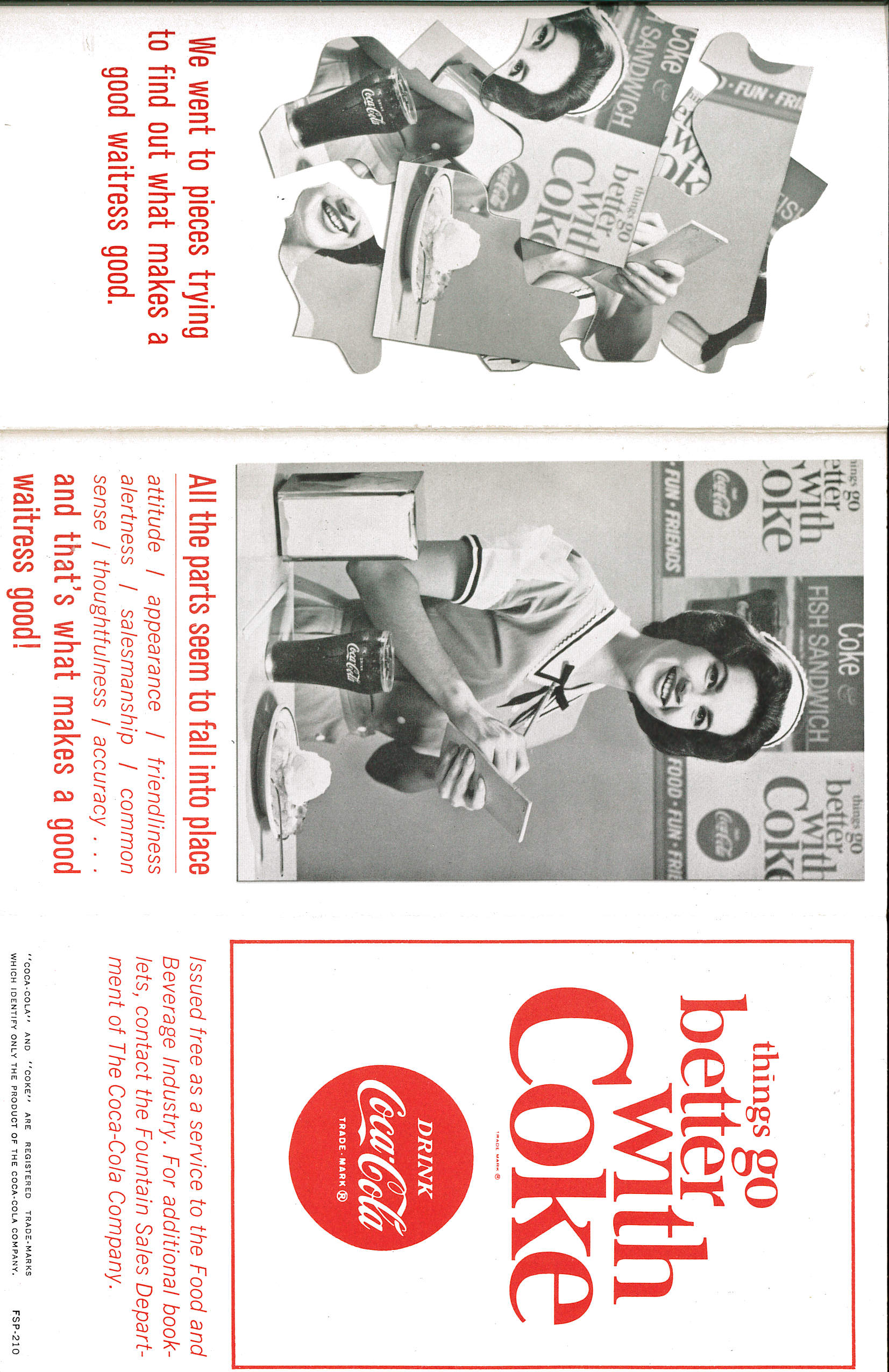
She worked on the Coca-Cola account during the early 1960s, and her papers include several pamphlets produced for the food and beverage industry intended to provide sales and comportment training to waitresses. The pamphlets sought to show restaurant and café managers how the wait staff could boost sales through a program called “Plusmanship” that emphasized the waitress’s power of suggestion to guide diners’ menu item selection.  The title quote and image below come from two of the pamphlets.

These materials add to the Hartman Center’s growing collection of sales and sales training literature, and especially materials pertaining to Coca-Cola retailing.

Post contributed by Rick Collier, Technical Services Archivist for the Hartman Center.

New Acquisitions Week, Day One: Moveable Brains and Laughing Cows

We’re celebrating the beginning of a new fiscal year with a week’s worth of new acquisitions from the first half of 2012.  Two newly acquired selections will be featured in a post every day this week.  All of these amazing resources will be available for today’s scholars, and for future generations of researchers in the Rubenstein Library!

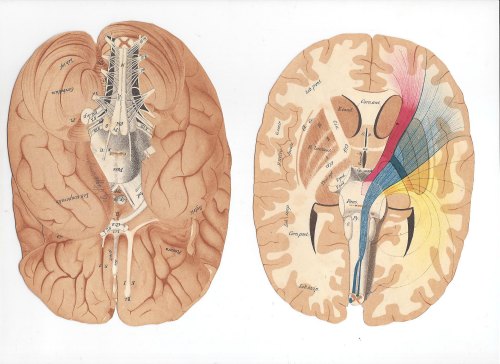
Diagram of the brain, from Ludwig Fick, Phantom des Menschenhirns (1885).
  • Joy Golden Papers: Joy Golden was a well-known advertising copywriter who started her own creative company, Joy Radio, in the 1980s that specialized in humorous radio advertising. She did a series of commercials for Laughing Cow Cheese that became particularly well known.  She also was active in the Friars Club, including holding the position of Governor.  Her papers include files related to her work in advertising from the 1960s forward, and audiotapes of many of the radio advertisements created by her company.  Her papers add to the Hartman Center for Sales, Advertising, and Marketing History‘s rich collections on women and advertising and the development of radio advertising.


Looking Back: Happy Birthday SPAM!

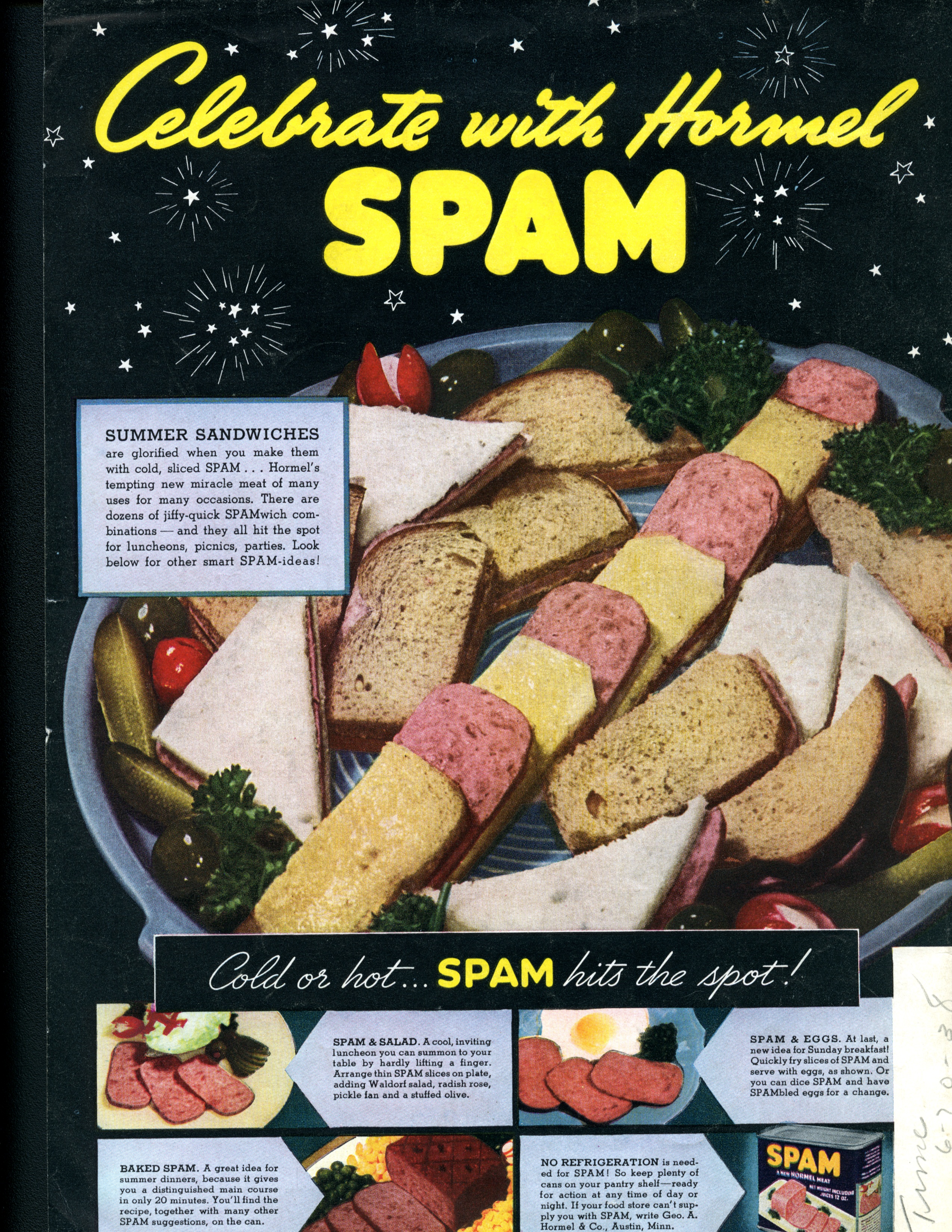
2012 marks the 75th anniversary of everyone’s favorite processed meat: Spam. In the frontispiece of Time in late 1936, Hormel Foods announced the introduction of two new canned meats: a spiced ham and a spiced luncheon meat. The name Spam was inaugurated the following year, putting this canned meat on the road to becoming the most memorable of Hormel’s product lineup of soups, chili con carne, and flavor-sealed chicken and ham. Spam, which now comes in 12 varieties, has sold over 7 billion cans worldwide. To celebrate this anniversary, Hormel is introducing its first spokescharacter, Sir Can-A-Lot.

Advertisement for Spam from Time Magazine, June 20, 1938

Early advertisements for Spam called it a “tempting new miracle meat of many uses for many occasions,” specifically suggesting that Spam & Eggs would be “grand on Sunday mornings,” that Spam & Salad would make for “a cool, inviting luncheon,” and that Baked Spam could provide “a distinguished main course in only 20 minutes.” Copy highlighted Spam as the choice of a thrifty household, claiming that Spaghetti with Spam could serve four for only a dime each. All the advertisements took care to emphasize that Spam did not need refrigeration, which made it perfect for picnics or to feed unexpected guests. “SPAM’s always ready for action – morning, noon and night,” the ads proclaimed.

Post contributed by Jackie Reid Wachholz, Director of the John W. Hartman Center for Sales, Advertising, and Marketing History.