Date: Tuesday, October 25, 2016 Time: 4:00 p.m. Location: Rubenstein Library Room 153 (Holsti-Anderson Family Assembly Room)
Cali Buckley
Join the Trent History of Medicine Lecture Series for our next lecture by Cali Buckley on “The History and Legacy of Ivory Anatomical Manikins.” Ivory anatomical models comprise a little-known set of objects that were popular with male doctors of the late 17th- and 18th-centuries. Their narrative is currently being revised in light of a history of questionable assumptions. Though small and largely inaccurate, the story of anatomical manikins reveals how the politics of medicine impresses meaning on medical objects – often transcending the needs of the scientific community. Ms. Buckley will present on her current hypotheses as well as the process by which medical objects can be examined according to social history, connoisseurship, and material culture.
Cali Buckley is a Ph.D. candidate in art history at Penn State University. She received a Fulbright U.S. Student Award that allowed her to spend the 2015–16 academic year in Germany working on her dissertation, “Early Modern Anatomical Models and the Control of Women’s Medicine.”
The talk will be held in the Holsti-Anderson Family Assembly Room, Room 153, of the Rubenstein Library at Duke University. All are welcome to attend. Sponsored by the History of Medicine Collections.
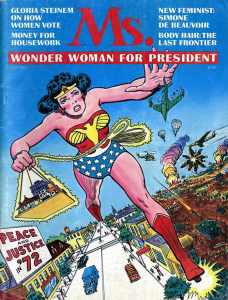
Please join us for a conversation with Linda Lumsden, associate professor at the University of Arizona School of Journalism, about her research project, The Ms. Makeover: The survival, evolution, and cultural significance of the venerable feminist magazine. Dr. Lumsden received a Mary Lily Research Grant recipient to conduct research at the Sallie Bingham Center for Women’s History.
Date: Thursday, October 27, 2016 Time: 12:00-1:30 PM Location: Rubenstein 249 (Carpenter Conference Room) RSVP via Facebook (optional)
Five Women at Duke University, 1976. From the University Archives Photograph Collection. (View on Flickr.)
Join two Duke undergraduate researchers from the Duke History Revisited program as they share their discoveries about women’s past experiences at Duke University.
Duke History Revisited was sponsored by a grant from Humanities Writ Large, with additional funding from the Dean of the Trinity College of Arts and Sciences.
The Struggle Continues: A Dialogue with SNCC Veterans
Date: Thursday, September 29, 2016
Location: The Forum for Scholars and Publics (Old Chem 011)
Time: 12:00 pm – 1:30 pm
Light lunch served beginning at 11:45
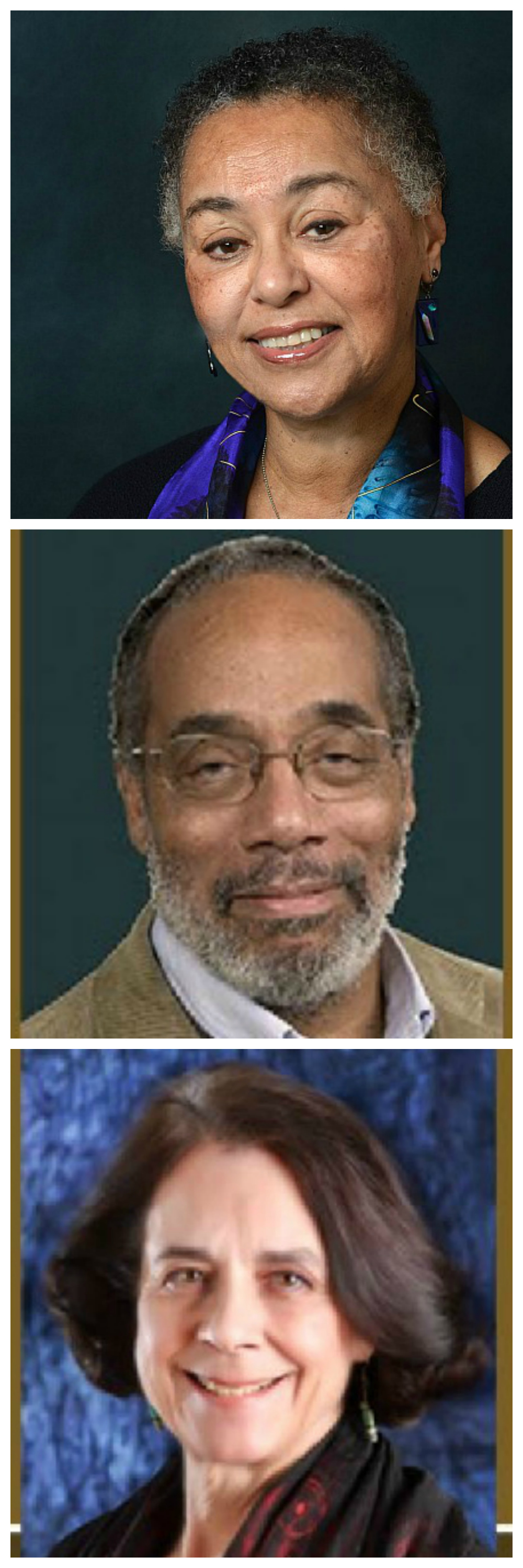
Top to bottom: Judy Richardson, Charlie Cobb, Maria Varela
Please join us for a conversation with three veterans of the Student Nonviolent Coordinating Committee (SNCC) as they discuss their work after SNCC and the southern freedom movement. Charles Cobb, journalist (founder of National Association of Black Journalists) and author (This Nonviolent Stuff’ll Get You Killed: How Guns Made the Civil Rights Movement Possible), Judy Richardson, filmmaker (Eyes on the Prize) and author (Hands on the Freedom Plow: Personal Accounts by Women in SNCC) and Maria Varela, photographer, community organizer and MacArthur “Genius Grant” Fellow, will reflect on how their experiences in SNCC impacted the choices they made with the rest of their lives. From opening the Drum and Spear bookstore and the Center for Black Education in Washington, D.C. to organizing with Latino and native resistance groups in the Southwest, the panel will look at how the worldview and approach they learned in SNCC infused itself into their later work and continues to do so today. The discussion will be moderated by John Gartrell of the John Hope Franklin Research Center at Duke’s Rubenstein Library.
This program is presented in partnership with the SNCC Digital Gateway Project. The SNCC Digital Gateway is a collaborative project of the Student Nonviolent Coordinating Committee Legacy Project (SLP) and Duke University that tells the story of SNCC from the perspective of the activists, themselves. It is funded by The Andrew W. Mellon Foundation and builds off of the pilot website of the SLP-Duke collaboration, One Person, One Vote: The Legacy of SNCC and the Fight for Voting Rights (http://onevotesncc.org). The forthcoming website, SNCC Digital Gateway: Learn From the Past, Organize for the Future, Make Democracy Work (https://snccdigital.org) tells the story of how young SNCC activists united with local communities in the Deep South during the 1960s to take control of their political and economic lives. In it, SNCC veterans, historians of the Movement, archivists, and students weave together grassroots stories, digitized primary source materials held at repositories across the country, and new multi-media productions to bring this history to life for a new generation.
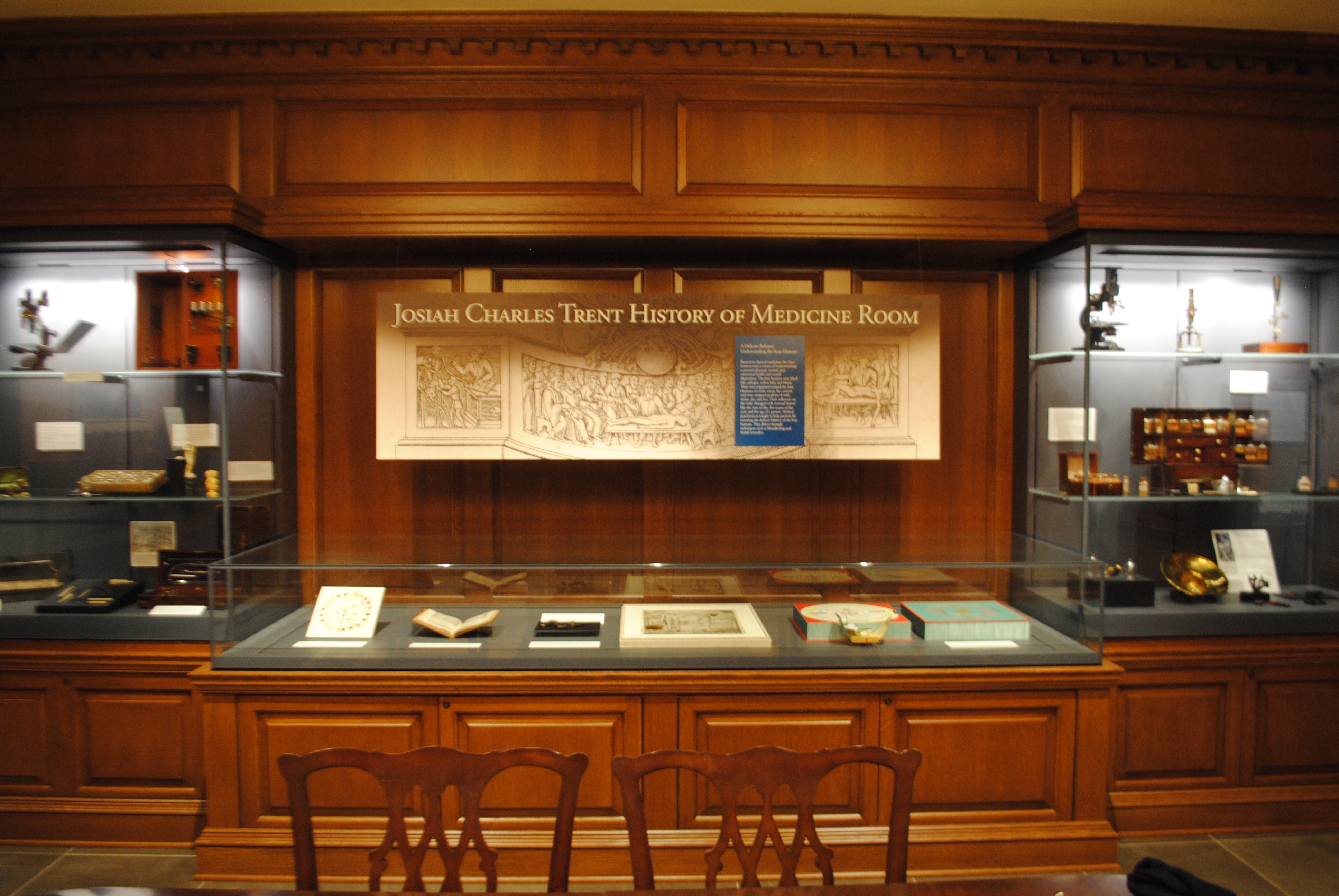
During my tenure as the Research Services Graduate Intern at the Rubenstein Library, I had the great fortune of exploring the fascinating history of the four humors, a topic that is far afield from my doctoral research on the culinary history of New Orleans. Setting aside my copy La Cuisine Creole, I picked up a first edition of Henry Peacham’s Minerva Britanna (1612) and paged through whimsical woodcuts that featured long swordsmen, lions, and laurelled lutenists. Although New Orleans’ history is bedazzled by myth, that of the four humors seems surreal, emerging out of a world occupied by dragons and vengeful gods. What resulted from my foray into this cosmos is a new exhibit in the Josiah Charles Trent History of Medicine Room, entitled, “A Delicate Balance: Understanding the Four Humors.”
A Delicate Balance: Understanding the Four Humors, Josiah Charles Trent History of Medicine Room, David M. Rubenstein Rare Book & Manuscript Library, Duke University. Photo credit: Ashley Rose Young.
The four humors were a means of analyzing a person’s disposition as well as her physical, mental, and emotional health. Within this belief system, every person had a unique humoral composition that shaped her behavior, appearance, and interactions with the broader world. Visualized as bodily fluids whose levels were constantly in flux, Hippocrates named the four humors black bile, phlegm, yellow bile, and blood. Each humor was paired with one of the four elements of earth, water, fire, and air and was assigned qualities of cold, moist, dry, and hot. Their influence on the body changed with external factors like the time of day, the season of the year, and the age of a person.
The origins of this medical philosophy and practice are attributed to the Indian Ayurveda system of medicine as well as ancient Greek, Roman, and Islamic physicians. This holistic approach to human health was pervasive in the Medieval and Early Modern periods and remained a common means of assessing and treating the human body until major advancements transformed medical practices in the mid-nineteenth century.
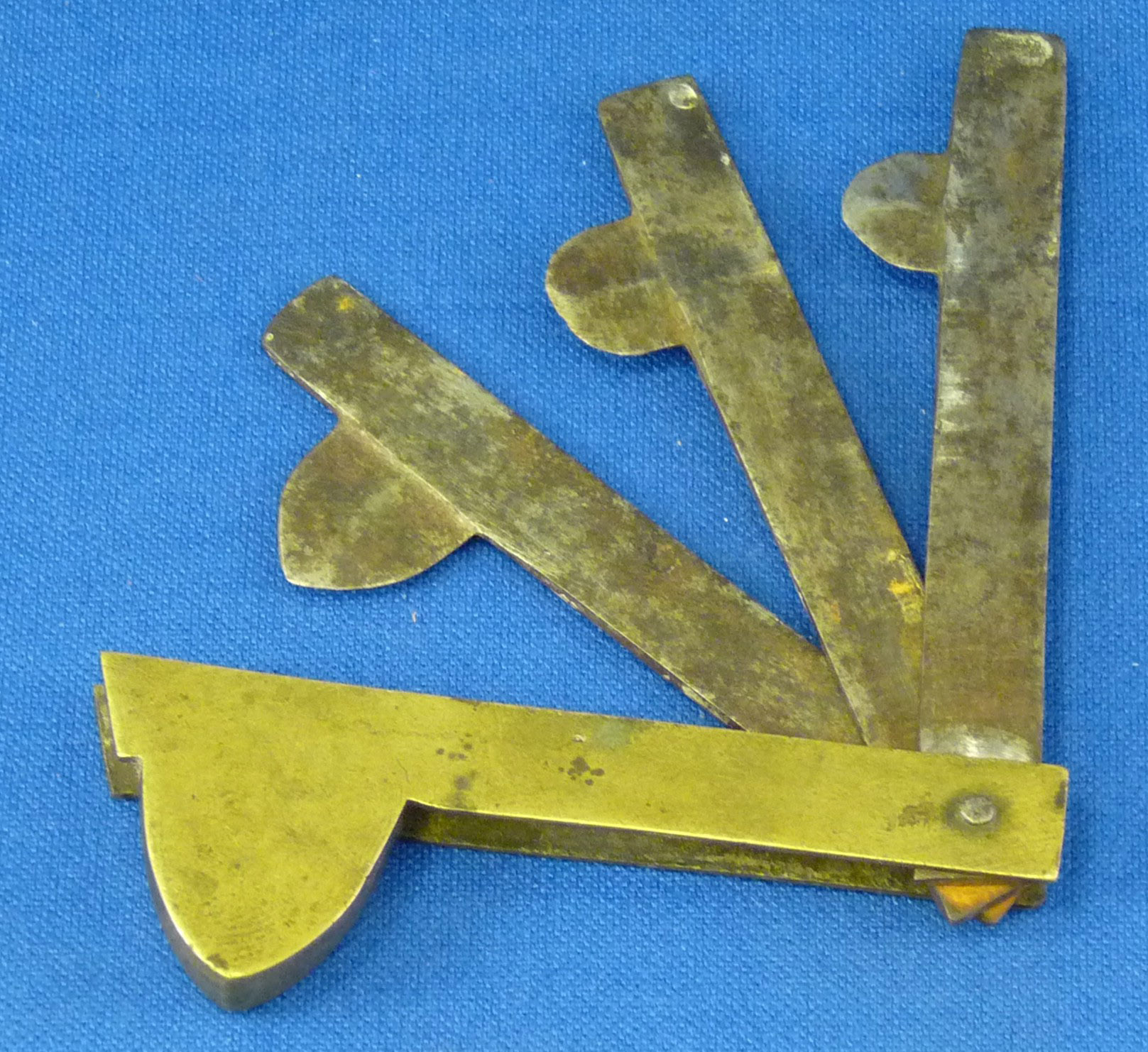
Prior to these innovations, medical practitioners sought to help ailing patients by restoring the delicate balance of the humors and did so through techniques such as bloodletting and herbal remedies. The new exhibit features a bloodletting fleam that a physician would have used to lance open a vein to remove excess blood from the body so as to bring equilibrium to a patient’s internal fluids. In the United States, doctors employed bloodletting through the Civil War to treat soldiers suffering from infection and fever.
Three-blade folding fleam with brass shield, 18th or 19th century, Dr. Callaway Collection Artifacts, David M. Rubenstein Rare Book & Manuscript Library, Duke University.
Consumption also played a major role in balancing the four humors. Throughout Early Modern Europe, for example, physicians kept gardens with plants that were assigned to a particular humor. They believed that patients could restore their bodies to full health by consuming carefully crafted herbal remedies comprised of stems, leaves, fruits, and nuts. Practitioners organized gardens to represent the potency of medicinal plants. Some of these historic gardens still exist today. The circular Minerva Garden in Salerno Italy, for example, is divided into four quadrants representing the four humors with the most potent plant life at the center of the garden. This garden is a physical embodiment of the healing powers ascribed to plants within the humoralist system.
Minerva Garden, Salerno Italy. Photo credit: Ashley Rose Young.
In the next few weeks, I encourage you to visit the Josiah Charles Trent History of Medicine Room on the first floor of the Rubenstein Rare Book & Manuscript Library so as to glimpse into the rich history of the four humors and their impact on medical practices in the Early Modern period through today.
Ashley Rose Young, curator of “A Delicate Balance” exhibit, giving an exhibit talk in the Josiah Charles Trent History of Medicine Room, David M. Rubenstein Rare Book & Manuscript Library, Duke University. Photo credit: Jennifer Scott.
Post contributed by Ashley Rose Young, a Ph.D. candidate in History at Duke University and the Business History Graduate Intern at the Hartman Center.
This summer, the University Archives offered a new program for undergraduate students called Duke History Revisited. The idea was to give students a chance to dig into the University’s history and tell the stories of people and events that were not widely known.
On September 19th, the program’s eight students will come together to recap their research projects. During this event, each student will briefly introduce his or her topic, highlight their research discoveries, and offer their own insight into Duke’s history. The presentations will be followed by refreshments and an opportunity to talk with the students in more detail.
The DHR students spent 6 weeks working with faculty members Jolie Olcott and Joshua Sosin; graduate student Will Goldsmith; and archivists Amy McDonald and Valerie Gillispie. The group met twice a week to discuss progress and share research. This special program was made possible by a grant from Humanities Writ Large and the Office of the Dean of Trinity College of Arts and Sciences.
Students and faculty discuss research strategies during a Duke History Revisited meeting.
We also welcomed a number of special guests to the program to talk about the act of doing research or reflecting on the past. Our guests included William Turner (T ’71, M.Div ’74, PhD ’84), Charles Becton (Law ‘69), Brenda Becton (WC ‘70, Law ‘74), Bob Ashley (T ’70), Steve Schewel (T ’73, PhD ’82), and Robert Korstad (Duke faculty). We were also joined by experts from the library, including Tracy Jackson and Matthew Farrell (University Archives), John Gartrell (John Hope Franklin Center for African and African American History), Laura Micham and Kelly Wooten (Sallie Bingham Center for Women’s History and Culture), Hannah Rozear (Librarian for Instruction), and Michael Daul (Digital Collections).
The students pursued a wide range of topics, using archival materials from the University Archives, materials from other repositories, oral histories and interviews, and other sources. Each created a final project that they felt best expressed the content. The titles and links to the projects are below:
“Town and Gown Relations vs. Power Struggles: An Overview of How the Durham Freeway Controversy Affected Relations Between Durham, NC and Duke University”
Date: Thursday, September 15 Time: 3:30-5:00 p.m. Location: Holsti-Anderson Family Assembly Room, Rubenstein Library 153 Optional RSVP on Facebook
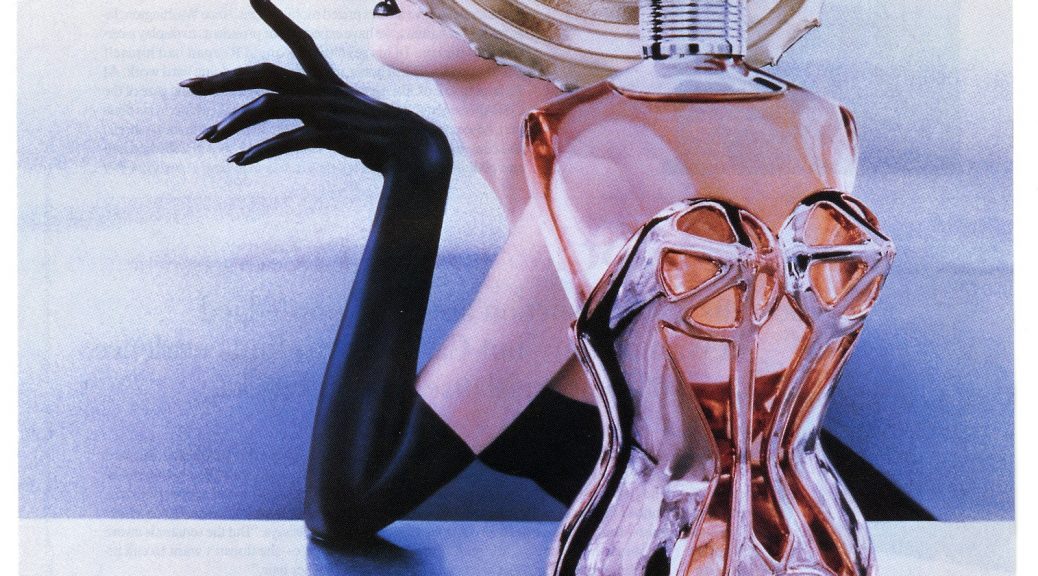
Feminist activist and advertising critic Jean Kilbourne’s pioneering work has helped develop and popularize the study of gender representations in advertising. Her presentation will show if and how the image of women has changed over the past 20 years and powerfully illustrates how these images affect us all. She is the creator of the renowned Killing Us Softly: Advertising’s Image of Women film series and the author of the award-winning book Can’t Buy My Love: How Advertising Changes the Way We Think and Feel.
The Managing Editors of RFD at Short Mountain Sanctuary. From the James T. Sears Papers.
Please join the staff of the Sallie Bingham Center for Women’s History and Culture for a Scholars’ Tea. Three recipients of Mary Lily Research Grants will present brief remarks about their research projects and allow time for conversation with library staff and other attendees. Light refreshments will be served.
Presenters:
Jason Ezell, Ph.D. candidate, American Studies, University of Maryland, “Queer Shoulders: The Poetics of Radical Faerie Cultural Formation in Appalachia”
Margaret Galvan, Ph.D. candidate, English, The Graduate Center, CUNY, “In Visible Archives of the 1980s: Feminist Politics & Queer Platforms”
Yung-Hsing Wu, associate professor, English, University of Louisiana at Lafayette, “Closely, Consciously Reading Feminism”
Mary Lily Research Grants support researchers in their use of women’s and LGBTQ history collections at the Bingham Center.
Post contributed by Jennifer Scott, Bingham Center Public Services Intern.
In the University Archives, we have seen a few time capsules in our day. More often than not, they end up being a bit of a letdown. Newspaper has crumbled, cloth has mildewed, and time has taken its toll on these relics of the past. This year, however, we were fortunate enough to be the recipients of a time capsule that, while modest from the outside, has preserved its remarkable contents in mint condition.
The time capsule was laid in the cornerstone of the Washington Duke Hotel in 1924. The hotel was the first to be built in Durham, and was the product of a fundraising campaign by many leaders of industry and other interested parties, including Duke University administrators. The hotel was a glamorous destination for many years, but by the 1970s the gleam had faded. In 1975, the hotel was imploded. The site today is a plaza, best known for its bull statue.
Someone thoughtful apparently removed the time capsule, and many years later delivered it to the new Washington Duke Inn and Golf Club, adjacent to Duke’s West Campus. The staff of the Washington Duke Inn kindly took care of this time capsule until this year, when it was gifted to the University Archives, and we have an opportunity for the first time to highlight this fascinating collection in a new exhibit, on display outside the Biddle Rare Book Room.
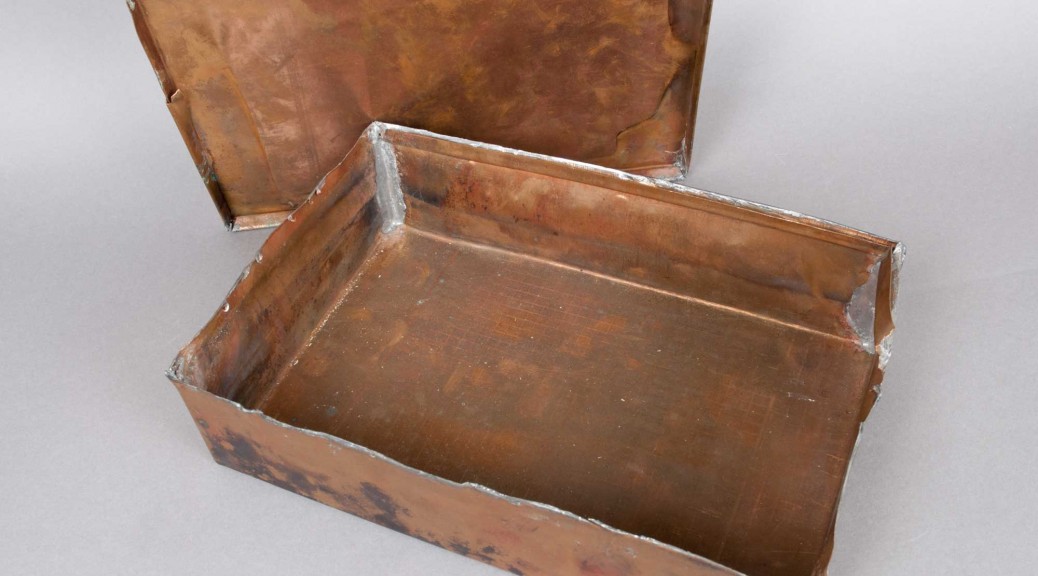
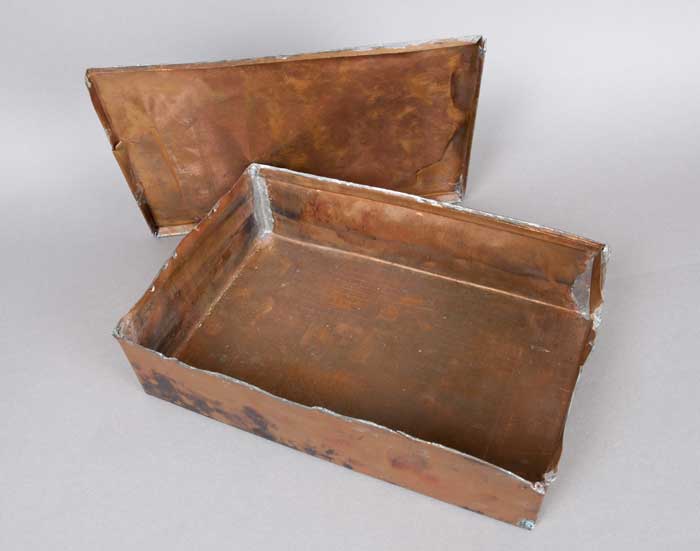
The time capsule. Photo by Mark Zupan.
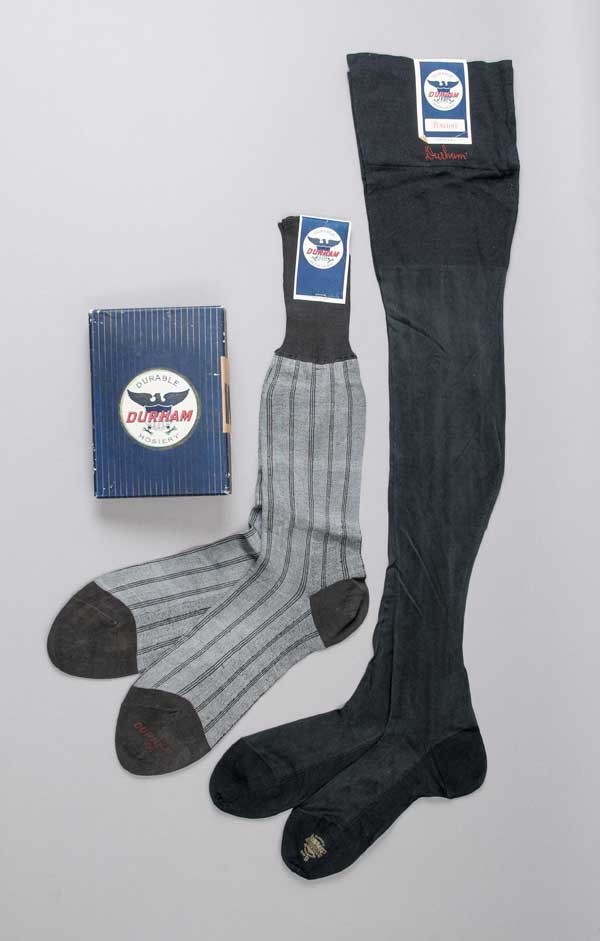
The time capsule itself appears to be made from recycled printing plates, and was soldered by hand. Inside were examples of the products produced in Durham in 1924: cigarettes, tobacco bags, cotton cloth, hosiery, and socks. Also included were a photo of John Buchanan, the Chairman of the Executive Committee tasked with raising funds for the venture, and a photo Washington Duke, the hotel’s namesake. A key, possibly added to the time capsule many years later, is a reminder that this was a hotel from another era—no key cards here! A prospectus for the dazzling new hotel promises, “that Durham will have a real civic, social, and commercial center, for around the new Hotel will radiate every big function that transpires in our city.”
Durham-made hosiery from the time capsule.
The exhibit will be on display outside the Biddle Rare Book Room until mid-June and is available during the general library’s open hours.
Post contributed by Val Gillispie, Duke University Archivist.
On Saturday, April 16, librarians from the Sallie Bingham Center for Women’s History and Culture will be joining over 150 zine-makers, artists, print-makers, independent authors and booksellers at the Durham Armory for the 2nd Zine Machine printed matter festival.
We’ll be setting up a pop-up zine library and teaching people how to make mini-zines. (If you can’t make the festival, you can still download and make your own copy of the Bingham Center’s minizine! Instructions on how to fold it are included.)
The Bingham Center holds over 6,000 zines dating from the early-1990’s through the present, by women, girls, queer and trans identified people. Our collections are always open to the public, but this is a fun way to browse a few highlights while getting a chance to start your own collection with creative zines from local, national, and international writers and artists.
The festival is organized by local artists and Duke faculty Bill Fick and Bill Brown, along with Everett Rand of Mineshaft Magazine to celebrate autonomous, alternative printed media and create a venue for our vibrant regional self-publishing community.
Post contributed by Kelly Wooten, Research Services and Collection Development Librarian for the Sallie Bingham Center for Women’s History and Culture.
Dispatches from the David M. Rubenstein Rare Book and Manuscript Library at Duke University




 Date: Thursday, October 20





 Feminist activist and advertising critic Jean Kilbourne’s pioneering work has helped develop and popularize the study of gender representations in advertising. Her presentation will show if and how the image of women has changed over the past 20 years and powerfully illustrates how these images affect us all. She is the creator of the renowned Killing Us Softly: Advertising’s Image of Women film series and the author of the award-winning book Can’t Buy My Love: How Advertising Changes the Way We Think and Feel.