Category Archives: From Our Collections

Class of 2010, Where Will You Be in 100 Years?

The Class of 1910 files into Craven Memorial Hall.

This weekend, over 3,500 accomplished students will receive degrees from Duke University. So much has changed in the 100 years since the Class of 1910 received their degrees (32 Bachelors of Arts and 3 Masters of Arts) on Wednesday, June 8th. Then, Duke was still known as Trinity College and John C. Kilgo was finishing his sixteen-year term as college president (William P. Few would assume the presidency in November). The Trinity Chronicle (now the Duke Chronicle) was only five years old.

We thought we’d revisit those school days of long ago by reprinting a few headlines from that fledgling paper for the 1909-1910 school year.

  • “Fortnightly Club Meets: Good Attendance at Postponed Meeting Last Friday Evening: Prof. Webb Selected Dante Theme,” October 27, 1909
  • “Doctor Kilgo’s Sermon: President Gives Masterly Defense of Faith Faculty of Our Mind,” November 17, 1909
  • Watts Hospital Opening: Thousands View the Various Rooms and Listen to Addresses,” December 8, 1909
  • Ninety Nineteen Initiate: Six New Men Taken through the Mysteries of the Order: Candidates Undergo Mystic Stunts,” February 23, 1910
  • “Mr. Nash on Fertilizers: Good Attendance at Regular Meeting of Science Club: Growing Interest in Club Work,” March 9, 1910
  • “Chronicle vs. Archive: Yearly Exhibition of Strictly Amateur Players, a Few Ringers Excepted: Most Exciting Game, Chronicle Wins,” April 20, 1910. (Yes, as the headline says, the Trinity Chronicle staff won that baseball game 8-5.)
  • “Commencement Program: All Arrangements for the Last Week Have Been Completed: Secretary Nagel to Make Address,” April 27, 1910
  • Mr. Brogden Speaks: Popular Durham Attorney Makes Forcible Talk to a Large Assemblage—His Subject: ‘Habit and Thought,'” May 4, 1910

The RBMSCL warmly congratulates the Class of 2010!

Additional Resources:

For Mom

On this special day, we’re sharing this cover from the sheet music from 1915 song (words by Edward Morton and James S. Donahue and music by Newton B. Heims). We love the sweet chorus:

Just write her a nice little letter,
Tell her you hope she is well,
Send her some little remembrance,
Something to make her heart swell,
Pet her and call her your sweetheart,
Cheer her and make her feel gay,
Don’t say a word that will grieve her,
Let this be your Mother’s Day.

Of course, we can’t write about mothers without mentioning one of the beloved treasures of the RBMSCL: enslaved woman Vilet Lester’s 1857 letter to her former mistress (from the Joseph Allred Papers). Vilet asks about her precious daughter, whom she had to leave behind when she was sold (ultimately) to a Georgian family. Each time we read it, our eyes get teary and our hearts break all over again.

Happy Mother’s Day, Vilet. Happy Mother’s Day to moms everywhere!

Free Comic Books!

Today is Free Comic Book Day, which means that comic book shops all over the world will be giving away free comics.

But every day is Free Comic Book Day at the RBMSCL, where everyone can use all of our 56,000 comic books (in the Edwin and Terry Murray Comic Book Collection) for free! You can’t take them with you, but you can spend as much time with them as you want in our reading room.

If you do want to take home some free comics (and who doesn’t?), the closest participating store is Ultimate Comics on Ninth Street in Durham.

Post contributed by Megan Lewis, Technical Services Archivist for the Sallie Bingham Center for Women’s History and Culture.

A Sculptor in the Stacks

A photo of Rodin's Psyche et l'Amour. From the Dawson Family Papers.

All of the hoopla surrounding the grand opening of the North Carolina Museum of Art’s expansion this past weekend, including the unveiling of 29 sculptures by Auguste Rodin, reminds us of a few items in the RBMSCL stacks: a 1911 volume of Rodin’s conversations with Paul Gsell entitled L’Art, inscribed by Rodin to Warrington Dawson, and two caches of Rodin letters.

Warrington Dawson (formally, Francis Warrington Dawson, Jr.) was an American novelist and journalist who lived in Paris for most of his life. He tells of how he came to know Rodin in a 1913 letter to James Brand Pinker, printed in Duke Professor Emeritus Dale B.J. Randall’s volume Joseph Conrad and Warrington Dawson: The Record of A Friendship:

I first met him [Rodin] in 1899. . . . I called as a newspaper correspondent to write an article about his work, but he was struck by my comments and invited me out to his house at Meudon. He told me that I had the knack of expressing in words just what he had expressed in stone or bronze. . . . Some ten or eleven years ago I was first privileged to see his notes, and I recognized their great value; I proposed to him then that he should allow me to prepare them for publication. He promised me that I alone should do this work when he was ready for it, but did not feel that the time had yet come when the public was prepared.

This collaboration was never completed, and the friendship dissolved, but Dawson’s transcriptions and translations of Rodin’s French notes and his correspondence with Rodin survive in the Dawson Family Papers here at the RBMSCL. The papers also include a few striking contemporary photographs of Rodin’s sculptures.

There are also seventeen letters from Rodin to Marie Hopkins, dating from 1904 to 1915, in the Field-Musgrave Family Papers. Rodin’s gorgeous penmanship in many of these letters is a lovely and understated accompaniment to his epic sculptures now on display down the road in Raleigh.

Post contributed by Will Hansen, Assistant Curator of Collections.

The Story of the 6,487 Books

On this day in 1800, Congress approved the creation of the Library of Congress (here’s the birthday blog post from the Library of Congress Blog). By 1814, the collection numbered some 3,000 volumes, many of which burned when the British army invaded the capital city in in August.

On 30 January 1815, Congress and President James Madison turned to former President Thomas Jefferson to help rebuild the library’s collection. Jefferson was offered $23,950 for his Monticello library of 6,487 volumes.

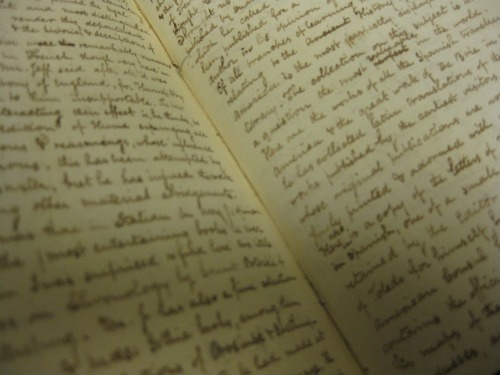
That very week, on February 3rd, Francis Calley Gray and George Ticknor arrived at Monticello to pay a visit of a few days to their friend Mr. Jefferson—a visit which Mr. Gray meticulously recorded in his diary, which we hold here at the RBMSCL.

Francis Calley Gray's diary.
Francis Calley Gray's diary. Nice handwriting!

The morning after a welcoming dinner—complete with silver goblets engraved “from G.W. to T.J.”—Mr. Jefferson had prepared a special treat for his guests, both bibliophiles and collectors. As Gray wrote in his diary:

Mr. Jefferson gave me the catalogue of his books to examine + soon after conducted us to his library, + passed an hour there in pointing out to us its principal treasures. His collection of ancient classics was complete as to the authors but very careless in the editions. They were generally interleaved with the best English Translations. The Ancient English authors were also all here + some very rare editions of them. a black letter Chaucer + the first of Milton’s Paradise Lost divided into ten books were the most remarkable. . . . Of all branches of learning however relating to the History of North + South America is the most perfectly displayed in this library. The collection on this subject is without a question the most valuable in the world. Here are the works of all the Spanish [travelers?] in America + the great work of De Brie in which he has collected latin translations of the smaller works published by the earliest visitors of America whose original publications are now lost. It is finely printed + adorned with many plates. Here also is a copy of the letters of Fernando Cortes in Spanish, one of a small edition, + the copy retained by the Editor the Cardinal Archbishop of Toledo for himself, but given by him to the American Consul for Mr. Jefferson.

On February 27, following his friends’ departure, Mr. Jefferson wrote to bookdealer Joseph Milligan (letter provided by the Library of Congress) to request his assistance in transporting the entire collection to Washington, D.C. These 6,487 books, some of which Mr. Gray had the good fortune to see, now belonged to the American people.

Sadly, an 1851 fire destroyed much of the Library of Congress’ collection, including two-thirds of Jefferson’s library. Which prompts us to remind everyone that MayDay is coming!

Thanks to Crystal Reinhardt, University Archives Graduate Student Assistant, for helping with this post.

Re-installing The Trial of Sylvia Likens

The Trial of Sylvia Likens by Kate Millett, 1978. Photo by Mark Zupan.

For the first time since its initial exhibition in 1978, Kate Millett’s chilling installation, The Trial of Sylvia Likens, has been reassembled. On Monday, the staff of the Sallie Bingham Center for Women’s History and Culture and Art History instructor Laurel Fredrickson joined with filmmakers Sophie Keir-Thompson and Mary Beth Ross to film the piece for a documentary about Millett’s life. The installation forms part of the Kate Millett Papers, which are held by the Bingham Center.

The installation marks Millett’s response to the horrific 1965 torture and murder of sixteen-year-old Sylvia Likens by the Baniszewski family and their neighborhood friends. Called “the most terrible crime ever committed in the state of Indiana,” the story of the murder and subsequent trial transformed Millett, laying the groundwork for her revolutionary work, Sexual Politics. Fredrickson writes, “For Kate, the case of Sylvia Likens exemplified in a very potent way how women are taught to accept punishment for real and imagined digressions from the cultural and social roles imposed upon them by patriarchal societies.”

In the photo essay below, Kelly Wooten, the Bingham Center’s Research Services and Collection Development Librarian, narrates Monday’s recreation.

The first step in reconstructing The Trial of Sylvia Likens was locating all the various mannequin parts, clothing, and panels, and then loading everything onto book trucks to convey to Room 217 in Perkins Library.

Once we delivered all the materials to Room 217 and the filmmakers set up their equipment, it was time to assemble the five defendants and get them dressed for court. Technical Services Archivist Megan Lewis and Art History instructor Laurel Fredrickson are putting on Johnnie’s jacket.

After all of the characters were ready, filmmakers Mary Beth Ross and Sophie Keir took shots of each mannequin in front of a green screen. This is Gertrude Baniszewski.

Filmmaker Mary Beth Ross prepares to capture images of the mannequins seated at the table.

For the original installation, Kate Millett created a death mask of her own face and dressed a mannequin in her own clothing to be arranged on a mattress as an embodiment of empathy for the victim, Sylvia Likens, who was found on a mattress in the family’s basement.

The trickiest part of this re-creation was hanging the panels that formed the backdrop in the original courtroom scene without damaging the library walls. Fortunately, Laurel Fredickson’s partner, Brad Johnson, is the Chief Preparator at the Nasher Museum of Art and had the time and the tools to hang the large newspaper reproductions.

For more photos, visit the RBMSCL’s Flickr photostream!

Thanks to the Bingham Center staff and Laurel Fredrickson for helping with this post!

April Showers Bring New Finding Aids!

Our technical services archivists have created a veritable deluge of new finding aids for some of our older collections. All of the following collections are open for research. Please contact the Special Collections Library at special-collections(at)duke.edu with any questions.

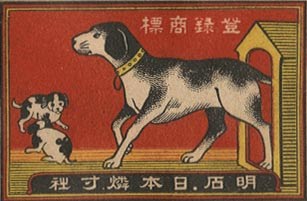
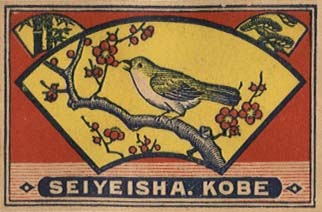
Japanese Matchbox Label Collection, circa 1910

400 vividly-colored Japanese matchbox labels are mounted in a contemporary paper album and housed in a custom-made cloth box. Unfortunately, the name of the person who created this marvelous collection is unknown.

Ann Atwater Interviews, 2006

Master and use copies of Jeff Storer’s oral interviews with Ann Atwater, an African-American civil rights activist based in Durham regarding her friendship with Ku Klux Klan leader C. P. Ellis.

Montrose Jonas Moses Papers, 1789-1960

The papers of this drama critic, journalist, and author of works on American and European drama and on children’s literature includes correspondence with giants of the turn-of-the-20th-century theater, including Eugene O’Neill, Percival Wilde, David Belasco, and Margaret Anglin.

Thomas Lee Settle Papers, 1795-1949

The papers of this Virginia surgeon, said to have pronounced the death of abolitionist John Brown, shed light on the practice of medicine in the 19th century. Of particular interest are documents detailing Settle’s own medical service for the 11th Virginia Cavalry.

“You’ve Got . . . Personality: Testimonial and Celebrity Endorsement Advertisements”

Date: 8 April-30 June 2010
Location and Time: Rare Book Room cases during library hours
Contact Information: Jackie Reid, 919-660 5836 or j.reid(at)duke.edu

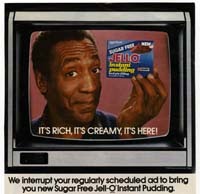
Testimonial advertisements, today seemingly reserved for fading actors, retired politicians, and late-night cable infomercials, were once a mark of innovation and prestige in advertising. This exhibit, a complement to “The Power of Refined Beauty: Photographing Society Women for Pond’s, 1920s-1950s,” highlights some examples of this style of advertising, as documented in the collections of the Hartman Center.

In 1923, JWT created a new advertising campaign for Pond’s creams, based on the testimonials of leading American society women and European titled nobility. That campaign lasted for over thirty years and is the focus of half of the exhibit. Newsletters, internal memos, publications, ads and other items allow the viewer a behind-the-scenes look at bringing a concept to fruition in a long-standing advertising campaign.

Taking a broader view, the other half of the exhibit documents an overview of the use of testimonials and celebrity endorsements in advertising for a range of products. From an 1893 endorsement by arctic explorer Lieutenant Peary for Kodak, to Count Basie for Camel cigarettes, to Coach K for American Express, a wide variety of well-known celebrities are shown endorsing products. Advertisements, reports, and memos illustrate advertisers’ belief that celebrity testimonials could lend products a feeling of familiarity and credibility, while also creating the illusion that to purchase a given product was to belong to an elite cast.

Post contributed by Jackie Reid, Director of the Hartman Center, and Lynn Eaton, Hartman Center Reference Archivist

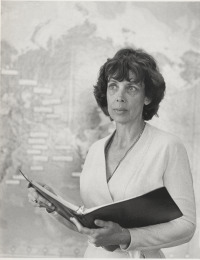
Patricia Derian Papers Coming to Duke

The Archive for Human Rights has signed an agreement with Patricia Murphy Derian to serve as the repository for her papers, which document her long career in human rights.

Patt, as she is known to friends and family, was involved in the civil rights struggles in Mississippi prior to being tapped by President Jimmy Carter to head the newly-minted Bureau for Human Rights and Humanitarian Affairs. In 1977, she became the nation’s very first assistant secretary for human rights.

Her papers consist of country files, general files, correspondence, and a collection of audio and video interviews. Processing of the collection will begin immediately and should be complete by summer of 2010. If you’d like to arrange a visit to view the collection, or if you have any questions, please e-mail us at special-collections(at)duke.edu.

Post contributed by Patrick Stawski, Human Rights Archivist.