Category Archives: From Our Collections

Medical Move Mondays: Technically Speaking

It’s week two of our series on the History of Medicine Collections‘ move from the Medical Center Library on Duke’s medical campus to the RBMSCL on West Campus. This week, we take a look at how we keep track of all of our books and collection materials and ensure that our researchers can find them when they need them.

Since March, Collection Development Assistant Jessica Janecki has been scanning barcodes for each and every book in the locked stacks collection. She’s also spent a lot of time working on problems and finding solutions, like pointing out books that have covers falling off. Working with a variety of staff and student workers from Perkins Technical Services, Jessica and others will change the collection codes so that when students, researchers, and others look for an item in the catalog, it will show an RBMSCL location rather than a Medical Center Library location.

Before:

After:

Jessica said one of the most interesting aspects of this has been finding items like the report related to the Cocoanut Grove Burns. The Cocoanut Grove was a nightclub in Boston that burned in 1942, killing hundreds of people. A book titled Management of the Cocoanut Grove Burns at the Massachusetts General Hospital came across her barcode wand: a detailed report on how to deal with a disaster. Jessica was really taken with the level of detail and thought on how to manage a crisis. The book provides introductions from hospital administrators, case studies of the patients, and graphic color photographs of burn victims.

For photos of the move from start to finish, visit the “HOM Collections Move” set on the Duke University Libraries’ Flickr photostream.

Next week: Conservation steps in!

Post contributed by Rachel Ingold, Curator for the History of Medicine Collections.
The Luckiest Nut in the World

This is the first of a summer series highlighting a few film shorts from the Full Frame Archive, a collection within the Archive of Documentary Arts, with the goal of preserving masters all past winners of Durham’s Full Frame Documentary Film Festival. The Full Frame Archive has grown to 74 films since 2007 and continues to grow; DVD use copies of these films can be viewed in the RBMSCL’s reading room. A complete list with descriptions, as well as titles of award-winners not yet acquired, can be found in the finding aid.

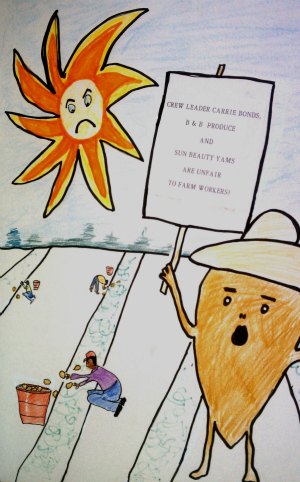
“This is a film about nuts,” a chorus of animated nuts declares to a bouncy, vaudevillian tune in the opening frames of Emily James 2002 short The Luckiest Nut in the World, winner of the 2003 Full Frame Jury Award for Best Short. More specifically, it’s a film about globalization and the nut industry. The luckiest nut himself, a tariff-protected, guitar-playing American peanut in a ten-gallon hat, segues into a country tune to explain the economic injustices faced by the nut industries in Mozambique, Bolivia and Senegal under policies of trade liberalization.

“We’re gonna tell you some stories that’ll make it clear
Why these problems won’t disappear
By making trade free indiscriminately
It’s only makin’ things worse,
It’s not a blessing, but a curse
And it’s happening more every year. . . . “

Continue reading The Luckiest Nut in the World

Under the Floorboards

Early last week, friend of the RBMSCL and James B. Duke Professor of Economics Dr. Craufurd Goodwin came to us with an exciting discovery. He has kindly shared a few words about it, noting that “archives are where you find them.”

When my wife and I moved from Durham in 1977 to a property called Montrose on the edge of Hillsborough, a venerable green 1961 Chevrolet pickup truck was included. Legend had it that the truck had mainly gone once a week to a garbage dump on the edge of town and spent the rest of its life in its garage. It had 18,000 miles on the odometer.

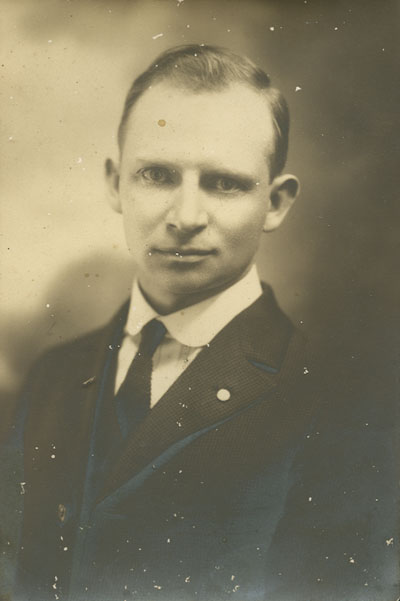
Holland Holton, February 1922

After moving most of our possessions from Durham, the old truck reverted to its traditional role and has today only 33,000 miles. But last week, on the old truck’s fiftieth birthday, it seemed appropriate to let someone else play with this toy and I sold the truck. Soon after it left the driveway, I heard from the young man who bought it that he had discovered a photograph taken by a professional studio in Durham called “Miss Johnson, Durham, N.C.” of a person described on the back as “Holland Holton, 1922.”

Holton was one of the first professors at Duke University and an administrator in various capacities; his papers are now at the Duke University Archives. There was no dated photograph of Holton in the RBMSCL’s collections until this week, but now there is.

It is a complete mystery how this picture ended up on the floor of the old truck for at least 34 years, and perhaps 50.  My predecessor at Montrose and in the truck was A. H. Graham, a prominent figure in the state (Lieutenant Governor, Highway Commissioner, etc.) but Carolina all the way. How a picture of a pioneering Duke professor ended up in his farm truck we shall probably never know.

Post contributed by Dr. Craufurd Goodwin, James B. Duke Professor of Economics at Duke University.

Medical Move Mondays: Introduction

Rachel Ingold, Curator of the History of Medicine CollectionsHi! I’m Rachel Ingold, Curator for the History of Medicine Collections. This summer, the History of Medicine Collections will be moving from the Medical Center Library on Duke’s medical campus to the RBMSCL on West Campus. For the next five weeks, join me every Monday here at The Devil’s Tale. I’ll be walking you through the move step-by-step.
This week, a little background: The History of Medicine Collections consists of over 20,000 rare and unique medical books and journals. Along with these print items are 4,500 manuscripts and numerous medically-related instruments, artifacts, prints, photographs, and ephemera. The collection is particularly strong in the areas of anesthesia, human sexuality, materia medica, pediatrics, psychiatry, vivisection, and yellow fever.

Two major gifts helped form the HOM Collections. In 1931, the Georgia Medical Society of Savannah donated its library of 8,000 volumes to Duke University. Another major donation which brought a new level and depth to the collection was the 1956 donation of the Trent Collection by Mrs. Mary Duke Biddle Trent Semans.

History of Medicine Collections Brochure CoverSo, how does one go about moving a collection with so many rare print items and manuscripts, as well as a variety of instruments and artifacts including curiosities such as amputating saws, ivory anatomical manikins, and glass eyeballs? The answer: very carefully. And with a team of wonderful people.

I’m grateful to be working with a great group of folks from the Medical Center Library & Archives and Perkins Library. So many people have been involved in making this move happen. And I hope this series of blog posts will highlight some of the work they have done to help and how we are going about this move.

For photos of the move from start to finish, visit the “HOM Collections Move” set on the Duke University Libraries’ Flickr photostream.

Next week: Technical Services gets to work!

Post contributed by Rachel Ingold, Curator for the History of Medicine Collections.

The Farmer in the RBMSCL

Student Action with Farmworkers Protest FlyerWe’ve passed the summer equinox and farmer’s markets across the country are in full swing. Over the past few years Durham has become the center of a vibrant local food movement in North Carolina due to its proximity to rich agricultural lands.  But those lands also come with a long history of agricultural labor and struggle: from plantation economies that depended on slaves, to share croppers, to today’s immigrant labor camps.

As I browsed the Duke Farmers Market‘s selections of tomatoes, greens, squash, and other locally grown produce (mmm, golden beets!) I reflected on the Archive for Human Rights‘ own farm labor related collections: The Student Action with Farmworkers Records. SAF, as they are called, works to improve the working conditions for farmworkers across the Southeast, the laborers who are the backbone of our agricultural industries.  SAF documents and advocates for improved conditions for farmworkers and a more just agricultural system.  Part of their work includes labor organizing and activism.  These guys in the photos are among the protest ephemera in the SAF collection.

Student Action with Farmworkers Protest Signs

Post contributed by Patrick Stawski, Human Rights Archivist.

Big Book, Little Book

Big Book, Little Book

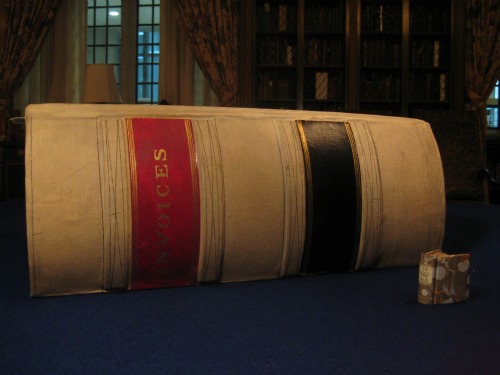
Wandering through the stacks earlier this week, we found ourselves a bit goggle-eyed upon discovering this enormous volume of newspaper clippings from the George Tinkham Papers. For comparison, we’ve placed it next to The Bible in Miniature, or, A Concise History of the Old and New Testaments, an 1805 volume from our miniature books collection.

P.S. These aren’t the biggest or littlest books in our collections.

P.P.S. Surprisingly, the big book is not as heavy as it might seem.

Flat Duke

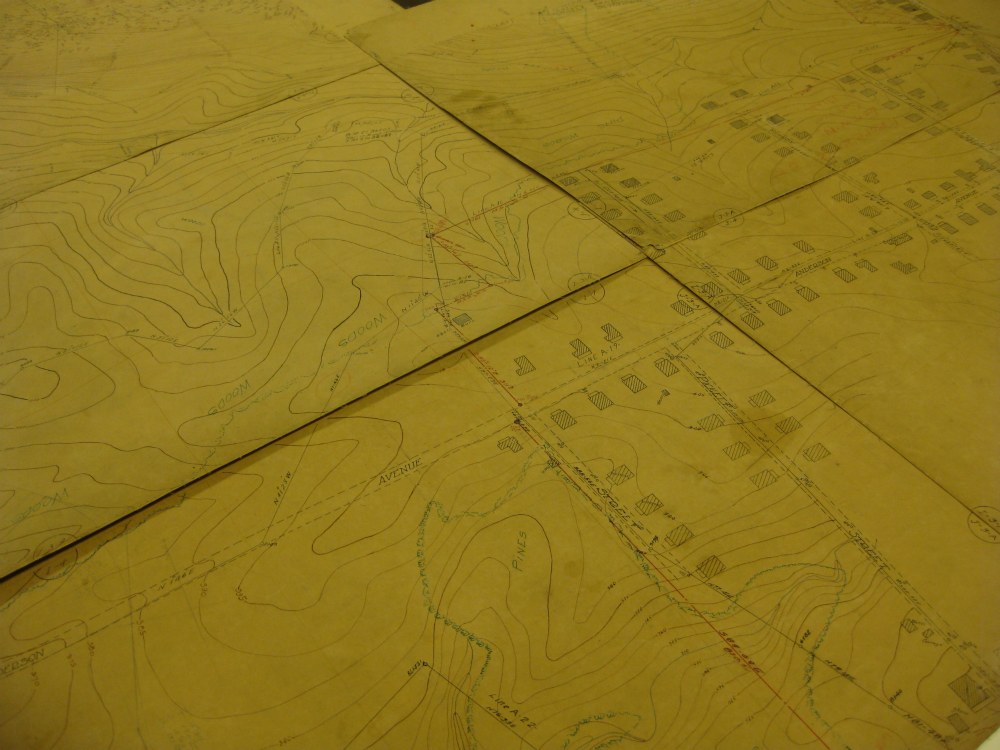
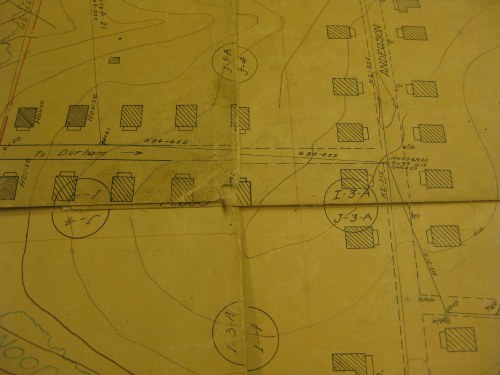
This spring, the Flat Blue Devil has been visiting lots of fun places on campus. Here at the Duke University Archives, we have Flat Duke: that is, approximately 100 hand-drawn, 23 x 30 inch property plats detailing Duke University lands around 1925-1926. These plats helped the new university prepare for the reconstruction of East Campus and the construction of West Campus.

These five plats show the land along Anderson Street (part of which now belongs to the Sarah P. Duke Gardens):

Anderson Street Plats
Click to enlarge.

These two plats show part of East Campus:

East Campus Plats
Click to enlarge.

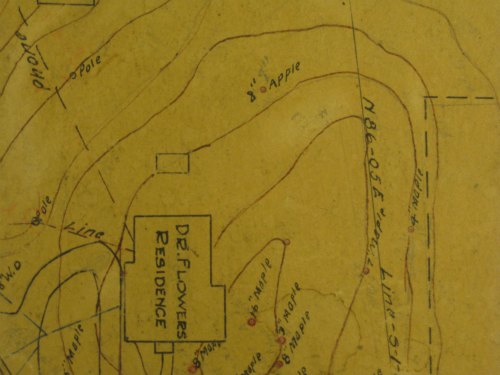
And when we say that these are detailed, we mean detailed. For instance, there was an apple tree near Vice President of the Business Division (and future Duke president) Robert L. Flowers‘ house (located on what is now East Campus).

Property Plats, Dr. Flowers' Residence

How do you piece the plats together? Match up the circles!

Assembling the Plats

As you can imagine, we’d need a pretty sizeable flat surface to lay all of these out. We wonder if we could borrow Cameron for a day….. Stop by the RBMSCL and pore over every little detail yourself!

Look Boys and Girls!

Date: May 5-July 25, 2011
Location and Time: Rare Book Room cases during library hours
Contact Information: Jackie Reid, 919-660 5836 or j.reid(at)duke.edu

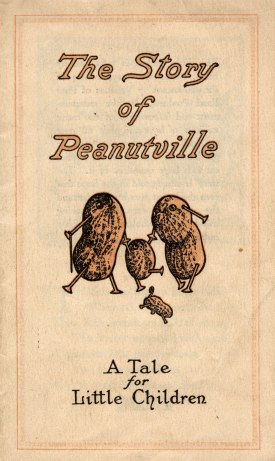
Cover of The Story of PeanutvilleOver the last 30 years, the explosion of Saturday morning cartoons and children’s television programming has caused American parents no shortage of worry about their children’s exposure to advertising. As the Hartman Center for Sales, Advertising & Marketing History’s new exhibit, “Look Boys and Girls! Advertising to Children in the 20th Century,” shows, this advertising is anything but a new phenomenon: advertisers started selling directly to kids, rather than their parents, in the early 20th century. Companies like Heinz and Palmolive published children’s stories (like The Story of Peanutville at right) that positively portrayed their products.

Advertising to Children: A Timeline

1910s: Companies like the Winchester Rifle Company established contests to encourage the use of their products.

Late 1920s: Kids could join “clubs” and might receive prizes and higher status if they consumed more of the sponsoring company’s product. Some companies promoted products through sponsored radio shows and even through schools.

1930s: Comic strip advertising was used to target children and played off the popularity of this section of the newspaper.

1953: Two of the first television shows aimed exclusively at preschoolers, “Baby Sitter” and “Ding Dong School,” were broadcast.

Outdoor Advertising Incorporated Report1960s: As interest in young consumers increased, advertisers consulted the latest psychological studies about how best to target children. This segmentation of the market has continued to narrow, with children now broken into two-year age groups like “tweens” or “explorers.”

1962: McDonald’s ran its first print advertising campaign and used cartoon-like characters to appeal to children.

1979: Well-known children’s advocate, Peggy Charren, testifies before congress, stating that “children’s advertising should be considered, per se, an unfair commercial practice.” Cable station Nickelodeon launches.

Late 1990s: Advertisers continued to expand their reach to these influential customers through the Internet, re-emphasizing “old-fashioned” ways of appealing to children through contests and loyalty clubs.

If you can’t visit the exhibit in person, be sure to check out the online exhibit!

We’d also like to welcome Julian, son of Hartman Center intern Katharine French-Fuller. He made his first visit to the library today (which included a visit to this exhibit)!

The Cleanest Books Around

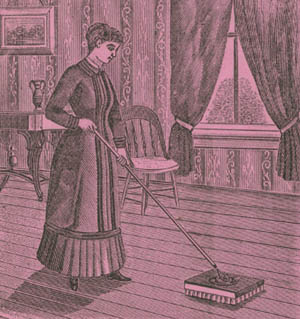
I-XL Pump Co.'s New Scrubbing BrushThe RBMSCL’s reading room is going to be closed on Monday, May 9th so that we can devote a few hours to a careful cleaning and ordering of our stacks. We’ll reopen again on Tuesday, May 10th at 9:00 AM with everything sparkling and tidy!

(Incidentally, doesn’t this homemaker look thrilled with her I-XL Pump Co. Scrubbing Brush? According to the advertising circular, it “takes the cake.” Which we don’t doubt, because who isn’t equally a fan of cake and cleaning products?)

To get ourselves ready for cleaning day, we thought we’d take a look at the suggestions for cleaning and caring for books and libraries that have been offered to industrious homemakers and housekeepers over the years.

Please note that the RBMSCL doesn’t actually use any of these cleaning and care practices, nor do we recommend that you use them on your own books or manuscripts.

To Prevent Moulding in Books, Ink, Paste and Leather: Collectors of books will not be sorry to learn that a few drops of oil of lavender will insure their libraries from this pest.”

—From The Skillful Housewife’s Book, 1846.

“When a parlor with handsome furniture is to be swept, cover the sofas, centre-table, piano, books, and mantel-piece, with old cottons, kept for the purpose. . . . Dust ornaments, and fine books, with feather brushes, kept for the purpose.”

—From Miss Beecher’s Housekeeper and Healthkeeper, 1873.

To Preserve Books: Bindings may be preserved from mildew by brushing them over with the spirits of wine. . . . Russia leather which is perfumed with the tar of the birch-tree, never molds or sustains injury from damp. The Romans used oil of cedar to preserve valuable manuscripts.”

and

To Remove Ink Spots on Books: A solution of oxalic acid will remove them without injuring the print.”

—From Practical Housekeeping, 1883. (With regard to the second piece of advice: now you know why we use pencils!)

“As the library . . . often knows the scent of cigar smoke we would refrain from adding upholsteries to catch and retain the odor, which, while it may not be objectionable at first, is certainly not enjoyable when stale.”

—From Home-Making and Housekeeping, 1889.

“Glazed bookcases are quite unnecessary. . . . Books do not suffer, but rather benefit, by coming into contact with the air. . . . Even if the [library] is not in regular daily use, a fire should be lighted frequently, especially in damp weather; otherwise the books will inevitably be attacked by mildew, and ruined sooner or later.”

—From The Book of the Home, 1900.

“Gum camphor laid among books on the shelves will keep the mice away.”

—From Putnam’s Household Handbook, 1916. (We would like to note how happy we are that we don’t have this problem!)