We got an amazing History of Medicine Collection artifact in the lab today for boxing . It is an anatomical birthing model dated to the 1890’s. The body and placenta are made of a soft suede material with red and blue yarn for the umbilical cord. The stitching that attaches each section to the main body is very finely done.
I don’t know the complete history of this item. But judging by the attention to detail on the hands, feet, and ears, along with the elegant stitching, you can tell this was a lovingly-crafted model.
This kozo paper has gold leaf and ferns imbedded in the delicate fibers.
We received a 12-volume set of books on the history of Washi. Each page has a description of the paper and includes a large (approx. 8″x10″) swatch. They are bound in a traditional side-sewn binding with each volume in a separate slip case. The set is amazing and beautiful.
Would it be wrong to keep them?
Minowashi is a decorative paper with ferns and leaves in it. This version also has pressed butterflies. The butterfly bodies appear to be printed, but the wings are real.
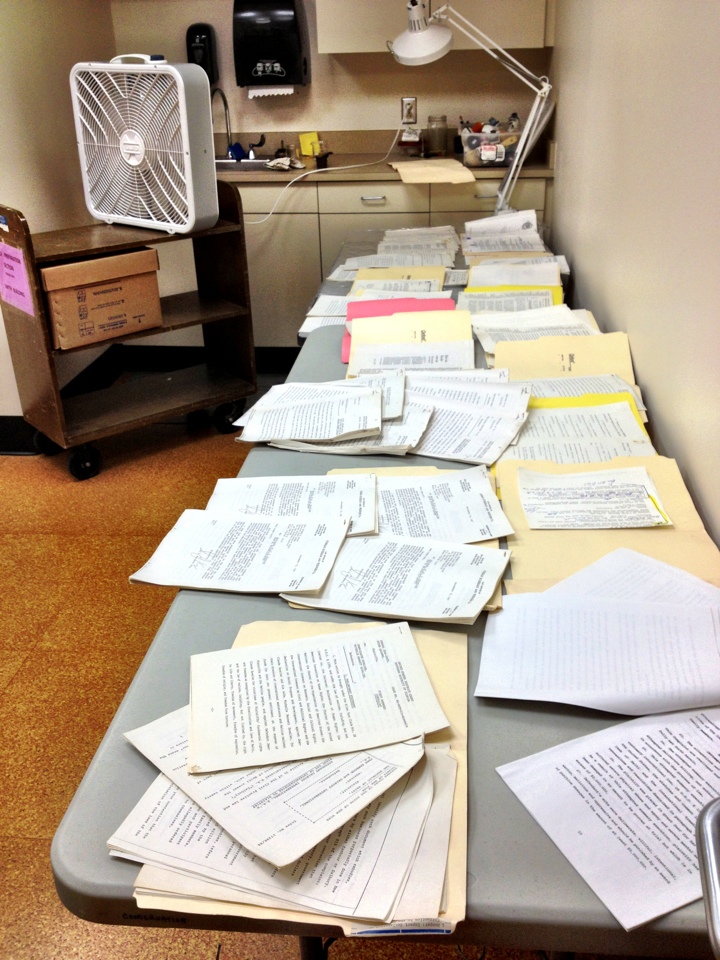
Today in conservation Grace is washing a newspaper published in 1815. Erin is at Smith Building for our bi-monthly Conservation At Smith consulting hours. Mary is working on rebinding some 18th Century Government Documents. I am air drying a box full of damp materials that have been in the freezer for a while. We also hosted a lunchtime tour for faculty and we discovered our water was turned off due to the construction.
It’s flu season, but there are more shots than the flu vaccine that you should consider getting if you work in Conservation.
We deal with a lot of rusty staples, various rodent and insect “evidence” and other animal and human unmentionables in our daily routine. I always advise matching the job with the appropriate personal protection equipment (PPE) such as gloves, dust masks or respirators, and clothing that can be washed in hot soapy water.
It is also wise to make sure your tetanus vaccine is up to date. And consider a hepatitis vaccine, one sewer-overflow response in the stacks and you will thank me. Who knew conservation could be so risky?
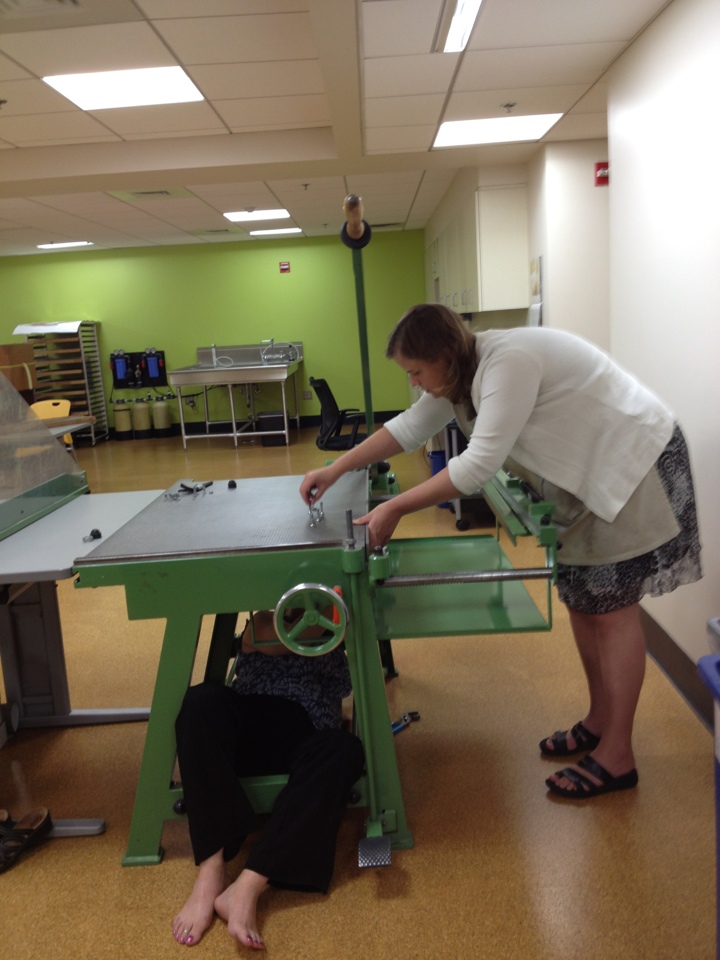
Today was board-shear maintenance day! It takes two of us to change out the blades on the shear. That’s me under the shear, and Jennifer on the right.
The arm-blade is easily removed. The base-blade has bolts holding the screws on, so they need to be loosened from underneath. Once the blades are changed we replace the clamp and check to see that it cuts square. I also put some new lithium grease on the catch basin gears while I was down there.
It’s always great to put a sharp blade on the shear. It cuts “like butter” and makes a wonderful “swishing” sound.
Note to self: don’t wear black pants on blade-changing day; and closed-toe shoes are probably a better footwear choice.
While this is a fascinating piece from our History of Medicine Collection, it does make me very happy to be living in an era of modern medicine (e.g. anesthesia).
This is in the lab for evaluation prior to being loaned for an exhibit at the Duke Medical Center Library. It’s an amazing thing to contemplate.
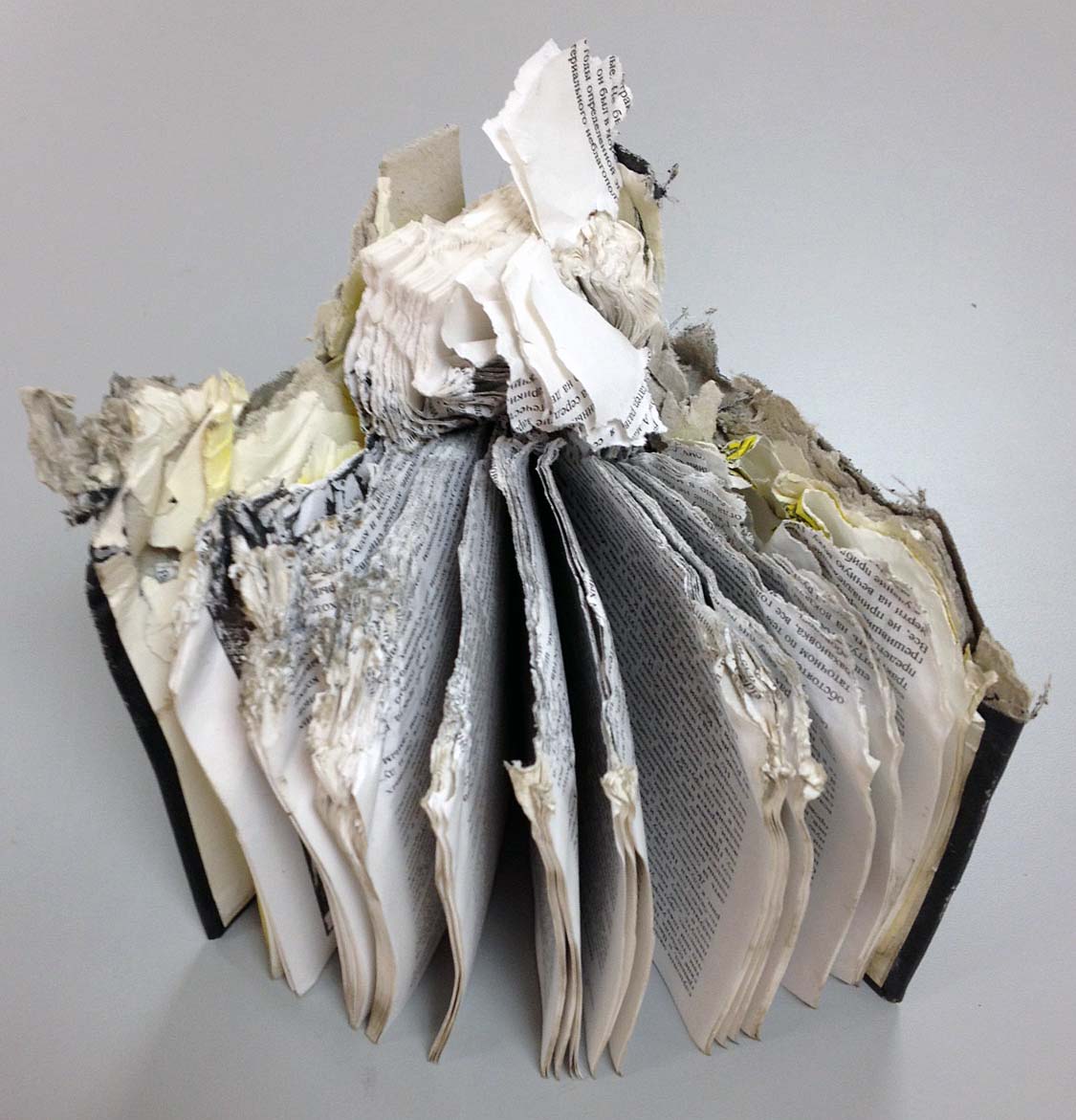
Books always tell you what sort of lives they have lead. Sometimes those clues are very subtle and hard to tease out, sometimes it is easy to see what has happened prior to them coming to the library. Occasionally the critters win the battle if not the war.
This week Duke Libraries joined Instagram! We will be posting along with our colleagues from across departments to show you the inner (and outer) workings of the library.
If you are an Instagram user, search for Duke University Libraries and follow us. If for some reason you cannot find it, search for #conservation, #rubensteinlibrary, or #perkinslibrary.



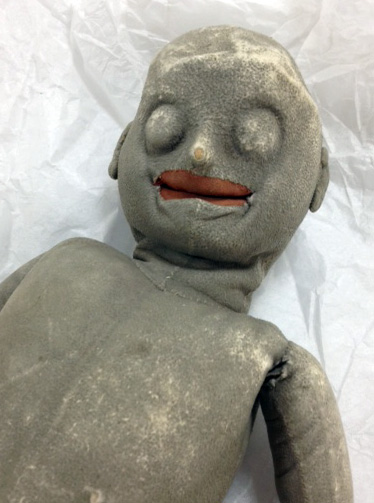 We got an amazing History of Medicine Collection artifact in the lab today for boxing . It is an anatomical birthing model dated to the 1890’s. The body and placenta are made of a soft suede material with red and blue yarn for the umbilical cord. The stitching that attaches each section to the main body is very finely done.