Hartman Center Director Jackie Reid Wachholz (at left) speaks to visitors from The Forest at Duke retirement community about advertising in the 1950s. The ads displayed on the table are from the Hartman Center’s collections.
For more photos from the presentation, visit the RBMSCL Collection at the Duke University Libraries’ Flickr photostream.
A few months ago, UNC-Chapel Hill graduate student Adam Domby spent a morning at the RBMSCL studying several of our manuscripts collections, including a heretofore unidentified North Carolina farm woman’s diary. “You know,” he said as he prepared to leave, “I think I could figure out who wrote that diary.”
Read the full story in the most recent issue of the Duke University Libraries Magazine!
Date: 1 February-1 May 2011 Location and time: Rare Book Room cases during library hours Contact information: Jennifer Thompson, 919-660-5922 or jennifer2.thompson(at)duke.edu
Colored tintype of a Civil War soldier, ca. 1860s. From the Picture File, 1600-1979.
African Americans have had an important, if not always publicized, role in every American war. Our new exhibit, “‘Brave Deeds Are Proudly Spoken of’: African American Military Service,” explores some of the ways in which the stories of these men and women have been recorded and asks the question, “How should this story be told for future generations?”
During the wars of the 18th and 19th centuries, many African Americans sought to gain freedom by enlisting in the military, which they believed would eventually ensure them rights and privileges as American citizens. In the conflicts of the 20th century, African Americans fought bravely to defend their nation abroad only to return home to discrimination and segregation. On display are artifacts, documents, photographs, and printed material that reveal these struggles and triumphs of African Americans in the U.S. military.
This exhibit highlights one of the collecting interests of the John Hope Franklin Research Center, which is currently celebrating its 15th anniversary.
Post contributed by Jennifer Thompson, John Hope Franklin Research Center Librarian.
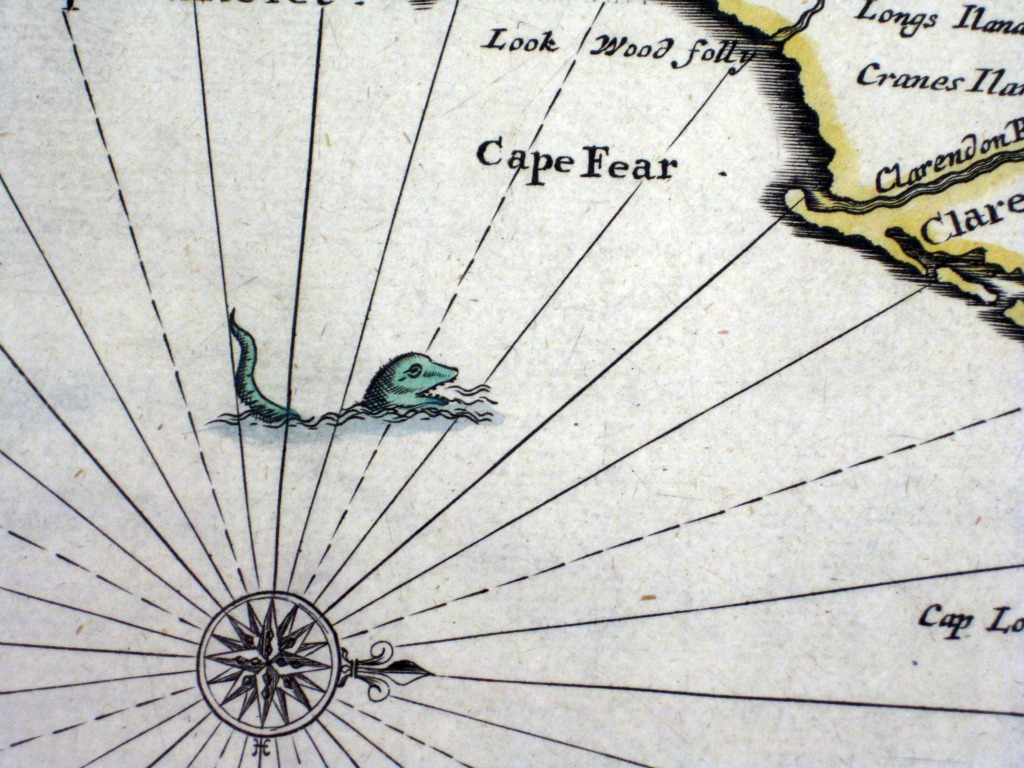
You are the captain of a ship bound for Carolina. As you near the coastline, your normally brave crew begins to mutter about treacherous waters—and possible mutiny.
From Protest to (PRODUCT) RED: Generational Shift in U.S. Human Rights Activism
Date: Thursday, 10 February 2011 Time: 5:00 PM Location: Rare Book Room Contact Information: Patrick Stawski, 919-660-5823 or patrick.stawski(at)duke.edu
Since WOLA’s founding in 1974, both the human rights community and the community of nongovernmental organizations working on Latin American issues have grown and evolved. Joe Eldridge, Alex Wilde, George Vickers, and Joy Olson—all current and former Executive Directors of WOLA—will discuss how the organization rethinks its position within these overlapping sectors to determine the best contribution it can bring to their collective work. The panel, moderated by Robin Kirk, Director of the Duke Human Rights Center, will explore how human rights challenges and the activism(s) that address them have changed and adapted to the shifting currents of national and international policy and history.
WOLA is the premier U.S.-based human rights organization working on Latin America. The Archive for Human Rights is the repository for the WOLA archives. Since 2008, WOLA and Duke University have co-sponsored the WOLA-Duke Book Award for the best non-fiction work on human rights and social justice in Latin America.
Date: Wednesday, 26 January 2011 Time: 3:00-4:00pm Location: Rare Book Room Contact Information: Kelly Wooten, 919-660-5967 or kelly.wooten(at)duke.edu
Based on over fifteen years of ethnographic and archival research, Dr. Eichhorn’s talk, “Feminist Artists, Activists, and Archivists: Redefining Feminism through the Archive since 1990,” will examine how and why young feminist artists, activists, archivists, and librarians adopted the archive and library as sites of feminist activism in the early 1990s—a period when many established feminist institutions, including presses and bookstores, were collapsing under the pressure of neoliberal restructuring. Her talk will bebased on her book-length project, The Order of Resistance: Redefining Feminism through the Archive, 1990-2010.
(Details about Kate Eichhorn’s 2008 book of poetry, Fond, are available on her website.)
Various as roads, the lines life takes—
Twisting like the boundaries of lakes.
What we lack here, some god can there increase
With harmonies, amends, enduring peace.
al margen (“living on the margin”) is the result of seven years of photography by Petra Barth in fourteen countries of South America, Central America, and the Caribbean. 70 gelatin silver prints are on display in two campus venues: 40 prints at the Frederic Jameson Gallery in Friedl Building on East Campus and 30 prints in the Special Collections Gallery.
Patagonia, Argentina, April 2010
Barth’s photography aims “to tell stories about the everyday lives of people living on the margin—their struggles and their dreams.” In her own words,
I use a spontaneous, intimate approach to photograph the daily life of individuals. I look for quiet, reflective moments when people are unaware of the camera and my presence, and genuine feeling is conveyed. Pieced together, these moments describe, with extraordinary clarity, the living conditions all across Latin America and the Caribbean, from Haiti’s streets to the suburbs of Nicaragua and El Salvador, and from the favelas of Rio to the victims of the recent tsunami in Concepcíon, Chile.
My photographs reveal moments that are not often depicted because they happen every day. My camera simultaneously captures the unusual in the ordinary and the ordinariness of the unusual. We often see images of devastated landscapes and human suffering in the wake of disastrous events, but that is only one part of life. What happens before, after, and in between these times? Despite struggle, there is also happiness and the ability to move on and create new narratives every day.
al margen is a candid photographic work that attempts to establish documentary photography as an art form as well as a method of communication. I would like to raise awareness about the living conditions of those who are marginalized, but I am also interested in people and the beauty of ordinary life.
Join us for an opening reception and panel discussion, as well as a gallery tour led by Petra Barth, on Thursday, Feburary 24th from 4:00-6:00 PM in the Frederic Jameson Gallery. Stay tuned to The Devil’s Tale for more details about this event!