All posts by John Gartrell

WOLA-Duke 2016 Human Right Book Award – Boom, Bust, Exodus…

WOLA-Duke 2016 Human Right Book Award

Boom, Bust, Exodus: The Rust Belt, the Maquilas, and a Tale of Two Cities
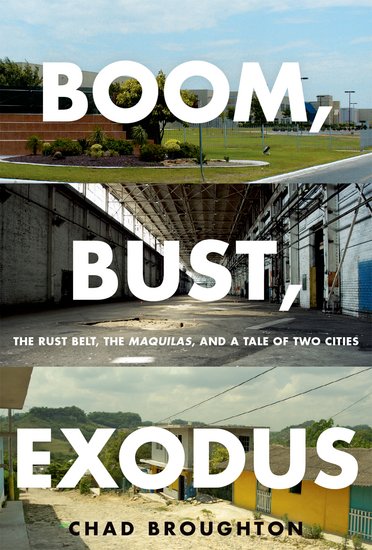
boombustexodusT he Washington Office on Latin America (WOLA) and Duke University have named Chad Broughton’s book, Boom, Bust, Exodus: The Rust Belt, the Maquilas, and a Tale of Two Cities (Oxford University Press, 2016) as the winner of the 2016 WOLA-Duke Human Rights Book Award. Broughton will be at Duke University on March 23, 2017 to accept the award.

Boom, Bust, Exodus traces the ripple effects of a single factory closing in Galesburg, Illinois, and its reopening in Reynosa, Tamaulipas, a border city in Mexico. Broughton uses a transnational and longitudinal approach to tell a human and humane story of the NAFTA era from the point of view of those most caught up in its dislocation – former industrial workers and their families in the Rust Belt; assemblers and activists in the borderland maquiladoras; and migrant laborers from the Mexican countryside.


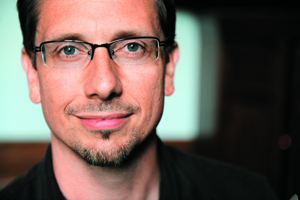
Chad Broughton, senior lecturer in Public Policy Studies at the University of Chicago, conducted several years of fieldwork in the United States and Mexico, and interweaves stories of people, places, and policies in this narrative account. He remarks, ”
broughton
Chad Broughton

I’m deeply honored to receive the WOLA-Duke Human Rights Book Award. After an election cycle filled with divisive sloganeering about trade and immigration, I believe it’s critical to move beyond demagoguery in order to understand these complex social and policy issues as they are felt in the everyday lives of working people on both sides of the U.S.-Mexico border. I hope Boom, Bust, Exodus has contributed to the effort to amplify their voices and their cause.”

First awarded in 2008, the WOLA-Duke Human Rights Book Award honors the best current, fiction and non-fiction book published in English on human rights, democracy, and social justice in contemporary Latin America. The books are evaluated by a panel of expert judges drawn from academia, journalism, and public policy circles.

Leonor Blum, WOLA-Duke Human Rights Book Award Committee Chair and Emerita Professor of History and Political Science at Notre Dame of Maryland University, comments, “This is a timely reflection on the plight of labor as a result of globalization. The longitudinal interviews of American workers are excellent and we feel for each individual.”

This year’s judges include Alex Wilde, American University Research Fellow in Residence, who says, “Boom, Bust, Exodus is a searching examination of the human effects of globalization on communities in the US and Mexico. It is a model of how serious scholarship can illuminate complex issues. It could hardly be more resonant with issues central to the U.S. election campaign and its outcome.”

Fellow judge, author Roger Atwood, states that, “There are plenty of books out there on the decline of industry in the age of NAFTA. What makes this one innovative, even pioneering, is the way it delves into the effects of this process in Latin America, and more specifically Veracruz and Tamaulipas, and weaves the two sides of the story together without giving short shrift to either.”

Holly Ackerman, librarian for Latin America, Iberian, and Latino/a Studies at Duke Libraries, comments, “I found this to be well written, engaging for both academic and popular audiences, and a profoundly timely reference that recognizes the struggle for human dignity across borders.”

Previous award receipts are:

2015 – Kristen Weld, Paper Cadavers: The Archives of Dictatorship in Guatemala

2014 – Oscar Martínez, The Beast: Riding the Rails and Dodging Narcos on the Migrant Trail

2013 – Jonathan M. Katz, The Big Truck That Went By: How The World Came To Save Haiti and Left Behind a Disaster

2012 – Héctor Abad, Oblivion: A Memoir

2011 – Kathryn Sikkink, The Justice Cascade

2010 – Victoria Bruce and Karin Hayes, with Jorge Enrique Botero, Hostage Nation

2009 – Ambassador Heraldo Muñoz, The Dictator’s Shadow: Life Under Augusto Pinochet

2008 – Francisco Goldman, Who Killed the Bishop? The Art of Political Murder


Contact:


Larissa Ong, WOLA

202-797-2171

long@wola.org


Patrick Stawski, Duke University Libraries

919-660-5823

Patrick.stawski@duke.edu

Lecture: The History and Legacy of Ivory Anatomical Manikins

Date: Tuesday, October 25, 2016
Time: 4:00 p.m.
Location: Rubenstein Library Room 153 (Holsti-Anderson Family Assembly Room)

Cali Buckley
Cali Buckley

Join the Trent History of Medicine Lecture Series for our next lecture by Cali Buckley on “The History and Legacy of Ivory Anatomical Manikins.” Ivory anatomical models comprise a little-known set of objects that were popular with male doctors of the late 17th- and 18th-centuries. Their narrative is currently being revised in light of a history of questionable assumptions. Though small and largely inaccurate, the story of anatomical manikins reveals how the politics of medicine impresses meaning on medical objects – often transcending the needs of the scientific community. Ms. Buckley will present on her current hypotheses as well as the process by which medical objects can be examined according to social history, connoisseurship, and material culture.

Cali Buckley is a Ph.D. candidate in art history at Penn State University. She received a Fulbright U.S. Student Award that allowed her to spend the 2015–16 academic year in Germany working on her dissertation, “Early Modern Anatomical Models and the Control of Women’s Medicine.”

The talk will be held in the Holsti-Anderson Family Assembly Room, Room 153, of the Rubenstein Library at Duke University. All are welcome to attend.  Sponsored by the History of Medicine Collections.

The Struggle Continues: A Dialogue with SNCC Veterans

The Struggle Continues: A Dialogue with SNCC Veterans

Date: Thursday, September 29, 2016

Location: The Forum for Scholars and Publics (Old Chem 011)

Time: 12:00 pm – 1:30 pm

Light lunch served beginning at 11:45

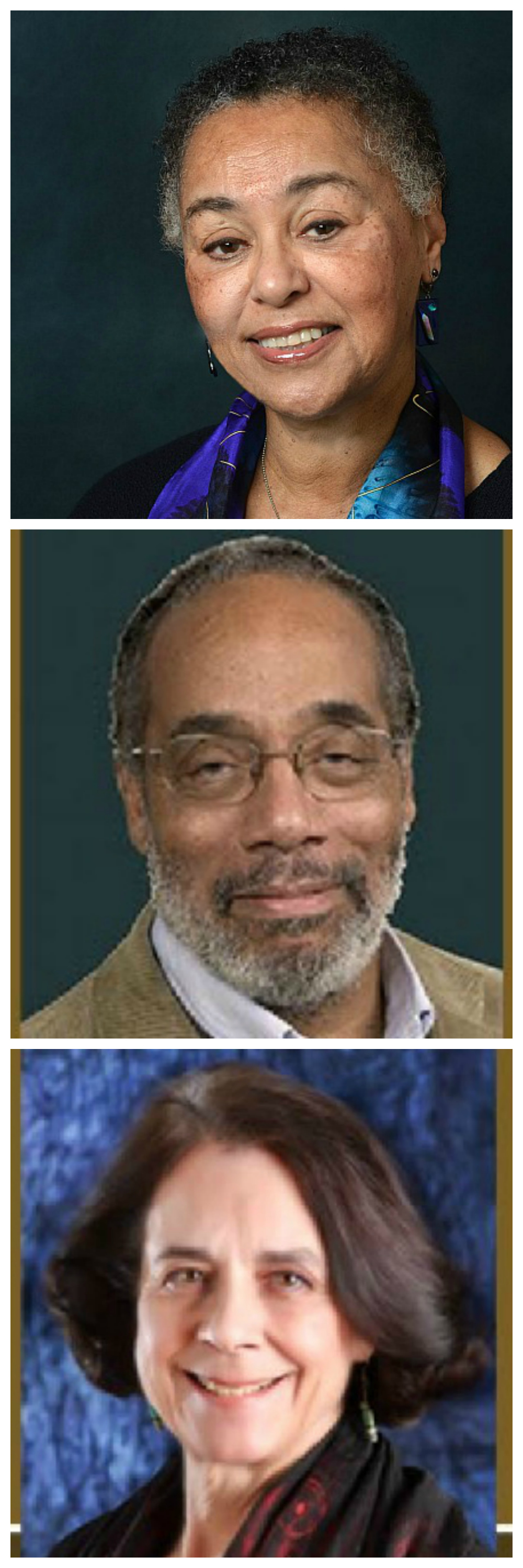
Top to bottom: Judy Richardson, Charlie Cobb, Maria Varela

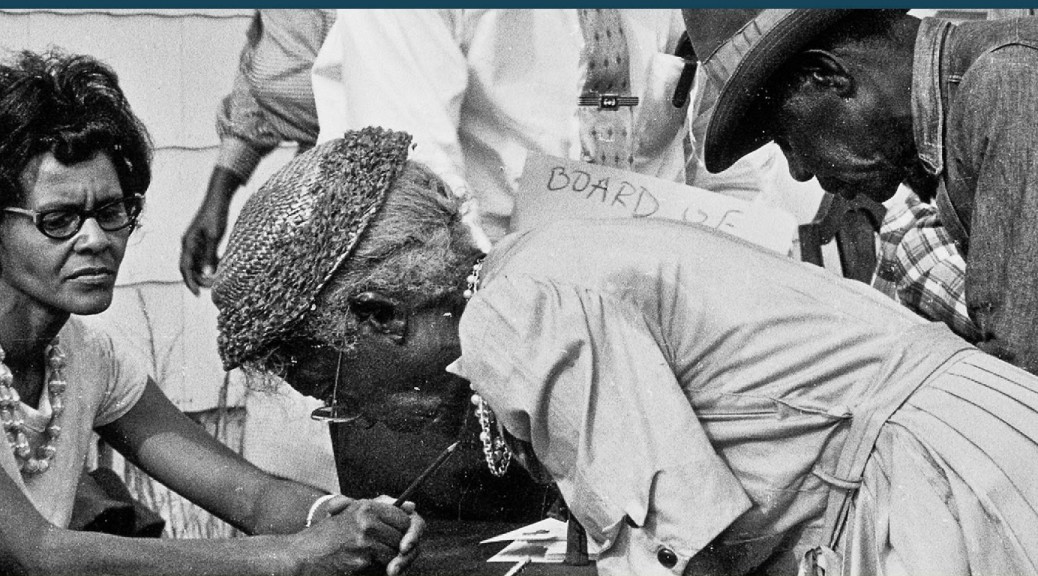
Please join us for a conversation with three veterans of the Student Nonviolent Coordinating Committee (SNCC) as they discuss their work after SNCC and the southern freedom movement. Charles Cobb, journalist (founder of National Association of Black Journalists) and author (This Nonviolent Stuff’ll Get You Killed: How Guns Made the Civil Rights Movement Possible), Judy Richardson, filmmaker (Eyes on the Prize) and author (Hands on the Freedom Plow: Personal Accounts by Women in SNCC) and Maria Varela, photographer, community organizer and MacArthur “Genius Grant” Fellow, will reflect on how their experiences in SNCC impacted the choices they made with the rest of their lives. From opening the Drum and Spear bookstore and the Center for Black Education in Washington, D.C. to organizing with Latino and native resistance groups in the Southwest, the panel will look at how the worldview and approach they learned in SNCC infused itself into their later work and continues to do so today. The discussion will be moderated by John Gartrell of the John Hope Franklin Research Center at Duke’s Rubenstein Library.

This program is presented in partnership with the SNCC Digital Gateway Project. The SNCC Digital Gateway is a collaborative project of the Student Nonviolent Coordinating Committee Legacy Project (SLP) and Duke University that tells the story of SNCC from the perspective of the activists, themselves. It is funded by The Andrew W. Mellon Foundation and builds off of the pilot website of the SLP-Duke collaboration, One Person, One Vote: The Legacy of SNCC and the Fight for Voting Rights (http://onevotesncc.org). The forthcoming website, SNCC Digital Gateway: Learn From the Past, Organize for the Future, Make Democracy Work (https://snccdigital.org) tells the story of how young SNCC activists united with local communities in the Deep South during the 1960s to take control of their political and economic lives. In it, SNCC veterans, historians of the Movement, archivists, and students weave together grassroots stories, digitized primary source materials held at repositories across the country, and new multi-media productions to bring this history to life for a new generation.

A Conversation with Marriage Equality Activist, Jim Obergefell

Date: Friday, September 23,

Time: 9:30-11:00 a.m. (Refreshments starting at 9:30 a.m. Discussion to follow.)

Location: Holsti-Anderson Family Assembly Room, 153 Rubenstein Library

RSVP via Facebook (optional)

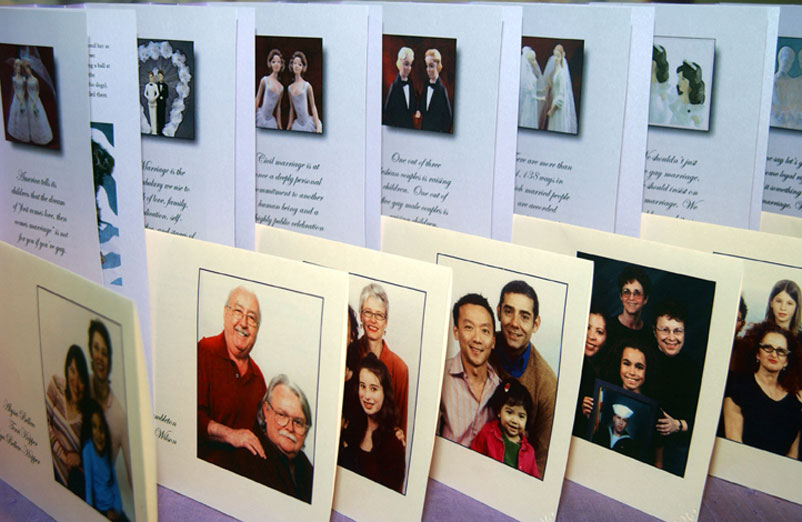
Image: Marriage Matters by Cheri Gaulke & Sue Maberry, 2005

Seeking state recognition for his marriage, Jim Obergefell became the lead plaintiff in the landmark United States Supreme Court case that would legalize same-sex marriage across the United States 2015. A resident of Cincinnati, Ohio, Obergefell and his longtime partner, John Arthur traveled to Maryland to officially marry in 2013, with Arthur having been diagnosed with ALS. After his husband’s death, Obergefell entered a legal battle with the state of Ohio to be recognized as the surviving spouse on Arthur’s death certificate. His case eventually made its way to the Supreme Court, combined with other lawsuits, to become known as Obergefell v. Hodges. On June 26, 2015, the court ruled that the Constitution supports same-sex marriage for the entirety of the United States.

Mr. Obergefell’s book, Love Wins, will be available to purchase at the Gothic Bookshop in the Bryan Center and at a table during the event. A book signing will follow the event.

Co-sponsored by the Sallie Bingham Center for Women’s History and Culture, David M. Rubenstein Rare Book and Manuscript Library, Blue Devils United, the Center for Sexual and Gender Diversity, Duke LGBTQ Network, the Duke University Union, and Steven Petrow T’78.

Rubenstein Library 2016-2017 Travel Grant Award Winners

The Rubenstein Library’s three research center annually award travel grants to undergraduate and graduate students, faculty, and independent scholars through a competitive application process. Congratulations to this year’s recipients, we look forward to working with all of you!

Sallie Bingham Center for Women’s History and Culture

Jason Ezell, Ph.D. candidate, American Studies, University of Maryland, “Queer Shoulders: The Poetics of Radical Faerie Cultural Formation in Appalachia.”

Margaret Galvan, Ph.D. candidate, English, The Graduate Center, CUNY, “Burgeoning zine aesthetics in the 1980SLA2053s through the censored Conference Diary from the controversial Barnard Sex Conference (1982).”

Kirsten Leng, assistant professor, Women, Gender, Sexuality Studies, University of Massachusetts Amherst, Breaking Up the Truth with Laughter: A Critical History of Feminism, Comedy, and Humor.

Linda Lumsden, associate professor, School of Journalism, University of Arizona, The Ms. Makeover:  The survival, evolution, and cultural significance of the venerable feminist magazine.

Mary-Margaret Mahoney and Danielle Dumaine, Ph.D. candidates, history, University of Connecticut, for a documentary film, Hunting W.I.T.C.H.: Feminist Archives and the Politics of Representation (1968-1979, and present).

Jason McBride, independent scholar, for the first, comprehensive and authorized biography of Kathy Acker.

Kristen Proehl, assistant professor, English, SUNY-Brockport, Queer Friendship in Young Adult Literature, 1850-Present.

Yung-Hsing Wu, associate professor, English, University of Louisiana at Lafayette, Closely, Consciously Reading Feminism.

History of Medicine Collections –

Cecilio Cooper, PhD candidate in African American Studies, Northwestern University, for dissertation research on “Phantom Limbs, Fugitive Flesh: Slavery + Colonial Dissection.”

Sara Kern, PhD candidate in History & Women’s, Gender, and Sexuality Studies, Penn State University, for dissertation work on “Measuring Bodies, Defining Health: Medicine, Statistics, and Civil War Legacy in the Nineteenth-Century America.”

Professor Kim Nielsen, Disability Studies & History, University of Toledo, for research on her book, The Doctress and the Horsewhip, a biography of Dr. Anna B. Ott (1819-1893).


John Hope Franklin Research Center –

Beatrice Adams, Rutgers University – Why African Americans remained in the American South during the Second Great Migration.

Erik McDuffie, University of Illinois at Urbana-Champaign – Garveyism in the Diasporic Midwest: The American Heartland and Global Black Freedom, 1920Come and Join us Brothers1-1980

Gretchen Henderson, Georgetown University – A narrative and libretto for an opera rooted in African American slavery and history entitled CRAFTING THE BONDS

Maria Montalvo, Rice University – All Could Be Sold: Making and Selling Enslaved People in the Antebellum South (1813-1865)

Nick Witham, University College London, Institute of the Americas – “The Popular Historians: American Historical Writing and the Politics of the Past, 1945-present”

John W. Hartman Center for Sales, Advertising and Marketing History –

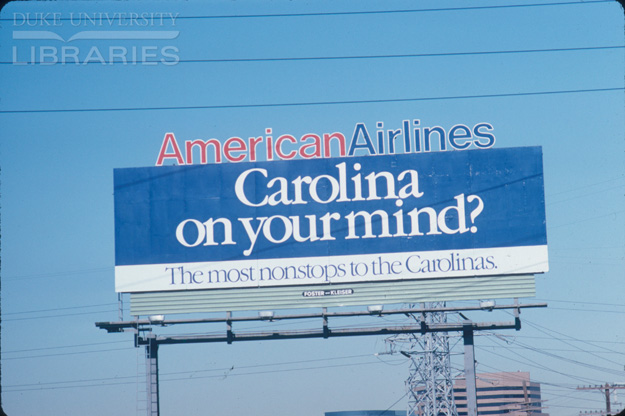
FOARE Fellowship for Outdoor Advertising Research:

Dr. Francisco Mesquita, Fernando Pessoa University, Portugal, “Billboard Graphic Production and Design Analysis”

John Furr Fellowship for JWT Research:

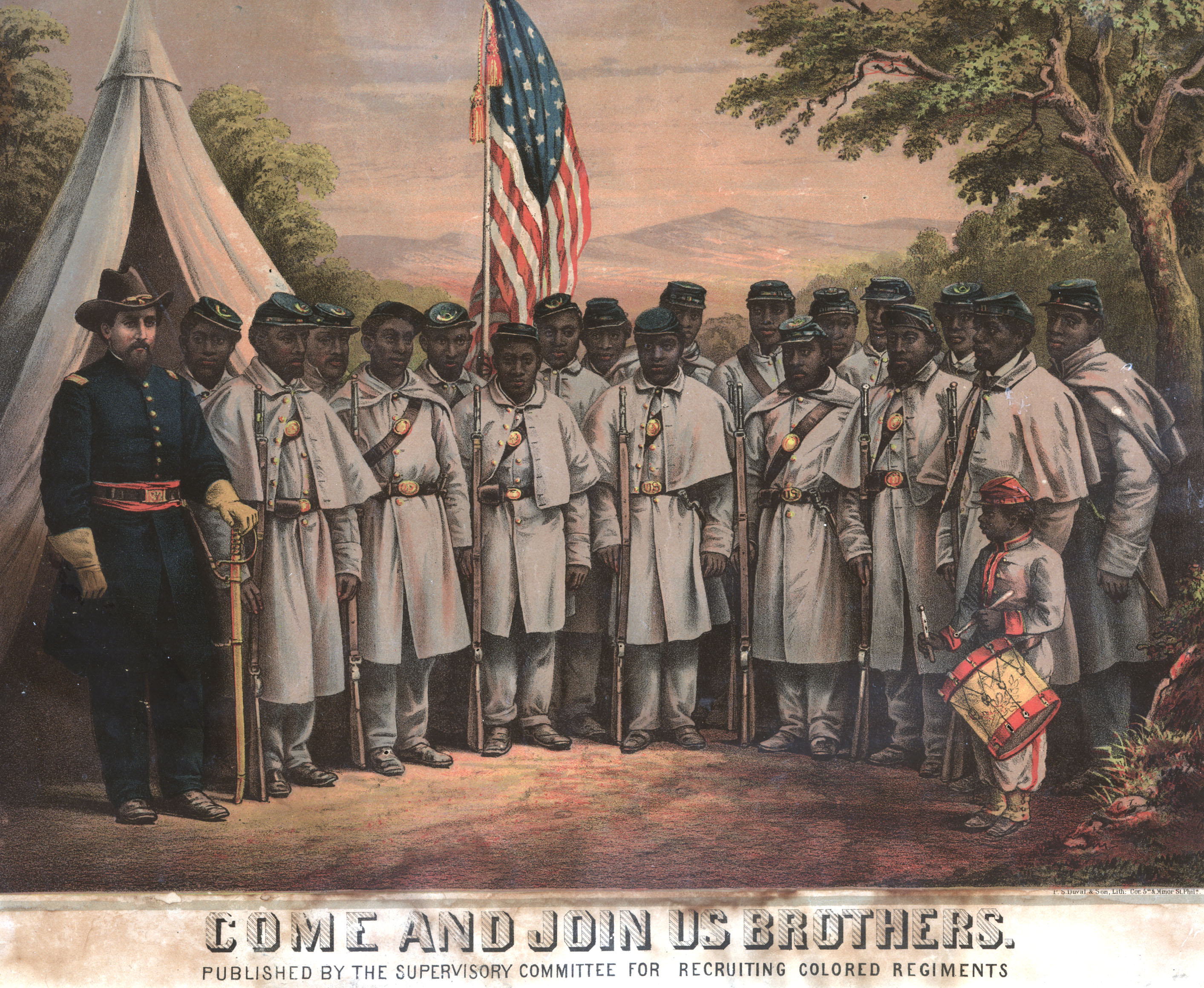
Jeremiah Favara, University of Oregon, “An Army of Some: Recruiting for Difference and Diversity in the U.S. Military”

 Alvin Achenbaum Travel Grants:

Faculty:

Megan Elias, Borough of Manhattan Community College, “Be His Guest: Conrad Hilton and the Birth of the Hospitality Industry”

Sarah Elvins, Department of History, University of Manitoba, “Advertising, Processed Foods, and the Changing Notions of Skill in American Home Baking, 1940-1990”

Students:

Alison Feser, Anthropology, University of Chicago, “After Analog: Photochemical Life in Rochester, New York”

Spring Greeney, Environmental History, University of Wisconsin-Madison, “Line Dry: And Environmental History of Doing the Wash, 1841-1992”

Elizabeth Castaldo Lunden, Media Studies – Center for Fashion Studies, Stockholm University, “Oscar’s Red Carpet: Celebrity Endorsements from Local to Global (A Media History)”

Eric Martell, History, State University of New York – Albany, “Kodak Advertising in the U.S. and Latin America, 1920-1960”

Eleanore and Harold Jantz Fellowship:

Dr. Jennifer Welsh, Lindenwood University-Belleville – Research on the presentation of female saints in German Catholic prayers and devotional works from the seventeenth and eighteenth centuries.

A Conversation With SNCC Veterans: March 9th

Our Stories, Your Legacy:  A Conversation with SNCC Veterans

Date: March 9, 2016

Time: 6:30-8:00PM

Location: Franklin Humanities Institute, Amadieh Family Lecture Hall (FHI Garage)

2016 03 09_SNCCEventFlyer_cropJoin us for a converation with three veterans of the Student Nonviolent Coordinating Committee (SNCC) as they discuss their work as activists and reflect on how telling the story of the Movement has evolved over time. Charlie Cobb (journalism), Judy Richardson (film), and Maria Varela (photography) will highlight how SNCC taught them the importance of capturing experieinces in the moment. The panel will also discuss the current efforts towards story-telling SNCC’s history using archival materials and comment on ways that modern activists can document their own work.

WOLA-Duke 2015 Human Right Book Award

WOLA-Duke 2015 Human Right Book Award

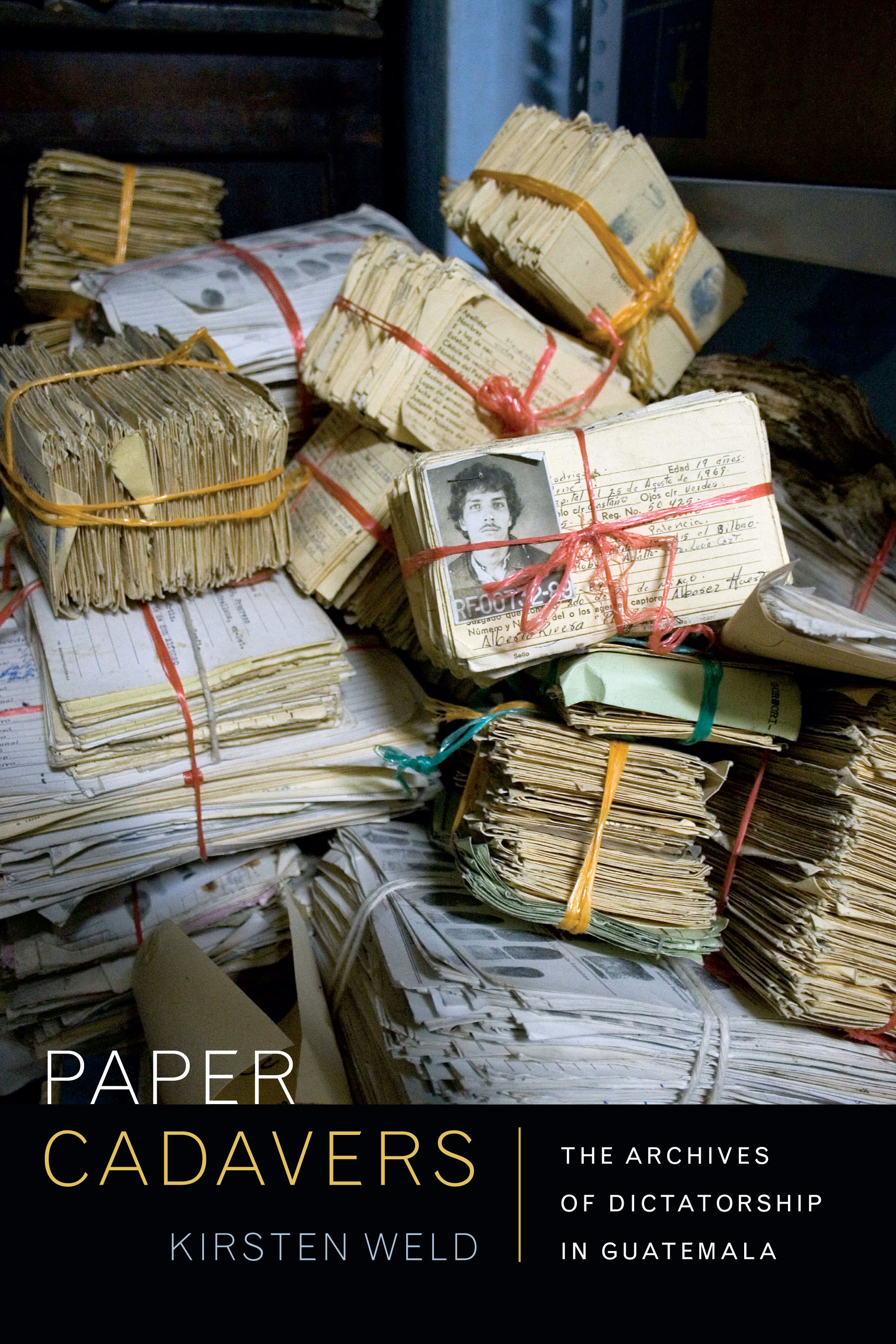
Paper Cadavers: The Archives of Dictatorship in Guatemala by Kirsten Weld

February 11, 2016, 6:00pm-7:30pm
Holsti Assembly Room (Rubenstein 153)

PapercadaversThe Washington Office on Latin America (WOLA) and Duke University have named Kirsten Weld’s book, Paper Cadavers: The Archives of Dictatorship in Guatemala (Duke University Press, 2014) as the winner of the 2015 WOLA-Duke Human Rights Book Award.

Weld will be at Duke University Libraries to receive the award, discuss and read from her book.  The award presentation will be followed by a reception and book signing.  The event is co-sponsored by the Duke Human Rights Center @ FHI, and the Center for Latin American and Caribbean Studies.

Paper Cadavers documents the heroic effort of hundreds of idealistic, activist youth who rescued and organized the National Police records under the leadership of a former guerrilla, Gustavo Meoño. In 2005, activists from the Human Rights Ombudsman’s Office (PDH) of Guatemala, while inspecting police premises for improper storage of explosives in Guatemala City, accidentally came across a trove of 75 to 80 million half-moldy pages of National Police (PN) records.

Kirsten Weld, assistant professor at Harvard University, shows how information once employed by the police state to control society and pursue subversives was put to use by the human rights community to reveal the identity of perpetrators of human rights abuses and to bring many of them to trial. In the words of the author, “Records once used in the service of state terror are repurposed by surviving reformers as building blocks for the rule of law and tools of social reckoning.”

Leonor Blum, WOLA Duke Book Award committee chair and emerita professor of history and political science at Notre Dame of Maryland University says, “Paper Cadavers is far more than a narration of the discovery of Guatemala’s police archives. Weld emphasizes both their importance in the reconstruction of memories of the past and as a form of empowerment for the future. A recent development may be a reflection of the public’s demand for greater transparency and truth. In August 2015, the International Commission against Impunity in Guatemala (CICIG) informed Guatemalans that their president and vice-president were both involved in notorious graft and corruption scandals. The public immediately took to the streets and demanded their resignation. Both the vice-president and subsequently the president resigned.”

This year’s judges include American University Professor Alex Wilde who comments that, “[Paper Cadavers] brings alive the world of archives and the political activists that learned to become archivists in the cause of human rights – one of the rare books about the human rights community itself and how it does its work.”

Author Roger Atwood describes how “This well-researched and important book shows how a group of brave researchers used those rediscovered records to document the violence and account for the missing. It is an inspiring story.”

Robin Kirk, faculty co-chair of the Duke Human Rights Center at the Franklin Humanities Institute says, “This is a riveting history of all of the complex – and often dangerous – steps that led to archivists being able to take what was a repository of terror and make it into a well of justice.”

Holly Ackerman, Librarian for Latin America, Iberian, and Latino/a Studies at Duke Libraries, comments, “Paper Cadaver is the first to put archives at the center of a case of transitional justice. She follows the chance discovery of over 75 million pages of National Police records from detection to preservation to use as evidence in trials for human rights violations. It provides a fuller trajectory than has been previously described of the long arc from human rights violation to justice.”

First awarded in 2008, the WOLA/Duke Human Rights Book Award honors the best current, non-fiction book published in English on human rights, democracy, and social justice in contemporary Latin America. The books are evaluated by a panel of expert judges drawn from academia, journalism, and public policy circles.

Previous award receipts are:

2014- Oscar Martínez, The Beast: Riding the Rails and Dodging Narcos on the Migrant Trail

2013- Jonathan M. Katz, The Big Truck That Went By: How The World Came To Save Haiti and Left Behind a Disaster

2012- Héctor Abad, Oblivion: A Memoir

2011- Kathryn Sikkink, The Justice Cascade

2010- Victoria Bruce and Karin Hayes, with Jorge Enrique Botero, Hostage Nation

2009- Ambassador Heraldo Muñoz, The Dictator’s Shadow: Life Under Augusto Pinochet

2008- Francisco Goldman, Who Killed the Bishop? : The Art of Political Murder


Contact:

Kelly McLaughlin, WOLA,202-797-2171,kmclaughlin@wola.org

Patrick Stawski, Duke University Libraries,919-660-5823,Patrick.stawski@duke.edu

Seen and Heard in the Rubenstein Library – The Emancipation Proclamation

Seen and Heard in the Rubenstein Library – The Emancipation Proclamation

Date: Tuesday, January 19, 2016

Time: 12:00 PM

Location: Hosti-Anderson Family Assembly Room, Rubenstein Library 153

cobb580_cropPlease join us for a showcase of new exhibits in the Rubenstein Library. Professor Jasmine Nichole Cobb will share reflections on the Emancipation Proclamation. Visitors are encouraged to view the exhibitions on display in the Mary Duke Biddle Room including a rare State Department copy of the 1863 Emancipation Proclamation on loan from David M. Rubenstein (T’70). Light lunch will be served.

Lecture – “Marcus Garvey and the Fallen Angel”

Date: November 4, 2015

Time: 4:00PM

Location: Rubenstein Library 153, Holsti-Anderson Family Assembly Room

Speaker: Prof. Robert Hill, Emeritus Professor of History, UCLA

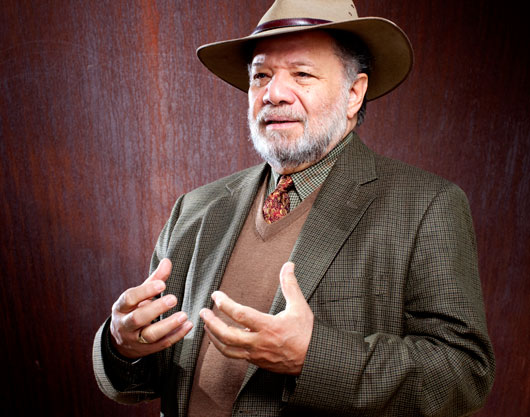
Hill-Garvey3Please join the John Hope Franklin Research Center to celebrate the recent acquisition of the Robert A. Hill Collection of the Marcus Garvey & UNIA Papers Project Archive. Prof. Robert Hill, leading expert on Marcus Garvey and his influence on the African Diaspora will lecture on a new departure in research on the legacy of one of the notable voices of the African Diaspora of the 20th century. For the past thirty-five years, Prof Hill has researched and collected materials on Garvey and served as editor of the 12-volume Marcus Garvey and Universal Negro Improvement Association Papers Project (University of California Press, Duke University Press). His collection now joins the archive of the Franklin Research Center documenting African and African American History and Culture in the David. M. Rubenstein Rare Book & Manuscript Library.

Contact – John B. Gartrell, john.gartrell@duke.edu

This event is co-sponsored by the Department of History, African & African American Studies, and the Center for Latin American and Caribbean Studies.

Reception to follow

Post submitted by John B. Gartrell, Director, John Hope Franklin Research Center

Franklin Research Center Acquires Robert A. Hill Collection/Marcus Garvey Papers Project Records

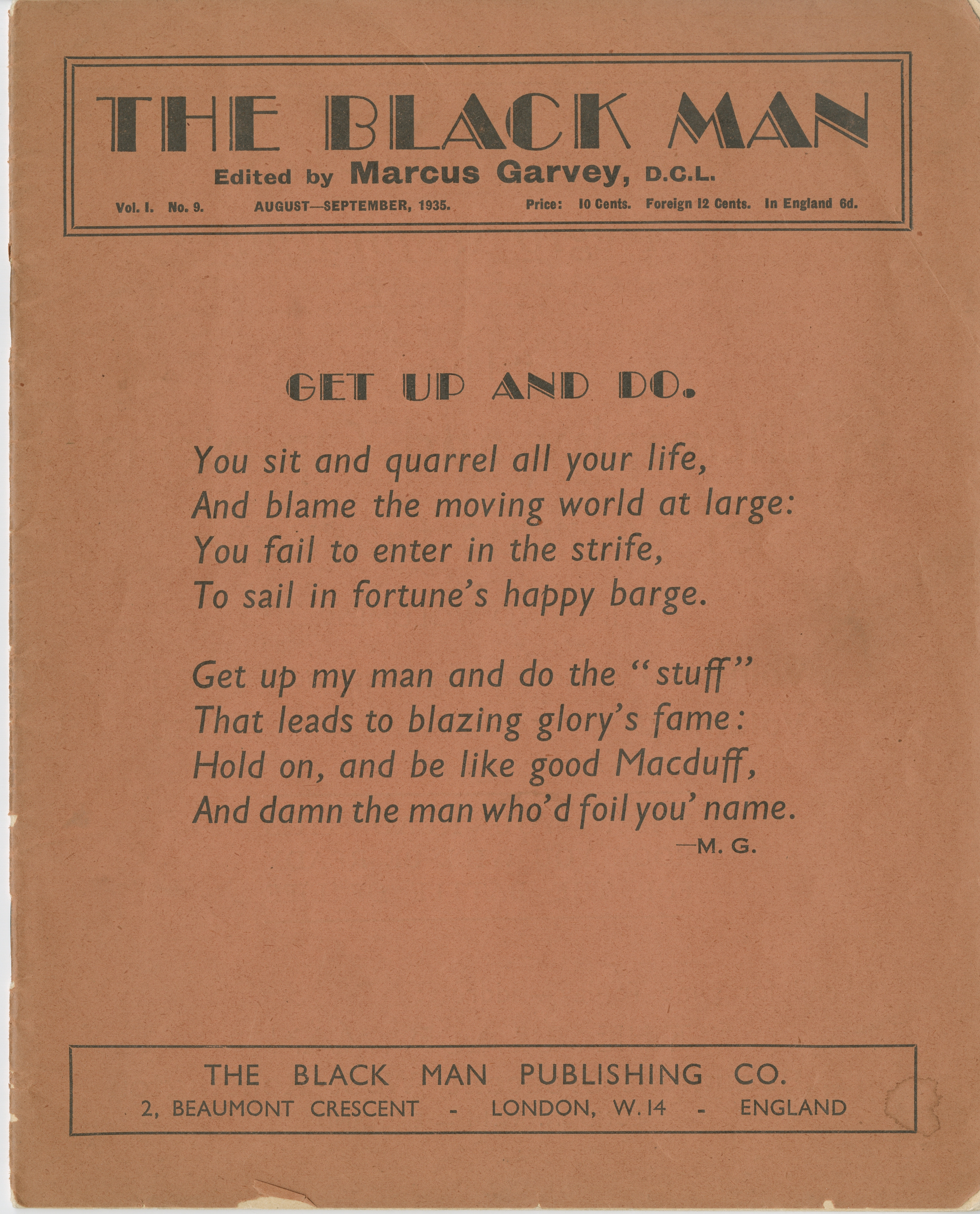
The John Hope Franklin Research Center has acquired the Robert A. Hill Collection of the Marcus Garvey and Universal Negro Improvement Association Papers Project Records. Hill is an Emeritus Professor of History at UCLA and a renowned historian and expert on the life and legacy of Garvey and his impact throughout the African Diaspora. The collection includes the research materials and documents collected to compose the twelve-volume Marcus Garvey and Universal Negro Improvement Association (UNIA) Papers (University of California and Duke University Press), which began publication in 1983 focusing on the Garvey and UNIA movement in Africa, America and Caribbean, with Hill serving as editor.

accession_003_013
The Black Man magazine, edited by Marcus Garvey, 1935

Many of the materials compiled by Hill were not able to be included in the published editions and the records of the Garvey and UNIA papers project, one of a handful of academic papers projects on a person of African descent, are one of the largest research collections of documents on Garvey and his followers in the world. The collection, which contains over three hundred boxes, is currently being processed in order to be opened to the public.

accession_004_014
Universal Negro Improvement Association Minutes of Proceedings, London, England meeting, 1928

A native of Kingston, Jamaica, Hill is currently an emeritus faculty at UCLA and has held appointments at Dartmouth College, the Institute of the Black World, and Northwestern University, Evanston. He began compiling materials related to Garvey in 1970 and subsequently expanded his collecting interests into the history of the African Diaspora throughout the western world. From Nov. 2-6, Professor Hill will be visiting the Rubenstein Library and will officially begin service as Scholarly Consultant & Adviser for the collection; assisting staff with understanding the collection’s organization, participating in an oral history about the genesis and growth of the collection, and delivering a public lecture on campus on November 4, 2015 at 4:00pm in the Holsti-Anderson Family Assembly Room, Rubenstein Library.

accession_010_020
Black Star Line stock certificate, 1919

Post submitted by John B. Gartrell, Director, John Hope Franklin Research Center