Category Archives: Readings and Talks

Q & A with Andrew Kahrl

Tomorrow, the Franklin Research Center will host Dr. Andrew Kahrl, who will present”Losing the Land: African American Ownership of Coastal Property.” We asked him a few questions in anticipation of his talk, which is based on his research in our Behind the Veil oral histories collection.

Q: Could you give us a preview of your talk?

Andrew: I’m going to trace the history of African American coastal land ownership from the late 19th century to the present in order to better understand the relationship between race and real estate development in the making of the modern Sunbelt South and the long civil rights movement.

I plan to discuss the rise of coastal black landownership in the post-emancipation era; African Americans’ economic and emotional investment in coastal property and leisure space under Jim Crow; and the impact of changes to the region’s political economy on black landownership and notions of land-based empowerment. I’ll highlight some of the more revealing interviews in the Behind the Veil collection that speak to the struggle of African Americans to acquire and defend coastal property under Jim Crow and the role of black-owned leisure spaces in shaping class and culture behind and along the color line, as well as the various strategies of expropriation black coastal landowners faced—and continue to face—at the hands of real estate developers, the courts, and public officials from the 1970s to the present.

Overall, I hope to use the story of African American beachfront property to offer new insights into the intertwined stories of Jim Crow, civil rights, and the making of the Sunbelt, and to stimulate discussions on the spatiality of race, wealth, and privilege in modern America.

Q: Tell us more about your research in the Behind the Veil oral histories. Have you made any surprising discoveries?

Andrew: I have made some fascinating discoveries in the Behind the Veil collection. Two years ago, I listened to a small sampling of interviews conducted with residents of coastal cities. Interviewees recounted stories of the places that are the subject of my research that I simply could not have found elsewhere, and offered clues to the hidden history of places and cases of land acquisition and expropriation that led me to pursue other records and, in the end, make fascinating discoveries. In particular, their personal stories of the different strategies real estate developers and their allies in public office employed to seize valuable, black-owned coastal property have helped me piece together a broader set of land-use practices and legal strategies that transformed America’s coastlines in the second half of the 20th century.

The Behind the Veil Collection offers rich and moving stories of African Americans’ struggles to carve out spaces for pleasure and relief under Jim Crow, and reinforces, in my mind, the importance of land ownership in the black freedom struggle and the impact of African Americans’ steady loss of land in recent decades on relations of political and economic power in the South and the nation.

Thanks, Andrew!

“Losing the Land” with Andrew Kahrl

Date: Wednesday, 17 March 2010
Time: 3:00 PM
Location: Rare Book Room
Contact Information: Janie Morris, 919-660-5819 or janie.morris(at)duke.edu

From the Davis Family Papers.

Dr. Andrew Kahrl will discuss the rise and demise of black beaches and coastal property ownership from the early 20th century to the present. Kahrl’s talk, titled “Losing the Land: African American Ownership of Coastal Property,” is based in part on his findings in the Behind the Veil oral history collection at the RBMSCL.

This event is part of the celebration of the 15th anniversary of the RBMSCL’s John Hope Franklin Research Center for African and African American History and Culture.

Kahrl is assistant professor of history at Marquette University and a former fellow at the W. E. B. Du Bois Institute for African and African American Research at Harvard University and the Andrew W. Mellon Foundation/American Council of Learned Societies.

Tea with Trailblazers: MaryAnn Black

Date: Wednesday 3 February 2010
Time: 2:30 PM
Location: The History of Medicine Reading Room, Duke Medical Center Library (map and directions)
Contact Information: Jessica Roseberry, 919-383-2653 or jessica.roseberry(at)duke.edu

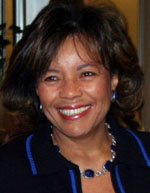
MaryAnn BlackIn celebration of Black History Month, the Duke Medical Center Library and Archives has partnered with the John Hope Franklin Research Center for African and African American History and Culture to present a special guest, MaryAnn Black, MSW, LCSW. In an informal talk, Ms. Black will share some of her “trailblazing” experiences at Duke and in the Durham community. Ms. Black, who has worked for Duke University since 1981, is the Associate Vice President for Community Relations for the Duke University Health System. Tea and light refreshments will be served.

Opening Reception for “Conscience of a Nation”

Date: Wednesday 20 January 2010
Time: 4:30 PM
Location: Perkins Library Rare Book Room
Contact Information: Karen Jean Hunt, 919-660-5922 or k.j.hunt(at)duke.edu

Join the exhibit curators and the staff of the John Hope Franklin Research Center for African and African American History and Culture as they celebrate the legacy of Professor John Hope Franklin (1915-2009).

Speakers will include Judge Allyson Duncan, a 1975 Duke Law graduate, and Dr. Walter Brown, former dean of North Carolina Central University’s School of Education.

Zine Mania, Round One: Cristy Road

Date: Monday, 16 November, 2009
Time: 4:00 PM
Location: Duke Women’s Center Lower Lounge
Contact Information: Kelly Wooten, 919-660-5967 or kelly.wooten(at)duke.edu

Cristy RoadYou know those issues of Greenzine you have stacked on your bookshelf? Now you’ll finally have your chance to meet writer and illustrator Cristy Road as she visits Duke’s Women’s Center for a reading and discussion.

Road, a Cuban-American from Miami, Florida, has been illustrating ideas, people, and places ever since she learned how to hold a crayon. Blending the inevitable existence of social principles, cultural identity, sexual identity, mental inadequacies, and dirty thoughts, she testifies to the beauty of the imperfect. Today, Road has moved from zines to illustrated novels, although her visual diagram of lifestyles and beliefs remain in tune with the zine’s portrayal of living honestly and unconventionally.

Stop by the Sallie Bingham Center for Women’s History and Culture during reading room hours to see issue #14 of Greenzine, one of some 4000 zines (and counting!) preserved in the center’s zine collection.

(Artwork courtesy of Cristy Road: “Hope Beyond Despair” from Greenzine 14, 2004)

Witnessing Iran: 1979 and 2009

Date: Wednesday, 4 November, 2009
Time: 4:30 PM
Location: Perkins Library 217
Contact Information: Ilene Nelson, 919-660-5816 or ilene.nelson(at)duke.edu

On the 30th anniversary of the beginning of the Iran Hostage Crisis, the RBMSCL will host a discussion of the changing role of the eyewitness account in the creation of historical narrative—with Iran as the context.

Mark Bowden, author of Guests of the Ayatollah: The First Battle in America’s War with Militant Islam, will talk about the interviews he conducted with hostages and hostage-takers in the 1979 crisis, as well as the information he obtained from military officials about 1980’s failed rescue attempt.

Negar Mottahedeh, associate professor in Duke’s Program in Literature, will speak about social networks and new media in the reporting of current events in Iran. Professor Mottahedeh posts frequently on Twitter about developments in Iran (follow her here).

The discussion will be moderated by Bruce Kuniholm, dean of the Sanford School of Public Policy and a member of both the U.S. State Department’s Bureau of Intelligence and Policy Planning Staff during the Carter administration.

Library staff have prepared a LibGuide in conjunction with this event. Of particular interest, the RBMSCL holds the interviews Mark Bowden conducted (collection guide here), as well as the interviews that author and Duke alum Tim Wells conducted with 36 of the the 1979 hostages (collection guide here).

Jazz Conversations with John Brown and Vincent Gardner

Date: Thursday, 22 October, 2009
Time: 12:00 PM
Location: Rare Book Room
Contact Information: Jeremy Smith, 919-660-5839 or jas5(at)notes.duke.edu

Join us as the Jazz Archive hosts this fall’s second installment of John Brown’s “Jazz Conversations.” Brown, Associate Professor of the Practice of Music and Director of the Duke Jazz Program, will discuss jazz history and contemporary developments in jazz with Vincent Gardner of the Jazz at Lincoln Center Orchestra. Guests are invited to bring their own lunches—but dessert and drinks are on us!

Ambassador Heraldo Muñoz at the RBMSCL

Date: Thursday, 15 October, 2009
Time: 5:00 PM
Location: Rare Book Room
Contact Information: Patrick Stawski, 919-660-5823 or patrick.stawski(at)duke.edu

Ambassador Muñoz will read from and sign The Dictator’s Shadow: Life under Augusto Pinochet. The winner of the second annual WOLA-Duke Book Award for Human Rights in Latin America, this poignant and wide-ranging memoir recounts how Chileans brought the former dictator to account for his crimes. Ariel Dorfman, the Walter Hines Page Chair of Literature and Latin American Studies and a long-time friend of the ambassador, will give the introduction. Duke University’s Gothic Bookshop will sell copies of the book. This event is co-sponsored by the Duke Human Rights Center and the Center for Latin American and Caribbean Studies.

Ambassador Muñoz was Deputy Foreign Minister of Chile from 2000 to 2002 and Minister Secretary General from 2002 to 2003 at La Moneda Presidential Palace before assuming his present post as Chile’s ambassador to the United Nations. He was imprisoned and exiled by the Pinochet regime for his political views.