Category Archives: From Our Collections

Not Even Covered in Chocolate Sauce

Wonders never quite cease at the RBMSCL. If ever there were a foodstuff that we strongly believed should not be associated with dessert, it was cauliflower. And then we discovered The Dessert Book: A Complete Manual from the Best American and Foreign Authorities with General Economical Recipes (written by a Boston Lady in 1872). So, in honor of National Dessert Month, we present:

Not dessert.
Not dessert.

Meringues in the Form of Cauliflowers

Fill a biscuit-forcer with Italian meringue-paste, and push this out upon bands of paper, in knobs, or large dots, superposed or mounted one upon the other in such form or fashion, that, when complete, it shall represent, as nearly as possible, the head, or white part, of a cauliflower (of course, on a very diminished scale, of the size of a pigeon’s egg, for instance): this pat of the cauliflower, when fashioned, is to be sprinkled over with rather coarse granite sugar.

The under part, or green leaves, which envelop a cauliflower, are imitated in a somewhat similar manner to the above by pushing out the paste in pointed dots upon bands of paper, in the manner and form as directed for the imitation of the heads, only somewhat flatter: these, in order the better to represent green leaves, are to be sprinkled over with green granite sugar; and when both parts have been dried in the closet, or screen, stick the head, or white part, upon the leafy or green part; thus you will form more or less truthful imitation of a cauliflower, according as in a greater or lesser degree you may have displayed your taste.

Should you want to make these for your next dinner party—imagine the aghast looks on your guests’ faces!—you’ll find the recipe for Italian Meringues after the jump.
Continue reading Not Even Covered in Chocolate Sauce

Stories of SNCC

Date: Sunday, 24 October 2010 
Time: 3:00 PM
Location: Durham County Library Auditorium, 300 N. Roxboro Street
Contact Information: Will Hansen, 919-660-5958 or william.hansen(at)duke.edu

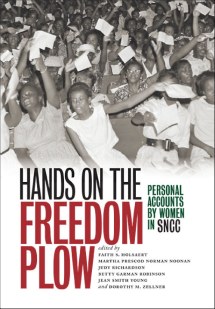
To celebrate the publication of the essay collection, Hands on the Freedom Plow: Personal Accounts by Women in SNCC, editor Faith S. Holsaert (whose papers are held by RBMSCL) and contributor Margaret Herring will speak along with Nia Wilson, Executive Director, and Mya Hunter, member of SpiritHouse, a local grassroots organization that supports the empowerment, transformation, and self-determination of marginalized communities of color.

In Hands on the Freedom Plow, fifty-two women—northern and southern, young and old, urban and rural, black, white, and Latina—share their courageous personal stories of working for the Student Nonviolent Coordinating Committee (SNCC) on the front lines of the Civil Rights Movement. Along with these stories, participants in the panel will discuss the legacy and continuing work of women for civil rights and equality.

This event is co-sponsored by the Sallie Bingham Center for Women’s History and Culture, the North Carolina Collection at Durham County Library, and The Regulator Bookshop.

Voting = Cake

In honor of National Dessert Month (which everyone celebrates, right?), we’ll be posting recipes from the RBMSCL’s collection every Friday this month. Last Friday—The Devil’s Tale’s first birthday—we started the celebration with a recipe for a pretty pink birthday cake.

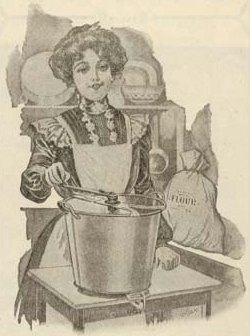
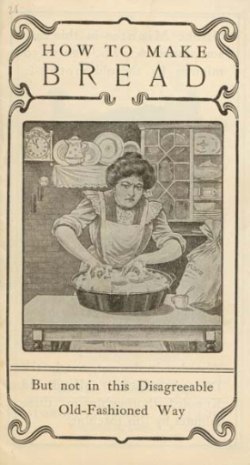
Today’s recipe comes from an advertising brochure with a marvelous title: How to Make Bread (But Not in This Disagreeable Old-Fashioned Way). Really, we’re not making that up:

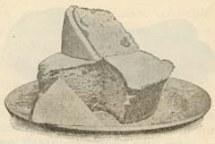
You see, this brochure advises the smart homemaker to purchase The Universal Three Minute Bread Maker from Landers, Frary & Clark (of New Britain, Connecticut). The transformation is nothing short of astonishing:

And, of course, no advertisement for an absolutely revolutionary bit of kitchen gadgetry would be complete without a few recipes to make with said gadgetry. So, in honor of a certain approaching first Tuesday in November, we offer this fine recipe:

Loaf, or Election Cake

Put into the Bread Maker one and one-half cups milk, one cup potato yeast, one cup sugar, five cups flour, turn crank three minutes, put on cover and raise till light. When light, add one cup shortening, (half butter and lard), one cup sugar, whites of two eggs, nutmeg to season, turn crank five minutes, cover and raise again till light. Fill pans with batter and fruit (raisins or citron, or both), well floured alternately, until pans are two-thirds full, add also fruit on top.

The cake should stand in the pans about one-half hour and then be baked in a moderate oven.

Now we’re off to eBay to find a 100-year-old Universal Three Minute Bread Maker.

“To Keep the Future Worthy of the Past”

Date: 14 October-3 January 2011
Location and Time: Rare Book Room cases during library hours
Contact Information: Tim Pyatt, 919-684-8929 or tim.pyatt(at)duke.edu

William Preston Few, undated

‘To Keep the Future Worthy of the Past’: The Legacy of William Preston Few” celebrates the centennial of Few’s inauguration as President of Trinity College on November 9, 1910.

Few accepted the presidency of Trinity College promising “. . . to keep the future worthy of the past.” This would be no hollow promise as, over the next three decades, he would transform the strong and growing liberal arts college into a major research university and help shape James B. Duke’s transformative gift.

Memorabilia from the inauguration, as well as documents and images pertaining to the growth of Trinity College into Duke University, will be on display in this exhibit.

The Duke University Archives will also commemorate the anniversary of President Few’s inauguration with a special event on Tuesday, 9 November 2010 at 4:00 PM in the Rare Book Room. Watch The Devil’s Tale in the coming weeks for further details about this event.

Post contributed by Tim Pyatt, Duke University Archivist.

Book + Art

Date: 13 October 2010-9 January 2011
Location and Time: Perkins Library Gallery during library hours
Contact Information: Kelly Wooten, 919-660-5967 or kelly.wooten(at)duke.edu

During your next visit to Perkins-Bostock Library, be sure to stop by the Perkins Library Gallery to see the eclectic selection of artists’ books on display in “Book + Art: Artists’ Books from the Sallie Bingham Center for Women’s History and Culture.” Or if you can’t visit in person, you can enjoy the online exhibit!

R & J: the txt msg edition. Elizabeth Pendergrass. J. Hastings, 2006.

So what exactly is an artists’ book? In the most general terms, it is an original work of art that that incorporates or innovates upon the book form in some—often dramatic—way. These books combine traditional arts, such as graphic design, printmaking, and bookbinding, with the full spectrum of contemporary art practice and theory, expanding and redefining the form. In this exhibit, you’ll see books in the form of a cell phone, a grandmother clock, women’s underwear, and even the traditional paperback book structure. The themes highlighted in this exhibit and in the Bingham Center’s artists’ book collection as a whole reflect the strengths of our broader collection of print and manuscript materials documenting women’s lives: motherhood and family, the domestic sphere, women’s bodies, sexuality, and women’s health.

This exhibit is part of this fall’s Book + Art series, part of a semester-long celebration of book arts in collaboration with UNC Libraries. In the coming weeks, the Bingham Center will be sponsoring several events about the book arts:

Aging Gracefully. Bea Nettles, 2002.

Bea Nettles, Book Artist and Photographer
Date: Thursday, 21 October 2010
Time: 5:30 PM
Location: Rare Book Room

Bea Nettles is a book artist and photographer whose work addresses issues of family relationships, the body, and the ways in which personal identities reflect political and social realities. She will give a lecture with book signing and light reception to follow. For more about Bea Nettles, visit her website.

Careers in Book Arts
Date: Wednesday, 10 November 2010
Time: 9:30 AM
Location: Room 217, Perkins Library

Panel discussion about making a career out of a love of book arts, featuring Laurie Corral, founder of Asheville Bookworks, Dave Wofford of Horse and Buggy Press, and Meg Brown, Duke conservation librarian and exhibits coordinator. Moderated by Beth Doyle, Duke conservation librarian.

Post contributed by Kelly Wooten, Research Services and Collection Development Librarian for the Sallie Bingham Center of Women’s History and Culture.

Having Our (Birthday) Cake….

The Devil’s Tale’s birthday (today!) happens to coincide with National Dessert Month. In honor of these two very important occasions, we’re going to be publishing dessert recipes from our collections every Friday this month. We’ll begin today, of course, with a birthday cake recipe from Gold Medal Flour’s 1931 New Party Cakes for All Occasions, part of the fine Nicole Di Bona Peterson Collection of Advertising Cookbooks.

It might be slightly more . . . normal than some of the recipes we’ve previously posted (frozen cheese, anyone?), but it sure is pretty.

Birthday Cake

3/4 cup shortening
2 cups sugar
3/4 tsp. salt
3 1/2 cups cake flour
5 tsp. baking powder
1 1/2 cups milk
1 1/2 tsp. flavoring
5 egg whites

Cream the shortening and add the sugar gradually. Sift the flour once before measuring. Mix and sift the flour, salt, and baking powder, and add alternately with the milk. Add the flavoring—vanilla and almond together are good. Fold in the stiffly beaten egg whites. Pour into well greased and floured pans and bake. Cool and frost with pink and white icing.

NOTE: Part of icing may be colored pink with vegetable coloring matter and used on sides of cake with white icing on top and between layers. Pink candles to match sides can be placed on top of cake for birthday party.

Happy birthday, Devil’s Tale!

Special thanks to Lynn Eaton, Hartman Center Reference Archivist, for helping us find this recipe.

Founders’ Day Traditions

(click to enlarge)

The practice of honoring the benefactors of Trinity College and Duke University was formalized by the Board of Trustees on June 4, 1901, when October 3 was designated as Benefactors’ Day in honor of Washington Duke. The original intent “to honor Washington Duke forever” has been kept in spirit, but the name and date of the annual observance has changed over the years. It has been called Benefactors’ Day (1901-1924), Duke University Day (1926-1947), and, since 1948, Founders’ Day. The most elaborate celebrations occurred during the year-long Centennial Celebration of 1938-1939, and on the 100th anniversary of James B. Duke’s birth in 1956.

After the creation of Duke University in 1924, the date shifted to December 11 in honor of the signing of the Indenture of The Duke Endowment. For several decades, tree-planting ceremonies were a traditional part of the festivities. In 1997, the ceremonies were moved back to a date in the early fall, usually the weekend closest to October 3rd. Events include a memorial for members of the community deceased during the year passed, recognition of outstanding students, faculty, and staff, and the presentations of awards for teaching, the Distinguished Alumni Award, and the University Medal for Distinguished Meritorious Service at Duke.

Post contributed by Tim Pyatt, Duke University Archivist.

The RBMSCL Celebrates Banned Books Week

In honor of Banned Books Week, we’ve asked the staff of the RBMSCL to reflect upon their favorite banned or challenged book:

“To me, The Adventures of Huckleberry Finn is the quintessential banned book. Hilarious, heartfelt, and packed with classic scenes, it has also been seriously offensive in very many ways to very many people in the 125 years since its publication. And yet there has never been any consensus on what, exactly, makes it worth burning—its immorality, poor spelling and grammar, racism, homoeroticism, and encouragement of juvenile delinquency have all come under fire. The book itself remains as tricksy as its narrator, and as its native time and place.”

—Will Hansen, Assistant Curator of Collections

“One challenged book that I enjoyed reading and discussing in school was Their Eyes Were Watching God by Zora Neale Hurston. Not only does this book break away from many literary norms, but I think it also succeeds in charging its readers to think about aspects of community, identity, and survival.”

—Jennifer Thompson, Research Services and Collection Development Librarian for the Franklin Research Center

“Widespread celebrations have marked the 50th anniversary of the publication of Harper Lee’s To Kill a Mockingbird, one of the American Library Association’s Top 100 banned or challenged novels of the 20th century. As a girl in 1960s Alabama, I was deeply troubled by the pervasive racial inequity that was so much a part of the social fabric. I felt a powerful identification with Scout and her father, Atticus, gave me hope that, eventually, individuals might change that fabric.”

—Elizabeth B. Dunn, Research Services Librarian

“While not a banned book (banned broadside), Martin Luther’s 95 Theses which he nailed on the Wittenberg Church door on Oct. 31, 1517 greatly influenced me. As an undergraduate at Duke just after the period of social protests in the 1960s, the idea that a provocative list of concerns by an early 16th century monk could transform the establishment inspired me. I went on study Luther and wrote my senior theses on the use of hymnody for protest. Perhaps those protest songs of the 1960s were not so novel after all!”

—Tim Pyatt, Duke University Archivist

“Thomas Paine’s Rights of Man, a rejoinder to Edmund Burke’s 1790 denunciation, Reflections on the Revolution in France, was so popular that it was published multiple times in 1791 and caused a furor in England. Paine argued that human rights are natural (not given) rights and that government’s are a product of and always accountable to the people. Not unexpectedly, Rights of Man was banned by the British crown for supporting the French Revolution and led to the prosecution of Paine who wisely had left England prior to his conviction. In a time when our nation’s human rights record is questionable to say the least, I am heartened, encouraged, and inspired by Paine’s courage and conviction in arguing that human rights are the foundation of a just society and the publication of Rights of Man reminds me that human rights have been with us since the birth of this country.”

—Patrick Stawski, Human Rights Archivist

Take a look at the lists of Frequently Challenged Books available at the American Library Association’s website and tell us about your own favorite banned or challenged books!

Treasures of the TCHS

Date: Tuesday, 28 September 2010
Time: 3:30 PM
Location: Rare Book Room and Perkins Library Gallery
Contact Information: Amy McDonald, 919-681-7987 or amy.mcdonald(at)duke.edu

Piece of Wood, undated. From the Trinity College Historical Society Collection.

Ever wonder how the Rare Book, Manuscript, and Special Collections Library got its start? When faculty started using primary sources in their teaching? Why the University Archives keeps a seemingly random chunk of wood in its collections?

Find out all this and more as the co-curators of “‘As Far As Possible from Forgetfulness’: The Trinity College Historical Society” lead a gallery tour and talk about this popular exhibit, on display in the Perkins Library Gallery through October 10.

University Archivist Tim Pyatt will start the celebration with a brief history of the TCHS. Then co-curators Meghan Lyon, Amy McDonald, and Kim Sims will lead a tour of exhibit in the Perkins Library Gallery, sharing some of the stories behind the artifacts in the cases and the people who collected them. A reception in the Rare Book Room will follow their remarks.

Post contributed by Tim Pyatt, Duke University Archivist.

Rights! Camera! Action!: After Innocence

Date: Thursday, 23 September 2010
Time: 7:00 PM
Location: Rare Book Room
Contact Information: Patrick Stawski, 919-660-5823 or patrick.stawski(at)duke.edu, or Kirston Johnson, 919-681-7963 or kirston.johnson(at)duke.edu

The Rights! Camera! Action! film series begins its fall season with this screening of After Innocence, the compelling story of seven men wrongfully imprisoned for decades and finally exonerated after DNA evidence proved their innocence. The men—including a police officer, an army sergeant, and a young father—are thrust back into society with little or no support from the system that put them behind bars. After Innocence shows that the human toll of wrongful imprisonment can last far longer than the sentences served.

The film will be followed by a panel discussion featuring recently-exonerated Shawn Massey and Theresa Newman, co-chair of Duke School of Law’s Wrongful Convictions Clinic.

The Rights! Camera! Action! film series, which is sponsored by the Archive for Human Rights, the Archive of Documentary Arts, the Duke Human Rights Center, the Franklin Humanities Institute, and Screen/Society at Duke’s Arts of the Moving Image Program, features documentaries on human rights themes that were award winners at the annual Full Frame Documentary Film Festival. The films are archived at the RBMSCL, where they form part of a rich and expanding collection of human rights materials.