All posts by John Gartrell

ABC’s of John Hope Franklin – (I) – Illinois (Chicago)

I – Illinois (Chicago)

John Hope Franklin and his wife Aurelia lived in the state of Illinois, specifically in Chicago, for several years. In 1964, Franklin joined the faculty at the University of Chicago, where he served as Chair of the History Department from 1967-1970, and was the John Matthews Manly Distinguished Service Professor from 1969-1982, he became Professor Emeritus in 1982.
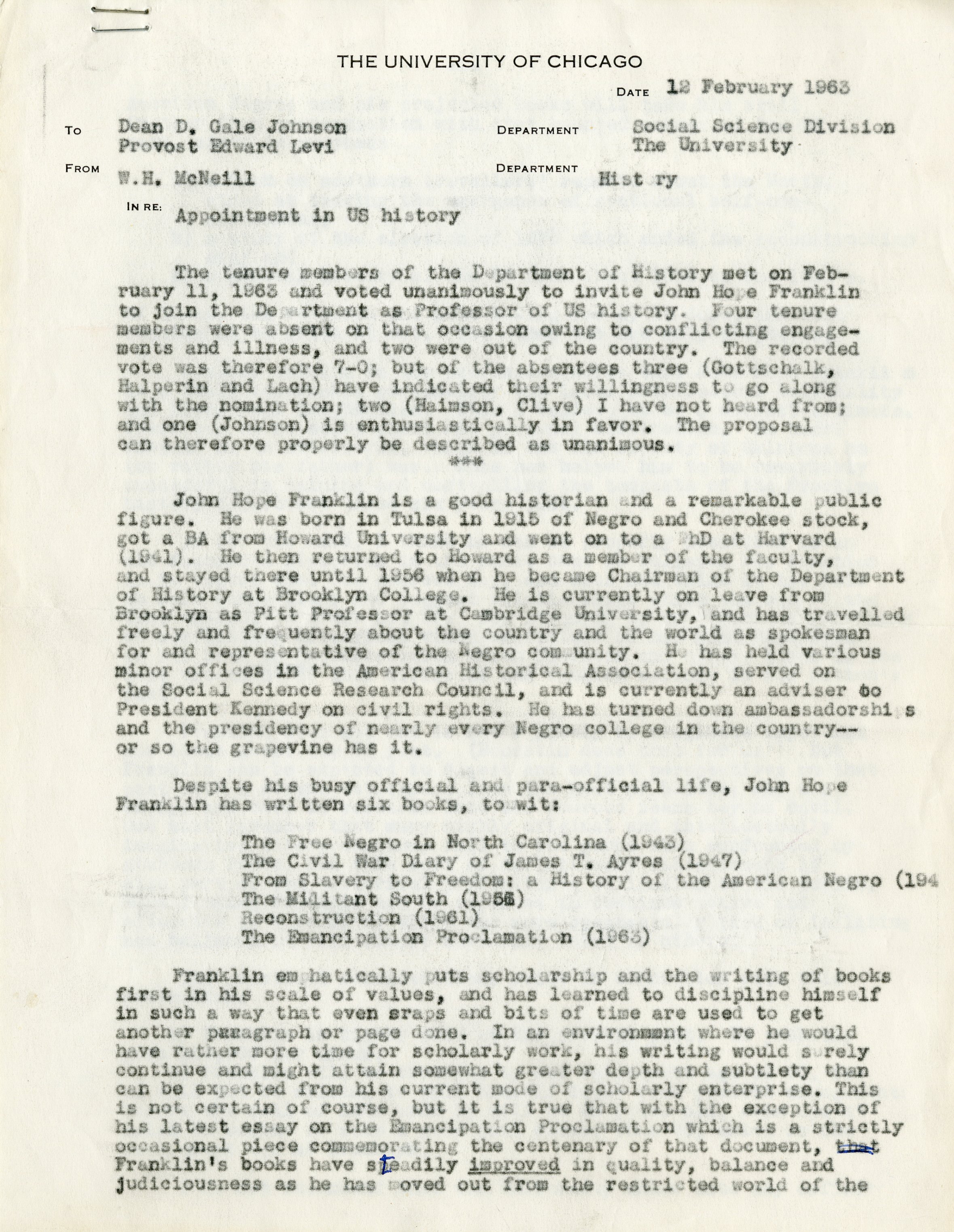
Appointment letter for John Hope Franklin to be hired by the department of history at the University of Chicago, 1963

During his tenure at the University of Chicago, Franklin published Color and Race (1969), and Illustrated History of Black Americans (1970), Racial Equality in America and Southern Odyssey: Travelers in the Antebellum North (1976). Franklin also served as advisor to over twenty PhD graduates from the department of history, including noted scholars Genna Rae McNeil, Paul Finkelman, Juliet E.K. Walker, Loren Schweninger, and Alfred Moss.

JHFpapers_p1_019
John Hope Franklin and former student, Alfred A. Moss, work together on the 7th edition of From Slavery to Freedom: A History of African Americans


Franklin was also entrenched in the community, working on boards and committees of the Chicago Symphony Orchestra, Chicago Public Library, Chicago Urban League and NAACP, and DuSable Museum.

franklin_family_006
John Hope Franklin on the campus of the University of Chicago, 1968


In 1984, four years after John Hope Franklin moved back to Durham, NC,  Franklin received the Illinois Humanities Council Public Humanities Award. This annual award is presented to an organization or an individual who has made significant contributions to the civic and cultural life of the State of Illinois through the humanities.

This series is a part of Duke University’s John Hope Franklin@100: Scholar, Activist, Citizen year-long celebration of the life and legacy of Dr. John Hope Franklin

Submitted by Gloria Ayee, Franklin Research Center Intern
ABC’s of John Hope Franklin – (H) Honorary Degrees

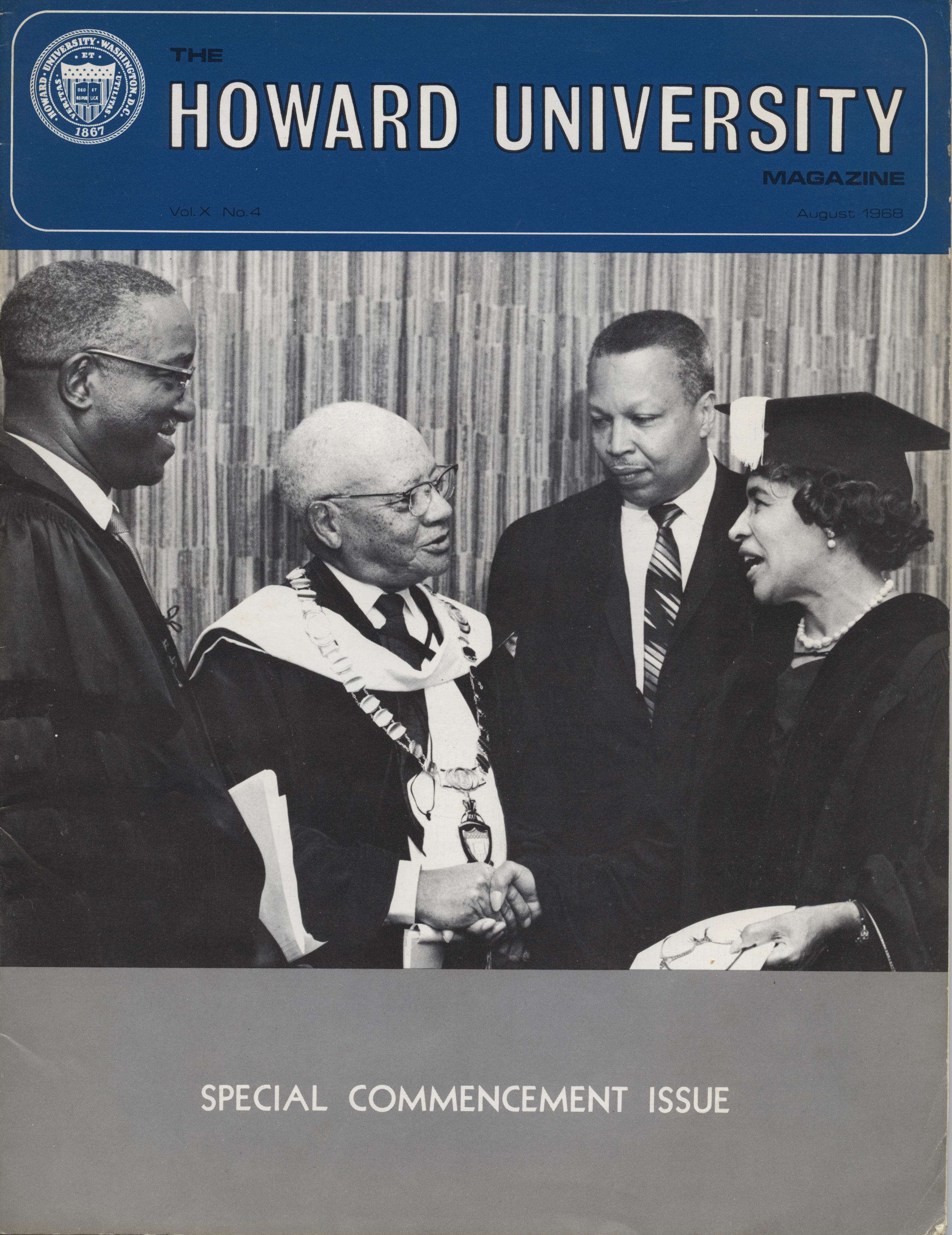
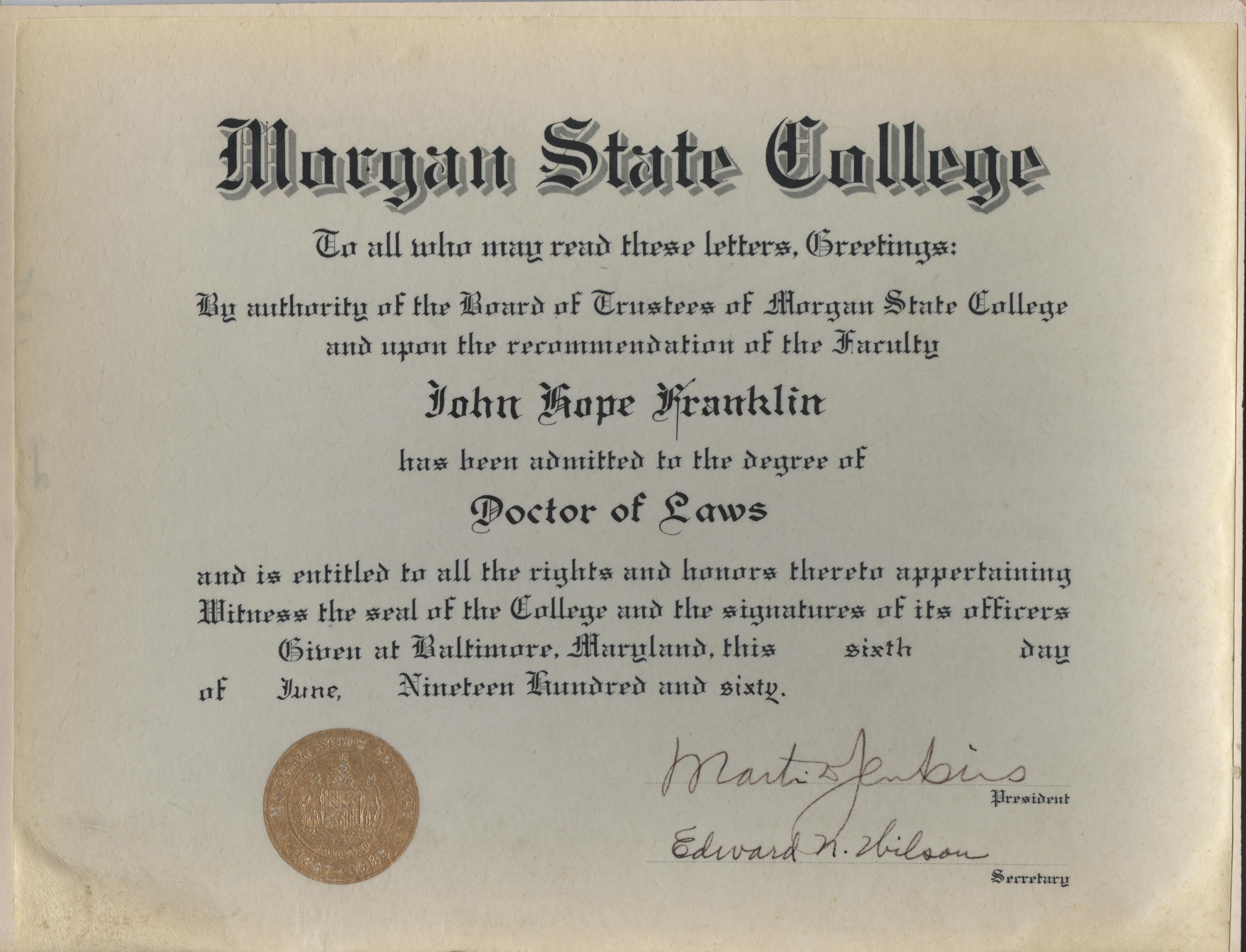
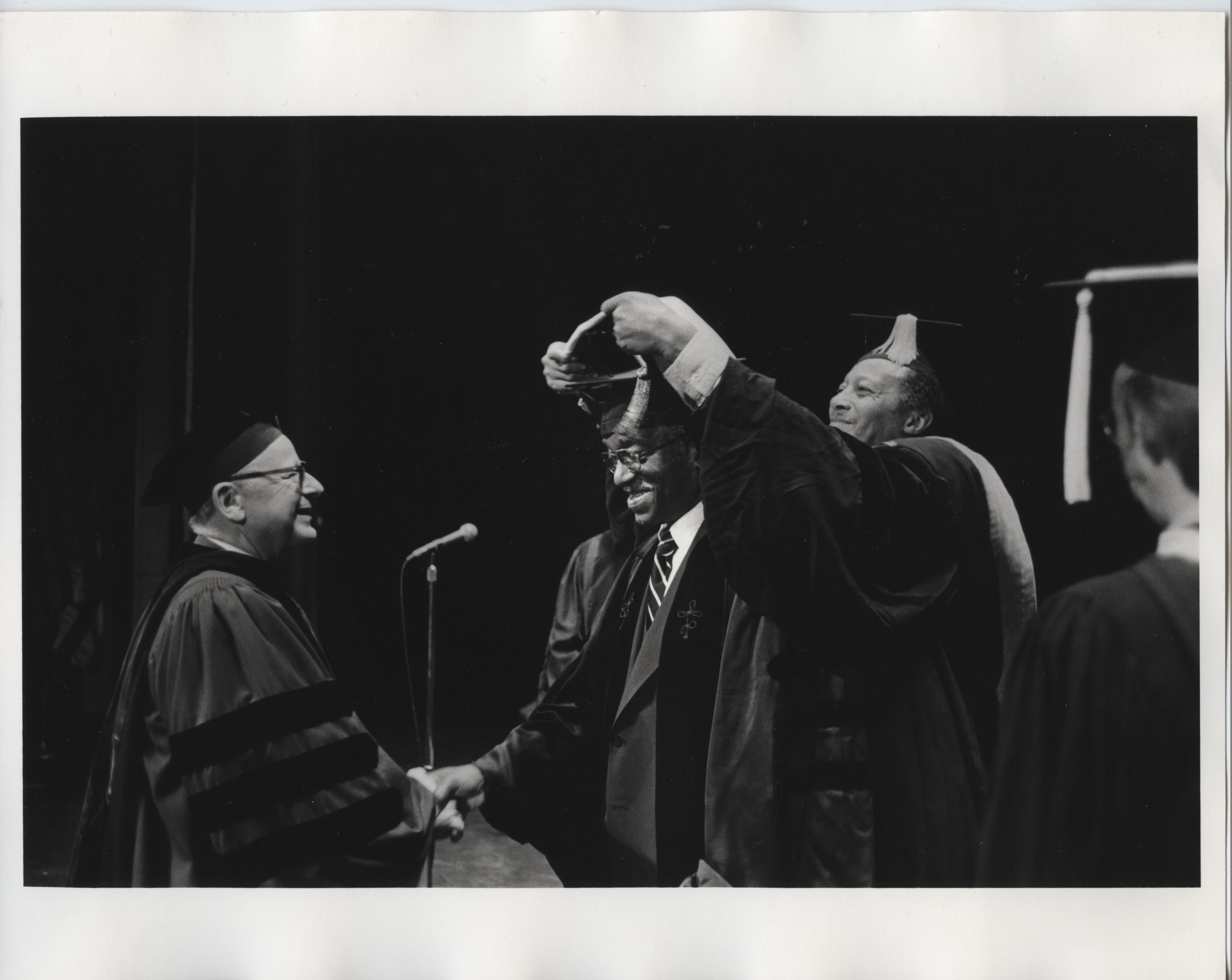
Over the course of his lifetime, John Hope Franklin Franklin would be awarded over 130 honorary degrees from colleges and universities across the United States. In several instances, Franklin was the first African American to receive an honorary degree from the institution. John Hope Franklin received his first honorary degree from Morgan State College in 1960 and his last honorary degree from Wesleyan University in 2006.  The collection of honors and letters represents not only the length of Franklin’s career, but the respect of his contributions to scholarship and society from his peers in the academy.

JHFpapers_H2_Honorary_003
Franklin served as a professor of history at Howard University from 1947-1956
JHFpapers_H2_Honorary_001
Franklin’s first honorary degree from Morgan State College (now Morgan State University). Franklin delivered the commencement address and fellow Fisk alumni, W.E.B. DuBois received an honorary degree that same day.


JHFpapers_H2_Honorary_011a
John Hope Franklin being hooded at the Roosevelt University commencement in 1978

Notable institutions that bestowed an honorary degree upon John Hope Franklin include: American University, Bennett College, Columbia University, Duke University, Emory University, Fisk University, Georgetown University, Harvard University, Lincoln College, Morehouse College, New York University, North Carolina State University, and University of North Carolina, Chapel Hill

This series is a part of Duke University’s John Hope Franklin@100: Scholar, Activist, Citizen year-long celebration of the life and legacy of Dr. John Hope Franklin

Submitted by Gloria Ayee, Franklin Research Center Intern
Archive of Documentary Arts Photobook Club Meeting

Archive of Documentary Arts Photobook Club Meeting

Date: Tuesday, May 5, 6:00-7:30 p.m.

ADA-Photobook-ClubLocation: Center for Documentary Studies Library, 1317 W Pettigrew Street, Durham, NC 27707

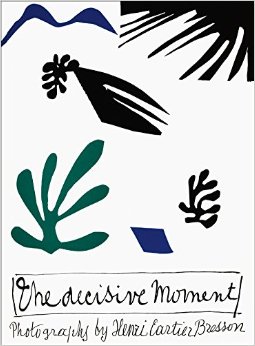
Join us for the third meeting of The Archive of Documentary Arts Photobook Club where we will be discussing Henri Cartier-Bresson’s, The Decisive Moment.

Book Discussion Group, Free and Open to the Public, byo beverage and/or snack

The book is on reserve for public use prior to the meeting in the David M. Rubenstein Rare Book & Manuscript Library.

Examine these editions for yourself in person, and/or read more about the book and Cartier-Bresson online at the links below:

Time    The Guardian   Magnum Photos

**Please note – Discussion will take place at the Center for Documentary Studies while the books themselves are held at The Rubenstein Library.**

Contact: Lisa McCarty, Curator of the Archive of Documentary Arts | lisa.mccarty@duke.edu

ABC’s of John Hope Franklin – (G) George Washington Williams

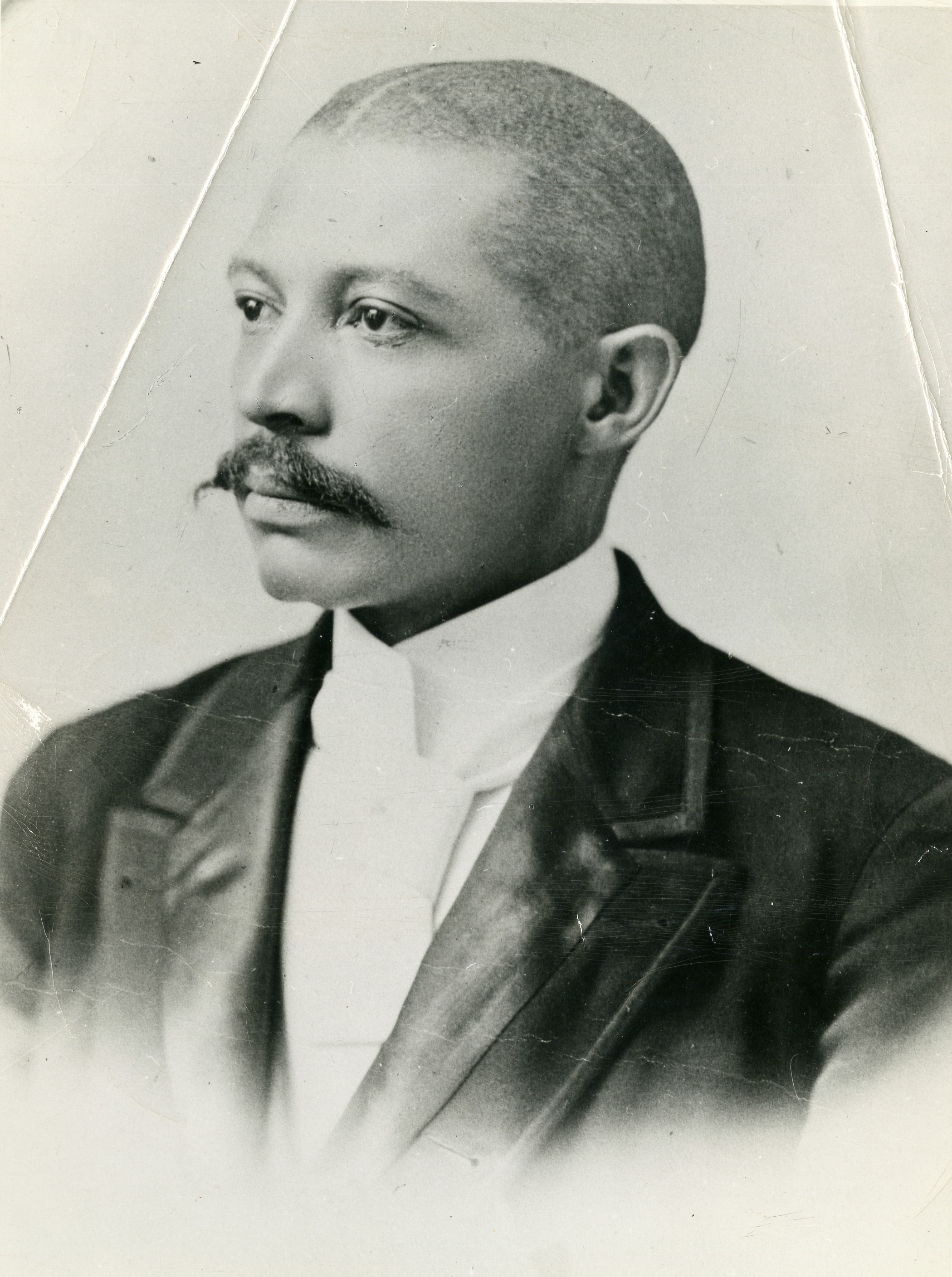
George Washington Williams was an accomplished African American intellectual, minister, historian, journalist, lawyer, politician, freelance diplomat, and Civil War veteran. Williams was born in Pennsylvania in 1849 and died in England in 1891.

George Washington Williams, 1889

Williams joined the Union army during the Civil War at age 14, after lying about his age. After receiving a medical discharge from the army in 1868, Williams, who was barely literate, enrolled in the Newton Theological Institution in Massachusetts. He went on to be a prolific preacher and politician in Ohio, among his many other notable professional achievements.

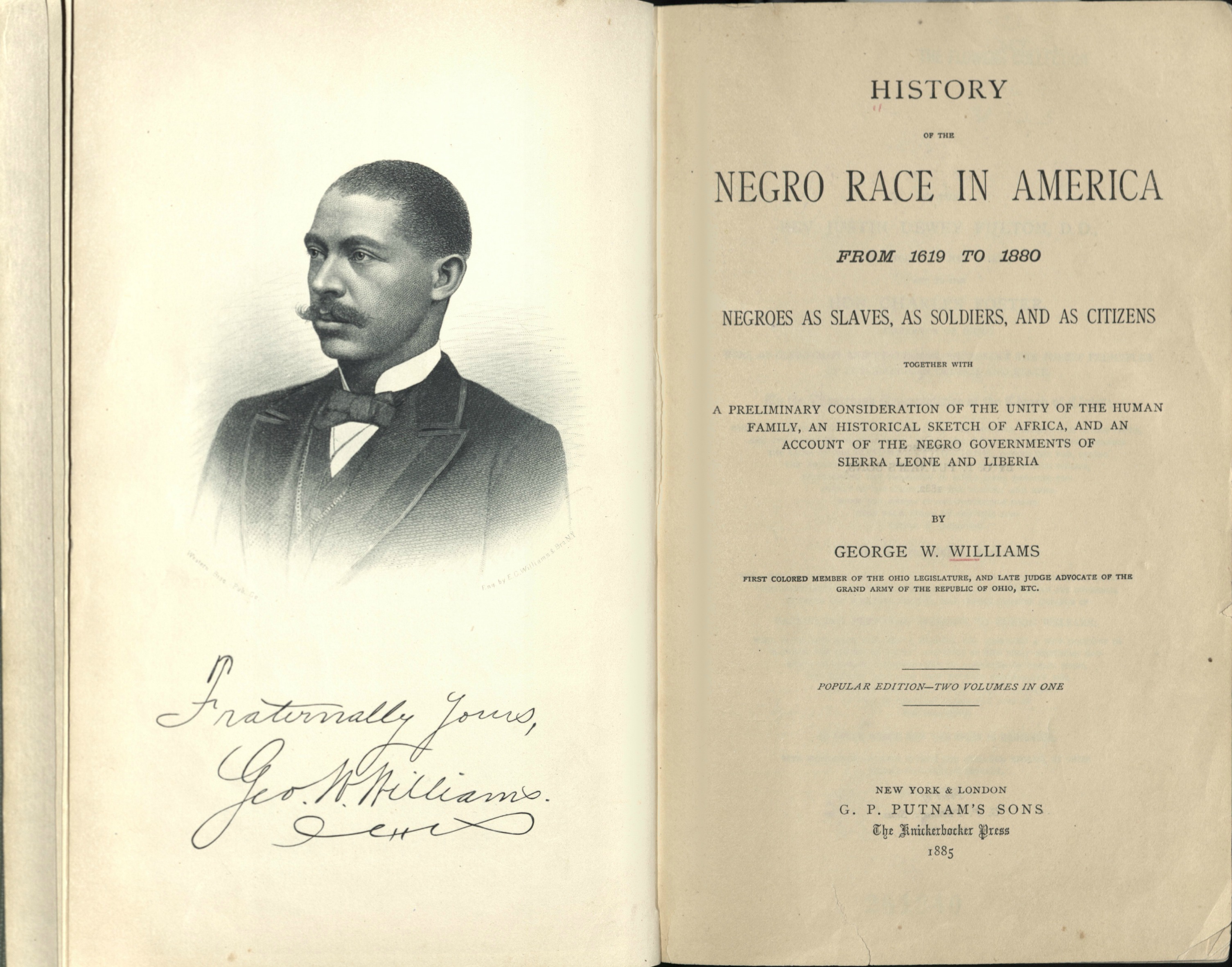
In 1885, Williams wrote a two volume book entitled, A History of the Negro Race in America from 1619 to 1880. The book was not wildly acclaimed or reviewed at the time, and John Hope Franklin first encountered Williams’ work while researching From Slavery to Freedom: A History of the Negro in America. Having never heard of Williams or his book, Franklin determined to write a scholarly work about one of the first African American historians.

Title page, The Negro Race in America by George Washington Williams, 1885

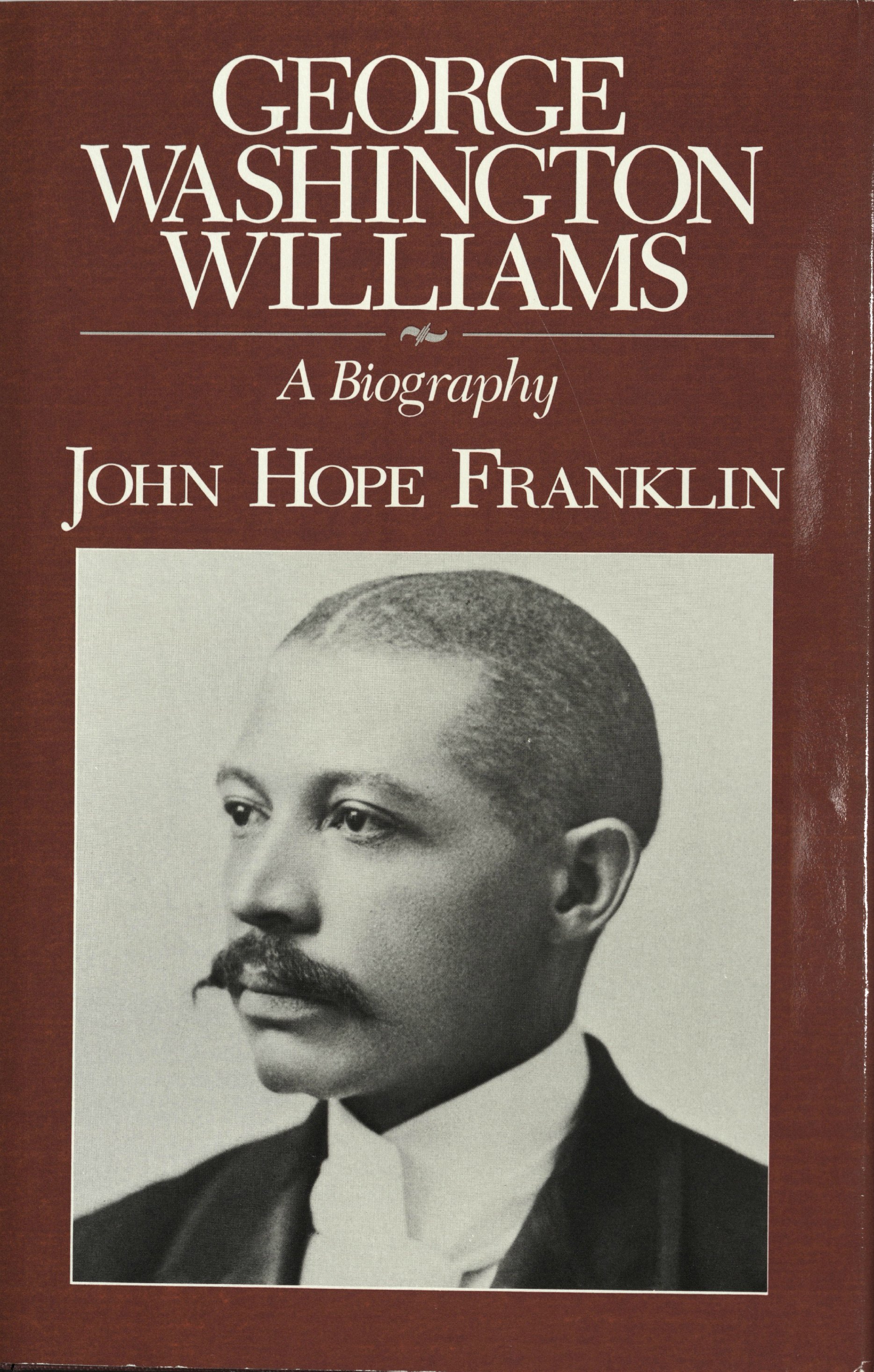
John Hope Franklin’s book George Washington Williams: A Biography was first published in 1985 by the University of Chicago. Franklin was awarded the Clarence L. Holte Literary Prize for this work. The book traces the life of George Washington Williams from his birth until his death. It is part biography and part social history, and highlights Franklin’s own quest to uncover Williams’ story.  In fact, the publication of this book marked the conclusion of a four decade long pursuit for Franklin.

George Washington Williams: A Biography by John Hope Franklin, 1985

George Washington Williams gravesite remained unmarked until 1975, when Franklin arranged for a tombstone to be placed over the grave.

This series is a part of Duke University’s John Hope Franklin@100: Scholar, Activist, Citizen year-long celebration of the life and legacy of Dr. John Hope Franklin

Submitted by Gloria Ayee, Franklin Research Center Intern
ABC’s of John Hope Franklin – (F) From Slavery to Freedom

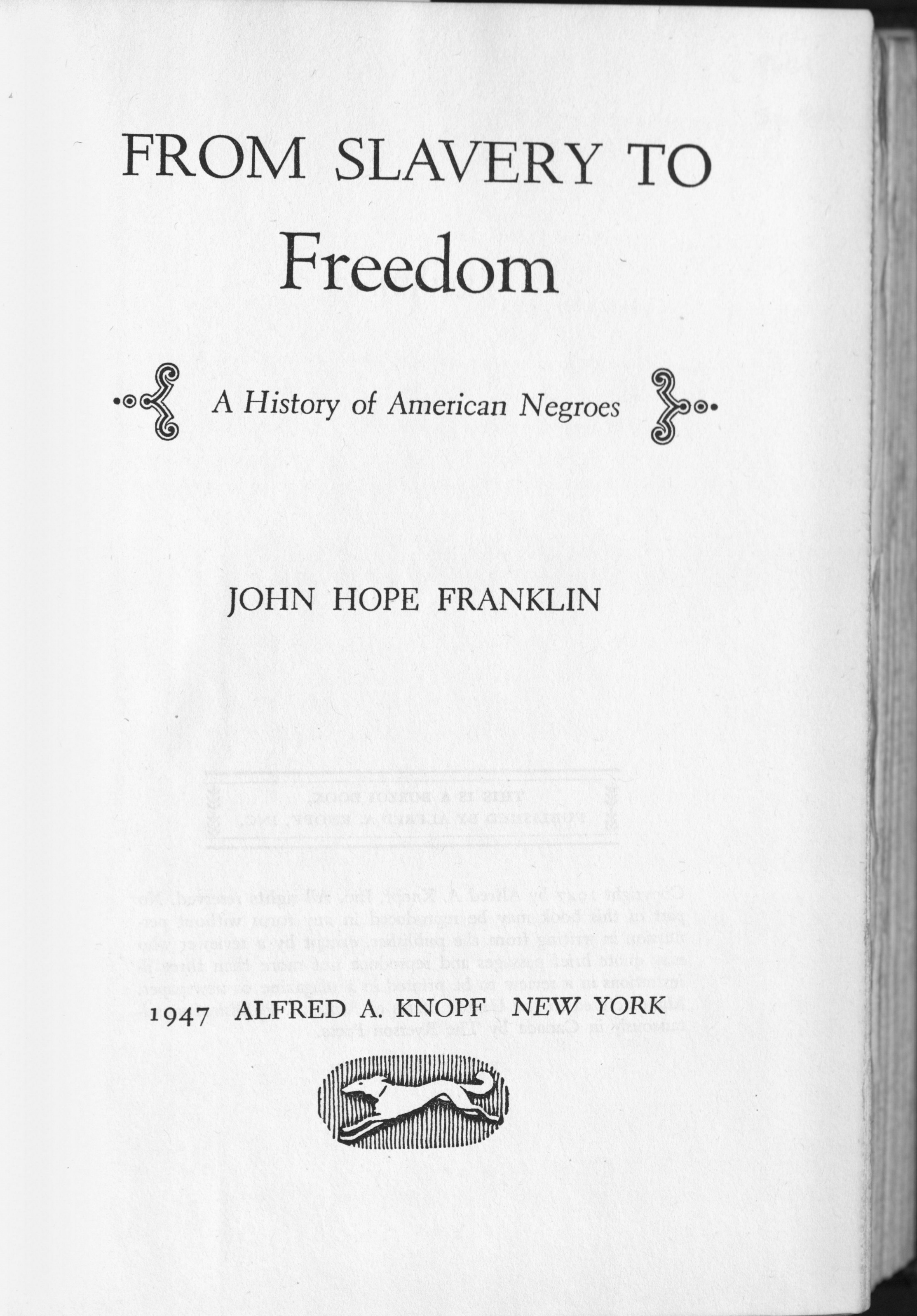
From Slavery to Freedom: A History of African Americans is widely considered to be the most authoritative, definitive, and comprehensive accounts of African American history. The book traces the history of African Americans from their origins in Africa, to their experiences as slaves in the Western Hemisphere, patterns of migration and demographic changes, as well as the continuing struggle for racial equality in the United States.

Title page, 1st Edition, 1947

From Slavery to Freedom has been translated into Chinese, French, German, Japanese, and Portuguese, and over three million copies have been sold. The book has remained in print since it was first published by the Alfred A. Knopf publishing company in 1947. From Slavery to Freedom is the seminal text on Black history in the United States, and the book is credited with playing an important role in the creation of African-American Studies as an academic discipline.

Portuguese translation, From Slavery to Freedom

The last edition of From Slavery to Freedom was co-authored by John Hope Franklin and Evelyn Brooks Higginbotham.

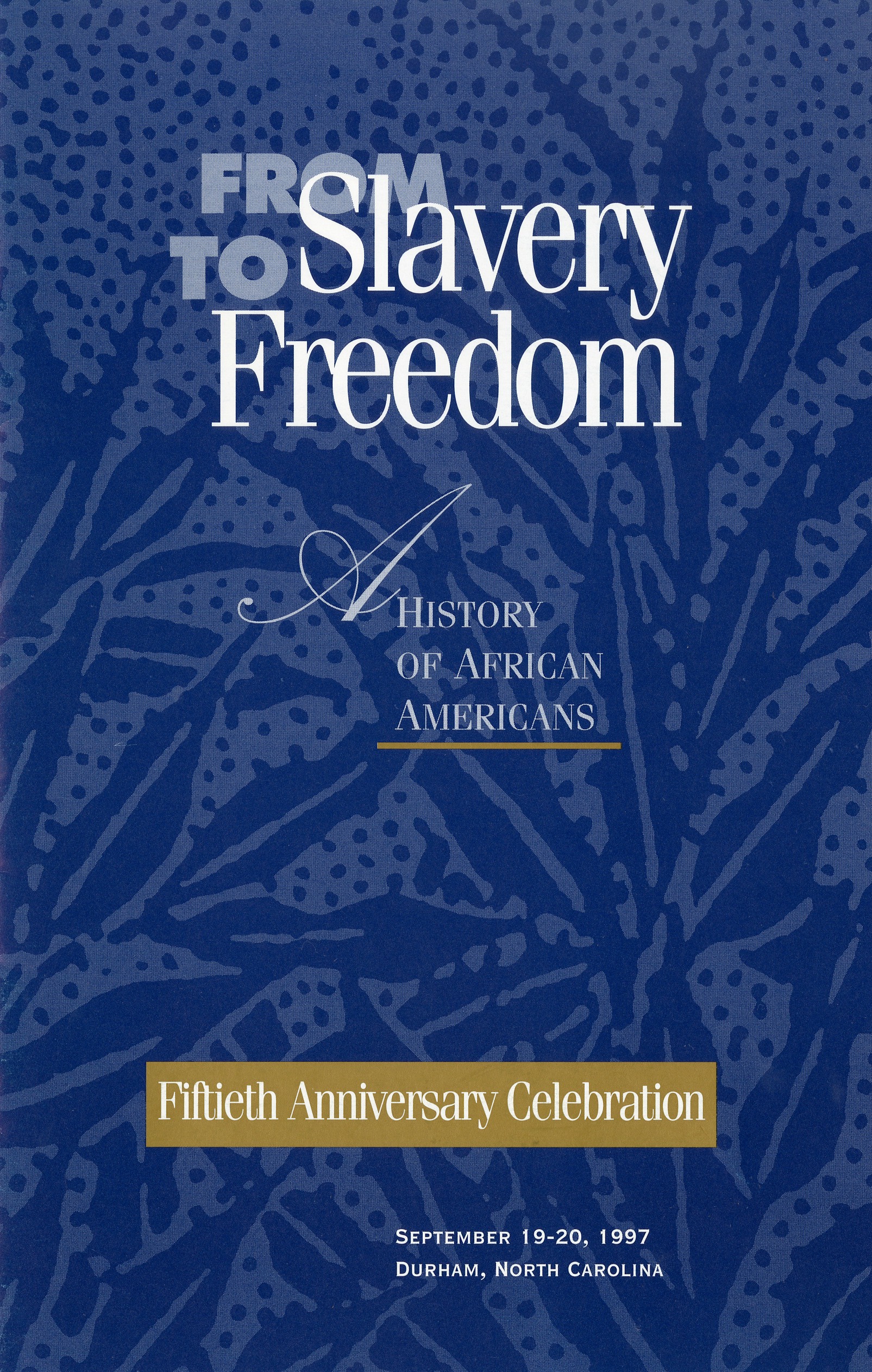
From Slavery to Freedom, fiftieth anniversary program at Duke University, 1997


This series is a part of Duke University’s John Hope Franklin@100: Scholar, Activist, Citizen year-long celebration of the life and legacy of Dr. John Hope Franklin

Submitted by Gloria Ayee, Franklin Research Center Intern
 

ABC’s of John Hope Franklin – (E) Education

John Hope Franklin excelled in his academic work throughout his education. Below is the list of schools that Franklin attended.

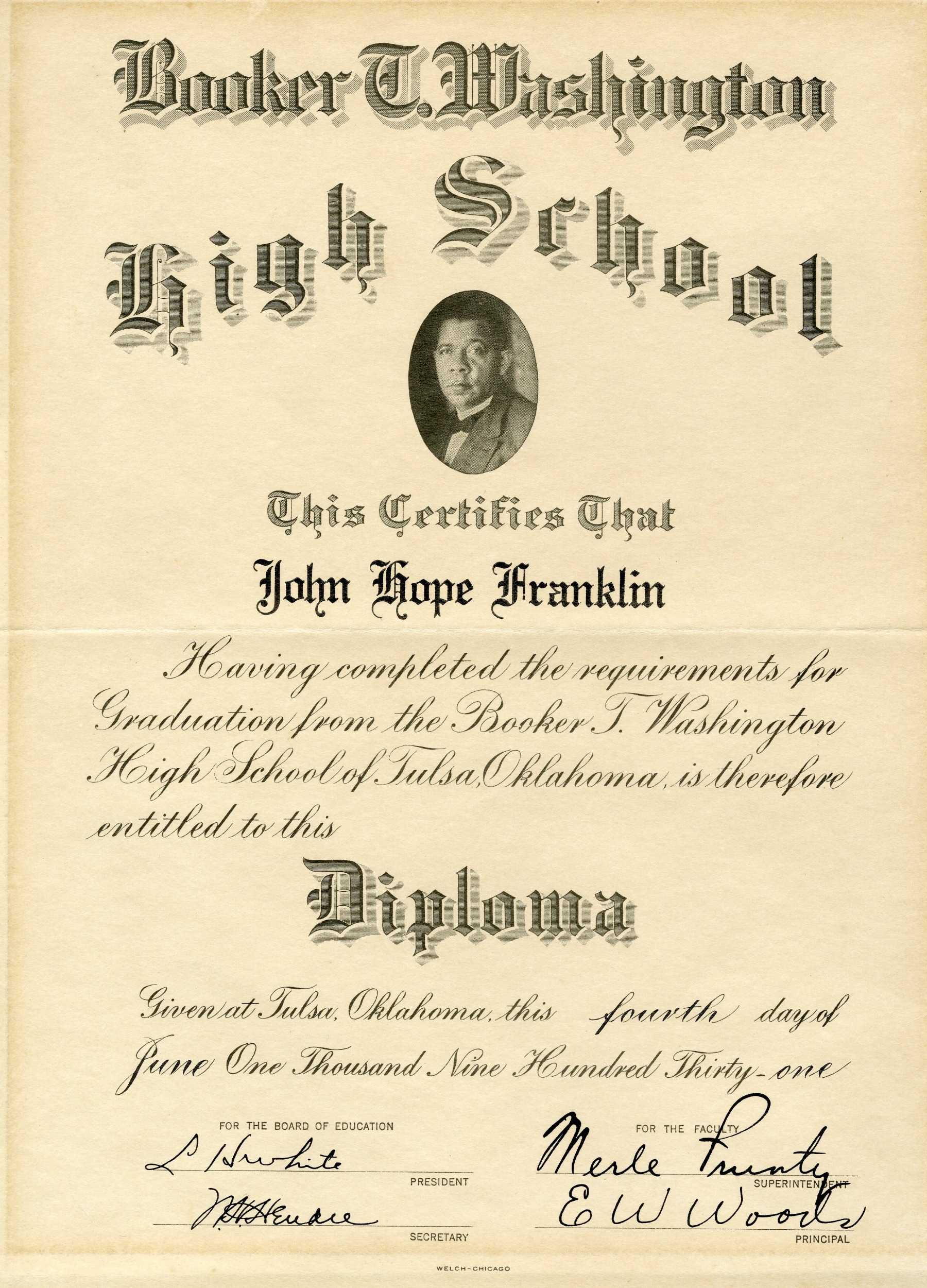
Booker T. Washington High School (Tulsa, Oklahoma):In 1931,John Hope Franklin graduated from Booker T. Washington High School. Franklin gave the valedictory speech at his graduation.

John Hope Franklin's diploma from Booker T. Washington High School in Tulsa, OK, 1931
John Hope Franklin’s diploma from Booker T. Washington High School in Tulsa, OK, 1931

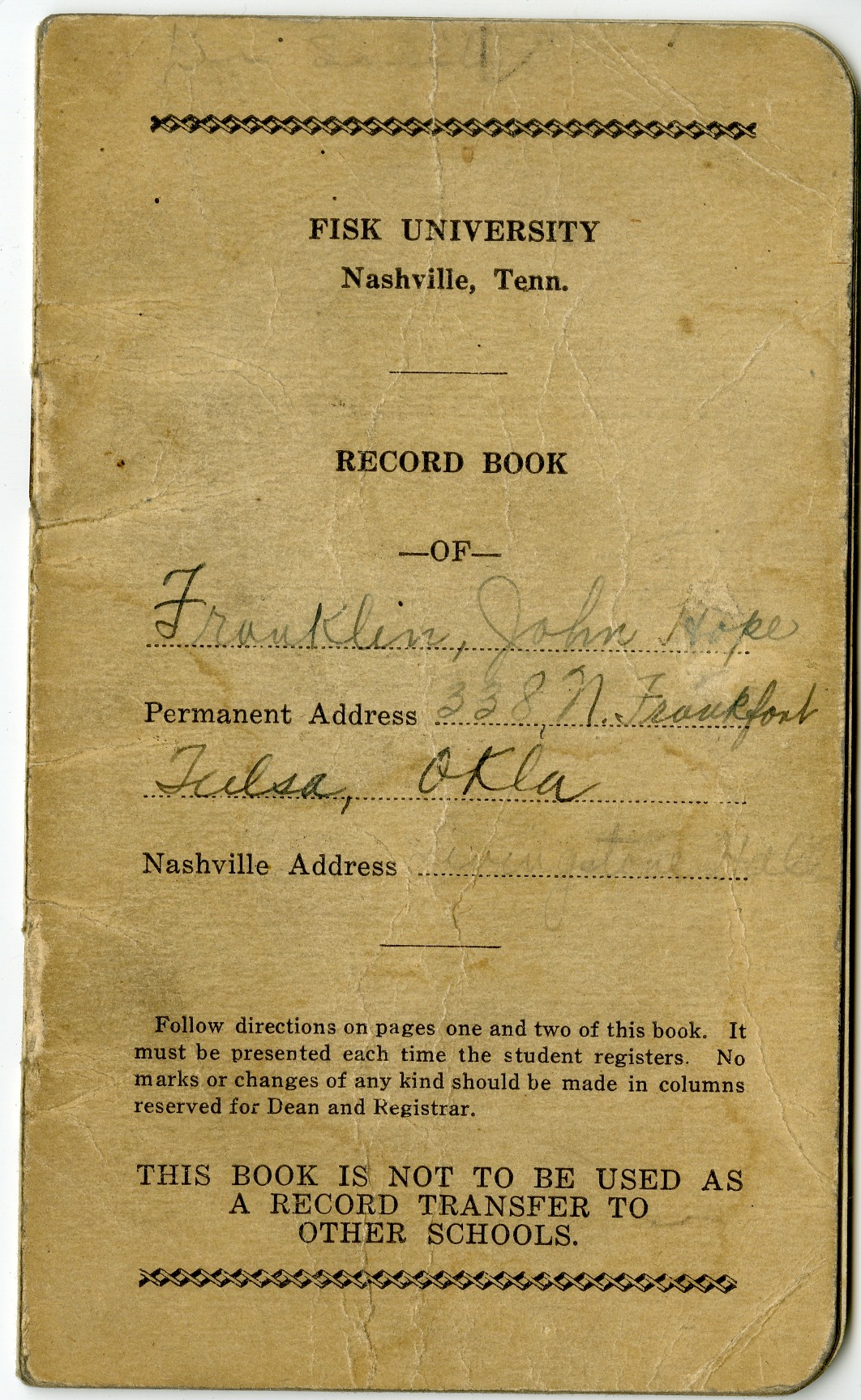
Fisk University (Nashville, Tennessee): John Hope and his sister Anne Franklin enrolled as undergraduate students at Fisk University in 1931. Having received only a tuition scholarship, John Hope had to secure on-campus employment as secretary to the librarian to pay for other education-related expenses. In college, John Hope took a wide array of courses, including German, physical education, contemporary civilization, and a general science survey class. In 1932, John Hope Franklin enrolled in a history course taught by Professor Theodore “Ted” S. Currier. Currier remained an advisor and friend of Franklin throughout his life. Currier encouraged Franklin to go to graduate school for a Ph.D. in history and even took a bank loan on behalf of Franklin to help finance his graduate education. Franklin was initiated into the Alpha Phi Alpha fraternity at Fisk University in 1932. He excelled in his academic work and thrived as a student leader. In his junior year at Fisk University, Franklin was elected president of his university’s chapter of Alpha Phi Alpha. Franklin was one of 75 students in his graduating class. He graduated magna cum laude from Fisk University in 1935.

John Hope Franklin's grade book at Fisk University, 1933
John Hope Franklin’s grade book at Fisk University, 1933

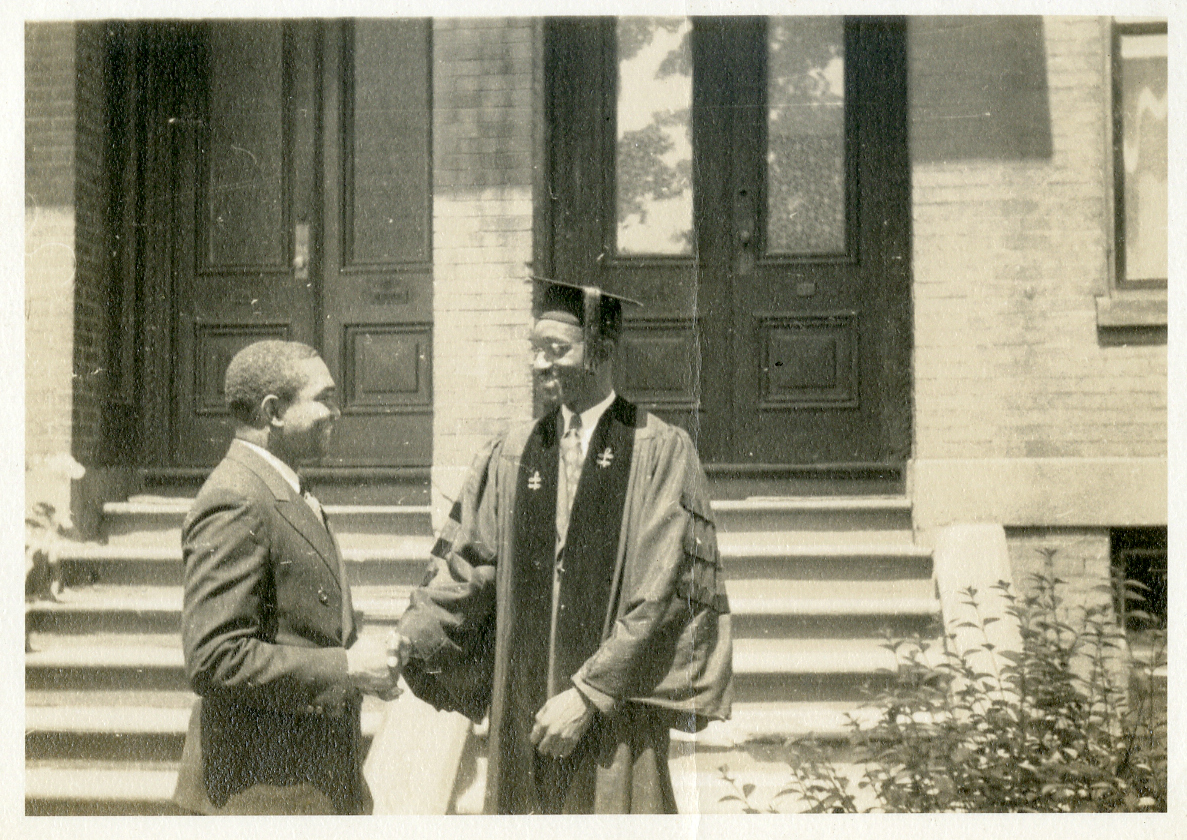
Harvard University (Cambridge, Massachusetts): Franklin gained admission to Harvard University for doctoral studies in 1935. He earned his Master’s degree in History in 1936, and his Ph.D. in 1941 after completing his research and successfully defending his dissertation on The Free Negro in North Carolina. From 1937 to 1939 Franklin took a leave of absence from his doctoral studies at Harvard University and returned to Fisk University to work as a professor, in order to repay the loan from Ted Currier.

John Hope Franklin and Emory Johnson the day he receives his PhD, 1941

This series is a part of Duke University’s John Hope Franklin@100: Scholar, Activist, Citizen year-long celebration of the life and legacy of Dr. John Hope Franklin

Submitted by Gloria Ayee, Franklin Research Center Intern
 

ABC’s of John Hope Franklin – (D) Durham

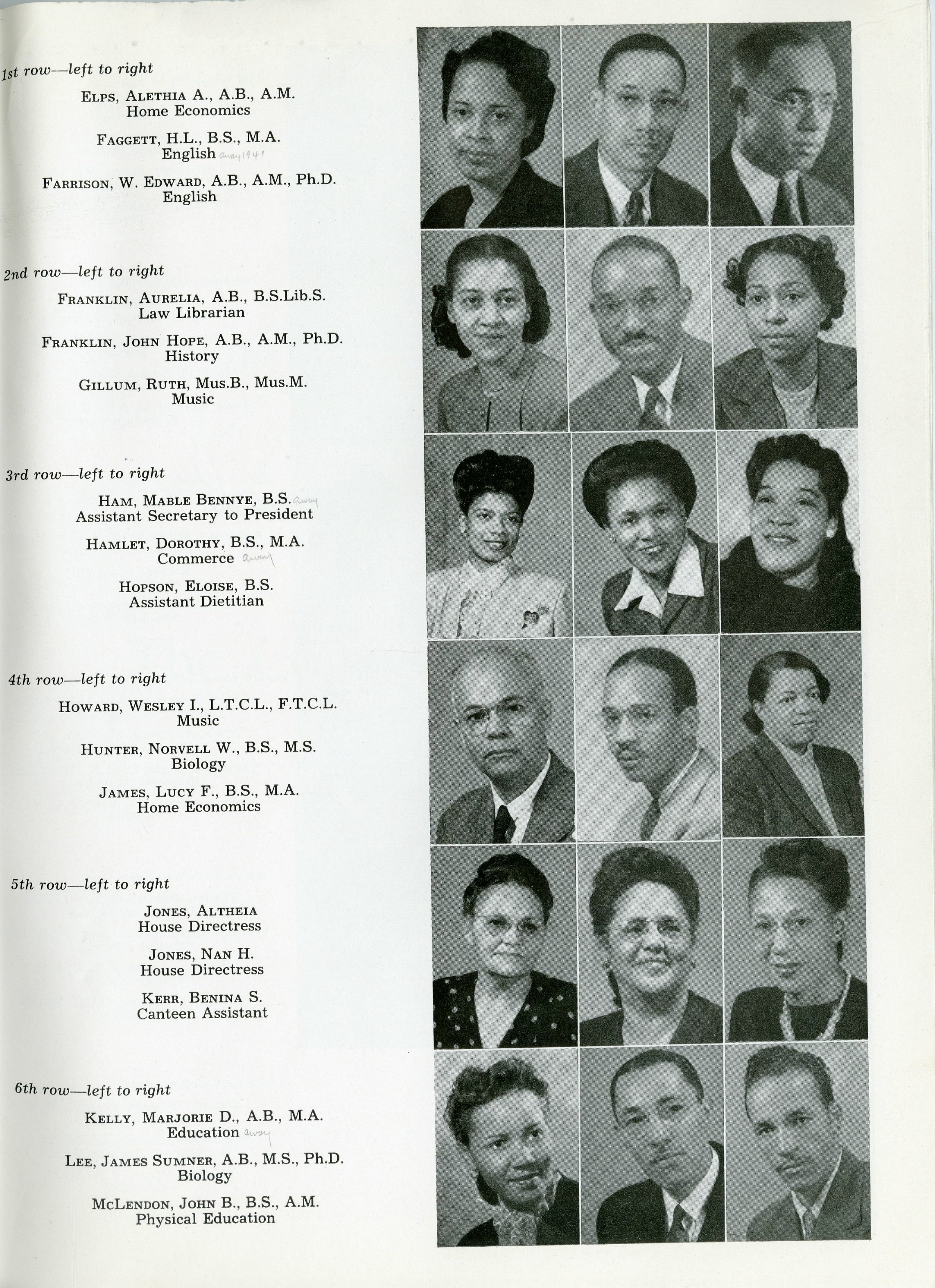
The Franklin family had the pleasure to call Durham home twice in their lives. John Hope first came to Durham to research his PhD dissertation in Duke University’s manuscript department in the late 1930’s. When John Hope was offered a teaching position at the North Carolina College for Negroes (now North Carolina Central University) in 1943, he and Aurelia moved from Raleigh, NC to take jobs. While John Hope worked in the department of history, Aurelia worked as a law librarian at the school. The Franklin’s enjoyed Durham, particularly the bustling African American community but left for Washington DC in 1947.

John Hope and Aurelia Franklin listed in the North Carolina College for Negroes, 1946
John Hope and Aurelia Franklin listed in the yearbook at North Carolina College for Negroes, 1946

In 1980, John Hope Franklin and his wife Aurelia relocated to North Carolina, after he retired from the University of Chicago. Franklin served as a fellow with the National Humanities Center in Research Triangle Park for one year. In 1982, he joined the faculty at Duke University as the James B. Duke Professor of History, becoming the first Black professor to hold an endowed chair at Duke University. Franklin served as emeritus professor of history from 1985-1995 and Professor of Legal History from 1985-1992.

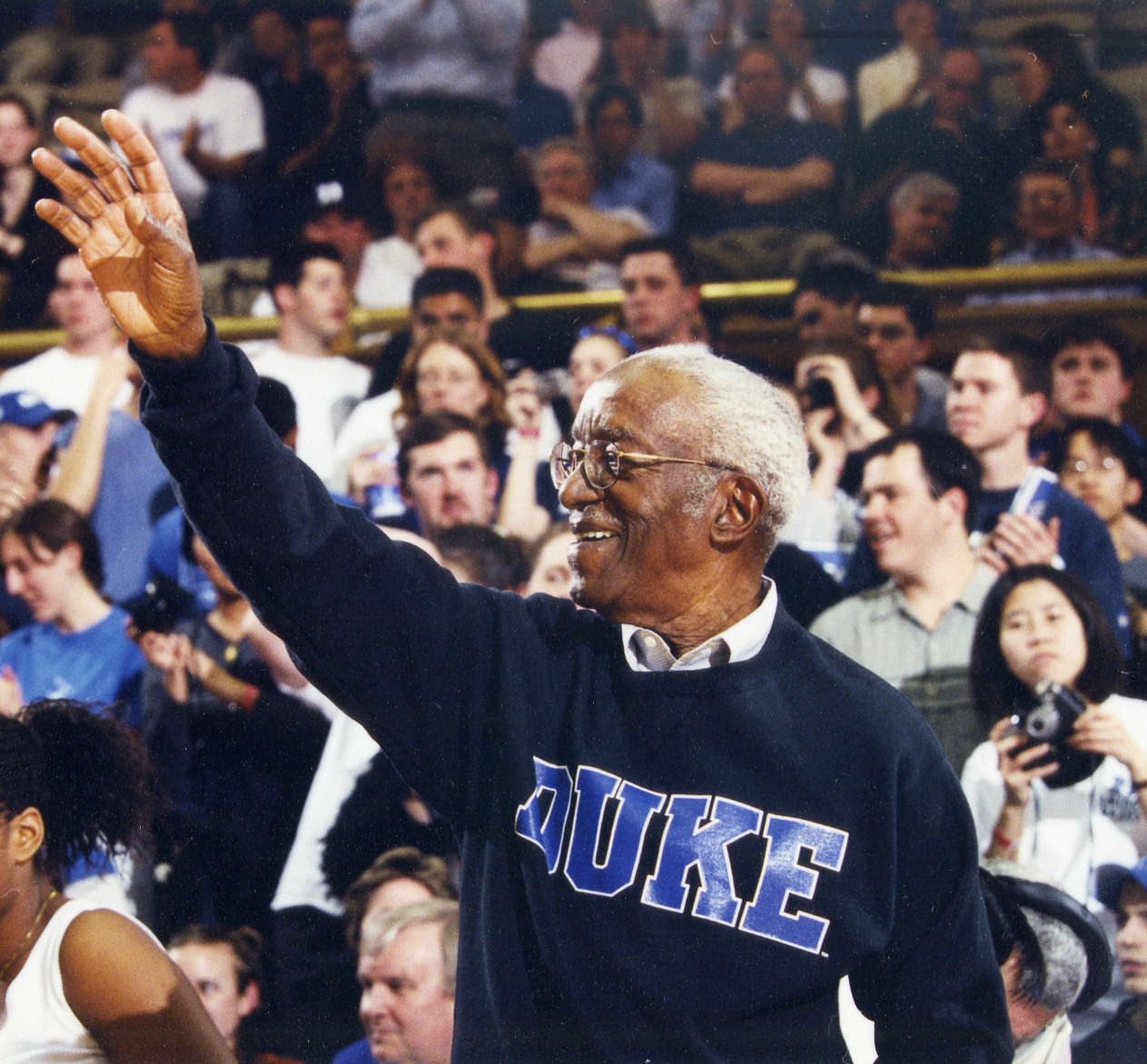
John Hope Franklin attends Duke University basketball game at Cameron Indoor Stadium, 2000

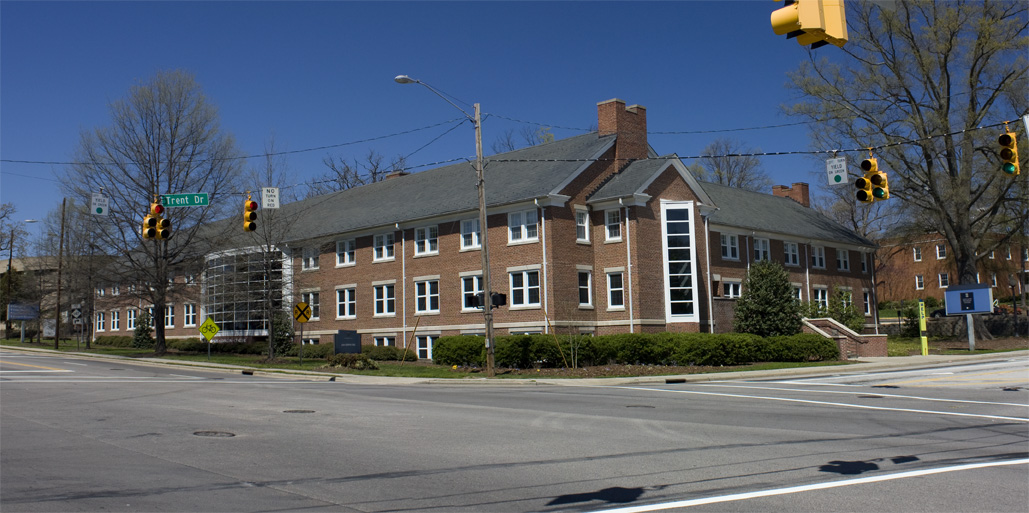
John Hope became rooted in the Duke and Durham community for the remainder of his life. He served on boards like the Durham Literacy Center, wrote insightful editorials for the Herald-Sun newspaper and Trumpet of Conscience newsletter, and spoke at local events. The John Hope Franklin Center for Interdisciplinary and International Studies was the first academic building named for an African American on Duke University’s campus. The Center, located at the corner of Erwin Road and Trent Drive, opened in 2000.

John Hope Franklin Center Building

Franklin lived in Durham until his death in 2009.

This series is a part of Duke University’s John Hope Franklin@100: Scholar, Activist, Citizen year-long celebration of the life and legacy of Dr. John Hope Franklin

Submitted by Gloria Ayee, Franklin Research Center Intern
Rights! Camera! Action! Presents: “The One Who Builds”

theonewho

Rights! Camera! Action! Presents: “The One Who Builds” (2013)

Directors: Hillary Pierce, Peter Carolla, and Nick Gooler

Total Running Time: 40 minutes

Date: Wednesday, February 5, 2015

Time: 7:00-9:00 PM

Location: Smith Warehouse, Bay 4, FHI Garage

The One Who Builds is a film about the life and work of Dr. Omer Omer, once a Sudanese refugee, now an American citizen who is paying it forward as the director of a refugee resettlement organization.  Through the North Carolina African Services Coalition in Greensboro, Omer has transcended boundaries dictated by society, race and religion to build a new village, one friendship at a time.

Co-Directors Hillary Pierce, Peter Carolla, and North Carolina African Services Coalition Executive Director Million Mekonnen will lead a panel discussion will follow the screening.

Presented by the Duke Human Rights Center@FHI, John Hope Franklin Research Center, Human Rights Archive and Archive of Documentary Arts, Rubenstein Library, and Screen/Society

For more information please contact: John B. Gartrell, 919-660-5922, john.gartrell@duke.edu

ABC’s of John Hope Franklin – (C) Cosmos Club

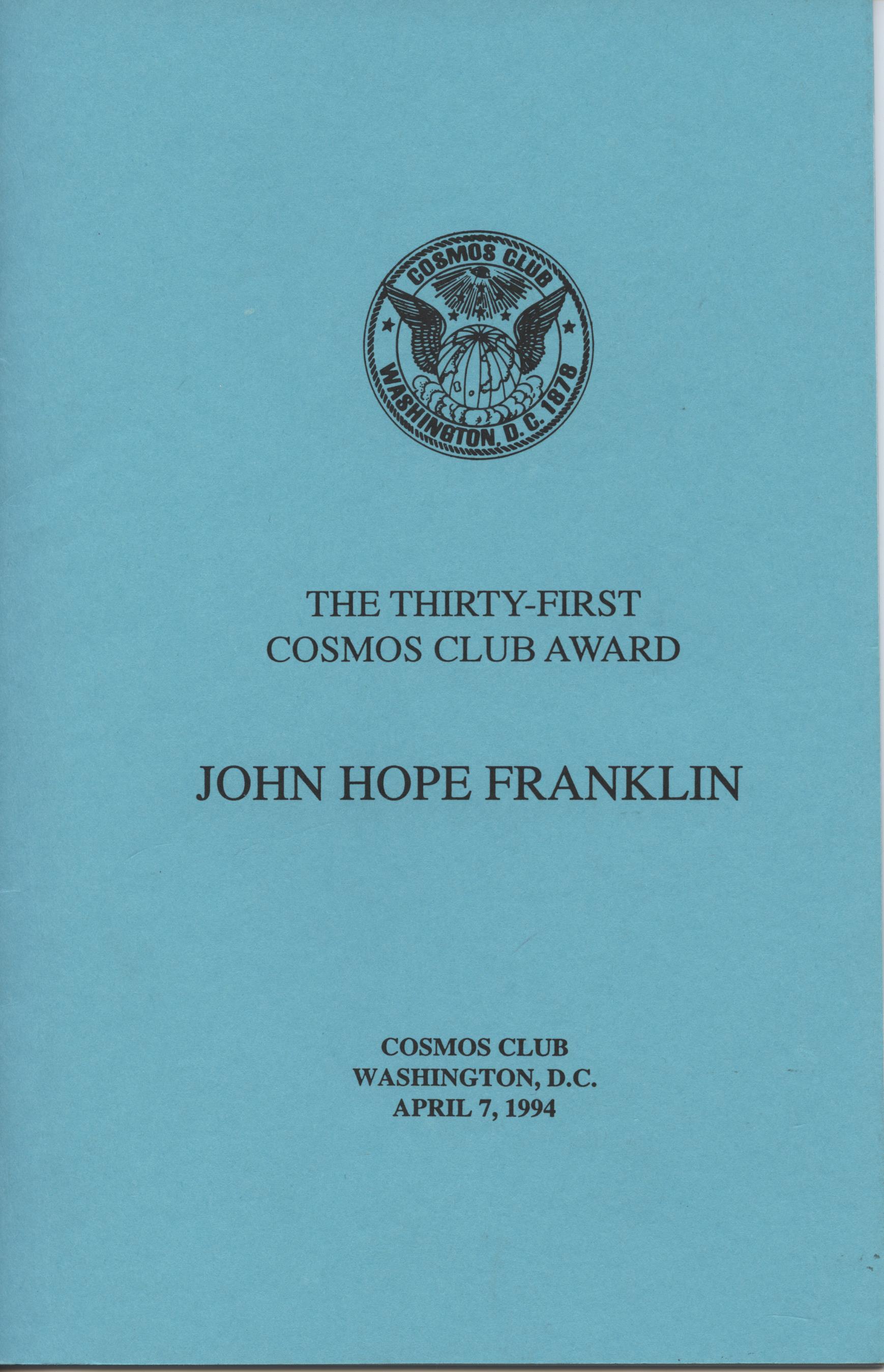
In 1962, John Hope Franklin became the first African American to be elected a member of the exclusive Cosmos Club.

The Cosmos Club is a private social club in Washington, D.C. that welcomes individuals from the arts, literature, and science. According to Cosmos Club rules, to be considered for membership, an individual must be regarded as “a person of distinction, character and sociability,” must have done meritorious work in the field of art, literature, or science, and have distinguished themselves in their profession, or through public service. Franklin received the Cosmos Club Award in 1994.

JHFpapers_H6_Cosmos_001

In 1995, on the evening before he was to receive the Presidential Medal of Freedom at the White House, Franklin hosted a celebratory dinner party for some of his friends at the Cosmos Club. Some of his guests had not arrived, and Franklin decided to head to the entrance of the Club to look for them. There, an elderly white woman handed Franklin her coat check and demanded that he fetch her coat. Franklin politely informed her that all the Club’s attendants were uniformed and if she handed one of them her coat check, they would be happy to assist her. In a talk he gave ten years later, Franklin recounted this event as an example of how racist stereotypes and ideologies about the social position of Blacks remained strongly entrenched in American society.

This series is a part of Duke University’s John Hope Franklin@100: Scholar, Activist, Citizen year-long celebration of the life and legacy of Dr. John Hope Franklin

Submitted by Gloria Ayee, Franklin Research Center Intern
ABC’s of John Hope Franklin – (B) Brooklyn College

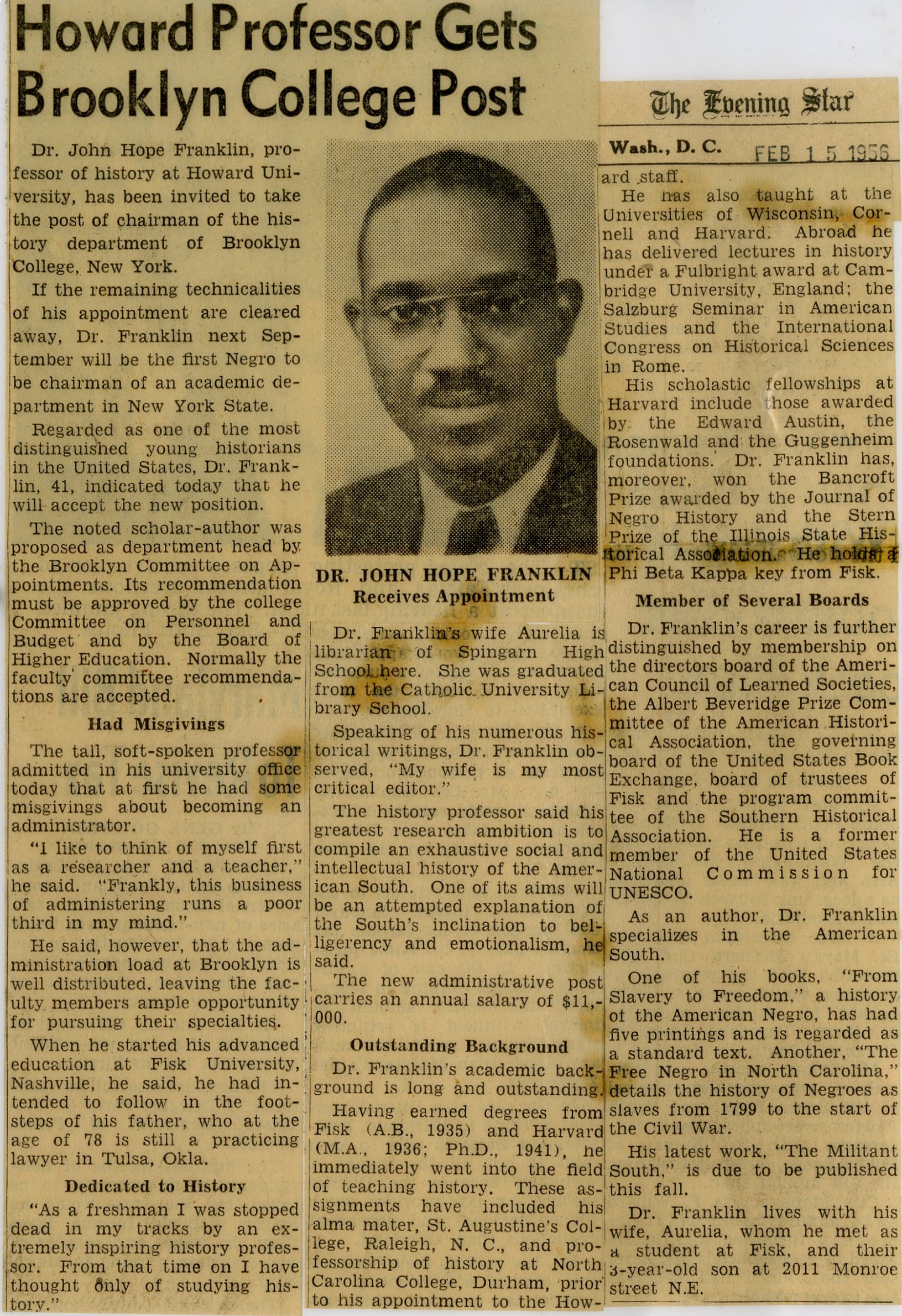
In 1956, John Hope Franklin was appointed Professor and Chair of the History Department at Brooklyn College, a predominantly White institution. Franklin’s appointment marked the first time that an African American was appointed chair of any department at a traditionally White institution. The New York Times found Franklin’s appointment so newsworthy that on February 15, 1956, they published an announcement with his photograph on the front page. The headline read: “Negro Educator Chosen to Head Department at Brooklyn College. Howard University Professor Will be First of Race to Hold That Rank Here.” The article noted that Franklin was the first African-American chair of any academic department in the New York State college system.

JHF_R7_FranklinPublicityClippings1950s_1_021_crop
Washington Evening Start Article, 1956

Franklin was a professor at Brooklyn College from 1956 to 1964 and served as chairman of the History Department over that period. During his tenure at Brooklyn College, Franklin published three important books: The Militant South, 1800-1860 (1956), Reconstruction after the Civil War (1961), and The Emancipation Proclamation (1963).

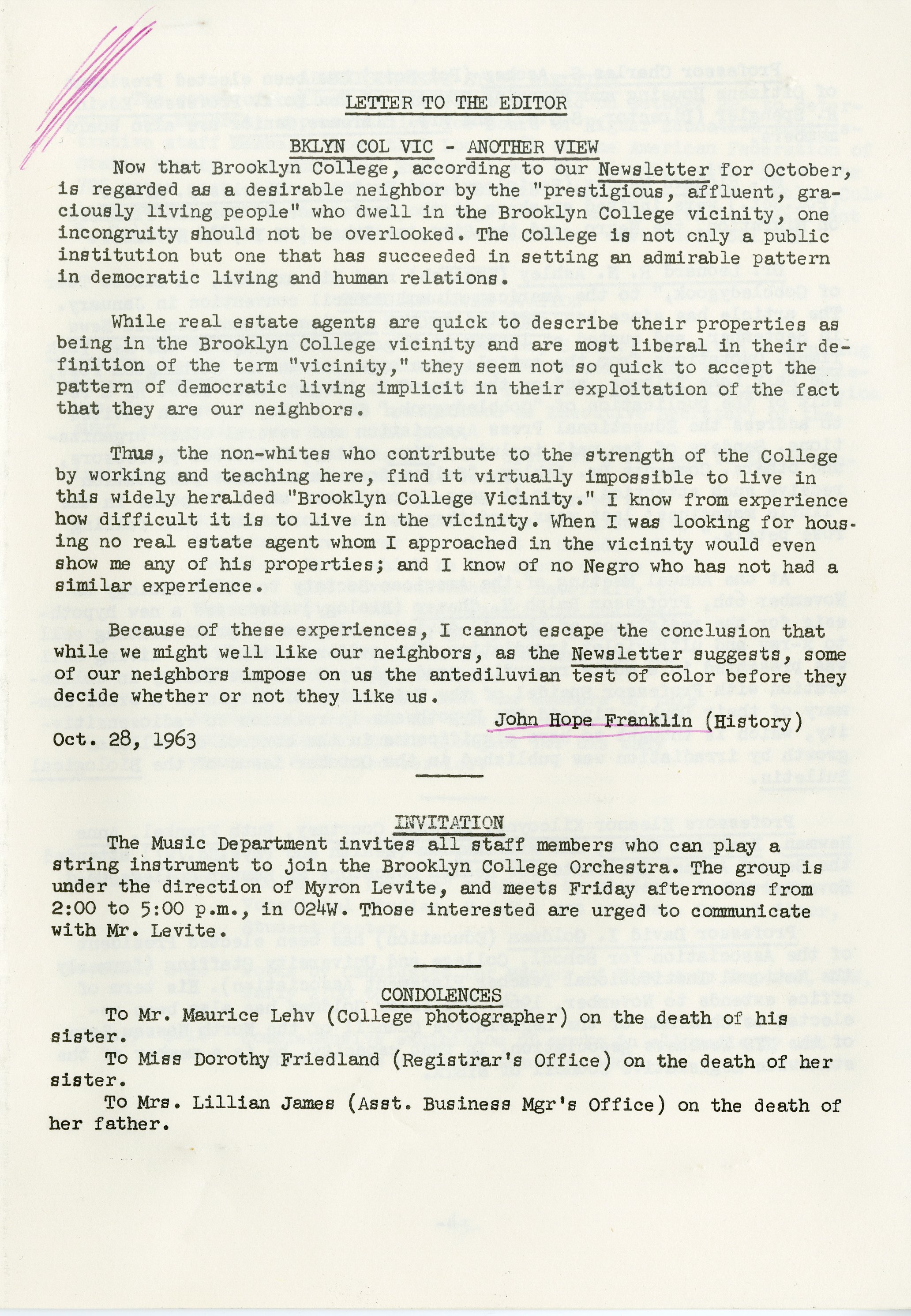
JHF_P3_JHFscrapbook_001a_crop
John Hope Franklin describes his experiences living as an African American in Brooklyn. Brooklyn College Newsletter, 1963

After leaving Brooklyn College, Franklin maintained strong ties with the institution. In 1981, he was invited to be the commencement speaker, and in 1990 he delivered the second Charles R. Lawrence II memorial lecture of the Department of Sociology and President’s Office of Brooklyn College.

After Franklin’s death, in an obituary published in The New York Times, Senator Barbara Boxer, Democrat of California, one of  Franklin’s former students, said of him: “Having John Hope Franklin at Brooklyn College in the 1960’s was like having a real star in our midst. Students who were lucky enough to get into his class bragged about him from morning until night.”

This series is apart of Duke University’s John Hope Franklin@100: Scholar, Activist, Citizen year-long celebration of the life and legacy of Dr. John Hope Franklin

Submitted by Gloria Ayee, Franklin Research Center Intern