Category Archives: Meet the Staff

Meet the Staff: Megan Ó Connell

IMG_0901

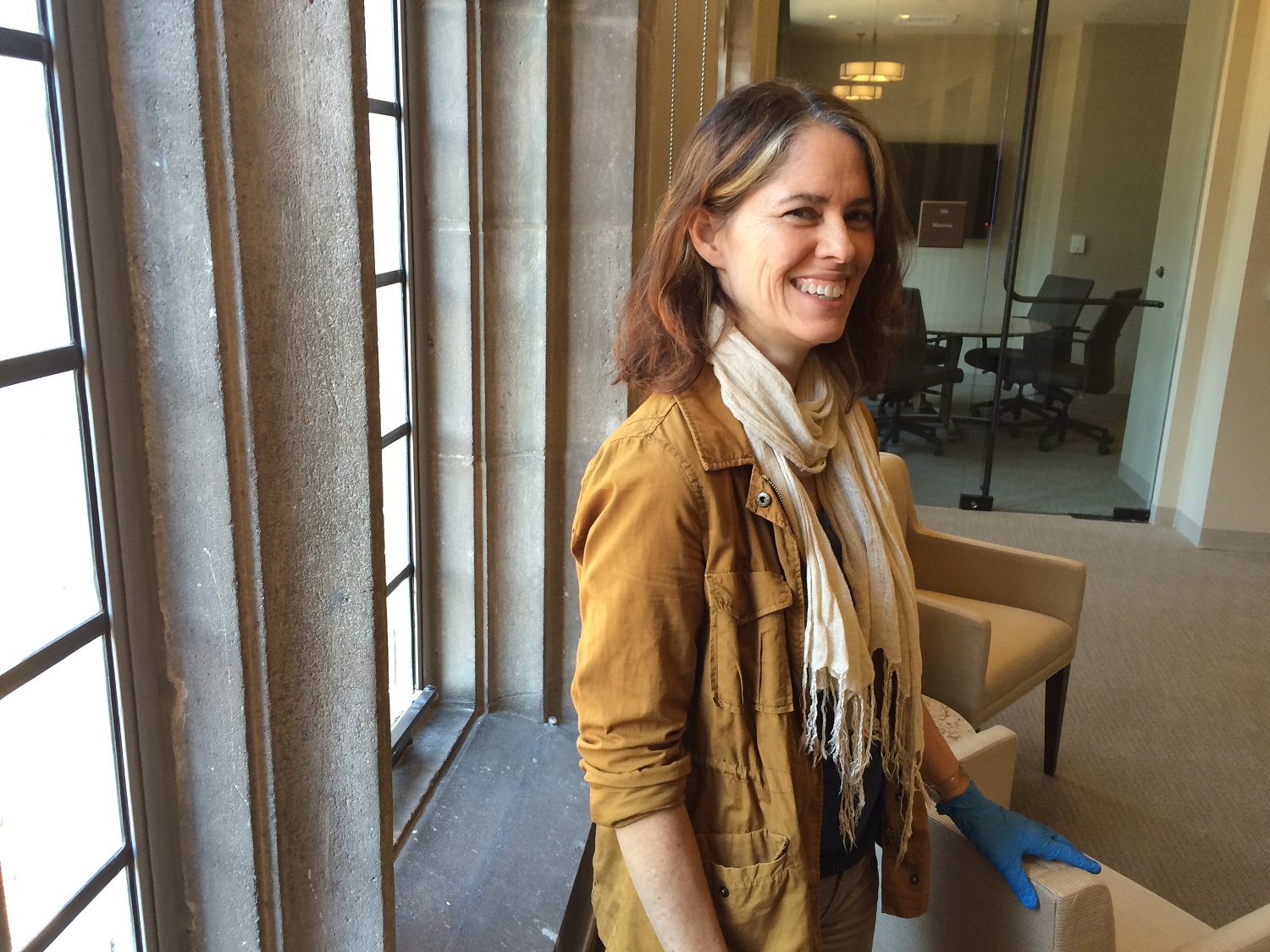
Megan Ó Connell is the Rubenstein’s Reproduction Services Manager.  Megan has been a part of the Duke library system since 2006, when she served as a University Archives intern. She joined the library full-time in 2009.

Tell us about your academic background and interests.

I have always been interested in the cultural record left by humans. I studied Anthropology, with a focus on American archaeology, and I worked in Southeastern and Gulf Coast archaeology for many years. After studying what can be learned from the unintentional record left by artifacts, I wanted to interact with the intentional/communicative record, as it was left in the past and continuing into the “futurepast,” that is, the present. Rare books and archives satisfied that wish.

What are the main projects you work on at the Rubenstein?

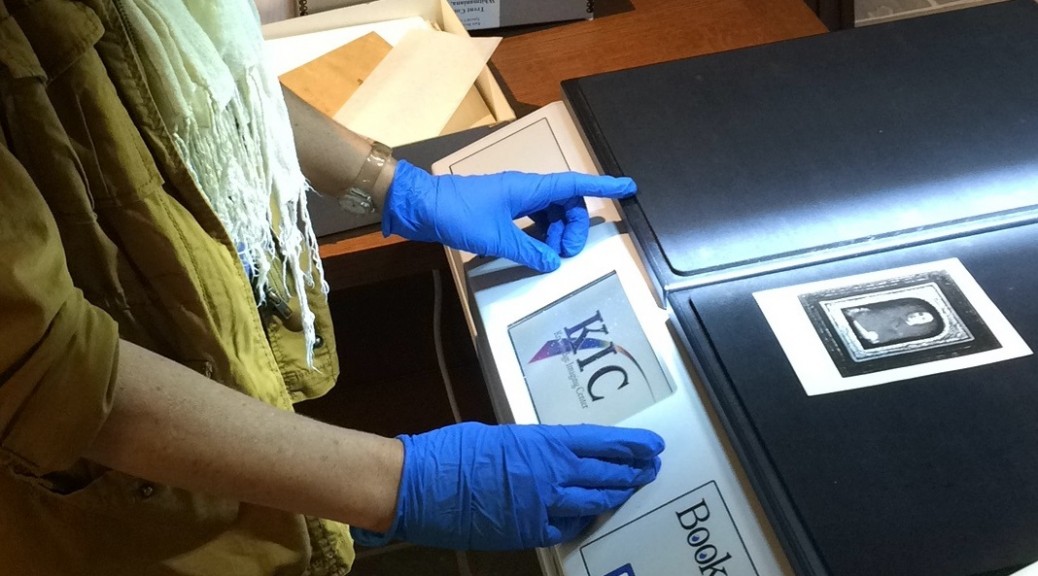
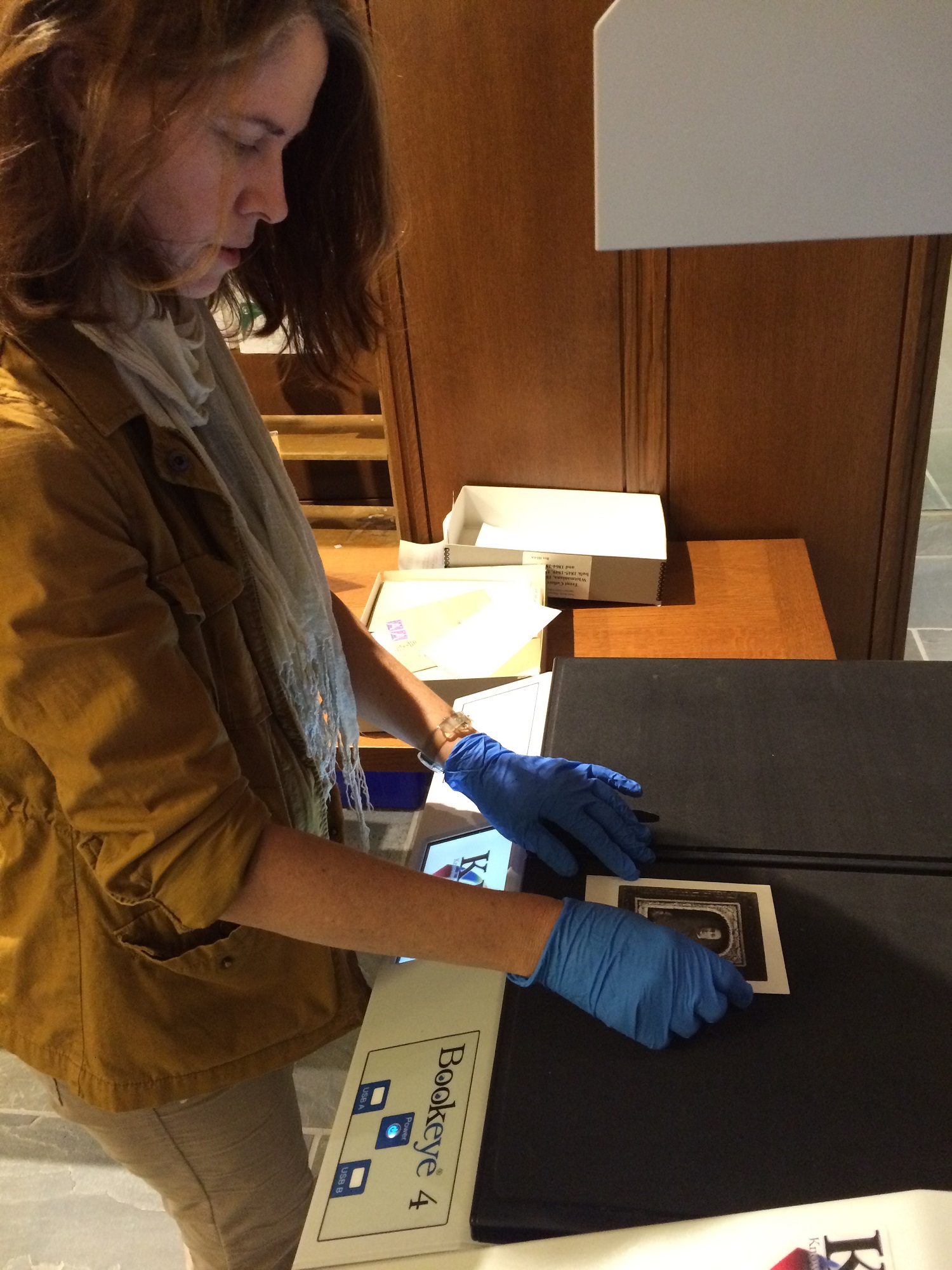
I manage the patron reproduction requests, including those made by both onsite and remote researchers, ensuring that the most appropriate technology is used based on the specific items and desired output; liaise with onsite and offsite services; and deliver requests as efficiently as possible while maintaining high quality and providing RL’s acclaimed customer service. Exponentially increasing numbers of library users want digital versions of our materials, and these researchers often cannot do the reproductions themselves, so I help ensure that they get what they need for their research, whether they live in Durham or Durban.
IMG_0874

What does an average day look like for you?
On most days I log new reproduction requests; route materials to be used in requests; examine materials for reproduce-ability; discuss options and approaches with technical specialists, RL staff, and my student assistant; and communicate with staff and patrons about technical considerations and goals. I may do some reading on specific media types, technologies, or techniques; troubleshoot imaging equipment maintenance issues; train staff on processes; or communicate with vendors. I assist researchers about 12 hours a week on the Reading Room desk, and also work on general reference questions, many of which  lead to reproduction requests.

What do you like best about your job?

I love seeing (and hearing) the panoply of treasures we hold at the Rubenstein — pamphlets, photographs, beautiful bound volumes, maps, vintage sound and film recordings, broadsides, artists’ books, zines, ads, papyri… and I enjoy learning about how researchers are using this richness to ask intriguing questions and shed light on cultural phenomena. People might be surprised to know that our library is so busy that we produce around 20,000 digital reproductions per year for patron requests! I enjoy helping our diverse researchers, from students to professors to authors to genealogists, and working with people all over the globe, learning about their lives – and often connecting with them on a personal level. It is gratifying to be able to be a part of so many efforts to illuminate aspects of human existence.

Do you have a favorite piece or collection at The Rubenstein? Why?

I love the H. Lee Waters films because while Waters intended to create a record, unlike most documentaries, the intended audience was the subjects themselves. The films’ subjects were caught in their everyday activities, yet they were very aware of the camera’s presence, and many behaved as if they were amusing their friends, rather than consciously creating a historical record. It’s just fun to watch the subjects ham it up, although the quick cuts can be a bit dizzying after a while.

Where can you be found when you’re not working? 

I enjoy nature walks, photography, reading, hiking, canoeing, gardening, fishing, and playing music.

What book is on your nightstand/in your carryall right now?

The John McPhee Reader.

Interview composed and photographs taken by Katrina Martin. 
Meet the Staff: Craig Breaden

CB devil's tale 017

The Meet Our Staff series features Q&A interviews with Rubenstein staff members about their work and lives.

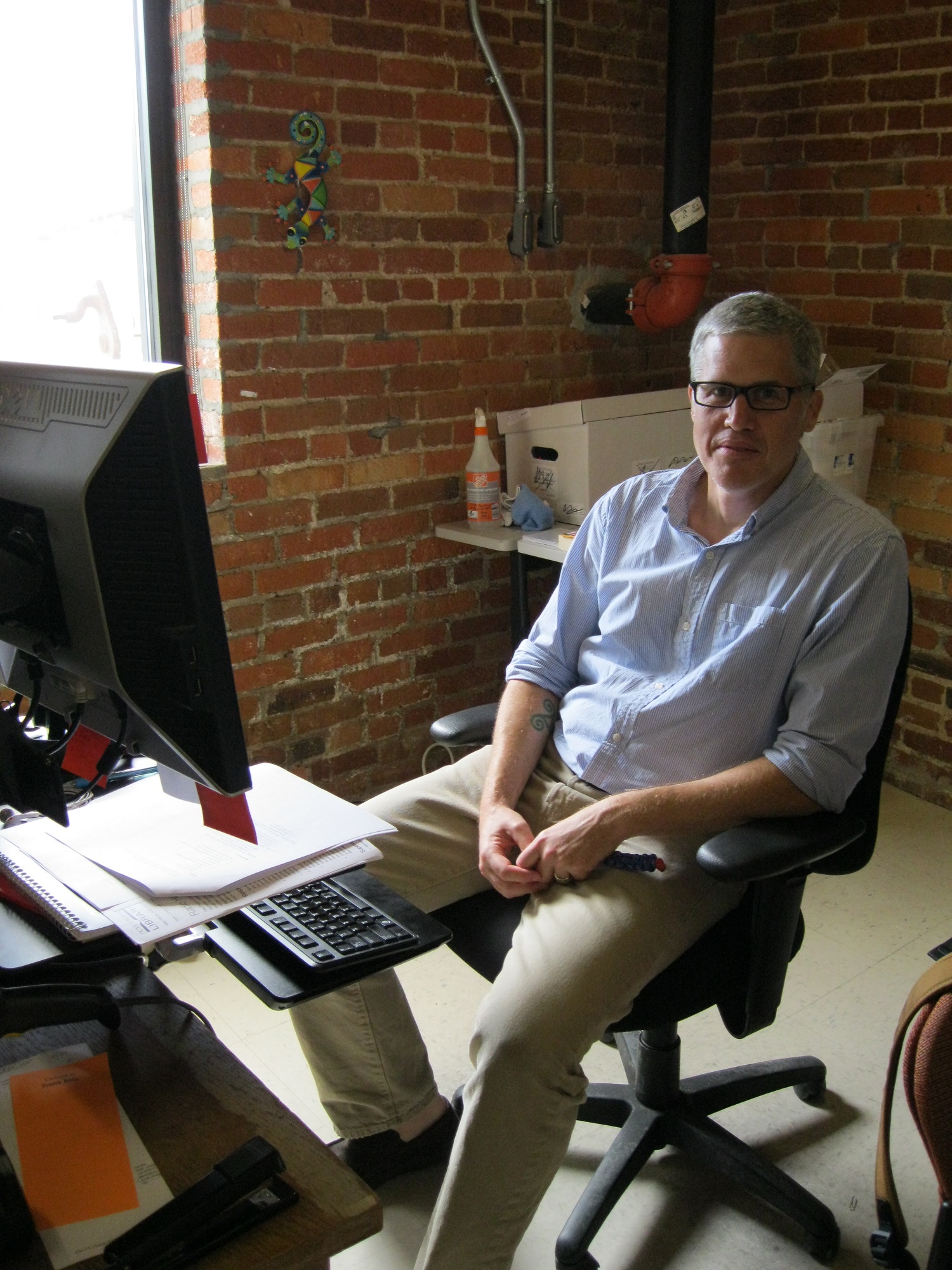
Craig Breaden joined the Rubenstein as our Audiovisual Archivist  three years ago. Prior to his time at Duke, he spent seven years at the Russell Library at the University of Georgia. He has a BA and MA in history from Texas Christian University and Utah State University, respectively, and an MLS from UNC .  He works on everything from small single-film collections to grant-funded preservation projects involving thousands of audiovisual items.  He facilitates preservation work, provides access to obsolete formats, processes (inventory and catalog) collections, and functions as the go-to oral history guy.

Tell us about your academic background and interests.

I started out interested in frontier history particularly, and how popular images of the American West inform the way Americans think about themselves, their creation myths, the rest of the world.  I’ve also had a lifelong love of music and a fascination with recorded audio and video.  Our audiovisual heritage provides a different, animated view of the past, and can carry a unique emotional weight.

What led you to working in libraries?

I’d had some experience working in a special collections library while in college, but it took a long while for me to come to the profession.  Some folks are late bloomers, I guess.  After years of working in corporate atmospheres unrelated to my academic background, I’d come to the point where I wanted to start making a difference and make a living.  It was the idea that work should mean something, make some kind of contribution to the society as a whole.  There are of course all kinds of ways to do this, but I thought I should play to my strengths.  I had a challenging and satisfying year of teaching 8th grade social studies, but knew that I could give more outside the classroom by focusing on what we might consider the raw materials of educators, those cultural heritage resources that give voice to the past.  It so happened that one of the best library schools in the country (UNC-Chapel Hill) was just down the road, and I applied and fortunately got in.  I decided to focus on my background and my interest in A/V, and while in school pursued audiovisual archiving as an emphasis of my library education.  I owe a big debt to the Southern Folklife Collection and its director, Steve Weiss, in helping me on my way, and to the great librarians at the University of Georgia for giving me a shot.

How do you describe what you do to people you meet at a party? To fellow librarians and library staff?

I usually tell people I’m an archivist in Duke Special Collections.  Sometimes that leads to further conversation, other times not.  I think in general there’s a real disconnect, a misunderstanding about what history really is.  It’s hard to say to most people that what we think of as history is what it is because of what we do in libraries and archives like the one here at Duke.  Colleagues get it, but I think usually the best introduction for them is when they get a CD or tape or film as part of a collection and wonder, at the very basic level, what to do with it.

What does an average day look like for you?

One of the great things about my job is that there aren’t many average days, but most days hold some combination of digital preservation, inventorying collections, answering reference questions via email, figuring out how to run a film or a video or audio tape so that we know what’s on it, and advising colleagues on portions of their collections that hold AV.  Then there are often questions related to policy creation and the changing landscape of digital preservation.  And let’s not forget the meetings….

What do you like best about your job?

I like figuring out problems that fall into my domain of expertise.  I do a ton of troubleshooting and tinkering to get AV to simply play back in a way that it can be accessed, and these nuts-and-bolts successes are always satisfying and really essential to what I do.  I also enjoy meeting donors and getting to know the personalities behind the stuff, just as it’s always great to help a researcher plug into something they might not have been aware of.  And of course my colleagues – every one of them brilliant in completely different ways.

CB devil's tale 013
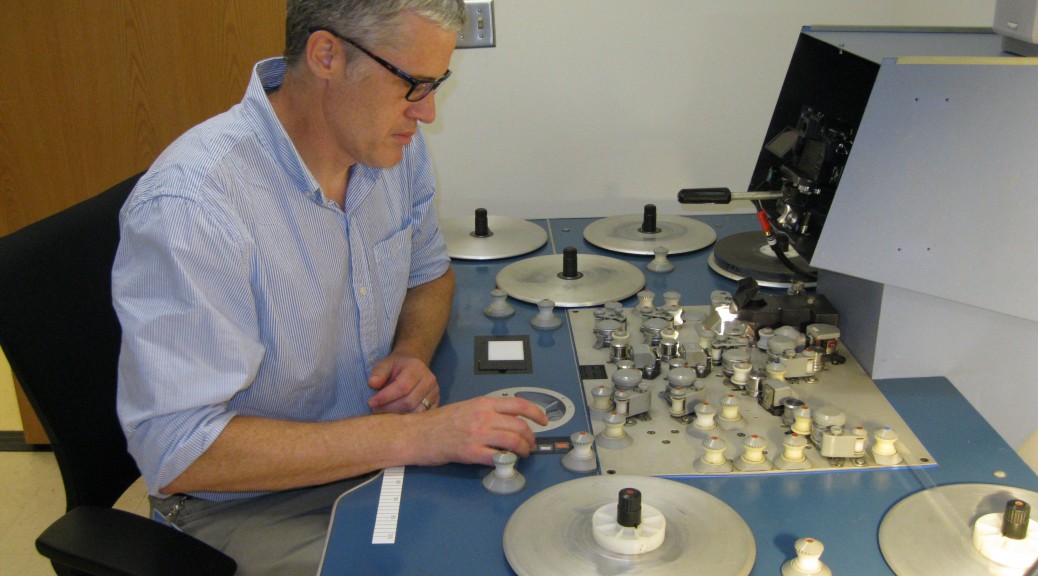
Craig with the Rubenstein’s newest flatbed film editing suite, the Steenbeck

What might people find surprising about your job?

The amount of time spent with spreadsheets and on email.  The first is part and parcel of what we do, that is, knowing what we have, the second is all about attempting to efficiently communicate (jury’s out on that, though).  Pleasantly surprising is that amazingly smart colleagues have something interesting to show or talk about every day.  Archives can be mind-blowing.

Do you have a favorite piece or collection at The Rubenstein? Why?

The H. Lee Waters Films for their big heart, the Frank Clyde Brown field recordings for all the secrets they hold in their wax cylinder and lacquer disc grooves (and that will soon be secret no longer), the home movie collections we have that tell a story beyond what’s happening onscreen, and all the fragile and forgotten bits of film and video that share our shelves equally and continue to have a voice.

Where can you be found when you’re not working? 

With my kids, cooking, strumming a guitar (sometimes all three at once).

What book is on your nightstand/in your carryall right now?

The Buried Giant by Kazuo Ishiguro; The Innkeeper’s Song by Peter S. Beagle; Hold Tight, Don’t Let Go by Laura Wagner; and Haiti: The Aftershocks of History by Laurent Dubois.

Interview conducted and edited by Katrina Martin.

Meet the Staff: Liz Adams, Collections Move Coordinator

LA - grin

The Meet Our Staff series features Q&A interviews with Rubenstein staff members about their work and lives.

Directly following the completion of her master’s studies in information science, Liz Adams joined The Rubenstein in 2013 as the Stacks Manager. Since January, she has served as the Collection Move Coordinator. She holds two degrees from the University of Michigan, a BA in English and an MSI.

We know you’re officially the move coordinator–what’s your unofficial title at the Rubenstein?

I’m a bit of a “gal Friday” in my attempts to alternately harangue or kindly beseech people to move forward on projects because collections can’t move without everyone’s involvement. No one would listen to me if I just said “move this!”

Tell us about your academic background and interests.

In undergrad, I worked in a public library. I couldn’t figure out what to do with my English degree and I knew I didn’t want to teach, but I liked books. I especially liked how tight-knit everyone in the library was and how we worked together to help people find what they needed. I went straight to grad school from undergrad, during which time I worked at a special collections library. Broadly speaking, my professional interests surround the idea of access and creating better, more useful access points for researchers and staff members alike. I think this can be accomplished through physical means—making things as physically accessible as possible– which is how my current job fits into that goal.

How do you describe what you do to people you meet at a party? To fellow librarians and library staff?

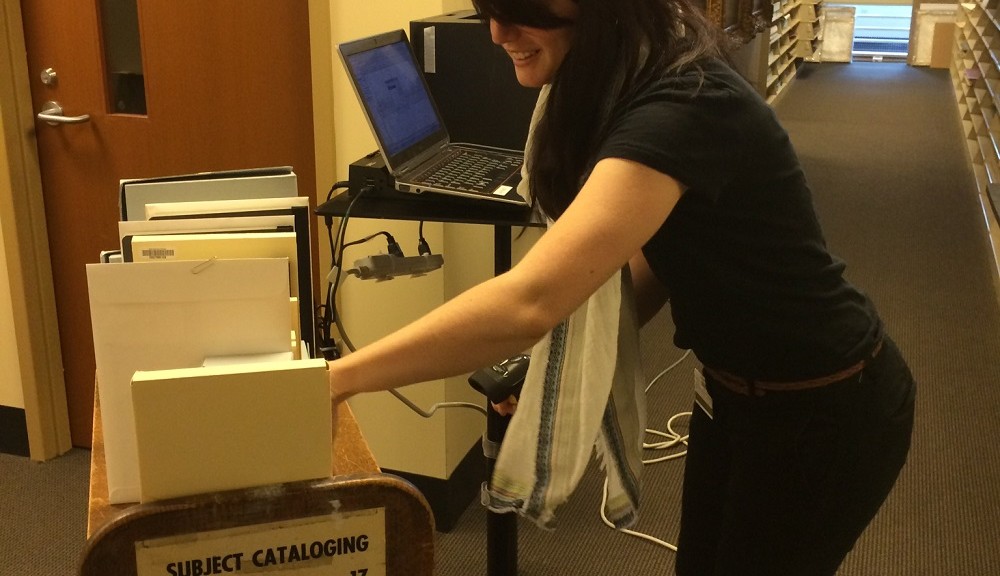
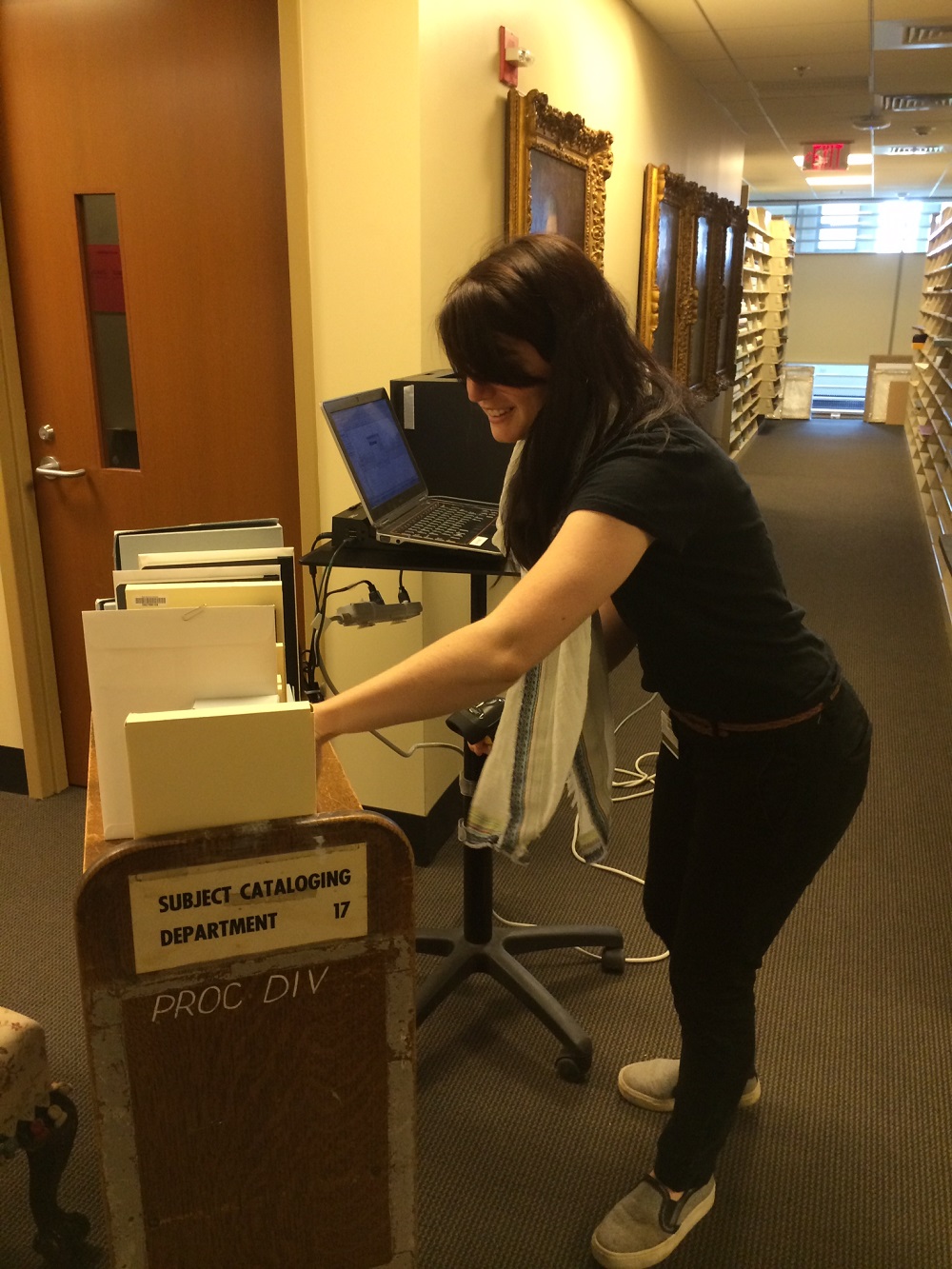
The people I meet at a party are generally familiar with the big construction project that’s happening on West campus and the Rubenstein. I tell them it’s my job to move our materials from temporary swing space to a permanent location and to figure out all that encompasses: good, bad, and ugly.

For people who might not immediately understand why there’s a whole position dedicated to this task, I’d highlight just how much material we have in our collection. Much like when you’re moving from one house to another, you find more things requiring your attention at every turn (and realize how much stuff you own!).  You have to decide what stays, what should move, and how you’re going to arrange things in a new space. No one likes moving and everyone else at The Rubenstein is so busy, there needs to be someone separate to help plot things out.

Action_Shot

What does an average day look like for you?

It’s a lot of Excel! One of the big headings under the umbrella of the move is the reclassification of all of our materials. We’re going from a system of 125 legacy call numbers (some more intuitive than others!) to Library of Congress. Part of what I’m doing now is sorting through a list of our 280,000 print materials that have been reclassified. I figure out which of those things should move on-site after being housed off-site during the renovation and before we had all this space. I ask questions like, which materials are high-interest? Which materials are high-use?

What excites you about the move?

When I was the stacks manager, I saw the confusion experienced by our student workers when retrieving materials.  At times, it really required a fine-toothed comb to find items. When the move is completed, everything will be in the same classification scheme and organized by size. Students and staff will hopefully be able to find materials more easily.

It’s also nice to think of moving into a brand new space that no one else has lived in. You get to really make your mark. In fact, you get to make the first mark, which as a competitive person, I love. I like to imagine that I’ll be the first person to walk in – my moon landing. Although I doubt it will be me!

What might people find surprising about your job?

I think my job is a lot of what people might expect. It’s a lot of organizing things, talking to people, and making sure things are done in a timely fashion.

Do you have a favorite piece or collection at The Rubenstein? Why?

I really like the Anna Schwartz collection. She was an economist who worked with Milton Friedman. It’s really interesting to see the personal and professional interplay of a female economist in the mid-twentieth century. She talks about comments made by a coworker and how she “took them to task” – you go Anna Schwartz!

Where can you be found when you’re not working? 

I enjoy a good picture show at the Carolina theatre. I can be found eating my way through the Triangle. You might see me huffing and puffing while running, and I sometimes pretend to be a yogi.

What book is on your nightstand/in your carryall right now?

In my bag I have New Introduction to Bibliography by Philip Gaskell.

On my nightstand, of a totally different flavor, is The Precious One by Marisa de los Santos.


Interview conducted and edited by Katrina Martin, Library Assistant in Technical Services.